Snap’s Specs Face a Public-Market Test After Years of AR Spending


On Diet TBPN, John Coogan and Jordi Hays used Snap’s new Specs as the clearest case for a broader skepticism: technically strong demos do not answer whether a company can create demand, an ecosystem, or a rational return on capital. They argued that Snap’s AR work might look fundable as a startup but is harder to defend inside a public company whose stock has fallen sharply and whose core ads business could be run more profitably. The same standard shaped their read on Taste Labs, AI export-control fights, and SpaceX’s valuation: the hard question is whether impressive capability can be converted into durable business control.
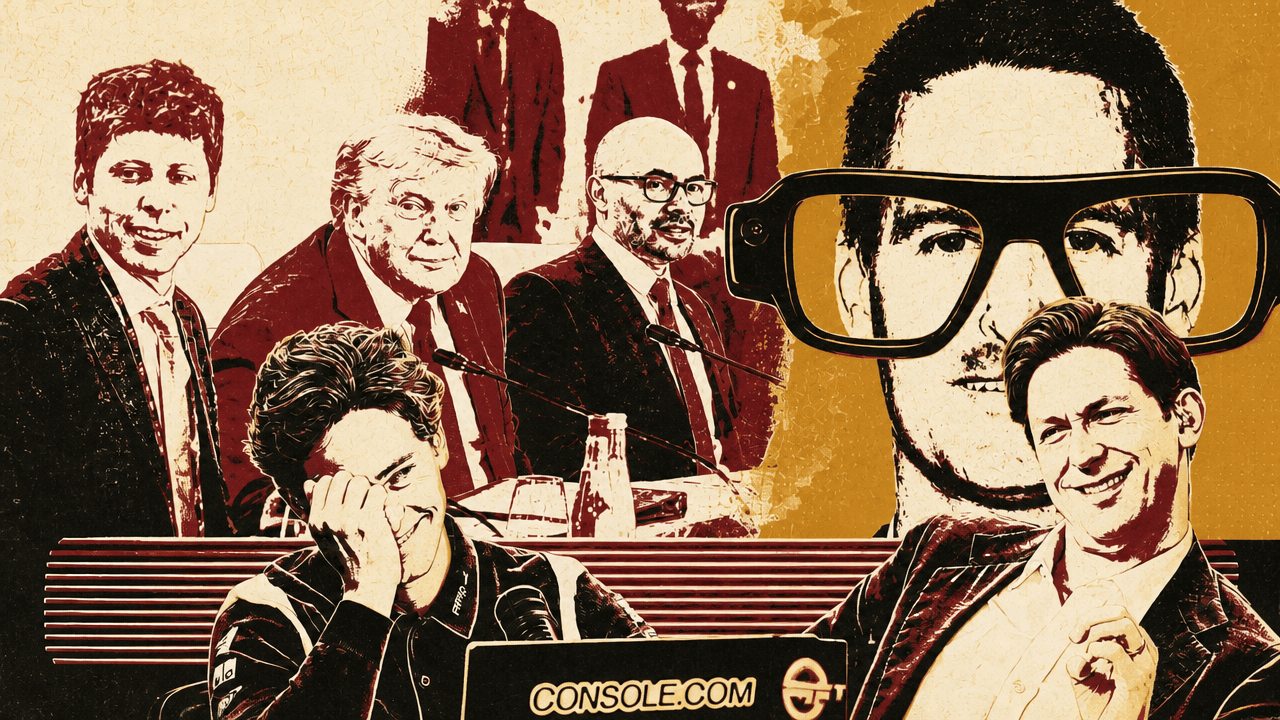
Snap’s AR bet now has to clear a public-company bar
John Coogan and Jordi Hays treated Snap’s new Specs as two different questions at once: whether the product is technically impressive, and whether Snap can justify the investment required to make it matter.



Hays said that if a startup had launched the same product and could perform the demos Snap can perform, “that startup would be able to raise at I would say easily a billion just based on current market conditions.” Snap, however, is not being evaluated like a seed-stage AR company. It is a public company that, in Hays’s estimate, has spent “somewhere in the range of three and a half billion dollars” building the product. The market is asking a different question: not whether the demo is good, but whether this is a rational use of Snap’s capital.
Coogan put the pressure in stock-market terms. Snap, he said, is down 92% over the last five years and had fallen another 8.5% over the prior five days. Spiegel now has to defend how expensive the AR effort is, how core it is to the business, and how many Snap employees are working on it. Coogan’s counterfactual was simple: Snap has “a great ads business” and “a great social media with a network effect,” should benefit from AI through better ad targeting and ad load, and could be run as a leaner, profitable enterprise. Instead, investments greenlit when the stock and broader market were high are now arriving in an “AI era, not the wearables era.”
Hays added that some of the work likely began when Snap was “a much, much, much bigger company,” with a chat comment summarizing the point as Snap being down 92% since “peak ZIRP.” Coogan gave Spiegel more historical credit: Snap has been acquiring in AR and thinking about this category for roughly a decade. Coogan said he had spoken with a founder who sold his company to Snap about ten years earlier, and he noted that Snap’s earlier Spectacles — camera glasses without a screen, closer in concept to Meta’s Ray-Bans — were well received even if they never reached business escape velocity.
The aesthetic reaction was harsh, but not the core issue. A post shown from BuccoCapital Bloke, alongside a photo of Evan Spiegel wearing the glasses, asked: “Do you know how deeply broken a culture has to be to ship this product and let the CEO walk around like this?” Coogan noted that the frames are large, thick and blocky, and read a newsletter item from Brandon Gorrell pointing out that Spiegel’s ear appeared compressed by the rear arm, which likely contains battery or compute. Coogan also resisted the easy dunk: after seeing an even more exaggerated image of oversized glasses, he said the actual Specs began to look more normal by comparison. “I’m getting pilled,” he said. “I might pick up a pair.”
The Specs demos were treated as genuinely interesting. An AR point-of-view demo placed restaurant information and walking navigation into the user’s field of view, including a seafood restaurant card for “Marée Nocturne,” a 4.8/5 rating, address, ETA, route, and weather. Coogan read Gorrell’s summary of the product’s feature mix: maps, a heads-up display, restaurant reviews in the visual field, shared virtual whiteboards, and AI-assistant features like measuring distances without a tape measure. The price, however, was described as roughly $2,200, and the product looked, in Gorrell’s framing, “painful to wear.”
Hays’s objection was that good demos do not automatically become a daily-driver computer. Golf yardage, furniture-placement visualization, and DIY guidance are all useful in moments, but each has a frequency problem. Coogan noted that golfers can buy rangefinders for around $150, and that golf rounds can last longer than the three-to-three-and-a-half-hour battery life he associated with the device. Hays said furniture visualization might matter “maybe once every couple of years” for many people. The same problem applies to DIY: a valuable use case is not necessarily a reason to keep $2,000 glasses on your face all day.
Hays also questioned whether the device matches Snapchat’s user base. A $2,000 product, in his view, does not align with what he believes is Snap’s core demographic. Coogan disagreed slightly on the need for a single killer feature. The iPhone’s original killer feature, he argued, was that it replaced a phone people already carried; the iPod and browser were additional layers. For AR or VR to work, he said, it has to replace a regular everyday interaction — “like a screen.” That is why he still sees VR as potentially replacing a home theater or an 80-inch television, though he noted that large TVs have become cheap enough that headsets must be clearly better and available to everyone in a household.
The competitive context sharpened the skepticism. Coogan pointed to XREAL, a Chinese company whose glasses he had tried, as pursuing a more commoditized path: a few-hundred-dollar wearable screen that can plug into an Xbox or other device and project something like a 200-inch TV in front of the user. Hays compared Snap’s Specs to Meta Ray-Ban displays at $799, while acknowledging Snap’s device may offer more features, functionality, and a larger developer network. Many “killer” features, he said — on-demand AI, generative UI, answering questions — can be done through a much simpler core UI screen, even something like a “Call of Duty HUD.”
Coogan’s deeper concern was platform cold start. Developers do not build if there are not users; users do not arrive if there is no software. He pointed to Apple Vision Pro as evidence that even premium hardware and impressive demos do not automatically create an ecosystem. Apple’s demo, he said, can map a room, open a wall into a dinosaur land, bring a velociraptor-like creature through the portal, and make a butterfly land on the user’s finger with enough precision that “you almost feel it.” Yet even in an era when “vibe coding” makes software cheaper to produce, Coogan said developers are not rushing to build breakout Vision Pro apps. They would rather build for the iOS App Store.
That leaves Snap with a hard proposition: demos that look cool, but no obvious path to millions of units, an app ecosystem, or enough monetization through games, ads, or paid software to support a platform. Hays said he wanted Snap to win and felt bad for the team, but his current view was that the launch would not generate the traction needed to justify further investment unless Spiegel simply continues to double or triple down. “At a normal company,” Hays said, “this would kind of be the last shot.”
Taste Labs made the right business claim with the most combustible possible word
Taste Labs is trying to “end AI slop” by giving AI models and agents “taste.” Its founder, Thais Castello Branco, a former xAI founding team member according to John Coogan, announced an $18.5 million seed round co-led by CRV and Amplify Partners. Her launch post, shown on screen, said AI has “nailed objective domains” and made it easy to generate anything, but still “feels off.” The remaining challenge, she wrote, is judgment: “What fits, what feels like you, what’s GREAT.” Taste Labs says this requires turning a “fuzzy, subjective domain” into something measurable and codifiable, beginning with design.
Coogan described the company’s two target customers: frontier AI labs trying to improve model outputs along aesthetic lines, and app-layer startups trying to improve the look and feel of their products. The premise connects to a current critique of “vibe coded” products: they often look the same, or as Coogan put it, people are already starting to identify a “vibe code look.”
Jordi Hays’s first reaction was not to the business model, but to the word. People, he said, have “taste fatigue.” For the past six months or year, “taste” has become a code word in tech discourse: once AI can do the technical work, humans will still have taste.
Coogan explained why the discourse around taste has provoked people outside tech. Many San Francisco tech people now insist taste is important, while outsiders do not see the local tech culture as especially tasteful in fashion, art, or curation. Coogan characterized the stereotype as a “t-shirts and athleisure community” optimized for efficiency rather than taste.
Hays then offered the steel man. He said that when he thinks of strong product taste, he thinks of Linear: opinionated, quality-driven, design-driven, and committed to growth through product excellence. The issue is that when a company’s taste becomes legible and admired, others copy it. Then an entire generation of companies begins to look like Linear, from website to product. In Hays’s view, once taste is merely copied, it ceases to be tasteful because it loses originality. Taste requires some ability to combine things in a way that produces something new — he stumbled through the arithmetic joke, moving from “1 plus 1 equals 2” to the more intended “1 plus 1 equals 3.”
Squarespace was his second example. It democratized and commoditized high-end website design, allowing anyone to have a pretty website. But once the template becomes recognizable, the output no longer signals the company’s own taste. It may still be useful and attractive, but it is not the same as original taste.
That critique did not lead Hays to dismiss Taste Labs as a business. On the contrary, he thought helping AI labs create better-looking outputs could be “a pretty good way to build at least temporarily a pretty big business.” Users care about visual quality, labs care, and hyperscalers care. While Taste Labs received heavy criticism over its first 24 hours, Hays guessed that its pipeline “probably exploded” and that the company would “print in the short term.” The uncertainty is what the business looks like in five years.
Coogan located the opportunity in the evolution of data labeling. Earlier labeling work could ask whether a button worked, whether something rendered properly, or whether an image had five fingers instead of six. Some of that could be folded into reinforcement-learning environments; some could simply be tagged. The new problem is not just functionality but aesthetic judgment: what looks good, and how a system can learn a diversity of good designs without collapsing into a single recognizable style.
That collapse is the failure mode both hosts circled. Coogan compared it to “corporate Memphis,” the now-familiar flat illustration style that spread across software and corporate marketing. The bad outcome for AI design would be a new generic aesthetic in which everything AI-generated has “the exact same flavor.” Hays said that is already easy to identify. He had reviewed a friend’s fundraising deck the previous night and told him: are you okay with everyone knowing you did not put effort into design? For some companies and some investors, he said, that may be acceptable. But founders should know that a one-shot AI-generated visual style will turn some people off.
John Mauriello’s response on X captured the philosophical objection: “Not everything can be codified and analyzed. Even if you can make AI imitate ‘taste’ (whatever that means), it still won’t MEAN anything. Taste emerges from craft, context, meaning, subjectivity, and genuine care.” Coogan partly agreed. The objection is “sort of true,” he said, but improving design quality is still valuable. The problem is that by using the word “taste,” the company invokes all of the baggage attached to craft, meaning, and judgment, even if its practical business is narrower: making AI-generated outputs look better.
The Netflix-Lionsgate dispute was a brief skirmish over reporting and denials
A short media-industry exchange turned on whether Netflix had interest in buying Lionsgate. TheWrap said sources familiar with the matter disputed Semafor’s reporting and said Netflix “is not interested and has no plans to pursue an acquisition.” Sharon Waxman amplified the denial: “Whoops - apparently no interest by Netflix in buying Lionsgate. @semafor whatcha got?”
John Coogan framed it as part of broader chatter about whether Netflix would buy something else and whether it had been involved in bidding around Roku. He read out the public sniping, including Waxman’s “Cleanup on aisle Semafor” and Ben Smith’s reply about helping with the cleanup and where the denial had landed.
Coogan did not resolve the underlying deal question. His point was narrower: reporters and media outlets were openly fighting over sourcing and denials. In his phrase, “the timeline’s in turmoil.”
AI export controls are being argued across markets, model access, and the G7
John Coogan grouped several market and policy items under a larger AI-policy backdrop, while keeping the status unsettled. On rates, he said more Federal Reserve officials had signaled that the next move could be an increase. At Kevin Warsh’s first meeting as chairman, the central bank held rates steady, but nine of 19 Fed officials penciled in at least one rate increase by year-end, up from none in March. Coogan attributed the day’s market weakness — about a 1% selloff — to that news.
The AI policy news was more specific but still in flux. A Wall Street Journal post shown on screen said President Trump stated negotiations with Anthropic over restoring access to the company’s latest AI models were “going fine.” Coogan said Trump was seated next to Sam Altman and Demis Hassabis from Google DeepMind at a G7 summit in France, where AI leaders were discussing export controls and broader AI issues. He expected more to come out of the meeting.
Another item shown on screen, attributed to Reuters in the visible text, said the U.S. had planned to designate more than 100 companies, including DeepSeek and CXMT, as national security risks and add them to a trade blacklist, but had put the move on hold. Coogan also said the “Fable 5” remained embargoed “in some way,” with some additional reporting but not much major movement.
The Anthropic dispute, as Coogan summarized it from a Washington Post excerpt shown on screen, concerned access to advanced models. The excerpt said Anthropic disclosed that a recipient list had “ballooned” and that roughly 50 additional entities had already received access. Senior officials began considering export controls to claw back the technology after Anthropic did not identify the new recipients for days. When the company turned over the names, the administration found that one recipient was a South Korean telecommunications company the administration suspected of having ties to China, according to the excerpt and Coogan’s reading of the reporting.
Coogan connected that to the broader export-control fight. The concern, as he described it, was that a South Korean telecom company with potential China ties had access to one of Anthropic’s most advanced models. The administration questioned whether that crossed a bright line. The status remained unresolved in the source: continued reporting, continued back-and-forth, and no major final movement.
Joshua Baer’s death landed as a loss for Austin’s startup community
Jordi Hays paused the technology and market discussion for the death of Joshua Baer, CEO and founder of Capital Factory. KVUE reported in an on-screen article that Capital Factory confirmed Baer had been killed in a small plane crash near Laredo, near the Texas-Mexico border, while heading to Austin.
Hays said he had never met Baer, but had heard “tremendous things” about him and described him as an important figure in the Austin startup community. He offered prayers to Baer’s family and friends and closed the note simply: “Really, really tragic. Rest in peace.”
SpaceX’s valuation could become acquisition currency
The closing business thread concerned whether SpaceX might use its high valuation as a strategic acquisition tool. Bill Ackman wrote on X: “One of the things that makes @SpaceX so valuable is how valuable it is.” Ackman’s argument, as Coogan read it, was that a high valuation lowers dilution when making acquisitions and that SpaceX’s ability to make economically, strategically, and technologically accretive acquisitions is part of its value. “Value begets value. Talent begets talent,” the post concluded.
John Coogan called the opening sentence a “Hall of Fame” line and a “tautological value argument,” but said Ackman was pointing to a real mechanism: a high stock price can serve as currency for acquisitions. For public companies, stock can make acquisition easier; in SpaceX’s case, the same logic raises questions about whether it could pursue a roll-up strategy.
Coogan kept the path speculative. He asked whether SpaceX might buy neo-cloud assets, energy assets, chip assets, or other companies in the AI and space supply chain. He mentioned that Ben Thompson had written about the issue after the Cursor acquisition option was exercised or announced. Coogan did not present an acquisition spree as decided. He framed it as a potentially “very different direction” that people would watch closely because of how much SpaceX could do if it used valuation as acquisition power.