Midjourney Medical Extends Image-Generation Ambitions Into Full-Body Ultrasound Scanning
TBPN hosts John Coogan and Jordi Hays read Midjourney Medical as a continuation of David Holz’s long-running work on sensing, interfaces and machine perception, rather than a sudden move from image generation into healthcare. Their account argues that Midjourney’s unusual business — bootstrapped, community-driven and cash-generative — has given Holz room to attempt a capital-intensive ultrasound scanning system with ambitions far beyond a conventional clinic device. The episode pairs that bet with OpenAI’s hiring of Noam Shazeer and Dean Ball as evidence that technical talent, policy capacity and institutional advantage are converging in AI.
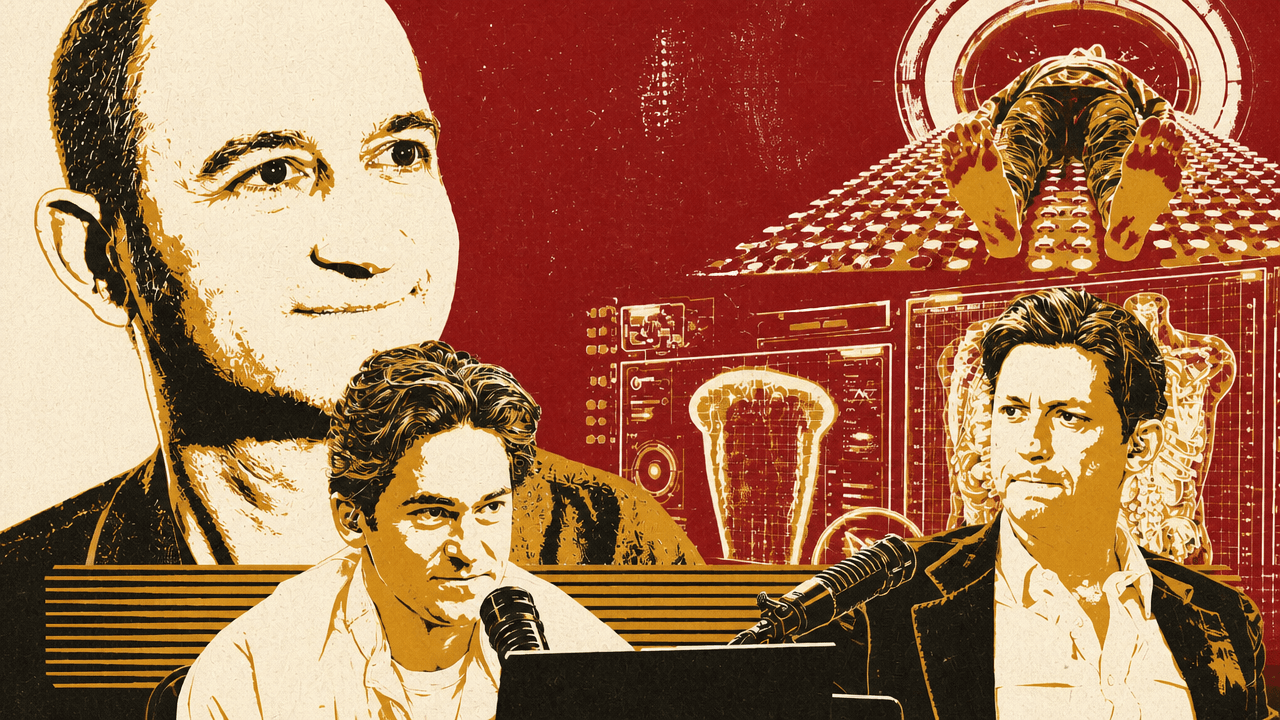
Midjourney Medical is framed as an expansion, not a pivot
John Coogan described Midjourney Medical as “an expansion, not a pivot”: a second or third act for David Holz after Leap Motion and Midjourney’s image-generation business. The through-line, in Coogan’s reading, is not that Holz suddenly moved from art into healthcare. It is that he has repeatedly worked on sensing, mapping, interfaces, and machine perception, first in hand tracking and now in medical imaging.
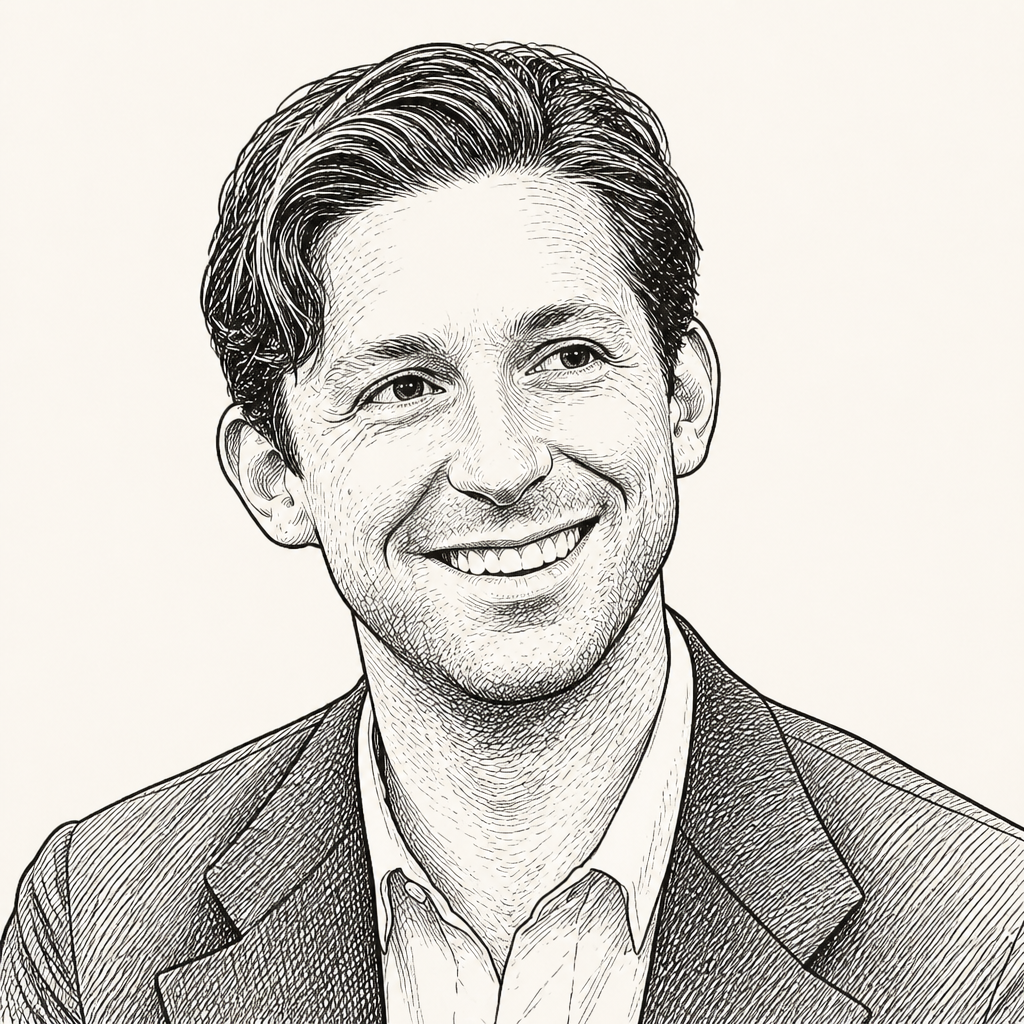
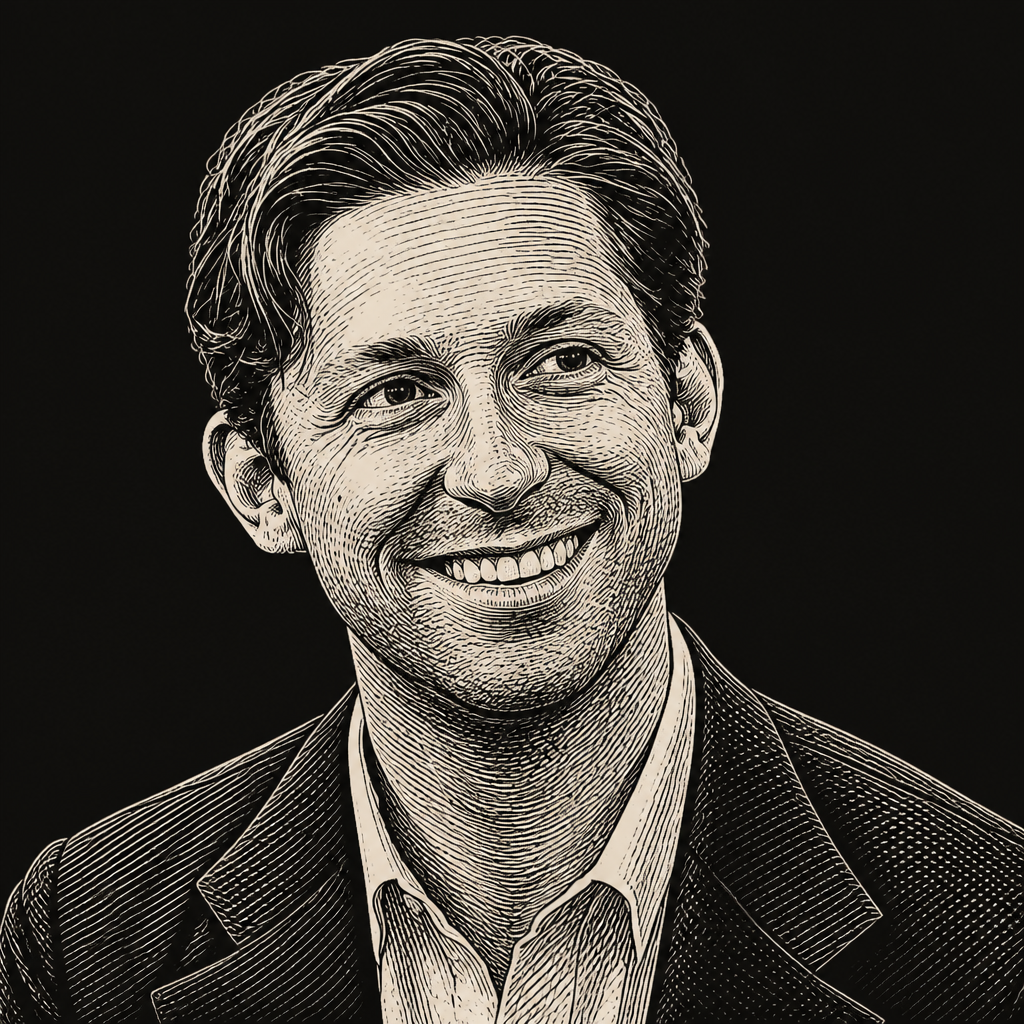
Coogan traced Holz’s earlier company, Leap Motion, as the relevant precedent. Leap Motion built a small hand-tracking controller, “like a stick of gum,” that let users interact with computers and VR experiences through their hands. The source showed demonstrations of the device controlling maps, games such as Fruit Ninja, 3D visualization, a first-person shooter, and drawing tools. Coogan emphasized that Leap Motion belonged to a much less mature hardware era: Oculus had generated energy around VR, Meta bought Oculus, Apple was investing, supply chains were expensive, and hardware execution was difficult. Leap Motion, he said, remained more of a developer-kit phenomenon than a mass consumer product.
A source participant who had attended the Midjourney Medical launch said Holz described Leap Motion as technically advanced for the early 2010s, including the use of deep neural nets and a mixture-of-experts model for a specialized hand-motion problem. That matters because the new scanner is being presented as a different product category, but not an unrelated engineering obsession. Coogan connected the two around sensing, detecting, mapping, and algorithms.
The Apple near-acquisition of Leap Motion appeared in Coogan’s telling as part of Holz’s founder mythology. He said Apple tried to buy the company, the deal fell through at the eleventh hour, and reporting at the time suggested welcome packets had already been prepared for Leap Motion employees. Jordi Hays added that Holz turned it down. Coogan described reporting that Holz had found Apple too corporate or not the right environment for the company’s work. The result, in Coogan’s account, was rough: layoffs, continued building, and a company that kept selling to hackers rather than becoming a mainstream device.
Midjourney’s later success was presented as the opposite kind of company-building pattern. Coogan pointed to the familiar anomalies: no venture funding that the hosts know of, no conventional consumer app at first, no website front end for years, and a massive Discord as the primary product surface. Hays called it a social experience. Coogan called it “multiplayer on day one.”
That multiplayer design was not cosmetic. Coogan argued that Midjourney solved the blank-prompt problem by letting users see what other users were doing. If someone is told a box can generate any image, he said, they often type “dog,” producing something not meaningfully different from a Google Images result. The interesting cases are prompts for images that do not already exist: an astronaut riding a horse on the moon, a user flying an F-16 over their hometown, or a composition that would otherwise require CGI or sophisticated Photoshop work. In the Discord, users could inspect each other’s prompts, model choices, dimensions, style references, and modifications, then remix them.
Coogan also identified Midjourney’s four-candidate output flow as part of its advantage. Instead of returning one finished high-resolution image, Midjourney returned four low-resolution options and let users pick the one with the right vibe, style, or layout. That gave the company feedback on what a correct image looked like for a given prompt. He contrasted that with Stable Diffusion’s local, open-source use, which could produce strong results but did not create the same centralized data flywheel for Midjourney.
The business consequence, according to the hosts, is that Midjourney now has the cash flow to attempt a capital-intensive hardware project without having been shaped by a traditional venture cadence. Hays said Holz had been talking for years about a medical device. Coogan said the terms of Midjourney’s Meta deal were not disclosed, but he assumed it was “in the hundreds of millions of dollars,” enough to give Midjourney the balance sheet of a heavily funded private company. Hays joked it could have been hundreds of billions or trillions, but the substantive point was that Midjourney appears able to fund large experiments from its core business.
The scanner is being sold as infrastructure, not a clinic machine
The launch video shown in the source presented Midjourney Medical as an orange-lit, designed environment rather than a conventional medical-office product. A woman stands on a circular platform, with visible interface text such as “SCANNER READY” and “SEGMENTING ANATOMY.” The attendee in the studio said the launch event itself used similar warm lighting and included large tube-like mockups of the scanner, plus a smaller version that could scan a hand. He said he put his hand in the demo scanner; another attendee, he said, believed the scan helped identify a wrist issue.
Coogan’s reaction focused as much on taste as on technical capability. He said he has long thought of Midjourney as a “David Holz art experience,” where the prompter is more like a museum-goer than the sole artist. In his view, Midjourney’s default output has taste because Holz and the team made opinionated aesthetic decisions. The same sensibility, he argued, appears in the medical-device launch: a category that he said usually lacks “aura” is being given motion, mood, and a designed future-facing experience.
Jordi Hays said the scanner made him feel as if “we’re finally living in the future.” He also suggested that people may want these scans not only because of clinical utility, but because they are personalized, beautiful, futuristic representations of the human body.
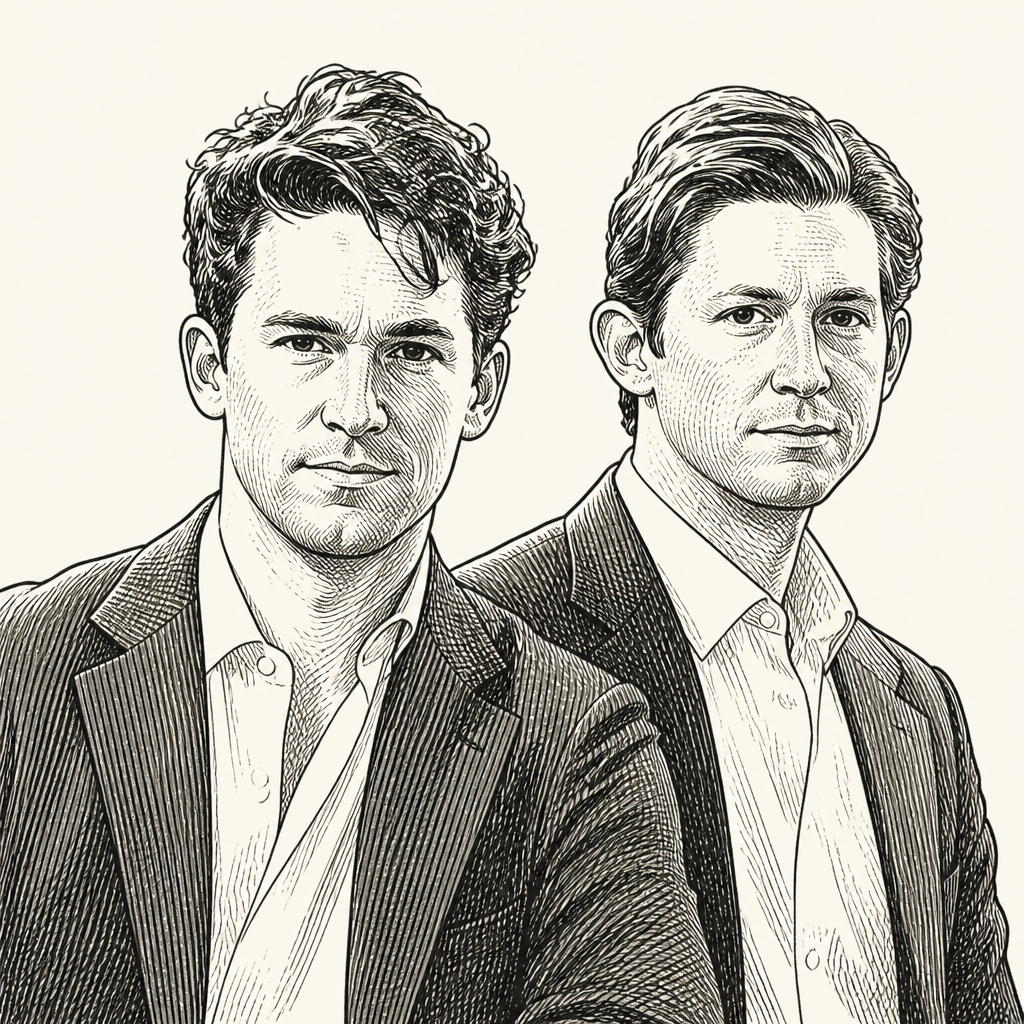
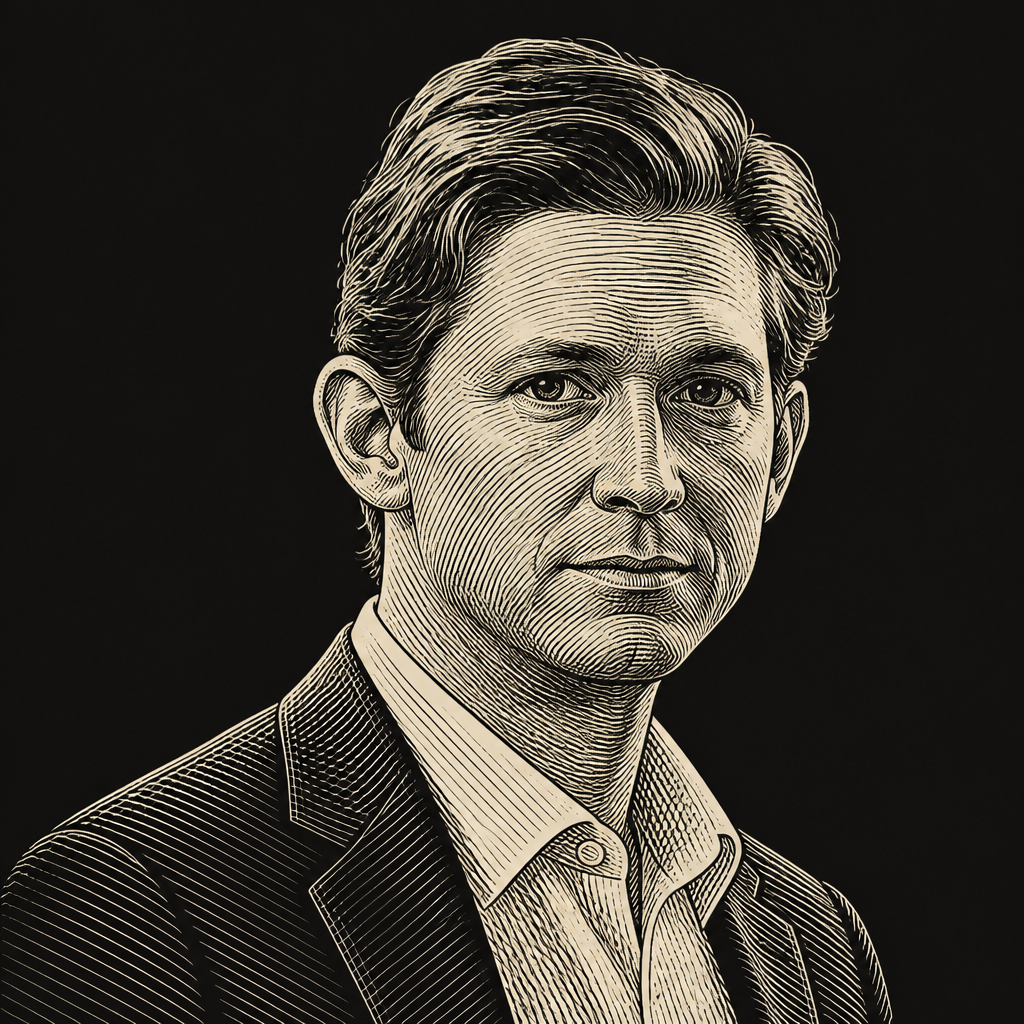
The technical video, which the attendee said Holz made himself in a 3D or CGI stack, described what Midjourney calls “Petaflop Ultrasonic Computational Tomography.” There was no voiceover; the video used captions and diagrams of transducer arrays, acoustic waves, a ring around a human body, and reconstructed body slices. Coogan read and summarized much of the technical text on air.
The system, as shown, starts with transducers that function as both speakers and microphones. The video said there are 8,960 transducers arranged in a grid, each 200 microns wide, vibrating over 50 nanometers and controllable at 100 million times per second. Those systems are combined into a 70-centimeter-diameter ring of 40 systems, totaling 358,400 ultrasonic sensors. The chips take turns firing structured waves, at up to 1,000 times per second, while hundreds of thousands of transducers listen to the reverberations.
The video stated that waves travel through the tank at 1,481 meters per second and cross it in 480 microseconds, about 1/2000th of a second. It claimed each sensor resolves motions smaller than the width of an atom, in picometers, and that groups of sensors can push into the femtometer range. Coogan read that language with some awe, calling out the claim that the system captures data at “a leisurely” 17 gigabytes per second.
The reconstruction burden is presented as central to the device. The video said over 40 gigabytes of data moves through the system to see one slice of the body. It then analyzes the images to identify organs, structures, and tissues; one shown slice was described as identifying up to 25 biological structures. As the user moves through the ring, the system repeats the process. The attendee clarified that the person is lowered down on a platform, rather than the ring moving around the body.
The launch video set the scan target at 60 seconds to obtain several hundred body slices, reconstructed across 21 servers with two petaflops of compute and up to 806 terabytes of raw data. The intended output is a 3D map resolving internal tissue details as small as half a millimeter.
| Claimed parameter | Value shown in the Midjourney Medical technical video |
|---|---|
| Transducers per grid | 8,960 |
| Scanner ring systems | 40 |
| Ring diameter | 70 centimeters |
| Total ultrasonic sensors | 358,400 |
| Data capture rate | 17 gigabytes per second |
| Data per body slice | Over 40 gigabytes |
| Scan duration goal | 60 seconds |
| Reconstruction hardware | 21 servers |
| Compute | 2 petaflops |
| Maximum raw data | Up to 806 terabytes |
| Tissue-detail resolution goal | As small as half a millimeter |
The ambition in the video went well beyond an individual scanner. It claimed that fewer than a dozen systems operating at full speed could perform more full-body scans than every MRI machine on Earth combined. It then stated a goal of 50,000 scanners capable of a billion scans per month, “enough to bring full body imaging to every person on Earth.” Coogan interpreted that as “basically everyone on Earth.”
Hays asked why Midjourney wanted to integrate the scanners into spas. The attendee said the first San Francisco location would have “like 10 or so” scanners, while some later sites might have hundreds and others one or two. The spa framing, in his account of Holz’s rationale, is about replacing the unpleasant clinic experience with something more like a sauna or steam room: quick, autonomous, and not requiring a doctor to be present during the scan.
The read-write medical-device idea is already adjacent to the scan
The source did not treat Midjourney Medical only as an imaging system. Once the scanner was described as an ultrasonic array powerful enough to map the body at high resolution, the discussion moved quickly to the possibility of using related systems to “write” to the body, not only read from it.
Hays joked that the ring should include needles that come in and deliver whatever peptides, hormones, or performance-enhancing drugs it deems necessary. The attendee then made the more serious point: Holz had described the system as “pretty overpowered,” and in theory ultrasound could be used not only to observe the body but to alter tissue. Coogan said the show had previously spoken with people working on ultrasonic approaches that pulverize tumors or cancerous tissue with focused waves.
The attendee compared the concept to lithography: if energy is positioned precisely enough, it can change material, not merely image it. Hays joked that this could pivot into chip-fabrication capacity; Coogan extended the bit by saying there would be more money in making chips.
A tweet shown from @anabology made the same read-write point directly. The visible text said the obvious next step after a full-body ultrasound scanner is to use ultrasound for “useful things to the body”: delete tissue, make cells divide, reprogram cells. The tweet summarized the direction as “Read + write” and included a hiring pitch for engineers interested in “sci fi med devices” at AION.
Coogan also used the launch to argue against a simplistic view of startup competition. Even if Midjourney is unusually well-capitalized and led by a founder with deep technical taste, he argued, that does not mean it will simply steamroll every biomedical-device startup or incumbent. In his view, market dynamics are more complicated: other medical-device companies may respond by partnering, buying from startups, or changing their strategies. His broader admonition was “never blackpill on startups.”
A tweet by Paras Chopra, shown on screen, framed the ultrasound scanner as evidence of the freedom bootstrapped companies have compared with VC-backed companies. Chopra wrote that only time will tell whether the bet is right, but that such bets require ownership and a “devil-may-care attitude.” Coogan partly agreed but pushed back on the absolutism. He noted that founders operating inside venture-backed or capital-marshaling systems — he cited Elon Musk projects and Sam Altman’s pattern of funding new teams around new ideas — can also get permission to work on ambitious, strange projects.
Still, Coogan agreed with the general constraint Chopra identified. Many VC-backed founders, he said, are trapped in an 18-month fundraising loop: raise, hit the core KPI, fight for the next round, and stay focused on the current win condition. Midjourney violates that pattern. It built a strong business in a category many would call commoditized and highly competitive, with Google and OpenAI as rivals, and appears to have carved out enough community, user base, and business model strength to fund a speculative medical hardware program.
OpenAI’s recruiting week was read as both technical and institutional
Coogan shifted from Midjourney’s hardware ambition to OpenAI’s talent moves by asking, “What did Noam Shazeer see?” The source showed Shazeer’s tweet announcing that he would join OpenAI, saying he was excited to work with the team, that it was difficult to leave Google, and that he was proud of what he and the Google team had built.
The reactions shown on screen emphasized Shazeer’s stature. One tweet from Yacine said simply that Shazeer is 6'4, which Hays treated as part of the internet’s apocryphal hero-building. A more substantive tweet from Lisan al Gaib described Shazeer as a co-author of the Transformer, T5, and Switch Transformer papers, one of the pioneers of sparse mixture-of-experts models, and said he was leaving a VP Engineering / Gemini co-lead role at Google DeepMind for OpenAI. The tweet called it likely the most significant AI talent move of the year and said it raised questions about what was happening at Google.
Coogan then paired Shazeer’s move with Dean Ball joining OpenAI the next day. Ball, in the hosts’ framing, occupies a different category from Shazeer. He is not an AI researcher but a policy figure. Coogan said Ball had been on the show multiple times and had offered even-keeled analysis. Hays said the main thing about Ball is that “he really cares about getting this right as a country.” He added that Ball has been critical of almost every company in the AI space, but because he cares about the outcome.
The juxtaposition matters in the source because OpenAI is not only recruiting model builders. It is also hiring people who think about governance, national strategy, and policy legitimacy. The Shazeer move was treated as a major technical-talent win; the Ball move as a sign that OpenAI also wants serious institutional and policy capacity.
The source also showed a Jim Cramer tweet reacting to Shazeer’s move: “Noam Shazeer, top AI thinker, goes to AI from Google. Big win for AI.” Coogan and Hays lingered on Cramer dropping “Open” and effectively calling the company “AI.” Hays joked that, given closed-source models, OpenAI might as well be called “the AI company.”
San Francisco’s tech culture supplied the day’s side evidence
The source’s minor stories were not unrelated filler so much as signals of the same social world: internet-native company-building, founder spectacle, and tech culture spilling into physical space.
Coogan discussed Riley Walls buying a street in San Francisco and auctioning it off, with Notion winning the naming rights. A tweet from Jeston Lu showed a sign reading “PRIVATE THE NOTION WAY” and announced a June 17, 2026 block party. Coogan said he was happy Notion won because the outcome could have been stranger or more obviously promotional if a crypto project or a domain-style ad had taken it. “The Notion Way,” he said, feels enough like a plausible street name that he would not be annoyed to see it in his neighborhood.
Hays said he had discussed the idea with Walls early and loved the execution. He said he and Coogan had offered to backstop the project if no one bid, acting as buyer of last resort. Coogan recalled the backstop as perhaps $1,000 or $10,000; Hays remembered it as in the $20,000 range. In the end, Coogan said, the winning bid was $140,000, making their support unnecessary. A source participant added that the project had the blessing of Mayor Daniel Lurie.
The source also showed a tweet from Aidan Gomez quote-posting an image of himself in a meeting with the text “accidentally became important at work n its ruining my life.” Coogan used it to praise Gomez, noting that he was also on the Transformer paper and jokingly calling him “Aidan Goatmez.” He also said Gomez once appeared on a 20VC podcast wearing a Death Grips T-shirt, which Coogan described as incredible.
The G7 supplied a final AI-adoption parable. Coogan described a clip in which Donald Trump, sitting next to Sam Altman, asks Altman how to adjust his chair. The visible caption on the clip read, “bro asked the ChatGPT CEO how to move up his chair.” Coogan’s joke was that Altman has spent years and enormous sums building a machine that can answer exactly that kind of question: take a picture of the chair, identify the mechanism, maybe retrieve the manual, and explain the adjustment. Trump chose the human sitting next to him instead. Coogan treated that as a tiny illustration of why diffusion takes time and why the AI transition remains a “slow takeoff.”
Jake Paul treated haters as distribution math
The closing guest segment brought Jake Paul and ? geoffrey-woo onto the show as co-founders and managing partners of Anti Fund. Paul’s substantive point was about attention, reputation, and the utility of detractors.
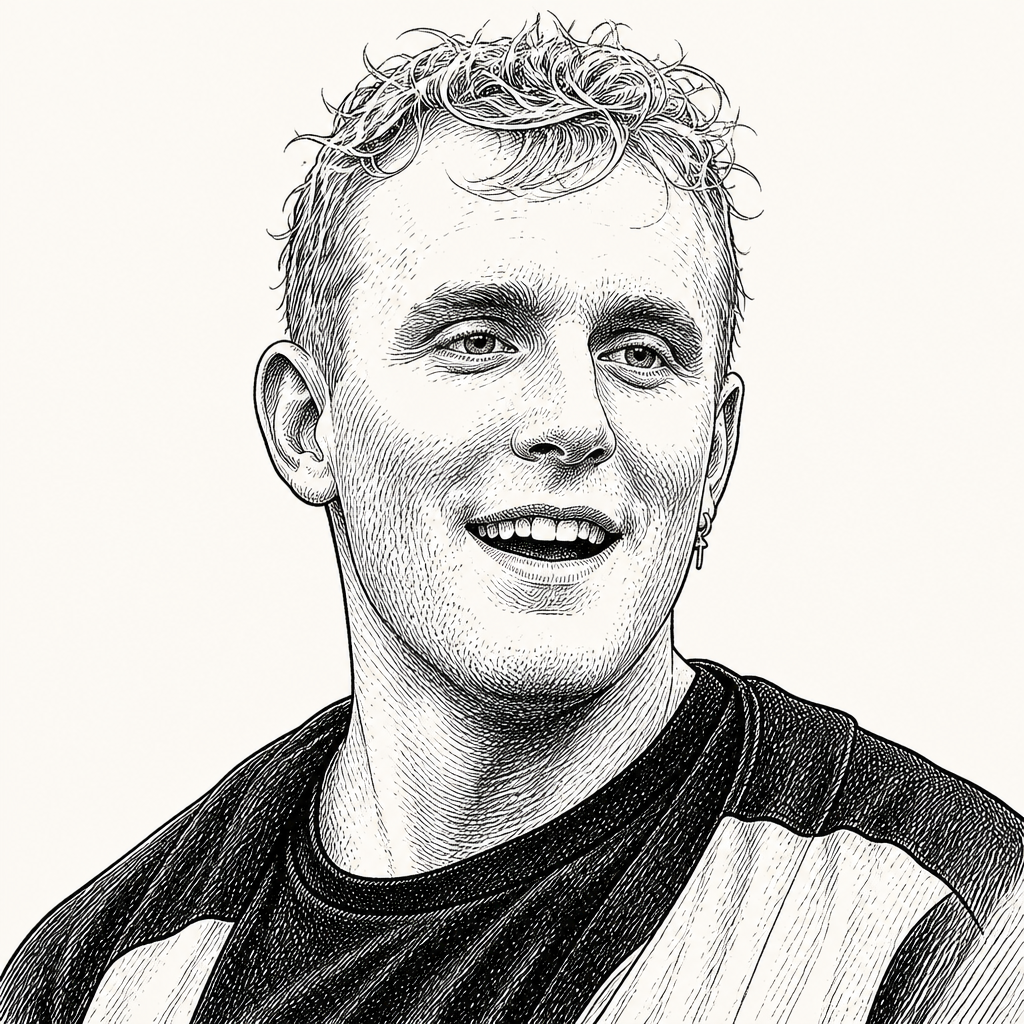
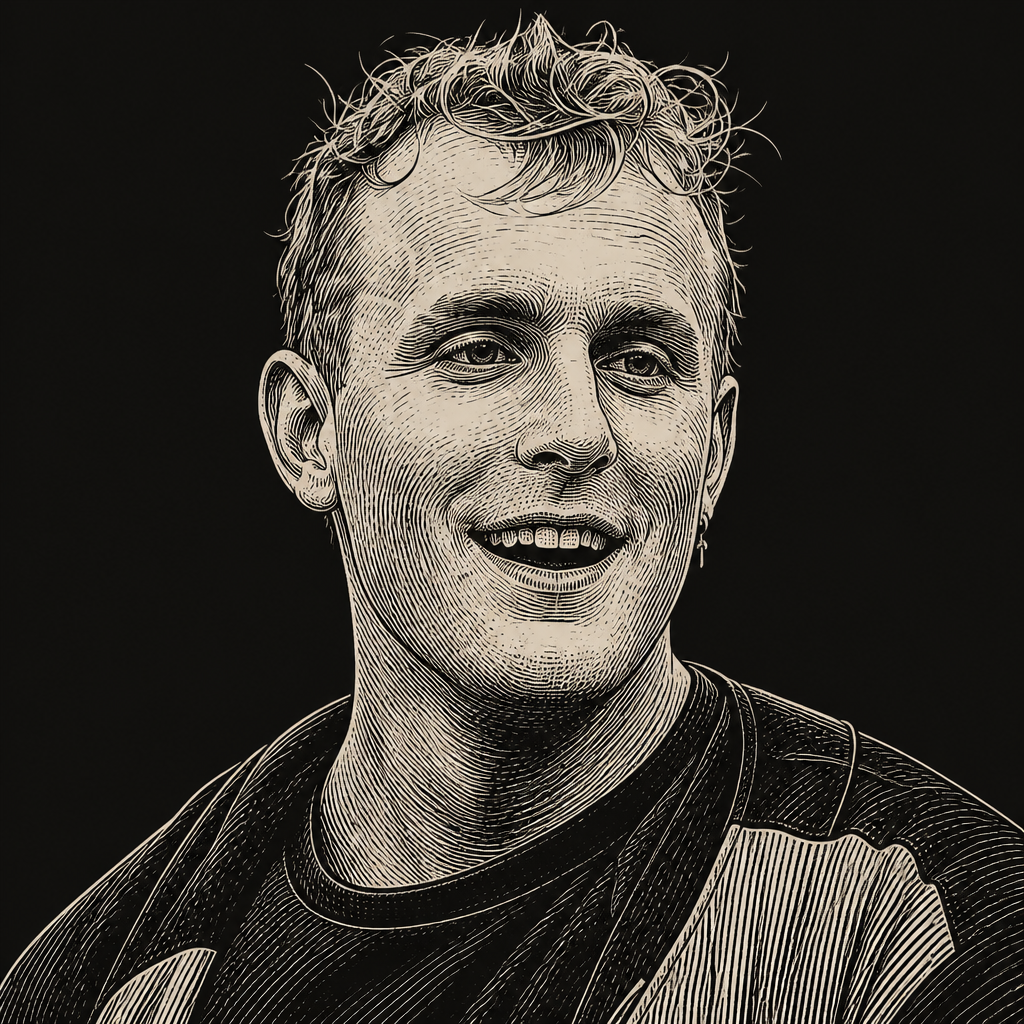
Paul said he does not remember life without haters. Since first going viral, he said, criticism has been part of the environment. His view is that anyone doing good things or big things in the world will attract haters, and that negative attention travels faster than positive attention. But over time, he argued, audiences do not remember exactly what was said; they remember the name and face.
His calculus was explicit. If 10,000 fans are talking about someone, that is useful. If 10,000 haters are added, then 20,000 people are talking. That increases clicks, views, conversation, and trending probability. “It’s really just math,” Paul said. He added that the biggest and best-known people in the world are often also the most hated.
Coogan then asked whether Paul would buy Ferrari’s new electric vehicle, the Lucche. Paul initially said no. Hays warned him that if he ever wants access to Ferrari halo cars such as the F80, he should be careful because his answer would be permanent. Paul briefly gave the political answer — “No comment” — before adding that the car was “ass,” then returning to “no comment.”
The exchange served as a compressed version of Paul’s earlier thesis. Controversial phrasing creates the clip; the clip creates the distribution; the distribution becomes part of the asset. In Paul’s account, the reaction is not a side effect of the work. It is part of the arithmetic of modern fame.