The Jensen Huang Allegations Put Nvidia’s Board and Security Risks in Focus
 Jordi HaysWarren Buffett
 John Coogan
 Tyler CosgroveLeonardo DiCaprioTBPNThursday, November 12, 20269 min read
Allegations involving Jensen Huang have put pressure on the Nvidia chief executive’s position and raised questions about how the Commerce Department weighed security risks when clearing advanced chip sales to China-affiliated entities. John Coogan cited an Axios report about a classified memo warning of Huang’s relationship with Alice Huang, described in the report as a suspected Chinese spy, and said the national-security concern was the possibility of extortion. Senator Kevin Cramer has called for Huang to resign; Nvidia’s independent directors issued a statement, but its substance was not disclosed.
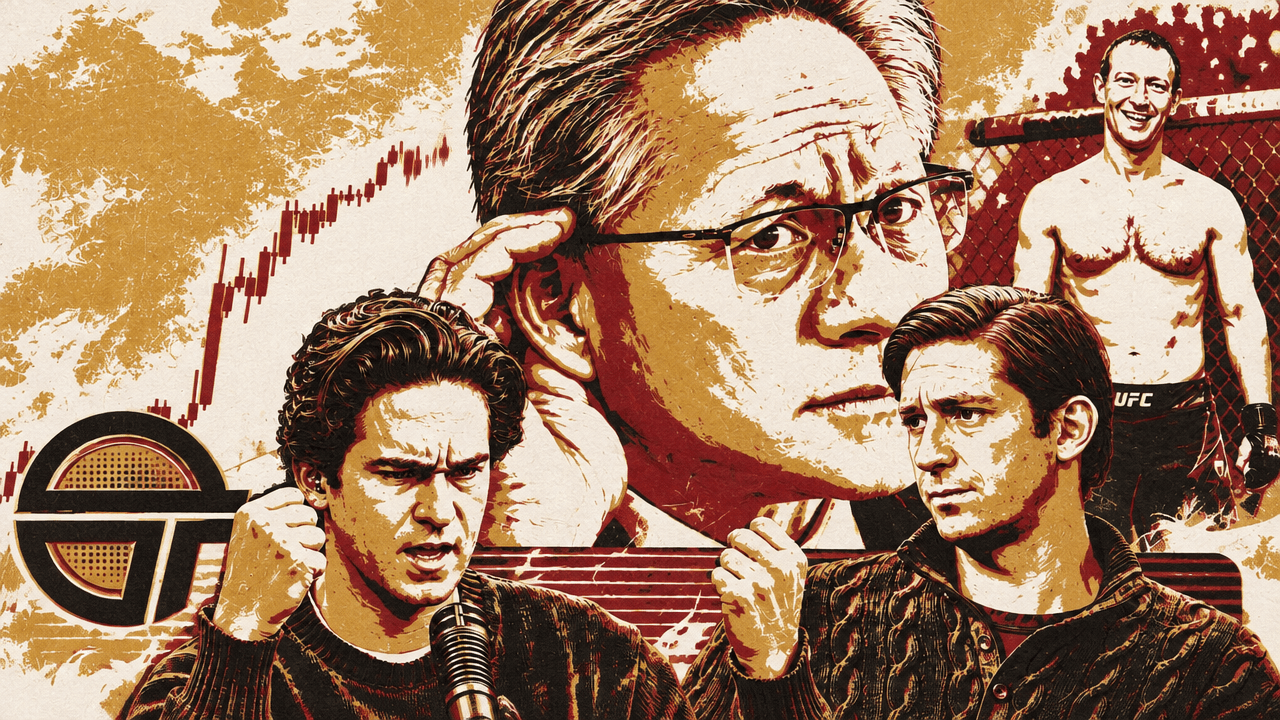
The Jensen Huang allegations have become a board and national-security problem
The independent members of Nvidia’s board issued a statement as allegations involving CEO Jensen Huang continued to draw attention. The statement’s title was shown on screen, but its substance was not. John Coogan cited an Axios report that Commerce Secretary Howard Lutnick had received a highly classified memo warning about Huang’s relationship with Alice Huang, whom the report described as a suspected Chinese spy. The memo, Coogan said, raised questions about how the department weighed security risks when clearing advanced Nvidia chip sales to China-affiliated entities.

Coogan speculated that Alice Huang might be better understood as a Chinese intelligence “asset” than as a conventional agent: someone with business connections who might have been contacted to pass information, rather than an agent carrying out an operation from the outset. He emphasized that this was speculation. Jordi Hays said the distinction might be technical, with little effect on the story’s broad implications.
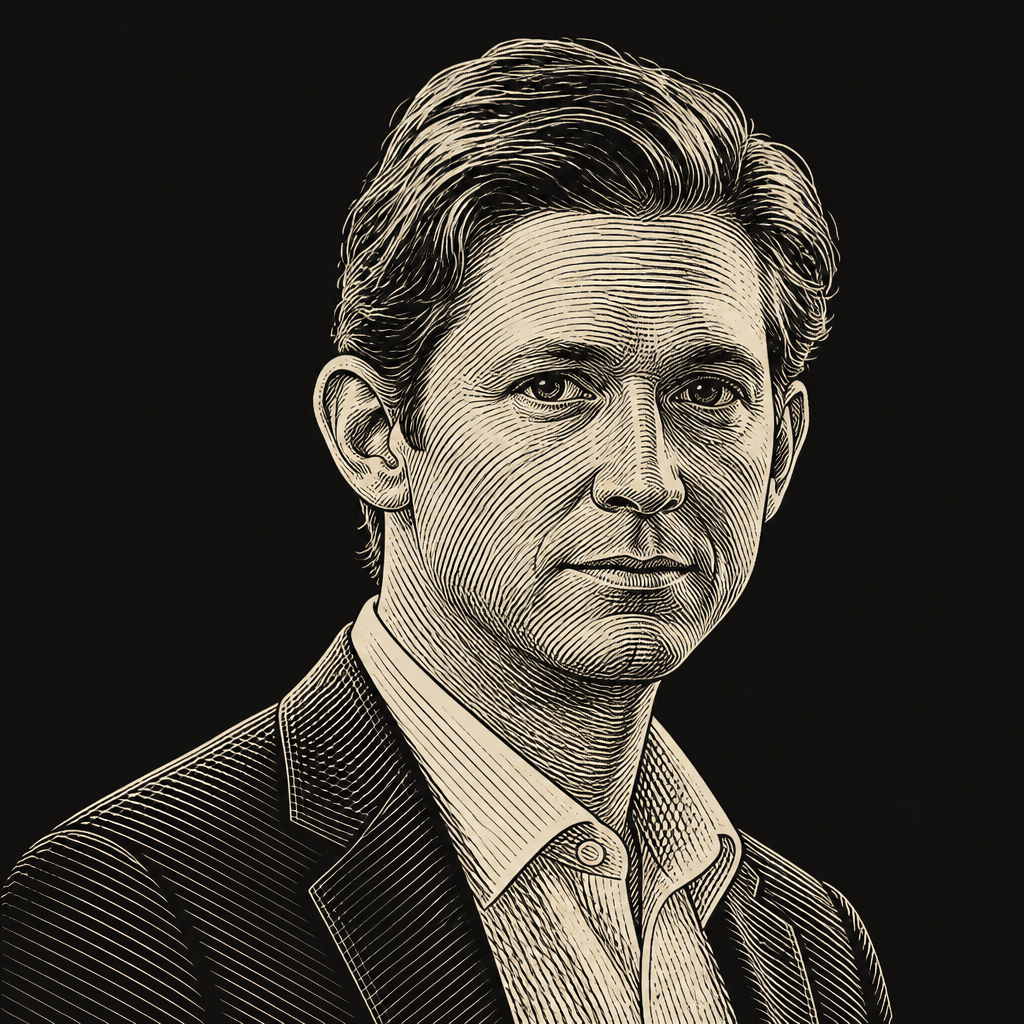
The national-security concern, as Coogan presented it, was the possibility of extortion involving the head of a company whose chips are strategically sensitive. Senator Kevin Cramer, a Republican on the Senate Banking Committee, had called for Huang to resign, arguing that the potential for extortion was too great. The hosts also noted the practical uncertainty around succession: they did not identify an obvious replacement, and Coogan said Huang had planned to run Nvidia for a long time.
A prediction market put the chance that Huang would leave before July of the following year at 38%, unchanged from the previous day. The hosts clarified that the market required Huang to leave the CEO role, not merely announce a departure; becoming chairman while giving up the chief executive position would count. Hays noted that “leaving” could describe very different outcomes, from a full exit to a change in title. Coogan compared the possibility of a role change with Elon Musk’s various titles at Tesla and SpaceX, suggesting that a nominal shift need not mean a clean break from influence.
Coogan contrasted the calls for resignation with a CNBC report that Huang had gone to Nvidia’s Santa Clara headquarters, opened his regular meeting with senior executives by apologizing for the infidelity, declined questions, and moved on to business. The hosts portrayed that as a business-as-usual posture, even as the story spread beyond technology circles. Coogan said he was seeing people who rarely discussed Nvidia comment on the allegations or make jokes about them. The senator’s demand, the prediction market’s narrow definition of departure, and Huang’s reported return to his regular meeting leave open what, if anything, changes in his role.
The CUDA debate is about whether AI can make hardware less interchangeable
The allegations are unfolding alongside renewed scrutiny of Nvidia’s CUDA software ecosystem. Coogan pointed to a claim circulating online that Anthropic’s Mythos model took three days to figure out how to run on AMD hardware, compared with an estimated six to twelve months using a traditional approach. The comparison appeared in a post by Marcelo P. Lima, shown during the discussion.
Coogan connected the claim to an earlier discussion with AMD CEO Lisa Su, in which the hosts had talked about AI reducing hardware bring-up time. He called the change from months to days an extraordinary acceleration, while noting that estimates of AI’s broader development-speed gains remained debated. The comparison sharpened the question of how quickly the CUDA barrier might weaken.
Hays framed that question as a deeper conflict between Nvidia’s and Anthropic’s views of the technology. In his account, Anthropic’s premise that compute is fungible sits uneasily with a strategy built around Nvidia’s tightly integrated hardware and software environment. The companies can cooperate commercially while disagreeing about the direction of the industry, he said. If models make software generation much faster, Anthropic’s view becomes more plausible: adapting software to different chips could become less burdensome, and Nvidia may be helping build technology that eventually disrupts its own position.
Hays also saw a political dimension. Anthropic’s public account of AI, he said, could gain ground while Huang was under pressure and less able to argue for Nvidia’s approach. Coogan added that this was not the emphasis of Anthropic’s reported IPO roadshow. He described the pitch as focused on the technology’s benefits—such as curing cancer—as well as adoption, revenue, and margins, rather than geopolitical conflict or the most alarming implications.
A sharp market rebound does not settle the AI investment question
The market’s mood had turned quickly. A post from The Kobeissi Letter shown on screen put the S&P 500 above 7,600 and said it was 3% from a record high, with buyers rotating back into technology stocks. Coogan and Hays cited the same figure as evidence of the rebound. Nvidia was up nearly 4% on the day they discussed, although Hays noted it remained down 22% over the previous month. A strong session had not erased the recent decline.
CoreWeave’s results helped revive the AI trade. A Reuters headline shown on screen linked the technology-stock rally to the company’s results and the prospect of a higher Anthropic IPO valuation. Coogan said CoreWeave’s revenue growth exceeded its guidance and its shares rose 26.8%. That was a substantial bounce after the stock had fallen by roughly half from its summer level, but Coogan noted that it would need to rise considerably further to return to its peak. Investors, he said, were being pulled between the prospect of a generational buying opportunity and the risk that debt-funded bets on AI revenue would prove a value trap.
Anthropic’s possible IPO valuation was another source of optimism—and volatility. Coogan cited figures ranging from roughly $1.2 trillion to $1.41 trillion, alongside a report that bankers were considering a move toward $1.5 trillion. He also relayed a claim that the offering was oversubscribed by two or three times, while noting that the process was still more than a week away. The valuation was moving as new reports changed expectations; the early demand figure left room for the picture to change.
Coogan described the broader market narrative as a return to a pattern in which AI spending and demand for compute continue despite higher inflation and interest rates. He pointed to new models capable of producing video and working on complex CAD files as examples of expanding uses. He also raised a gap in the evidence: Ramp’s credit-card and panel data appeared to show about 1% growth, while Anthropic had described growth of about 13%. Coogan suggested the figures might reflect differences between enterprise activity and the narrower signals captured by credit-card and panel data.
There was still room for improvement in model capabilities, Coogan argued. He cited GPQA benchmark results that had risen from around 12% to 16% for Llama 3.2, calling the increase modest but the remaining room to improve meaningful. For Coogan, the benchmark was a sign that model development had further ground to cover, alongside expanding uses for AI.
Jeff Yass’s argument turns on what a market price can tell us
John Coogan summarized investor Jeff Yass’s case against calling markets bubbles: a falling price does not prove that investors were irrational before the fall. In the passage the hosts discussed, Yass argued that there is “no true price to lose sight of.” The value of a new technology is uncertain, and a market price is a collective estimate of possible futures, not a verdict on what an asset is worth.
Yass’s criticism was directed in part at the confidence of bubble callers. Coogan paraphrased the argument: when prices drop, commentators often say that hype had pushed shares above fundamental value, but that explanation assumes the commentator knows the true value and can identify when the market has lost sight of it. Yass instead treats a decline as uncertainty resolving. A fall, on that view, does not establish that buyers were foolish; it may reflect a change in expectations.
Jordi Hays connected the argument to Nvidia’s recent rise and retreat. He recalled jokes that Huang signing a T-shirt had been a sell signal, then pointed out that Nvidia had multiplied in value since then despite being down around 20% from a more recent point. Coogan likewise mocked the idea that Huang’s leather jacket had been an obvious warning sign, noting that he had worn it for years.
The hosts did not argue that hype has no effect on prices. Coogan acknowledged that hype moves markets, but said investors buying and selling AI stocks know that and take it into account with their own money at risk. His challenge to Yass was an invitation to debate the record of investors against that of market commentators.
The hobby argument depends on when a founder is being judged
A post by investor Masha Bucher stated that the best founders she had backed had no hobbies, only an obsession with the company. Investor Martin Casado replied, “Not a thing.” Coogan and Hays used the disagreement to test a more basic question: what qualifies as a hobby, and at what stage of a founder’s life are we judging?
Hays proposed a strict standard. A hobby should be unrelated to work and not readily monetizable: building ships in bottles or model trains, for example. A dinner party with people in one’s industry might be enjoyable, he said, but it can still serve a professional purpose. Coogan added a time-commitment test: doing something for ten hours a year should not be enough to call someone an active hobbyist.
That standard complicated a list of founders’ reported interests posted by investor Sheel Mohnot. It included Mark Zuckerberg’s martial arts and surfing, Bill Gates’s bridge and reading, Steve Jobs’s meditation and interest in Japanese design, Jensen Huang’s cooking, Warren Buffett’s bridge and ukulele, and Elon Musk’s video games. Coogan questioned whether some activities began only after the companies had become successful, and whether retired founders should count. Hays likewise argued that many entries were interests rather than established hobbies.
They disagreed about whether activities such as walking, exercise, cinema, and sleep could qualify. Coogan’s test became deliberately concrete: a hobby involved making, experimenting, or developing expertise—and, as a running joke, visiting Home Depot or the equivalent specialty store at least once a quarter. Hays thought working out could be a hobby; Coogan thought a routine without ongoing experimentation was just exercise. A dirt-bike rider became a hobbyist, by Coogan’s measure, when the person was working on the bike, seeking trails, and known at the relevant shop.
The dispute shifted when the wording of Bucher’s post was read closely. She had said the best founders she had backed had no hobbies, not that the best founders never have them. Tyler Cosgrove offered that distinction, and Coogan said he agreed with a reading focused on founders’ early, company-building period. Hays’s further objection was that Mohnot’s examples included people who were no longer active in the companies they founded. Coogan countered that several remained involved, and that being a founder did not end once a company matured.

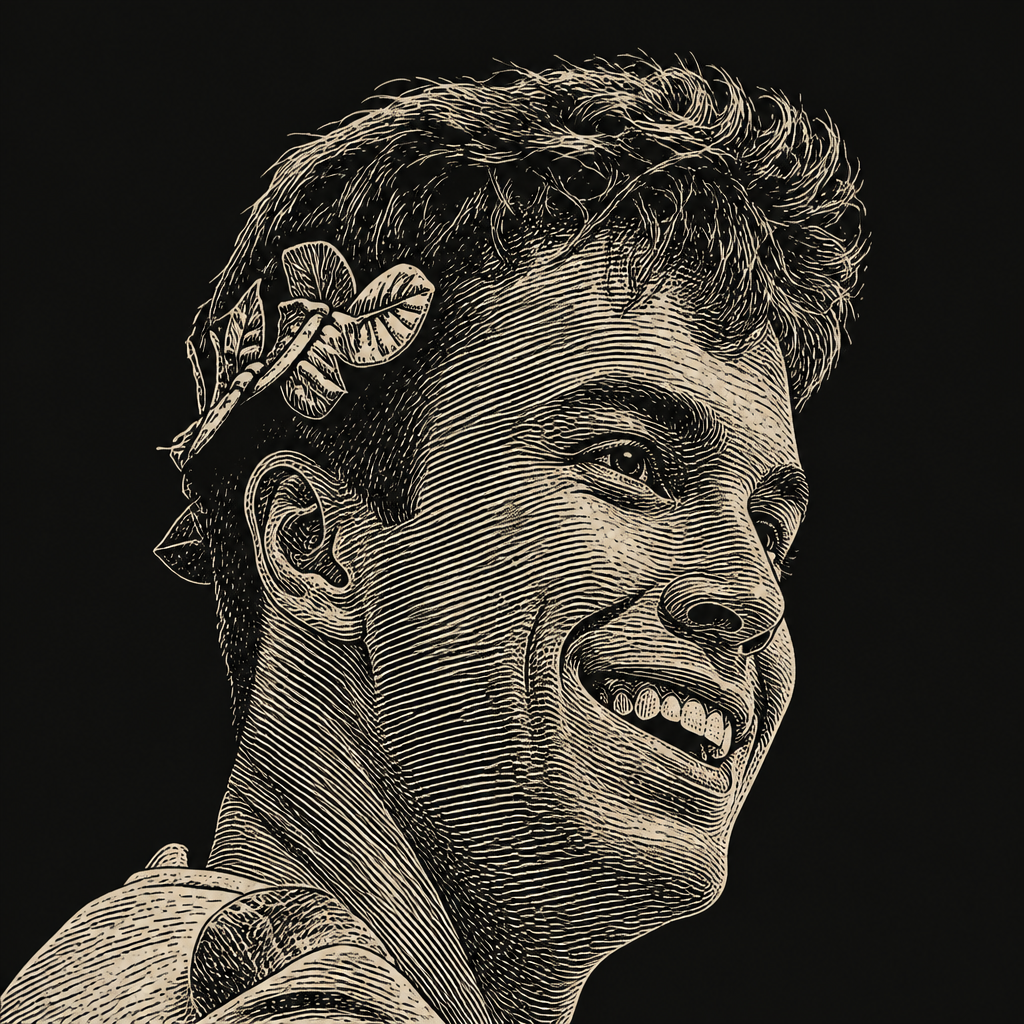
That left the disagreement narrower than the opening claim suggested. A founder may give up hobbies during the early years and later take them up when the company and the role allow more time. The hosts’ different readings turned on the time period being judged, what counts as a hobby, and whether an activity remains separate from work.
The examples at the end supplied their own test cases. Warren Buffett played “My Way” on a ukulele in a CNN clip the hosts treated as evidence of genuine enthusiasm, even though the instrument shown was not his. Cosgrove said that memorizing Homer was his hobby, then recited lines from the Iliad. His collection of Rubik’s Cubes, including a 9-by-9 cube, also cleared Coogan’s bar: serious enough, and specialized enough, that someone at the relevant shop might know his name.