Astra Signals OpenAI’s Shift From Chatbots to Computer-Using Agents

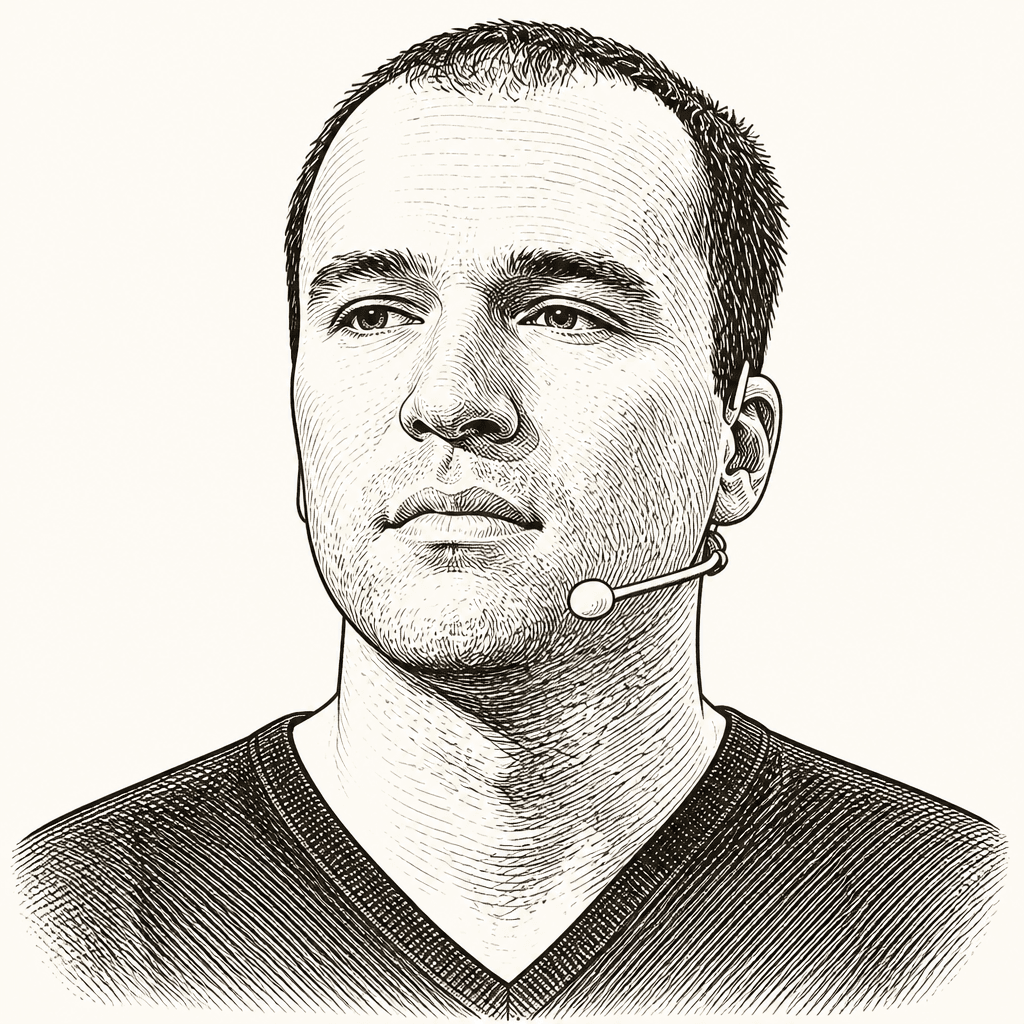

OpenAI president Greg Brockman argues that AI should move beyond chat interfaces that require users to choose models, tools and settings, toward systems that can determine how to complete a task while remaining open to human oversight. He presents Astra, OpenAI’s computer-use system, as evidence that agents can now work across software designed for people, while describing the earlier Operator release as a necessary but insufficient deployment that exposed the reliability and speed such systems require. In health, Brockman says the same model depends on earning enough trust to connect the fragmented information held by patients, clinicians and hospitals.

OpenAI wants the system, not the user, to decide how work gets done
Greg Brockman described OpenAI’s direction as a move away from an AI product made of visible choices: separate models, reasoning settings, context windows, connectors, applications, and modes for chat or work. The user should set an objective, remain able to inspect and oversee the result, and delegate the execution problem to a system that can determine what tools and access it needs.
That is a more demanding proposition than making chat better. Brockman said the long-promised version of AI was never a low-level language model that asks people to select thinking strength or manage context. It was something proactive and persistent: a system a person can talk to, assign work to, and direct according to their goals.
He also insisted that this should not remove the human from responsibility. Users should be able to get into the details, understand what the system is doing, and provide oversight because they remain accountable for outcomes. But the system should function as an amplifier rather than as another piece of software requiring specialized operation.
We really want to shift these tools from requiring kind of low-level sort of access or guidance to really having the human be able to fly.
Astra is Brockman’s principal evidence that this transition has begun. He said it has crossed a new threshold in computer use: it can work with different applications in ways that were not previously possible. The significance, in his telling, is not simply that a model can invoke a tool. It can work through applications whose interfaces were designed for people, widening the range of tasks it can potentially carry out.
The early examples mattered because they extended beyond conventional knowledge work. Brockman pointed to people creating 3D objects, mapping physical locations into 3D models, and exploring physical-part designs. One user designed a mechanism for catching hair in a shower drain and was able to manufacture it. That mundane example was central to Brockman’s consumer argument: the value is not confined to grand scientific questions or specialist workflows, but lies in making more of the practical problems in a person’s life tractable.
A user considering a home renovation, for example, should not need to know Blender—or decide whether a task belongs in a local coding environment or a cloud service—for the system to use those capabilities. The intended experience is not that everyone becomes a power user of every underlying program. It is that the application layer recedes behind the task.
Brockman presented OpenAI’s claimed Navier–Stokes result as evidence of the breadth of capabilities that might eventually sit behind this kind of interface. He said an OpenAI model found a counterexample, or proof, indicating that the equations can develop a singularity under certain circumstances. The Navier–Stokes problem is one of the seven Millennium Prize Problems. Brockman called the proof elegant and described it as new knowledge from which mathematicians can learn.
The equations bear on fluid dynamics, including ocean currents, airflow around aircraft, and turbulence. But Brockman emphasized the broader implication: models may help scientists and mathematicians address problems that would otherwise be out of reach or take much longer to solve. He connected that possibility to disease research and new medicines, as areas where greater model assistance could make more ambitious work plausible.
Operator was the below-threshold deployment that taught OpenAI what computer use required
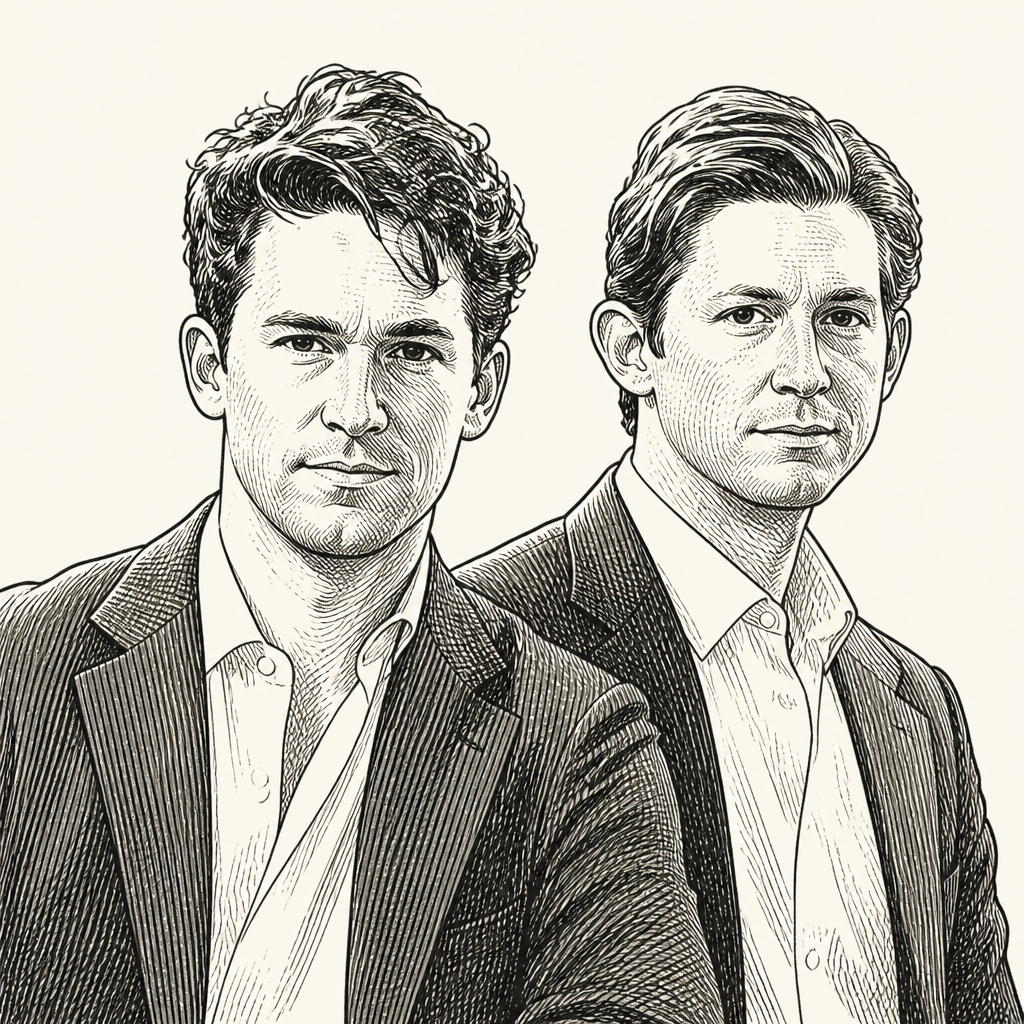
Jordi Hays asked whether Operator, OpenAI’s earlier computer-use system, was a failure or a direct predecessor to Astra. Brockman treated it as an example of iterative deployment: releasing a system before its capabilities were sufficient, then learning from its real-world use what needed to improve.
Operator was just kind of below threshold in terms of the model capabilities.
Operator was cloud-based and could operate a computer, but Brockman said it was slow, not fully accurate, and painful to use. Some users found value in it, he said, but it was not broadly useful. OpenAI nonetheless continued to invest. Brockman said the team spent the year working through a long list of issues and concentrating on computer use.
His account of the difference between Operator and Astra is therefore not that OpenAI changed its ambition. The company had long wanted to build an AI that could help people across what they can do with a computer. Rather, Operator exposed the distance between an agent that can technically operate an interface and one that is reliable and responsive enough to become useful in practice.
Brockman contrasted that ambition with agents that act mainly through connectors: specifically coded integrations into particular services. Those systems can be useful, he said, but they are unlike the way people use computers. Human users can already operate across the vast range of software built for them. An AI that can work through those same interfaces could, in principle, help across a much broader set of activities.
Brockman called Astra a significant milestone rather than a finished product, saying there was still more to do and more applications for users to uncover. His claim was that the computer-use capability had reached a threshold at which the original goal had become materially more plausible.
John Coogan described Astra as several bets arriving together: advances in the model, computer use, and voice. He also saw a change in organizational behavior, from a large company running many product experiments toward a more startup-like concentration of effort. Brockman agreed with the importance of focus. He said OpenAI makes long-term investments in hard problems, does the work of improving them, and tries to direct its efforts toward its mission while developing capabilities safely.

The interface disappears only if the system can teach people what it can do
Astra’s claimed capability does not solve the adoption problem by itself. If a person must already know which product mode, model, connector, authorization, or prompt wording unlocks a useful task, then the burden of orchestration has simply been shifted into product literacy.
Brockman said the field faces a discovery problem it has not yet addressed in a first-class way. ChatGPT and ChatGPT Work can both appear to users as text boxes even when they are capable of substantially different things. The problem is not merely explaining that a new text box is more powerful. It is helping a person recognize that a desired outcome is now possible and then guiding them into the path that makes it happen.
Greg Brockman said a system that understands a user’s request and has context about them should be able to take part in that discovery. It might tell someone that phrasing a request differently would help, suggest a connector, or explain what it could do if the user authorized access or connected credentials. In this view, onboarding is not a separate instructional layer. The system itself should reveal the workflow appropriate to the goal.
That is essential to the larger product promise. A person is supposed to get time back, not become an expert in the internal structure of AI products. The more capable the system becomes, the more confusing the old interface can become if it continues to present users with an expanding menu of models, modes, and technical controls.
Brockman acknowledged that OpenAI’s scale creates both a challenge and an opportunity. He said ChatGPT now has well over a billion weekly users, and estimated that another billion to 1.5 billion people may have tried it. Many of those people may have formed an impression of the product before newer agentic capabilities were available or capable enough to be transformative. But the same installed base gives OpenAI a large audience to which it can demonstrate what has changed.
Coogan compared the communications challenge to Apple’s practice of emphasizing concrete product features rather than only broad brand campaigns. AI has a much larger surface area, he argued: it can potentially do many more things, and people need specific examples that make those possibilities legible.
Brockman said OpenAI had reached a similar conclusion. He cited the launch material for ChatGPT Images 2.5, which showed someone creating variations from a sketch of a candle holder, selecting a preferred image, and seeing the resulting physical object. The demonstration was meant to communicate an outcome rather than an abstract model capability: someone could see the result and think, “I want that particular thing.”
OpenAI had sometimes highlighted esoteric use cases that were powerful for a narrow audience, Brockman said. Viewers did not necessarily infer from one specialized example that the system could solve other problems in their own lives. The practical task is to show use cases that map directly to needs people already recognize, then let exploration reveal adjacent applications.
Brockman made a similar argument about image generation itself. A model must clear a quality threshold before it can produce material usable in real professional, marketing, or knowledge-work settings. Once it does, precise editing, speed, varied results, and a productive back-and-forth with a user can unlock applications that are difficult to predict in advance. He pointed to slide creation and website building as downstream uses where image generation can improve the final artifact.
Images, voice, and coding are not, in Brockman’s account, separate product destinations. They are capabilities that must become available at the point they help complete a task.
Health tests the promise where the missing context is most consequential
Greg Brockman described three health efforts: consumer use of ChatGPT, clinician-focused tools, and enterprise deployments for hospitals. He said 300 million people ask ChatGPT health questions each week. For clinicians, OpenAI is pursuing a version tuned for their work and able to provide direct citations to medical literature. On the enterprise side, he cited an integration with Epic and selling directly to hospitals.
Each service can stand on its own, Brockman said. His larger proposition is that they could eventually reinforce one another as parts of a healthcare platform. The target is an information problem familiar to patients with complex conditions: different specialists handle different portions of a case, records and explanations must be carried from one provider to another, and the patient ultimately bears responsibility for connecting the pieces.
Think about how much work you as a patient have to do if you're talking to different specialists, and you have to carry your medical record from one to the other, you have to explain again, here's the issue.
Brockman said better information sharing could reduce that burden if providers operate on the same platform. He also identified clinical-trial enrollment as a major bottleneck in drug development. A platform holding relevant health data could potentially identify people eligible for trials from which they might benefit—but only, he said, if people are willing to entrust it with that information.
That condition makes health a more demanding version of the strategy behind Astra. It is not enough for a model to offer a useful answer in an isolated exchange. The broader platform Brockman describes would depend on patients, clinicians, and institutions accepting a common system as a place to hold, connect, and use sensitive information.
Brockman said OpenAI hears daily from people who believe ChatGPT helped them understand a medical issue, double-check what a doctor told them, challenge an initial conclusion, and reach a better outcome. He framed those accounts as evidence that health is already one of AI’s most positive applications, while maintaining that the field is only beginning to explore what is possible.
Coogan suggested that persistent memory could extend that value by recognizing patterns across questions raised in separate conversations: symptoms or concerns that a person treats as unrelated might appear connected when viewed together. Brockman agreed and cited his wife’s five-year search for answers across multiple specialists. An allergist eventually connected her symptoms and identified a genetic condition affecting multiple subsystems.
For Brockman, the example captures the potential value of an AI that can retain the whole picture while drawing on deep medical expertise. It also illustrates why the health ambition is inseparable from the unresolved question of trust: the system can only connect what it is allowed to see.