Abstraction Requires Accountability When AI, Logistics, and Companies Get Too Complex
 John Coogan
 Jordi Hays
 Eric Ries
 Christopher Hale
 Alex Atallah
 Sean HenryTBPNTuesday, May 26, 202623 min read
Abstraction creates value only when responsibility for the hidden system remains clear, the TBPN discussion argued across AI ethics, company governance, logistics and inference markets. Christopher Hale framed the Vatican’s AI position as a claim that human dignity and accountability must govern algorithmic systems; Eric Ries argued that mission-driven companies need structures strong enough to resist capital and convenience; and Sean Henry and Alex Atallah described logistics and AI markets where software layers must still answer for the fragmented physical or computational systems beneath them.
The most consequential threads in the discussion were not the Ferrari EV or the closing jokes, but a set of arguments about systems that become too complex for ordinary users, founders, workers, or citizens to inspect directly. The same question kept returning in different forms: when an institution, market, supply chain, body, or AI stack is abstracted away, who remains responsible for what the abstraction hides?
The Vatican’s AI position is less about software than moral jurisdiction
The Vatican’s intervention on AI was framed as an attempt to move beyond the existing regulatory split between Silicon Valley, the United States, the European Union, and other major blocs. Christopher Hale said the Church is not trying to offer a technical regulatory framework in the usual sense. Its emphasis, as he described it, is on “algorithmics”: the values that should govern algorithmic systems before governments and companies settle into incompatible regimes.
Hale identified transparency, inclusion, and accountability as central principles in the Vatican’s approach. Transparency means that people should have “a sense of understanding of what’s happening and how this is taking place.” Inclusion means AI should help broad majorities rather than amplify exclusion. He quoted the Pope’s argument that AI can be acceptable only if it is “capable of an inclusive pluralistic and peaceful vision” and capable of standing against inequalities rather than introducing greater ones. Accountability, in the Vatican’s framing, keeps responsibility with human beings rather than allowing AI systems to become a moral sink for human choices.
On-screen Vatican materials identified the document as an “Encyclical Letter of the Supreme Pontiff” on “the dignity of the human person in the digital age.” A Vatican News page shown on-screen carried the headline “Pope Francis issues encyclical on Artificial Intelligence and human dignity.” The materials anchored Hale’s reading of the Church’s position: AI is being addressed not chiefly as a product category or a narrow safety problem, but as a question of human dignity. The emphasis was not on a specific policy prescription. It was on the Church’s claim that AI is a “powerful tool,” comparable to other inventions whose moral status depends on human use.
John Coogan placed the Vatican’s approach against two live tendencies in AI culture. One is effective accelerationism: the view that AI should be pushed to its limits to discover what it makes possible. The other is a more restrictive governance path that treats AI as a dangerous tool requiring tighter control. Reading the Vatican’s position, Coogan said, it seemed closer to the latter: powerful tools should not simply be left “out in the open.”
Hale accepted that framing, with a qualification. He said the Vatican is probably closer to “a highly regulated approach,” but its distinctive contribution is not the same as Brussels-style rulemaking. The Church, in his telling, sees a fractured landscape: local environments are not responding quickly enough, American political leaders are perceived by many in the creative class as too old or disconnected to understand the technology, and many governments are moving slowly relative to technological change.
The Vatican’s claim to relevance comes from a different kind of authority. Even though the Pope is an octogenarian, Hale said, the institution has “thousands of years of experience” evaluating the morality of human behavior. That distinction mattered because Hale repeatedly argued that technology itself is neutral. The problem is not that AI exists. The question is whether humans use it in ways that preserve human dignity. From a Catholic standpoint, he said, “these things are meant to serve humans. Humans aren’t meant to serve these things.”
The tension he saw in accelerationism was not only existential risk or a narrow safety question. It was economic dislocation. Hale acknowledged the upside case: if AI reduces the friction of scientific problem-solving, it could make treatments possible for diseases that are currently neglected because the cost of capital and market size do not justify drug-development pipelines. In that sense, he said, the Church would see AI as a “massive benefit to humanity.” But he also said the Vatican would likely worry that a large share of the economy in both the global north and global south could be dislocated by the same acceleration if it moved too quickly.
Jordi Hays pressed the institutional problem inside the Church itself. Religious institutions historically have had reformist wings and conservative wings, and Catholicism includes people who may be devout while also building accelerationist companies. Hays asked how the Church reconciles dissent, especially if slowing AI could itself harm people by delaying beneficial uses.
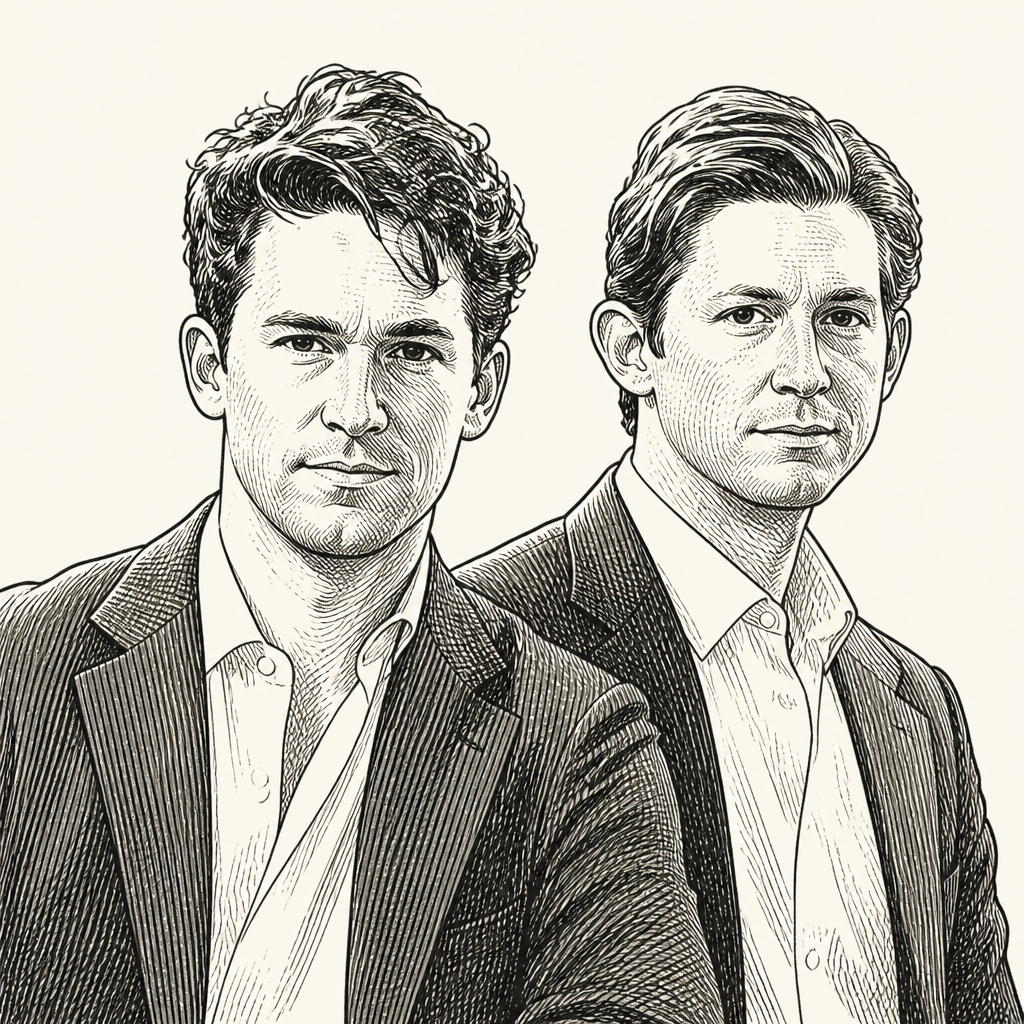
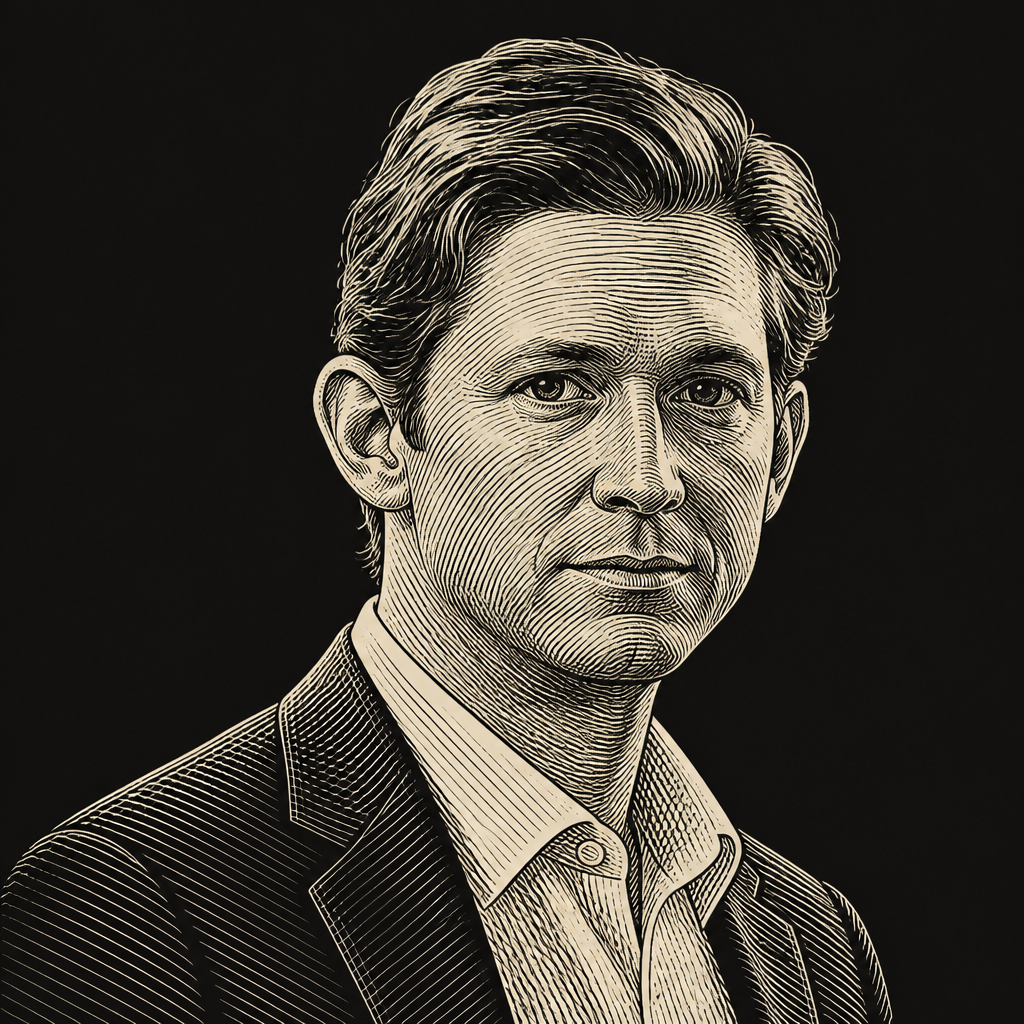
Hale’s answer was that the Vatican is first trying to convene. He said more announcements related to the Vatican’s involvement in technology would follow, and that the institution has been bringing in CEOs of major tech companies, many of whom are not obviously aligned with traditional conservative Catholic thought. The Vatican wants those leaders to see it as an “independent honest broker” capable of centering the question of an ethical framework.
He did not pretend the Church can manage the views of 1.3 billion people. “You don’t,” he said. What it can do, in his view, is offer common principles that different regulatory systems and technological strategies might adopt: human dignity, transparency, accountability, and related values. Hale suggested that if the Vatican can credibly speak independently of the U.S. government, the Chinese Communist Party, and the European Union, a global values framework for AI could become a “major feather in their cap.”
Eric Ries approached a related question through fiction and corporate life. Ries described his novel, Incorruptible, as a story about a society that has developed an AI adjudicator for legal and political disputes. The premise allows him to ask what happens when a society outsources ultimate truth-finding to a machine.
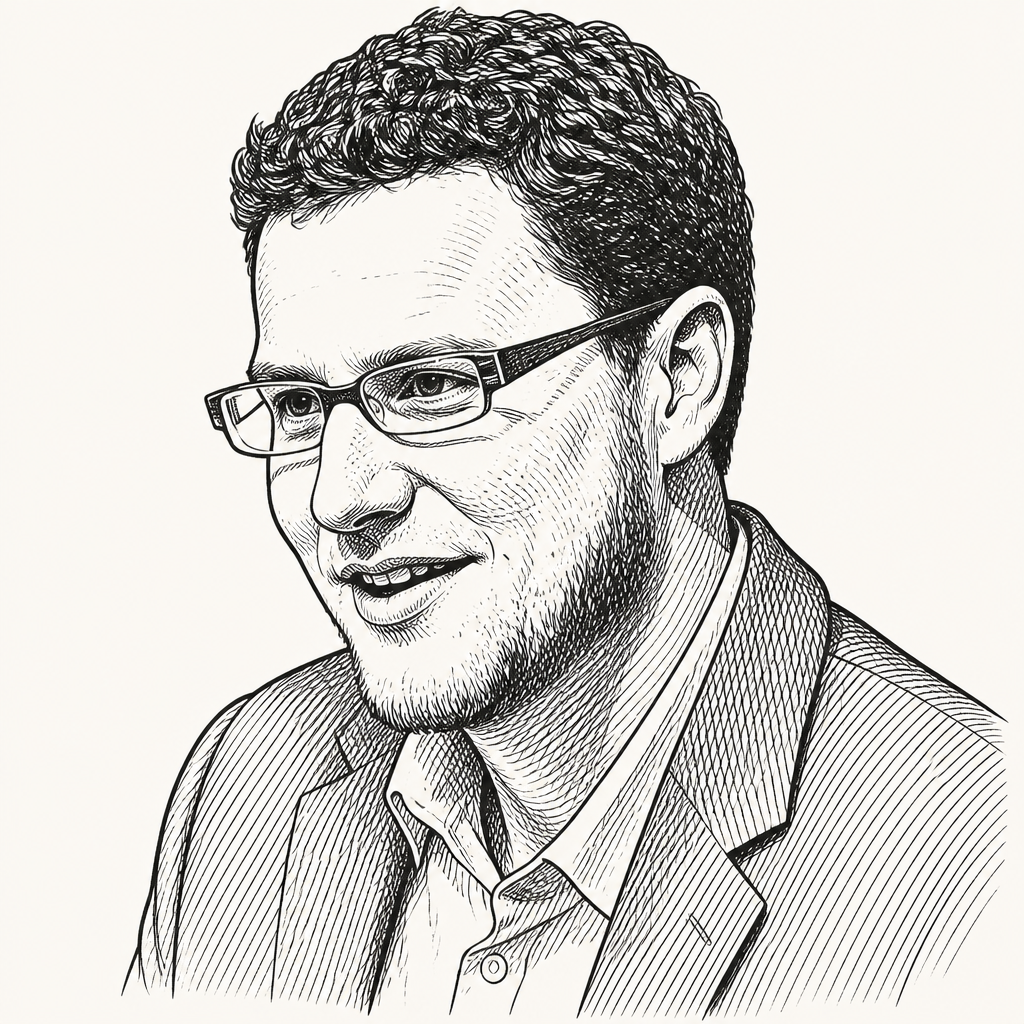
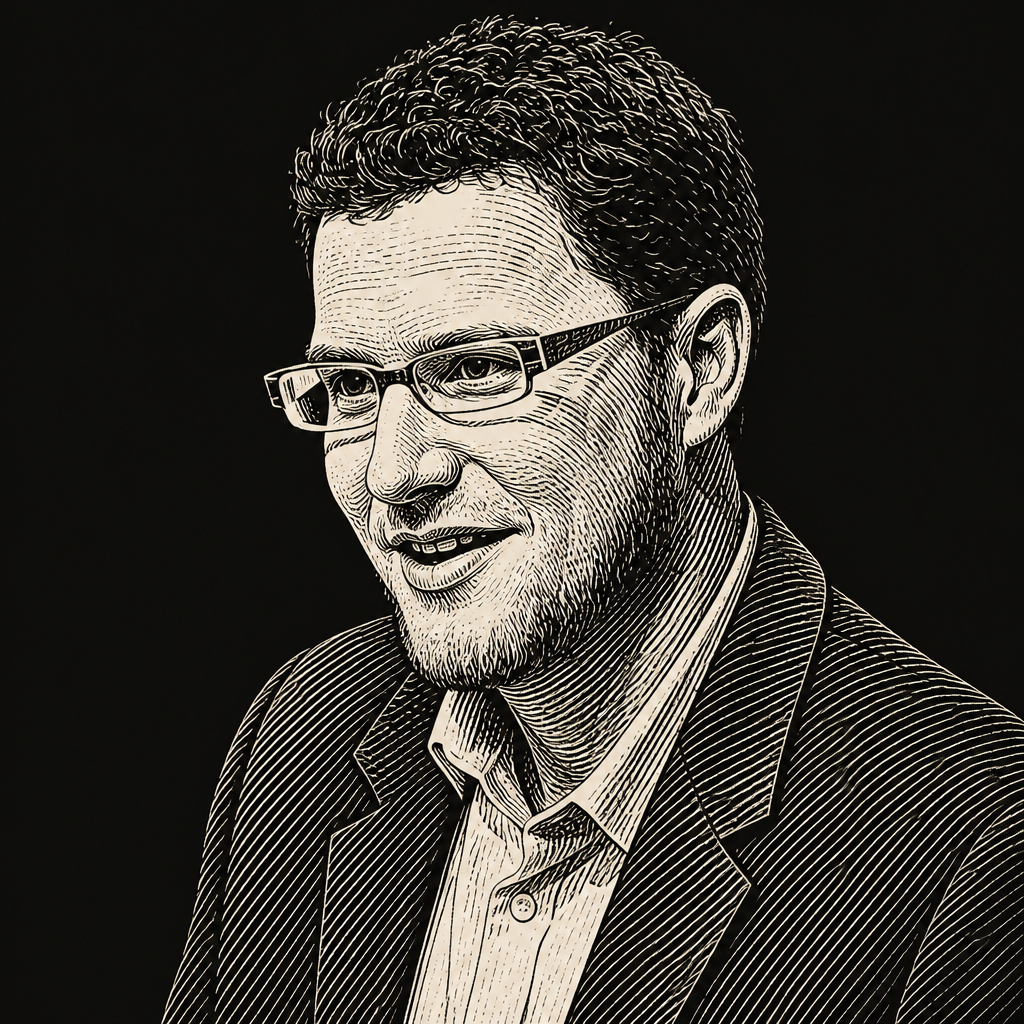
Ries argued that Silicon Valley has a strong bias toward technological solutionism: if there is a problem, the instinct is to build an app, algorithm, or platform. His question was what happens if that instinct is applied to corruption itself. If an “incorruptible” machine could adjudicate disputes more efficiently than broken human institutions, would that solve governance — or would it create a different dystopia?
Coogan characterized the technocratic dream as the belief that enough data and the right model can centrally plan everything. Ries agreed with the objection: fairness and rightness are political and moral questions, not merely computational ones. Outsourcing them to a machine means abdicating the human responsibility to govern.
Hays offered the counterargument. Human governance, historically, is full of corruption, self-dealing, violence, and incompetence. If that is the baseline, perhaps even a flawed and biased AI would outperform humans in resource allocation and dispute resolution.
Ries conceded the appeal and said an AI might well be more efficient. But for him efficiency was not the central question. The central question was what people lose when they surrender agency over public choices. Arguing, deliberating, and trying to find common ground are, in his account, the essence of a free society. Even a benevolent machine that handles those choices would reduce humans to “pets,” because it would imply people are no longer capable of managing their own affairs.
The fantasy of an incorruptible arbiter is just that—it's a fantasy. Because ultimately, the definition of what is fair, what is right, is a political question. It's a moral question.
The Vatican and Ries arrived from different places, but both rejected the idea that algorithmic systems can absorb moral responsibility. Hale’s version was Catholic and institutional: AI must remain ordered toward human dignity. Ries’s version was civic and anti-solutionist: even a better machine cannot replace the human burden of self-governance.
The wellness argument was about optimization becoming its own burden
The alcohol thread was less a health debate than a reaction to quantified self-seriousness. A tweet by Miki, shown on screen and attributed to @CryptoMiki, quoted Steven Bartlett saying that after he stopped drinking, he later tried “a couple of glasses of wine,” did not get drunk, and concluded that it “ruined three days” of his life. The chain Bartlett described was a measurable domino effect: worse sleep, worse eating, disrupted dopamine or cortisol, worse podcasting, missed workouts, and more poor sleep, all tracked on a Whoop.
Earlier, a tweet containing a video of Andrew Huberman appeared on screen; its visible text included the cortisol, podcasting, gym, sleep, and Whoop language. In the discussion, Huberman functioned as an emblem of a broader wellness-media style, while the Bartlett quote supplied the specific “three days” wine experiment the hosts debated.
John Coogan treated the mode as both comic and revealing. The appeal of health optimization is that it makes the body legible. The comic edge appears when every input becomes a crisis in a monitored system. Coogan broadened the critique into what he called “the Huberman problem”: the idea that one is not allowed to enjoy anything without imagining a neurochemical penalty.
He riffed on a TikTok impression in which merely seeing a beautiful flower causes a dopamine spike, which must then be followed by a crash, making the person useless to their workout, family, and humanity. The underlying point was not anti-health. Coogan said biohacking is useful “up to a limit,” after which marginal returns diminish severely.
Jordi Hays’s reaction to the Bartlett quote was more direct: “these people are extremely dramatic.” He invoked Nassim Nicholas Taleb as an anti-biohacking model, describing him as someone who lifts heavy but criticizes “spreadsheet guys.” Hays’s summary of that view was that human beings have historically moved through stress and non-stress, and the ability to handle stress is part of the point.
The hosts also used themselves as counterexamples to polished wellness systems. Coogan said he does “absolutely zero” biohacking. Until recently, he drank from a plastic Nalgene bottle at the gym. Enough microplastics fearmongering eventually pushed him into buying Mountain Valley sparkling water in green glass bottles. “I don’t drink anything out of plastic anymore,” he said, calling that his one biohack.
Hays said his only biohack was quitting Zyn. He described having been heavily into nicotine pouches, including buying a metal snus-style case called the Icetool and even custom engraved metal containers. Coogan called the metal Zyn case “serial killer vibes.” Hays said it felt cool to him, while to others it looked like addiction. The point at which he knew he was not in control was waking up on a Saturday and putting in a Zyn immediately, while still in bed.
The Enhanced Games came up in a similar register, but at the other end of the performance spectrum. Its website appeared with the line: “Discover the true potential of humanity. No limits.” The description in the discussion was blunt: it is “basically the Olympics but they allow doping,” rebranded as science and pushing the limits of the body. One speaker raised the safety concern that athletes would be encouraged to take “entirely untested cocktails of drugs” to break records. Another gave the Enhanced Games’ counterargument: if athletes are already doping covertly, bringing it into the open could allow doctors to monitor it.
The hosts were not defending drinking as healthy or doping as safe. They were reacting to cultures that translate ordinary bodily choices into systems-management problems: the sleep stack, the dopamine crash, the cortisol disruption, the monitored athlete, the medically supervised enhancement.
Stord’s pitch is that logistics needs an AWS layer, but software alone was not enough
Sean Henry described Stord as “prime-like logistics” or “AWS style logistics” for brands that do not have Amazon’s integrated physical and software infrastructure. The company announced a $250 million Series F at a $3 billion valuation, led by Kleiner Perkins and Founders Fund, according to the on-screen funding graphic.

| Company | Round | Amount | Valuation | Lead investors shown |
|---|---|---|---|---|
| Stord | Series F | $250M | $3B | Kleiner Perkins; Founders Fund |
Henry’s core argument was that the consumer experience created by Amazon Prime depends on tight coordination between physical infrastructure and software. Amazon can deliver same-day or next-day across the country because its warehouses, routing systems, inventory systems, and order management are coordinated. Outside Amazon, Henry said, the supply chain is fragmented. Brands may use one outsourced 3PL warehouse, add another on the West Coast, add another on the East Coast, experiment with cross-border fulfillment, and use many transportation providers across LTL, FedEx, UPS, Pitney Bowes, and parcel networks.
Those physical systems often do not “talk.” Legacy logistics providers may lack the software needed to connect them. Brands then try to manage logistics through ERPs, BigCommerce, Shopify, or custom workflows. At scale, Henry said, that becomes overwhelmingly complex. Stord’s claim is that it unifies a physical network with a software platform, giving brands physical capacity from manufacturing to the consumer’s front door and a cloud platform that routes orders across systems and the network.
Coogan, drawing on his own logistics experience “in the bowels of an ERP system,” summarized Stord as an abstraction layer: a customer may have three warehouses and four shipping methods, but Stord gives them an API and platform so they do not have to confront the fragmentation underneath. Henry accepted that as a fair summary. The system abstracts the complexity of adding facilities or transportation carriers, where integrations can take months or years because warehouse systems may still be built around EDI, FTP, or legacy ERPs.
Hays pushed on the hardest part: many warehouses still run on DOS-looking platforms from the 1990s, with little software and no universal API. How does Stord plug into that?
Henry said the “universal API” phrase captured the platform’s role. He compared the model to Plaid and Stripe: Plaid aggregates endpoints across banks, some modern and some primitive, and exposes them through one API. In logistics, he argued, the problem is worse because the software layer is entangled with physical operations — people moving goods inside warehouses and over the road.
That physical reality forced a change in Stord’s model. Henry said the company began acquiring logistics companies outright and building greenfield operated facilities. By bringing software and physical processes in-house, Stord could develop warehouse management system capabilities natively. In a Stord-operated facility, proprietary operations software guides workers picking with scanners, driving forklifts, and moving through thousands of locations inside the four walls of a warehouse.
For partner facilities, the goal is standardization: put warehouse management systems and standard operating procedures into third-party environments so the network behaves more uniformly. Henry’s answer was that a pure software aggregator could not solve the whole problem. Stord had to internalize enough of the physical operation to make its abstraction trustworthy.
Coogan saw the model as a mix of several familiar internet-company patterns: Flexport, Uber, Airbnb, AWS, and an API business that abstracts “atoms” complexity. He emphasized that the market is not just direct-to-consumer Shopify brands. Large mid-market B2B and wholesale companies need reliable service-level performance for enterprise contracts. For those customers, supply chain is not a growth hack. It is the ability to fulfill obligations that keep their business alive.
Henry agreed and said D2C is important, but much of what people interact with every day moves through complex B2B networks before it ever reaches consumer channels. Stord’s inflection point came during the pandemic, when supply chains were breaking. Customers liked Stord as an intermediary providing connectivity, but when things went badly in the physical world, they wanted to know whether Stord had control over facilities and standard operating procedures. That pressure moved the company from aggregator toward logistics provider.
The distinction is important. Aggregators can sit between fragmented providers and customers, but when a customer’s supply chain fails, intermediation alone may not be enough. Henry said brands were effectively telling Stord that if it wanted to be trusted with their most important asset — the supply chain that determines whether they have anything to sell — it needed deeper operational control.
Ries argues that mission-driven companies fail structurally, not just personally
Eric Ries connected his new work to the same systems thinking that produced The Lean Startup and the Long-Term Stock Exchange. Asked whether he had spent the zero-interest-rate boom “yelling at clouds,” he said Lean Startup was not born in a tough environment; it emerged at the beginning of a long boom. During frothy times, founders often looked at discipline, unit economics, and hypothesis testing as alien concepts because cheap capital could subsidize broken business models. But, Ries said, “the laws of gravity in business always assert themselves eventually.”
His book Incorruptible is partly a novel, but the business argument he brought to the discussion was about governance: how companies can protect a mission over time. The problem, in his account, is that founders who care about mission are often told governance is premature. Advisors say it is too early. Later, once the company has raised money, given up control, or taken on conventional obligations, those same protections become too late.
Ries called this principle “it’s always too early until it’s too late.” He described being in rooms where CEOs asked CFOs, bankers, and general counsel what happened to a mission-protective provision they had once discussed. The answer was effectively: nobody took it seriously, and now the window had closed.
The alternative structures Ries discussed were not presented as fantasies. He pointed to Mondragon, the Basque worker-cooperative network that began after the Spanish Civil War when a Catholic priest entered the war-torn region with a vision for workers to learn trades and control their own destiny. Ries described Mondragon today as a 90,000-person organization, one of Spain’s largest companies, with elevators, a grocery chain, industrial equipment, and many other operations.
From the outside, he said, Mondragon looks like a diversified industrial conglomerate. From the inside, it is a network of roughly 80 or 90 independent worker cooperatives. They send representatives to a congress, self-govern, and can leave the network if central services are not useful. Ries called it a “mission locked constellation”: many entities that customers, investors, and outsiders perceive as one thing.
Hays said that if someone tried to reproduce Mondragon today, it would be extremely hard and likely fail even with talented people and knowledge of the prior example. Ries accepted that it is hard, but said the fact that Mondragon exists proves it is possible. His broader point was that founders have too narrow a view of what companies can be. Cooperatives, he said, employ millions of people worldwide, and alternative structures collectively control roughly 5% of world GDP.
Coogan asked why the United States does not have a modern American Mondragon. If co-op networks are legal, why are there not more of them? Ries pointed to credit unions as the closest U.S. analogue: not-for-profit member-owned financial institutions with broad household adoption that hold big banks accountable in subtle ways. But he emphasized that his goal was not to convince everyone to copy Mondragon. It was to give founders permission to attempt structures they are rarely shown. Most lawyers and bankers, in his caricature, respond to mission concerns by steering founders back toward a Delaware C corporation and a SAFE.
Ries also discussed Japanese keiretsu and Toyota. He said his path into these questions came through Toyota because Lean Startup traces to lean manufacturing. Toyota posed a paradox: people were being told to build long-term companies in a venture-backed, public-market system that often rewards short-termism. In Japan, Ries said, even people there described certain legacy structures as difficult to recreate — hybrids of public and family-run companies that no longer emerge naturally.
For Ries, these structures work only when they protect a genuinely strong ethos. The mission can be lofty, like climate or multiplanetary life, or simple, like making high-quality products. But if a company has a long-term purpose beyond making money, Ries said, it is “business revolutionary” whether it knows it or not, because the economic system is designed to extract from and eventually destroy such companies unless they are structurally strong enough to resist.
If you have a larger vision that is long-term in nature, that is like, trying to, to, whether, whether it's something really lofty like I want to fix climate change or I want to go multi-planetary, or something really simple like I just want to create high quality products, no matter what it is, if you have that vision, you are a business revolutionary whether you know it or not, whether you admit it or not.
Hays raised AI as a forcing function for new structures, citing what he described as a recent Samsung worker negotiation in which 48,000 workers demanded a larger share of AI-driven profits or threatened not to work. Ries said two forces point in that direction. First, he said the evidence for employee ownership is stronger than he had realized. He cited a meta-study of 55,000 companies showing a “dose response”: 10% employee ownership is better than zero, 50% is better than 10%, and 100% is better than 50%, not only for employee welfare but for commercial performance such as revenue growth. Second, he said AI will change collective-action problems.
Ries drew on Toyota Production System thinking: if workers are asked to help remove costs from a business, it is neither ethical nor effective to ask them to contribute to their own firing. They will sabotage the process, and it is fundamentally wrong. The savings from efficiency should be used to grow the business. CEOs excited about using AI to lay people off, in Ries’s view, are not serious about AI’s competitive potential. If they were, they would use AI to gain advantage, not simply reduce headcount. Companies that truly believe AI is existential should ally with labor to transform the business.
This led into a broader critique of shareholder primacy, which Ries described as treating employees and customers like resources to be mined. He used Costco as the counterexample. Hays cited the famous Jim Sinegal hot-dog quote — “If you raise the effing hot dog price, I will kill you. Figure it out” — and Ries said he had worried about sourcing it, contacted Costco PR, and was put on the phone with Sinegal, who confirmed it.
Ries also recounted Sinegal’s view on low prices. Costco could raise the price of a dollar bottle of ketchup by three cents and sell the same amount. Across the store, Ries said, that could increase net income by 50%. But Sinegal compared that move to “the business equivalent of taking heroin”: once a company gives in, it has to keep doing it, and eventually it is no longer the low-price leader. For Costco, low prices are not a missed profit opportunity. They are part of the company’s competitive strength.
Coogan connected that to Jeff Bezos’s phrase, “your margin is my opportunity.” Ries agreed: excessive margins can be a source of weakness because they invite attack and corrode long-term positioning.
The practical advice Ries gave to mission-driven founders had two parts. The first was the “path of ethos”: build the company operationally around what it stands for. He cited Sol Price, the retail figure behind Costco’s lineage, and the idea of being a fiduciary to the customer. Ries’s test was: who would you rather die than betray? That answer should be written down and embedded in management structure, business model, and culture.
The second was the “path of integrity”: create a company capable of making and keeping promises. That means structural strength against internal temptation and external pressure. A company should be able to reject an acquisition or incentive that would betray the mission. Ries mentioned public benefit corporations, board mission pledges, and long-term benefit trusts as examples of governance tools that can replace standard best practices when the goal is mission protection.
Hays connected this to competition. A founder facing venture-backed competitors may have an opening precisely because those competitors will be forced to do things that do not serve the product or customer. A corporate structure that preserves the founder’s mission after the founder is gone could become a durable advantage. Ries said this was already happening among early readers of his book: several had identified business ideas they would not previously have considered, often in categories where customers hate vendors because they are extractive. A company that competes by being trustworthy can see opportunities others miss.
OpenRouter’s thesis is that inference becomes multi-model because one model is usually too expensive, too narrow, or both
Alex Atallah announced that OpenRouter had raised a $113 million Series B led by CapitalG, with participation from existing investors and strategic corporate investors. In his spoken list he mentioned Nvidia, ServiceNow, Databricks, and “a bunch more.” The on-screen graphic listed a $1.3 billion valuation and participation from a16z, Nvidia, ServiceNow, MongoDB, Snowflake, and Databricks.


| Company | Round | Amount | Valuation | Lead investor shown | Other investors shown |
|---|---|---|---|---|---|
| OpenRouter | Series B | $113M | $1.3B | CapitalG | a16z; Nvidia; ServiceNow; MongoDB; Snowflake; Databricks |
Atallah’s language for the AI market was “neurodiversity”: not only in the human team, but in model usage. The future, as framed by the hosts and Atallah, is not one dominant model serving every task. It is agents and applications choosing the most cost-effective model, provider, and tool for each job.
Coogan asked about the shift from token maximization to ROI. Companies have been pushing large numbers of tokens through AI systems and now need to know what they got for it. Atallah said the important pattern among customers is that many are using “Uber Black” when they do not need it. In the early phase, companies were still finding product-market fit for AI internally. Now many have passed that phase and discovered that most of their operating expense is inference.
That changes the economics. Optimizing inference spend, Atallah said, is not like trimming a Datadog bill. If inference is a major operating cost, better model selection flows directly into margin. Companies often use one large model for a task that should be decomposed into multiple tasks handled by lower-cost specialized models. By doing that, customers can save money while improving recall and accuracy.
Coogan asked whether this meant “mixture of models”: asking multiple models the same question and synthesizing the result. Atallah said yes, but more generally it means orchestrating models trained by different companies, then using a judge or heuristics to select the best result or combine them.
Atallah also emphasized diversity on the supply side. Many assume everyone is using one model, he said, but OpenRouter has about 350 models used by hundreds of active users per day, and token diversity is increasing. He said the platform was doing about 120 trillion tokens per month. Diversity exists not only in model selection, but also among providers serving specific models.
The distribution problem for small compute providers is severe. Coogan mentioned George Hotz discussing finding a building with power, racking Nvidia GPUs, and selling tokens on OpenRouter. Atallah said that historically, becoming a provider was hard because distribution was hard. A small shop might specialize in very low-cost but slower inference optimized for batch agentic workloads, but customers would not know how to discover it. OpenRouter is building marketplace SKUs so providers can find demand quickly, effectively becoming a go-to-market channel for the long tail of inference providers.
To make that work, Atallah said OpenRouter has built tools for quality checks and rigorous testing of providers against the SKUs they claim to support. Providers receive reporting so they can optimize inference and improve over time. This turns the marketplace into both a distribution layer and a standards-enforcement layer.
On American open source, Hays asked for predictions. Atallah was cautious. He expects American open source to include both improvements on existing models — some of which may be foreign or Chinese — and new models built from new foundations. The current adoption pattern, he said, is strong for foreign open-source models and domestic closed-source models. The best lever for American open-source models may be enterprise demand from American companies that specifically want American open-source options. OpenRouter helps users filter by model family and helps model labs find niche markets.
Coogan then asked how personal AI routing might differ from enterprise routing. In enterprise workflows, the economics are clear: if an agentic workflow runs millions of times per customer, every cent matters. Personal AI and consumer agents may have different constraints, especially around memory and context.
Atallah said the biggest difference he has seen over the past year is local context. Agents that can leverage the full computer work well for personal AI because people have personal computers full of context. By contrast, nothing yet works especially well on the phone, even though much personal context lives there. He also noted the lack of a strongly social personal agent that pulls in social media data, and said there have been surprisingly few games. There may be an opportunity, he suggested, for something that looks like a game but becomes much more.
Asked how big OpenRouter can become, Atallah argued that inference could become the largest software market, possibly the largest market in the economy, because all knowledge work will need it. He compared model choice to hiring: even if one could hire a single 250-IQ chief of staff, hiring five people for the same or lower cost could be better because the group is more likely to catch issues one person misses. Multiple models can similarly improve quality while reducing cost; “you don’t need Uber Black all the time.”
The company’s role, in that vision, is to manage and secure boundaries between models and between server tools. When enterprises bundle models together, they immediately need cost management, observability, security, and operational controls across those boundaries. Atallah said OpenRouter is building new agentic tools for enterprises and individual developers to manage that.
Coogan asked about scaling constraints. Atallah said OpenRouter is memory-constrained first on server memory, not yet CPU-constrained. Uptime and routing are central technical problems. The company’s first problem was determining, given many providers for a model, how to route requests to the provider most likely to be up quickly and able to serve the requested parameters. OpenRouter benchmarks internally against the rest of the market and against direct provider access, then hill-climbs from there.
The hardest capacity issue arises with brand-new models that only one provider serves. Sometimes OpenRouter hosts them itself or works with a provider; sometimes it broadcasts market signals to other providers, telling them a model has demand in a particular region or use case and encouraging them to host it. In Atallah’s telling, routing is not just a technical dispatch problem. It is a market-making function for model capacity.