Prometheus Raises $12 Billion as Industrial AI Moves to IPO Scale

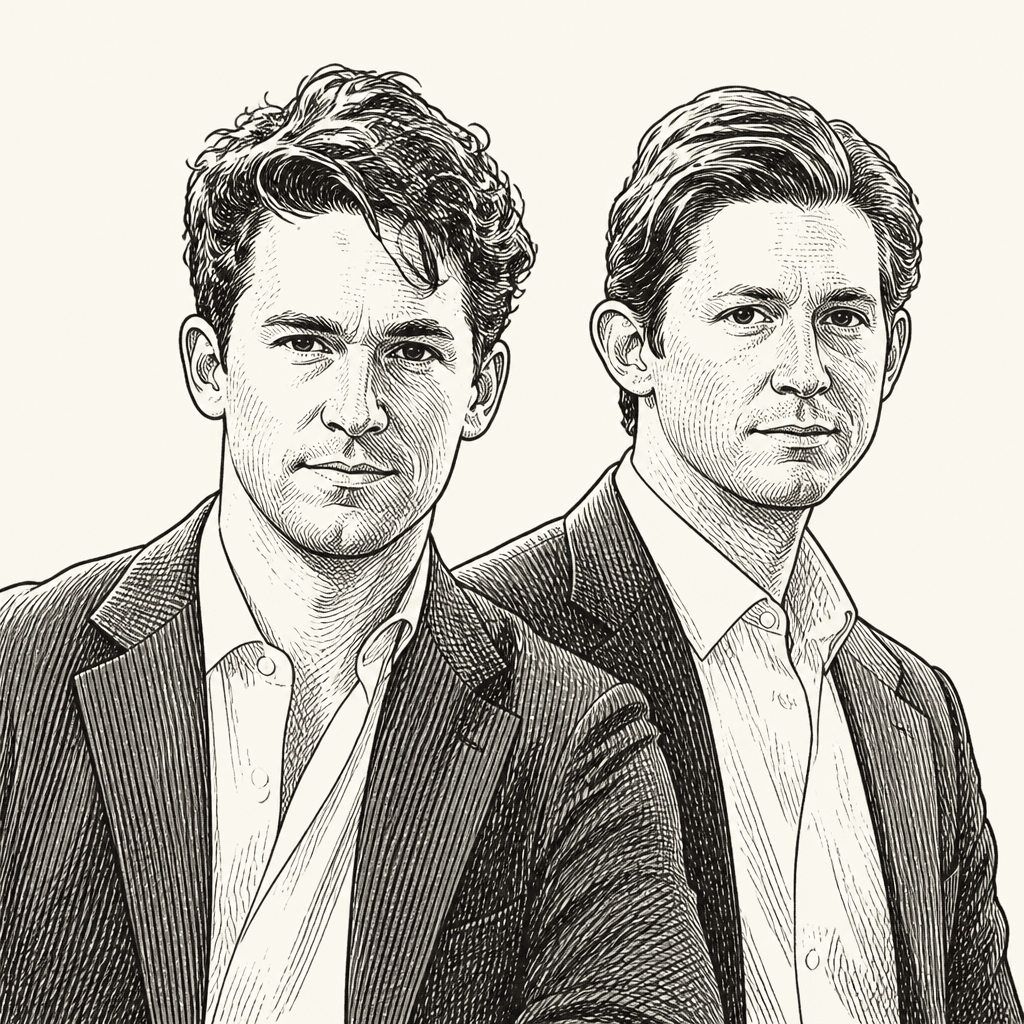
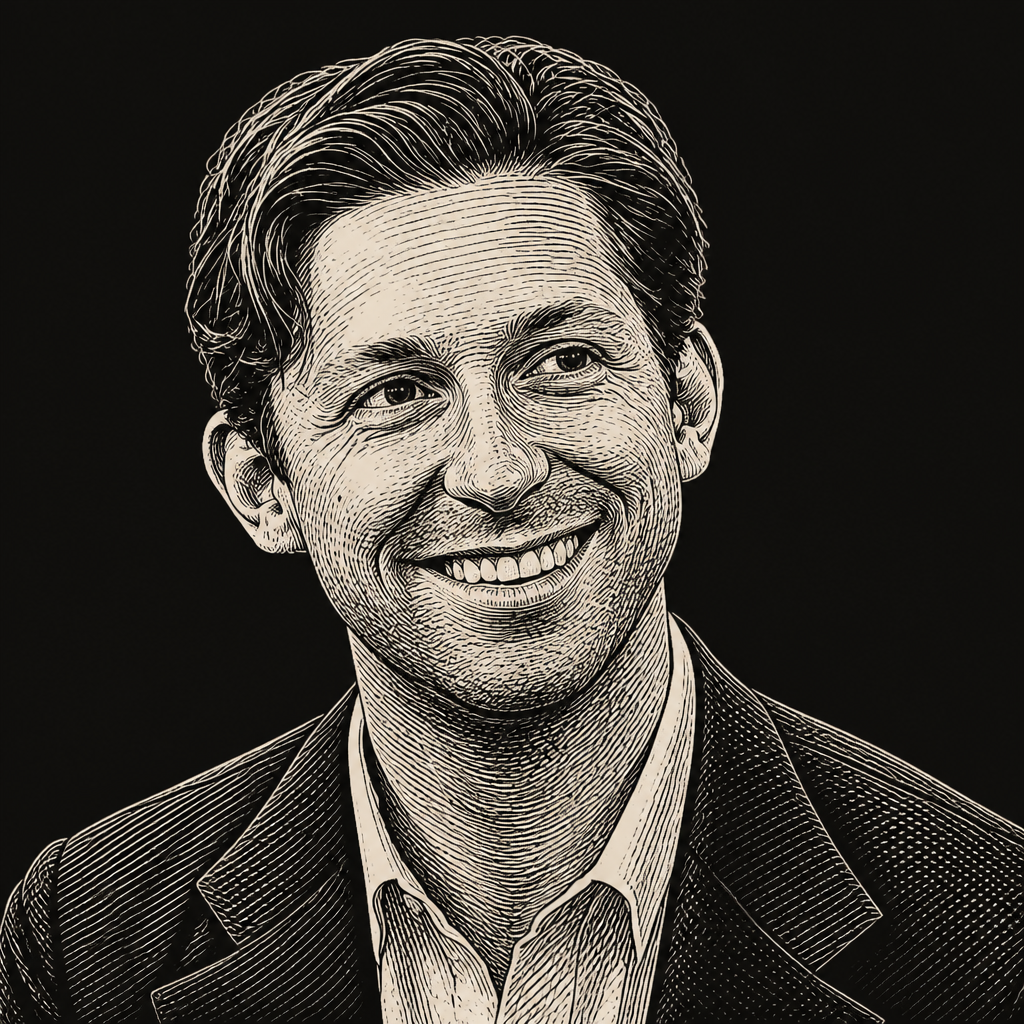
On Diet TBPN, John Coogan and Jordi Hays treat Jeff Bezos’s Prometheus as the clearest sign that AI infrastructure and industrial ambition are being financed at public-company scale before the business model is visible. Coogan argues the $12 billion raise reflects the cost of trying to compress physical engineering cycles, while Hays presses the implication that only a founder such as Bezos could raise that much capital with so little public detail. The episode extends that capacity frame to freight and Texas, with Hays describing trucking’s rebound as a supply-driven rate recovery and Coogan presenting Texas as a corporate center of gravity built on energy, data centers, headquarters moves and market infrastructure.
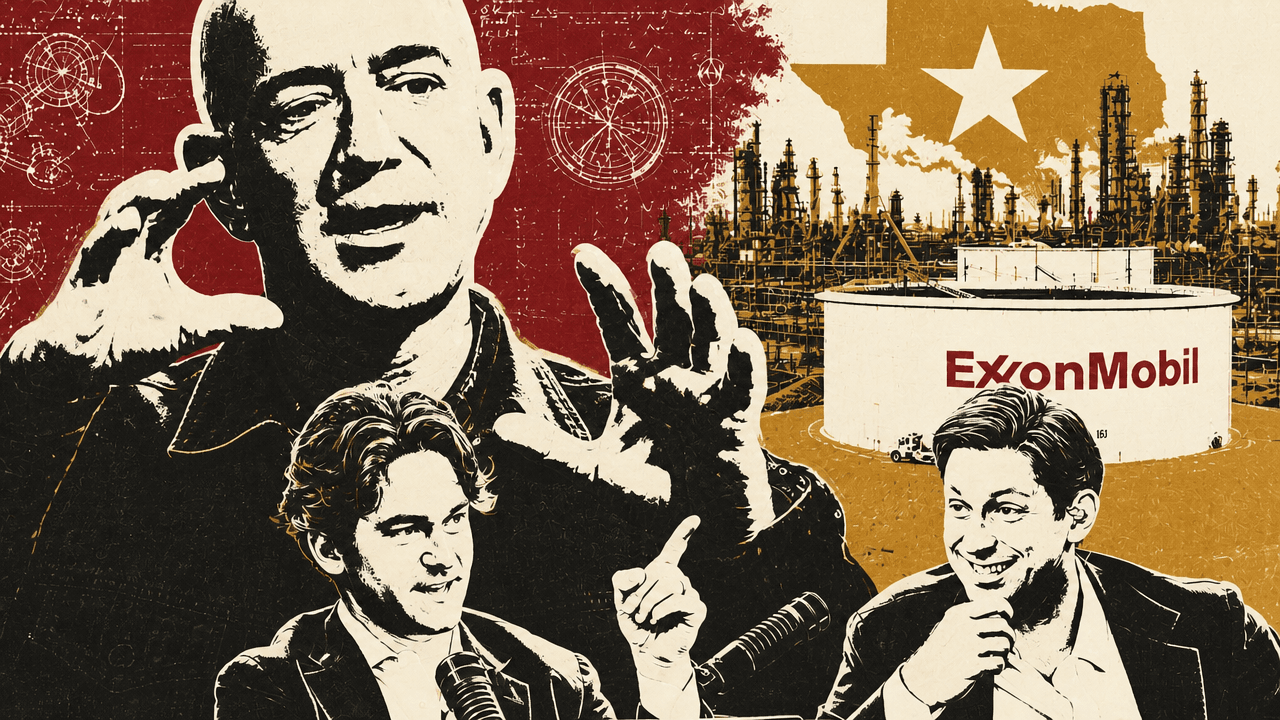
Prometheus is being financed at public-company scale before anyone knows exactly what it is
John Coogan framed Jeff Bezos’s new AI company, Prometheus, less as a normal startup financing than as a shift in what “early stage” means when the founder is one of the few people who can raise institutional-scale capital on reputation, network, and category alone. Prometheus, described as an industrial AI startup, has raised another $12 billion in a Series B only six months after emerging from stealth with $6.2 billion in funding. Coogan put the reported valuation at $41 billion.

“It's just a thousand times bigger than a normal Series A and a Series B,” Coogan said, comparing the old pattern of a $6 million Series A and $12 million Series B with the new Prometheus pattern of “6 billion Series A, 12 billion Series B.” His shorthand explanation was simple: “AI is expensive.”
Jordi Hays pressed on what a $41 billion company actually meant in this case. Was this a business that would buy existing companies? Coogan’s answer was that the outside world still does not really know. Prometheus might be buying companies and trying to transform them, but the specifics remain thin. Hays argued that being able to raise that much capital to buy businesses with that little dilution is “a pretty remarkable feat that pretty much only Jeff Bezos could pull off.”
The Wall Street Journal headline shown on screen described the company as a bid to build an “artificial general engineer” that can design and manufacture complex physical products. Coogan treated “AGE” as the latest term in a crowded AI lexicon — after AI, AGI, ASI, recursive self-improvement, personal superintelligence, and other labels — but the intended function was concrete: design and manufacture physical goods, including examples as complex as a jet engine.
Bezos’s stated goal, as Coogan read it from the article, was to “empower engineers and make innovation easier and faster so smaller teams can do much bigger things on much shorter time cycles.” Coogan’s view was that even a modest speedup would matter in aerospace and other hard-tech sectors. Building a jet engine or a plane takes years, he said, and founders pursuing new aircraft designs can make gains, traction, and demos for decades without getting safely approved products onto runways. If AI speeds that process by 10%, Coogan said, “that's like years.”
The reported backers underscored the scale. Prometheus has raised from investors including Bezos, JPMorgan Chase, Goldman Sachs, and BlackRock. Coogan noted that the company “went straight to the big banks,” while Hays observed that raising $12 billion on a $41 billion valuation looks less like venture capital and more like an IPO-scale financing. Coogan agreed: “That is IPO numbers.”
| Prometheus metric | Reported figure or detail |
|---|---|
| Series B | $12 billion |
| Earlier funding after stealth | $6.2 billion |
| Reported valuation | $41 billion |
| Headcount | 150 people |
| Locations | San Francisco, London, Zurich |
| Reported ambition | Artificial general engineer for complex physical products |
Prometheus’s size also invited comparisons. Coogan said the company is bigger than AIG, Chipotle, CBRE, and Baidu. Hays checked nearby public-market comparables and said Prometheus was roughly in the range of MicroStrategy and Pinterest, with Reddit lower at around $33 billion. The point was not that these are equivalent businesses, but that Prometheus has been valued before the market understands its operating model at a level normally associated with mature public companies.
Bezos’s AI labor argument is that productivity could create a shortage, not unemployment
The more consequential claim from Bezos, as Coogan presented it, was not merely that Prometheus can improve engineering productivity. It was that AI may create a labor shortage rather than a jobs crisis.
Coogan read Bezos as rejecting the idea that fast-evolving AI will simply put humans out of work. Bezos said some of the pessimism among young people is “the opposite of reality.” Coogan connected that to current labor-market signals as he described them: the economy is running hot, inflation is high, unemployment is low, and jobs are still being added.
Bezos’s argument, as Coogan summarized it, is that AI will reduce the number of workers needed in jobs that exist today, but create more opportunities overall by making invention cheaper, faster, and easier. The key mechanism is scale: even if a given activity requires one-tenth the number of people, the technology could generate more than ten times as many opportunities.
Coogan used Amazon as the intuitive precedent. Physical retail jobs may have shrunk in some areas, he said, but the number of entrepreneurs building products, selling on Amazon, and working in the broader Amazon ecosystem probably increased. The broader U.S. labor market has grown since 1999, in Coogan’s framing, as workers shifted across categories.
Bezos also floated a more unusual outcome: two-earner households in which one earner leaves the labor pool because productivity has raised household earning power enough that a single income can support the family. Coogan emphasized that this could produce a world where the number of people in typical jobs declines while unemployment remains low, because unemployment counts people actively looking for work. A person who chooses not to work would not necessarily show up as unemployed.
Hays added a cautionary data point: NEET levels — people not in employment, education, or training — have been rising since 2021, before the current AI paradigm. He said he would not be surprised if that trend continued, and hoped it would be for the reasons Bezos outlined rather than for more troubling ones.
The disagreement was not explicit, but the tension was. Bezos’s version of AI disruption is deeply optimistic: productivity expands opportunity, and some people work less because they can. Hays’s aside pointed to the same observable outcome — fewer people attached to work or training — but left open whether that reflects abundance or disengagement.
The industrial-AI model may be as much about buying factories as building models
Prometheus was described publicly as a company building an artificial general engineer, but Coogan and Hays spent time on a second possibility: that the company could combine AI models with ownership of manufacturing assets.
Coogan noted that prior reporting said Prometheus had discussed raising a $100 billion fund to acquire manufacturing businesses and deploy AI across their operations. He contrasted that with SpaceX’s reported $70 billion financing ambitions, saying SpaceX is already “a huge business with so much attention,” while Prometheus is “an entirely new thing” potentially looking to put $100 billion to work.
Coogan said they had previously tried to imagine what Prometheus could buy for $100 billion, including companies such as Goodyear, in an exercise that amounted to a tour of the American manufacturing base. He conceded his predictions were probably wrong, but the strategic frame remained important: this is not just a software company trying to sell tools into factories. It might be a capital vehicle for acquiring manufacturers and changing their cost structure.
Hays’s read was that the company could pair a foundation model capable of generating high-fidelity product specs and designs with manufacturing infrastructure that can produce those goods quickly. He compared the latter to a SendCutSend-style model: design on the computer, make the product on demand, and have it delivered. In consumer software, he said, people can already generate images of anything they want. The missing speedup is on the physical side.
Closing that loop — from generated product design to real-world manufacture — is the Prometheus idea Hays found compelling. Coogan placed it in a broader class of AI roll-ups, AI modernization funds, and private equity strategies that buy established businesses and use AI to improve productivity and margins. The difference, if the $100 billion fund materialized, would be scale. “No one's come in with a hundred billion dollars,” Coogan said. “You're in a completely different tier.”
Coogan also relayed Bezos’s broader optimism that AI advances have opened the way for “a multitude of golden ages, not just one, happening simultaneously,” and that this is “the best time to start a company.” Coogan’s response was direct: “I love the optimism.”
Gaming lounges are a better fit for airports than gyms because passengers value predictable downtime
The travel thread began with airport gaming lounges but turned into a practical argument about what has actually improved in commercial air travel: security predictability.
A Wall Street Journal article shown on screen described airport lounges where video games are more important than drinks, including spaces such as the Portal Lounge where travelers can play Mario Kart, Minecraft, and other games before a flight. Coogan suggested that they should try Rust before flying. But Hays first asked whether TSA had become better and more consistent.
Coogan’s “hot take” was that TSA “might be goated.” Hays said it felt “pretty dialed,” noting that across roughly his last 30 flights he had not waited more than 30 minutes in a security line. Commercial travel, Hays said, remains “torture” and a “humiliation ritual,” but being able to plan around a 30-minute security line makes it meaningfully better. Coogan agreed that TSA had become efficient and reliable, even as he noted that the process has become more surveillance-heavy, with photos taken repeatedly on the way through. Hays said passengers can refuse the photo, though the opt-out is less actively announced than it had been a couple of years earlier.
The improvement changed their travel calculus. Hays said he could comfortably show up 45 minutes before a flight and make it. Coogan pushed that logic further, arguing that if a traveler is not missing flights at least 10% of the time, they are not cutting it close enough. Hays rejected that. Coogan analogized it to venture capital: an investor whose only goal is never to have a zero will miss the strategy. Some missed flights are like portfolio losses; the average time “DPI” can still be good.
The counterargument from others in the room was that the math may not work. If the next flight is three hours later, saving 25 minutes at the front end does not justify a miss. Coogan insisted that if he flies weekly and saves an hour each time, the annual time saved outweighs an occasional missed flight. Others challenged both the size and the quality of the time saved, suggesting he might only be having another coffee at the hotel rather than doing irreplaceable work. Coogan answered with a joke that he is “locked in at the clock factory,” making clocks “clock by clock.”
Gaming lounges changed the premise. If airport time can be spent playing games, showing up early becomes less costly. Coogan joked that if he wanted to prestige in Call of Duty, he might arrive 72 hours early.
The Portal Lounge example gave the concept a business shape. Coogan described a family at the new Terminal 1 lounge in Minneapolis-St. Paul where the parents appreciated having their phones back because their children, ages 8 and 12, were occupied with Mario Kart and Crash Bandicoot. The lounge still has food and drinks, including robot and human bartenders serving old fashioneds, but entertainment is the main offering. Its operators, Emma and Jordan Wallbridge, opened their first airport video game lounge at Dallas Fort Worth in 2018 under the Gameway brand. Coogan said there are now 11 across the country, with two more planned.
Hays thought gaming lounges would be more successful than the recurring idea of airport gyms. A gym might be useful occasionally, he said, but if even 5% of a flight boarded after an hour on a treadmill, the result would be “pretty brutal” and “pretty sweaty.” Games fit airport downtime without making the cabin worse.
The trucking recovery is supply-driven, which means higher freight rates may also feed inflation
The freight story was more straightforward: Hays said the four-year U.S. trucking slump is “officially over,” citing the Wall Street Journal’s reporting that trucking executives are calling an end to one of the longest freight downturns in carriers’ memory.
The recovery is visible in rates. A FreightWaves chart shown on screen traced weekly average dry-van spot rates falling sharply from mid-2022, staying in a long trough, and then climbing steeply into 2026. Hays said the Logistics Managers’ Index showed transportation prices in May rising at the fastest rate for any metric in the report’s 10-year history.
Hays treated the news as good for truckers and for industry health, but not as unambiguously benign. Higher freight rates can push up prices and potentially contribute to inflation. Still, he said, “it is good to have a healthy trucking industry” and a healthy dry-van spot rate.
Coogan asked what was driving the rebound. Hays answered that it was supply-driven, not demand-driven. During the pandemic, drivers rushed into trucking as online ordering and shipping surged and consumer demand pushed rates to record highs. Rates then plummeted in 2022, squeezing carriers already facing rising costs for drivers, equipment, and insurance. Hundreds of thousands of smaller carriers were forced out of business, and the exodus accelerated over the past year.
The result, according to Hays’s summary of trucking specialists, is that the industry finally reached an equilibrium where the supply of trucks is low enough to lift rates. That will likely bring more trucks back into the market, after which rates will adjust again. In the meantime, higher fuel prices linked to the war have increased trucking-company expenses, but operators are largely passing those costs through to customers.
Hays also cited a nationwide trucking company that, because of the stronger freight market over the past few months, is increasing a fleet of more than 10,500 trucks and expanding a pool of about 11,000 drivers. The industry’s recovery, in this telling, is not a sign that freight demand has exploded. It is the consequence of a painful capacity washout finally restoring pricing power to those who survived.
Ty Morse’s attempt to land Elon Musk became a media product before the interview existed
A brief “breaking news” item turned into a discussion of how the story around a podcast can become more compelling than the podcast itself. Hays said Ty Morse had posted that construction of “Set II” would finish on Saturday. Morse had built a set for a hoped-for Elon Musk interview, apparently in a location he could only occupy temporarily. Coogan described the original setup as available for “the next seven days on one hour notice.”
The post shown on screen was an extended statement from Morse about urgency, bottlenecks, and building before permission. He wrote that for three months he had been asking himself, “What would Elon do?” His answer was that Musk would build the rocket and put it on the launch stand before approval, identify the biggest bottleneck to the mission, and “systematically” remove it. The post quoted Musk: “A maniacal sense of urgency is our operating principle.” Morse said he was building Set II to have a full month to make the interview happen, that there was no guarantee it would work, and that he was “max long humanity.”
Coogan said the meta story had done better than most podcasts. He cited a video about the set reaching around two million views, while the set itself had only a handful of people involved. The dynamic, he said, is that the behind-the-scenes build is by default more interesting because the interview has not happened yet. There are already many Elon Musk interviews, and not all of them go viral or become objects of discussion across tech. The difference here is that people are watching a bold, risky, physical attempt to will the interview into existence.
Coogan’s read was charitable. People like to see bold moves, building, risk-taking, and unusual urgency. Morse is getting attention because all of that is visible before the core media product exists. “Good luck to him,” Coogan said. Hays added: “Godspeed, Ty.”
Texas’s corporate pull is no longer just taxes and housing; it is energy, data centers, and market infrastructure
Coogan closed with The Economist’s argument that Texas has become “America Inc’s new center of gravity.” The trigger was ExxonMobil shareholders approving a plan to sever the oil giant’s incorporation ties with New Jersey and reincorporate in Texas, where Exxon has long had its headquarters. Coogan called it another feather in the state’s “cowboy hat.”
The movement is broader than Exxon. Citing the article, Coogan said at least 184 companies shifted their headquarters to Austin, Dallas, or Houston between 2020 and 2025, including Tesla and Caterpillar. Texas, he said, is receiving more business investment than any other state and adding more people to its population. From 2020 to 2025, it created roughly one-fifth of all net new jobs in the country.
The state’s earlier appeal was familiar: remote workers leaving high taxes, expensive housing, and bad policies in coastal metros, alongside Biden-era subsidies for green energy and chipmaking facilities. The newer argument is that Texas’s energy dominance makes it a major beneficiary of the data-center boom. At the same time, its technology and finance ecosystems are deepening.
Coogan highlighted the market-infrastructure symbolism. This summer, Texas is expected to get its first standalone bourse, the Texas Stock Exchange, joining outposts of the New York Stock Exchange and Nasdaq already operating in the state. Donald Trump, Coogan said, called the NYSE’s Texas branch “an unbelievably bad thing” for his hometown of New York, even though Trump’s social media venture was the first business to list on it. Coogan interpreted the comment in context: New York is defined by its exchanges, so losing any exchange-related status to Texas is bad for New York.
The energy story cuts across old and new categories. Houston remains the heart of the Texas oil and gas industry, whose barons have benefited from war-linked energy profits. But Texas has also become a green-energy hub. Coogan cited the article’s claim that the state is expected this year to build two-fifths of all utility-scale solar in America, helped by wide open flatlands.
Texas, in this account, is not winning on one dimension. It is pulling corporate headquarters, workers, data-center investment, energy projects, financial infrastructure, and cultural attention at the same time. Coogan treated that as the state’s new compounding advantage — a center of gravity built from multiple overlapping migrations rather than a single boom.