Amazon Blocks Meta’s Muse to Defend Shopping and Advertising Control
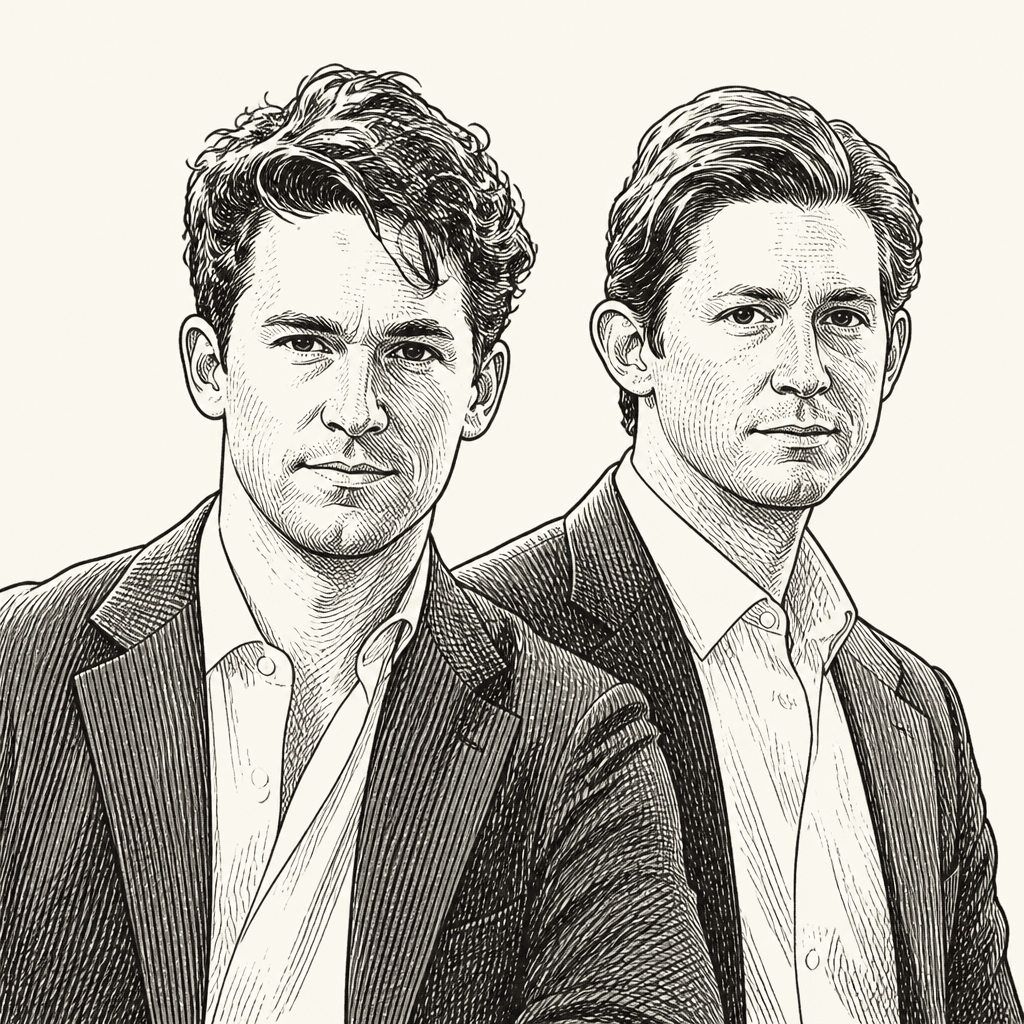


TBPN hosts John Coogan and Jordi Hays argue that the commercial value of new AI video and shopping agents will depend less on raw model performance than on who controls the consumer interface. Coogan says ByteDance’s video advantage comes from its existing TikTok, CapCut and advertising distribution, while Hays casts Amazon’s block of Meta’s Muse as a defense of its shopping and advertising economics. They also report that Paramount’s settlement over its Warner Bros. Discovery acquisition keeps major production assets in California under a larger media owner.

Distribution, not just model quality, will determine who captures AI’s consumer value
John Coogan frames ByteDance’s apparent lead in AI video as a distribution advantage rather than a simple consequence of model capability or permissive intellectual-property rules. Video generation is extraordinarily compute-intensive, he says, which raises a basic allocation question: why spend scarce compute on video rather than coding models or broader general-purpose runs?


ByteDance has an answer that OpenAI and Anthropic do not. It already operates TikTok, Douyin, CapCut, advertising products, e-commerce, and recommendation systems. Better video tools can improve an existing set of consumer surfaces and business loops without requiring the company to create a new market for generated video. Sora attracted users, Coogan says, but it did not have the same obvious flywheel.
Meta and Google also have relevant distribution through social, messaging, and video products. But Coogan characterizes their leading AI organizations as more focused on agentic workflows, personal agents, retrieval, coding, recursive self-improvement, and AGI. ByteDance can instead prioritize a category closely connected to the activity it already distributes and monetizes at scale: making and watching video.
That distinction also helps explain why a company associated with China’s open-weight model releases might keep a leading video system closed. Open coding models can help build a domestic developer ecosystem and support an indigenous technology stack, Coogan says. A vertically integrated video company already controls the relevant consumer surface. It has less reason to seed an external ecosystem when it can keep the technology inside its own products.
If you are a challenger that needs an ecosystem, you want to open up. And then if you’re an incumbent and you have distribution, you want to close down.
Coogan does not treat the apparently strong reproduction of famous people or movie footage as conclusive evidence of any particular training-data practice. When a system produces something that looks exactly like Tom Cruise, he says, observers naturally infer a training-data explanation. But output selection and the product harness may also shape what users see.
His narrower point is that TikTok, YouTube, and Instagram contain large amounts of film footage uploaded in contexts users may regard as criticism, commentary, or other transformative uses. A short, highly edited reel derived from a movie is not necessarily a substitute for the movie itself, he argues; film-criticism channels can also use clips while discussing lighting or other production choices. That does not settle the legal questions around training or infringement. It does mean platforms with enormous stores of video have a potentially valuable data and distribution advantage.
Coogan sees a longer-term possibility in video models for sim-to-real work and humanoid-robot training, where better synthetic video could become strategically important. He presents that as speculative. In the nearer term, he expects the practical effect to be viral altered clips, memes, and footage whose manipulation is increasingly difficult to spot.
SeaDance makes the distribution thesis tangible
The latest generation of video replacement tools matters because the effect is no longer limited to a face pasted over a clip. John Coogan says SeaDance 2.5 replaces “the whole person, the whole object,” while preserving enough of the original footage’s subtle details for the substituted subject to appear integrated into the scene.
It replaces the whole person, the whole object, as opposed to just a face swap.
Coogan contrasts that experience with the earlier DreamBooth period of personalized image generation. Users had to gather 10 or 20 photographs at different angles and in different lighting, run a Python workflow in Colab, and hope the randomly provisioned GPU had enough memory. A hobbyist implementation eventually made DreamBooth practical on commodity gaming hardware; shortly afterward, the capability became an app feature and then a standard feature inside chat products.
Video has moved more slowly, Coogan says, because serving it requires much more compute. But the workflow he demonstrated was already far less manual than the old image-model process. He ran Codex on a PC while interacting with it through his phone, asking it to find recognizable source clips and reference images. It generated reference material with ChatGPT’s image tools, then ran the replacement through SeaDance using Higgsfield for rendering. He did not need to upload a curated set of photos of Hays or choose every underlying clip himself.
An X post from SemiAnalysis showed Dylan Patel substituted into a Drake video under pink and blue lighting. Coogan’s explanation for why viewers were fooled involved more than visual fidelity: the original Drake video had been released only a day earlier, meaning some people encountered the manipulated version before they had seen the original choreography or heard the original performance.
The hosts’ own examples exposed both the advance and its limits. In a recreation of Steve Jobs introducing the MacBook Air, the system replaced both a smaller and larger representation of Jordi Hays in the same frame and altered a partially visible mouth. Coogan took that as a sign that the model can manage more than a centered, easily cropped face. In a Steve Ballmer clip, by contrast, he said the model captured Hays’s sweat and general look but allowed the face to jump around.
Jordi Hays identified an important perceptual asymmetry: the person depicted is likely to see inaccuracies immediately, while others may regard the result as an exact likeness. That gap is part of why these clips can travel so effectively even when their subjects see obvious artifacts.
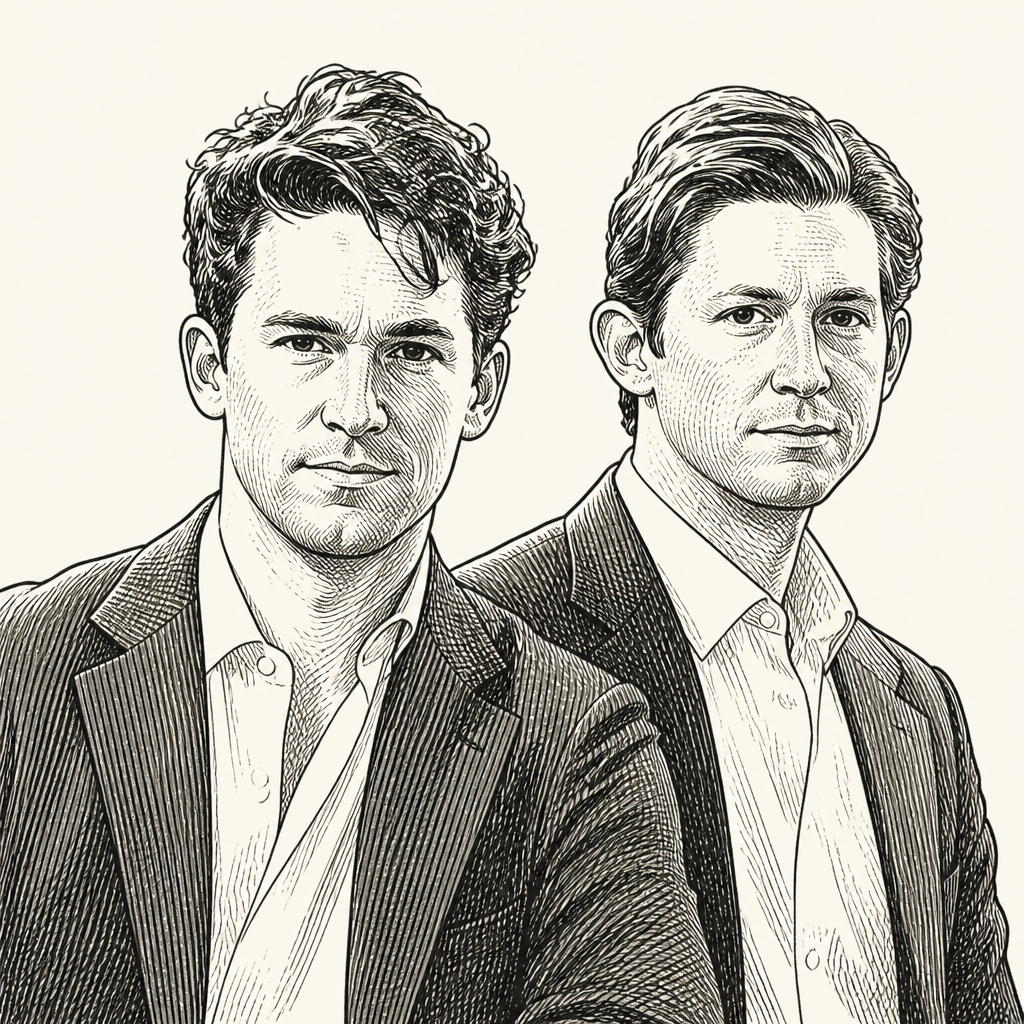

The Jackass-style montage made the technical case under more difficult motion. Coogan and Hays were substituted into existing stunt footage involving a cactus, a jet ski, a mechanical bull, and an alligator. Coogan thought the footage worked partly because the underlying stunts were already surreal enough to resemble AI prompts. Hays emphasized the more important result: the system replaced multiple people and held those identities relatively consistently through aggressive movement.
For now, Coogan sees the clearest production use in corrections and reshoots rather than wholesale replacement of actors. He pointed to Henry Cavill’s digitally removed mustache in Justice League. Cavill had grown the mustache for Mission: Impossible after Superman production wrapped, then returned to shoot an additional Superman scene. The visual shown during the discussion contrasted Cavill with the mustache and the altered Superman image, whose reconstructed upper lip appeared unnatural.
Coogan says newer tools could reduce the expense and labor of that kind of continuity fix. But he does not regard them as a general replacement for performances: if an actor can perform the scene, conventional production will usually remain preferable, at least for the time being. Stunts and situations where the actor is not driving the original footage are more plausible early uses.
Higgsfield, meanwhile, illustrates that a compelling underlying model does not guarantee a coherent product experience. Coogan praised the service’s API access while describing its billing as confusing: subscription-plan credits and API credits were distinct pools, so money loaded into one could not be used in the other. Hays said he had also seen complaints about users being unable to cancel plans.
Amazon’s block of Muse is a fight over who owns the shopping interface
Jordi Hays presents Meta’s Muse as an unusually concrete AI product for a company that has spent heavily on the category. A post shown during the discussion attributed Meta’s 27% stock gain over the previous month to Muse. Coogan did not accept that causal account outright. His view was that investors may react positively when a company committing hundreds of billions of dollars to AI finally has a product that appears to work.
For Hays, the significance of Muse is not only that it performs well in a particular subcategory. Meta can place it across shopping, messaging, and its other consumer products. Coogan says that puts Meta in a category where it has rarely held the apparent lead: a product experience built on a model that may not itself be at the frontier, but that currently looks best-in-class for its use case.
The same ability to sit between users and services is why Amazon has moved to block Muse from shopping on Amazon.com. Hays read an account stating that Amazon had asked Meta to exclude its site, then cut off access when that did not happen. Amazon’s stated concerns were that it never agreed to Muse’s access, that the agent did not identify itself while browsing, and that it appeared to capture and store customer credentials, creating privacy and security risks. Users attempting to shop through Muse reportedly saw a notice saying continued access by an unauthorized AI agent violated Amazon’s conditions of use.
Hays argues that Amazon’s advertising business supplies an additional economic explanation. He said Amazon generated $76 billion in advertising revenue over the 12 months through the second quarter of 2026. If an independent agent takes a user directly to checkout after the user has already decided to purchase from Amazon, the transaction may bypass the ad auction and create no incremental demand for Amazon to monetize.
Coogan describes Amazon’s reported arrangement with OpenAI as a different bargain: rather than permit an outside agent to conduct checkout freely, Amazon plugs its ad network into ChatGPT. ChatGPT can supply purchase intent, and advertisers can pay to reach that intent. That model preserves a role for advertising rather than reducing the retailer to a fulfillment destination behind another company’s interface.
An Eric Seufert post shown on screen made the case more forcefully. It said Amazon had begun blocking agents the previous July and was suing Perplexity over autonomous shopping with Comet. Seufert argued that agentic commerce was already commercially real, but mostly inside retailers’ own products: Amazon’s Rufus, he wrote, produced $12 billion in incremental revenue in 2025, while Walmart’s Sparky had also shown significant traction. The affiliate model was economically inferior to advertising, in his view.
Hays agrees that an agent’s business model remains unsettled. He cited a frustrated user who received an invitation blast from Instinct and objected that an agent meant to work for the user was advertising for itself. Coogan wondered whether recommended actions inside ChatGPT could become sponsored, such as an offer to begin a shopping workflow. Hays’s response was that companies will pay for incremental demand, but not necessarily for a consumer who has already told an agent exactly where they intend to shop.
Muse could create a related problem inside Meta’s own marketplace. Hays read a post by former Meta employee Nikita Bier arguing that automatic negotiation on Facebook Marketplace could flood sellers with bot-generated lowball offers and degrade the service. Coogan suggested that sellers could deploy agents on the other side of the exchange. Tyler Cosgrove noted that agents can also operate outbound, contacting large numbers of people. Whether bot-to-bot negotiation makes a marketplace more efficient or turns it into a channel for automated solicitation remains unclear.


Paramount keeps production capacity under one larger media owner
The Paramount settlement is a separate media-industry development, but it turns on a related contest for control of production capacity, distribution assets, and consumer attention. Jordi Hays reports that Paramount reached a settlement with California and other states challenging its $111 billion acquisition of Warner Bros. Discovery, clearing what he described as the last major obstacle to the transaction.
California Attorney General Rob Bonta and a coalition of other states had sued in July, arguing that the combination would give one entertainment company too much control over major film studios, cable networks, and other media properties. Hays says Paramount agreed to create an independent board of journalists intended to protect the editorial autonomy of CNN and CBS News, release at least 30 movies theatrically each year, and spend an additional $1.5 billion on film production over five years.
| Settlement commitment | Term |
|---|---|
| Editorial oversight | Create an independent board of journalists for CNN and CBS News |
| Theatrical releases | At least 30 movies each year |
| Film production | An additional $1.5 billion over five years |
Paramount did not agree to sell CNN or divest a movie studio. The combined company would bring Paramount+, HBO Max, CBS, CNN, and franchises including Superman, Minecraft, and Sinners under one roof. Paramount’s stated rationale, according to Hays, is that it needs that scale to compete with increasingly powerful streaming and technology companies such as Netflix.
The settlement also reduces the immediate prospect that Paramount will move substantial production and thousands of jobs out of California. Hays says the company had warned it might do so if the deal were blocked and had explored studio space in Nashville; Governor Gavin Newsom had warned that losing Paramount would damage California’s position in entertainment. The Paramount lot, Hays noted, is therefore less likely to become the large Los Angeles data center some advocates had hoped for. The immediate outcome is continued movie production rather than a conversion of that physical media asset into compute infrastructure.