The Cloud Is Being Rebuilt Around Agents, Tokens, and Sandboxes

Vercel chief executive Guillermo Rauch used a Stanford MS&E435 seminar to argue that coding agents are expanding the software market rather than merely making developers faster. In his view, AI is widening software creation from professional programmers to business users and autonomous agents, while shifting cloud demand from websites and applications toward deployed agents that need token routing, sandboxes, security, observability and long-running compute.
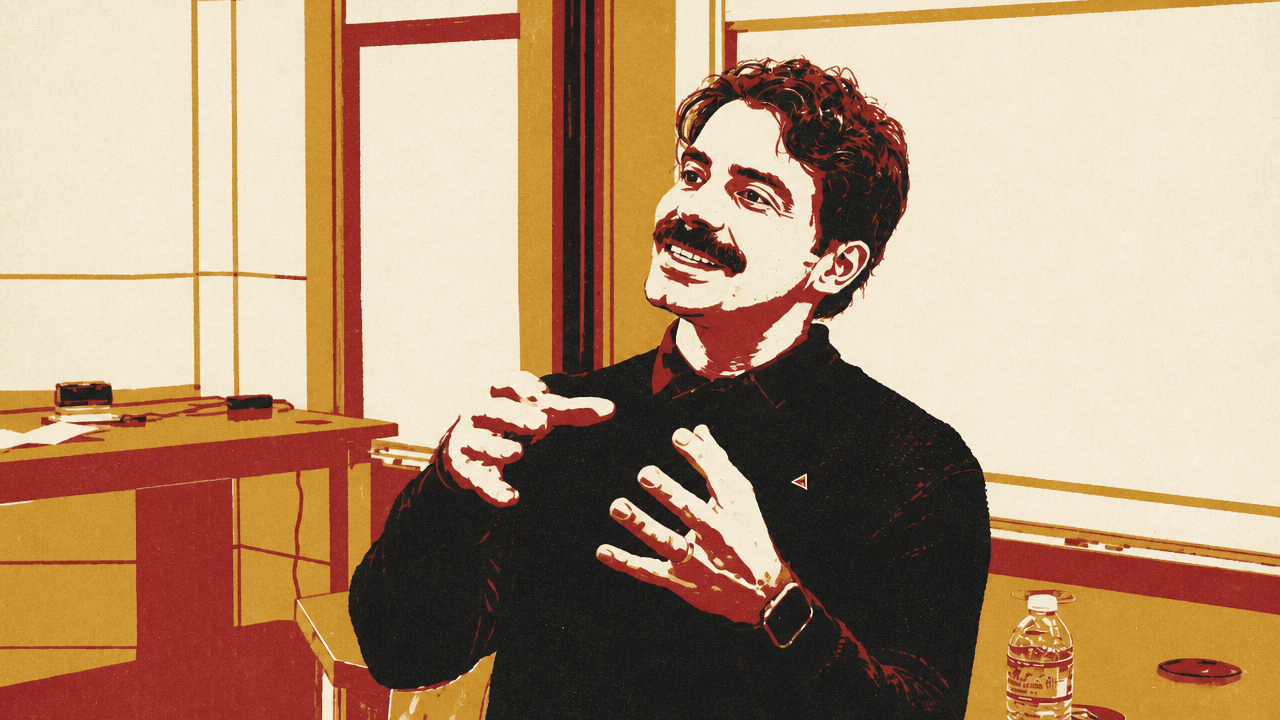
AI turns software creation into a larger market, not just a faster workflow
Guillermo Rauch treated coding agents as a supply shock in software creation. The important change, in his account, is not only that developers can write faster. It is that the population able to create and ship software is expanding from professional developers to business users and autonomous agents, while the deployed object itself is shifting from pages and applications toward agents.


That is the economic claim behind the growth Vercel showed during the seminar. A Vercel slide described the company as “where the modern web & AI run,” listing 33 million-plus weekly downloads for Next.js, 12 million-plus weekly downloads for its AI SDK, 17 million-plus people building on Vercel every day, 5 million-plus deployments per day, 40 billion-plus requests per day, and 1.7 billion-plus threats mitigated per day. Another Vercel slide showed “3X Deployments since Q3,” with an upward line from October 2025 to May 2026. Rauch attributed the deployment inflection especially to the arrival of “a very specific coding model,” Opus 4.5, after which, he said, Vercel saw more people deploying to the platform.
Vercel began from a narrower premise. When Rauch started the company, the target customer was the JavaScript developer who could build a front-end application but did not want to wrestle with the infrastructure required to make it fast, global, and reliable. AWS, Google Cloud, Azure, and Kubernetes-era deployment existed, but they were painful even for an experienced engineer. Rauch described taking weeks to deploy the website for his own startup and concluding that “it can’t be this hard to deploy a freaking website.”
The original market, as he described it, was perhaps 20 million developers who could satisfy what he considered a relaxed constraint: they could create a modern front-end project, especially in React. Coding bootcamps were part of the period’s context. It was plausible, he said, for someone to learn React in three months and get a job. Vercel’s promise was to take that person’s user-facing application and handle scale, global speed, load balancing, and the low-level work of keeping the system running.
AI changed the boundary. Rauch described programming history as a series of access expansions: from a tiny group with access to university mainframes, to a larger population of professional developers, and now to business users and agents. He called AI and coding agents “the biggest expansion” in the total addressable market for software creation in the period he is describing.
The key distinction is between writing code and deploying it. Writing code, in Rauch’s formulation, is not enough. The learning starts when a user confronts a running version of the code. He contrasted that with the vast amount of software that sits in GitHub repositories, SourceForge before that, and older code archives: “piles and piles of software that doesn’t run.”
Coding agents push against a human habit. Human developers often keep code local because “it works on my machine” and the local machine feels safe. Coding agents, Rauch said, “love to deploy.” That is why he described Vercel as the “jelly layer” paired with the “peanut butter” of coding agents: agents generate software, but software becomes economically meaningful when it is deployed, observed, used, and iterated.
The cloud primitive is shifting from pages to agents
The cloud that served human-written websites and applications was built around static and semi-static interfaces, one-shot responses, CDNs delivering pixels, and compute products designed for human-authored code. The agent cloud, as Vercel presented it, has a different profile: dynamic and generative interfaces, streaming responses, token routing, sandboxes, and background work that may run far longer than a conventional web request.
Rauch turned that into a naming joke with a serious premise: if Amazon were starting AWS today, it might not call it Amazon Web Services. It might call it “Amazon Agent Services,” because the thing people increasingly want to create and ship is not only a website or application but an agent.
| Layer | Traditional cloud | Agent cloud |
|---|---|---|
| UI | Static and semi-static; one-shot responses | Fully dynamic and generative; streaming responses |
| Framework | UI and pages; React / Next.js | AI and agents; AI SDK |
| CDN | Pixels; CloudFront | Tokens; AI Gateway |
| Compute | Human-written code; EC2, Lambda; foreground, quick, CPU-bound | Agent-written code; Sandbox, Fluid; background, long-running, I/O-bound |
That shift does not mean human-facing experiences disappear. Rauch explicitly said he remains “super bullish” on human-centric experiences. People will still visit brand experiences and inspect agent outputs in rich environments. He predicted a return of a more whimsical web, comparing what may come next to Microsoft Encarta: an encyclopedia that felt alive, interactive, and rich. By contrast, he described Wikipedia as a wall of text with, if one is lucky, a photograph on the right side. With video generation, 3D model generation, and just-in-time rendering, he expects more immersive pixel-based experiences, not fewer.
But the infrastructure requirements differ. The web Vercel originally served was built around fast request-response loops. Rauch cited Amazon’s observation that faster pages drive more sales, and said Amazon’s data showed each 100 milliseconds of slowdown reduced conversion by 1%. That logic shaped a large part of internet infrastructure: instantaneous page loads, fast front ends, fast CDNs.
Agents break that pattern. They do not always answer immediately. Rauch described a progression from agents that think for seconds, to minutes, to hours, and now to agents that may “cook for an entire day” before returning a report, analysis, or built software. He said Vercel hosts platforms that are “creating companies for people,” with agents that maintain, advertise, grow, and scale those companies behind the scenes. The compute profile of that work is not the same as a human-authored web page request.
Elastic compute was designed around human-written code, so the amount of compute sold to the world was bounded by how many programmers existed. If AI expands the number of people who can create software by 10, 20, or 100 times, and if agents themselves write, repair, and secure software, the demand curve changes. Rauch connected this to cybersecurity as well: there are hacking agents and “good agents,” and both create demand for compute and security infrastructure.
Tokens are the parallel commodity. Vercel once streamed pixels: pages, interfaces, applications. Now, Rauch said, it is also streaming intelligence in the form of tokens. That changes pricing and business models. He referred to industry discussion about the death of SaaS and seat-based pricing, and the rise of token-based pricing, which he characterized as a measure of intelligence.
Tokens are the new hot commodity.
Agentic infrastructure has three jobs
“Agentic infrastructure,” in Rauch’s formulation, has three sides: infrastructure for coding agents, infrastructure to ship agents, and infrastructure automated by agents. The same through-line runs across all three. Agents require deployment, token routing, sandboxes, security, observability, and eventually self-optimizing operations.
| Side | What it means in Rauch’s framing | Examples from the Vercel stack |
|---|---|---|
| For coding agents | The deployment and infrastructure layer that Claude Code, Codex, v0, and other coding agents can use | Vercel deployment, Next.js, React, shadcn, open-source ecosystem |
| To ship agents | The blocks developers use to build and deploy their own agents | AI SDK, AI Gateway, Chat SDK, Fluid Compute, Sandbox, Workflow |
| Automated by agents | Cloud operations that configure, optimize, remediate, and improve themselves based on production signals | Investigation, code review, rollback, self-optimizing infrastructure |
The first side is the infrastructure coding agents need. If a user is working with Claude Code, Codex, v0, or another coding agent, that agent must deploy somewhere. Vercel benefits, Rauch said, because models have absorbed a large amount of internet knowledge about Next.js, React, and Vercel’s open-source ecosystem. The agent has a “preconception of the world,” a world model shaped by training data and grounding.
A Vercel slide claimed that “Vercel is the default deployment pick for Claude Code.” The visible prompt was “where should I deploy this?” and the visible answer said, “The best option is Vercel.” The slide stated “86 of 86 Frontend deployment picks. No runner-up,” and showed Vercel ranked fourth overall in a tool leaderboard, behind GitHub Actions, Stripe, and shadcn/ui, and ahead of Tailwind CSS, Zustand, Sentry, Resend, Vitest, and PostgreSQL. Separately, Rauch said a report described Vercel’s UI engine, shadcn, as having near-monopoly status at 94.1%, while Vercel had 100% in the deployment category, which he joked was still called a “near-monopoly.”
Apoorv Agrawal raised the obvious question: whether that position came from an enterprise deal with Claude or from agents choosing the best tool in real time. Rauch did not give a simple yes-or-no answer. He said he could not “confirm or deny the existence of deals in the direction of expanding access to Vercel,” but his substantive explanation focused on product design, content, and open-source distribution. Vercel had spent years creating high-quality APIs and content that worked for humans and agents alike. Those APIs had properties agents could use efficiently.
The important property is local reasoning. Tailwind was Rauch’s example. Tailwind was controversial among human developers because the code could look ugly: long lines, aesthetically awkward, and to Rauch’s own taste initially unpleasant. But it allowed a component’s design to be reasoned about locally. If a component is moved elsewhere, it carries the relevant styling logic with it and still works. That makes it economically scalable across codebases and organizations. Rauch said he overcame his “gag reflex” because he saw that it scaled better.
The same property matters in React and Next.js. React, he said, had local reasoning “in spades,” and the Facebook team had reached similar conclusions as it hired more engineers and needed code systems that scaled. For agents, the constraint is even sharper because LLM context windows are finite. “You can’t fit all of the code of humanity into the context window of an LLM,” he said. If a tool or framework lets an agent reason locally, it becomes more usable.
Composability is a key prerequisite for this agentic scalability.
The second side of agentic infrastructure is software that ships agents. A Vercel slide listed AI SDK for unified model access, AI Gateway for access to hundreds of models without separate API keys, Chat SDK for one codebase across chat platforms, Fluid Compute with active CPU pricing, Sandbox for secure code execution, and Workflow for durable TypeScript functions.
Rauch described AI Gateway as a CDN for tokens. Traditional CDNs such as Akamai and Fastly emerged to scale, accelerate, and secure pages and pixels. Tokens from Claude, Anthropic, Gemini, and other models need analogous infrastructure: observability, failover, security, acceleration, caching, and load balancing. Rauch gave the example of using an expensive model to answer “thanks” with “you’re welcome,” activating large amounts of GPU capacity for a trivial response. A smarter gateway could route that to a smaller model or serve it through semantic caching.
Sandbox is compute for agents. Rauch described it as analogous to EC2: a fundamental compute unit. Models become more powerful when given a computer. In post-training, models are handed Docker containers and playgrounds; they “cut their teeth” in mini-computers before encountering the broader world. When a company hires a knowledge worker, it gives that person a laptop preconfigured with software. The same pattern is emerging for agents: give the agent a computer, provision it with software, and let it work.
That analogy carries risk. Personal computing brought viruses, phishing, and scams. Agent computers can likewise be tricked into exfiltrating or leaking data. Vercel is building security products for these sandboxes, and Rauch expects entire categories of cybersecurity products and companies to emerge around agent security.
The third side is infrastructure automated by agents. Rauch compared this to the cloud becoming a self-driving car. Running software at scale remains operationally painful: engineers carry pagers, get interrupted at night, and respond to data center failures or performance regressions. He cited an anecdote from Stripe’s founder: hearing ducks raises his cortisol because a duck sound used to be his pager duty ringtone when Stripe was crashing. Vercel has automated away much of the pain, but not all of it. The target is a cloud where systems configure, optimize, and remediate themselves. The agent might tell a team, “I just optimized all your software. I made it twice as fast, here’s the PR,” or perhaps it already shipped the change and measured improved conversion.
Generated software puts the interface layer under pressure
Agents make software more plastic at the interface layer while increasing the value of systems that expose data, workflows, permissions, and APIs cleanly. Generated software can replace brittle off-the-shelf experiences, but it often still relies on durable systems of record underneath.
Rauch resisted the phrase “death of software.” If anything, he said, software has “never moved faster and been more alive” for Vercel users. But a large category of off-the-shelf applications is vulnerable because the best software is the software most tailored to the user. SaaS required product managers and designers to decide on a common UI that would satisfy the largest number of customers. That common UI could then scale globally, perhaps with translated labels or modest configuration. But it was still “lowest common denominator software.”
AI-generated software changes the tradeoff. Rauch gave the example of a startup customer whose lead engineer told him Vercel was “dangerous” because the CEO had shipped software. The CEO had replaced the company’s parking-lot management software with something vibe-coded in v0 and saved significant money. The point was not that parking software is the central enterprise category. It was that many categories of business software are not high quality, are not deeply differentiated, and can be replaced by a tailored application generated in a prompt or two.
The critical distinction is between presentation layers and underlying systems of record. Inside Vercel, Rauch said, the company “kind of reinvented all of Salesforce.” Sales reps use a custom internal system to learn about accounts and opportunities and read business intelligence about how to pitch. According to Rauch, a team of roughly two people created a version of Salesforce tailored to Vercel’s business. But Vercel still uses workflows and databases that Salesforce set up. The result is not a clean replacement of every SaaS layer. It is a more malleable software stack: keep the database, access-control layer, and workflows, while replacing the interface and business-specific experience.
That framing creates a survival condition for SaaS companies. The companies that expose themselves through the right agentic interfaces — Rauch mentioned MCP, CLIs, and APIs — can fit into this world. They may be used “headless,” with Vercel or another platform hosting the application experience on top. Companies that do not open themselves up, or that depend on a closed, slow procurement experience, face greater risk.
Vercel is seeing both durable and disposable generated software. Some software is useful for a single customer call. Sales engineers use Vercel and v0 to accelerate presales, walking into a prospect conversation with a custom version of the software already built rather than a slide deck describing what the software could do. That software may be thrown away after the call when the team learns something new. In that sense, some software is “throwaway,” and Rauch even said “software is basically now free.”
Throwaway software can still drive engagement because it creates a new communication reflex. Rauch attributed to Shopify’s Tobi the phrase “the reflexivity of AI”: once someone knows they are one prompt away from communicating with another person through a high-fidelity software prototype, demo, or example, they will not give that up. He compared it to efficiency gains that are hard to forego. Engineers have told him they will never be able to code the old way again because their brains no longer work that way.
Not all engineering becomes easy. Much of the infrastructure software Vercel builds remains hard, sometimes requiring “a quorum of three agents plus a lot of smart humans” to examine a single line of code and decide what is true. Some software remains extremely long-lived.
The more immediate change is the audience. Rauch said customers now contact him on X with errors, sometimes saying they do not even know what Vercel is: their agent brought them there, deployed something, and now they need help. Support changes accordingly. Rather than asking a human engineer what happened in the docs or API, Rauch asks to be introduced to the agent, or asks for the transcript so Vercel’s engineers can turn it into evaluations and understand how the customer’s agent got into a bad spot. He expects the end state to be more agent-to-agent communication: a customer’s agent files a feature request or bug report with Vercel’s agent, and Vercel’s agent prioritizes it against budgets, deadlines, and company priorities.
Vercel’s breadth depends on reusing the same primitives
Vercel’s product breadth follows from Rauch’s claim that agents need a full operating environment, not a single isolated tool. The architecture slide showed open-source projects, developer experience tools, infrastructure, security, and agentic products: Next.js, AI SDK, Workflow SDK, Chat SDK, Turborepo, v0, CLI, Git CI/CD, previews, observability, Fluid Compute, Sandbox, middleware, cron, workflow orchestration, CDN, AI Gateway, DNS, storage, firewall, bot management, audit logs, code review, rollback, skills, plugins, MCP, marketplace, adapters, multitenancy, BYOC, IAM, compliance, and support. Independent companies exist to do individual pieces of that stack; Vercel’s argument, as Rauch presented it, is that the agent platform needs many of them to work together.
Rauch said Vercel is not trying to do everything in the abstract; it is trying to do the whole thing for the thing that matters. “Agents matter,” he said. “Agents are probably the last class of software.” If Vercel is building tools and infrastructure services for agents, it has to participate across the relevant stack.
The product-development justification is reuse. Vercel builds by dogfooding its own platform. AI Gateway, the CDN for tokens, is built on Vercel. Rauch said Vercel had even open-sourced the recipe so others could build competing token gateways. But the product itself uses Fluid Compute, the global network, and much of the same CDN machinery Vercel already had. In his words, Vercel could reuse “95%” of the rocket engine and rocket fuel that had powered the CDN for pixels and pages.
Sandbox followed the same logic. Vercel had seen a rapid increase in deployments, including a doubling of daily deployments since January, and Rauch said the platform mostly held up because Sandbox reused the virtualization primitive that powers every deployment on Vercel. Every deploy creates an ephemeral computer that is later destroyed. Sandbox turned that compute and virtualization expertise into an agent product.
This is the basis for Rauch’s description of Vercel as building the “AWS of AI or agents”: websites, applications, and agents share enough primitives — compute, networking, deployment, security, observability, workflow — that a platform built for the modern web can extend into agentic workloads if it adapts the primitives to tokens, sandboxes, and long-running agent work.
Rauch used Meta and Notion as customer examples, with both claims supported by quote cards shown on screen. For Meta, Rauch said the company had spent years building internal infrastructure, but Vercel had an edge when Meta needed to move fast with engineers using coding agents. According to Rauch, Vercel “runs a lot of Meta Superintelligence Labs” and helped Meta move faster by avoiding some software procurement. The on-screen Business Insider card stated: “Meta Superintelligence Labs is pushing staff away from Meta’s slower, home-grown infra toward mainstream developer platforms like Vercel.”
For Notion, Rauch said the product is investing in a second chapter in which Notion itself becomes agentic. A Forbes quote card shown on screen stated: “Last month, Notion used Vercel to launch Notion Workers, a platform that lets developers build and deploy AI agents.” The same card quoted Zhao saying Vercel was “one of the fastest, if not the fastest,” in adapting to tradeoffs between human developers and AI agents. Rauch’s example was practical: a Notion transcribing agent could take notes from the class, with its infrastructure running on Vercel.
Value accrues where intelligence becomes useful work
Apoorv Agrawal framed the investment question as a stack problem: chips, data centers, infrastructure below the model, the model itself, and agents above the model. In his description of 2026, more value appeared to be accruing below the model — chips, data centers, power, cooling, energy — while above the model there was some value in coding models, customer support, legal, and other concentrated application areas.
Rauch’s answer centered on usefulness. Whether the current moment is “a gigantic bubble” or “the most exciting chapter of humanity,” he said, depends on whether useful services and products are delivered. Models become useful when they get the surrounding infrastructure: sandboxes, deployment platforms, domain names, observability, security, and interfaces.
Coding agents are especially important in his account. He said coding agents appear to be one of the most promising paths to AGI, or perhaps the path. Vercel’s position, as he described it, comes from building infrastructure those agents need in order to “actually do useful things.”
The domain-name example made the point concrete. Rauch said he had heard from the Codex team that many people want to name their creations and give them a domain. Some find Vercel first through the process of getting a domain name. Rauch had earlier bet on making DNS and domain-name configuration extremely fast and easy because DNS is “sort of hell.” His intuition was that when a human has an idea, often the first act is buying a domain name. He said he owns many domains himself and sometimes feels bad at renewal, though he tells himself it is digital real estate. That bet, he said, has returned well because new software creators also need naming, DNS, deployment, and hosting.
The broader ambition, in Rauch’s words, is for Vercel to become “the front door to any emergent idea on the planet.” Businesses that help ideas become real and useful, he argued, will do well. But usefulness also requires security and governance. Making agents useful is only part of the work; companies also need to govern them, set guardrails, secure them, and secure the broader internet. Despite anxiety about whether engineering jobs are ending, Rauch said Vercel cannot stop hiring engineers because there is so much left to build just to serve demand from coding agents.
Demand also breaks old infrastructure assumptions. Engineers are trained to apply rate limiters for operational health. A team might once have decided that no company would deploy more than 100 times per minute and encoded that assumption. Rauch argued those assumptions now fail. A YC company that did not exist three months earlier may produce enough deployments to surprise Vercel and uncover forgotten rate limits. He had provocatively told the company, “no more rate limits,” though he clarified that some controls are necessary for operational health, abuse prevention, KYC, and cost control. The point was to avoid arbitrary assumptions about demand while preserving safeguards.
That connects the infrastructure argument back to SaaS pricing. Rauch favored companies that can move at “the speed of tokens”: instant signup, consumption-based pricing, direct access to raw signal, and products agents can use without long sales cycles. He contrasted that with software companies that have an “e-brochure” instead of a product and require a customer to talk to an enterprise representative for years before software emerges. In a world where agents want APIs, CLIs, MCP interfaces, data, and tokens immediately, that slower posture becomes a liability.
Businesses built on scarce code are exposed
Asked by Agrawal to name businesses he was long and short, Rauch identified categories rather than targeting many individual companies. He said he was short “any static data or content business,” describing such businesses as “kind of cooked.” His classic example was Stack Overflow, an aggregator of programming questions and answers.
More broadly, he was short businesses built on the premise that code is scarce or difficult to produce. He singled out drag-and-drop builders and “coding with training wheels.” Rauch said he had always disliked that category because it felt patronizing: as if users were children who needed constrained interfaces because code was scary. Agrawal supplied “too opinionated,” and Rauch agreed with that framing: opinionated and constraining. Companies built on that foundation, he said, will need serious pivoting conversations.
The other vulnerable category is closed software. Coding agents want raw signal. They do not want to talk to sales, spend months discussing requirements, or wait through old enterprise procurement. They want to go directly to data and start consuming. Rauch’s long position was on companies with instant signup, consumption-based pricing, token-speed access, and infrastructure capable of absorbing extreme demand.
That does not imply an absence of controls. Rauch repeatedly acknowledged the need to manage abuse, identity, and runaway cost. Because these products are backed by supercomputers, a platform cannot let anyone immediately consume astronomical amounts of compute and then hope to collect afterward. His “no more rate limits” line was intentionally provocative, not literal. The operating principle was to avoid arbitrary assumptions about demand while preserving safeguards.
The final question moved outside software. Agrawal asked what Rauch would build if he were not building Vercel. Rauch answered: space technology. He said he is drawn to the aspiration of becoming a multi-planetary species and translated it into infrastructure language: high availability, multiple availability zones, multi-region redundancy, layers of failover. He joked that he chose where to live in San Francisco based on structural safety and the reliability of a historic retaining wall. “I’m an infrastructure guy,” he said.
He also said he is excited about energy because intelligence can be understood as a flow in which energy goes in and intelligence comes out. Breakthroughs in fission, fusion, geothermal, or other energy sources are therefore “deeply exciting” to him.