AI Is Moving Venture Capital’s Bottlenecks to Compute, Power, and Policy


Ben Horowitz, co-founder of Andreessen Horowitz, uses a Stanford CS153 lecture with Anjney Midha to argue that venture capital is a systems business whose constraints keep moving. He says a16z was built in 2009 to serve entrepreneurs rather than merely allocate capital, using centralized control, small investment groups, and a deliberately constructed relationship network. In Horowitz’s account, AI has shifted the next bottlenecks toward capital, compute, electricity, policy, moats, and culture, forcing venture firms and startups to redesign around those constraints rather than rely on older software-era assumptions.
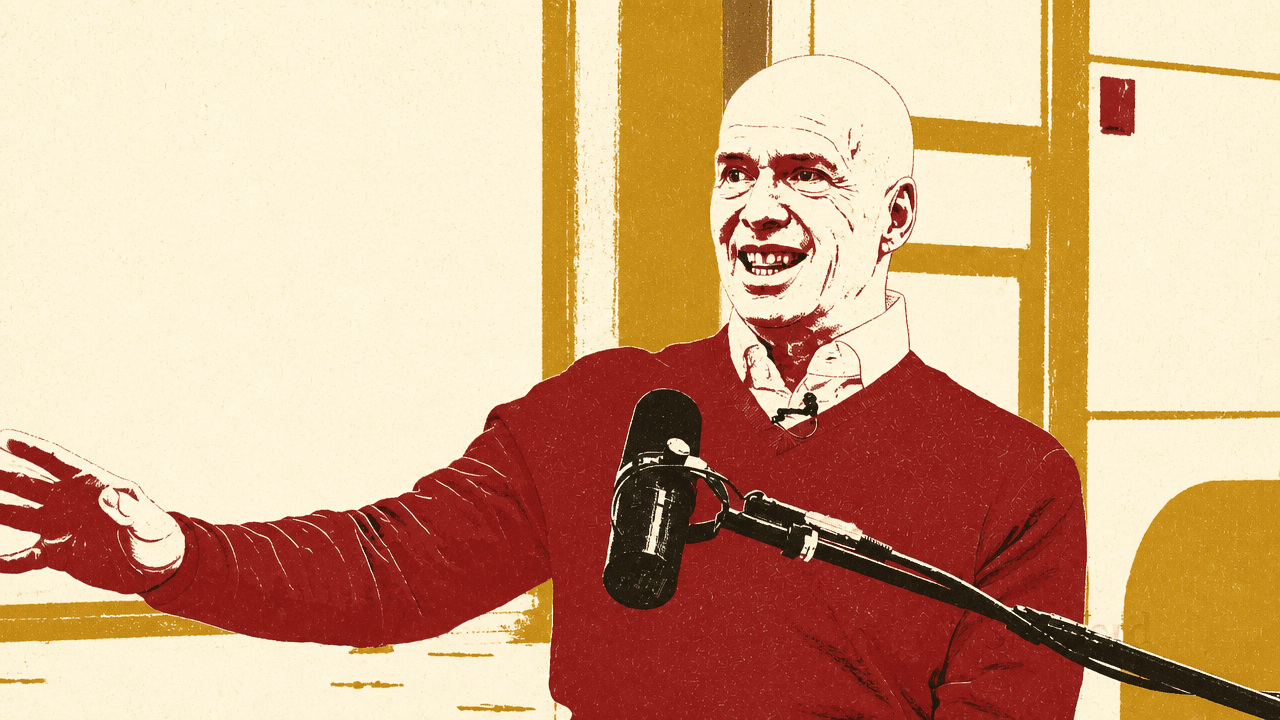
Andreessen Horowitz was built around a different customer: the entrepreneur
Andreessen Horowitz’s 2009 founding was, in Ben Horowitz’s telling, a redesign of venture capital’s operating system. Two assumptions behind the incumbent model looked dated to him.


The first was that venture capital was primarily an investment product. For limited partners, the product was strong: high returns. For entrepreneurs, Horowitz thought the product was “pretty bad,” because most firms did little beyond supplying money. Andreessen Horowitz’s first design principle was to build a better product for entrepreneurs.
The second assumption was about market size. The prevailing view, supported by historical data, was that in any given year only about 15 technology companies would reach $100 million in revenue. The venture industry was therefore organized around getting into as many of those 15 as possible. Horowitz and Marc Andreessen believed that number was about to change. Their thesis was that software would “eat the world,” that every interesting new company would be a technology company, and that the relevant annual cohort would look more like 200 companies than 15.
That change required a different firm architecture. The older model did not need to scale much. Horowitz recalled David Swensen’s view that a good venture firm was “like the size of a basketball team” — five people and perhaps a sixth. That would not be enough, Horowitz argued, if the firm wanted both to serve entrepreneurs more deeply and to invest across a much larger universe of breakout companies.
The key organizational choice was to separate economics from control. Traditional venture partnerships shared both. Horowitz saw shared control as a structural barrier to change: a reorganization redistributes power, some people will hate it, and if everyone has a vote, the organization cannot effectively reorg. Andreessen Horowitz would share economics but centralize control.
That choice, Horowitz said, enabled the firm to reorganize over time and move into categories such as American Dynamism, crypto, and bio. It was not presented as a management slogan; it was the mechanism that let the firm keep changing shape.
The second mechanism was smaller investment conversations. Investing is “always a conversation,” Horowitz said, and getting to the truth requires a high-fidelity exchange. A room with 30 people is not a conversation; it is a presentation. With excellent rapport, the right size might be seven. Without that chemistry, even seven can be too many. The firm’s answer was to keep splitting into smaller groups, each focused on a specific part of the market.
The same logic applied to investor skepticism. Anjney Midha asked how Horowitz had persuaded institutional investors to update entrenched assumptions. Horowitz’s answer was blunt: “Succeed.” If one party believes one thing and another believes something else, the proof comes from results.


The early proof point was Skype. Andreessen Horowitz invested roughly a quarter of its first $300 million fund into the Skype buyout after eBay spun it out. Horowitz said many observers thought the investment was insane because eBay owned the company but not the underlying intellectual property — specifically the library controlling the communications protocol. That gave Skype’s founders, Janus and Niklas, leverage because they could have sued and potentially shut down the service.
Horowitz saw the situation differently because he knew the founders. Skype, he said, was the defining thing in their lives. They were not going to kill it. The question was how much money they wanted and how they would participate. After the deal worked, the reaction shifted from “you were nuts” to “maybe you’re not completely insane.”
The firm treated relationships as a network effect, not as marketing
Ben Horowitz argued that many investors in the early internet period still did not understand network effects. The internet itself was strange because it was valuable, decentralized, and not owned by anyone. People could see value building on it, but did not know how to price or interpret owned networks such as Facebook and Twitter before they reached strength.
He described network value in n-squared terms: adding a node increases the value of the network roughly with n². A five-person network has 25 potential value units in his illustration; six people have 36. At internet scale, he said, the network becomes effectively invincible. Nobody is likely to build a rival internet.
Andreessen Horowitz applied that model to the venture firm itself. From the beginning, the firm thought of itself as a network. The more relationships it had, the stronger its network effect. The goal was to build relationships with every engineer in Silicon Valley, every executive, every important corporation buying technology, and the broader ecosystem that could help startups.
That was the entrepreneur product. A founder raising money from Andreessen Horowitz would not just get capital; they could tap into a network that would help them become powerful “right off the rip.”
The hard part was bootstrapping. Horowitz used the telephone analogy: a billion-person network is obviously valuable, but Alexander Graham Bell still had to sell the first telephone when there was nobody to call. Andreessen Horowitz had to solve the same cold-start problem in venture.
Its answer was to reinvest the management-fee economics that venture capitalists often used to pay themselves. Horowitz said the firm asked: what if we did not pay ourselves anything and instead spent the money building the network? They hired people to bring others in. They built relationships with large corporations. They created a briefing-center experience that was not typical for venture capital.
One of the most important hacks came from Horowitz’s prior company, Opsware, which Hewlett-Packard had acquired. Because the a16z founders knew people in HP’s enterprise briefing center, they would call every week to ask which major companies were visiting. Then they would contact those companies and invite them to Andreessen Horowitz’s own briefing center, where they would show them startups and provide the corporate-briefing basics, down to the donuts.
The result, Horowitz said, was that Andreessen Horowitz quickly knew more large companies than venture firms that had existed for 50 years. Anjney Midha noted that the lecture itself was taking place in Hewlett 200, giving the HP connection a literal echo in the room.
The incumbent reaction was dismissive. Midha recalled being at Kleiner Perkins and hearing a senior marketing person describe a16z’s executive briefing center as “just marketing.” His response at the time was that this was precisely the point: it was working. Horowitz said limited partners would tell him that when they met other venture firms, those firms wanted to complain about Andreessen Horowitz. He took that as “fantastic” — the best form of flattery.
Some of the hostility, Horowitz admitted, was self-inflicted. Coming from enterprise software, which he described as competitive and “bare knuckle,” he had written a blog post called “Four Things That VCs Do That I Don’t Like” and attacked rival investors. In an interview with Sarah Lacy, he quoted Lil Wayne: “When I see another VC coming at me with the peace sign, all I see is the trigger and the middle finger.” Other VCs hated him for it.
In retrospect, Horowitz said he might not have been that antagonistic again. But the antagonism had an unintended strategic benefit: because competitors disliked him so much, they were less willing to copy what Andreessen Horowitz was doing, even when it worked.
AI moved the bottleneck from software talent to capital, compute, power, and moats
For most of Ben Horowitz’s career, one fact about technology companies was reliable: you could not throw money at the problem. If a competitor had a two-year lead, hiring a thousand engineers would not let you catch them. Some work could not be parallelized; communication overhead would overwhelm the effort. His old joke was that a “man-year” meant “700 IBMers before lunch” — a way of saying headcount did not equal progress.
AI has changed that rule, in Horowitz’s view. If a company has enough GPUs and enough data, he said, it can solve many problems. That makes the capital race real in a way it was not before. Code is no longer a moat in the same way. User interface is not a moat in the same way. The question becomes what barrier to entry will differentiate a company over time.
That distinction matters for how he thinks about the so-called SaaS apocalypse. Horowitz did not deny that companies whose only moat is code and user interface are in a difficult position. His counterargument was that many software businesses are not defended only by code and interface. They can be defended by distribution, supply-chain relationships, workflow integration, domain-specific buyer channels, and the operational work that an AI model does not automatically replace.
At the same time, demand is unusually unconstrained because the products work. Horowitz contrasted AI systems with older enterprise software such as Siebel Systems, which could take two years and at least a million dollars to deploy. AI products can produce immediate “wow” moments. If a tool makes an engineer 20 times more productive, and the engineer costs several hundred thousand dollars a year — or, in Horowitz’s joking reference to Meta, much more — the return can be enormous.
Anjney Midha connected that to the course’s final project: the “one person frontier lab.” Horowitz said a16z already had an entrepreneur building a global VPN by himself. But when Midha asked what students should do if they lack capital or compute, Horowitz pushed back on the framing. In the current environment, he said, anyone with a great idea has access; there is “unlimited money for good ideas,” at least for now.
The broader career implication, in Horowitz’s view, is that young people benefit from discontinuity. If the world were stable, they would have to start at the bottom, work for decades, navigate politics, and wait while older people captured the rewards. In a world where new companies and new jobs replace old ones, older people face the harder adjustment because they know the old system. Young people can learn the new one.
Horowitz compared AI to electricity when advising students where to put their effort. If someone were alive just before electrification and wanted to do something interesting, the obvious move would be to understand the new technology deeply and then apply it to whatever domain mattered to them. That domain could be biology, materials science, rocketry, or a creative field. In creative work, he said, someone who in his era might have been merely a pretty good guitar player can now make a science-fiction motion picture, scored and produced, by themselves.
The durable advice was to combine interest with mastery of the new toolset. Find what you care about, learn AI, and apply the tools there. On dropping out of school, Horowitz refused a universal answer. People mature at different times. Finishing college was good for him. Dropping out was good for Zuckerberg given the idea he had and the company he was building. More broadly, he said no one can give another person good career advice in the abstract. They can only give advice that would have been good for themselves. Friends are especially likely to give advice that fits their own temperament rather than yours.
The investment implications are broader than early-stage company formation. When Midha asked what prior Horowitz himself has had to update, Horowitz returned to the capital point: AI has made it possible, in some cases, to throw money at the problem. That is a massive change. Venture used to face a bottleneck in software engineers. Now he sees bottlenecks in things like electricity. That changes investment thinking because progress depends not only on talent and code, but on compute, power, and physical infrastructure.
The scale of private companies has also changed the job of the venture firm. Companies can reach such large sizes while still private that they need capabilities earlier associated with public companies. At $1 billion in revenue, Horowitz said, a company may need to be multi-country, multi-channel, and multi-product. Most venture firms have not historically provided that kind of help. He argued that now they need to. Private capital markets also lack some functions of public markets, another gap he said needs to be addressed.
Horowitz warned against ignoring AI. Before the internet, there were technology companies that dismissed it; they disappeared. AI is similarly too large to ignore. A new company that does not account for AI today and for likely model improvements will not be very interesting.
But he rejected the more extreme claim that companies will soon have no employees and be run by AI bots. Horowitz said the data is moving in the opposite direction, including software engineering jobs growing quickly and growing quickly at Anthropic. Midha added that claims from Dario Amodei are often taken out of context: the serious point, as Midha framed it, is about job transitions and low-skill roles being replaced, not a simple end of work. Horowitz agreed that there will be job change, but said the doom-and-gloom version is overblown.
The public-market version of the same mistake, as Horowitz described it, is the view that Anthropic or another AI company will “one-shot” software companies and destroy their defensibility. He called that an arbitrage opportunity whenever Wall Street and Silicon Valley disagree, adding that Wall Street is “always wrong.”
His example was Navan, where he sits on the board. Navan is a software travel agency for businesses. Corporate travel is a major variable expense, and companies need policy control. To build such a business, Horowitz said, a company needs supply-chain relationships with airlines and hotels around the world. Scraping websites is not a substitute; suppliers will cut off access, send cease-and-desist letters, and sue. A travel platform also has to integrate with customers’ internal HR and other systems, and sell through a channel that reaches travel managers.
Horowitz’s point was not that Anthropic could not technically generate software for that market. It was that building the global supply relationships and sales channel is not what a frontier AI lab will prioritize when “gold bricks” are available elsewhere. He joked that Anthropic itself had an open requisition for a travel manager to manage its Navan relationship.
Markets, in his view, will eventually distinguish between companies that deserve the SaaS-apocalypse narrative and those that do not. In the short term, he said, markets are narrative-driven — echoing Warren Buffett’s voting-machine versus weighing-machine distinction. Portfolio managers who owned SaaS companies got fired, so few want to reenter the category. But over time, if companies keep producing results, the weighing machine takes over and the narrative changes.
A good idea is something the world needs and will not get without you
Ben Horowitz resisted defining good startup ideas by sector alone. The test was whether a founder could build a product, organization, culture, or offering that people want — and whether, without that founder, the thing would not otherwise exist.
The example he used was his own firm. The world did not need another generic venture capital firm. It did need a different kind of venture capital firm. That distinction made Andreessen Horowitz worth building.
He applied the same logic to OpenAI. Google was widely assumed to own AI, he said, and that assumption worried people. Elon Musk co-founded OpenAI with Sam Altman because the world needed an alternative to Google. Horowitz noted that Musk is “still mad” about what Altman did with it, but treated that as a separate story. The core point was that a needed alternative can be a very good idea.
The same reasoning shaped his view of building in an AI world. Horowitz agreed that the barrier to building software and user interfaces is falling. But he called it boring to rebuild Salesforce at half or a quarter of the cost. The more important question is what a sales organization should actually look like in an AI world. Should salespeople still enter data into a poor interface, while much of their actual work remains uncaptured? He implied that the real opportunity is not cheaper replication but rethinking the workflow.
Anjney Midha raised a common student trap: the “dorm room problem.” Students often see only the problems within their immediate cone of experience, even if they want to work on mission-critical domains such as health care, financial services, the economy, or enterprise systems. The challenge is access to the context-feedback loops that reveal real problems.
Horowitz’s answer was to start by solving a problem. When people try to solve a hard problem, they often discover a more important one. He gave examples of accidental discovery and adjacent expansion: penicillin as an accident; Meta emerging from Mark Zuckerberg’s earlier Hot-or-Not-like project; Dropbox beginning with Drew Houston’s frustration moving presentations around with a USB drive; Elon Musk starting with a more mundane Yellow Pages-like problem before PayPal, Tesla, and SpaceX.
Trying to “swallow the earth” from the beginning, Horowitz said, usually does not work. It may be good for the pitch deck, but not for the company. The right starting point is not “how big a thing am I going to do?” It is “what problem can I solve?” The problem has to be sized to the founder.
Horowitz also emphasized that people become their most effective selves at different ages. Zuckerberg at 20, he said, was very different from Zuckerberg now; without Facebook’s network-effect takeoff, that version of Zuckerberg might not have worked as a CEO at all. He developed over time because the business gave him the runway to do so.
That founder-centered lens also explained why Horowitz could invest after a bad pitch. Asked about memorable pitches, he named Databricks because the presentation was so difficult to understand. Ion Stoica, the Berkeley professor presenting the company, gave slides that felt to Horowitz like an incomprehensible computer science lecture. Horowitz invested anyway because Scott Shenker, another Berkeley professor whom he knew, had called and described Matei Zaharia as the best distributed systems person academia had seen in 10 years. Horowitz said that as soon as Shenker said that, he knew he was going to invest. The bad pitch scared his partners, but it did not change his conviction.
He made a related point in discussing a company identified in the transcript as “Clueless.” The easier way to think about the investment, he said, is that a16z invests in founders. The founders had original, breakthrough thinking, including in marketing. They were not the biggest company, but people knew about them, and “there’s something to that.” He did not claim certainty about what the company would become, only that it was early.
Horowitz’s rule for early companies was stark: the only unforgivable sin in business is running out of money. Until that happens, he does not count a company out if the founder is special. He cited Slack as an example. Stewart Butterfield had built an iPad game called Glitch on Flash; Steve Jobs outlawed Flash on the iPad, leaving the company in dire straits with about $6 million left. Butterfield turned that into Slack.
The lesson was not that any struggling company will recover. It was that great entrepreneurs can redirect under pressure if they still have cash and time. In the larger systems argument, this is why venture cannot be reduced to clean pitch evaluation: the firm has to recognize the founder and the latent direction even when the artifact in front of the partnership is confusing.
Culture is behavior, not sentiment
Culture, in Ben Horowitz’s account, is an operating constraint, not a set of values statements. Anjney Midha asked why talented teams with star founders, capital, and important problems can still fall apart within six to 12 months. Horowitz’s first answer was that building a company is always hard, and some companies will fail. But the internal dynamic, he said, comes down to leadership and culture.
Culture is often discussed as values: integrity, having each other’s backs, and other platitudes. Horowitz rejected that framing. Culture is how people behave. Do people come to the office? Do they go home at 5 p.m. or stay longer? If someone asks a question, do they respond instantly or in a week? Does the best idea win, or does the founder’s view dominate? These things need to be agreed upon specifically, not as abstractions.
He cited a samurai line that is also displayed at Andreessen Horowitz: culture is not a set of beliefs; it is a set of actions.
I don't care what you think, I don't care how you feel, I don't care what's in your heart, I just care what you do.
The reason specificity matters is enforcement. If a company has a standard, then failing to meet it can be addressed simply. If there is no standard, resentment becomes political. One person thinks another is leaving too early; the other person says no rule was ever agreed. People stop liking each other. Then a hard issue appears, someone receives a lucrative offer elsewhere, and the team breaks.
Culture can evolve, Horowitz said, especially when the world changes quickly. But it must evolve together, and that requires a leader. He rejected co-CEO arrangements, “we’re all equal” structures, and what he called a communist organization. A company needs someone to break ties: one person wants one path, another wants another, and the leader says which way the company is going. If someone does not like it, they can leave.
Horowitz said Silicon Valley had moved away from that idea during the “fat happy network effect era,” when employees wanted votes on company values and CEOs often caved. In his view, that did not work well. Companies are not democracies.
He drew a distinction between companies and countries. A dictatorship, he said, always beats a democracy in a competitive battle because democracies take longer to decide. For a country, the design problem is different. A country must last for centuries and be resilient to bad leadership. Even if a great monarch acts for the public benefit, the next monarch might not. Decentralizing power protects against that. A company, by contrast, can optimize for efficiency while it has the right leadership. If a company disappears after its mission is done, that is acceptable in a way a failed country is not.
Saying no is part of the culture
Anjney Midha pressed Ben Horowitz on culture as not only what a company does, but what it refuses to do. Horowitz’s main example was AI-driven leveraged buyouts.
He said the idea had been proposed to him many times. The analogy was spreadsheets and private equity: spreadsheets helped launch a form of financial engineering because investors could acquire large companies and make them more efficient. AI could do the same thing more powerfully. A firm could buy old companies, deploy AI, make them much more efficient, and capture the gains.
Horowitz said many venture capitalists are pursuing some version of that idea. He declined for two reasons.
The first was cultural. Leveraged buyouts are, in his view, the opposite motion from venture capital. Venture capital is about investing in entrepreneurs with new ideas and helping them grow quickly. LBOs are about entry price, efficiency, firing people, and extracting more profit from an existing asset. The talent profile is different too: venture looks for the exceptional entrepreneur; buyouts often install professional management to run a business more efficiently.
The second reason was personal and mission-driven. Horowitz said he has the opportunity to fund new ideas that can push humanity forward. AI-enabled buyouts may be a good business, but he does not want to spend his life doing it.
That means accepting self-imposed bottlenecks. Horowitz said companies do not have to enter every business just because money is available. His view is that a company should do something larger than itself and make the world better; if it does that, it will make money. But building a business purely because “there’s money over there” is not the kind of company he wants to be part of.
Tech policy became a systems bottleneck too
Ben Horowitz framed his political engagement as an attempt to give technology a voice in Washington. He noted that he had donated $5 million to Kamala Harris’s campaign, a fact Anjney Midha said was often not reported in discussions of Horowitz’s political activity.
Horowitz said the technology industry had very little voice in Washington, and that the consequences were severe. In his account, the Biden administration nearly ended the crypto industry by enforcing requirements that “weren’t even in the law” in ways that shut down companies. He also said something similar was happening with AI.
The GPU example was his most direct claim. Horowitz described the last Biden administration executive order as requiring U.S. government approval for all worldwide GPU sales. In his view, that would have effectively taken the United States out of the AI race. The article does not independently establish that policy characterization; the point here is Horowitz’s explanation of why a16z treated Washington as an operating constraint.
The root problem, in his telling, was that the industry had no meaningful channel into the administration. Horowitz said he could not get a meeting with President Biden during the four years he was in office, and he said Tim Cook, Sundar Pichai, and Eli Lilly CEO Dave Ricks had similar experiences. “Now, we all know why now,” Horowitz said, but at the time the result, in his view, was simply that tech had no voice.
Andreessen Horowitz launched a large effort to change that. Horowitz judged it successful: he said AI policy, energy policy, and crypto policy are now much better than before the firm became involved. His donations and conversations, he said, were about that policy access and influence.
His support for Harris came from a different personal channel. He said he had known her for 15 years, she had been to his house 17 times, and his wife had sat next to her in church. He believed he could talk to her.
The policy discussion fit the same bottleneck pattern as the firm-building and AI-capital discussion. If compute, electricity, and GPU access now shape who can build frontier systems, regulation is no longer a distant background condition. In Horowitz’s account, it becomes part of the operating environment venture has to help change.
The AI risk that concerned him most was political rather than technological: that the United States becomes too scared, overregulates, restricts data centers, and lets China win. He said a world in which either China has superintelligence and the United States does not, or the United States has it and China does not, is more dangerous than a world with some balance of power. Concentrations of power, he said, have historically been terrible for humanity. In his view, fear could cause a worse problem than the one people fear.