Attendees Put Independent Safety Testing First in Building Trust in AI
Stanford HAI Denning Director James Landay said he had no single answer to what AI’s rapid progress means, but named the choices ahead: what to build, how to govern it and who gets a seat at the table. Reporting attendees’ poll responses, he said third-party safety testing was the most commonly selected way to increase trust, with clear liability rules close behind; attendees saw science and healthcare as the greatest potential benefit, and elections and democracy, as well as work and labor, as areas of greatest risk.
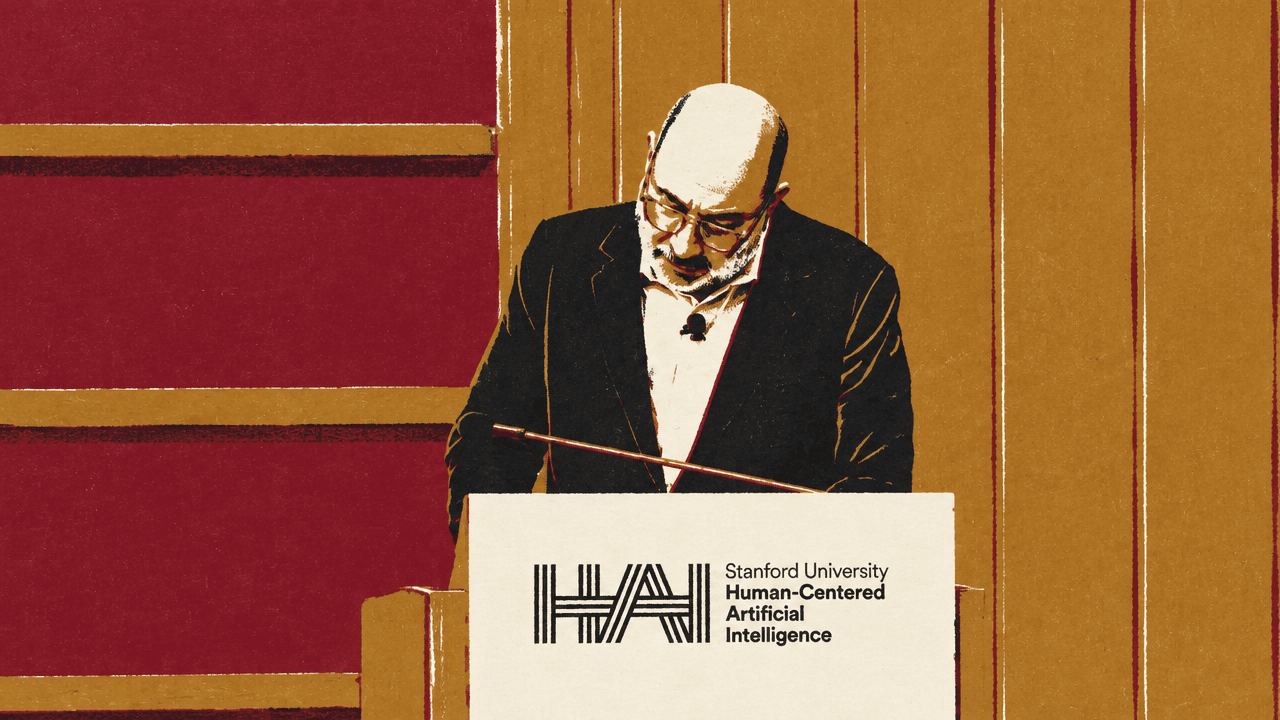
The day’s conclusion was a set of choices, not a single answer
After a day of discussion about AI’s rapid progress and what it could mean for people, James Landay said he did not have a single answer. The conversations had, he said, left the community better equipped to ask the questions. Earlier, he had described HAI as a “lighthouse for the choices ahead.”
In his closing remarks, Landay named the choices directly: what to build, how to govern it, and who gets a seat at the table. Hope and fear are both reasonable responses to this moment, he said. The choices ahead belong to the people shaping AI and its place in society.
Attendees had shared their views through polls, written reflections, and an installation where they could read one another’s responses. Landay presented some of those results as a record of the hopes and concerns voiced during the day.
Attendees put safety testing and liability rules first for trust
Asked what would most increase trust in AI, attendees most often selected third-party safety testing. Clear liability rules came a close second, Landay reported. The poll also offered transparent model data, public input on design, and an open-source ecosystem as options.
| Poll question | Reported responses |
|---|---|
| What would most increase public trust in AI? | Third-party safety testing; clear liability rules came a close second. |
| Where could AI bring the most benefit? | Science and healthcare, by a wide margin. |
| Where is AI’s greatest risk? | Elections and democracy; work and labor. |
The answers put two practical concerns near the top: whether AI systems are tested by parties outside their development, and who is responsible when something goes wrong. The same poll presented several other possible ways to increase trust, without Landay ranking them in his remarks.
On AI’s potential effects, attendees pointed to science and healthcare for the greatest benefit, by a wide margin. They identified elections and democracy, as well as work and labor, as areas of greatest risk. Landay noted the attention to elections and democracy with a brief aside: “surprise this week.”
Nearly 800 reflections will be examined for shared themes
The polls were one part of the day’s feedback. Attendees contributed almost 800 written reflections—aha moments, ideas, fears, and hopes—using prompts about their biggest AI worry, a dream use case, the guardrail most needed, what AI could do in the next year, and a specific use of AI they already liked.
Landay said he had seen people stop at the reflection wall during breaks to read what others had written. He welcomed the time they took to consider one another’s perspectives.
HAI planned to digitize the cards and use both AI and humans to identify themes and patterns across the responses. Landay said the institute would share findings and visual summaries after the conference. The prompts ranged from anxieties and safeguards to specific uses people valued, giving the collection a broader scope than the poll choices alone.
Measurement and safety remained part of the work ahead
The main program’s close was followed by another scheduled conversation, moderated by Vanessa Parli, with Sanmi Koyejo, Michael Kochenderfer, and Dan Ho. Its question was how to measure whether AI is performant and safe. Landay described it as a question beneath many of the day’s discussions and said the conversation would provide a first look at HAI’s new Center on AI Measurement Science, or AIMS.
He described HAI’s commitment as bringing rigor and open research across disciplines to choices about AI, together with colleagues across Stanford. The closing message returned to the same set of decisions: what people build, how they govern it, and whose perspectives inform those choices.