Physics AI Work Depends on Rigorous Problems and Interdisciplinary Collaboration

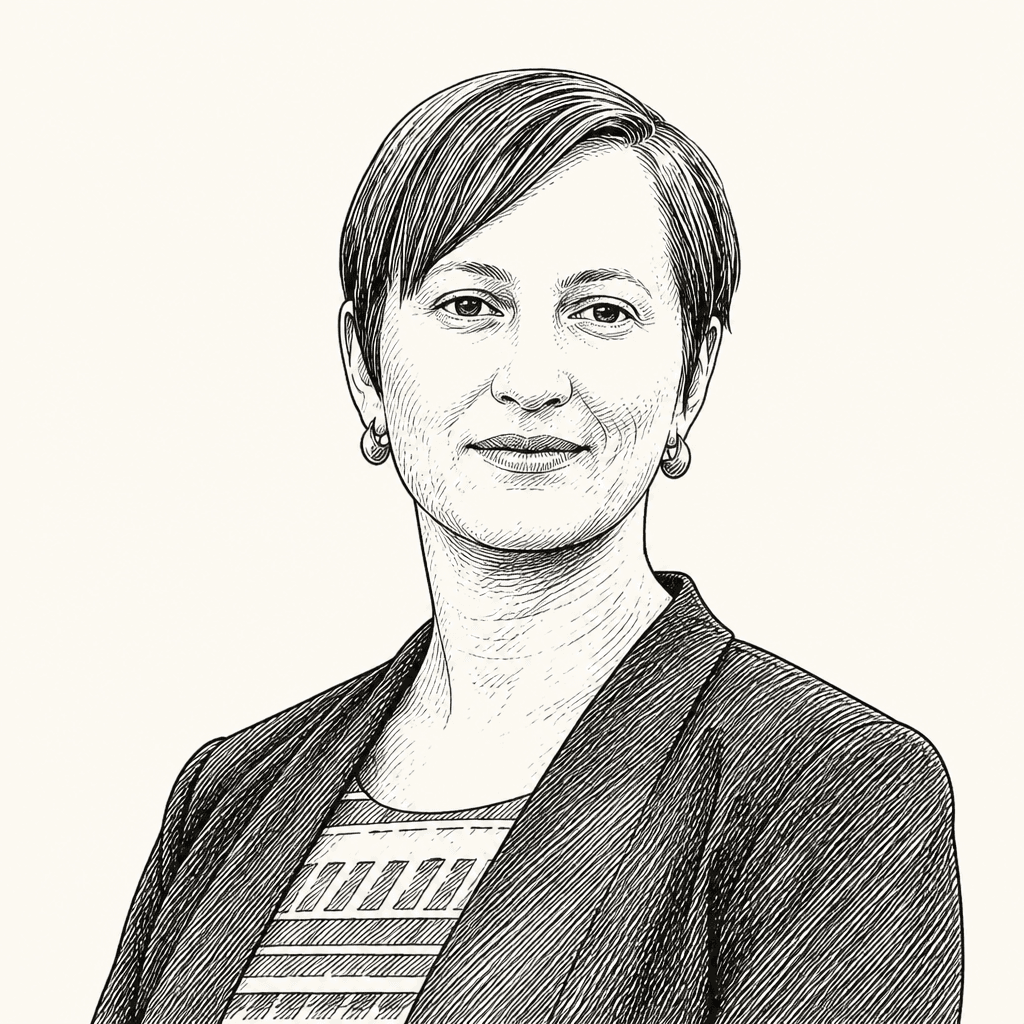
Risa Wechsler used her opening remarks at Stanford’s 2026 Conference on Physics and AI to argue that physics is well placed to make serious use of AI because many of its hardest problems are already rigorous, data-driven and computational. Speaking as director of KIPAC and Stanford’s Center for Decoding the Universe, she framed the opportunity less as a broad endorsement of AI than as a call for grounded collaboration between physicists, data scientists, computer scientists, engineers and statisticians.
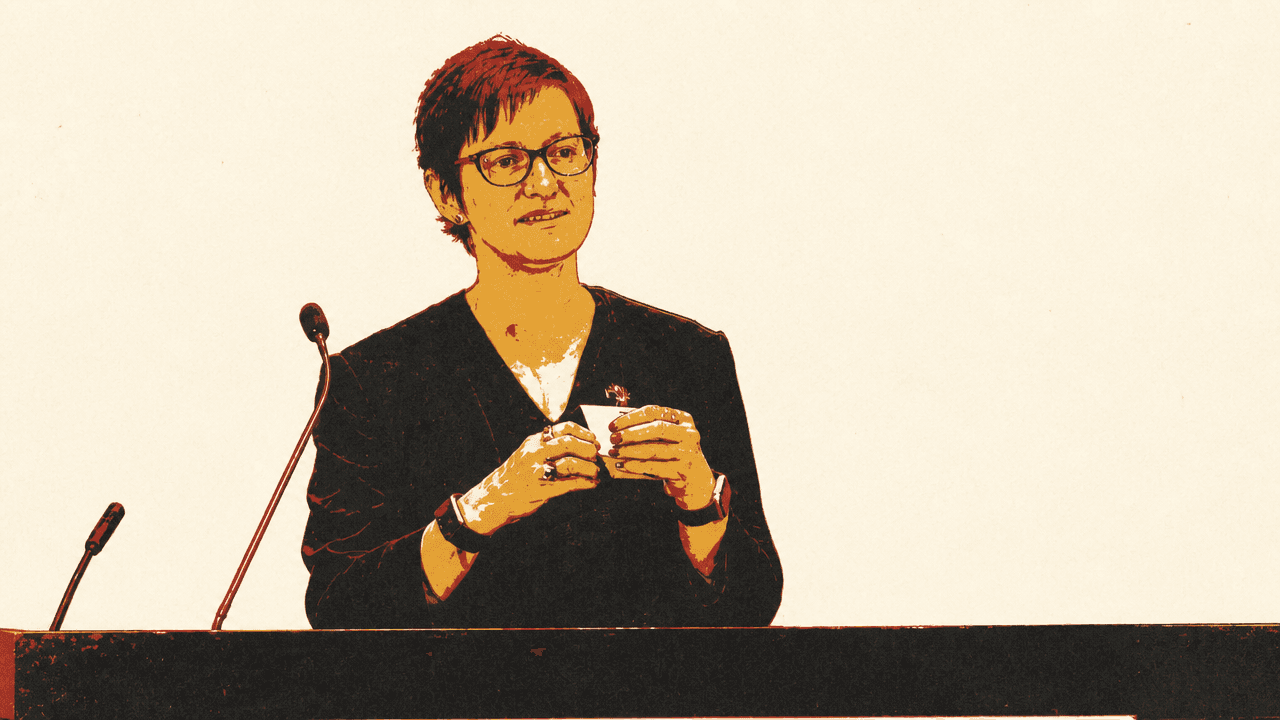
Rigorous, data-driven physics problems are ready for new AI tools
At the 2026 Conference on Physics and AI, held at Stanford from June 10–12, Risa Wechsler framed the physics-AI moment as consequential because of the fit between new computational methods and the way many physicists already formulate problems. Speaking as director of KIPAC, Stanford’s astrophysics institute, and the Center for Decoding the Universe, she said she has been at Stanford and SLAC for almost 20 years in a joint appointment, but has “never been more excited” to be there than now.
Her reason was not general optimism about AI. It was the match between AI, machine learning, data science, and the rigorous, data-driven questions now confronting astrophysics, cosmology, and the broader physical sciences. Wechsler acknowledged that AI is producing “existential crises” and that “there’s many things to be worried about,” but emphasized the scale and scope of problems that may become solvable with these tools.
The opportunity, she said, belongs especially to researchers who are not treating AI as a detached technique. She pointed to people who have “been thinking deeply about AI and machine learning applied to physics and other disciplines for a long time,” and argued that the present moment rewards work grounded in disciplinary understanding.
I think it's a moment where people who are thinking deeply in a grounded disciplinary way, starting with the sort of rigorous problems and the way we think about rigorous problems as physicists, it's a huge opportunity.
The institutional setting was changing too. Benjamin Nachman introduced Wechsler as having multiple roles, including director of the Center for Decoding the Universe and associate director for the newly merged Stanford Data Science and Stanford Human-Centered Artificial Intelligence organization. Wechsler clarified that neither Stanford HAI nor Stanford Data Science is new; both are about seven years old. What changed, she said, is that they had officially merged about a month earlier.


Slides made that connection explicit, showing Stanford HAI and Stanford Data Science together and presenting the Center for Decoding the Universe as a Stanford effort whose aim is “to build interdisciplinary collaborations that leverage complex data to infer how the universe works.” Wechsler said she was especially excited about doing more work, through the merger, at the interface of science, AI, machine learning, and the cutting edge of data science.
The center is built to make interdisciplinary work routine
The Center for Decoding the Universe began in astrophysics, but Risa Wechsler said it takes the word “universe” seriously: “I think all of you work on something in the universe.” Its stated purpose, shown on the center slide, is to “build interdisciplinary collaborations that leverage complex data to infer how the universe works.”
Wechsler named Susan Clark and Ben Nachman as co-directors of the center with her. From the start, she said, the center has focused on interdisciplinary collaboration. The most exciting part for her has been “real substantive discussions and collaborations” with computer scientists, engineers, and statisticians.
The exchange is meant to move in both directions. In some cases, those collaborators bring new approaches to problems physicists have thought about for a long time. In other cases, the long-standing scientific problems themselves push methodology forward. Wechsler described a relationship in which difficult scientific questions and computational methods can shape each other.
The center slide paired that ambition with a practical inventory of recurring activities.
| Activity listed on the center slide | Description from the remarks or slide |
|---|---|
| Quarterly forum and annual conference | The annual conference was underway; Wechsler said another quarterly forum would be held in the fall. |
| Summer Monday collaboration time, 12–3 | Wechsler described a three-hour loose collaboration time every Monday during the summer. |
| Bi-weekly journal club | Listed on the slide; Wechsler said the Monday collaboration time would include the journal club. |
| Topical workshops and hackathons | Listed among the center’s key activities. |
| Key projects | Listed among the center’s key activities. |
| Co-supervision of student projects | Listed among the center’s key activities. |
| Joint group meetings | Listed among the center’s key activities. |
| Your ideas here | The slide explicitly left room for participant-driven additions. |
The summer collaboration time was intentionally loose: part journal club, part formal meeting, part unstructured time for “hanging around and hacking on things and trying to solve problems.” Wechsler invited Stanford participants whether or not they had previously been involved, and said the center was also interested in participation beyond Stanford as it looked to “kickstart more collaborations” in the coming year.
The practical instruction was to talk across fields
Risa Wechsler closed by turning the institutional welcome into a working instruction: talk to people you have not talked to before. Echoing an earlier point attributed to John, she said the most important thing was to make new connections, learn things, and come away with motivation for what comes next.
That instruction matched the center’s structure. The annual conference, quarterly forums, journal club, workshops, hackathons, joint meetings, and open collaboration time were all presented as mechanisms for bringing physicists into substantive contact with computer scientists, engineers, statisticians, and others working on complex data problems.
Wechsler’s opening claim was that the physics-AI opportunity depends less on generic excitement about AI than on connecting rigorous domain problems, methodological advances, and sustained interdisciplinary work.