Kalshi Built Its Prediction-Market Lead by Suing Its Own Regulator
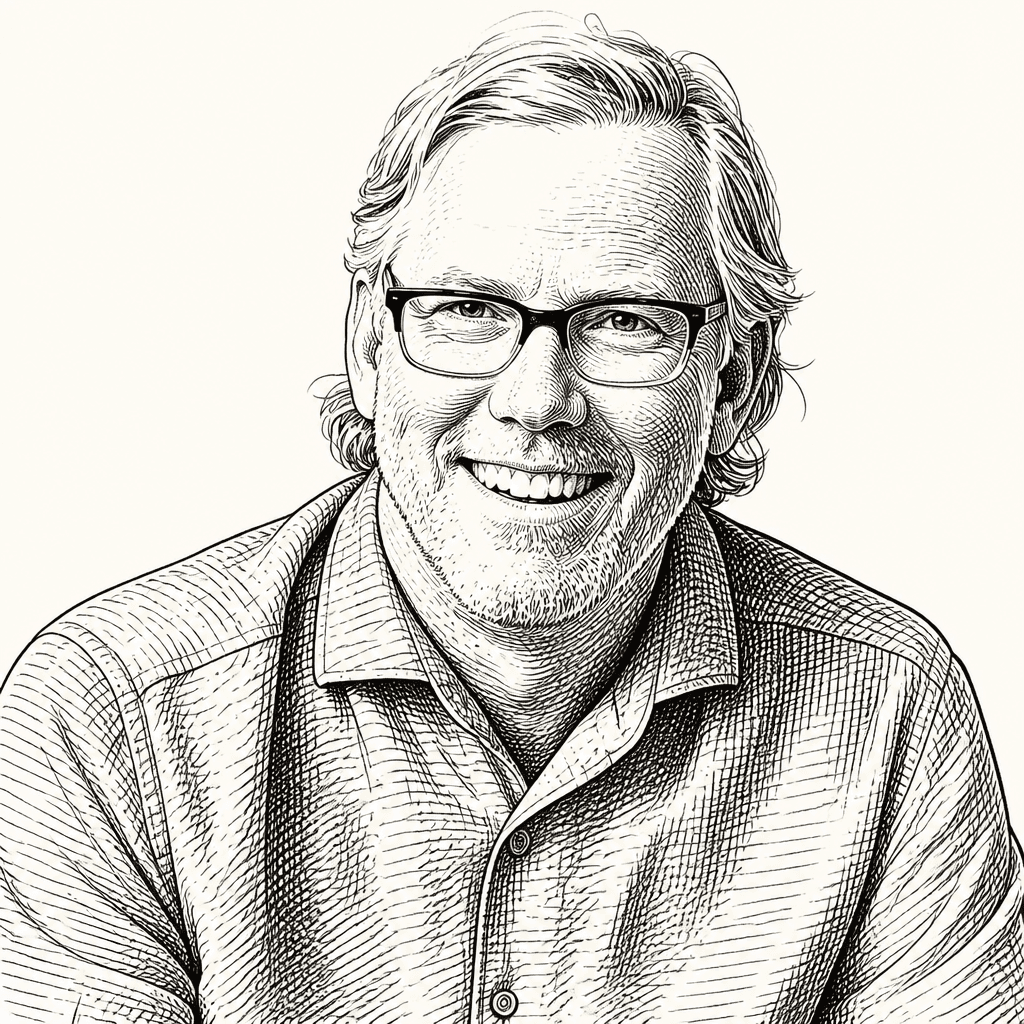

Kalshi co-founder Tarek Mansour argues that the prediction-market company’s defining choices — refusing to pivot, suing the CFTC, and keeping a deliberately chaotic founder-led organization — all followed from treating Kalshi as a vehicle for an “everything exchange,” not as a conventional startup to be optimized. In his account, the company’s legal victory before the 2024 election mattered because years of regulatory patience, product work, and co-founder disagreement with Luana Lopes Lara left it ready to use the opening.
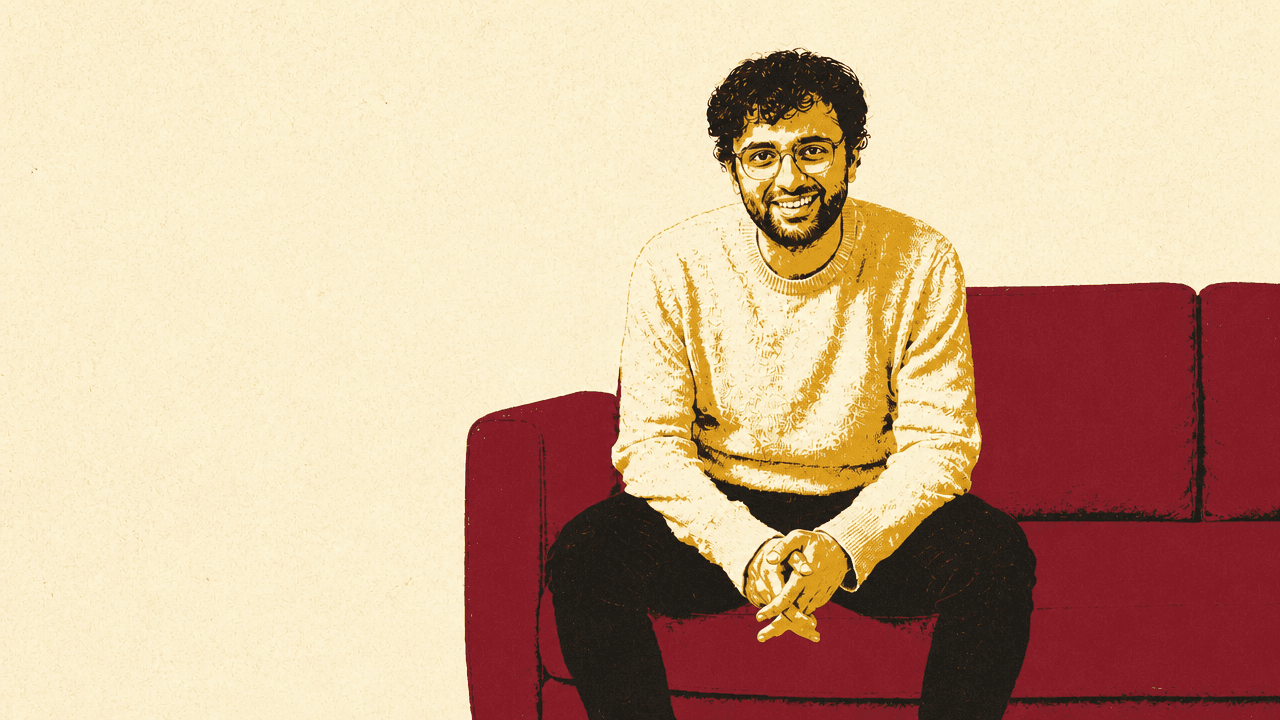
Kalshi was built around the idea, not the company
Tarek Mansour describes Kalshi as a company that never really pivoted because the company was not the point. The point was the market structure he and co-founder Luana Lopes Lara wanted to exist: an “everything exchange,” a regulated venue where people could trade on a broad range of future events.
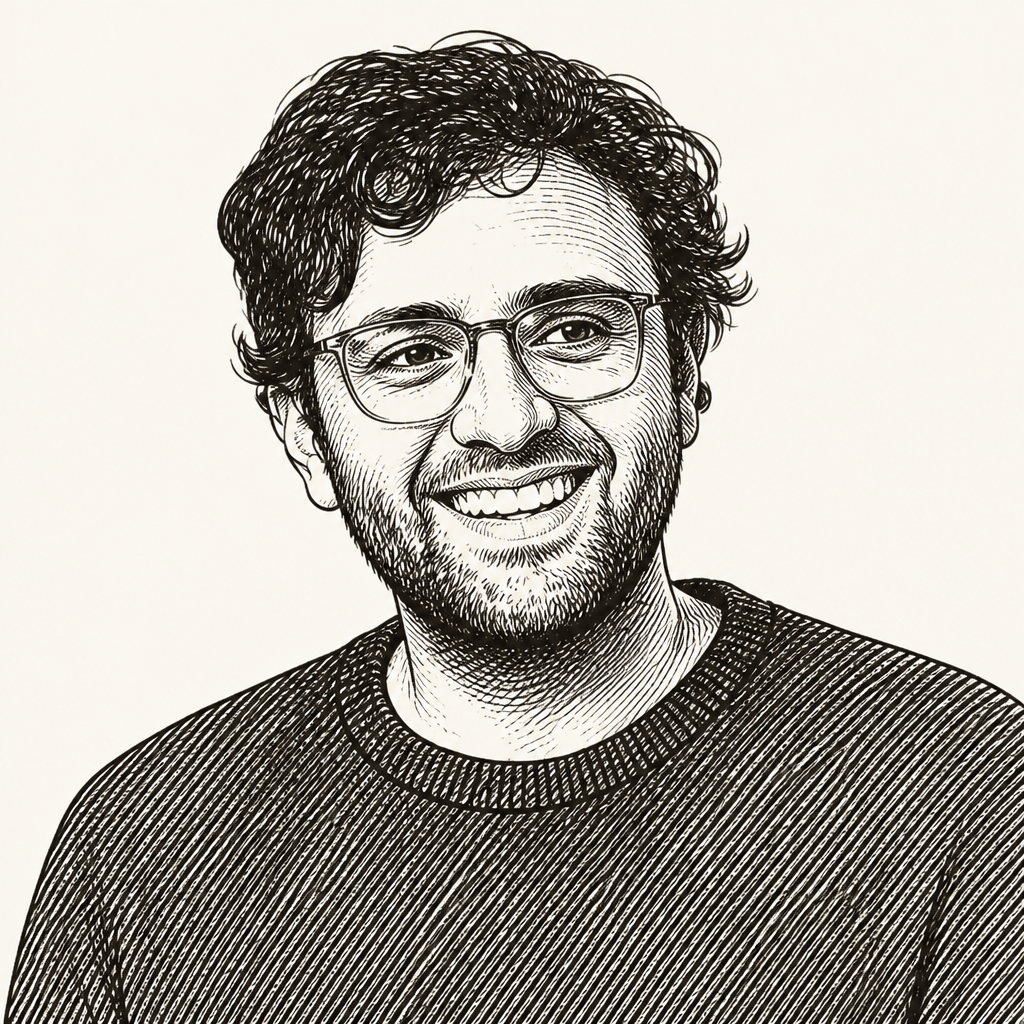
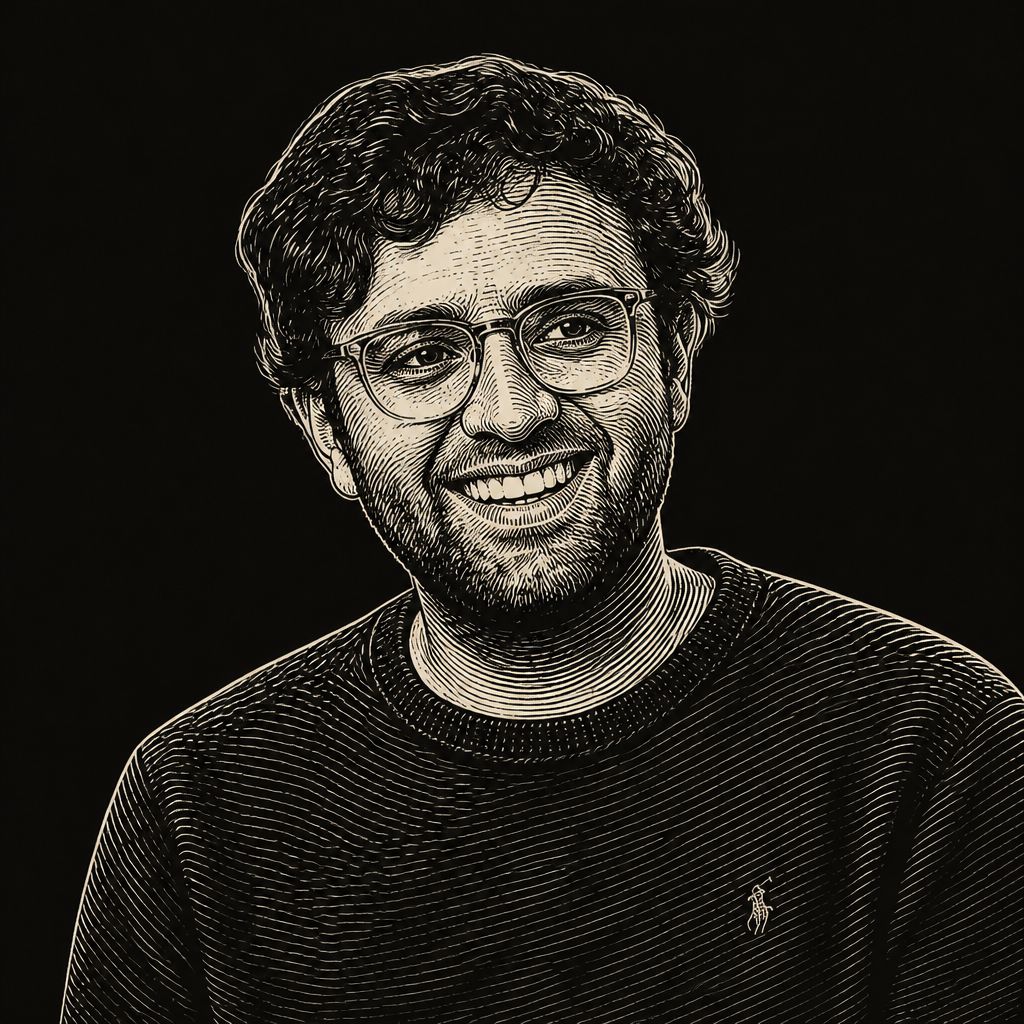
Kalshi, he noted, means “everything” in Arabic. He said the founders “didn’t build Kalshi to build a company”; they “built a company to build Kalshi.” The distinction explains why Mansour says the company stayed on a path that, for years, looked commercially and politically irrational. He does not present himself as someone who had always wanted to be a founder. If the dice were rerolled, he said, he would probably have become a trader or risk manager, not an entrepreneur. But the idea was “so glaring” that he felt pulled by it.
We didn’t build Kalshi to build a company. We built a company to build Kalshi.
That framing is central to how he explains Kalshi’s years of stagnation, regulatory conflict, and eventual legal confrontation with the CFTC. Many companies preserve optionality by changing markets, products, or narratives when the original path becomes too costly. Mansour says Kalshi did not, because the mission was not merely to operate in an adjacent financial-services category. It was to build the prediction-market exchange inside the regulated U.S. system.
The company, he said, started in 2018, began talking to the government about election markets before its public launch, built toward the 2022 midterms, then watched the CFTC delay the matter until the election window had passed. Mansour called that a “pocket veto”: not an explicit no, but, in his characterization, a delay long enough to eliminate the practical value of approval. Kalshi then launched with a more limited set of markets, which Mansour said made it hard to get the exchange running. The company lost people and eventually had to do a layoff.
Mansour described that period as “walking through the desert,” with false signs of relief that turned into “mirages.” He said he wanted to give up “every day.” His claim is not that persistence was easy or obviously correct at the time. It is that if the reason for founding is the idea itself, abandoning the idea means abandoning the reason the company exists.
The co-founder dynamic is structured disagreement
Mansour’s operating relationship with Luana Lopes Lara is not a clean division of executive responsibilities. He said they spent years treating their inability to give a tidy answer about how they split the company as a weakness. Over time, his view changed: the model works because it works for them.
The rough division is this: Mansour thinks at the very high level and the very low level. He focuses on strategy, where the world is heading, Kalshi’s “rights to win,” external work, regulatory and policy matters, fundraising, and the customer-facing details of marketing, copy, and product feel. Luana, he said, runs the company day to day. “Everything else that is actually running the company is Luana.”
That division is paired with deliberate opposition. Mansour said they “disagree by design.” They often take opposite sides of an argument because Kalshi itself requires a constant balancing act between innovation and regulatory risk. The tension does not produce paralysis, in his account; it pulls the company away from extremes. They do not always get the right answer, he said, but they tend not to be too far from it.
Brian Halligan framed Mansour as the more conservative of the two, especially on regulatory risk, and Mansour agreed. Luana, as Mansour described her, is a “faith-based optimist,” at times “super irrationally optimistic.” Mansour is the paranoid risk manager: probabilistic, expected-value-oriented, and quick to list the ways a plan can fail. What used to frustrate him about Luana’s optimism has become, in retrospect, part of the company’s machinery. Given enough time horizon, he said, her apparently irrational optimism tends to become true.
That opposition also matters because both founders have equivalent legitimacy. Mansour said an employee, no matter how senior, has a different incentive structure from a founder who owns as much as the CEO and is equally responsible for the outcome. A non-founder report will not always tell the founder the truth, he said; with two equally powerful co-founders, it is harder for either one to “stray.”
Halligan, reflecting after the interview, said the dynamic reminded him of his own relationship with HubSpot co-founder Dharmesh Shah: complementary opposites where “one plus one equals three.” What surprised him was the direction of the complementarity. He had expected Mansour to be the risk-seeking one. Instead, Mansour presented himself as risk-averse and disorganized, while Luana was both more organized and more willing to push through uncertainty.
Mansour was direct about his own deficits. He called himself a procrastinator and “so disorganized,” saying the people around him would describe the day-to-day as “such a shit show.” Luana “orchestrates everything.” His own strength, as he described it, is not broad managerial completeness but obsessive focus. He can become consumed by a specific domain — marketing, messaging, product detail — and get good at it quickly because he stays with it until it works.
Chaos is an operating choice, not a failure mode
Kalshi’s org design is intentionally unusual. Mansour said roughly 150 people report to him and Luana across most of the company, with some functions left to operate more conventionally. Halligan pressed on how that does not become chaos. Mansour’s answer was that it is chaotic — but that chaos buys adaptability.
The premise is that the company must be able to reorient around whatever the biggest problem or opportunity is with little friction. Mansour resisted the word “pivot” for Kalshi’s product vision, but embraced constant reassembly at the organizational level. He compared the company to a complex system: organisms and cells moving around, then recombining. In a world that is itself chaotic and accelerating, he said, rigid structure can become unnatural. The organization needs to remain sensitive to changing conditions.
This is not a standard metrics-driven planning culture, at least by Mansour’s description. He said Kalshi is intensely metrics-oriented where risk touches the product — for example, margin extended to customers — but less so in executive decision-making. The conversations are more likely to revolve around what customers are saying, where demand is showing up, where the company can be first or aggressive, and which one or two challenges matter most at that moment.
He gave a sequence of recent examples. After the election markets opened, the question was whether Kalshi could convert election-driven demand into broader usage. Mansour said the company tried to prove a network-effect engine: new demand attracting more liquidity, which improved other markets, which lowered the cost of demand, which then compounded. After that, the focus moved to proving a broker strategy — becoming an infrastructure layer for other brokers, not just a direct-to-consumer exchange. When brokers grew to 80% of revenue, the problem inverted: the company had to prove it was not too dependent on those partners. Mansour said the company then refocused on direct volume, helped by the liquidity brokers had brought, and brokers eventually fell to about 10% of volume.
| Phase | Central question | Mansour’s description of the response |
|---|---|---|
| Post-election demand | Would users stick and trade other markets? | Use election-driven demand to attract liquidity, improve other markets, and compound the network effect. |
| Broker strategy | Could Kalshi become infrastructure as well as a consumer product? | Scale broker partnerships and prove the B2B motion could work alongside direct-to-consumer. |
| Broker concentration | Was revenue becoming too dependent on large partners? | Return focus to direct volume after brokers had deepened liquidity across the exchange. |
| Mainstream scrutiny | Could Kalshi distinguish regulated prediction markets from offshore or unregulated actors? | Spend executive time on policy, positioning, and responsible-market guardrails. |
The important point is not simply that the company moved between consumer, B2B, sports, financial markets, and policy. It is that Mansour sees this movement as the reason to keep the organization flat and founder-driven. He said that for any “big meaty problem” the company must get right, one of the two founders should be directly responsible. The DRI who gets “grilled,” in his phrase, is always either him or Luana.
His metaphor is a ship with a hole in it. Every company, he said, has one: the leak that can eventually sink the whole enterprise. One kind of organization has the founders stare directly at the hole every day. The other delegates it to someone else. That person, facing the pain of the problem without founder-level incentives, may put “a rug on top of the hole.” Growth continues, but the leak remains.
For Kalshi, Mansour said the hole in January was reputational and regulatory differentiation. He believed the company needed to separate itself from unregulated and offshore prediction-market activity, and from concerns such as insider trading. Users and the public, he said, often did not understand the difference between a regulated onshore prediction market such as Kalshi and offshore actors. He described that as bad for the industry and said much of his recent time — “pretty much like 80%” — was going into communicating the regulated version of the category and its guardrails.
The CFTC lawsuit was an asymmetric bet with no plan B
The most consequential decision in Kalshi’s history, as Mansour tells it, was Luana’s proposal to sue the company’s own regulator. Mansour called it “crazy” even after the win. Being legally right, he said, is only part of the issue when dealing with government. Politics, institutional power, cost, and timing matter. The government, in his description, can impose costs on a private company long before the company can hold it accountable.
The path to the lawsuit began years earlier. Kalshi had been engaging the government about election markets before its public launch, arguing that such markets were legal and would provide an accurate gauge of electoral probabilities. Mansour said he had effectively bet the company on launching election markets for the 2022 midterms. Instead, the matter was delayed past the election. At the end of 2022, he said, election markets were banned for Kalshi, leading to departures and a layoff.
That outcome created a crisis of interpretation inside and around the company. Mansour framed it through the distinction between expected outcome and outcome. A decision can have a good expected value and still produce a bad realized result because variance breaks against it. The world, he said, rewards outcomes, not expected outcomes. But expected outcome is what the decision-maker controls.
He illustrated the point with sports and poker. After France lost the World Cup final on penalties, he said, some in France wanted to oust Didier Deschamps despite his prior success and the inherent coin-flip quality of penalties. Mansour saw Kalshi’s 2022 setback similarly: the coin landed against them, and outsiders interpreted the result as evidence of wrong strategy or wrong execution. The best poker players, in his view, know when they are playing a good hand and can tolerate losing to variance because, over enough hands, the expected value matters.
That retrospective confidence was not present in the moment. Mansour said the expected-outcome framing makes more sense looking back than it did while the company was suffering. But after the 2022 setback, Kalshi tried again. In 2023, according to Mansour, the government rejected the election-market effort outright. Luana had already been arguing that if another rejection came, the company should prepare to sue.
The reaction from advisers and investors was largely negative. Mansour said Alfred Lin, on the board, called it a crazy idea and warned that even a larger company would struggle to win against the government. A startup suing its own regulator could lose, incur enormous cost, or be killed through regulatory retaliation. Mansour shared many of those concerns. He worried that the company’s clearing-house structure could be undermined, that sanctions or personal consequences could follow, and that the regulator could impose what he called “death by a thousand paper cuts.”
Luana, in his account, was far less conflicted. Mansour oscillated. The night before filing, he was still wavering. Luana pushed hard, and the room developed what he called a “missionary feeling”: the sense that they had come too far to stop and should “go full on war.”
The calculation was not that the odds were high. Mansour said the odds were hard to price. The appeal was asymmetry: even with a low probability of success, the outcome if Kalshi won was so large that the expected value looked attractive. They “bet the farm,” with “no plan B.”
If it does work, the outcome is so big, and the expected value seems pretty attractive actually. Even if a low percentage odds of success, the outcome is so big.
The win came, according to the discussion, three and a half weeks before the 2024 election. Mansour described the notification vividly. He had told Kalshi’s litigator, Yaakov Roth, not to call him unless there was a court decision, because a previous call had caused his heart to drop. When Roth’s name appeared on his phone, Mansour froze. Roth told him, “We won.” Mansour said he barely remembers what followed, except that people were throwing chairs and effectively destroying the office in celebration.
The reaction was intensified by what Mansour said had preceded it: competitors gaining brand attention while Kalshi stuck to its regulated strategy; pressure around the clearing-house structure; enforcement actions; audits that, in his characterization, stretched from what would usually take days into a nine-month process; and personal pressure. The win felt vindicating because, for the first time, he said, Kalshi finally had the opportunity to win.
The legal win only mattered because the company could compound it
The court victory gave Kalshi permission to move, but Mansour rejected the idea that the business immediately exploded on its own. The first few days were slow. “You win and then they’re like, ‘Oh, let’s launch it.’ And then nothing happens,” he said. The company still had to build the motion, the brand, and the habit.
The timing was unusually favorable: about three and a half weeks before the election. Mansour acknowledged that luck mattered, but he framed it as earned exposure to luck rather than pure accident. Kalshi had spent five or six years expanding its “luck surface area,” so eventually it could catch the break.
Once the window opened, Mansour said the company treated it as its shot. Everyone was in the office. He said he barely cared about anything else and joked that he might shower once every four days. For weeks the numbers were slow, then they began to uptick, and eventually “the machine started going.”
Mansour attributes the post-approval trajectory to years of foundation-building combined with faster execution on product and growth. He contrasted Kalshi’s approach with competitors that launched earlier without a license. They may have owned the brand in the headlines, he said, but Kalshi was dogmatic about doing it “the right way.”
The reasons were both practical and philosophical. Practically, Mansour does not believe financial services and healthcare allow the same “move fast and break things” posture common in parts of Silicon Valley. In financial services, when things go wrong, they go wrong badly. For mainstream and institutional adoption, he said, counterparties care about how the business is regulated and operated. Philosophically, he found it more exciting to change the system from within — “building the next generation New York Stock Exchange” — than to operate offshore on the side.
He tied that foundation to trust. When people put money on Kalshi, he wants them to feel that the venue is regulated and reliable. After the legal and regulatory path opened, he said, the company’s trajectory went “parabolic.” Halligan stated that Kalshi now has about 95% U.S. market share in prediction markets; Mansour answered that the strength was “across the board.”
The claim in the discussion was not that legal compliance alone created growth. Mansour’s case was that the regulatory foundation, product infrastructure, liquidity, and execution mattered together once the blocked market became available. The lawsuit created the opening; the years before it determined whether Kalshi could use the opening.
Marketing is treated as timing, not just creative
Mansour’s obsession with marketing is unusually tactical for someone who describes himself as a risk manager by temperament. He said the last 10% of execution contains “all the results.” Most people, in his view, stop at an 80-20 version, but because everyone is doing that, it is insufficient. Marketing has to hit what he called a “resonant frequency”: the exact combination of form, message, and timing that produces a sharply better result.
One example was the 2024 election billboard campaign. Mansour wanted the billboards to be the product, not merely ads for it. They had to look exactly like the app, be live, use the API, and update in real time as trades occurred. The goal was habit formation: people looking up in Times Square, Los Angeles, or elsewhere and learning that Kalshi was where they could see live odds. He said it took about 20 iterations of putting the work out, pulling it back, and refining it. That process exhausted designers and engineers, but he saw it as the kind of work only a founder would insist on.
Timing is the other half of the theory. Mansour said people do not care about Kalshi in the abstract; they care about themselves and what they are already reading, watching, or discussing. The job is to bring Kalshi to whatever is happening in the culture, not force the company’s message into a vacuum. The relevant window has compressed from months to weeks to days, and perhaps now to hours.
His examples all share that logic. Kalshi partnered with Lionel Messi two days before what Mansour described as Messi’s first game of his last World Cup, because he was at peak relevance. The Timothée Chalamet commercial launched 12 hours after the Knicks-related news that had people talking about him. A Giannis announcement was timed just after news that he was not leaving his team. AI-generated ads worked when the cultural debate around AI art was live; Mansour said they would not work now because “now it’s cool to do real things.” News integrations with CNN, CNBC, and Fox were framed around the broader debate over whether news was outdated or modernizing.
This timing creates operational strain because counterparties have their own processes. Halligan asked whether celebrities or media companies care about Kalshi’s preferred timing. Mansour’s answer was essentially that the company has to fight through it. Too much process kills the opportunity. A partnership function that plans in three-week cycles cannot capture a 12-hour cultural window.
Kalshi’s marketing organization reflects that bias. Mansour said the company has a CMO, Alan, who is strong on the scientific parts of marketing and spending money with high ROI. But the brand function is looser. The person leading brand had no direct reports and was “flying around the country” doing unusual projects. Mansour said he originally hired him from the “inverse Cramer” account on Twitter because he had a knack for strange, esoteric ways of entering the zeitgeist. That skill, Mansour said, works not only for consumers but also for institutions, because being continuously top of mind matters even when institutional customers also require serious risk, compliance, and operational conversations.
Public trust is the category risk Mansour thinks founders cannot delegate
Halligan raised the concern that younger users, including his 21-year-old son and his friends, might become addicted to prediction-market trading. Mansour did not dismiss the concern. He said there are similar impulses between trading and gambling, and that he thinks about the risk a lot because he does not want people to get hurt.
His answer begins with category definition. Mansour said new trading products have often been attacked as gambling. He cited grain futures, saying that commodity futures once faced lawsuits and were eventually legalized through a Supreme Court decision in the 1900s. The historical analogy was part of Mansour’s argument: speculation can look like gambling because it shares surface features with gambling, but an open, transparent exchange where participants trade against one another can also produce price discovery.
The stronger distinction, for Mansour, is incentive structure. In gambling, he said, the company’s revenue equals customer losses. That creates pressure to block winners, court losers, and use promotions to bring back customers who repeatedly lose. A gambling business cannot fully solve addiction, in his view, because reducing excessive losses directly threatens its economics.
Kalshi, he argued, is structurally different because it charges a fee whether a customer wins or loses. Losses go to other participants, not to Kalshi. That gives the company, he said, an incentive to encourage informed trading, liquidity, and better forecasting rather than customer self-destruction. He wants “smart traders,” because more research and liquidity improve the forecast, which makes the market more useful and increases top-of-funnel interest.
Halligan pushed back that, in Kalshi’s world, sophisticated traders may be taking the other side of casual users’ gut-feel trades. Mansour agreed that this happens. His response was that the same is true of competitive markets broadly: not everyone wins in stocks, options, sports, or any high-skill competitive setting. The platform’s obligation, in his view, is to be fair and neutral, give users tools to research, and identify excessive behavior.
Mansour said Kalshi adds more throttling for 18-to-20-year-old users even though, according to him, the data does not show dramatically different behavior in that group. The reason is social concern. Throttling means adding friction when an account appears to be losing too much or behaving excessively, including additional verifications. He also described a parent portal designed to prevent minors from using a parent’s ID. Parents can give Kalshi their ID and tell the company not to allow anyone else to use it. Mansour claimed this solves “95% of the issue” of minors accessing the platform through parental identity.
He also claimed that the percentage of Kalshi users showing patterns of excessive behavior, excessive losses, or losses in general is lower than in options trading and lower than active stock trading. The broader argument is that irresponsible behavior exists across financial markets, and the proper response is to flag and throttle it rather than collapse the category into gambling.
The positive case Mansour makes is epistemic. He believes prediction markets can train users to become smarter about the future. Compared with social media, which he described as polarizing, extremist, and “brain rot,” prediction markets reward calibrated, well-reasoned takes. Social media does not reward that behavior, he argued; prediction markets do because being wrong has a cost and being well calibrated can be profitable.
That product-safety argument sits inside a broader theory of mainstream adoption. When a consumer technology becomes large enough, Mansour said, a portion of society will worry because it does not understand the product or sees only its risks. At the same time, incumbents will attack because the new product is taking value from them.
His examples were Uber and Airbnb. Taxi interests did not argue that Uber should be stopped because taxi margins were threatened, he said; they argued it was unsafe. Hotels did not simply complain about Airbnb’s economics; they amplified cases of harm and risk. In his view, the press is drawn to scandal and drama, and incumbents learn to frame their economic concerns as public-safety concerns.
For Kalshi, he said, the “easy low-hanging fruit” is to call the product gambling. That is why the company’s regulatory-first posture has become not only a compliance position but a communications position. Mansour said Kalshi has to explain that there is a right way to build the category: regulated, onshore, with guardrails. He compared the issue to AI, where he said the answer is not to decelerate but to add the right guardrails and communicate why they are the right ones.
This was also why Halligan asked whether recent scrutiny of Polymarket was good or bad for Kalshi. Mansour said it was bad. Competition, he argued, is rarely the true company killer in a large market. The bigger risk is category damage. If the public and policymakers cannot distinguish between regulated and unregulated actors, reputational problems for one company can hurt the whole field.
That belief explains the current “hole in the ship” for Mansour: distinguishing regulated prediction markets from offshore or unregulated alternatives, and rebuilding trust in the industry’s reputation. Even if Kalshi’s own house is in order, the public story still has to be told. That is why he described the work as founder-level rather than communications-staff work. In his model, the leak that can sink the company has to be watched by someone with founder-level responsibility.
The founder’s life is not the oasis
Mansour’s advice for founders walking through their own desert is not simply “keep going.” He believes the number one risk is giving up if the founder is genuinely pulled by the idea. But he also agreed with Halligan that many founders should give up because the opportunity cost can be enormous. The distinction is why they are doing it.
If the founder is pursuing the company because the idea itself matters deeply, Mansour thinks persistence may be warranted. If the founder is pursuing the imagined rewards that people associate with success after the fact — status, glamour, freedom, money — he thinks the premise is weak. Entrepreneurship, in his telling, does not end in an oasis. The original desert turns into other deserts or storms: sometimes clean water, sometimes a “shitstorm,” but not the fantasy of arrival.
His own routine is not glamorous. He said he wakes at 7, gets to the office by 8, usually leaves around 10 at night, works a little at home, wastes about 30 minutes on Instagram Reels, then goes to bed. On weekends he may go to dinner one night, but if he is not traveling he is usually in the office Saturday and Sunday. He does not require employees to match those hours and said he does not believe in forcing everyone into a performative 24/7 grind. Founders can work that way, he argued, because they have the strongest incentive. If they do, the right people may choose to be around them, sit next to them, and work through ideas.
When Halligan asked what Mansour would say if his younger brother wanted to start a company, Mansour’s answer was: “Why?” Wanting to be one’s own boss is not enough. Halligan added that CEOs are not really their own bosses because they answer to boards, employees, and customers. Mansour agreed and went further: a good CEO works for everyone else. As the company grows, the founder becomes less free, not more.
His other major piece of advice is that the company has to be true to the founder. He does not believe one can easily build, market, or operate a company that is not an expression of the people leading it. Every large company, he said, makes more sense once one meets the founder or CEO. The office, the product, the culture, and the decisions are “them.” The implication is that copying someone else’s CEO playbook can only go so far. If there were a universally correct way to do it, everyone would do it.
Halligan closed by saying Mansour was clearly himself. In his own reflection, Halligan emphasized Kalshi’s mission-driven character, its large foundational bets, and the unusual complementarity between Mansour and Luana. The lesson was less about adopting Kalshi’s chaos than about understanding why, for this company and these founders, the chaos was part of the design.