NVIDIA Casts Japan as a Hub for AI Factories


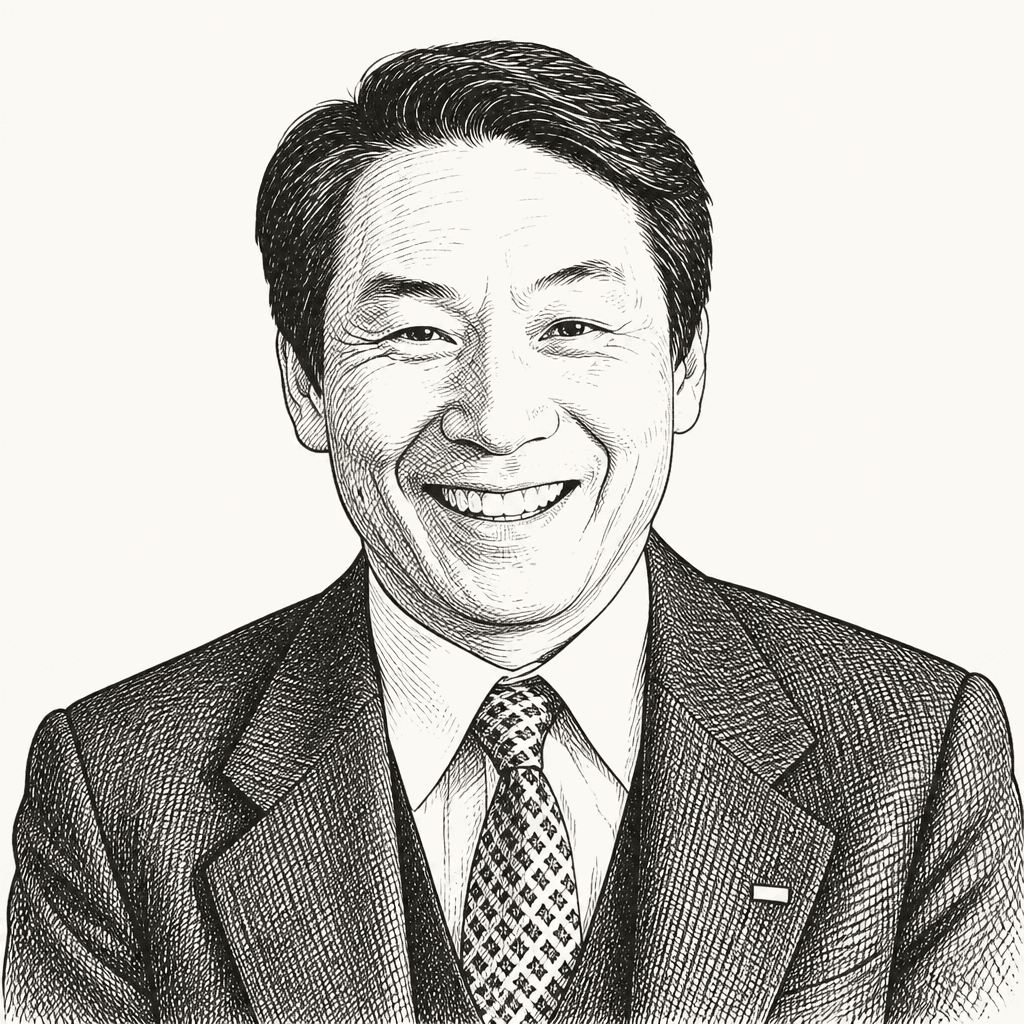
NVIDIA argues that Japan’s manufacturing disciplines, engineering culture and long relationship with robotics make it a natural setting for AI factories—computing systems that produce intelligence for scientific, engineering and industrial work. The company presents this as the next phase of a three-decade relationship that began in gaming and later extended into accelerated computing, framing AI infrastructure and robotics as the future it seeks to build with Japan. It identifies no specific AI-factory deployments, however, instead making its case through industrial fit and ambition.

AI factories recast computation as industrial capacity
NVIDIA’s central proposition is that Japan is not merely a market for advanced computing. Its manufacturing discipline, engineering culture, and long relationship with robots make an AI factory intelligible as the next industrial system: a factory that produces intelligence for science, engineering, manufacturing, and robotics.
NVIDIA grounds that proposition in an account of Japanese production as purposeful. Excellence, it says, does not happen by accident; it is a philosophy and a way of life. “Made in Japan” came to signify reliability, beauty, attention to people, imagination, quality, and taste.
Toyota’s production concepts provide the operating vocabulary. Kanban means making work visible; kaizen means continuously improving it; gemba means going to where the work is done. NVIDIA links those ideas to factory scenes: cards sorted in a wall-mounted rack, a process board marked “After Kaizen,” and workers gathered around a vehicle chassis. An unidentified Toyota speaker describes a new product as neither “your car” nor “my car,” but “our car.”
For NVIDIA, an AI factory extends that collective production logic into computation. Rather than producing vehicles or parts, it produces intelligence that can be used in other kinds of work. The examples are narrow but pointed: a real-time tsunami simulation at the Institute of Science Tokyo, and an Institute speaker describing GPU acceleration becoming mainstream as “just the beginning.”
AI is presented as a new industrial revolution, with AI factories generating intelligence for scientific work, engineering, and manufacturing. The intended horizon is physical as much as digital: systems that can support what NVIDIA calls the golden age of robotics.
Japan’s robot future joins cultural imagination to physical work
Japan’s relationship to robots gives NVIDIA’s industrial argument both cultural depth and a direction of travel. Robots appear first as objects of imagination and companionship, then as machines operating in the physical world.
Soichiro Honda supplies the language of aspiration.


年をとるとね、夢が欲しいですね。夢がなくなったらね、恐らく生ける屍だな。
Honda’s words are translated on screen as: “The older I get, the more dreams I have,” and, “When you run out of dreams, there will be no meaning in life.” NVIDIA places that sentiment within a lineage of Japanese invention, alongside Hisashige Tanaka’s Myriad Year Clock, Toyota’s founders, and Sony’s founders.
The distinction in its robot imagery is deliberate. Astro Boy’s declaration—“This is what it means to have a beautiful heart!”—and Doraemon’s insistence that he is a cat-shaped robot, not a tanuki, make robots characters with personalities and moral feeling. Honda’s ASIMO and industrial machinery from Kawasaki Heavy Industries shift the emphasis to embodied systems at work.
A quotation displayed over the Kawasaki footage says that the world’s robots are working in Japan and predicts that robots will become the next export boom. NVIDIA’s point is not simply that robots are a future application for AI. Japan is portrayed as a place where the social imagination of robots and the capacity to build physical robots have developed together.
Sega’s release gave NVIDIA time to become NVIDIA
NVIDIA places its Japanese relationship inside its own origin story. Shoichiro Irimajiri appears at Sega announcing the Dreamcast project:
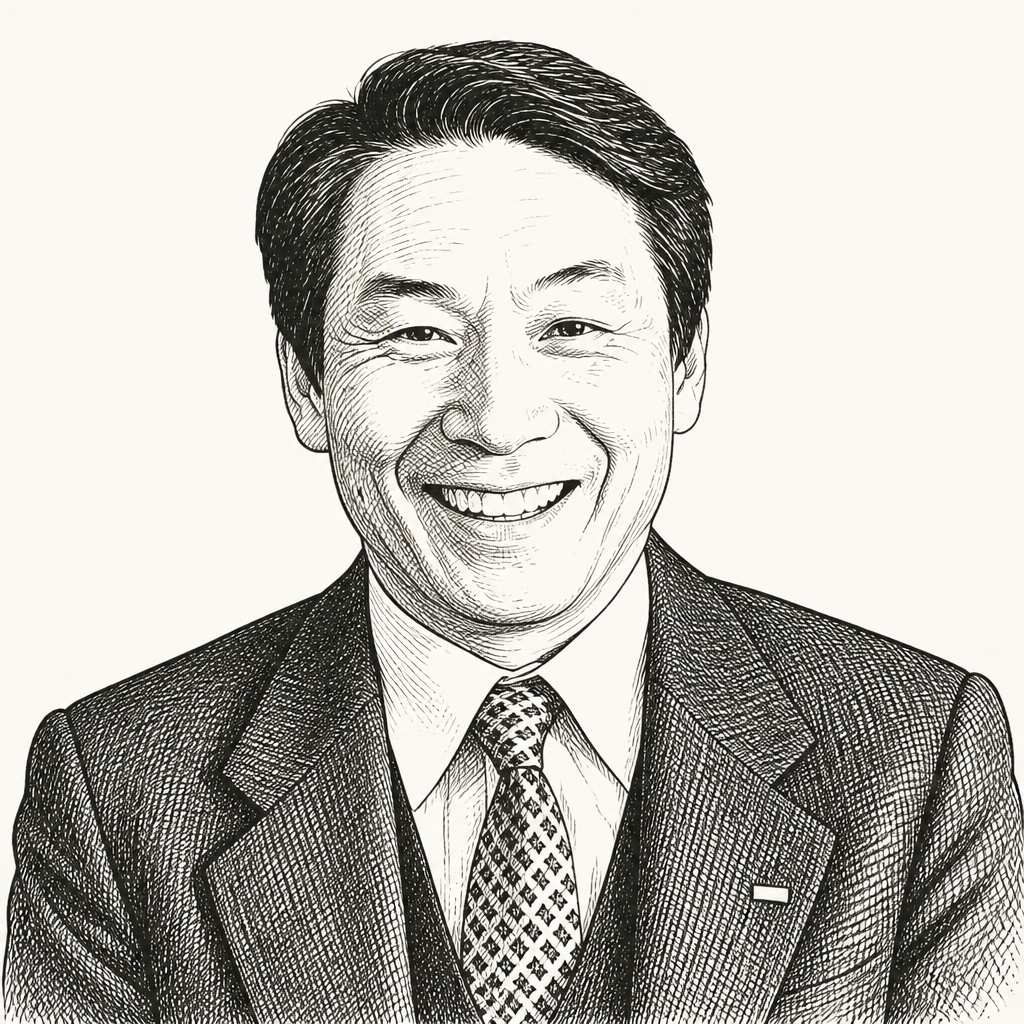
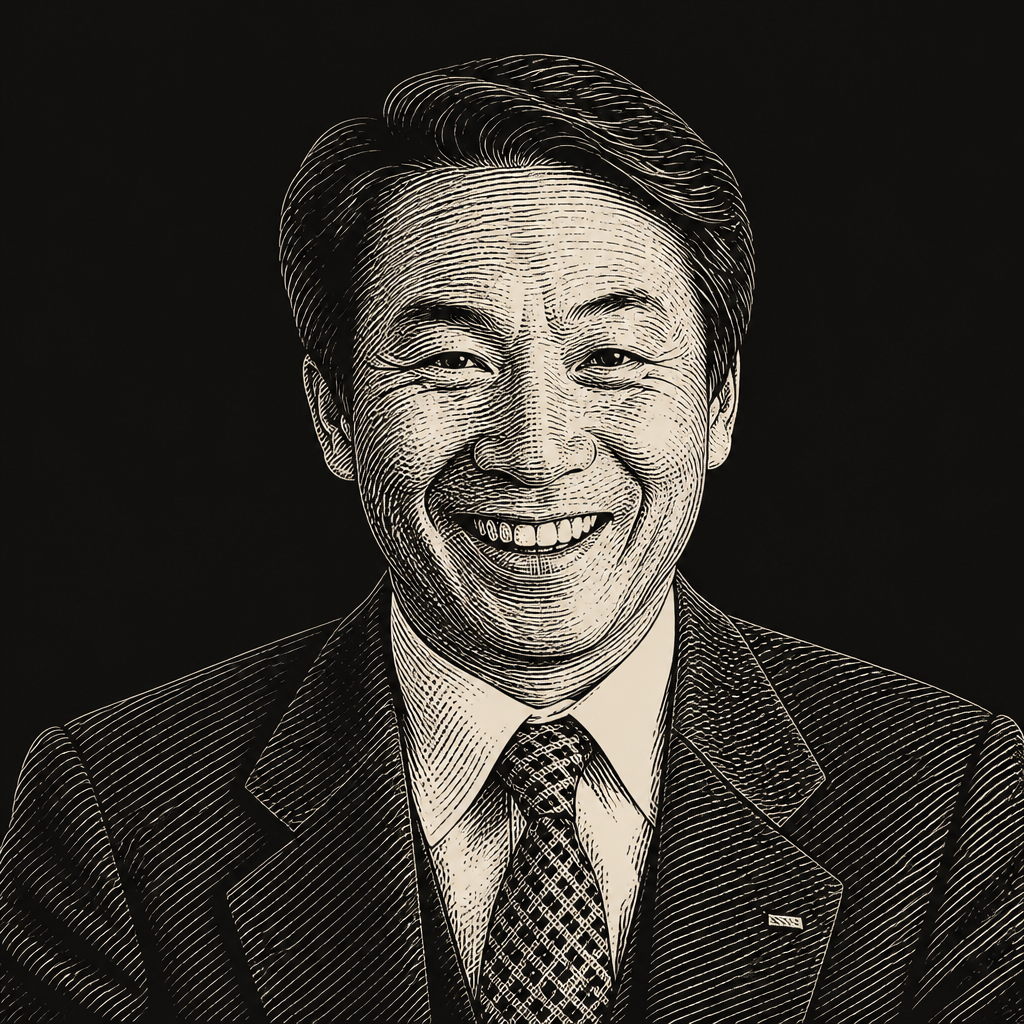
このプロジェクトを私はドリームキャストと名付けました。
“I have named this project ‘Dreamcast,’” reads the accompanying translation.
NVIDIA says Sega had chosen it as a partner for a next-generation game console, but that its approach was wrong. The company says it acknowledged the mistake and asked Irimajiri to release it from its contractual obligations. He agreed.
NVIDIA describes that decision as an act of generosity that gave the company time: time to invent the GPU, time to survive, and time to become NVIDIA.
Time to invent the GPU. Time to survive. Time to become NVIDIA.

A CUDA GPU roadmap follows NVIDIA’s account of Sega’s release, tracing double-precision FLOPS per watt across Tesla in 2007, Fermi in 2009, Kepler in 2011, and Maxwell in 2013. In NVIDIA’s telling, the reprieve enabled the company to redirect its technical future.
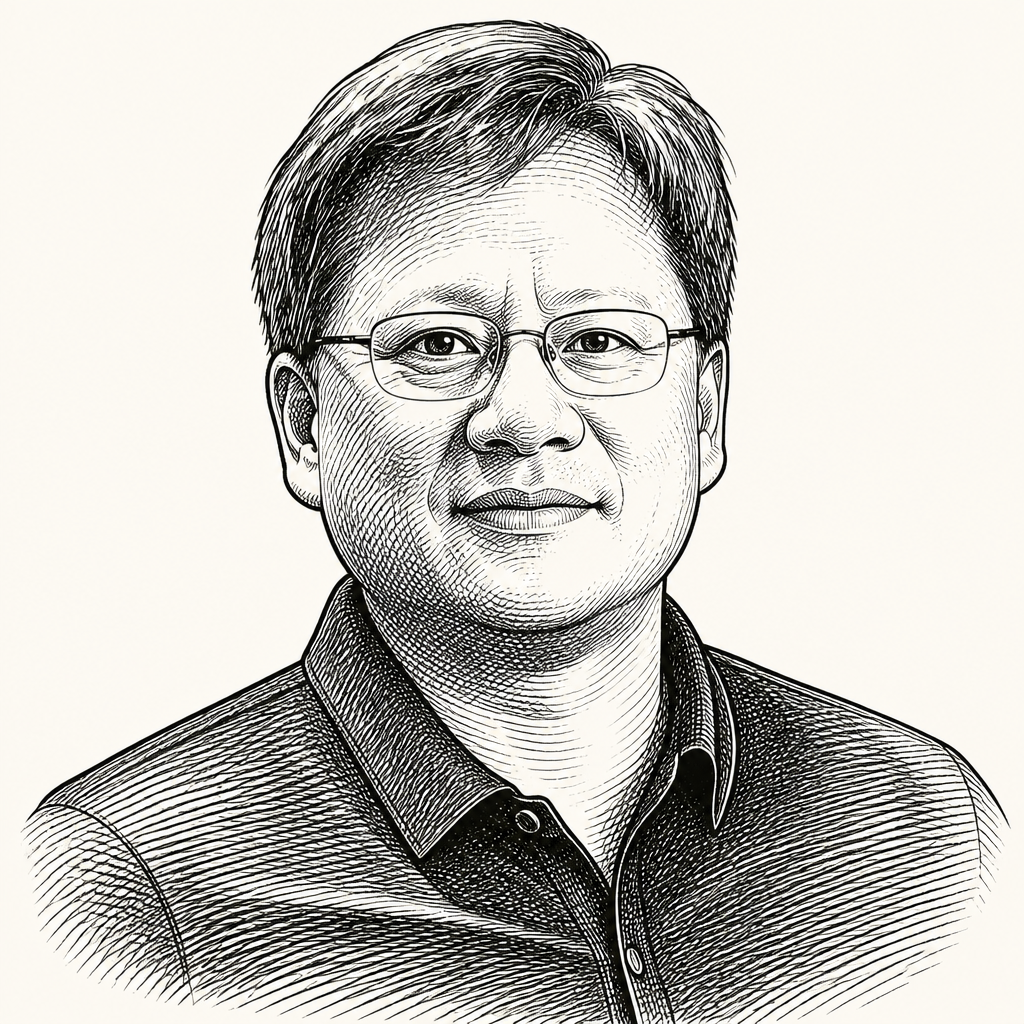
Jensen Huang then appears at what he calls the first conference for GPU developers. That moment marks the strategic shift NVIDIA wants to emphasize: a relationship that began in arcades and game consoles continued into computing, accelerated computing, and AI. A gaming partnership became part of NVIDIA’s account of building a GPU-developer ecosystem.
The argument is about industrial fit, not named deployments
NVIDIA closes with a large logo wall of Japanese organizations. It includes manufacturers and industrial groups such as Toyota, Honda, DENSO, FANUC, Kawasaki, Komatsu, Yaskawa, OMRON, Hitachi, Fujifilm, and Panasonic; technology and communications groups including NTT, NEC, SoftBank, Sony, and Sega; universities including the University of Tokyo, Kyoto University, Keio University, and Tohoku University; as well as financial institutions, investors, retailers, and other organizations.
The breadth of that wall expands the field in which NVIDIA wants AI factories to matter. The listed names span organizations associated with making products, operating industrial systems, conducting research, and providing technology services. But NVIDIA identifies the organizations without defining the nature of each relationship.
That leaves the core claim narrower than an announcement of specific projects. NVIDIA names AI infrastructure, AI factories, and the golden age of robotics as the future it seeks to build with Japan, while showing a scientific simulation and a broad organizational ecosystem. It does not identify particular AI-factory deployments or the industrial programs they will support.
The argument is therefore one of fit and industrial imagination. Japan’s established practices of making work visible, improving it continuously, and building physical systems are presented as the setting in which intelligence generation can become a consequential form of industrial capacity.