Digital Twin Simulation Aims to Cut Months From Audi Logistics Testing
Audi plans to use a digital twin built in Dassault Systèmes’ DELMIA to test logistics tasks for robots before deploying them in production. The proposed system combines factory knowledge from the 3DEXPERIENCE platform with NVIDIA Omniverse libraries for simulated perception and motion, creating a virtual training environment for robots from Agile Robots and idealworks. NVIDIA says scaling tests to multi-robot fleets could help assess safe operation and save months in future logistics testing.
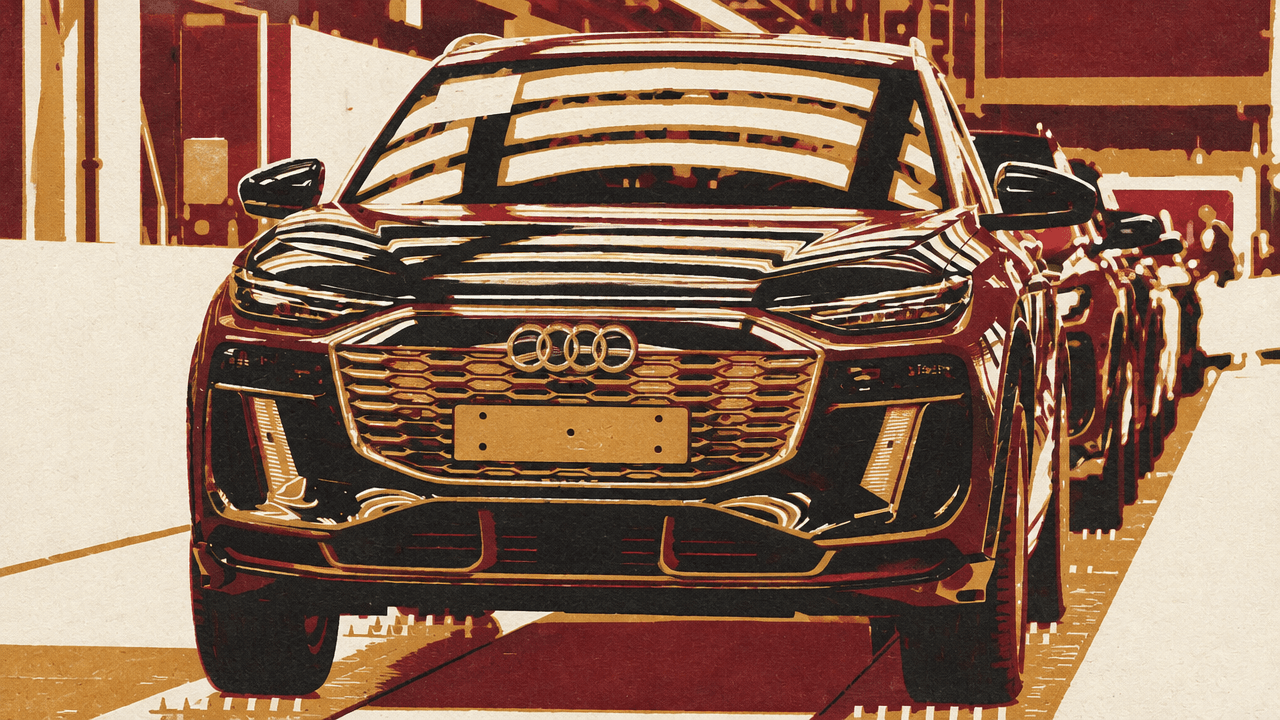
The twin gives robot testing a virtual production setting
Audi prepares nearly a million parts for car assembly each day, according to the narration. The production challenge addressed here is how to test robot work across that logistics operation before relying on it in the factory.
Audi planners will build a digital twin in DELMIA using LEO, Dassault Systèmes’ virtual companion, and foundational knowledge from the 3DEXPERIENCE platform. NVIDIA’s Omniverse sensor and physics libraries enable perception and motion simulation. In this setup, the twin is not only a representation of the factory: it is a virtual environment for training robot systems from Agile Robots and idealworks.
That distinction matters to the proposed workflow. Planners can test and validate diverse tasks and scenarios in simulation, before scaling the work to multi-robot fleets. The source describes this as a planned approach; it does not claim that the robots are already performing these tasks in Audi’s production operation.
Factory data and robotics tools serve different roles
The architecture diagram places factory knowledge and robotics simulation in one system. It labels inputs and representations including manufacturing ontologies, factory planning, CAD/PLM, IoT and OT systems, and the 3DEXPERIENCE Industry World Representation. It also names NVIDIA OpenUSD, Omniverse, Isaac and cuOpt, alongside LEO, an LLM and NVIDIA Sentry.
The spoken explanation gives the clearest account of the relationship: DELMIA, LEO and 3DEXPERIENCE provide the basis for building the twin, while Omniverse libraries enable simulated perception and motion. The diagram adds breadth to that description by showing factory systems and robotics components together, but the narration does not specify the function of every labeled element.
The software views make the simulated work more tangible without establishing a particular real-world result. One shows a humanoid robot interacting with a cardboard box in a virtual factory. Another pairs a factory simulation with multiple camera views and a simulation summary. These are examples of the environment in which teams can examine and validate robot tasks—not evidence that a task has been completed on the factory floor.
Fleet-scale tests are meant to reduce later logistics work
Once teams have tested diverse tasks and scenarios, they can scale the simulation to multi-robot fleets. NVIDIA says this will help ensure robots can safely perform their tasks and save months in future testing of logistics processes.
The stated benefit is therefore tied to testing: simulation at fleet scale is intended to let teams assess safe task performance and reduce the time spent on later logistics testing. The source gives no schedule, measured savings or deployment result. Its claim is prospective, but specific: the digital twin is meant to extend testing from individual scenarios to fleets before future logistics processes are tested.