MTV’s Cable Moat Collapsed When Everyone Became a Broadcaster


Tom Freston, the former MTV Networks chief executive, tells Sam Parr that MTV’s rise came from pairing scarce cable distribution with a company built to read youth culture faster than the broadcast incumbents. In his account, MTV and Nickelodeon succeeded by defining audiences narrowly, hiring culturally immersed outsiders, taking fast creative risks, and turning attention into subscriber fees, advertising, and intellectual property. The same model came under pressure when social media made distribution abundant and weakened the gatekeeping advantage that had made cable channels powerful.
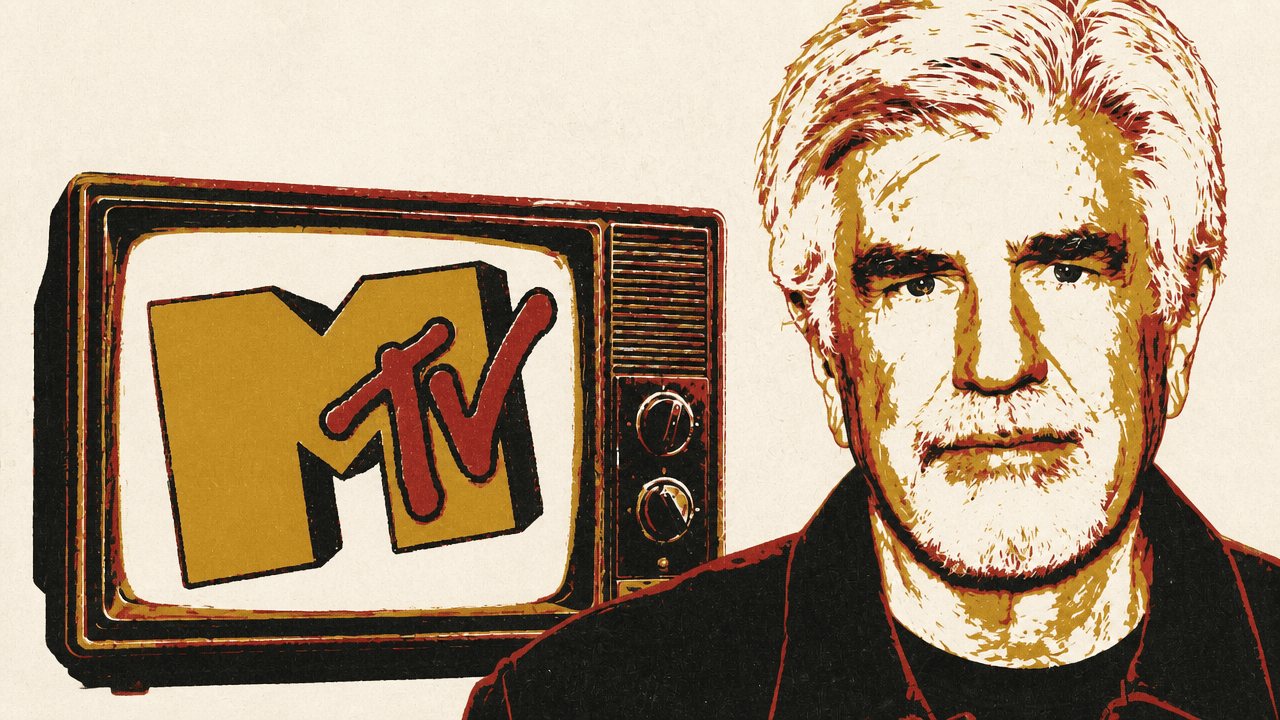
MTV’s advantage was scarce distribution plus a faster metabolism for youth culture
Tom Freston describes MTV Networks as a product of the cable revolution: a company that grew from a small development team into a business with “eight or nine billion dollars” in revenue, three major revenue streams, and unusually high margins. The model depended on a shift in television distribution. Instead of broadcast networks trying to serve everyone at once, cable allowed channels to be built around a single genre and a defined audience.


The original MTV was developed inside Warner Amex Satellite Entertainment Company, a joint venture connected to American Express and Warner Communications. American Express had been drawn into cable through Qube, an early interactive television experiment in Columbus, Ohio. The Qube footage used in the source shows the idea in its earliest form: a colorful interactive-TV system, a large multi-button remote, and an on-screen poll. Warner Amex then began creating channels to “feed” cable systems: the Movie Channel, Nickelodeon, and eventually a music channel.
The strategic premise was “narrowcast” television. MTV would not be one show inside a network schedule. It would be a place. Viewers would not primarily say they were watching a particular program; they would say they were watching MTV, or Nickelodeon. Freston says this was partly borrowed from FM radio, where stations had started slicing audiences by genre — soft rock, freeform rock, other formats — and taking share from dominant AM stations.
That framing mattered because the early cable networks were fighting a broadcast monopoly with roughly 90% to 95% market share. Freston puts MTV in the same generation as CNN, ESPN, and USA Network: companies trying to prove that cable could support national programming brands. The legacy broadcasters thought they were “idiots,” he says. The cable networks, meanwhile, were betting that households would eventually be wired, and that once the pipe existed, specialized channels could build strong relationships with specific audiences.
MTV’s starting capital was large by startup standards. Freston says the company had $25 million to get the plan working, with an original expectation of breaking even in about four years. But the size of the check did not make the business safe. MTV had to run a 24-hour network, hire enough people to operate continuously, and persuade cable operators to carry it.
The unit economics were simple but initially unforgiving. MTV asked cable operators for 10 cents per subscriber per month — $1.20 per year — and expected subscriber fees to account for only about a third of revenue, with advertising filling much of the rest. But when the company was “running out of money” in year three or four, it had only about 2.5 million subscribers. That meant the subscriber-fee base was too small, and advertiser revenue was not yet meaningful enough because the audience was still too limited.
The obstacle was not only economics. Cable operators did not necessarily like the product. Freston says many were culturally far from MTV’s music and audience; some saw rock and roll as something “from the devil.” MTV’s problem was that demand existed in the homes that could receive it, but the gatekeepers controlling distribution were unconvinced.
The proof came in places such as Tulsa, which had MTV from day one in about 100,000 homes. Freston, then the marketing person, could see what happened when the channel entered a community. Music fans “went crazy for it.” The product looked unlike anything on television: 24 hours of music videos, fast cutting, unfamiliar bands, irreverence, and a visual style that felt underground even though it arrived through a cable box.
Freston’s reset made career choice a question of love, skill, and timing
Before MTV, Freston had already built and lost a business. He had gone to business school partly to stay out of the Vietnam draft, then became “entranced and turned on by business” after encountering professors and thinkers such as Peter Drucker. After graduation he worked menial jobs and bartended while traveling through Aspen and the Caribbean, then returned to New York and joined an ad agency. Being assigned to Charmin toilet paper became, for him, “the last straw.” An ex-girlfriend called from Paris, told him he could not sell toilet paper, and invited him to cross the Sahara. He quit and left within days.
That period eventually led him to India and Afghanistan. In the early 1970s, after seeing a model used by a clothing designer who made clothes in Kathmandu and sold them in Mediterranean beach resorts, Freston tried to scale the idea. He built a clothing business designing and making garments in India and Afghanistan and selling them to better stores in the United States, Canada, and elsewhere. At its peak, he says, the business had around $8 million in revenue. He had his first million in his 20s, though he emphasizes that it was “on paper”: tied up in inventory, receivables, and advance payments for goods.
The business collapsed under forces outside his control. A communist coup in Afghanistan drove him out of that part of the operation. He doubled down in India, then ran into a clothing-import embargo from Jimmy Carter. Freston says he endured strikes, blackouts, dust storms, delays, and payments to get things done, then ended up smuggling three tons of clothes over the St. Lawrence River to meet a Bloomingdale’s delivery date and reduce his debts. By 33, he was back in New York “broke, bankrupt and deep in debt.”
His next move came from the only self-help book he says he ever bought: What Color Is Your Parachute? The book cover shown in the source identifies it as A Practical Manual for Job-Hunters & Career-Changers, by Richard Nelson Bolles. Freston says the book changed his life because it made career switching concrete. Its premise, as he summarizes it, was that people have transferable skills rooted in personality and experience; the task is to match those skills to work one loves in a field that is rising.
Freston did the exercises in his kitchen and concluded that he wanted to enter the music business. He had an encyclopedic knowledge of rock and roll, his brother was in the music business, and he believed he could do that kind of work. He was hired in March 1980 by the company that would become MTV Networks. He was 33, the oldest person on the development team, and his starting salary was $35,000 — more than colleagues making $30,000.
That reset matters because the same framework recurs in his later advice. Freston repeatedly returns to three variables: work connected to something one loves, an ascendant market, and skills that transfer from one setting to another. MTV was not simply a lucky landing spot after bankruptcy. In his telling, it fit a deliberate test: music, television, youth culture, and cable were converging at a moment when a new business model could be built.
Music videos began as promotion, then became the product
Music videos were not born as an American television format. They emerged largely in Europe and the UK because radio and television were more constrained. Artists and labels needed ways to get exposure, so they made videos for shows such as Top of the Pops or for record stores. Freston first saw them while living in Berlin, in a record store with a small television. The form felt “playful,” “low-key,” and “lo-fi” — a promotional device for selling albums before CDs had arrived.
That origin explains why MTV initially had so little inventory. When the network began, Freston says it had only 160 videos, mostly from the UK and Europe and largely from independent acts. The United States had less need for the format because American radio already played music all day. MTV’s early scarcity was therefore structural: the channel depended on a content form that American artists had not yet widely adopted.
Once labels and artists saw that videos could sell records, the supply changed. Freston cites Bruce Springsteen and ZZ Top as examples of established artists who began making videos, and Madonna as a new artist who used video as an image-making tool. MTV helped create incentives for an industry around the music video. The format still exists, he notes, and more music videos are made now than ever, even though MTV later moved away from them — a decision he calls an obvious mistake.
Sam Parr compares the early skepticism around music videos to later skepticism around TikTok dancing or watching people play video games online. The pitch can sound trivial in advance: people pretending to sing on television, people dancing on the internet, people watching game streams. But the behavior becomes legible after the fact because audiences actually do it.


MTV did not simply discover a format. It caught a promotional medium at the moment it could become programming. The channel’s early advantage came from packaging that behavior continuously, giving it a brand, and using cable distribution to make it feel ambient: something that appeared one day in the living room and stayed on.
The company’s creative system depended on young taste, not executive certainty
Tom Freston is careful not to present himself as the sole taste-maker behind MTV Networks’ hits. When Sam Parr asks how he spotted young creative talent — Mike Judge, Matt Stone and Trey Parker, Steve Hillenburg, the people behind Comedy Central and Nickelodeon hits — Freston’s answer is organizational. He wanted an eccentric company that could attract offbeat talent, take leading-edge ideas seriously, and gradually bring them into the mainstream.
That meant the employee base had to be young, culturally immersed, and loose. The dress code, Freston confirms, was effectively “no frontal nudity.” In the Manhattan office culture of the period, where suits and ties were normal, MTV’s employees looked radically informal. That was not incidental. Freston says he wanted the company to signal that creativity and risk-taking were central to the business.
We were like a talent magnet in a way.
The model required people who could find and support creators, not merely executives who could evaluate finished work. Freston compares this to A&R in the music business: people who go out, spot bands, build relationships, and bring talent into the company. In the case of Yo! MTV Raps, the idea came through an intern and a production assistant who were part of downtown New York’s early hip-hop scene as fans. They championed the culture internally and brought in the people they knew. MTV, in Freston’s words, “really put hip hop on the stage for America.”
Parr presses the point: did Freston personally understand rap the first time he saw it, or was the skill hiring people and letting them follow their instincts? Freston chooses the latter. He says he was good at hiring people who had good taste, instincts, diplomatic skills, and relationships. He also recognized that he was older and increasingly removed from the center of youth culture, which “always seemed to focus on what’s going on with 20-year-olds.”
That distance shaped his management philosophy. Judy McGrath, one of the important executives in that culture, used to say the company needed to hire “aberrant people.” Parr asks what the word means. Freston defines them as trouble: not mainstream, not respectful of the system, on their own agenda, perhaps the people who sat at the back of the class. They were pains in the ass, but they were also the people most likely to bring distinctive success.
The green-lighting process could be unusually fast when the work had originality. Freston recalls seeing Mike Judge’s short Frog Baseball, where the characters who became Beavis and Butt-Head hit a frog with a bat. The premise sounds grim, he says, but the attitude, sensibility, laughter, and dress made it obvious that something was there. The visuals shown alongside the story underline how rough the raw material was: a Frog Baseball title card identifying it as “A Mike Judge Film,” Butt-Head hitting a flying frog with a baseball bat, and then Beavis and Butt-Head on their couch against a cracked wall. The decision, in Freston’s version, was essentially immediate: get Judge “inside the tent” and make it easy for him to develop a series. The eventual device — Beavis and Butt-Head sitting on a couch commenting on music videos — matched how the network imagined some of its own audience behaved.
South Park followed a similar pattern. Brian Graden, then head of programming at MTV, had commissioned a Christmas card sent to thousands of people; it featured foul-mouthed kids who became the South Park characters. The imagery in the source shows Matt Stone and Trey Parker with paper cutout characters and early stop-motion-style animation in a snowy setting. Comedy Central needed a hit, and Freston says the decision to greenlight it “took like a minute.” He saw it as original, offbeat, irreverent, edge-pushing, and likely to get attention. They made six episodes.
The standard was not whether an idea looked safe. It was whether it had a point of view strong enough to be unmistakable.
Nickelodeon became the bigger business because character IP compounded
Tom Freston says Nickelodeon became the biggest business “by far.” The reason was not only ratings. Nickelodeon could generate intellectual property that turned into consumer products and movies. SpongeBob, Rugrats, and other Nicktoons created revenue beyond cable fees and advertising.
The company’s larger revenue architecture had three parts: subscriber fees from cable and satellite operators, advertising, and then consumer products, films, and other extensions. For kids’ programming, that third stream could become enormous. Freston says the “home run” was a show that lasted for decades and could spin off into consumer products and motion pictures.
But he distinguishes Nickelodeon’s development criteria from what he calls the “factory world” of children’s entertainment. In that world, executives often asked whether a character had “toyability” — whether it could become a toy. Nickelodeon did not greenlight shows on that basis, according to Freston. The question was whether the team loved the characters, whether the show could be good, whether it could get numbers, and whether it would resonate with the audience. Angry Beavers, for example, was not obviously a consumer-products bonanza, but that was not the primary test.
That stance again traces back to respect for creators. Freston argues that the person with the characters in his head was probably not thinking first about toy lines. He had a simpler, more crystallized idea of what could happen on screen. Commercial extensions mattered, but they worked best when they followed from a show people cared about.
Nickelodeon did use filters. Its people were conscious of pro-social appeal: nonviolence, pro-kid values, fun, humor, irreverence, and a modern presentation. The network wanted to be a cooler, more modern children’s network relative to Disney. For MTV and VH1, the filters were different but similarly tied to a very specific core audience.
MTV’s core viewer was not “everyone young.” Freston says the network programmed to a 22-to-24-year-old, with the broader core at 18 to 24. Teenagers were perhaps a third of the audience, but MTV did not showcase them on air because a 24-year-old seeing teenagers would conclude the channel was for “teenyboppers” and leave. That distinction captures one of the company’s operating principles: the audience definition had to be precise enough to shape casting, tone, and even who was visible on screen.
The internal culture was designed to make creative risk feel normal
Tom Freston’s version of management is unusually social. MTV Networks held wild parties because he wanted the company to have a wild vibe. Sam Parr brings up a story in which Jon Stewart saw Freston in the street after a holiday party, apparently after falling during a shoulder-mounted chicken fight, and concluded he was in the right place. Freston does not reject the characterization. The company had events with tequila, shots, and behavior he says would not be possible in the same way today.
The point was not simply excess. Freston says parties were not plus-one events; they were for employees. He wanted salespeople to know people in animation. He wanted accounting, sales, and other functions to absorb the same creative ethos as programming. Because the company was still smaller than the major networks, creativity had to apply not only to shows but also to selling and operating.
Employees, he says, loved working there. Some slept in the office. The workplace became the center of their social lives. The average age was in the 20s, and many people were working 12-, 16-, or 18-hour days. Parr asks whether employees were sleeping with each other. Freston says yes, and adds that many married and remain married, while acknowledging the obvious problems.
The cultural reinforcement also happened in formal communication. At town halls, Freston says he led with creative successes, not financial results. He talked about the risks the company had taken, which ones paid off, which did not, showed programming, identified the people behind it, and brought creators into view. He almost never focused on the company’s financials or on Viacom, the parent company.
That was partly deliberate resistance to corporate abstraction. People did not come to work for Viacom, Freston says. They came to work for MTV or Nickelodeon. Viacom wanted synergy across divisions, but Freston’s task was to knit together different channel cultures: Nickelodeon employees who were often more socially conscious and connected to children’s education sensibilities, MTV and VH1 employees with a different edge, and later Comedy Central. The common identity had to be built around creative output and talent, not around the parent corporation’s stock price.
Reality television emerged from a budget constraint
Tom Freston’s account of The Real World is a useful example of how MTV’s constraints produced format innovation. The company wanted to respond to Fox’s younger-skewing broadcast programming, including shows such as Melrose Place and Beverly Hills, 90210. MTV’s creative people wanted to do something more ambitious, so they developed a soap opera with Bunim/Murray.
The budget created the problem. The proposal included a large line item for writers. Freston says MTV did not have that kind of money. They were thinking in terms of making episodes for around $100,000 and had other financial needs.
Bunim/Murray came back with a different plan: eliminate the writers, find seven or eight people, put them in a loft around Broadway and Prince Street, install hidden cameras, tape them, and use MTV’s real skill set — post-production and editing — to shape the material into episodes. That became The Real World in 1992. Freston describes it as the birth of The Real World and says it “really launched the modern version of reality television.”
Freston says the first cast members had no idea they would become reality stars because the category did not yet exist. The show worked because young people wanted to see other young people on television and take social cues from them. Later reality casting became self-conscious; participants knew they needed outsized personalities and controversy. But the first iteration succeeded before reality television had become a known performance genre.
The same quick-decision pattern appears in Freston’s story about The Osbournes. MTV was already doing something with Ozzy and Sharon Osbourne. Sharon, riding in a car with Brian Graden, said that if a crew followed her around, it would make an amazing reality show. Graden’s response, as Freston tells it, was essentially: done. Freston describes the result as the first celebrity reality show, and says reality television has since expanded into dozens of categories.
The lesson, within Freston’s telling, is not that MTV had a master plan for unscripted television. It is that the company’s combination of limited budgets, editing capability, appetite for youth behavior, and tolerance for fast greenlights made the format available.
Facebook and MySpace marked the moment cable logic was under pressure
By 2005, Tom Freston says MTV Networks understood that social media represented a major paradigm shift. Facebook was still focused on college students, had about $7 million or $8 million in annual revenue, and Mark Zuckerberg had recently moved to California. MTV did not believe it had the capability or skill set to build its own social network, so the question became whether to buy one.
Zuckerberg came to MTV’s Times Square offices in February wearing a hoodie and flip-flops. Freston remembers that Facebook’s strategic question was whether to expand from college students into high school students. MTV saw the larger shift: people could now connect directly to each other, and the gatekeeper era would begin to fade.
Freston describes MTV Networks as early to the acquisition pursuit: “we were the first people,” he says. The offer was roughly $800 million or $900 million in cash plus an earn-out, totaling around $1.7 billion. Negotiations continued below Freston’s level, including with Owen Van Natta. At one point, an MTV executive offered Zuckerberg a ride on a plane back toward New York around Thanksgiving, hoping that several hours together might help the negotiation. Zuckerberg took the plane ride; his parents picked him up at the airport. The deal did not happen.
Sam Parr focuses on the psychology of turning that down at 21 or 22: the “gall” required to reject becoming a billionaire. Freston calls it refreshing. He contrasts founders who start companies in order to sell to a larger platform with founders who want to build enduring companies because they believe in the thing itself. He places Zuckerberg in a lineage with Steve Jobs, Bill Gates, Paul Allen, and Phil Knight: people who saw an opening in the culture, built companies around it, and did not check out early.
MTV did not think in venture terms. Parr asks why the company did not invest if it could not buy Facebook. Freston says it was not set up that way. MTV Networks had grown organically and had not been a buyer of companies. Its parent operated on limited investment capacity. Buying and owning something made more sense to them than taking a venture stake, though he says an investment might have been the cleverer move.
The failed Facebook pursuit exposed a strategic mismatch in Freston’s account. MTV Networks could see that social media would weaken the gatekeeper era, but seeing the shift was not the same as having the acquisition habits, capital flexibility, or product capabilities to own it. The company had been built for a world where scarce distribution could be assembled, programmed, branded, and monetized; Facebook was developing in a world where users connected directly to one another.
MySpace created a more immediate corporate consequence. Freston says Rupert Murdoch bought it for $560 million over a weekend with no due diligence. At the time, the AOL-Time Warner merger had made legacy media companies wary of large digital acquisitions. Murdoch’s move made him look like an old media mogul who understood new media.
It also angered Sumner Redstone, Freston’s boss at Viacom, who Freston says had barely heard of MySpace before Murdoch bought it. Redstone later said Freston had “the prize” and let it go to Murdoch. Freston says that was a primary reason he was fired, though he allows there may have been others. In his retrospective judgment, MySpace was not much of a prize: he says it was sold years later to Justin Timberlake for $35 million.
Both episodes show the pressure cable incumbents felt as digital media arrived. Freston’s account does not turn them into a simple counterfactual. MTV pursued Facebook and failed to buy it. Murdoch bought MySpace quickly and was briefly praised for the bet. Redstone punished Freston, at least partly, for missing MySpace. In hindsight, Freston treats Facebook as the missed transformative deal and MySpace as a “prize” that dissolved.
Freston’s mogul taxonomy separates product operators from stock-price watchers
Tom Freston distinguishes between Rupert Murdoch and Sumner Redstone as two versions of the media mogul. Murdoch, he says, was bold and buccaneering, willing to take large risks. Freston does not endorse the political results of some of Murdoch’s programming, but credits his operational understanding. Murdoch flew around the world, knew how the businesses worked, and could intervene credibly — even at the level of headlines — because subordinates believed he might have a point.
Redstone, by contrast, was focused on who might be screwing him, lawsuits from an antitrust perspective, and the stock price. Freston presents that as a narrower form of control. It was not the same as knowing the product.
Steve Jobs appears in the same discussion as a different kind of creative business icon. MTV met with Jobs before iTunes to discuss a possible MTV-Apple joint venture. Jason Hirschhorn, who ran digital for Freston, argued that the better path was a music streaming service — something like Spotify. Jobs rejected that direction and held to the iTunes model. Freston describes Jobs as an icon for MTV because he could lead creatively and because he did not have a “straight ahead business mindset.”
Oprah Winfrey represents another model: the creator as the center of a media enterprise. After Freston was fired from Viacom, he traveled to Burma to disappear and rethink. In a hotel reachable by boat, with no cell service, he received a message that Oprah had called. She had seen the sendoff he received from employees and invited him to Montecito for breakfast. He later worked as a consultant on OWN, the Oprah Winfrey Network, a joint venture with Discovery built from the Discovery Health Network.
Freston says that, using today’s language, Oprah fits the creator-economy idea: a creator at the center of a media enterprise built around her ethos, curiosity, and ability to talk to people. He does not present her as part of a formally defined category at the time. His point is that her media business was organized around a person whose relationship with the audience was the asset.
Once everyone became a broadcaster, access stopped being the scarce asset
Tom Freston and Sam Parr return to the structural change that made MTV possible and later made MTV less dominant. Cable was a pipe with scarcity. If a channel got into the pipe, it had a strong chance to matter. Editors and programmers controlled access; barriers to entry created a monoculture, or at least a world where a limited set of channels could concentrate attention.
Everybody is their own broadcaster.
Digital media dissolved that advantage. The creator economy offers tools such as Patreon and Substack, but the challenge is no longer simply finding distribution. It is standing out against everyone else.
That is the later version of the career exercise Freston did after going broke at 33. His advice to a 25-year-old starts from the same question he asked after the collapse of his clothing business: how to align the things one likes and cares about with an enterprise that is rising. In the current market, he says he would look for a business that powers creative people and helps them become more famous and relevant. But today that also requires mastery of social media and some intrinsic quality that lets a person rise above a nearly infinite field.
Parr connects that to his own company, The Hustle. He says he studied cable businesses, Ted Turner, Liberty Media, Bob Pittman’s Pilot Group, DailyCandy, and Thrillist, then asked where there was still owned real estate rather than rented attention. In 2014, while platforms such as Facebook were changing reach for companies like BuzzFeed and Vice, he chose newsletters because the audience relationship could be owned more directly. He sold The Hustle in 2021 after the company had done $12 million in trailing revenue and was on pace for about $18 million.
Freston asks whether Parr regrets selling. Parr says no, because he was broke and wanted financial security during a period marked by COVID and Black Lives Matter protests. But he regrets being in the position where selling was the way to get that security. Freston names that as another form of the innovator’s dilemma: “the brokenness” of scrambling without money while having a life to support.
That exchange brings the story back to ownership. Freston admires founders who do not sell because they remain true believers. Parr understands the appeal but also describes the practical pressure of underpaying oneself while building. MTV’s own early employees were crusaders without stock options, later receiving some upside only after a partial public offering and sale. The mythology of building forever exists alongside the cash-flow reality of the people doing the building.