Oh My Mahjong Reached $40 Million by Selling More Than Tiles


Shaan Puri argues that mahjong’s business is built on more than selling a game: premium, display-worthy sets help draw people in, while lessons and social events turn a difficult game into a community. On My First Million, he points to Oh My Mahjong’s reported $40 million in second-year revenue as evidence that customers will pay for both the product and a way into the activity.
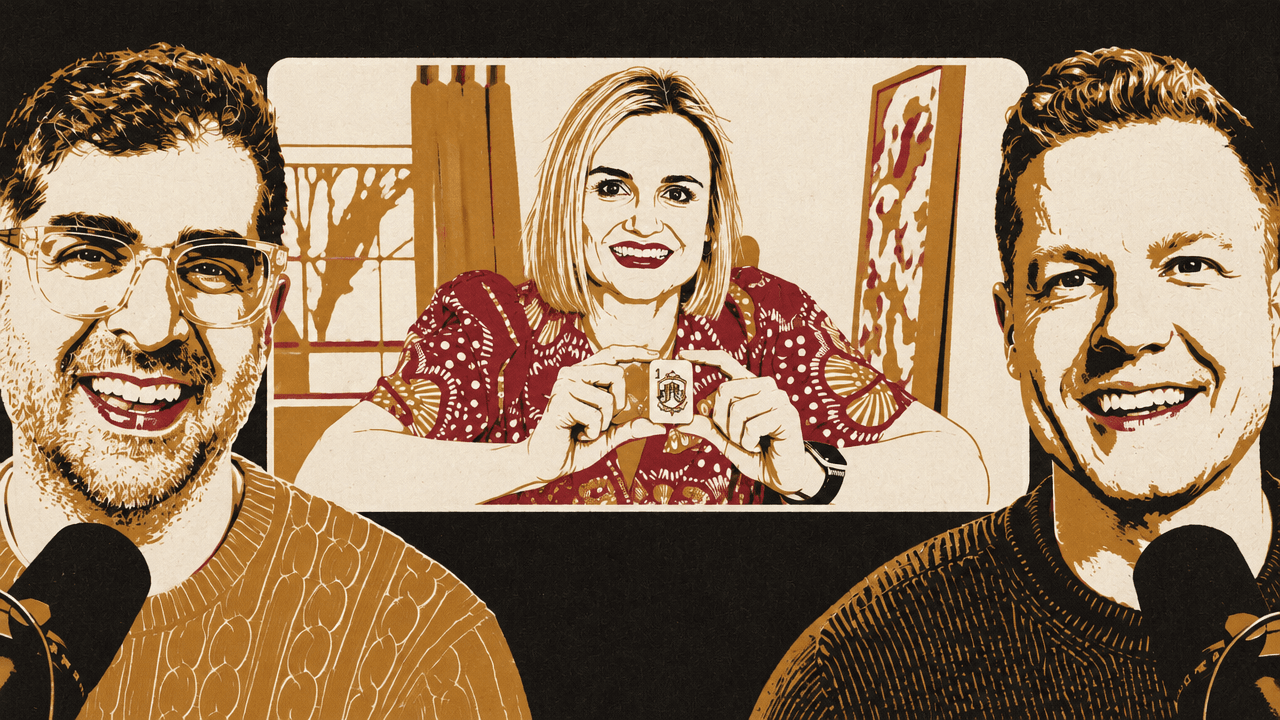
Mahjong sells an activity, not just a set of tiles
When Shaan Puri’s wife went to a birthday party for suburban mothers, it began at 8 a.m., after school drop-off, and paired tennis with mahjong. She knew neither activity. Puri expected that to be ordinary; instead, he heard that nearly everyone there knew mahjong and loved it. The surprise sent him looking at the business around the game—and at why a centuries-old activity was finding new players.


The signals he cited were striking. Yelp search data put searches for mahjong clubs up 4,467% and searches for lessons up 819%. Puri said Google searches were up 70% year over year and had climbed every year since COVID. He pointed to Oh My Mahjong, a company selling tiles and accessories: he said it made $1 million in its first year and $40 million in its second. In its third year, he said, it had already passed $40 million, and he expected it to finish around $60 million.
The scale of the business became more tangible when Puri and his wife went to a shop to buy a set. They expected a board game to cost $20 or $30. An entry-level set was $450. They left having spent $850 on beginner equipment. Oh My Mahjong’s Aloha travel set was listed at $450 and included 160 tiles, wooden racks, a mat and travel bags. Puri also showed the National Mah Jongg League’s annual card of winning hands, which he said costs $14.
These purchases are not just functional. Puri described colorful, patterned tiles with a satisfying clack, and argued that a mahjong set can be something people want to leave out rather than put away. He compared the approach to Method soap: founder Eric Ryan had told the hosts that conventional kitchen cleaners looked ugly enough to hide under the sink, while Method’s attractive bottles could sit on the counter. In both cases, design changes how a familiar product fits into a home.
For mahjong, visual appeal also gives the game a social setting. Puri described themed events—mahjong and tea, or mahjong and martinis—and videos of people opening new sets or showing off new designs. Event listings included beginner lessons, restaurant gatherings and an ornament exchange. The game can be played, displayed, filmed and used to organize a social calendar. Its products travel with the activity.
But the set is only one part of what a new player needs. Puri said the game has a steep learning curve, enough that even someone accustomed to poker and other games may find it complicated. Shops and teachers provide an entry point: some offer free lessons that put beginners in a group, let them try the game and make it easier to return. Puri compared this to Lululemon’s free yoga classes. The business can sell equipment, but it can also sell a route into the activity and the pleasure of doing it with other people.
The rules make that route especially important. Puri gave a brief history in which American tourists encountered mahjong in China about a century ago and brought it back to California. He said the game caught on in some Hollywood circles, and an importer began selling tiles, but the interest faded. In his account, novelty was not enough. The game needed American rules and more readable tiles, teachers who could show people how to play, and enough sustained enthusiasm to support the surrounding infrastructure.
That infrastructure can turn difficulty into commitment. Puri described the “severity of initiation,” the idea that people may value a group more after paying a cost to join it. In the study he recounted, participants faced different levels of embarrassment before joining a group. Once inside, they heard a deliberately boring lecture. Those who had faced the most embarrassing initiation rated the group more favorably than those who had faced little or no initiation. Puri said the effect had also been replicated using electric shocks. The accompanying chart gave group-rating sums of 166.7 for no initiation, 171.1 for mild initiation and 195.3 for severe initiation.
The cost need not be time or effort. In the study, it was embarrassment. Puri’s point was that investment can shape how people interpret what they have joined: if getting in required something of them, they may be more inclined to believe the group is worthwhile. That can create friction, and some potential members will turn away. But the people who make it through may feel more invested, return more often and tell others about it.
Puri’s formulation was simple: the harder it is to get into a club, the more people may value being in it. He connected the idea to costly signaling: people use participation and knowledge to communicate something about who they are, while the difficulty of entry gives that signal weight. He pointed to CrossFit and Hyrox, where physical effort can become a badge of belonging, and to wine, golf and sushi, where learning the codes can deepen a person’s involvement. Mahjong has its own barriers—the rules, equipment and social conventions—but lessons and gatherings help turn those barriers into community.
The game also gives beginners chances to enjoy it before they master it. Puri said a game lasts about 20 to 30 minutes. Unlike chess, he said, luck plays a larger role: a less experienced player can draw the tiles needed for a strong hand. Skill still matters, but chance can give newer players wins along the way rather than leaving them to be routinely crushed by experienced opponents.
That mix helps explain why the business is not just selling expensive tiles. The equipment can make the game inviting to host and display; lessons help new players cross the learning curve; gatherings make the equipment useful. Puri compared the opportunity to early pickleball, where a niche-looking activity created room for brands as participation grew. He cited a previous podcast guest who built and sold a pickleball equipment brand, and borrowed Mark Pincus’s formulation that being in the “right body of water” can do much of the work.
A collaboration with LoveShackFancy showed how a brand can extend that identity. Puri described the apparel company’s soft floral look as distinctive, then pointed to its mahjong partnership with Oh My Mahjong. He said the set sold out in five minutes. The Coquette tiles were priced at $550 and marked sold out. Puri said they were being resold online for $5,000, and that even buyers willing to pay that could have trouble finding them.
The partnership made the product legible to customers who already recognized the brand’s aesthetic. It also made a mahjong set more than a game accessory: it could signal taste and participation in a particular social world. For a company selling a difficult game, those meanings help make the high-priced object easier to want.
Premium goods make function carry a story
Sam Parr offered Jacques Marie Mage sunglasses as a parallel to the mahjong business. He said the frames range from about $1,000 to $3,000; one product page listed a model at $2,725. As Parr recounted the founder’s history, he had worked on eyewear for brands including Burton, Quiksilver and Oakley before starting Jacques Marie Mage in 2015. The idea was to sell sunglasses at a much higher price, supported by craftsmanship and a more elaborate story.


Parr pointed to limited production runs and drops, as well as details about materials and construction. He said the frames were thicker, the lenses different, and the acetate made in a particular way. The product’s appeal, in his account, comes from more than the function of shading someone’s eyes. It includes the story of how the object is made, the scarcity of a particular run and the identity associated with wearing it.
He generalized the opportunity beyond eyewear. For categories from ballpoint pens to fishing lures, he argued, there may be room to charge many times more than the average price if the maker can offer a compelling story and a product people want to own. Parr estimated that Jacques Marie Mage might be doing $50 million to $100 million in revenue. Puri said the company had reportedly passed $40 million the previous year.
Puri described both companies as businesses that grew through experimentation rather than from an initial plan to build a large one. In mahjong, a set becomes something to display and a way into a social activity. In luxury eyewear, limited production and craft details help make a familiar object distinctive. In each case, a premium depends on customers caring about more than basic function.
Some customers want friction where convenience has taken over
David’s Year Unplugged project offers a different kind of proposition: a year without a smartphone, laptop, tablet, television, Kindle or movies. Shaan Puri described the goal as avoiding screens at home and as much as possible elsewhere. The project’s FAQ made exceptions for everyday screens such as grocery-store checkouts, thermostats and billboards, and for medical tests or concerts where screens might be unavoidable. The stated aim was 99% elimination, not solitary confinement.
The project has an unusual operating problem: David still needs to publish updates about not using screens. A custom device, described as a “Screenless Phone” powered by Claude, lets him write posts by hand and upload them through a scanner. Parr said that if a tweet appeared, David knew the scanner had worked; he joked that there was no way to know whether it had failed.
The project’s website listed a starting point of 11 hours and 7 minutes of daily screen time. A post from David described a headache, dysphoria, flatness and phantom iPhone sounds during sleep. He wrote that days one to three felt like a rush, then the withdrawals began on day four. Parr said David felt horrible and was describing the experience as withdrawal.
Parr admired the experiment but said he did not know whether David would make it through all 365 days. Puri said the premise worked because it could be understood in one sentence: someone would try to go a year without screens. Public updates let an audience follow the challenge and watch what happens when familiar conveniences disappear.
Parr connected the project to “reward shortcutting”: the idea that easy digital gestures can stand in for a deeper reward without delivering the same thing. Clicking “like,” in his example, may feel like a shortcut to social connection without providing the connection itself. He pointed to renewed interest in books and demanding study as other signs that some people want the work rather than the shortcut.
One example was a Harvard humanities class described in a Wall Street Journal article. Parr said the class had 90 seats and hundreds of applicants. Students wrote an essay to apply, read a book each week and were expected to attend regularly. He described the subject as a way of studying art, literature and philosophy, and asking what matters and how people think. Parr also mentioned Ralston College, a humanities graduate school in Savannah, Georgia. He said it had received $25 million in funding from a billionaire, attracted many applicants and accepted a small cohort—he estimated 25 to 50 students a year.
Puri’s broader explanation was that when one pattern becomes dominant, people may seek its opposite. A world full of screens can make a radical screen-free experiment compelling; if AI and automation reduce the effort required to do things, effort itself may become attractive to some people. He did not predict that most people would reject convenience. He argued that there can be a meaningful niche for activities requiring attention, work or in-person participation precisely because those things become less common.
The same tension appears in Puri’s examples of mahjong, golf and wine. Their learning curves are barriers, but they also help give participation meaning. When instruction and community make the barriers crossable, the effort can become part of what people value.
Attention is finite, and influence is repriced
The limits of personal attention also shape the businesses competing for it. Puri said average daily time online had flattened in recent years. The figures he cited moved from 6 hours 54 minutes in 2021 to 6 hours 38 minutes in 2025, with little change across the intervening years.
If total screen time is no longer growing quickly, Puri argued, platforms seeking growth have to take time from one another. He pointed to Netflix adding mobile games, Instagram testing longer video, TikTok expanding its formats and YouTube pushing Shorts. Instagram wants some of YouTube’s viewing; YouTube wants time spent on Netflix; Netflix wants time spent on games. The platforms are competing for the same limited hours.
That makes new formats valuable to creators willing to build around them early. Parr had watched Instagram head Adam Mosseri demonstrate a horizontal, longer-video format in a day-in-the-life post. Parr said he watched the whole video and thought the format worked. His advice to a young creator interested in business content would be to use Instagram’s new format while the platform was promoting it. He said Instagram was encouraging creators to try it, even accounts he considered small.
Parr compared the opportunity to Cheddar, a video business-news company built around Facebook Live. He described it as “CNBC for Facebook Live,” with a studio on the floor of the New York Stock Exchange. Parr said the company sold after two or three years for roughly $250 million. He also mentioned TBPN as a more recent example of business video. His suggestion was that another version could work on Instagram’s longer-video format.
Attention has value not only as views, but as a way to sell products or build companies. Puri said established podcasters in his circle and above could make tens of millions of dollars annually from advertising. Parr estimated that a business, technology or finance podcast in the top 50 could plausibly generate eight figures in annual revenue, with additional potential from a community or paid newsletter. He also said he had spoken with smaller creators making roughly $600,000 to $1.2 million a year through sponsorships on clips.
Puri emphasized that a creator’s earning power depends both on fame and on the ability to turn fame into a business. Sponsorships are one form of revenue, but building a company around an audience can create greater value because the creator owns equity in the business.
The economics of influence change as advertisers discover it. Puri recalled that early Twitch streamers could draw enormous live audiences while production costs stayed low. He described streamers such as Ninja and Tfue playing for audiences of tens of thousands of people for hours at a time, with a basic setup of a computer, camera, microphone and headphones. When Puri tried to sell sponsorships, he said he once put a $500,000 annual offer in an email subject line and got no reply.
Brands that understood the opportunity early could build around those audiences. Puri cited G FUEL, which signed prominent streamers and created custom flavors and shakers for them. He said the company reached about $70 million in annual revenue quickly, with that approach as its only marketing strategy. Later, platforms offered top streamers tens of millions of dollars to stream on their services. The audience had not necessarily changed; its price had.
Puri described the cycle as a shift from underpriced to overpriced attention. As advertisers compete, rates rise until returns weaken and the market corrects. He applied the same pattern to podcasts: early comedy-podcast sponsorships helped brands such as Manscaped, then high-priced deals followed for famous people who did not necessarily build a durable audience. He cited the reported $20 million-a-year deal for Harry and Meghan and said they published five episodes. For Puri, that overreach is part of how a market finds the value of a new medium.
The Hims agreement with Andrew Huberman showed how much a company may pay for influence in health and wellness. Puri described several elements: a $250,000 annual board fee, $3.5 million per year as an adviser, $5 million per year for guaranteed podcast advertising, and up to $1 million annually for short-form videos. He summarized the package as roughly $8 million or $9 million a year; the displayed breakdown put the possible total at up to $9.5 million.
Puri compared that agreement with Hims’ marketing spend, which he said was over $900 million a year. The figures presented were $446 million in 2023, $679 million in 2024 and $919 million in 2025. Against that budget, he said, the Huberman deal was a small share of spending for a prominent health-and-wellness voice. He called it a strong move for the company and for Huberman, and said Huberman might have been able to negotiate more.
The arrangement also raises an incentive problem Puri identified directly: when someone giving health advice is paid by a company, it can be difficult to distinguish education from endorsement. He said the problem applies to anyone promoting products, including the hosts, but is especially important when the person is discussing health or medical advice. The financial relationship is part of the deal’s value; it is also what makes the advice harder for an audience to interpret.
The Jensen Huang story turned a scandal into a question about trust
A discussion of Jensen Huang began with the humor circulating around an internal apology message. Puri focused on two party-popper emoji reactions to the message and said he wanted to know who had sent them. The joke sat alongside a more serious exchange about reputation: whether being seen as a good person can make a public fall more damaging, and whether someone who is already expected to offend becomes harder to “cancel.”
Puri called that posture a “cancellation vaccination”: if someone offends people constantly, he argued, each new offense may have less power to shock. He compared it to Donald Trump’s ability to withstand criticism by producing another controversy the next day. Parr suggested that Huang’s mistake, by contrast, was having seemed like a great guy.
The hosts also discussed Huang’s wife, Lori, and a claim about NVIDIA’s early years. Puri referred to a post with a community note saying that she pawned her wedding ring in 1995 to help keep the cash-strapped company afloat. He treated the story as a striking example of the sacrifices made while the company was struggling, rather than as a way to excuse Huang’s conduct.
From there, the conversation shifted to vulnerability and espionage. Puri recounted a story about counterintelligence training: a briefer asked a room of men whether they thought they were a ten in attractiveness, then told them that if a ten approached, they should remember they were not a ten. The point was to be wary of an approach that might be motivated by something other than attraction. Puri joked that someone as wealthy and powerful as Huang might have a harder time knowing whether a person wanted him for his money or for state secrets.
The exchange was comic, speculative and unresolved. Puri and Parr wondered aloud about fidelity among the richest men and professional athletes, but neither presented a reliable measure. Puri cited Morgan Housel’s line that there had been 13 divorces among the ten richest men in the world. The more grounded point was about exposure: wealth, celebrity and influence can make private decisions unusually public, while the same prominence can make it difficult to read other people’s motives.
Changing the frame can change the response
The question of how people respond to constraints returned in the hosts’ accounts of parenting and phone use. Parr described his daughter seeing him check his phone and asking whether he had to “pay the bills.” He had told her that going to the office meant paying bills; when he looked at his phone at dinner, she applied the explanation back to him. Parr said the moment made him recognize that he had reached for the device without a good reason.
Puri described trying to be precise with his children rather than saying he “has to” work when he actually wants to. He might tell them that he likes working, and that after looking after them all day he wants to spend a few hours on work. Explaining the real choice, he said, helps him hear when he is making excuses to himself. He compared it to “rubber ducking” in programming: explaining a problem out loud can reveal errors in the reasoning.
Parr said children also benefit when adults use real vocabulary instead of talking down to them. His mother, a teacher, noticed that children with strong vocabularies often had parents who spoke to them like grown-ups and encouraged them to ask about unfamiliar words. Parr said he does the same with his children, explaining words such as “enthused” when his daughter asks what they mean.
Puri gave a more pointed example after his son had surgery. His wife responded with comfort: toys, ice cream, television and reassurance that the boy was brave. Puri asked his son whether he wanted the family to baby him or treat him as himself. He was not sure his son fully understood the question, but said the boy later turned off the television and cleaned up the living room, things he did not usually do without prompting.
Puri connected the moment to the idea that children are happiest when given a task or a sense of purpose. That did not mean denying his son comfort—he kept his Charizard toy—but it changed the frame from being treated as helpless to being asked how he wanted to act.
A smaller example came from parenting advice Puri said he had borrowed from Chelsea Explains It All, a creator he described as a former babysitter. Instead of telling children to stop a fun activity and begin the bedtime routine, he challenges them to get ready in ten seconds. In his account, the change turns the transition into a game and can replace an argument with a quick contest.