Carlyle Turned Fundraising, Talent, and Deal Exits Into Scale
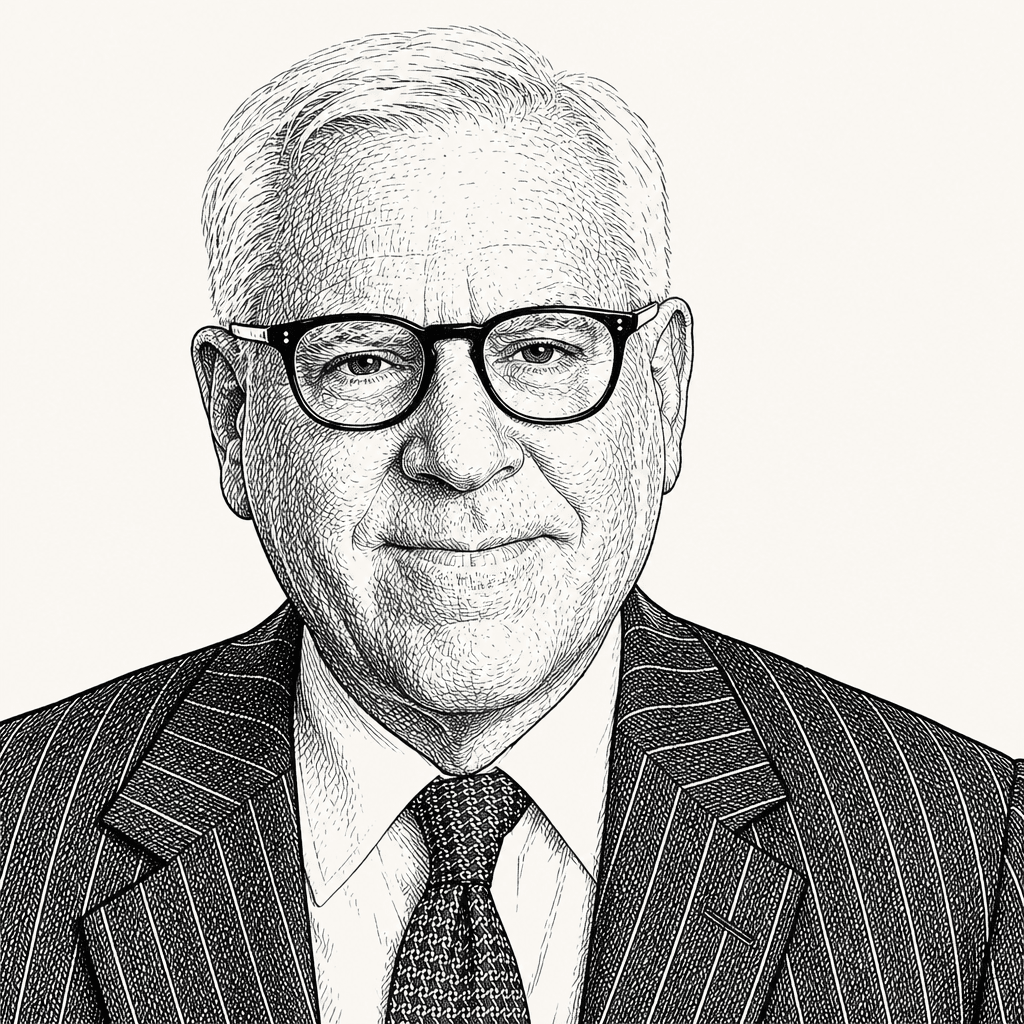
David Rubenstein argues that Carlyle’s rise from a $5 million, deal-by-deal operation in 1987 to a firm managing $500 billion was built less on one investor’s foresight than on institutional compounding: recruiting specialists, raising capital, using Washington connections to open doors, and turning successful exits into proof for the next fund. Rubenstein, who came to private equity after careers in government and law, says his role was fundraising and building the organization while his partners led investment decisions. Even at Carlyle’s scale, he says, the entrepreneur’s job remains to assume that something can go wrong.
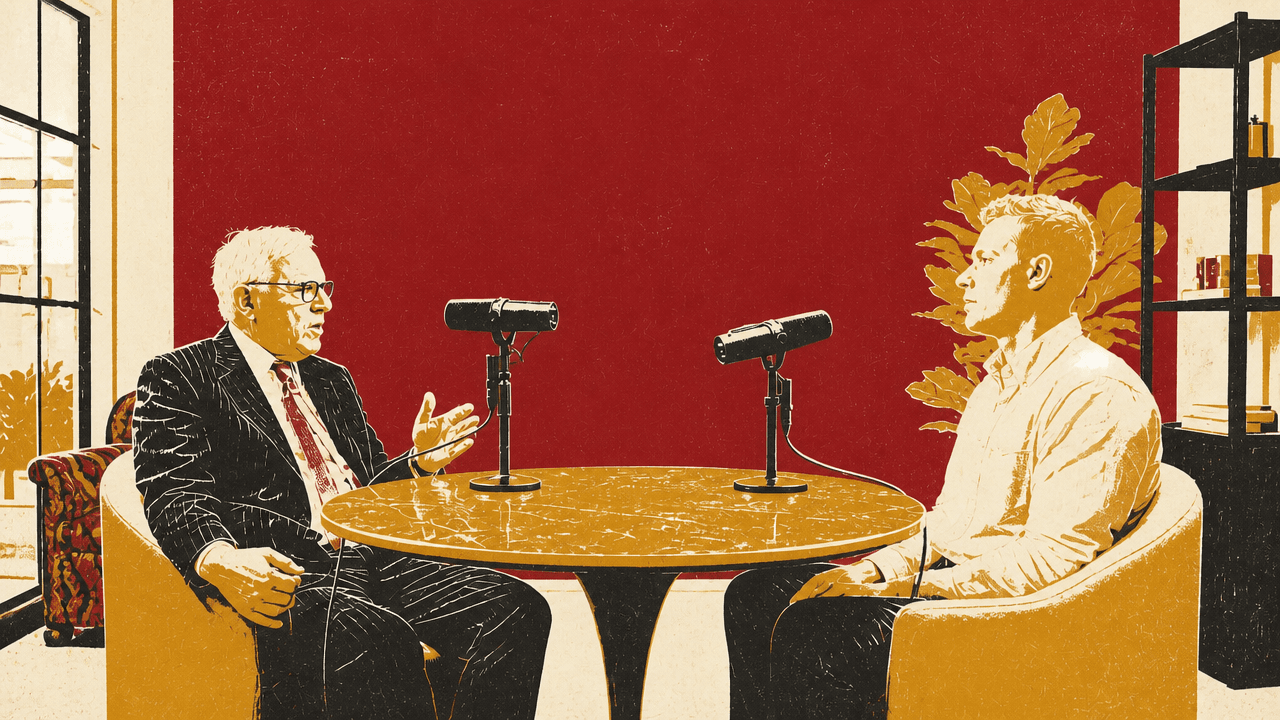
Carlyle was built as an institutional machine, not a founder’s investing thesis
David Rubenstein did not describe Carlyle as the product of superior deal selection by a lone investor. He started the firm at 37 after concluding that, if he did not act then, he might never do it. He had spent years in government and law, not building an investing résumé. He says he knew more about government and legal practice than business, and that his partners knew the investment world better than he did.
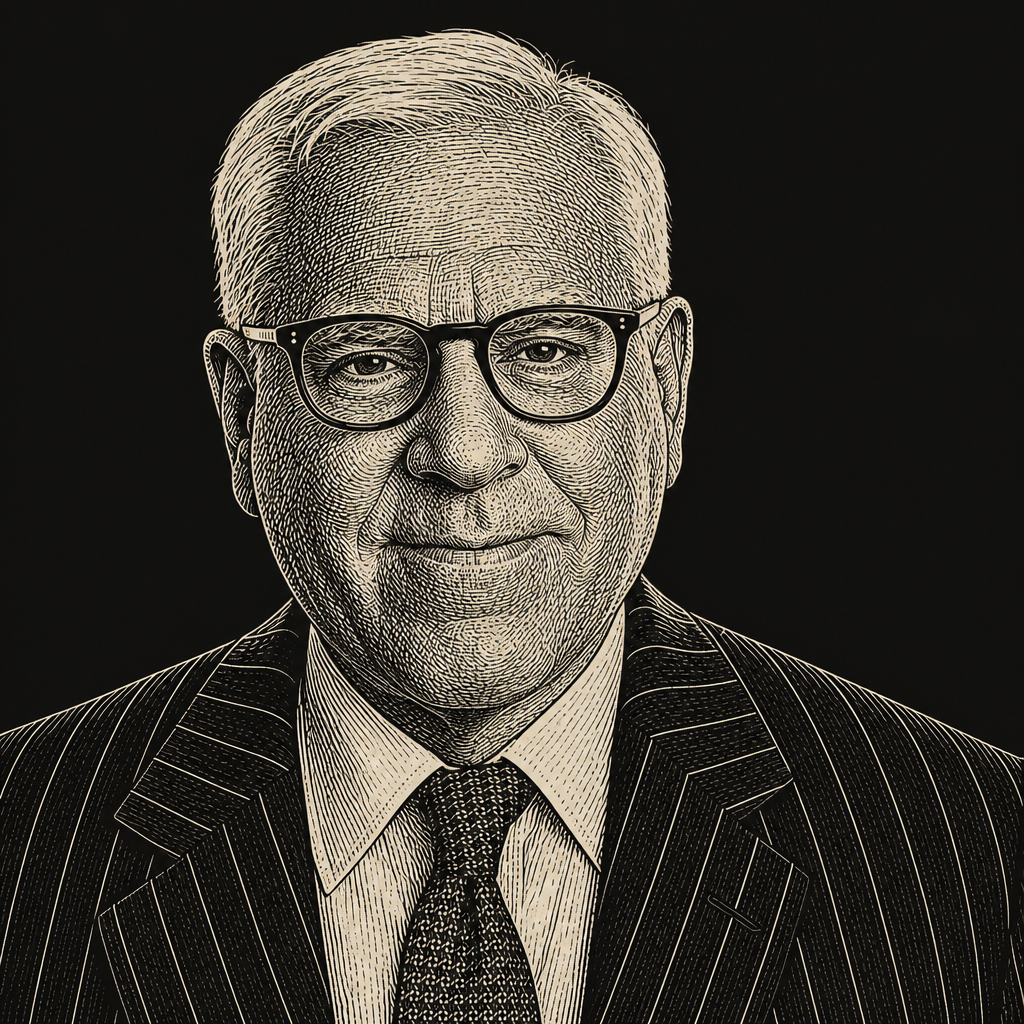
The response was a practical division of labor. His partners, many with MBAs, would assess investments. Rubenstein would raise capital, recruit people, and become the firm’s public face. For more than three decades, he says, he traveled to do precisely that: persuade investors to back the firm and find people capable of building new investment businesses.
That structure ultimately supported a much broader organization. Rubenstein says Carlyle raised $5 million from four investors in 1987 and now manages $500 billion. Carlyle itself has roughly 2,300 employees, he says, while companies it controls employ about 1.5 million people.
The central strategic idea was to expand beyond the conventional private-equity model of the time. Rather than operate a single buyout or venture fund and raise a successor every four years, Carlyle developed separate buyout, growth, real-estate, and debt funds. Rubenstein paired that with geographic expansion: funds and teams in Europe, Asia, Japan, and elsewhere.
Neither move was self-executing. New strategies needed investment professionals who understood them; new geographies needed local credibility; all of them needed capital. In Rubenstein’s account, the firm’s growth depended less on a single investment insight than on continually assembling the people, reputation, and fundraising capacity that made each next business possible.
Washington, D.C., initially looked like another disadvantage. Private equity was not yet a standard label, and the center of the business was New York. Rubenstein chose to turn Carlyle’s location into a differentiated story: a Washington firm, he argued, could understand companies heavily affected by federal policy better than New York investors could. “Maybe it was true, maybe it wasn’t,” he says, but it sounded plausible enough that some investors gave the firm money.
He frames that approach with a line attributed to Senator Everett Dirksen: when being kicked out of town, get out in front and pretend to lead a parade. The business use of the line was straightforward. Use the position available to you, rather than waiting until you have the position you would prefer.
The firm had to earn credibility deal by deal
Carlyle’s first years imposed constraints that made the later scale difficult to imagine. The $5 million raised at the outset was not a conventional blind-pool fund. The firm found a transaction, then approached investors for money tied to that particular deal. Only after doing this for several years did Carlyle raise a dedicated fund, which Rubenstein puts at $100 million. Its second fund was $1 billion.
The deal-by-deal structure was especially awkward because Carlyle was buying publicly traded stocks. The firm could not easily tell a prospective investor exactly what the opportunity was without creating a chance for that person to trade on the information. Meanwhile, investors could take their time deciding whether to participate. Rubenstein describes the period as difficult but not unique: Blackstone, Apollo, KKR, and Carlyle all began without institutional scale. He cites Steve Schwarzman’s account that Blackstone was rejected by 97% of the people it approached for its first fund.
Carlyle’s physical footprint showed a similar hesitation about scaling ahead of proof. Its first office occupied 5,000 square feet in a new Washington building, in space previously used for the film Broadcast News. The leasing agent offered an option on another 5,000 square feet at no cost. Rubenstein declined.
The refusal was not financial. He says he did not want the extra space because he did not want to be tempted to build a firm that large. At the time, he was wary that spare capacity would encourage expansion before the business warranted it. Carlyle later became the building’s largest tenant.
That early restraint fits Rubenstein’s skepticism about founders’ retrospective narratives. He doubts that Bill Gates, Mark Zuckerberg, or Jeff Bezos started with a realistic vision of the organizations they would eventually create. Grand expectations at the outset, he says, can be a form of self-deception. A young business has more immediate problems: whether it can pay rent, make payroll, attract customers, and keep operating long enough to learn what it is.
The risk was not abstract. Rubenstein recalls spending nearly all of Carlyle’s available cash while trying to acquire a company through bankruptcy court. The firm lost the court fight, leaving it with neither the company nor much cash to meet payroll. Carlyle eventually obtained the company and the investment became successful, but Rubenstein remembers waking in the middle of the night wondering whether the firm could pay its rent.
The firm’s franchise value became visible only much later. Rubenstein says Carlyle sold roughly 5% to CalPERS around 2009, at an implied valuation of about $2 billion to $2.5 billion. He describes that as unusual for the time: few people, he says, believed a private-equity firm had a saleable franchise value. A few years later, Carlyle sold 7.5% to Mubadala, an Abu Dhabi investment arm, in a transaction that valued the firm at about $20 billion. Carlyle later went public.
Access could open doors, but successful exits funded the next ask
David Rubenstein’s recruiting contribution was not limited to investment staff. Carlyle’s early team included Bill Conway, formerly chief financial officer of MCI, who became Rubenstein’s co-chief executive for roughly 30 years, and a senior executive from Marriott. The founding group numbered four people.
The early hires sounded conventionally credentialed. Rubenstein concedes that he was probably too drawn to people from good schools, but he also sees a shared motive beneath different résumés. People joining a new venture are generally leaving somewhere because their current situation is not working well enough for them; a pedigree does not eliminate the willingness to take a chance.
Carlyle also gained an unusual set of former public officials. Frank Carlucci came to the firm around the end of the Reagan administration after one of Rubenstein’s former law partners suggested that he interview the outgoing secretary of defense. Carlucci expected to sit on several corporate boards, but he gave Carlyle access that Rubenstein says he could not command alone.
Jim Baker later joined Carlyle after serving as secretary of state, while also returning to his family’s law firm. Dick Darman, formerly head of the Office of Management and Budget, followed. Former president George H. W. Bush and former British prime minister John Major later became advisers. These affiliations had practical value in Rubenstein’s account. Raising money in the Middle East carried a different weight with Baker present; a pitch to acquire an aerospace-and-defense company could reinforce Carlyle’s Washington positioning with a former secretary of defense associated with the firm.
Rubenstein had seen the conditional value of political standing from the other side. At 27, he became deputy domestic policy adviser in the Carter White House despite, as he puts it, not being especially qualified or experienced. His role was to reconstruct Carter’s campaign promises from speeches, interviews, and questionnaires, before such material could be searched online. Because he knew those commitments closely, he was able to flag when proposed policies conflicted with them.
A photograph shown in the source captures Rubenstein with his parents and President Jimmy Carter at the White House. His parents, neither of whom graduated from high school, were blue-collar Baltimore workers; Rubenstein’s father spent his career as a postal clerk after returning from World War II. They were, he says, “Yellow Dog Democrats,” committed enough to vote for a Democrat even if the candidate were a yellow dog.
The experience taught him that the attention attached to an office is not personal capital one can simply carry away. While Carter was president, Rubenstein says people praised him, promised assistance, and invited him to call if he wanted work. After Carter lost, many did not return his calls. At 31, he struggled to find a law firm willing to hire a junior aide from the defeated administration. He eventually found a legal job, decided he was not particularly good at law and did not enjoy it, and started Carlyle a few years later.
That background makes Rubenstein’s account of Carlyle’s advisers more precise. A prominent former official could create an introduction or add force to a pitch, but that did not by itself produce a durable investing business. Carlyle still had to show investors what it had done. After completing and exiting one deal successfully, Rubenstein says, the firm could use that result while raising money for the next similar deal.
The distinction mattered because access did not make outcomes easy to read. One of Carlyle’s companies owned a bibliography of books in print that Jeff Bezos needed for an online bookstore. Bezos offered 20% of the company—Rubenstein later gives a range of 20% to 25%—for access to it. Carlyle’s representative preferred cash to an ownership stake in an illiquid startup, and the parties instead agreed to a rental arrangement of about $100,000 a year for five years.
Rubenstein later visited Bezos when Amazon was a one-office operation. Bezos was handling books himself and taking them to the post office at night. Rubenstein warned that Amazon would compete with Barnes & Noble; Bezos responded that he understood how to do the business better. Rubenstein says he did not think Bezos would make it. Carlyle later received some stock but sold it at the IPO. Rubenstein estimates that the original stake would now be worth about $14 billion.
Entrepreneurs, people that build companies, are not shrinking violets.
Bezos struck Rubenstein as smart, driven, hard-working, and unusually self-confident, though Rubenstein says he could not judge Bezos’s technical skills. The broader point is not that confidence predicts success reliably. Rubenstein makes the opposite case when discussing founders and political figures: many people may have the visible qualities of ambition and intensity, but luck and institutional openings still help determine who breaks through.
He offers Microsoft as an example of the latter. In Rubenstein’s telling, IBM hired Microsoft to provide an operating system for its PC without taking ownership of that system. Had IBM owned the operating system or bought Microsoft at that point, the outcome could have been different.
The same uncertainty applies to careers. Rubenstein hired Glenn Youngkin after McKinsey and Harvard Business School, watched him work at Carlyle for 25 years, and did not expect him to win a governorship because he had never held political office. Youngkin won in Virginia, and people began discussing him as a potential presidential candidate. Rubenstein’s conclusion is that it is impossible to know confidently which capable people will make a decisive leap.
The entrepreneur’s job never becomes entirely safe
David Rubenstein does not describe Carlyle’s scale as producing a corresponding sense of safety. Asked when he felt financially stable, he answers, “Maybe yesterday.” Even after decades of growth, he says, an entrepreneur assumes that something can go wrong: an employee can make a mistake, a deal can fail, or a new risk can emerge.
Because if you're an entrepreneur, you always think something bad is going to happen.
Rubenstein repeatedly cites a severe survival figure: 99.9% of companies started in the United States, he says, are not still in business five years later. He uses it less as a statistical analysis than as a statement of posture. The founder needs enough confidence to start a business and persuade others to join it, but enough concern to keep asking what could break.
That concern did not appear to be evenly distributed among Carlyle’s founders. Rubenstein says one of the two people with whom he built the company is now 80 and has no gray hair, while Conway seems less troubled by risk because he has greater confidence in his investing ability. The contrast matters because Rubenstein does not treat anxiety as an investing advantage in itself. His claim is narrower: vigilance is part of the operating condition, even if different partners bear it differently.
The habit survives beyond the firm. As principal owner of the Baltimore Orioles, he says he worries daily about whether the team will make the playoffs and whether he has done enough to help. Ownership, in this view, does not eliminate exposure to outcomes one cannot fully control.
Rubenstein also says advisers have trained him not to read social media, since criticism is inevitable. He does not claim that criticism is painless; “nobody wants to be criticized,” he says. His response is avoidance rather than trying to become indifferent to it.
Wealth did not erase the habits of a blue-collar upbringing
David Rubenstein attributes some of his disposition to his family background. He still views himself as coming from a blue-collar Baltimore family, and says his parents’ lack of formal education made his own later trajectory difficult to predict. He describes himself as lucky and says his philanthropy and nonprofit board work are efforts to give back.
That self-description extends to small habits. Rubenstein says he still goes to a neighborhood barber for a roughly $15 haircut, has no yachts, and was wearing a suit he had owned for about a decade. He owns many suits and ties, he says, partly because his father, a blue-collar worker, disliked wearing ties. Rubenstein speculates that buying and wearing suits became a way of marking an achievement his father did not have.
He also does not describe building a family office as a way to place his children inside his own professional orbit. His three children have MBAs and work in private equity, but they have their own businesses, which he says he has supported. His family investment office is largely owned by the professionals who work there; he owns a piece of it. He says he expects his children to receive something from it after his death, but that he intends to give away most of his wealth. He identifies himself as an original signer of the Giving Pledge and says he has already given away substantial sums.
The costs of the firm’s expansion remain part of that account. Rubenstein says that extensive travel required him to depend on his spouse and others to help raise his children. When he came home on weekends, he tried to spend time with them. He does not present this as a solved formula for balancing business and family; he calls it a challenge.
Nor does he think anyone has fully solved the larger problem of a good life. People can have professional and personal qualities worth emulating, he says, but “there’s nobody out there that’s perfect.” He illustrates the point with high-school friends who were once excellent athletes and now have artificial hips or knees. Every life, in his telling, contains trade-offs and complications that are less visible from a distance.