Coach Scaled Accessible Luxury Through Retail Control and Customer Proof


Former Coach chief executive Lew Frankfort argues that the handbag maker’s rise from a $6mn New York manufacturer to a global brand was built on controlled distribution, direct customer knowledge and disciplined evidence, not fashion intuition alone. In his account to Masters of Scale, Coach’s “accessible luxury” position emerged from early proof points — catalog data, the Madison Avenue store and measured demand — before becoming an investor story and global expansion strategy. Frankfort frames the company’s durability as a balance of “magic and logic”: brand belief and instinct constrained by metrics, operational control and a willingness to refuse damaging growth.
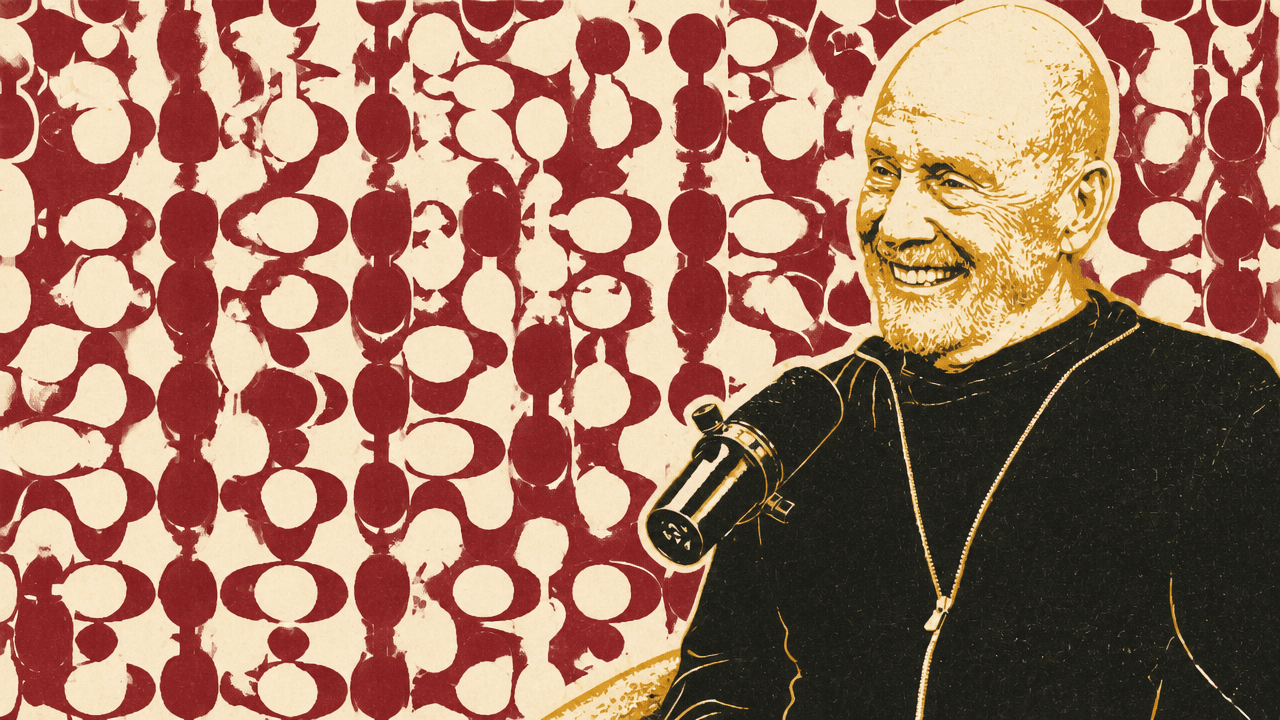
Frankfort’s account of Coach’s scale starts with control, not just distribution
When Lew Frankfort joined Coach, it was a small New York handbag maker with about $6 million in annual sales and no retail empire of its own. He came in not as a fashion executive but, effectively, as assistant to the CEO, with the title VP for Marketing and Special Projects. The founder, Miles Cahn, wanted a protégé with two qualifications: no fashion experience and good values. Frankfort said he had the first, and believed he had the second.
Frankfort’s account does not present lack of fashion experience as a handicap he had to overcome. His first move was not to impose fashion logic on the company. It was to find out what Coach already meant to the people closest to it. That pattern — purpose first, then evidence, then disciplined refusal when the evidence demanded it — had already been formed in his public-service work and would later shape his fights inside Sara Lee.
Before joining, Frankfort conducted what he called a “deep search” into the brand. He posed as a Business Week reporter, called buyers and retail executives at Bloomingdale’s, Bonwit, Macy’s, and other stores, and visited a handbag shop on 72nd Street. He did it, he said, because identifying himself as a reporter would get him access to divisional managers, general managers, and perhaps even presidents. “Everyone took my call,” he said.
What he heard was that Coach had a cult following. Customers loved the bags not as interchangeable fashion accessories but as personal objects. Frankfort emphasized the intimacy of the category: a handbag is a “vessel” that a woman might open 50 or 60 times a day. Coach’s natural leather developed a patina over time, “like a baseball mitt.” His phrase for the product was that it would “never wear out, it would wear in.”
Early Coach imagery supported that leather-and-craft positioning: black-and-white storefront and shop photographs, shelves of leather handbags, and vintage department-store advertisements. A Saks Fifth Avenue ad described Coach bags as “hand-sewn of natural glove-tanned cowhide” and framed them as “almost as enduring” as Christmas. The brand Frankfort encountered was rooted in material feel, durability, craft, and the sensory environment around leather, not only in positioning language.
That understanding led him toward more control over the customer experience. He looked to Europe for models of handbag manufacturers that sold directly to consumers. Louis Vuitton, then a relatively small brand in his account, impressed him because it controlled its own destiny: its own stores, one price, its own merchandising, staffing, service levels, and policies. Frankfort’s conclusion was that Coach could become a democratized luxury brand — not a luxury brand reserved for the top 1% or 5%, but one accessible to the top 20% to 40% of the population.
The term “accessible luxury” would not be coined at Coach until about 20 years later, Frankfort said. But the idea was already forming. He saw a growing middle-class audience and a product that was “unique,” “very much American,” made of natural leather, and priced as a value relative to European luxury.
The proof point came in 1981, about two years after Frankfort arrived. He convinced Miles Cahn — or, more specifically, Cahn’s wife — to let him open a Coach store on Madison Avenue. That store did more than $1 million in its first year. Frankfort called it “the magical moment,” because it showed that the brand’s customer loyalty could convert into direct retail demand.
But he stressed that the store was not a speculative bet made on brand faith alone. He had already started a catalog business 18 months earlier. Through that work, Coach had built a file of roughly 100,000 people. The company invited 20,000 of them who lived within 100 miles of the Madison Avenue store, held special events, and gave existing customers a reason to come in.
The store itself was designed as a Coach environment, not a generic shop. Frankfort said the entire assortment was in one place, staffed by seasoned salespeople, with the smell of natural leather permeating the space. He and Miles designed it themselves, pulling references from different places to create something “uniquely Coach.” The result, he said, reached $10,000 per square foot and eventually $4 million to $5 million in sales from that space.
I had real clarity it would, it would be successful. I never dreamt it would be as, from the start, would be as successful as it was.
The lesson Frankfort drew was not simply “open stores.” It was that Coach had first built evidence of demand, a customer file, a direct-response channel, product loyalty, and a physical experience that amplified what customers already valued. After Madison Avenue and mail order worked, he developed a plan to open one or two stores a year. By spring 1984, Coach had reached $20 million in sales, and the channels Frankfort started accounted for about half the business.
Public service gave Frankfort a pattern for mission, metrics, and refusal
Before Coach, Lew Frankfort worked in New York City government. He described himself as “a product of the 60s” who came of age believing his generation would create a better world. Under Mayor John Lindsay, city government was recruiting idealistic young people, but Frankfort said he soon found himself surrounded by people who were mainly trying to get to Friday or vacation. He wanted to improve things.
His response was to look for a mentor. He asked around city government for someone smart, caring, and able to get things done. Herb Rosenzweig was one of the names that surfaced, and Frankfort went to work for him, following him through different positions. That experience raised Frankfort’s profile enough that, in 1976, he was asked to help fix New York’s day care and Head Start programs, which he described as “the poster child for inefficiency and corruption.”
Frankfort believed deeply in those programs. He framed day care and Head Start as part of creating opportunity for the underclass and as essential to a country built on immigrants. But he said the programs were in danger of collapsing because they were badly administered. Audits found, in many cases, that only half the children were eligible. Some community-based programs, he said, were run in the self-interest of operators rather than the broader community; some employed unqualified relatives; some were corrupt.
Jeff Berman called it a turnaround, and Frankfort agreed. The complication was that unlike a small private-company turnaround, Frankfort did not fully control the system. He had to work through bureaucracy, laws, regulations, stakeholders, and politics. His first move was to recruit a coalition of leaders with purpose and values aligned to the mission. He called it a “rainbow group of staff,” and said they worked around the clock.
The mission was specific: maximize the number of eligible children who could stay in care while improving quality and managing to a lower budget. Frankfort said the team reached a point where no eligible child was denied service, quality improved, and HEW — which had identified the program as the worst in the United States — later said other programs should follow its example.
That public-sector episode also showed how Frankfort used metrics when a political request conflicted with his view of the mission. He described a confrontation with Ed Koch, who was then a congressman. Koch came to Frankfort’s office seeking to save a program outside his district and, as Frankfort told it, did not want to know why the program was being defunded. City Hall had warned Frankfort to meet with him because Koch was influential. But the program was in the bottom 10% by measurable standards, and only 15% of its children were eligible. Koch did not want to examine the metrics, Frankfort said. Frankfort told him he was not sure he could do anything. Koch said, “You know what I want.” Frankfort said he understood — and then defunded the program.
Years later, when Koch was mayor, he passed Frankfort over for a job Frankfort believed he was especially qualified for. According to Frankfort, Koch told him, “Lou, you’re too principled.” Frankfort said he knew exactly what that meant.
The same willingness to refuse appeared inside Sara Lee. Frankfort’s later rejection of the JC Penney placement was not presented as a taste preference alone. It was an example of protecting the business when a parent company’s broader incentives pointed elsewhere. He said he was willing to be terminated rather than do things that made no sense.
Accessible luxury had to become a story the market could measure
The phrase “accessible luxury” did more than describe a price point in Frankfort’s account. It gave Coach a way to explain a business that was not trying to imitate European luxury but was also not behaving like a mass handbag company. The idea had to make sense to customers through product and price, to operators through stores and supply chain, and to investors through an IPO narrative backed by measured performance.
After Miles Cahn decided to sell Coach rather than make Frankfort and others partners, Frankfort helped negotiate the sale. Cahn told him he would recommend that Frankfort become CEO after the transaction, but also told him directly, “You’re not ready for this.” Frankfort said he understood. The buyer was Sara Lee, a large conglomerate that paid $30 million for Coach.
Frankfort credited Sara Lee with getting the early integration right. The company focused on helping him build a team and ensuring the right people were in the right roles. But the parent company also tried to use Coach’s brand power to support other corporate priorities. One example was JC Penney, then described by Frankfort as a strong mass brand “eating department stores’ lunches.” JC Penney wanted Coach in its stores, and Sara Lee wanted to open Hanes and Champion shops there. The argument to Frankfort was that Coach could help open the door.
Frankfort refused. His view was that Coach customers were not shopping at JC Penney, “at least not yet,” and that placing the brand there made no sense. He said he was prepared to be fired rather than do it. Over time, he reached a handshake understanding with Sara Lee’s chairman and CEO: if he could get the parent company a billion dollars, Sara Lee would give Coach its freedom.
Preparing for that independence required a different discipline. Frankfort said he recruited business leaders, aligned the team around what Coach needed to do to go public, and executed systematically. By 1999, the “green shoots” he was measuring made it clear to him that Coach was nearing a breakout. He wanted to get the company public before those numbers fully appeared, so that the benefit would accrue to Coach shareholders rather than Sara Lee shareholders.
In spring 2000, Coach agreed to pursue an IPO and engaged Goldman Sachs. The market dipped midyear, and there was discussion of pulling the offering. Frankfort said he delivered numbers that gave Goldman confidence it could take Coach public successfully. The timing also meant Coach was coming to market as the dot-com bubble was bursting, as a company that was “very much not a dot-com stock,” in Berman’s framing.
The accessible-luxury story mattered here because investors needed a way to understand why a handbag company could grow rapidly. Frankfort said Coach coined the term, revamped its entire supply chain, broadened the brand’s personality, and introduced major new collections with broad appeal in Asia. In other words, the story was attached to operational changes and measured demand, not just to marketing language.
Japan was central to that expansion. Frankfort said consumers in Japan spent six times as much on bags as the average American did at the time. He described Japan as an “egg-shaped economy,” especially then: broadly middle class, with European luxury brands serving as the number-one possession. Coach did not enter by directly targeting European luxury buyers. It targeted the young female professional who wanted independence: to travel, delay marriage, break the glass ceiling, and spend on herself.
The price gap was part of the proposition. Frankfort said Coach could offer her a bag at 40,000 yen while European competitors were priced at 100,000 yen. The difference, he said, could fund a weekend trip to Korea, including hotel and airfare.
| Reference point | Figure Frankfort gave | Why it mattered |
|---|---|---|
| Coach before Frankfort | $6 million in annual sales | A small handbag maker with strong customer loyalty |
| Madison Avenue store | More than $1 million in year one | Retail proved direct demand for the full Coach assortment |
| Coach by spring 1984 | $20 million in sales | Mail order and stores had become about half the business |
| Sara Lee purchase price | $30 million | The conglomerate acquired Coach before the breakout |
| Japan price comparison | 40,000 yen vs. 100,000 yen | Coach positioned itself below European luxury while still offering aspiration |
Frankfort’s accessible-luxury claim was not that Coach was simply cheaper luxury. It was that the company could preserve brand belief while reaching a much larger audience than traditional luxury. That required pricing, retail control, supply-chain work, product breadth, and a coherent story for customers and investors.
“Magic and logic” meant vision disciplined by measurement
Lew Frankfort’s leadership language at Coach was “a blend of magic and logic.” He said the phrase remains part of Coach’s culture and is still used by his successors. It was his answer to Berman’s distinction between being data-driven and data-informed: numbers matter, but they cannot be everything.
Magic, in Frankfort’s definition, includes belief, vision, and the ability to see something that does not yet exist. It also includes curiosity — probing and learning — adaptability, nimbleness, instinct, and intuition. Logic includes the discipline to organize people around the greater good and a shared purpose. The hard cultural work, he said, is building a mindset in which people are in service of something larger than their own function.
At Coach, that purpose was building a powerful franchise that consumers would love and believe in. Frankfort’s description of great brands was not primarily transactional. “At its essence,” he said, “that’s what great brands do. People have belief in them.”
The tension is that large companies often become structurally hostile to that blend. Jeff Berman pointed to corporate silos — units literally called divisions — and Frankfort said large companies often lack the right people with the right mindsets. An entrepreneurial mindset cannot be produced simply by creating a “new projects” division inside a mature company.
Frankfort’s critique of incumbency was blunt. Many people in large companies, he said, have grown up inside the company or the industry. They are accustomed to a certain way of working. They want to meet plan, get their bonus, and take vacation when they want. They may not speak truth to power because they do not want to jeopardize their jobs. They may not want to work around the clock. As companies scale, process and protocols make movement difficult.
He connected that problem to the familiar generational pattern in family companies: the founder creates it, the second generation sometimes builds it, and the third generation ruins it. In very large companies, the pattern may not be as literal, but scale still creates inertia. Reinvention requires, in Frankfort’s phrase, throwing the company “up in the air.”
What kept Coach from becoming only process, in Frankfort’s telling, was the combination of disciplined evidence and brand imagination. The Madison Avenue store was “magic” in that it imagined Coach as a full retail experience before that existed. It was “logic” because it was supported by catalog data, customer interviews, direct invitations, assortment strategy, and measured demand. The IPO story had the same pattern: a narrative category for investors, accessible luxury, backed by measured green shoots and delivered numbers.
Coach’s current relevance is renewal of the same brand DNA
Berman noted that Coach was having a Gen Z moment, with recurring signs of cultural traction on TikTok and elsewhere. Lew Frankfort, no longer running the business day to day, said watching that resurgence was rewarding because he knows the leadership team and their values.
He named Todd Kahn, Coach’s CEO, and Stuart Vevers, both of whom he recruited, as leaders who see themselves as stewards of the brand. In Frankfort’s formulation, they have temporary charge of something that belongs to investors, employees, and the community that uses it. That stewardship matters because it frames the brand as an asset to be renewed, not merely harvested.
Frankfort said the current leadership has leaned into the zeitgeist and remained forward-minded. He described Coach as being in its ninth decade and said that under his watch, the company peaked at $20 billion in market capitalization. Today, he said, it is at $30 billion, after taking 10 years following his departure to return to $20 billion and surpass it.
The point was not nostalgia for a brand that once worked. It was continuity under active management. Berman framed the companion to magic and logic as “tradition and innovation,” and Frankfort agreed. The requirement, he said, is understanding the brand’s DNA while not fearing new things.
That final idea also shaped Frankfort’s career advice. Asked when people should toe the company line and when they should stick to their guns, he refused to make it absolute. It depends, he said, on where someone is in their journey and where they are on Maslow’s hierarchy. If people are fortunate enough to have discretion, he advises them to be deliberate about where they work.
His criteria were consistent with the rest of his account: look for an organization whose purpose you believe in; look for a culture that encourages curiosity and openness; avoid places that are heavily siloed or hierarchical; look for evidence that people can rise quickly if they perform; and seek a boss who can be a mentor, at least in some areas, with reasonably high emotional intelligence. Without that, he warned, people can end up in situations where they do not respect their boss.
The goal is not necessarily to find one’s “best destiny” in the first role. It is to increase the likelihood of fulfillment, growth, and authenticity. Frankfort’s account tied that advice back to the same requirements he described at Coach: purpose strong enough to orient decisions, evidence strong enough to test them, and enough independence to refuse choices that would damage the work.