Raising Cane’s Built a Billion-Dollar Chain by Refusing Menu Expansion


Raising Cane’s founder and CEO Todd Graves tells Masters of Scale that the chain’s growth to nearly 1,000 restaurants came from refusing much of the conventional quick-service playbook. He argues that a narrow menu built around chicken fingers, company ownership rather than franchising, resistance to private-equity-style cost cutting, and continued reliance on human service are not constraints on the brand but the operating choices that made it scalable.
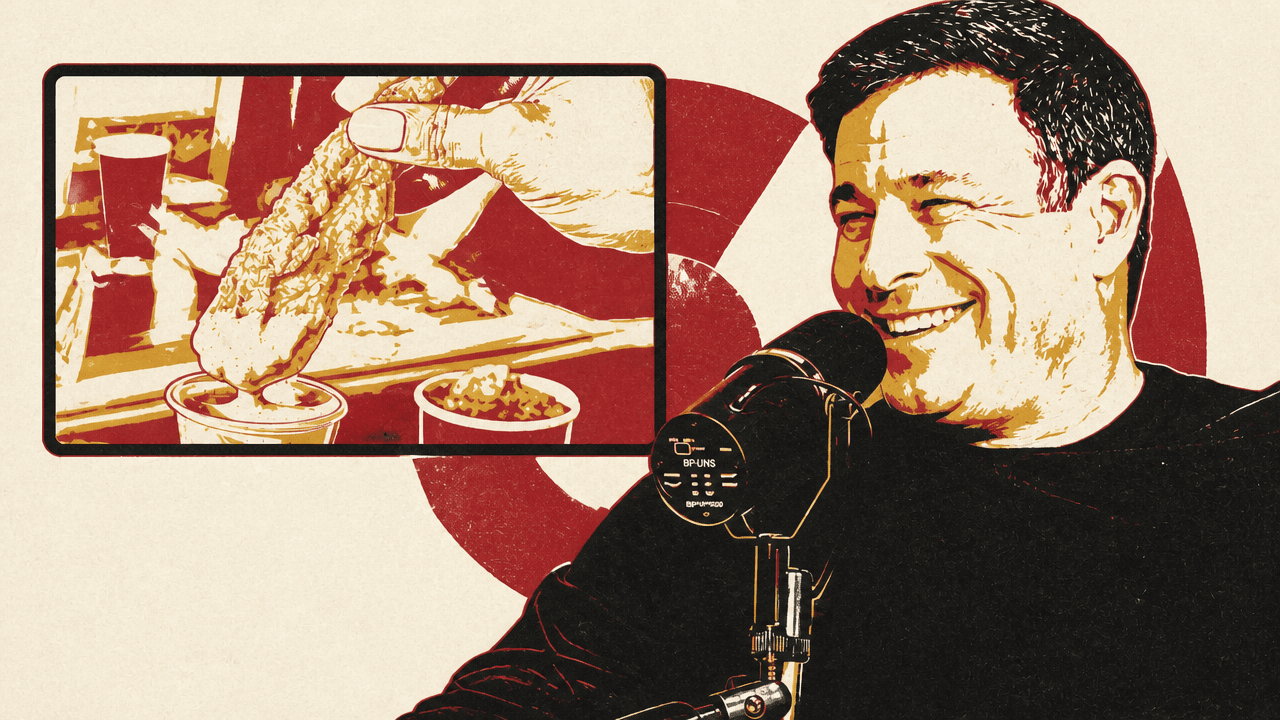
The chicken-finger focus was deliberate, not accidental
Todd Graves built Raising Cane’s to almost 1,000 restaurants, by his account, around a premise that ran against the quick-service restaurant logic he was taught in college: a restaurant did not need to minimize “veto votes” with a broad menu if it could become the place people craved for one core product.


Graves said the idea formed in the early 1990s, when he was in college and saw boneless chicken becoming more common while chicken was gaining popularity as a protein. Growing up in Louisiana, he knew fried chicken as bone-in fried chicken. In college, he saw boneless chicken showing up at chains and local restaurants and concluded that chicken fingers could become “the next thing.”
The business plan he wrote with his original partner for a business-planning class was operationally detailed: he said he knew costs down to what it would take to wash aprons because he had worked in restaurants. The plan still received the worst grade in the class. The professor’s objection was not that the plan lacked detail, but that it did not follow the industry’s direction. Quick-service chains were adding menu items, salads, wraps, and other options because they feared that one person in a car could veto a restaurant if it lacked variety.
Graves took the opposite lesson. He believed people went to a restaurant for “craveable food,” even if that restaurant had a hundred menu items. The practical advantage was execution: doing one thing better than anybody else. He later pointed to In-N-Out Burger as an example of a focused model that had worked since 1948, though he said he did not have it in mind as a model at the time.
That focus still governs how he describes the business. Raising Cane’s is built, in his formulation, around “craveable food served with fast food speed and convenience.” The limited menu is not only a brand decision; it is an operating system. A simpler kitchen lets the company cook in what Graves called a “homemade style” while preserving speed. A simpler menu also reduces decision time at the speaker or window. He said customers often do not read the menu board; they pull up and order a familiar customization, such as “a box combo, no slaw, extra toast.”
Suggestions to add local sauces, spicy chicken, barbecue sauce, cream gravy, or other products have not changed that view. Graves argued that each additional option adds seconds, uncertainty, forecasting complexity, and cooking friction. With no held food, a spicy-chicken option would require estimating demand for multiple versions and coping with customers changing their minds at the window.
If you try to be all things to all people, you're not serving any of them well.
The same logic held when Raising Cane’s entered the Middle East. Graves said there was pressure to add a popular mayo-and-garlic-based local sauce. He refused, believing customers would come to love Cane’s sauce. In his account, customers there came to love Cane’s sauce as much as the local alternative.
The company was funded by work before it was funded by capital
Graves’s origin story is not a clean fundraising narrative. It is a story about being unable to raise money, then converting labor into startup capital.
After college, he took the business plan to banks around town in what he described as a cheap suit with a cheap briefcase. The answer was repeatedly no. Bankers advised him to work in the industry for a decade because he had a college degree but no money. Graves said those rejections became fuel. He had already observed, through entrepreneurial clubs and business reading, that many people with strong ideas never started because starting was hard. His conclusion was that he had to commit until the restaurant existed, whether the effort ended in success or failure.
When banks would not finance him, he went to work. Through a friend of a friend, he became a boilermaker doing turnaround shift work in refineries in El Segundo and Torrance, California. He worked 90-hour weeks and said California’s double-time rules made it possible to earn money if he was willing to work hard.
A coworker nicknamed Wild Bill Tolar then suggested a more extreme way to raise money: commercial fishing for sockeye salmon in Alaska. Graves said he flew to Anchorage, then to King Salmon, hitchhiked to Naknek, and spent the summer gillnetting. He described it as roughly four hours of sleep a night, often broken into short segments, with 20-hour workdays, boats filling with fish, captains delaying trips to tender boats, boats ramming each other, and medevac helicopters overhead.
His explanation for enduring it was simple: “I’m fueling my chicken finger dream.” He also said he told people why he was there. Saying out loud that he was going to open the restaurant created, for him, a kind of psychological commitment.
I am going to open my restaurant. I'm going to do it. I'm not going to stop until I do. Nothing's going to ever stop me for this. I will never quit. I'll never give up.
Graves also assembled small preferred investments from people who had seen his commitment over roughly two years: boilermakers, people from Alaska, and even his bookie, in increments of $5,000 or $10,000. With that equity, he secured a small SBA loan.
The first location was an old, dilapidated building at the North Gates of LSU. Graves said the broker, Red Reynolds, advocated for him to landlord Tula Harper, who was about 96 years old, arguing that unlike many college-area concepts that came and went, Graves would build something long-term. Because capital was scarce, Graves learned plumbing and contracting work himself, bringing in specialists for jobs such as electrical work that he could not do.
He also had to learn the managerial pieces he had not done before: hiring, scheduling, and building teams. He said the National Restaurant Association provided useful templates and formats, and he sought advice from Baton Rouge restaurateurs he respected. His future wife, then a McDonald’s franchisee, became another source of operational discussion; they talked about motivating crews and details as specific as salting fries.
The restaurant made money in its first month, Graves said, though only about $30. Eighteen months later, he opened a second location with a full SBA loan and a ground-up build. The second site changed his understanding of the concept. The first store had looked like a college restaurant. The second, still near LSU but in a different traffic pattern, brought in parents picking up food after work, tee-ball teams on Saturdays, church groups on Sundays, and business customers at lunch. That convinced Graves the concept was not limited to college campuses.
Control became more important than franchise speed
Raising Cane’s ultimately chose slower, tighter control over the expansion speed a franchise-heavy model might have offered. Jeff Berman raised the franchise question, and Graves said the company initially did use franchisees. His early expectation was a split model: perhaps 60% company-owned and 40% franchised. The franchisees he chose were strong restaurant operators who cared about crew, people, community, and similar values.
The problem was not that they were poor operators. It was that they were slightly worse than the company-owned restaurants, and that difference was intolerable to him. Graves described company restaurants as operating at “95 out of 100,” while the franchisees might operate at “85 out of 100.” He added that many franchisees elsewhere might be closer to “65 out of 100,” so 85 was good. It still drove him “crazy.”
The issue was not only scores. Franchisees slowed operating change. If Raising Cane’s developed a new training program or drive-thru speed improvement, franchisees could debate, modify, or resist it because the restaurants were their businesses. Graves said he spent more time convincing them than moving forward on things he believed worked.
So the company bought back the franchised restaurants. Graves said the former franchisees were happy to sell, and Raising Cane’s moved to 100% company restaurant operations.
That choice links directly to how Graves defines the brand. He said he wants Raising Cane’s known not only for craveable chicken finger meals, but for “great crew, cool culture, active community involvement.” When the company enters a new community, Graves said it hires local leaders and local people, while sending existing crews to establish training and cultural practices. The local leaders he wants are “intrinsically motivated”: people who want to take care of crew members, create opportunities for them, and give back to the community.
Raising Cane’s scale has not made him less wary of outside financial control. He cautioned restaurant founders against selling to private equity, while allowing that not all private equity firms are bad. His objection is to a three-to-five-year exit frame in which investors and shareholders focus primarily on financial returns while restaurant workers remain with the consequences after the investors leave.
The damage, as he described it, is often operationally small but culturally cumulative. In a boardroom, a CFO may identify 15 cost cuts. One example Graves gave was the music system. Raising Cane’s uses what he called a top music system with many choices because crew members like having current music and being able to enjoy the kitchen environment while working. A cheaper system might have the basics and save money, but if crew members are less happy, customer service and speed can decline.
Another example was sauce. A commissary-made sauce might preserve quality while saving 50%, in the abstract. Graves framed such decisions as “death by a thousand cuts.” The cuts can look rational in isolation and still erode the experience that makes the restaurant work.
Marketing depends on timing, fandom, and founder judgment
Graves’s view of marketing begins with the constraints of a founder without much money. Around LSU, he bought radio, met DJs, brought them food, and encouraged them to talk about the restaurant. As the business could afford billboards and television, it added those. In quick-service restaurants, he said, staying top of mind matters because customers often decide lunch in the moment. A billboard on the way to lunch, a radio mention, or a television ad the night before can turn into “Oh, Cane’s.”
But Graves’s current marketing emphasis is not only paid reach. It is timeliness and cultural placement. He wants Raising Cane’s to be present when something is already on people’s minds. He cited Cynthia Erivo going to Cane’s after the Oscars, Saquon Barkley two days after the Super Bowl, and the idea of quickly involving the winning Super Bowl quarterback. The value comes from tapping into a celebrity’s fan base while the person or event is still in the news.
The company also looks for places where a restaurant brand can appear in a way that feels different rather than overly serious. Graves described a Cane’s fashion show around Fashion Week, with a designer and a Cane’s sauce dress, staged just before Fashion Week activity intensified. Press attended because the activation was unusual, and the brand reached a different audience.
He said he personally runs marketing because, for a founder, marketing is personal. The job is not risk-free. Being top of mind can turn against a brand if it picks the wrong person, chooses someone who is not a genuine fan, or overreaches into uncoolness. Consumers, Graves said, see through inauthentic marketing “in two seconds.”
That is why he emphasized “Caniacs” — celebrities who already love the brand. Snoop Dogg was the first celebrity drive-thru activation, according to Graves. The two were already friends, and Snoop called asking what they could do together. Graves suggested that, because Snoop was going to be in Little Rock for a show, he work the Cane’s drive-thru with hidden cameras. Snoop did it, enjoyed it, and the activation became proof that Graves could show other celebrities: Snoop did it, so they could too.
Graves also tied marketing back to operations and employee economics. Staying relevant and driving sales helps crew bonuses and compensation. In that sense, he framed marketing as part of his responsibility to create opportunity for the people in the restaurants.
Founder visibility supports trust, but it runs on the founder’s own rhythm
Graves said he grew up seeing Dave Thomas in Wendy’s commercials and drew a lesson from it: there was a real person behind the brand, not just a corporation. To him, Thomas signaled that someone cared about quality and was making decisions.
That model matters more now, Graves argued, because there are fewer visible restaurant founders after companies sell to private equity. When consumers see Graves and his family associated with Raising Cane’s, he believes it communicates care about food quality, food safety, and the standards of the company.
His public role now includes commercials, celebrity collaborations, and a turn as a Shark Tank shark. Berman asked how he thinks about personal brand as a global business asset. Graves’s answer was less about abstract influence than about founder trust and productive enjoyment. He said he genuinely likes doing the work and sees it as both fun and useful.
His time-management answer was notably unsystematic. Graves called himself “pretty erratic” and said he is not a good example for conventional productivity. His method is to get done whatever needs to get done, regardless of when it happens. Sometimes that means working until 3 or 4 a.m.; sometimes it means sleeping 11 hours after several short nights.
His team understands the pattern, he said, and he surrounds himself with disciplined, detailed, scheduled people who know how to manage up. Technology gives him flexibility he did not have in the beginning: he can travel with his family, set up dual monitors, take Zoom calls, work part of the day, have dinner, and work later. The through line is not schedule discipline but obligation. He said he made a commitment to the crew, and whatever that commitment requires, he has to get it done.
AI is useful, but Raising Cane’s does not want to automate away the human advantage
Raising Cane’s is using AI cautiously: as a way to gather and compile information faster, not as a substitute for human judgment. Graves said the company wants the tools to support better decisions. His warning to employees was blunt: if the output is something he “could have ChatGPT’d” himself, the tool is not adding enough value.
He also looks at technology as a way to anticipate future competition. Raising Cane’s already uses drive-thru technology such as handhelds and “great systems” to improve speed. Graves is watching robotics and asking how quickly fully robotic restaurants may arrive.
His response is not to race toward replacing people. He said he wants to keep the human touch. He believes fully robotic restaurants will eventually exist, with robots serving food. That could neutralize one of Raising Cane’s current advantages if robots are reliably friendly and competitors’ human crews are not.
But Graves interprets the risk differently. If robotic service becomes common, he thinks customers may value the presence of real people more: a real person cooking in the kitchen, a real person at the counter. He said he is not planning to replace crew members with robots.
That position is consistent with his broader diagnosis of restaurant labor. When competitors lack friendly crews, he said, it is often because workers are not being treated right. The problem is not primarily the workers; it is the system around them.
The risk of one product is real, but Graves accepts the existential version
A company built around chicken fingers has obvious supply-chain exposure. Berman raised bird flu and poultry disruption as risks that could hit a limited-menu chicken business more severely than a diversified restaurant.
Graves’s answer had two layers. First, he emphasized redundancy. Raising Cane’s uses multiple poultry providers and gets fries made to its specifications by several fry companies. Redundancy protects against plant disruptions and keeps suppliers honest through what he called healthy competition. In the early days, before that redundancy existed, a plant fire or potato shortage could have forced product changes. At the current scale, the company has more options.
Second, he argued that chicken is a resilient protein. Poultry production turns quickly, poultry houses stay up to date, and Raising Cane’s uses fresh chicken while maintaining frozen supply to get through an outbreak. In Graves’s recollection, during the first bird flu outbreak in China, KFC sales may have dropped around 20% for a period before bouncing back.
Still, he did not pretend the model has no terminal risk. If people stop eating chicken altogether, he said, Raising Cane’s would be extinct. He would not start serving steak fingers. At that point, he said, it would be time to “hang this up.”
That answer clarifies the nature of the chicken-finger strategy. Graves manages operational disruption with redundancy, supplier competition, and backup supply. But he does not hedge the core consumer proposition. The business is chicken fingers, not a platform for anything that can fit through a drive-thru.
The advice to young builders is passion plus competence, not passion alone
Graves’s advice to young people began with dreams and passion, but he added a constraint: “You have to be good at what you're doing.” He said he was good at the restaurant business. He could not have become a professional quarterback, so that was not his dream. His advice was to choose a field where passion and ability overlap, then expect the work to be far harder than imagined.
He also returned to the people principle. In business or any field, he said, treat people well. If people are treated well, things tend to go well.
Graves sees particular opportunity for young people who are willing to work hard and lead. He said he loves the younger generation, but believes some parts of it have become “more soft” about work. That creates room, in his view, for go-getters with older work-ethic values to stand out. People will follow good leaders, he said, if those leaders are aggressive about what they want, work hard, and take care of people.
He applied the same expectation to his own children. His daughter graduated from LSU and works in the business. His son is graduating from SMU and studied business. Graves tells them they can come into the company immediately and start adding value.