A Calling Requires Capacity, Inner Fire, and Economic Fuel
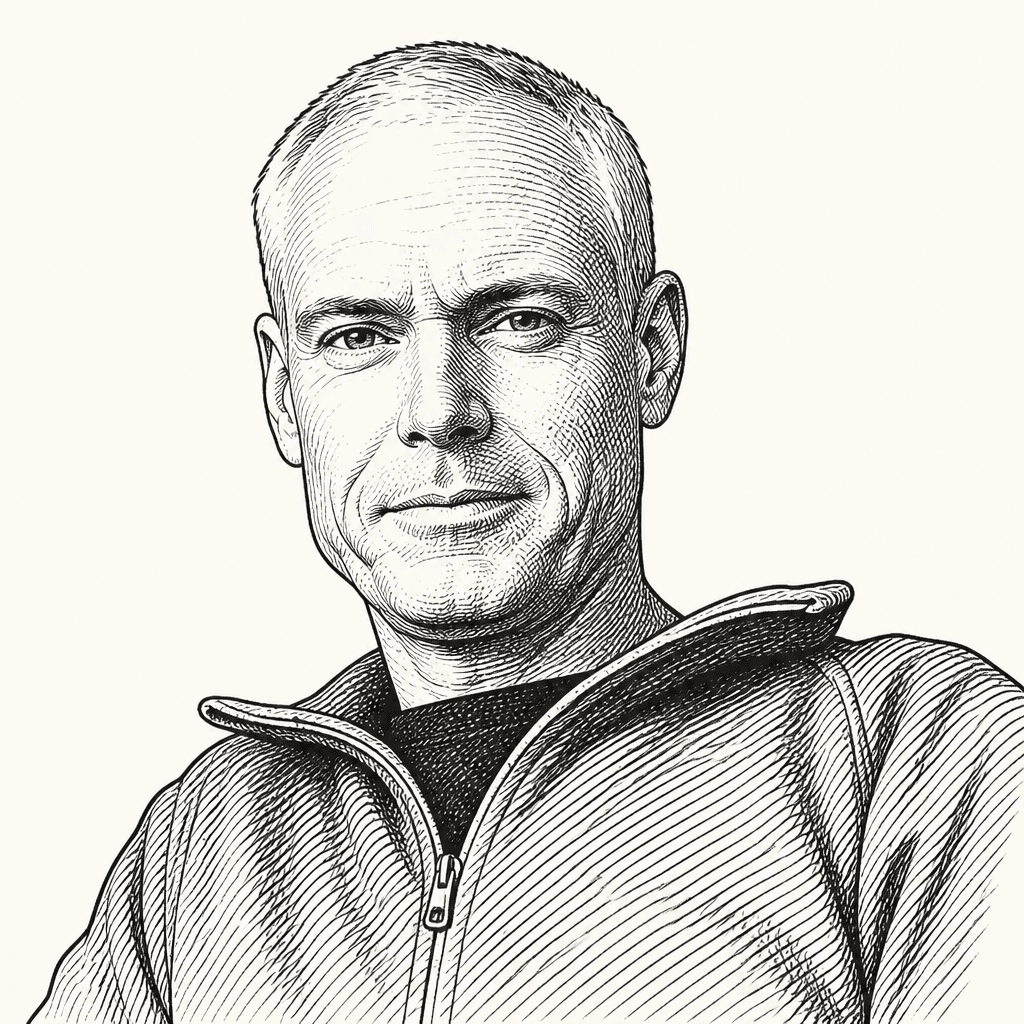

Jim Collins argues that potential is not a discovery that must happen early or follow a fixed career plan. Drawing on lives including Grace Hopper’s, he says people should look for the durable capacities they are “encoded” for, then find work that combines those capacities with inner motivation and enough economic support to sustain it. When careers are disrupted or the institutional setting no longer fits, Collins contends, the task may be to change the work’s “home,” not abandon the deeper pursuit.
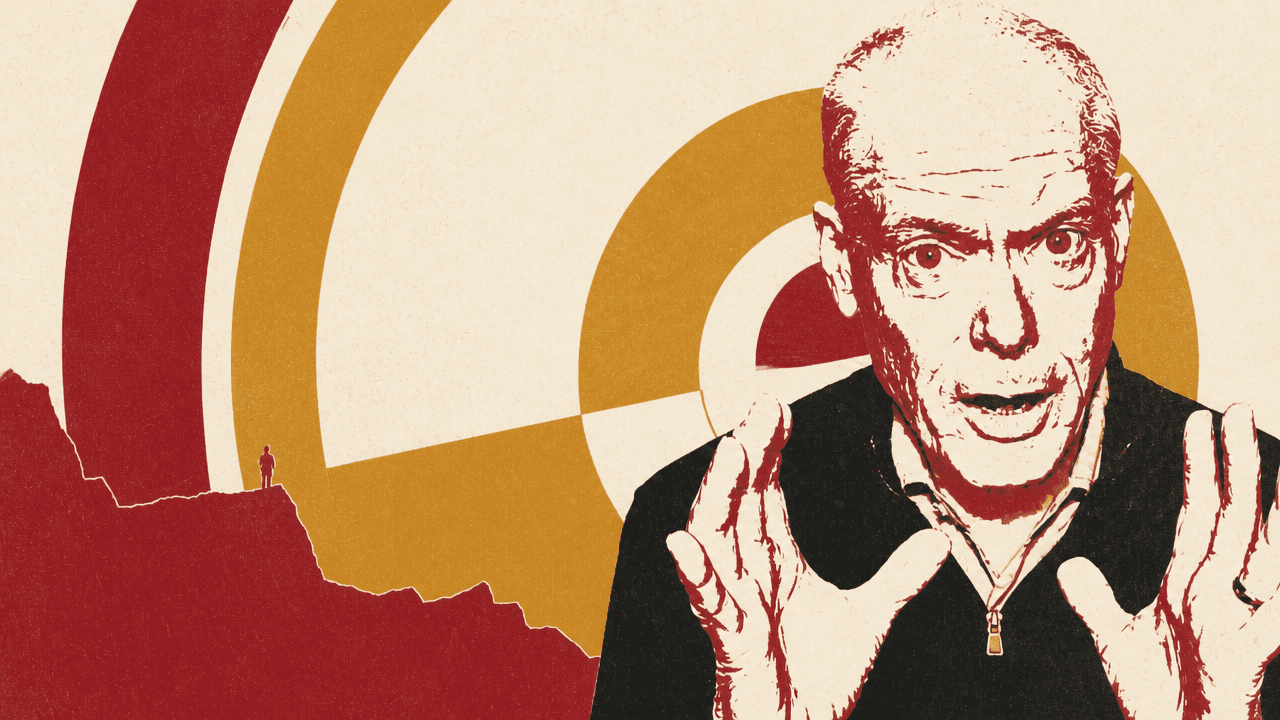
Potential is not a deadline-driven discovery
Jim Collins no longer believes that failing to find one’s defining work by 30 means the opportunity has passed. His research into individual lives led him away from the idea that a person’s most consequential direction must reveal itself early, or that life can be reliably organized around a fixed plan.

Some people in his study found their “one big thing” after 30, sometimes well after. Others did work Collins describes as spectacular in their 50s, 60s, 70s, 80s, and 90s. He had long sensed this might be possible, he says, but the research changed his view of what the evidence supported: creative and important work is not inherently a young person’s domain.
That shift also altered his view of planning. Collins still values disciplined objectives, but says many remarkable lives unfold organically and unpredictably rather than according to a predetermined design. The relevant condition is not a flawlessly executed life plan. It is an ongoing process of recognizing where one is suited to contribute, responding to changes in circumstance, and continuing through periods when that answer is unclear.
“If you haven’t found it by 30, the clock’s not over,” Collins says.
He calls uncertain periods “fog” and distinguishes them from “cliffs”: moments when life changes abruptly or a previous path is no longer available. A career disrupted by changing demand, artificial intelligence, a lost role, or the physical limits that end an athlete’s career may all force someone into fog.
Fog is not evidence of failure, he argues. It is a recurring condition of a life in progress, and not a basis for judging either oneself or someone else. “It’s never done till it’s done,” Collins says. What comes next may be “big and wondrous and totally unforeseen.”
The useful question is what you are encoded for
Rather than asking only what people enjoy or do well, Jim Collins asks what they are deeply “encoded” for. An encoding, in his account, is a durable capacity within a person that awaits discovery through life experience. It is not merely a learned skill, a stated passion, or a credential.
Collins compares these capacities to a constellation of stars. Life moves a window across that constellation: under one set of circumstances, a capacity may be invisible; under another, it becomes unmistakably bright. The practical task is not to declare a fixed identity prematurely, but to notice which settings repeatedly bring a person’s distinctive capacities into use.
Grace Hopper is his central example. Collins describes Hopper as a girl taking apart the clocks in her family’s summer house because she felt compelled to understand how they worked. After becoming a mathematics professor, she joined the Navy Reserves during World War II and was assigned to Harvard’s secret Mark I computing project. On seeing the machine, Collins recounts, Hopper called it “the most beautiful gadget I ever saw.”
For Collins, the through-line was an enduring encoding for understanding and improving gadgets that finally met the right setting. At the Mark I, that disposition expressed itself in work on subroutines, software, and making the machine function better. The project also exposed a capacity Hopper may not have recognized in herself: leadership within an organization. Commander Aiken, who led the program, saw her ability to keep people coordinated and focused, and gave her responsibility for running part of it.
That is why Collins places a burden on managers as well as individuals. People do not always identify their own latent capacities alone. A leader can make a substantial contribution by recognizing what someone is naturally equipped to do and changing the work’s frame so that capacity can operate.
The research changed Collins’s own posture toward colleagues. He says he had spent energy frustrated by what people were not—wishing they were more like him or trying to develop capacities they did not possess. Studying lives that “sparkled” when people were in the right frame led him toward a different question: what adjustments might make what a person already is more visible and useful?
As Collins puts it, his dominant reaction shifted from frustration about what people are not to gratitude for what they are. He describes that as a dividend not only for productivity, but for how people experience their work and relationships.
A calling needs capacity, fire, and economic fuel
Asked by Jeff Berman how this framework applies to people entering a job market being reshaped by AI, Collins rejects the familiar implication that people should simply “follow your passion” and trust that income will follow. He offers a deliberately ordinary counterexample: he loves riding his bicycle with Joanne, but nobody is going to pay him for it. Passion alone does not solve the economic problem.


For Collins, being “in frame” requires three conditions working together.
| Condition | What Collins means |
|---|---|
| Encoding | The work draws on a durable capacity the person is deeply suited for, not simply a skill or credential. |
| Inner fire | The activity is worth continuing for its own sake and sustains a childlike sense of enthusiasm. |
| Economic fuel | The person has found a viable way to generate the resources needed to keep doing the work. |
The economic point is not that money is unimportant. It is that people should consider which direction the arrow runs: is the purpose of work to make money, or is the purpose of money to enable the work? For someone who has found work that is intrinsically worth continuing—solving genetics puzzles, working on computers, flying fighter jets, writing novels, or leading a team—the greatest reward is not eventual retirement from the activity. It is getting to keep doing it.
Economics, in this view, is fuel rather than a measure of worth, success, or comfort. The people Collins studied generated that fuel in different ways. The standard is not unlimited wealth; it is a workable answer to how someone can devote a meaningful share of their energy to work that fits their capacities and sustains them.
Together, the three elements form what Collins calls a personal version of the hedgehog concept. Drawing on the ancient contrast later popularized by Isaiah Berlin—“the fox knows many things, but the hedgehog knows one big thing”—Collins uses “hedgehog” to describe a large organizing pursuit: acting, scientific research, music, company leadership, or a political cause. It is the thing around which a person concentrates substantial energy, time, and life.
The pursuit may be right even when its home is wrong
The three-part test has a practical qualification: “A happy hedgehog needs a happy hedgehog home.” Someone can be doing work that fits their encodings, feeds their fire, and has economic support, yet still be in the wrong environment. The underlying pursuit may be right while the organization, title, institution, or platform is wrong.
Collins returns to Barbara McClintock and Grace Hopper to make that distinction. McClintock remained committed to genetics throughout her life, but he says she concluded that traditional academic institutions in the first half of the 20th century would not be a viable home for her research as a woman in science. Hopper faced a related problem when her Harvard contract ended and the institution did not promote women. In both cases, the underlying pursuit endured while the institutional setting had to change.
The lesson is to separate the hedgehog from its current home. A job title, organization, position, prestige, and the description on a name tag can all be mistaken for the thing one is actually trying to do. Collins calls those signals “noise.”
A person whose work has been disrupted does not necessarily need to abandon the deeper pursuit. They may need to find, construct, or move to another platform where it can continue. The same distinction applies when much of one’s work feels right but the surrounding context does not: the diagnosis may be a need for a different hedgehog home, rather than proof that the person chose the wrong calling.
Mentorship depends on recognizing—and returning—who-luck
Jeff Berman worries that hybrid and remote work may reduce the informal proximity through which younger workers learn: the chance to watch an experienced colleague work, ask questions over coffee, absorb unwritten norms, and receive patient guidance. Collins shares the concern, though he approaches it as someone who describes himself as a “socially adept introvert” drawn to solitary research.
Jim Collins calls unexpected formative encounters “who-luck”: the luck of crossing paths with a person who plays an outsized role in one’s life. His own examples include Bill Lazier, a mentor, and Jerry Porras, whose chance encounter with an article Collins had written helped set his research career on a different path.
Who-luck cannot be planned in the ordinary networking sense. One does not know when or how a consequential person will appear. The practical challenge is to be alert enough to recognize the event when it happens—and to place oneself in enough human flow that such encounters remain possible.
That can mean making room for conversations, curiosity, and unstructured contact rather than operating in isolation. Collins says he must actively fight his own tendency toward withdrawal for this reason. If someone works at home and remains disconnected from others, the chance of a meaningful random encounter is smaller.
But mentorship is not a one-way extraction of wisdom. Collins says Lazier taught him that relationships, rather than transactions, are the foundation of a great life. He once asked Lazier what makes a great relationship. Lazier’s answer, as Collins recounts it, was that each person should believe the other has benefited more.
That is the standard Collins applies to mentorship as well. If someone takes an interest in a younger person, the younger person also has a responsibility to make that investment meaningful. The relationship should be mutually enlarging, not merely instrumental.
A life is measured by responsibilities, not legacy
The research changed Collins’s thinking not only about careers and human potential but also about the moral purpose of a life. He once believed it was worthwhile to spend time thinking about one’s legacy. He no longer considers that a useful focus.
The better question, he says, is what responsibilities a person chooses in front of them, and whether they make good on those responsibilities while they are here. That view resists treating a life as a finished artifact to be assessed from afar. It directs attention toward obligations that are immediate, chosen, and still capable of being met.
Collins has similarly broadened his understanding of giving. Philanthropy and volunteering count, he says, but the highest form of giving may be giving one’s encodings: the particular scientific problem one solves, work of design or architecture one creates, leadership one provides, or another contribution that emerges from a person’s distinctive capacities. He points to I. M. Pei’s Louvre Pyramid, designed in Pei’s 70s, as an example of that kind of giving.
This is also why Collins’s framework does not end with self-discovery. Identifying a capacity, finding a viable home for it, and sustaining it economically matter because they make a contribution possible. The work is not only a route to personal fulfillment; it can be a way of giving what one is specifically equipped to give.
The study also made Collins more compassionate toward people in fog, including those whose work may be disrupted by AI or other forces. Fog is to be expected, he says. It is a period to step through, not a verdict on the person in it.