Investment, Fans and Media Turn Women’s Basketball Into a Growth Flywheel
 Jamie Battmer
 Jim Collins
 Jeff Berman
 Jess SmithMasters of ScaleThursday, September 24, 20269 min read
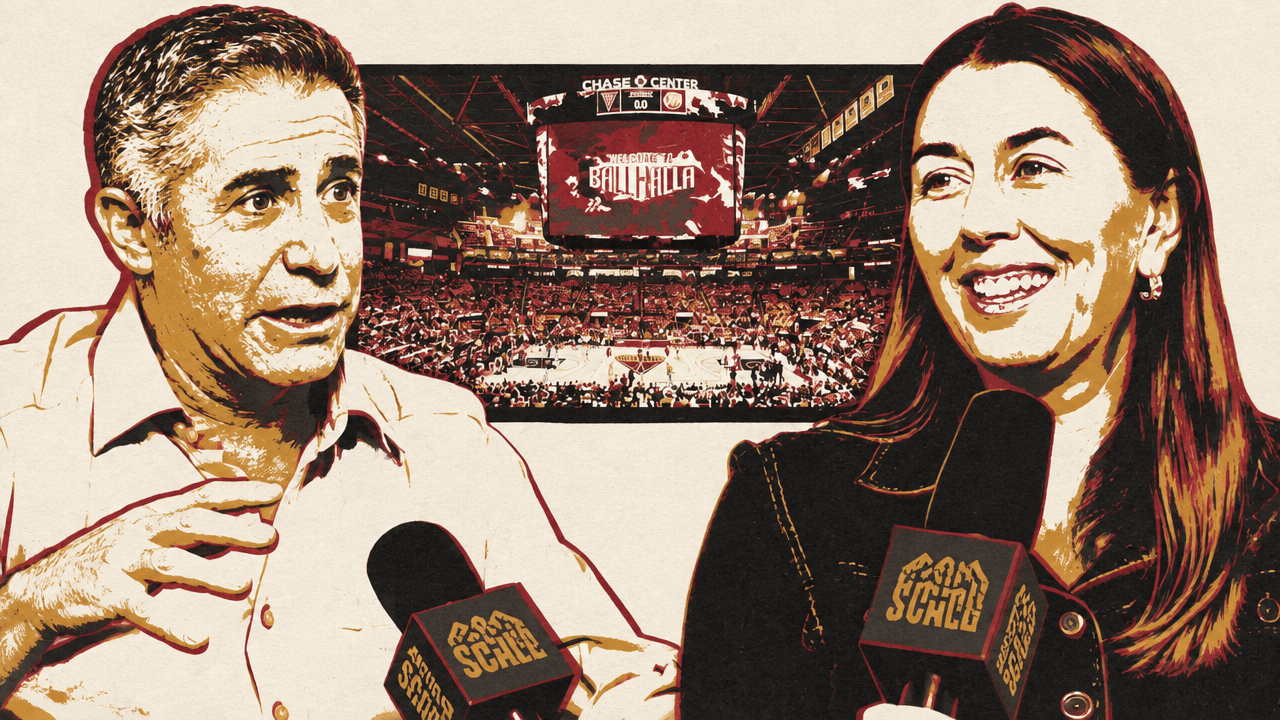
Golden State Valkyries president Jess Smith says investment, alongside growing fan interest and media attention, is driving the team’s rapid growth. In a Masters of Scale interview with Jeff Berman, she argues that a women’s team should build for an audience beyond fans of men’s sports and establish a distinct identity before going to market. The Valkyries’ brand, she says, must give fans a reason to connect with the team beyond its roster.
Investment, fans and media are driving the current growth
The Golden State Valkyries went from a $50 million expansion fee to a $1 billion valuation in about two and a half years, according to host Jeff Berman’s introduction. Jess Smith does not describe that rise as a sudden change in appetite for women’s sports. The WNBA is 31 years old, she says, and has experienced “a lot of ups and downs.” What is different now is investment: capital to hire staff, improve the product and make the most of growing interest.




Smith identifies three forces behind the current momentum: investment, fans and media. Capital makes it possible to hire the people needed to run a team and build beyond what an underfunded organization can support. She says the pandemic shifted how people encountered women’s sports and made fans more aware of their role in sustaining them. As audiences grew, merchandise sales rose; better broadcast windows, production and visibility helped bring in more viewers.
Media matters not only through rights deals but through promotion and access to audiences. Smith points to college basketball: women’s games were once not even allowed to be called “March Madness,” while now viewers can find them on one network and follow standout players into the WNBA. She also points to strong softball ratings as evidence that the opportunity extends beyond basketball.
Those drivers describe the current flywheel; generational fandom is its longer-term promise. Smith cautions that younger leagues—including professional volleyball and baseball leagues—need time to mature. But she sees a lasting change in who grows up watching. Her daughters, five and seven, will know a packed Chase Center for both the Warriors and the Valkyries as normal. A generation that sees athletes such as Veronica Burton and Steph Curry as equally familiar, she argues, will give women’s sports a different foundation of fandom.
The audience is not simply the one already watching men’s sports
Before Angel City FC, Smith spent 15 years working across sports leagues, including Major League Soccer, the NHL and Major League Baseball. She joined Angel City during the pandemic, when five people were working from home with a goal of building “the most powerful women’s sports team in the world.” The first task was to understand the audience the club wanted to serve and define what the organization would be.
Smith’s rough study of crossover between men’s and women’s teams sharing venues—conducted, she jokes, by calling people—suggested that no more than 10% of fans overlapped. Her conclusion was to build for the other 90%, while welcoming crossover fans too. A women’s team, she says, should not assume that an existing men’s sports audience will automatically become its audience. It needs to offer the elite product people have been waiting for, then give those fans a reason to show up, make noise and invest in the atmosphere.
That approach carried into the Valkyries. The team launched its brand on the WNBA’s opening day in 2024, a year before it would take the court. It had no players yet, but sold merchandise in 70 countries and all 50 states within 60 days. Smith says the brand landed quickly because it felt distinctive and connected to the Bay Area while reaching beyond it. The team wanted a color people would associate with the Valkyries; its violet palette was meant to work both as a powerful team identity and as a lifestyle brand.
For Smith, this kind of brand-building can combine commercial ambition with public purpose. She grew up as the first person in her family to graduate from college and credits access to sport with shaping her life. Women’s sports fans, she says, have often lacked the club experience they wanted; people asked her to “make it cool”—including the chance to eat sushi and drink champagne at a basketball game. At the same time, she argues, the athletes and communities represented by women’s sports have been underserved. A team can create a compelling product while also widening access and visibility.
A new club needs a clear identity before it can sell
Smith was the Valkyries’ first employee. Her first reaction was to panic: with a year and a half before the team’s first game, she realized that she herself was “the momentum” and would have to direct the organization while it was being built. As in a startup, she took on many jobs while hiring for the roles the team needed.
The Valkyries had an advantage that a standalone startup might not: they were part of Golden State, which Smith says brought an established reputation and facilities. In the first weeks, the organization committed to renovating a practice facility and building a locker room inside Chase Center. She credits that infrastructure to Golden State rather than claiming it as her own work.
But infrastructure did not remove the need to establish the team’s identity before going to market. Smith says the organization had to decide what the Valkyries stood for, choose its name and branding, plan the launch and have merchandise ready. Brands were already interested in talking, but Smith held off: the team had not yet defined what it meant to be a Valkyries partner. “You can only go to market once,” she says. Moving too early, before knowing what to ask for, could do more harm than good.
The same principle shaped the team’s partnership model. Smith says the Valkyries’ founding partners—including Sephora, JPMorgan Chase, Kaiser Permanente, OLLY Vitamins and Rakuten—were asked to do more than buy exposure in a full arena or on social media. Each founding-level partner joins an impact council, with programs intended to produce community outcomes as well as business value. Smith describes the council as a way for partners and the team to learn together while women’s sports fandom is still growing.
Smith’s startup lesson is to be specific about what you are building, stay unapologetic about the outcomes you intend to pursue and secure funding to support them. She credits owners Joe Lacob and Peter Guber with backing her and the team from the outset, while also asking difficult questions and expecting a clear position. She identifies revenue and fans as the two continuing organizational priorities: growth in revenue enables the team to deepen its audience, while growing that audience strengthens the business.
She also wishes she had hired into revenue-generating work sooner. Smith says she knew the Valkyries’ growth was coming and believes the team could have met the moment more fully with additional resources in its first year. That is a mistake she would correct by trusting her instinct and moving faster.
Players can bring fans in; the club has to give them a reason to stay
Smith sees the WNBA at a moment when fans may follow a player into a team rather than inherit a team through family or geography. Viewers who came to women’s basketball through college games may already have worn a player’s jersey before that athlete enters the WNBA. They may choose a team because of that player, creating fan bases that grow around individual athletes as well as regional loyalties.
The club cannot control which athletes arrive or how long they stay, Smith says. It can control its identity: the culture and values it represents, and the home-court environment it creates. The Valkyries want players to stay, but they also want fans who follow a player elsewhere to remain engaged with the team—following it on social media, speaking well of it and remembering the experience through a jersey or a return visit.
For the league, Smith argues, the task is to make the most of many distinct athlete stories. She names A’ja Wilson, Paige Bueckers, Caitlin Clark and Olivia Miles, and says there are many more. The question for media partners is how to tell those stories: when they stand alone, when they converge, and how they speak to different fans in the United States and internationally.
The team’s own identity also has to be legible beyond its roster. Smith describes Violet, the Valkyries’ raven mascot, as another way to make the brand tangible. The team’s imagined arena world, “Ballhalla,” draws on Norse mythology; Violet’s color and name extend the team’s identity. Her personality draws on the raven’s love of shiny things and music, making her a dancer and a visible presence in the community. Smith says the mascot can enter spaces where the team might not otherwise be invited.
The Valkyries’ approach to athlete advocacy is similarly based on keeping distinct responsibilities clear. Smith says players should be able to speak in their own voices and use their platforms. As a team, the club’s job is to provide safe and celebrated spaces for players and fans, and to protect the joyful atmosphere at Ballhalla. At times, those roles converge. Smith points to a game during San Francisco Pride weekend: the team’s participation was part of a broader local celebration, and the win that followed felt more meaningful because of who was gathered there.
Access extends beyond the arena, even when demand raises prices
The Valkyries have sold out every game in their history, with more than 18,000 fans at each game, according to Smith. Strong demand can make tickets expensive on the secondary market, but she says pricing has to reflect the quality of the on-court product and the game experience. The team also keeps tickets aside and donates them for every game, both directly and through partners.
Smith says an early purchase can still turn up a $15 ticket; that does not mean one will be available at the last minute for a major matchup. Accessibility, in her view, also means giving fans ways to participate outside the arena. She says the ticketed audience is only a small part of a sports brand’s potential reach, and that many successful sports brands see only 1% of their fans attend a game. The Valkyries launched a bar network of 40 venues across Northern California committed to showing every game. That creates more places for fans to gather while supporting local businesses.
Community access also means addressing practical reasons girls leave sport. Smith points to puberty as a period when many changes can make participation harder. At Angel City, the club partnered with Nike to donate a sports bra to a young girl in need for every seat deposit. Smith says lack of access to a sports bra is one reason girls stop playing. She also names coach support, safety and access to period products as issues that can make young athletes feel embarrassed or unwelcome. The Valkyries’ partnership with Cora, a feminine-products company, reflects Smith’s view that these needs should be discussed openly rather than treated as a secret.
Asked by young fan Rosie Berman for advice about playing several sports, Smith keeps the answer direct: first, make sure it is fun. Enjoyment, she says, helps a young athlete try hard and do her best; even when the result is disappointing, she can learn from it. Her advice is to keep playing and not worry about anything else.
Growth depends on adding reach without compromising the game
Smith points to expansion, media visibility and a longer schedule as sources of opportunity for the WNBA. She names Portland and Toronto as recent additions and Philadelphia, Cleveland and Detroit as future markets, describing new teams as opportunities for more rivalries. She also expects the league’s media deal to bring in casual viewers. On the schedule, she says the WNBA is adding 15% more games; for the Valkyries, that means three additional home dates, three additional road games and six more opportunities for viewership across the season.
That expansion brings commercial possibilities, but Smith says growth should not come at the expense of the product. On gambling, she says it is an area a league has to get right rather than rush into, because it carries responsibilities and potential repercussions alongside the prospect of attracting fans. Any formal move, in her view, should preserve the fairness and character of the game.
Commercial cooperation among teams is less troubling to her. Smith says helping grow the WNBA does not undermine the Valkyries’ responsibility to compete. Her job is to create the best home-court advantage she can and make sure the world knows the players. The league’s success benefits every club, she argues, by expanding visibility and creating opportunities for athletes. Individual teams can share in that growth while still trying to beat one another on the court.