Incumbents Can Recognize Disruption and Still Be Unable to Join It


MTV co-founder Tom Freston argues that the network’s early advantage came from rejecting television’s established habits: hiring outsiders, operating with little money, and treating young viewers—not distributors or advertisers—as its primary constituency. He says that same audience-first culture helped MTV scale, but Viacom’s later struggle with YouTube showed how an incumbent can recognize a disruptive model while its rights, assets, and institutional obligations make adoption difficult.
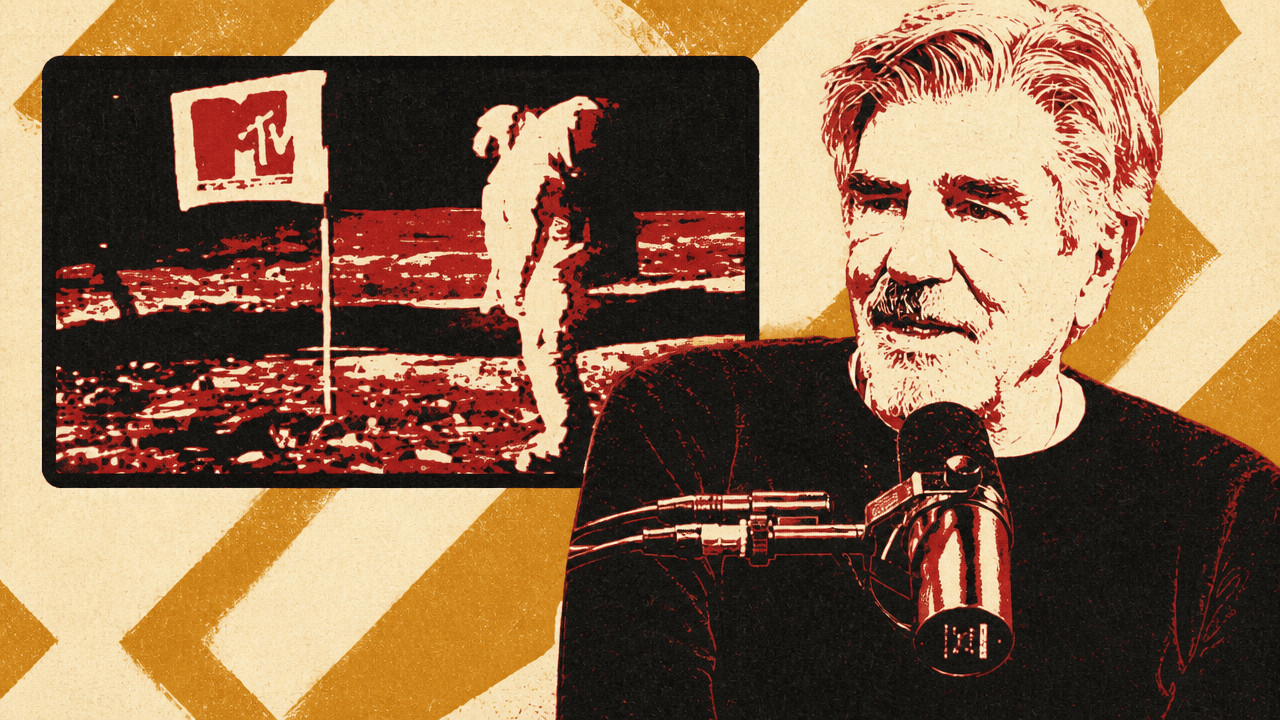
MTV’s advantage was that it did not know television
Tom Freston arrived at the job that became MTV after an entrepreneurial collapse, not a conventional media career. He had spent eight years in Afghanistan and India, where he started Hindu Kush, an apparel business he says he never intended to enter and knew nothing about. It grew into a multimillion-dollar company before an embargo imposed during the Carter administration stopped imports from India. Freston says he sent three tons of clothing to Montreal and smuggled them across the St. Lawrence Seaway—an episode he now calls insane, motivated by a search for “a little justice.”


The business failed. At 33, deeply in debt and back in New York while his friends had careers and families, Freston bought What Color Is Your Parachute?—the only self-help book he says he has ever bought. Its argument that skills transfer, and that people should pursue work they love, helped him identify music as his direction.
An article in Billboard led him to John Lack, who was helping build early cable networks including The Movie Channel and Nickelodeon and was planning a music-video channel. At the interview, Freston was told the company wanted people with “absolutely no experience in television.” He qualified almost literally: television had not been part of the life he had been leading abroad.
That absence of experience was an operating choice, not just a gap to overcome. MTV hired from radio and the music business; Nickelodeon hired schoolteachers. The companies needed people who would not import established television habits, and their lack of money compounded the pressure to invent. Freston saw his own years abroad—improvising, taking risks, betting on unusual people, and learning to tolerate them—as unusually good preparation for an eccentric media company.
There's nothing like having no money to force people to innovate. And, and if you're working with a group of people who are on a crusade like you are, really passionate about something, you'll figure some good things out.
The practical production model was comparatively simple: fill 168 hours a week, send the signal by satellite, and build programming from materials that could reach a national footprint. Music videos already existed, making MTV analogous in some respects to a radio station. The company hired people who could make video, drew on public-domain NASA footage including rocket launches, and assembled a visual language from what it could afford and obtain.
Freston, then 33, was the oldest person in an organization largely made up of people in their twenties. His boss, Bob Pittman, was 26 and had not gone to college. Pittman became a mentor, and Freston says his core lesson was to put the consumer ahead of every other constituency. MTV still had to deal with advertisers, cable operators, artists, and record companies. But if it understood what was happening in its audience’s head, built research around that understanding, and created loyalty, the other commercial relationships could follow.
The key to the business is the consumer. You have to deal with a lot of different groups. But if you can make a connection with the consumer and know what’s going on inside that consumer’s head, the other things that have to happen in your business can fall into place.
That orientation informed MTV’s most conspicuous act of business rule-breaking. In the early 1980s, Freston says, cable operators were local monopolists, and MTV had only a few million subscribers. Many operators disliked MTV’s audience and did not want to pay an additional 10 cents a month for the channel. MTV went over their heads with the “I Want My MTV” campaign, trying to produce enough audience demand that distributors would have to carry it.
Freston distinguishes that move from breaking the law. The rules MTV challenged were cultural and commercial conventions—particularly the expectation that a young programming supplier would not antagonize its distributors. For him, a company could reject incumbent etiquette while remaining within legal boundaries.
The same logic shaped the culture MTV tried to preserve as it grew. Freston wanted a flat organization where people believed their opinions would be heard, politics did not dominate, and creative risks were encouraged. His shorthand for the hiring ideal was the “subway car”: MTV should look like the young, slightly “batty” people he saw in a subway car, not a conventional corporation. The dress-code rule was correspondingly spare: no frontal nudity.
But informality was not permissiveness about performance. Freston says bad actors could not be tolerated because a manager who hires substandard people is likely to hire more of them, gradually degrading the company’s character from within. When addressing employees, he says, he emphasized creative risk rather than money.
Diversity became part of that operating challenge. Freston says MTV started out “uncomfortably white” and male, and that diversifying the company was harder than he expected. The network had received criticism for not airing Black artists, which he calls fair in many respects. He says MTV later helped put hip-hop into American living rooms, but changing programming did not by itself make the workplace representative.
Hiring alone was also insufficient. MTV could bring Black and Hispanic employees onto staff, see its representation numbers improve, and still lose people who did not feel comfortable in the organization. Freston says he eventually made diversity a goal in managers’ bonus plans. After several false starts, the company improved at making the workplace comfortable for more people; by the time he left in 2005 and 2006, he says about half of its managers were women.
Asked by Jeff Berman whether opposition to DEI is rooted in racism and sexism, Freston answers bluntly: “Yes. It’s racism. Without the dog whistle.”


Viacom saw the internet coming but encountered it as a control problem
Tom Freston says Viacom recognized the internet’s importance early. The problem was that it experienced the new medium primarily through the risks it posed to the rights, scarcity, and editorial control on which its cable business depended.
When Freston became a Viacom co-president alongside Les Moonves, MTV was part of a much larger cable-network operation that included Nickelodeon, Comedy Central, VH1, Noggin, Nick Jr., TV Land, and Country Music Television. Those businesses functioned as editors in a scarce media system: they chose a limited amount of programming, packaged it, and distributed it through centralized channels.
MTV’s own audience made the shift impossible to miss. Children, teenagers, and young adults were among the first groups to move viewing time and attention online. Freston calls MTV the “canary in the coal mine.” But the internet enabled users to upload, share, and comment on material, turning almost everyone into a small broadcaster. Viacom, he says, did not have the organizational DNA for that model.
The company tried buying smaller websites without finding much consequence in them. It also looked seriously at social media. Freston recalls meeting Mark Zuckerberg when Facebook was still called The Facebook, had reported revenue of $9 million, and was debating whether to add high-school students. Viacom offered $1.5 billion to buy the company, half as an earn-out. Zuckerberg declined.
YouTube presented the sharper version of the same paradox. Freston says Viacom saw a compelling extension of what MTV had done: it had been the king of short-form video, while YouTube enabled any user to upload, share, and comment on video. Yet Viacom’s ownership of valuable programming made the platform look dangerous as well as promising. Users were uploading episodes of Viacom shows and material such as Saturday Night Live. The board saw YouTube, in Freston’s account, as a copyright-infringement machine.
After Freston left, Viacom sued YouTube for $1 billion and lost after 10 years, he says. He argues that nobody could then have imagined the ecosystem YouTube would become, or its value, which he puts at almost $600 billion. The larger point is not that Viacom failed to notice user-generated video. A public company responsible for protecting valuable programming rights could not easily treat a system built on uncontrolled uploading as its own next business.
Freston describes that constraint through the innovator’s dilemma. An incumbent can understand that a new model is taking its audience and still find that its assets, obligations, and institutional logic make the model appear first as a threat.
His current interest remains with companies operating around the mainstream rather than at its center. He points to A24 as an independent company with instincts and taste, low-cost projects that perform well, television work, merchandise, shorter-form internet experiments, and a live venue where it can test ideas. He names Neon as another company worth watching and points to creators emerging from YouTube and TikTok.
The practical advice he draws is not simply to chase the next platform. A company needs a point of view and relationships with the people making culture. “At the center of all this change,” Freston says, “is talent.” The YouTube and TikTok worlds, in his view, contain creators who have already built substantial businesses and may become partners in a new media model.
Those relationships depend on honesty, competence, and familiarity with the artist’s work. Freston cites Jon Stewart as an example. Stewart had previously worked with MTV and wanted to turn The Daily Show, then hosted by Craig Kilborn, into political satire. Viacom gave him the chance. Freston credits Stewart with inventing fake news and with turning the show into an Emmy-winning force that became a platform for Stephen Colbert, Samantha Bee, Steve Carell, and John Oliver.
Fragmentation has replaced shared cultural attention
Tom Freston is concerned not just with MTV’s decline as a music-video channel, but with the disappearance of common reference points in media. Outside major sports events or, as he notes, the final episode of Stephen Colbert’s show, he sees fewer “water-cooler moments”—occasions when people ask each other whether they saw the same program the night before.
Audiences now live in silos, served by algorithms. Freston sees vinyl’s renewed popularity, interest in flip phones, and nostalgia for the 1990s as possible signs of resistance to that condition. He does not treat them as decisive evidence; they may still be niche behaviors. But he sees in them an ache for experiences not fully determined by personalized feeds. He doubts that the disappearance of MTV, linear networks, and large broadcast shows as common cultural touchstones has been positive for society.
The implication is not that a new media business should try to restore the old broadcast model. Freston’s own account of YouTube makes clear that participatory platforms have created a vastly larger ecosystem of creators and audiences. His concern is about what gets lost when almost all cultural consumption becomes individualized: not merely a dominant channel, but the shared attention from which broad cultural conversation once emerged.
Belonging and purpose are operating conditions, not corporate decoration
Tom Freston treats belonging as a retention and performance issue. MTV’s experience, in his account, was that representation targets and hiring figures did not solve the problem if Black and Hispanic employees did not feel comfortable enough in the organization to remain. The company improved only after making the effort more deliberate, including putting diversity goals on managers’ bonus plans.
His broader case is commercial as well as cultural. A company programming for a diverse audience should contain people who reflect that audience and can bring opposing viewpoints into its decisions. For Freston, the same logic applies to corporate purpose: employees are more committed when they believe the organization does something worthwhile beyond selling its product.
He recalls MTV’s Save the Music work, which supported music libraries and music education. The program fit the company’s identity, he says, and made employees feel good about the place where they worked. As board chair of ONE Campaign, including its RED initiative, Freston has worked with companies on products tied to social causes. He says employees at partner companies, including Starbucks, responded to the knowledge that their employer was pursuing a social purpose alongside commercial work.
That argument comes with a concern about what companies now perceive as politically safe. Freston worries that social-purpose initiatives, diversity efforts, and broader stakeholder commitments are avoided because executives fear they will be branded “woke” and attacked.
The discussion turns from internal culture to the conditions companies require to operate. Jeff Berman argues that businesses depend on rule of law: enforceable contracts, neutral courts, and protection from retaliation based on political loyalty. Freston says executives he has spoken with see the threat as real but are reluctant to “raise their hand.”
He describes a collective-action problem. Leaders may privately believe public resistance is warranted, yet fear being singled out if they act alone. Freston cites Tim Cook bringing a gold gift to Donald Trump in the Oval Office as an example of the cronyism and favoritism he associates with this dynamic: executives may conclude that visible deference is necessary to get things done for their companies and shareholders.
Freston offers no mechanism for resolving that stalemate. His hope is that companies again treat representative teams, purposeful work, and employee pride as elements of a healthy business rather than political liabilities.