Compute Allocation Is Becoming AI’s Central Strategic Question

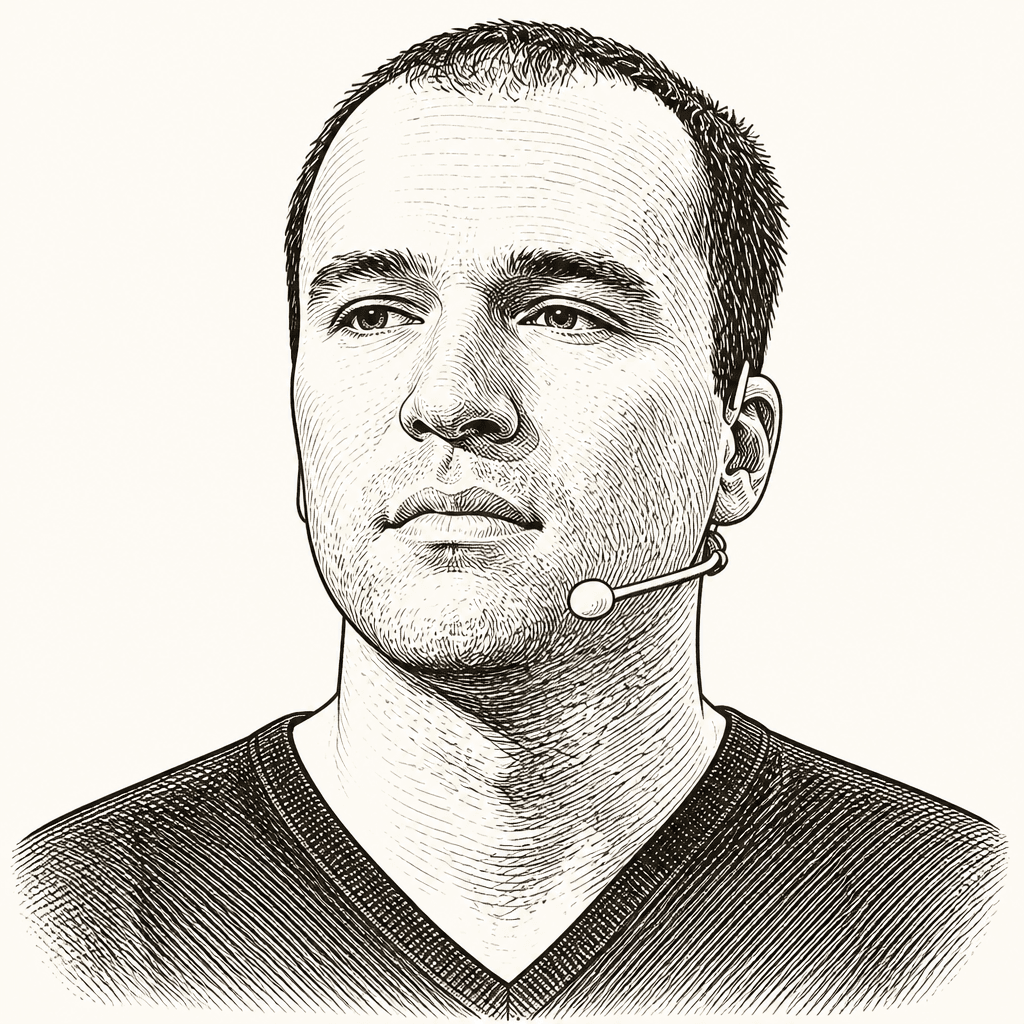
OpenAI co-founder Greg Brockman argues that compute has become the central bottleneck in AI, turning data centers into a strategic advantage and a public allocation problem. In a Knowledge Project interview with Shane Parrish, Brockman says the question is no longer just how powerful AI systems become, but where scarce capacity should go — consumer access, business productivity, scientific discovery or problems such as cancer research — and how the benefits can be felt broadly rather than concentrated.

Compute is becoming the strategic and political bottleneck
Greg Brockman’s case for vast AI infrastructure is also an admission of scarcity. OpenAI’s early investment in data centers may now give it a business advantage, but Brockman presents the deeper issue as an allocation problem: if compute can be used for consumer tasks, business productivity, scientific discovery, and medical research, where should the capacity go?
When Shane Parrish notes that competitors had teased OpenAI for putting so much effort and money into data centers, Brockman says the investment is now paying off. It is an advantage, he says, not only for the business but for “delivering on the mission of bringing this technology to everyone.” Parrish asks, “Who’s laughing now?” Brockman’s answer is blunt: “our competitors are not having a good time on compute.”

That point is not treated as a narrow infrastructure victory. Brockman frames compute as the constraint that will force choices. The bottleneck is not merely whether powerful models exist. It is where the capacity to run them goes.
This is going to be the most important question for society to answer. Where does the compute go? What problems are worthy?
Brockman identifies the trade-off without prescribing a full allocation system. There are “lots of worthy problems,” he says, but they must be prioritized because there is only so much compute. At the same time, he argues that everyone will need access, which is why OpenAI maintains a free tier of ChatGPT and has put effort into making the technology widely available.
The alternative he describes is an “ivory tower” approach: concentrate the systems on solving major problems, then distribute the resulting breakthroughs later. Brockman grants that there is merit to that model. But he says it is not the right balance for OpenAI. Specific breakthroughs matter, but in his telling they should serve broadly distributed benefits rather than replace public access.
The data center is becoming a machine for directed work
Asked whether entire data centers might eventually be dedicated to a single problem — Parrish gives the example of a huge North Dakota facility devoted only to solving cancer — Greg Brockman answers simply: “Yes.” He adds that something like that happening “this year is not out of the question.”
The significance is easier to miss if data centers are treated as buildings rather than machines. Brockman describes the experience of walking through rows of racks, seeing cables cut to exactly the right length, and realizing that the whole installation is one enormous engineered system. “These are maybe the biggest machines that humanity creates,” he says.
What justifies machines of that scale, in his explanation, is not the spectacle of the infrastructure but the problems they could be pointed at: cancer cures, business operations, and ordinary user queries all appear in the same answer. The category is “delivering value” against people’s goals.
Brockman’s phrase for the still-underappreciated possibility is “massive machines targeting one problem.” He argues that society has not yet internalized what that could mean.
“Data centers everywhere” depends on making fragile systems maintainable
When Shane Parrish asks whether data centers will exist in space, Greg Brockman does not reject the premise. His broader answer is that “we’re going to have data centers everywhere.” But he immediately grounds the idea in the fragility of present systems.
I think we're going to have data centers everywhere.
Today’s facilities, Brockman says, are “very finicky”: massive machines made of breakable, expensive components. His example is mundane but revealing. OpenAI has had issues where cables were too taut — literally too tight — creating signal-integrity problems that meant “the computer doesn’t work.” The example matters because it shows how far the question is from a simple matter of site selection. Putting compute in harder environments is also a question of physical maintenance, tolerances, and repair.
At present, people go into data centers and physically pull components. Brockman expects that this “probably will move to robotics.” That shift becomes a dependency for any more ambitious siting strategy, whether in difficult terrestrial locations or eventually in space. Space, he says, feels like a “grand challenge.” But the need for compute is large enough that “all options” have to be considered.
Regulation should make AI’s benefits felt directly
Greg Brockman frames AI regulation around broadly felt benefits: access to compute, distribution of economic value, support for people whose assumptions about work and institutions may be disrupted, and public concerns about the infrastructure being built. The ultimate purpose, as he states it, is to ensure the technology benefits people.
He does not offer one regulatory mechanism. Instead, he lists questions regulation or adjacent commitments may need to solve: should everyone have access to compute; how can that access be ensured; and how can the economic value created by AI avoid accruing “to just one place.” In his view, it is not enough for AI to “abstractly benefit the economy.” People should feel in daily life that their own circumstances are better because the technology exists, because they are using it, and because it lets them accomplish more.
Data centers are part of that justification, but they also create a separate set of public concerns. Brockman acknowledges concern that they could drive up electricity prices, and says OpenAI has a commitment to ensure they do not. He also argues that not every issue is solved through the same channel. Some problems may call for regulation, some for company commitments, and some for public understanding of the facts.
His example of the last category is water use. Brockman says claims that OpenAI’s data centers use a lot of water are misinformation. Parrish asks whether the usage is less than a household’s, and Brockman agrees. Brockman explains that the system is a closed loop: “think of it as like a swimming pool of water,” filled once and circulated. In his description, it is a fixed amount of water and “not very large.”
That answer returns to his larger point about why these facilities are being built. People need to understand why they are worthwhile and how they benefit them. For Brockman, the justification for the infrastructure cannot be only that it enables a more capable AI industry. It has to show up as individual empowerment: starting a business, building something, creating something, or otherwise feeling the technology in daily life.