Uber’s Trillion-Dollar AV Bet Depends on Aggregating Autonomous Supply

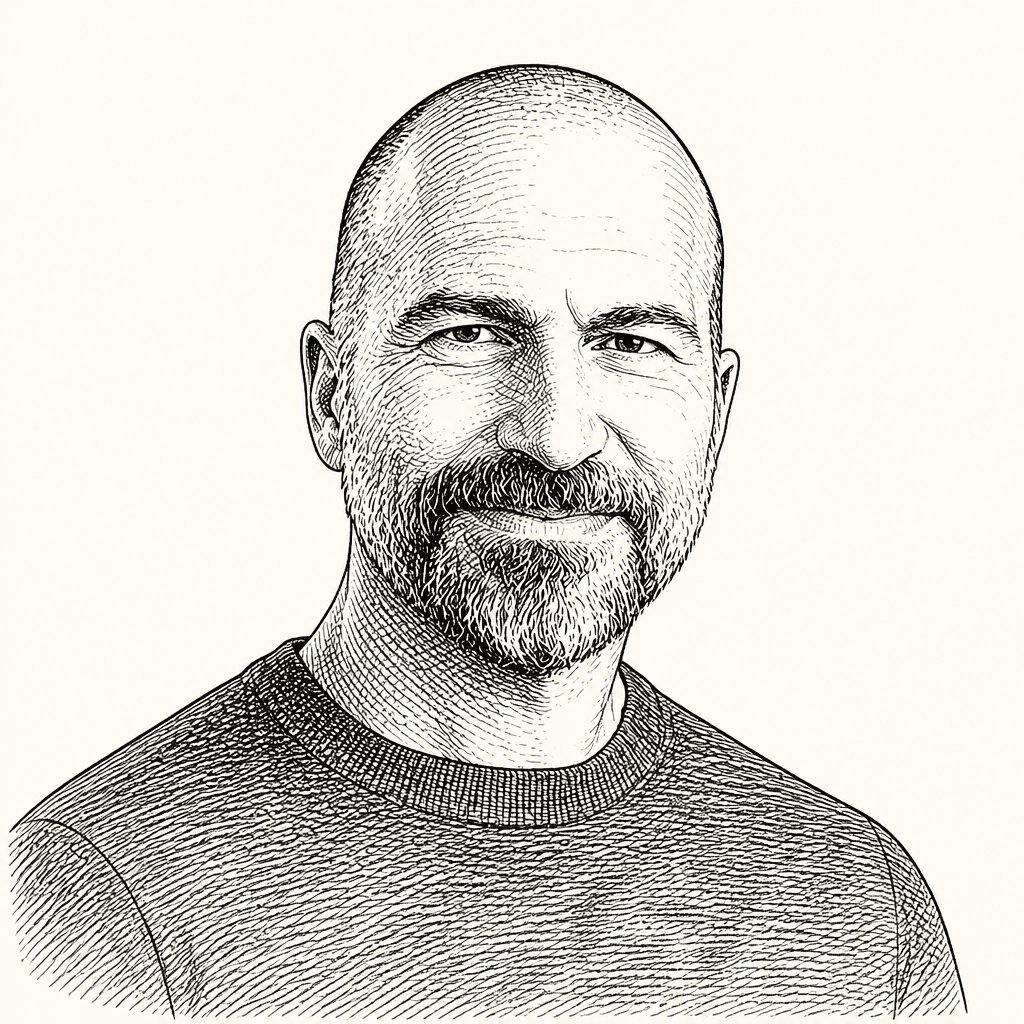
Uber chief executive Dara Khosrowshahi argues that the company’s next phase depends on becoming the supply aggregator for “physical AI”: autonomous vehicles, drones, delivery networks, and other systems that turn digital demand into real-world services. In an Invest Like the Best interview, he says Uber’s advantage is not simply consumer demand but access to drivers, merchants, couriers, fleets, and eventually autonomous supply — a position he believes could open another trillion-dollar marketplace if lower costs and higher reliability expand usage.
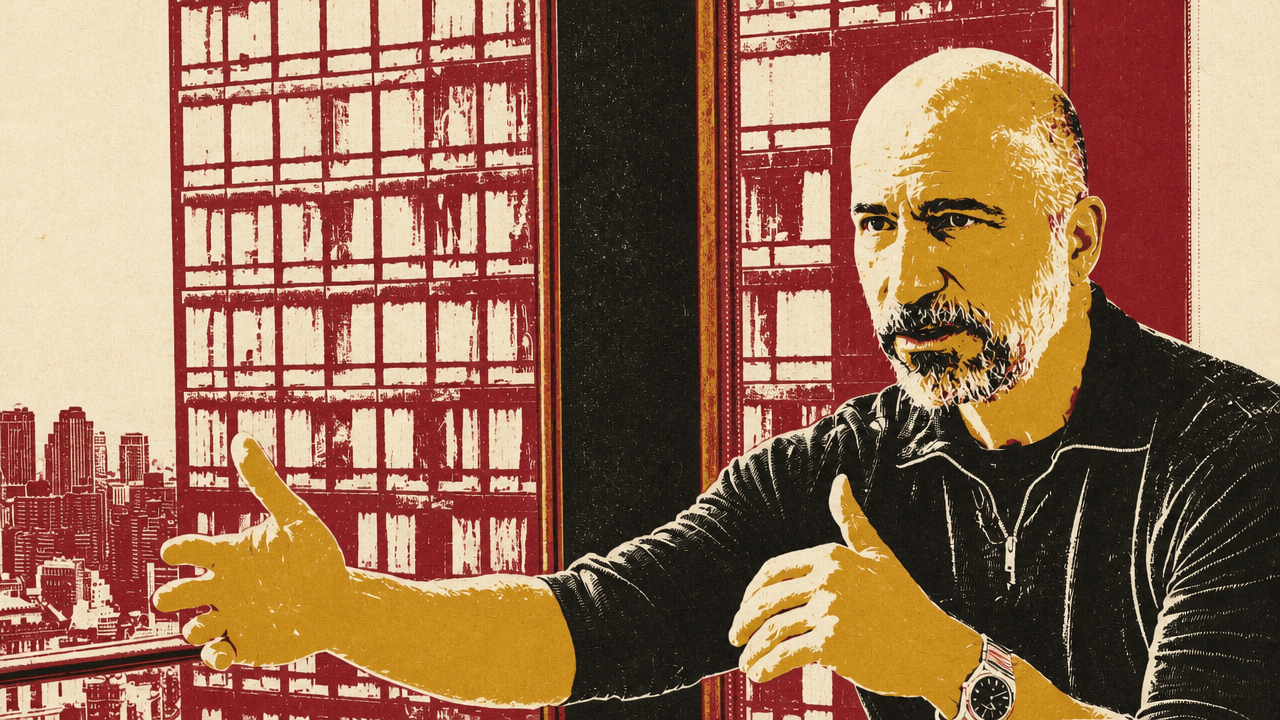
Uber’s physical-AI thesis depends on locking up supply first
Dara Khosrowshahi puts Uber’s next large opportunity in “physical AI”: autonomous vehicles, drones, and AI systems that change how services are fulfilled in the real world. His estimate is explicit. If autonomous transportation and related delivery systems lower costs, increase reliability, and expand usage, Uber sees “another trillion-dollar marketplace” opening around the movement of people and goods.
We think it’s another trillion-dollar marketplace. It will change how society operates.
The strategic condition underneath that claim is supply. When Patrick O’Shaughnessy described Uber as a demand aggregator, Khosrowshahi corrected him immediately: “Supply.” Uber, in his formulation, is a supply-led company. Demand follows when the marketplace has more drivers, couriers, restaurants, grocers, retailers, and, eventually, autonomous vehicles.
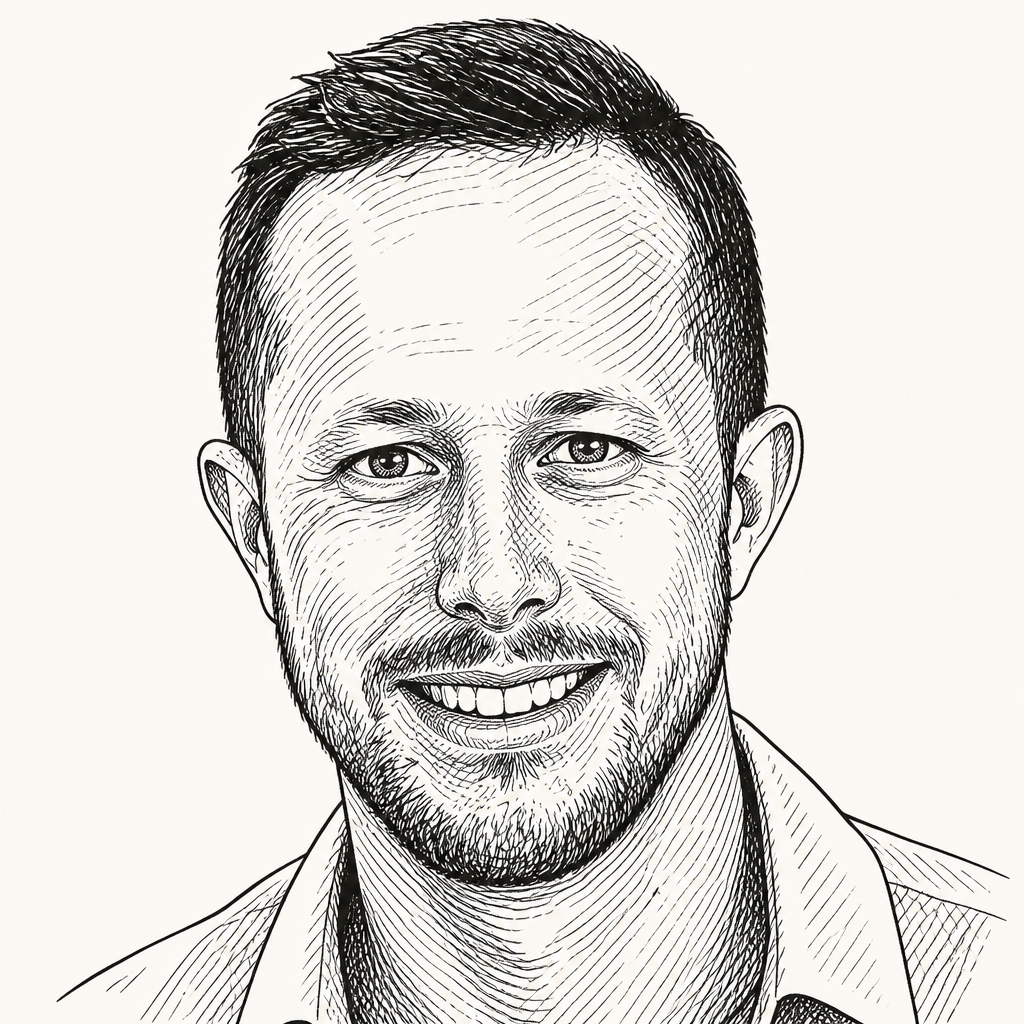
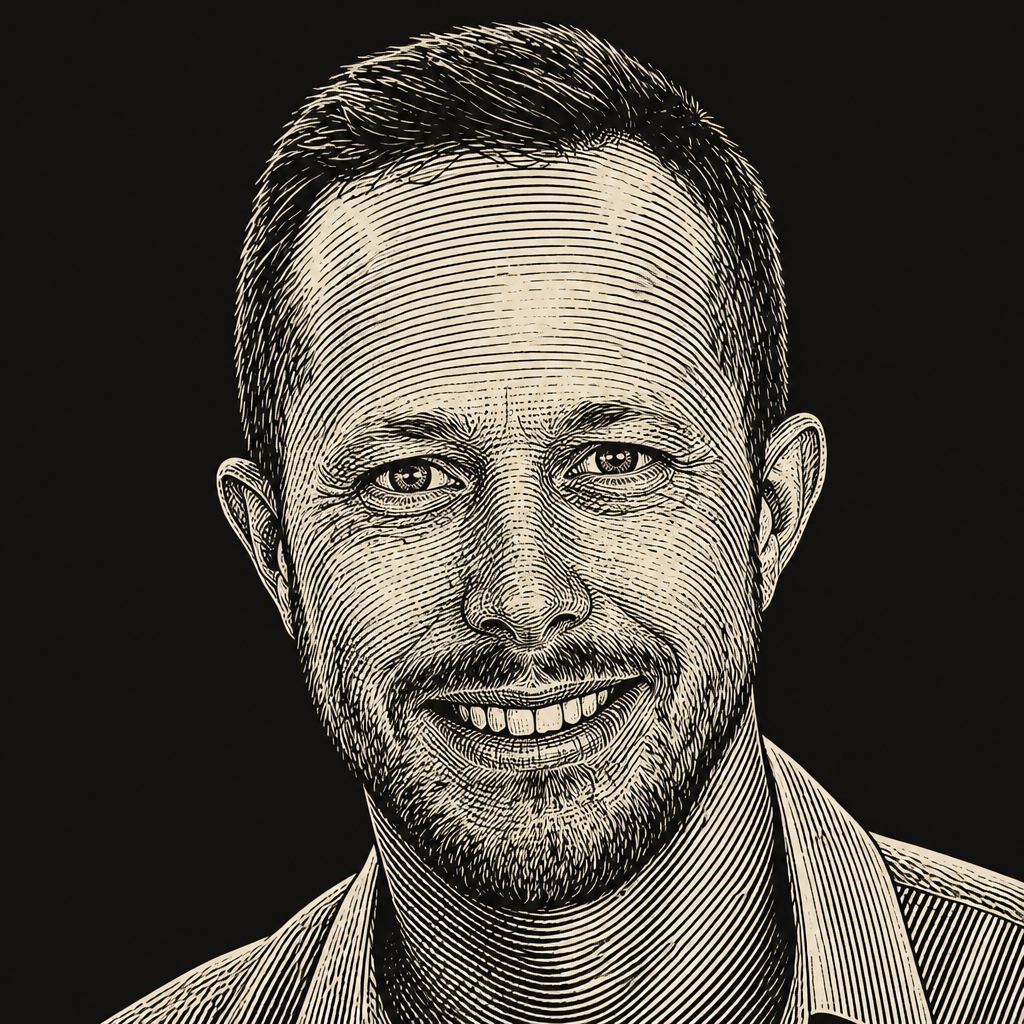
That distinction comes from his contrast with Expedia, where he was CEO before Uber. Expedia began from demand: get consumers to the website, then build hotel and flight inventory in response. Uber works in the opposite direction. One of its significant growth opportunities now is not only in the largest cities, but in suburbs, sparse markets, smaller cities, and the next 50 or 200 cities in a country. The first operating task is to recruit drivers, merchants, restaurants, grocers, retailers, and couriers. Demand then becomes easier to unlock.
The same logic governs autonomous vehicles. Uber has more than 30 AV partnerships, including Waymo, Nuro, Lucid, Nvidia, Waabi, Wayve, WeRide, and Pony.ai. Khosrowshahi compared the market structure to foundation models: there will not be a single winner, but many players, including smaller and open-source equivalents. Uber’s desired role is to become the go-to-market layer for companies building “digital drivers.”
In that role, Uber would not only provide demand. It is building the surrounding system: securing depots and charging in cities with favorable regulatory trajectories, working with fleet partners, arranging financing, developing autonomous insurance, collecting street data that can feed models, and then providing immediate demand once vehicles are ready. Khosrowshahi cited a recently announced $1 billion financing line with Santander for EV and AV fleets.
The economic claim is utilization. AVs on Uber’s network, he said, are at least 30% busier than first-party AVs not using Uber’s network. He framed that as a meaningful difference in trips per vehicle per day and revenue per vehicle per day because the cars are expensive and returns depend heavily on utilization.
The likely competitive structure, in his view, is coexistence rather than pure competition or pure partnership. He drew from travel and food delivery. Online travel agencies compete with Marriott, Delta, and independent hotels for the consumer, but hotels and airlines still use those platforms to fill inventory. Uber Eats works with McDonald’s, Starbucks, and Chipotle, even though those companies also have direct channels. AV companies such as Waymo or Zoox may want their own brands and direct relationships, but still value incremental utilization from Uber. Other companies, such as Wayve, may focus on licensing an end-to-end model to OEMs while Uber handles demand.
Asked for a pre-mortem on how Uber could miss the AV opportunity for reasons within its control, Khosrowshahi returned to one phrase: access to supply. That is why Uber is trying to partner with essentially every AV provider across mobility, delivery, and freight, and why it is willing to invest time and capital to become the largest aggregator of autonomous supply.
AI changes both the interface and the fulfillment layer
Uber’s position between digital intent and physical fulfillment is what makes Khosrowshahi’s AI thesis different from a purely software story. A rider taps an app, but the service depends on traffic, drivers, restaurants, couriers, weather, cancellations, late food, airport flows, city regulation, and other probabilistic realities. Uber’s products begin in software, but they are completed outside it.
The company has long used machine-learning tools to manage that uncertainty. Khosrowshahi described the current AI shift as two compounding changes: larger digital models that know more about a user and predict intent more accurately, and physical AI systems that can perform more of the real-world work now done by human drivers and couriers.
The immediate opportunity is “boring, but wonderful boring”: better prediction. Uber’s feed and search models are roughly 10,000 times larger than older models, allowing the company to use more data and make better guesses about what a customer wants. Universal search is one example. A query is no longer confined to rides, food, grocery, or another category; Uber can show what it has available across services. Destination prediction is another. When a user takes an Uber ride, the company can guess the destination three-quarters of the time, turning the experience into a one-tap interaction.
The larger shift is that intelligence can reshape both the interface and the fulfillment method. Khosrowshahi expects drones to deliver food, autonomous vehicles to move people, and models to anticipate needs before users express them through today’s fixed app flows.
He does not think apps disappear. The inbound interaction becomes less structured: users will increasingly talk or type to Uber rather than navigate a preset UI. But many outbound interactions still work better visually. It is not useful, he said, to have a voice tell you a car is six minutes away when a picture of the vehicle and a live map communicate the trip more efficiently. The app remains, but the way users ask for services becomes more personal and less constrained.
Uber’s historical product design optimized a single flow for the average user. AI agents make it possible to personalize the interaction itself. Landing in a new city, commuting to work, reserving an airport ride, or ordering food could each produce a different Uber surface because the system knows the context and can respond in a less standardized way.
Inside Uber, AI adoption is not concentrated in one function. Engineers are using it for scoping, building, debugging, on-call work, and platform migrations. Legal and marketing teams are also using it. Because Uber has long been machine-learning native, adoption has been broad and bottom-up.
Khosrowshahi is cautious about top-down mandates. He does not want to be the company’s single point of failure and wants people inventing everywhere. His intervention is more specific: he is pushing teams to use AI to rebuild systems and processes from first principles rather than merely optimize existing workflows by 20% or 30%.
The most interesting internal pattern is unpredictability. Some developers in India, for example, are suddenly producing 10 times the code commits they used to, using autonomous agents heavily. The individuals and teams moving fastest are not necessarily the ones management would have predicted. Uber’s job, in Khosrowshahi’s framing, is to find and promote the internal rebels who are racing ahead.
There is also a cost constraint. Uber “blew through” its annual AI budget in one quarter. That is forcing adjustments. If engineers are becoming much more efficient and their throughput is increasing, Uber will meter headcount growth. The company has more than $10 billion in free cash flow, but that comes on more than 10 billion trips a year. Khosrowshahi emphasized that Uber is not a high-margin business; efficiency matters because the company wants lower rider prices and higher earner payouts.
The operating model separates exploration from scale. Uber is willing to use expensive frontier models, such as an OpenAI model or a Claude model, to test new interactions and experiences. Once an experience scales, the company will look for more efficient models, including lower-cost or open-source options. The instruction is not simply to “burn tokens” forever. It is to explore aggressively, then scale efficiently.
Autonomy has to become cheaper, trusted, and ordinary
Khosrowshahi’s most striking observation about the AV consumer experience was how quickly the futuristic feeling disappears.
He compared it to early Uber. The first time he used Uber in New York City while still at Expedia, he found it magical: press a button, a car appears in five minutes. Very quickly, that baseline becomes entitlement. A six-and-a-half-minute wait becomes unacceptable. He expects the same pattern with AVs. The first two minutes feel extraordinary: no driver, a nicer car, privacy, quiet, your own music. By minute three, the user is back to ordinary behavior.
Consumer expectations reset fast. What feels remarkable now will feel standard within a decade. The durable requirements are safety, efficiency, affordability, reliability, and broad availability. Khosrowshahi emphasized that AVs should not be restricted to wealthy riders in city centers.
The market expansion case depends on lower costs. Over time, he expects AV software costs to fall and hardware costs to decline, citing a typical 30% to 40% cost reduction per generation. He said the Lucid midsize vehicle being built with Nuro for Uber would be a $60,000 to $70,000 car. At those price points, he believes autonomous transportation can bring down consumer costs. Uber’s history informs the analogy: early observers sized the rideshare market against the taxi market, but Uber became multiple times larger than the taxi market. He sees similar potential in AVs as price, reliability, and safety improve.
Manufacturing remains a bottleneck. Current AV production is in the hundreds and thousands of vehicles, but he expects it to move to tens and then hundreds of thousands. Each AV probably drives three to four times as much as a human-driven vehicle, making one autonomous vehicle substantially more productive. Traditional OEMs are beginning to see Level 4 autonomy as closer than they had expected and are investing in L4-ready systems. Newer “Foxconn-like” manufacturers are emerging, especially in China, where manufacturing quality, cost, and bill-of-material capability are “unrivaled” in his view. The Western hemisphere needs a comparable low-cost player but is not there yet.
The broader industry pre-mortem is social backlash. Khosrowshahi compared AV risk to AI’s public perception problem. Corporate users may be impressed by AI, but many consumers encounter it through higher electricity costs, job fears, or only marginal product improvements. AVs face a similar social question. Even if the technology is safer than humans, cities must ask how it interacts with emergency services, whether it is available beyond wealthy users, and how it affects drivers’ earnings.
He said early data in Austin and Atlanta, where Uber has major Waymo partnerships, is encouraging: drivers on the Uber platform are making more money, and more drivers are joining, because AVs appear to be adding incremental demand. But he treated that as early evidence, not a settled answer. Uber and the industry have to communicate with regulators, city residents, and drivers, and move at a pace society is prepared to accept.
| Metric | What it shows in Khosrowshahi’s argument |
|---|---|
| 30%+ higher AV utilization | Uber can improve trips and revenue per autonomous vehicle by adding demand to expensive assets. |
| $60K–$70K Lucid midsize AV | Lower-cost vehicle platforms could make autonomous transportation cheaper for consumers. |
| 3–4x human driving | One autonomous vehicle can be substantially more productive than a human-driven vehicle. |
| $1B Santander financing line | Uber is helping build the financial infrastructure for EV and AV fleets. |
Drones matter for the same reason: delivery demand changes when the service becomes cheaper, faster, and more reliable. Khosrowshahi’s claim was not that drones are already ready for mass adoption. It was that the same physical-AI logic eventually applies to delivery. If customers become habituated to 10- to 15-minute delivery instead of 25- to 30-minute delivery, the baseline shifts.
The central technical issue is battery density. The battery has to lift itself, lift the payload, travel the required range, and recharge in a way that makes the economics work. Khosrowshahi distinguished between drones for people and drones for food or grocery. Joby is building drones for people. Food and grocery drones should begin reaching real scale over the next two to five years, in his view, but he does not expect them to be a major part of daily life two years from now. Over five to 10 years, he expects the experience to become more normal.
The economics will not start favorable. Drone delivery will initially cost more than human delivery. But the technology is improving along several dimensions: larger payloads, better operation in varied weather, and more accurate delivery to a customer’s home.
Regional adoption of AVs and related technologies will vary. The Middle East is moving quickly, especially Abu Dhabi, Dubai, and Saudi Arabia, where regulators are entrepreneurial and eager to lean into new technology. The United States is progressing in places such as California and Texas, but New York and Boston will take longer. Europe is beginning to move as well. Uber is starting commercial robotaxi work in Europe and expects pilots in London before the end of the year. Khosrowshahi’s explanation was partly competitive and industrial: Europe recognizes it cannot be left behind, and European OEMs are significant manufacturers and employers.
Uber One turns cross-platform usage into retention
Uber’s delivery business follows the same supply logic, but with a cross-platform advantage. Khosrowshahi said Uber has signed up roughly 40% to 50% of the restaurants and merchants in its serviceable addressable markets. The basics remain selection and reliability: get the right merchants, avoid mistakes, and deliver within roughly 30 minutes.
The differentiator is that Uber begins with mobility. It can introduce ride customers to delivery, and increasingly does so inside the mobility app. About 13% of Eats bookings come from the mobility business. That gives Uber “free customers” compared with monoline competitors because existing users can be cross-sold into additional local services.
Uber One is the membership layer that binds those services. It has 50 million members and is growing 50% year over year. Khosrowshahi compared the ideal membership program to Netflix: a fixed cost base where each incremental member has little or no variable cost to serve. Travel loyalty also has attractive economics when benefits are upgrades to otherwise empty rooms or seats.
Uber’s case is harder because delivery and rides have variable costs. The more a member uses the service, the more benefits Uber funds.
Amazon Prime was the example Khosrowshahi drew from. Amazon endured a period when public-market observers did not understand the rising losses, but the company understood the long-term unit economics and stayed with the model. Uber One followed a similar logic. Acquiring a member makes the first transaction, second transaction, and third transaction less profitable because Uber is giving value back. The first year of membership is loss-making for Uber, but the company expects to make money on the member in years two, three, and four. Khosrowshahi said the program is now solidly profitable.
The platform ambition is to make each added service increase retention across the whole system. When Uber added train bookings in the UK and Spain, it saw the same pattern it has seen elsewhere: more services and more interactions led users to come back more often. That logic led to hotels.
Hotels test whether Uber can stretch from on-demand to planned
Hotels are a return to familiar territory for Khosrowshahi, but he framed Uber’s entry through Uber-specific data rather than nostalgia for Expedia. People who travel a lot use Uber a lot. Uber operates in more than 70 countries. A common first action after landing at an airport is opening Uber. Khosrowshahi said Uber completed 1.5 billion trips last year for people outside their home city, and about 15% of trips are to or from airports.
That gives Uber a way to identify travelers and ask what else it can do for them. The company began with trains, then moved toward hotels after seeing that more content increased retention. Uber struck a supply deal with Expedia, Khosrowshahi’s former company, and is giving most of the economics back to Uber One members. He described offers such as 10% off hotels and 20% off 10,000 hotels as reasons to join or stay in Uber One.
The more ambitious hotel vision is not merely booking. Khosrowshahi wants Uber to bring “in-market magic” to travel. If a user books a hotel in San Francisco, opens email access to Uber, and shares flight information, Uber could pre-book the ride to the departure airport and from the arrival airport to the hotel. As the user approaches the hotel, Uber could alert the front desk or, ideally, allow the user to bypass it and use the Uber app as a room key.
The risk is brand elasticity. Uber is known for on-demand behavior: push a button, get a car; push a button, get food. Hotels are planned months ahead. Khosrowshahi said Uber has already tested whether it can move from on-demand to planned through Uber Reserve. In the early version, Reserve looked like a reservation but was effectively an on-demand dispatch designed to hit the expected pickup time. Uber changed the backend to pre-book with a driver, have the driver accept, and increase reliability to more than 99%. Reserve is now on a run rate above $5 billion and did not exist five or six years ago.
That success gave Uber permission to explore pre-commitment more broadly. But Khosrowshahi did not call hotels a guaranteed extension. The open question is whether reserving a ride is fundamentally different from thinking about a vacation two or three months out, and whether Uber can stretch the brand that far in time.
Marketing has to help with that stretch. Khosrowshahi said he has changed his mind about the function. His earlier view was product-led: marketing should get people into the app, and the product should surface the right service at the right time. A product-led example is offering hot coffee during an airport Reserve ride. The point is not simply to sell coffee on that ride. It is to show the rider that Uber can get coffee, or other local goods, in a way that feels useful rather than like an upsell.
His marketing team pushed back. They told him he was “an idiot,” and he loved it. Their argument was that Uber needs stories, not only surfaces. Uber Teens is not just a feature; it involves parents, children, sports practices, games, and the emotional moment when a child comes home after doing well or badly. Reserve, grocery delivery, and other services also need human narratives that make customers understand Uber as something broader than transportation.
The broader marketing point is that Uber must train users to see it as an app for local time savings, not only rides. That helps explain the move into planned travel, grocery, delivery features, and richer Reserve experiences. The company is trying to expand the situations in which opening Uber feels natural.
Supplier experience is a product-quality problem
When asked what excellence looks like in supply aggregation, Khosrowshahi did not claim Uber had mastered it. “We’re okay at it,” he said. “I think we can get a lot better.”
His critique is experiential. Uber employees are heavy users of rides and Eats, but they do not necessarily put themselves in the shoes of drivers, couriers, restaurants, and merchants. After COVID, partly because he was restless at home and partly because he wanted to understand the courier experience, Khosrowshahi bought an e-bike and delivered food in San Francisco. He also drove people in his Tesla in San Francisco for a couple of years.
That changed his view of product quality. A consumer may interact with Uber for 30 seconds once or twice a day. A driver or courier may have the app open six, eight, or 10 hours a day. A p95 bug that affects a loyal consumer once a month may affect a driver every week. Supplier-facing software therefore has a different quality bar.
What surprised him most about delivery was the difficulty. The courier has to enter a restaurant, figure out where pickup happens, confirm the right order, sometimes handle batched orders—about 50% of orders are batched—and then navigate traffic and delivery details. The consumer sees a button press followed by food. The courier processes the real-world complexity that makes the button press possible.
Khosrowshahi tied that to one of Uber’s values, “building with heart.” He described himself as an engineer and a numerical thinker, but said Uber’s services require craft and humanity. Aggregating supply is not only contracting with enough drivers or merchants; it is building systems that respect the operational reality of the people who keep the marketplace liquid.
The operating model is transparency, randomness, and mutation
Khosrowshahi’s account of taking the Uber job begins with reluctance. He had been CEO of Expedia for 13 years, liked the work, and dismissed the first call from a headhunter about Uber with “no F in way.” Uber was in the news constantly and looked chaotic. At Allen & Company’s Sun Valley conference, Daniel Ek told him he had recommended him for the role. Khosrowshahi said he was happy at Expedia. Ek’s reply stuck with him: “Since when is life about happiness? It’s about impact.” The next morning, Khosrowshahi called the headhunter back.
Uber, when he arrived, felt like “complete chaos.” Travis Kalanick had not been leading the company for a period of time, a committee of executives had been running it, the board was fighting over control, the company had lost trust with regulators and the public, and the business itself was intensely competitive. Khosrowshahi’s method was to simplify: break the unmanageable situation into component parts, like vector mathematics. At the board level, Uber brought in Ron Sugar as chairman, helping move the board from control fights toward the company’s future. Externally, Uber went on a listening tour with stakeholders and regulators, then began acting and communicating. Internally, the job was to retain strong talent, move on from people stuck in the old world, and add leaders such as Tony West while elevating existing operators such as Andrew Macdonald.
His personal tolerance for chaos comes partly from childhood. Khosrowshahi was nine when his family came to the United States from Iran and lost everything. He watched his father struggle to begin again, and said the experience gave him a large immigrant chip on his shoulder while also making him determined not to let work or fortune break him as a person. He describes stress as useless: list the problems, solve them, test and learn, and avoid overthinking.
The management lesson he credits most heavily to Barry Diller is the value of getting truth from source material. He recalled being a young analyst at Allen & Company building an LBO model for Paramount during a hostile tender offer from Viacom. Diller did not want the managing director, vice president, or associate; he wanted the person who built the model. Khosrowshahi said Diller always pushed past filtered summaries because filtering removes “the edge” from a situation, and the edge is often where the advantage is.
That translated into Khosrowshahi’s own emphasis on telling the truth and receiving it. He is brutally frank with his team about what is good, bad, uncertain, and unresolved, because that makes it easier for them to be truthful in return. It also means he tries to create randomness in his information flow. A CEO’s schedule is processed by well-meaning people, but processed information can become too thin. He wants interactions beyond direct reports and formal channels.
The people he looks for are “troublemakers.” In larger companies, the incentive is to get along, preserve culture, follow process, and smooth disagreement. Troublemakers often get chased away. Khosrowshahi wants to find them and bring them in because companies are organisms, and organisms evolve by mutation. Companies that do not mutate die.
That view connects directly to AI. He believes the rate of change inside companies—how information flows, how people work, how decisions happen—has accelerated fivefold. The companies comfortable with change will adapt; companies attached to one way of operating will struggle.
Capital allocation starts with growth, then returns
Uber’s capital allocation question is sharpened by the same AI and AV opportunity set. Khosrowshahi described himself as somewhere between Amazon and Apple: not simply plowing every dollar into growth, not simply returning capital.
His first priority is organic investment. Uber Eats was doing under $1 billion in gross bookings when he joined; it is now over $100 billion. That required enormous organic investment. The basic financial discipline is straightforward in his telling: grow costs more slowly than revenue unless there is a clear long-term benefit. He connects that to comfort with compounding from his banking background.
With excess capital, Uber’s priorities are to keep building current services, invest in algorithms, hire more engineers, and invest in the new AV reality. That can mean investing in partners or committing to tens of thousands of AV vehicles, with financing structures such as the Santander EV and AV fleet line. Uber has to help develop the market.
Buybacks remain part of the picture, but not the top priority. Uber has authorized large buybacks, and Khosrowshahi said the company is fortunate to have cash left over for them. But he explicitly prioritizes growth and innovation. If the company is built correctly, in his view, it can do both.
His answer to insecurity was consistent with the rest of the operating philosophy. He said he is not insecure because insecurity does not help. He is curious. The danger of success, he said, is that people talk more and listen less. Authority does not make someone right. He again pointed to Diller, who could argue unpleasantly, realize he was wrong, and be delighted because he had learned. Khosrowshahi described himself as confident and comfortable in his own skin, but also as “a learning creature.” The pain of being wrong, hearing something unwelcome, or facing an unexpected event is part of what keeps the work interesting.