AI Could Extend Nubank’s Low-Cost Banking Model Into New Markets
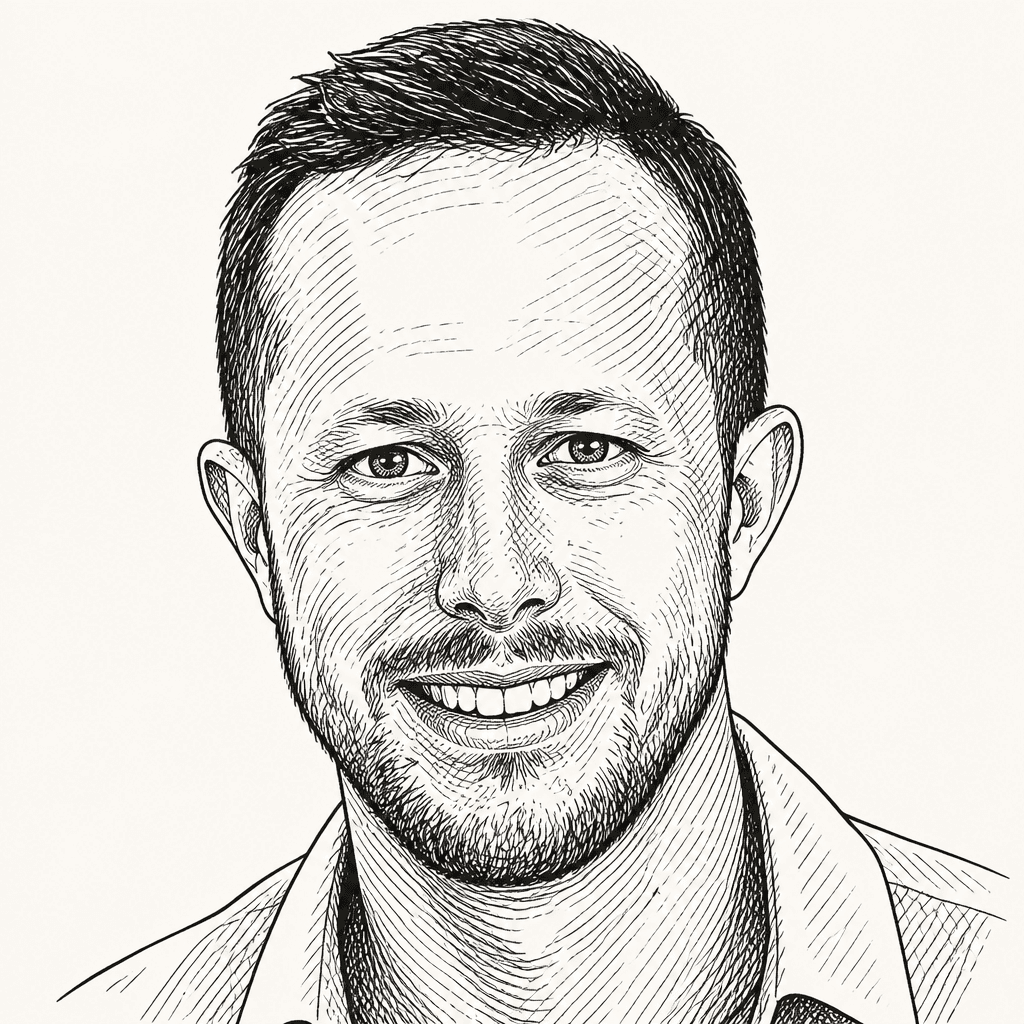
David Vélez, Nubank’s founder and chief executive, argues that the digital bank’s low-cost model can challenge incumbents in an industry he says remains largely branch-based. Nubank’s 140 million customers are evidence for that model, but its expansion into the United States and other markets will test whether the advantage travels. Vélez sees AI as a way to lower costs further and improve financial services, while saying that scale alone is not enough: companies need the systems and culture to use their data effectively.

Nubank’s low-cost model is a test of whether its advantage travels
Nubank’s case for becoming a global financial-services company rests on a combination of a lower-cost digital model, customer data that can improve financial decisions, and AI that may help both serve customers and redesign the company’s operations. Its scale in Brazil is evidence for the model; expansion into other countries, including the United States, will test how much of that advantage can travel.
David Vélez says Nubank has 140 million customers and 10,000 employees. He compares that with incumbent banks that, in his account, serve 100 million customers with 100,000 employees and 6,000 branches. Nubank’s cost to serve a customer, he says, is about 3% of a traditional bank’s—an advantage achieved before applying AI.
That gap is central to his view of the industry’s prospects. Global consumer financial services is roughly a $10 trillion industry, Vélez says, and about 90% of it still runs through branches and incumbent banks. The spread of neobanks and fintechs has not yet changed that basic structure. In his analogy, digital banking is where Netflix would have been if video rental still accounted for 90% of the market.
Nubank’s position in Brazil is an exception to that pattern. Vélez says the company has nearly 120 million Brazilian customers, more than 65% of Brazilian adults, and that around 60% of its customers use Nubank as their primary bank. He distinguishes that relationship from being a secondary wallet: customers use Nubank for day-to-day banking, replacing an incumbent institution. The company is pursuing a similar role in Mexico and Colombia, though its experience in those markets has differed.
The larger opportunity, in his view, has two parts. Digital-native firms can take market share from established banks, but they can also bring more people into the financial system. Vélez estimates that three billion people remain outside banking and lack access to credit. For him, the shift is not simply a change in which company holds an account. It is a chance to expand who can participate in financial services at all.
He sees mobile banking as the first stage of that transition. A smartphone lets a bank serve customers without building a branch network; lower infrastructure costs can then support lower fees, better rates and a better product. AI, he argues, can multiply the efficiency gains. A company could use that productivity to automate more of its operations or to pursue a larger ambition. Vélez says Nubank wants to take its model to 100 countries.
Access, cost and intelligence define the opportunity
Vélez groups the problems he wants financial technology to address into three categories: access, cost and intelligence. Each depends on digital systems, but each describes a different obstacle: people excluded from credit, consumers paying for an expensive banking infrastructure, and most people lacking practical help with financial decisions.
Access is not just about opening an account. In countries such as Mexico and Colombia, he says, credit-card penetration is around 13%. Expanding credit requires more data, stronger underwriting and digital systems that can process financial activity. He expects the move away from cash and the introduction of real-time payment networks—such as Brazil’s PIX and India’s UPI—to help build those foundations. His forecast is that, over time, everyone, including small businesses, could have access to banking and credit. He presents that as a potential driver of economic growth, not as an outcome already achieved.
The second category is cost, including charges that customers may not see as a direct fee. Vélez points to roughly $15 trillion in U.S. retail deposits and says banks pay an average yield of about 40 basis points. At interest rates of 4.5% to 5%, he calculates that the difference amounts to around $600 billion. He argues that this money is retained by banks rather than staying with consumers, helping support the traditional banking system, including its branches; he does not describe the full amount as a direct branch expense.
He also points to remittances and account charges. In his example, people sending money out of the United States pay 5% to 10% per transaction. Because transferring money is, in his formulation, “moving bits,” he expects those costs to trend toward zero in a more competitive environment. He says U.S. customers may also pay $5, $10 or $15 a month for an account, and sees similar costs in Europe and Japan. More competitors, he argues, can put those charges under pressure.
His third category, intelligence, concerns who can get help making financial decisions. Vélez contrasts the top 1% of earners, who may have a private banker to manage deposits, find loans and structure investments, with everyone else, who often has little or no comparable advice. Financial education, he says, has not solved that gap: people do not generally sit down to take classes that help them manage their finances. He believes AI could instead provide individuals with personalized assistance in optimizing their financial lives.
He expects that kind of advice to make existing banking costs and profit pools more contestable. Open banking can connect a person’s accounts across institutions; AI could then help that person identify fees, find better rates or move money to meet a bill. Vélez says Nubank already uses this approach in Brazil for about 15 million customers. It may alert someone that a payment is due at another bank and that they lack funds to cover it, then offer money to help avoid a charge. Or it may offer to refinance a loan at a lower rate. The aim, he says, is to optimize the customer’s finances, not simply to sell another product.
That does not mean every banking interaction should be automated. Vélez says a small business may want to speak with a banker, and a person investing millions or taking out a mortgage may value a human conversation. He sees those as a minority of cases. For everyday savings accounts, cards and loans, he argues, a physical branch is increasingly unnecessary.
Digital records can turn cash flow into credit history
The case for cashless payments, in Vélez’s view, reaches well beyond convenience. When a business transacts in cash, its activity may leave no usable record. He imagines a taco seller in Mexico City whose daily sales are real but invisible to a lender. If those transactions move onto a digital ledger, the seller can show a bank a history of cash flow and seek credit to expand from one stand to two—or five.
That process can help create creditworthiness, not merely measure it. Vélez says Nubank was the first credit-card provider for 30 million people in Latin America. When the company asked why banks had not served those customers, it heard that people did not want credit or were afraid of using cards. Nubank concluded instead that the available products did not match their needs. For some customers, it began with a credit limit of $20, a figure traditional banks considered absurd. But, he says, $20 was better than zero: a small limit could grow to $100 and then $1,000 as a customer built a history.
He sees AI as a way to extend that process with more tailored guidance—a financial copilot that could help someone understand what to do with spending, savings or investment in order to improve their financial position and access to credit. The digital transaction record makes activity visible; a product suited to a customer’s circumstances can give them a way to build a history from it.
Vélez says small businesses are particularly important to this opportunity: they account for about 70% of employment in Brazil, and he describes similar patterns in India and Southeast Asia. If their cash transactions become visible, he argues, lenders can assess activity that was previously difficult to underwrite. He sees the resulting credit access as a potential source of economic mobility.
For Nubank, expanding into countries with different levels of digital and financial infrastructure has tested how portable its model is. Brazil, Vélez says, was more banked than unbanked. In Mexico, the company initially heard that people preferred cash and did not trust digital payments or cards. Nubank was less competitive in that offline environment: it had no branches or ATMs. But as Mexico has digitized, he says, the market has started to resemble Brazil more closely. Nubank is now, in his description, the country’s second-largest bank and its largest digital bank.
His expectation is that financial services will become more homogeneous across countries as digital systems spread, much as he sees social media, streaming, ride-hailing and e-commerce products converging around similar services. The path is not identical everywhere, but he expects cash use and local differences to matter less over time.
AI may strengthen scaled firms—but not by itself
For a new AI-native financial startup, Vélez identifies speed as the most obvious advantage. A young company can launch products quickly, particularly before it becomes regulated. But speed alone has limits in banking. A startup still needs licenses and regulatory approval, he says; AI cannot produce a banking license or reduce a two- or three-year regulatory process to six months.
Scale and accumulated data can also favor established digital banks. Nubank has 140 million customers, and Vélez says it holds 20,000 to 30,000 data points per customer across 13 years. He says the company used proprietary data to build a foundation model for financial services, initially focused on credit decisions and now also used for fraud decisions in Mexico and Colombia. That model, he argues, gives Nubank an advantage in assessing credit and fraud and could help it enter new markets with tools already suited to those decisions.
Nubank acquired Hyperplane, a Palo Alto company that had been working on foundation models for financial services. Vélez says Hyperplane had struggled to sell to incumbent banks because sales cycles could take two years. After the acquisition, Nubank integrated the team. He describes the result as a foundation model built with proprietary data for credit decisioning, and says the company has published research on the work.
But scale is not automatically a moat. Vélez recalls that banks once argued their long histories and large customer bases gave them an unassailable data advantage. He compares them to Blockbuster: the chain had plenty of customer activity, but did not have the systems or culture to turn that information into a better recommendation algorithm. Netflix, in his telling, could start with less data and still build a better system for using it.
The distinction is organizational. Vélez says Nubank began in 2013 as a technology company operating in financial services, with machine learning and data-driven credit decisions built into its approach from the start. He says the company took credit risk onto its own balance sheet rather than avoiding capital-intensive activity. Traditional banks, by contrast, often have systems accumulated through decades of acquisitions. He points to their continuing work to move legacy systems, including mainframes and COBOL-based infrastructure, toward the cloud.
AI, he says, accelerates a capability Nubank already valued: testing more features and models quickly. Before AI, adding and testing a feature in a model could take weeks or months. Now the cost of experimenting with different variables is lower. Vélez gives a deliberately ordinary example: testing whether an email should have purple or yellow letters. If the experiment is cheaper, more decisions can be tested and potentially made by a model rather than a person.
The advantage therefore depends on having the right systems and culture to use the data, not simply possessing a large dataset. Vélez places larger digital financial companies in a favorable position: they have scale, data, brand and licenses, while retaining technology infrastructure that can make AI useful. He expects startups to find openings in less obvious applications built on top of AI models, but says that creating a consumer brand with hundreds of millions of customers will be difficult without a fundamentally different approach.
Cashless economies can widen access to credit
David Vélez sees the end of cash as one of the most consequential changes in financial services, especially in cash-heavy economies such as Mexico, Indonesia and parts of Africa. He expects real-time payment systems to make transactions faster and reduce the need for branches. They can also create records of economic activity that enable lending.
The implications for credit are less visible than the convenience of digital payments, he argues. In a cash economy, a taco seller’s daily sales may not be recorded in a form a lender can use. Once payments enter a digital ledger, the seller can show a record of cash flow and seek credit to grow the business. For Vélez, that is one way digitalization can turn economic activity that already exists into activity that lenders can evaluate.
He sees open finance as a second change. The idea, as he describes it, is that consumers own their financial history across institutions and can share it with another provider. A customer’s history is often difficult to transfer, giving incumbents an advantage through inertia. If people can connect their accounts and take their records elsewhere, a new provider may be better positioned to compete for them. Vélez says consumers may eventually be able to offer their historical information to someone willing to pay for it, if they choose.
He expects this to make banking less concentrated and more competitive. In his account, a small number of banks hold much of the assets in the United States, Europe, Asia and Latin America. Open banking could loosen those relationships and put pressure on fees and costs. He also points to the difference between consumer control of financial data and the way social-media companies use people’s data without the same kind of direct choice.
His third anticipated change is the growth of crypto and stablecoins alongside national currencies. Vélez says people in some countries do not trust their banking systems or local currencies and already seek access to Bitcoin or stablecoins. He imagines a future in which people move between a domestic financial system and an offshore one, using both. His prediction is that the roughly 190 currencies in the world today could narrow to around 10, with crypto tokens also used for saving and investment. That is his forecast, not a description of a change already underway to that extent.
On the U.S. dollar, Vélez argues that dollar-backed stablecoins could help preserve its role as a reserve currency by making access to it easier. He says the U.S. fiscal position is deteriorating, but remains better than that of many other countries, including emerging markets in Latin America. He does not expect the dollar to be the only currency people use to save: his expectation is that several fiat currencies will remain alongside a smaller set of crypto tokens. He says Bitcoin has a role in a diversified investment portfolio.
U.S. expansion will test whether Nubank can earn trust
Nubank’s international plans reflect Vélez’s claim that the company’s thesis is global rather than specific to Latin America. He says the company has announced its entry into the United States as well as a stablecoin-backed account available in more than 35 countries. He describes Latin America as the place where Nubank proved its model, not the limit of the original idea. In his account, the company has become the continent’s largest private financial institution, has a high customer satisfaction score, and has achieved a high return on equity in Brazil.
The U.S. is a much larger and competitive market, Vélez says, with strong fintech firms as well as established banks. But he argues that incumbent institutions still dominate much of U.S. banking and that many customers continue to use branch-based services. That leaves room, in his view, for a company with lower costs to offer better rates, lower fees and a digital experience.
He identifies the mass market’s credit needs and global payments as areas where Nubank believes it can compete. He also says the company wants to bring a consumer-obsessed culture to an industry where customers often do not feel strongly about their banking relationships. But that ambition depends on trust, not just price or convenience. Nubank wants to become customers’ primary bank, and Vélez says building a strong brand will be among the hardest parts of entering the United States.
American consumers cite brand as an important factor in choosing a bank, he says. Building recognition and trust is expensive, but Nubank does not want to rely simply on spending heavily on marketing. It wants to build an organic brand in a market with many established names. The company’s welcome kit for a first debit or credit card is one small example of how it hopes to make an initial interaction memorable; it is not a substitute for earning confidence over time.
For investors assessing the business, Vélez points to customer growth, customer satisfaction and acquisition cost, alongside lifetime value relative to customer acquisition cost and return on equity. Growth alone can be bought with marketing, he says; the question is whether it is sustainable. Nubank charges fewer fees than incumbent banks, he argues, yet has achieved two to three times their return on equity in the markets where it operates. He sees that combination as evidence of a lower-cost way to offer a better product. In the U.S., he adds, the profitability of some incumbent banks itself signals an opportunity: “Your margin is my opportunity.”
AI is changing how Nubank organizes its work
Vélez says Nubank’s approach to AI changed after a clear technical shift. The company had been using models for programming in Clojure, but through 2025 the results were poor enough that experienced engineers doubted the tools would work. He says the arrival of Opus 4.6 in December 2025 changed their assessment; he and colleagues recognized the shift about 60 days later, after testing newer models. Nubank then launched what he called a “Code Red” across the organization.
The company mapped 120 workflows, from coding and product design to know-your-customer processes, internal audit, compliance and regulatory capital management. It began redesigning them with AI tools and building evaluation infrastructure to measure the results at each stage. Progress differs by workflow, Vélez says. Some areas are further along than others, and some productivity gains come from rethinking processes rather than from AI itself; the technology makes that rethinking easier to pursue.
The review was not limited to adding an AI assistant to existing tasks. Vélez describes the work as reinventing each workflow natively with AI tools. That requires a way to test whether the redesigned process works at each step. The evaluation infrastructure is meant to let teams assess those changes rather than assume that putting a model into a workflow improves it. The company is still at different stages across its 120 areas, he says.
One visible result has been a flatter organization. As Nubank grew from one million to 140 million customers, it accumulated management layers in response to problems and growth pains. Adding managers was often the quickest way to address a fire, Vélez says, but over time that produced less visibility and more distance from the work. He says Nubank has reduced its layers from 10 to five, while his own direct reports increased from one to 20.
He attributes the change partly to better information systems and partly to a different management habit. An internal “company brain,” as he describes it, can provide information about product launches, metrics and the AI transformation. Fewer layers can also reduce the distortion that occurs as information passes through a chain of managers. But technology is not enough: Vélez says he is willing to go directly to the people doing the work rather than always observing a formal chain of command.
He also expects AI to alter performance management. Feedback at many companies arrives every six months, he says, and may reflect only the most recent month. He contrasts that with the daily coaching an Olympic athlete receives. Nubank is building systems that can give employees more specific, frequent feedback: an engineer might receive suggestions on code and on how to use AI tools; a designer could get feedback on their work; a manager could see more information about how a team is performing. Vélez sees this as a way to give employees more actionable coaching and managers more visibility, especially as their spans of control grow.
The company’s own adoption has included a return to more in-person work. Vélez says Nubank moved from remote work to hybrid work after concluding that time together in an office matters. He argues that AI may strengthen that case: individual work done at home will increasingly compete with what AI can do, while collaboration and coordination remain activities for people working together.
To stay close to the technology, Vélez says he follows developments on X, uses an agent to summarize them and blocks time to build with the tools. He says he made a non-custodial crypto app in an afternoon, and that Nubank asks senior managers to build software or products every quarter. He does not argue that every executive should spend most of their time coding; he wants leaders to use the tools enough to understand how quickly they are changing.
Customer obsession is a test of choices, not slogans
David Vélez says Nubank’s approach was shaped by Amazon’s focus on the customer and Disney’s effort to create magical experiences. The Disney lesson, as he describes it, is attention to the whole interaction: entering the park, being treated well by staff and encountering spectacles designed to make the experience memorable. Nubank tries to apply that idea to ordinary financial tasks. Vélez points to the welcome kit for a first credit or debit card as one opportunity to make an otherwise routine product feel special.
The harder test, he says, is whether a company follows its stated values when doing so costs money. A bank may call itself customer-focused, then introduce a fee because it improves short-term revenue. For Vélez, prioritizing the customer means resisting that trade-off when the long-term relationship matters more. He also sees a risk in the current focus on AI efficiency: companies may become so interested in the technology that they give less attention to the experience it creates for customers. In his view, human judgment still matters in deciding whether an automated change serves the customer or merely the business.
That focus may have to extend to agents as well as people. Vélez expects agents to become a distinct customer segment: companies will need to design products for them and make those products discoverable to them. Nubank has a team focused on understanding what agents need. But he does not expect human customers to disappear from the decision. Banking depends on trust, and people will still want to know where their life savings are held. Nubank will have to build trust with people while also serving agents that act on their behalf.
In Brazil, where Vélez says Nubank serves more than 65% of Brazilian adults, the company could also act as an agent for customers, fielding requests about financial products through its app. He says that agent could be open to products from other banks and financial institutions. The model he anticipates is a mix: more delegation for some products, less for others, and an ongoing human relationship with the institution.
The founder’s job is to hold the ambition and keep revising it
David Vélez describes his motivation in terms of impact: doing work that gives his time and energy meaning. At one point, he says, he wondered whether he should be doing something beyond Nubank. He concluded that taking the company from around 100 million customers to a billion, or from three countries to 100, could have more impact than anything else he could imagine. He is energized by periods of disruption, describing himself as more of a wartime than a peacetime general.
That confidence developed alongside doubt. Vélez says he had never managed anyone before founding Nubank and was not an engineer, yet had to recruit technical leaders and build a credit organization. He questioned whether the company needed more experienced outside managers, and Nubank did hire external talent. He later concluded that the organization also needed what he had brought from the start: clear leadership, motivation and a willingness to pursue goals that initially seemed impossible.
He distinguishes the founder’s role from the CEO’s.
The founder is impatient. The founder has a huge amount of sense of urgency. The CEO will need to be more patient.
The founder moves quickly; the CEO has to be more systematic and patient, building systems for a larger organization. The roles can conflict. Vélez says founders may be less inclined toward management tasks such as one-on-ones and coaching, while CEOs need to manage and think in systems. His own answer has been to adjust between those modes while preserving the founder’s drive, especially when technological change creates a chance to move faster.
For him, leadership means holding conviction and humility together. A leader needs a view of the future that others do not yet see and must be able to persuade people to work toward it. But rejecting consensus wholesale is as mistaken as treating the status quo as permanent. Existing arrangements may have survived because they work; other parts need to change. Good leadership, in Vélez’s account, is knowing the difference—and listening closely enough to revise a vision that is incomplete.
He frames Nubank’s range of possible futures in those terms. The bear case is that the company saturates Brazil, Mexico and Colombia, fails to find another path to growth and cannot use AI to internationalize. Nubank already serves more than 65% of Brazilian adults, and Vélez jokes that the company will run out of Brazilians. The bull case is that it rides the shift from incumbent to digital banks, uses real-time payments, open finance and AI to expand across countries, and continues offering lower fees, higher yields, better experiences and integrated advice. He describes expansion across 100-plus countries over the coming decades as part of that bull case, not an accomplished outcome.
His closing advice to founders returns to conviction. Building a company will be more painful than expected, he says; a mission that matters deeply can help sustain the effort. Finding that mission involves luck and serendipity as well as deliberate search. A sign, for him, is that the problem stays with you—that you cannot imagine your life continuing without trying to solve it. He also argues that AI makes the search more important, not less: when it becomes easier to start a company, founders may gravitate toward easier problems. The more compelling opportunities, he suggests, may be the ones that still seem impossible and that a particular founder believes they are uniquely equipped to pursue.