Airbnb Is Rebuilding Around Identity, Not Homes, for AI

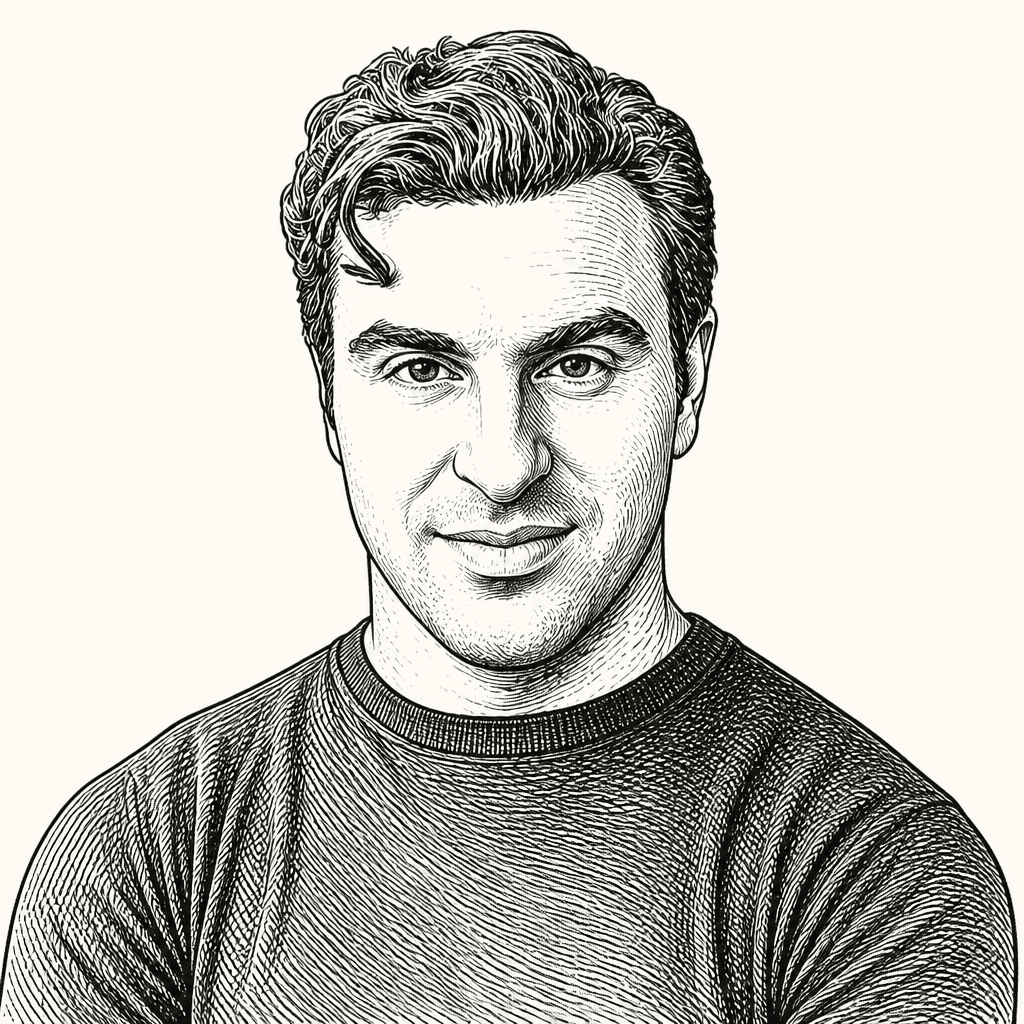
Airbnb’s challenge in the AI era is less a feature rollout than a company reinvention, chief executive Brian Chesky argues in a conversation with Patrick O’Shaughnessy. Chesky says the company has to move beyond a business still identified mainly with homes, rebuild around identity and personal preferences, and do so without damaging a large public platform that hosts and investors depend on. His answer is a more hands-on operating model: fewer abstraction layers, smaller elite teams closer to users, continuous recruiting, and a CEO directly engaged with the work.
Airbnb’s AI problem is a reinvention problem
Airbnb’s AI question is not only how to add AI to the product. Brian Chesky described a broader reinvention problem: a public company with a large existing business, hosts whose livelihoods depend on it, investors expecting execution, and a brand still closely associated with one thing — homes.
Chesky said Airbnb has begun to saturate the core idea and that its stock has been flat because the company “only do[es] one thing.” The next phase of his job, as he defined it, is product extension and reinvention: changing Airbnb’s atomic unit from a home to a person, building identity and preference systems, expanding into more categories, and navigating AI without damaging the current business.
That commercial problem is why the management philosophy matters. Chesky’s answer is not to detach further as the company grows. It is to remove abstraction layers, make problems smaller, get elite teams closer to users, and put the CEO back in direct contact with the work.
No one is born a good CEO. I think people are basically born good founders, or said differently, it's innate. You don't have to learn how to be a good founder. The job of CEO is completely counterintuitive, and almost all of your intuition about what to do is wrong.
The “Founder Mode” idea, which Chesky said Paul Graham coined based on his experience at Airbnb, began as a rejection of a common founder-to-CEO pattern: founders hand the company to professional managers, detach from the details, and end up being managed by the organization rather than managing it.
Chesky separated the founder’s job from the CEO’s job. Founders are taught to learn by doing. That works early, when the company is still discovering what it is. It does not work at CEO scale, because trial and error can create damage that takes years to unwind. His example was hiring someone who builds an empire, leaves, and then forces the company to spend years undoing the structure.
The pandemic was the break point. By late 2019, Airbnb had about 7,000 employees and had become unrecognizable to him. Chesky described feeling like he was “in a car without a steering wheel”: he would try to turn left and the company would go right. He later concluded that he had enabled the bureaucracy himself by over-delegating, deferring too much, and not listening to his own intuition.
Then Airbnb lost 80% of its business in eight weeks. The crisis moved the company from peacetime to wartime, and Chesky said he “totally took control” and “never let go.” For two or three years, he reviewed every little detail, working about 100 hours a week. His stated goal was not permanent micromanagement. It was to understand what was happening before empowering others.
The operating system he described was meeting-heavy. Chesky held roughly 35 hours of meetings a week, did not do one-on-ones, and instead used live group reviews with the full chain of command present. Anyone could offer an opinion. He usually spoke last, usually agreed with the team, and disagreed about 10% of the time. But he ratified every decision, creating a clear chain of command.
AI changes that system, but Chesky was careful not to present the replacement as finished. He said he is still in the middle of defining “AI founder mode.” The direction he described is toward more detail, more information on demand, fewer layers, and less dependence on meetings as the primary way to know what is happening.
That implies an organizational redesign, not a settled one. Chesky said every job at Airbnb will change. His immediate priority is getting people to adopt AI tools so he can see how their work changes, and only then redesign the company around that reality. He expects fewer layers of management and argued that “pure people managers” will have little value in the future.
By pure people managers, he meant people who only manage people and are not close to the substance of the work. In engineering, even managers need to code. In law, managers need to read the case law and get involved. His broader formulation was that every field has its own version of coding, and leaders have to do it.
Chesky’s line is blunt: you manage people through the work. Leaders should have relationships with their reports and periodically have real conversations about their lives, but that cannot be the day-to-day job. People who rely on recurring one-on-ones as the core of management, he said, are unlikely to survive the AI shift. The two categories he singled out as vulnerable were pure people managers and people too rigid to change.
The consumer AI gap
The next large AI opportunity, in Chesky’s view, is not where most current startup energy is concentrated. Patrick O'Shaughnessy pressed him on why so much AI company-building appears enterprise-focused when many of the largest companies in history have been consumer companies. Brian Chesky began with Y Combinator. He said that in the most recent batch he referenced, 175 companies were in the batch and 159 were enterprise companies.

Chesky offered several explanations. First, after ChatGPT, many founders and investors feared that OpenAI would kill new consumer AI businesses. Second, the consumer AI business model is still unclear. He described three possible monetization paths for ChatGPT-like products: subscriptions, ads, and e-commerce. He was skeptical that any one of them had solved the problem. Subscriptions may hit a local maximum because Claude and Gemini are available for free. Ads face limits if competing products do not use ads. E-commerce had been complicated, he said, by the shutdown of third-party apps. Inference costs remain expensive enough to make the economics difficult.
His more general point was that a consumer AI company cannot simply be “in the business of information,” because consumers have not been trained to pay for information. Consumer AI needs a business model that fits what people will actually pay for.
Third, distribution has matured. Chesky acknowledged that if a product is revolutionary enough, it can still rise: he said the top three apps in the app store were AI apps. But he contrasted that with the general difficulty of launching consumer products now.
Fourth, he argued that Silicon Valley is more trend-based than it likes to admit. The current trend is enterprise. Y Combinator also encourages startups to get other YC companies as first users, which is a powerful distribution move but naturally favors enterprise software. What began as “do things that don’t scale” can, in Chesky’s diagnosis, become a machine for producing more enterprise companies.
Finally, consumer companies are harder. Chesky described them as more hits-driven, higher-risk, and more all-or-nothing. Enterprise companies can begin with a narrow vertical, sell to other startups or smaller companies, and grow from there. Consumer companies require excellence across more dimensions: design, marketing, culture, press, and product taste, not just technology and sales.
His prediction is that the current age of enterprise AI will give way to a consumer AI renaissance within 12 to 24 months. Almost every app on his home screen, including Airbnb, had not fundamentally changed because of AI. He expects that to change within two years.
For Chesky, the significance of consumer AI is not only market size. It is interface pressure. Enterprise users are often paid to figure out difficult tools. Consumer products have to become simple enough for everyone. Because AI has been mostly enterprise so far, he argued, the incentive to make interfaces radically simple has been weaker. A consumer wave would force AI tools to become intuitive.
Project Hawaii makes scale small again
Airbnb’s answer to large-company abstraction has been to make important problems small enough for an elite team to touch directly. Brian Chesky described “Project Hawaii” as a way to recover the operating feel of Airbnb’s early days inside a much larger organization: a small team, one problem, close CEO involvement, and a constrained enough scope to learn from reality.
The first target was the guest experience and conversion rate: the path from someone entering a location and dates to making a booking. Airbnb assembled roughly 10 or 12 people: designers, engineers, product people, and data scientists, mostly a pure software team. They treated the team like a startup.
The operating model was “crawl, walk, run, then fly.” Crawl meant fixing obvious bugs and conversion problems. Walk meant developing features and reframing the journey. Run meant rethinking the entire flow with bigger features. Fly meant complete reinvention. The north star was to improve the user experience and increase conversion, with measurement throughout.
Chesky called the results “phenomenal.” In year one, he said, the team delivered the equivalent of $200 million to $300 million in incremental revenue. The following year, he put the figure at $400 million to $500 million. He later described the impact as a run rate of more than 600 basis points on a base he described as “13, 14 billion dollars.”
The team grew, by his account, from a small group into dozens of people, perhaps 50 or 60. Airbnb then applied the same model to pricing, with a different team, and then to other problems. Chesky’s management pattern matched his broader philosophy: start hands-on, teach the team what he knows, then let go over time. He compared it to a golf instructor watching thousands of swings before the student builds the wrong muscle memory.
The same logic now applies to new businesses. Chesky said Airbnb had a core business doing nearly $100 billion a year in gross sales and that, for every $1,000 spent in the world, $1 was spent on Airbnb. But he also called Airbnb a “one-hit wonder” for much of its life: for 18 years, it could not get a second hit out.
His explanation was that Airbnb kept trying to launch new businesses at global scale from the beginning. He contrasted that with Airbnb’s original launch in New York, Uber’s launch in San Francisco, and DoorDash’s launch in Palo Alto. Airbnb’s new rule is “one to ten to many”: pilot in one market, expand to ten if it works, and industrialize only after that.
Chesky said Airbnb launched services and experiences in 100 cities and that it did not work right away. The lesson he drew was to make the problem smaller and perfect one city. He now expects Airbnb to run many pilots, eventually building toward 50 to 70 new verticals, but only through this constrained approach.
The principle is the one Chesky said Paul Graham gave Airbnb on the first day of Y Combinator: it is better to have 100 people love you than a million people sort of like you. Chesky traced that idea to Paul Buchheit and the development of Gmail, saying the internal standard was that 100 people inside Google had to love the product before it shipped.
Scale, in this telling, distorts reality. If a team tries to make something a million people like, it cannot speak to a million people. It ends up with averages, abstractions, and what Chesky called a “shallow swimming pool.” By shrinking the problem to one city, one neighborhood, or one narrow group of users, the team can talk to everyone, do unscalable things, and learn what actually produces love.
He connected this directly to industrial design: before manufacturing, you prototype. Product-market fit and industrialization are separate problems. The first requires intimacy, manual work, and a willingness to ignore scalability. The second turns the discovered model into a repeatable system.
Industrial design became a management philosophy
Airbnb’s AI-era redesign begins, in Chesky’s account, at the Rhode Island School of Design. Brian Chesky had never heard the term industrial design before choosing a major, but was drawn to the department’s explanation that it covers everything from a toothbrush to a spaceship.
He contrasted industrial design with other design fields. It is technical, requiring work with mechanical and electrical engineers. It is commercial, because a product that does not sell is considered a failure. And it is empathetic, because it forces designers to understand user journeys and multiple stakeholders.
His example was a child’s ventilator he designed at RISD. The assignment was not only to design a breathing machine, but to imagine the child in the hospital, the parents wondering whether the child would be okay, the technicians who had pride in being the only people who could operate complex equipment, and the hospital’s desire for simplicity. Chesky said that kind of stakeholder thinking prepared him for being a CEO.
Industrial design also shaped his view of product leadership. He noted that the field did not have product managers in the way software companies do. The industrial designer was effectively the product manager, working directly with engineers and program managers. That shaped his view that design and product should not be separated.
Apple was the formative company in this account. Chesky described the late-1990s and 2000s Apple period as a golden age of industrial design and Jony Ive as his hero. Apple educated the public about design, and once people were educated, they could not “unsee great products.”
That Apple influence later arrived inside Airbnb through Hiroki Asai, whom Chesky described as Steve Jobs’s creative director and an “unsung hero” of Apple’s marketing and design system. Hiroki taught him two principles: simplicity and craft.
Simplicity, for Chesky, is not merely removing things. It is distilling something until its essence is understood. Startups are naturally simple because they have no money and constraints are forced on them. Later, after raising money and hiring people, they move in too many directions and lose the muscle for focus. Chesky said he became obsessed with simplicity in the product, organization, and everything else.
Craft meant that details matter because “how you do anything is how you do everything.” Chesky connected this to Bill Walsh’s The Score Takes Care of Itself and John Wooden’s practice of teaching UCLA players how to put on their socks. The point was not socks or jerseys in isolation. It was that winning is an output of thousands of inputs performed rigorously.
Airbnb, he said, stopped focusing directly on growth and focused instead on making the inputs perfect. If the inputs are right and made perfect, growth follows; if perfection does not produce growth, then the team chose the wrong inputs.
That logic also explains the “11-star experience” exercise. Chesky said Airbnb reviews suffer from compression: five stars means nothing went wrong, and anything less signals a bad experience. To escape that compression, he began asking what a six-star, seven-star, or 10-star check-in would look like.
A five-star check-in is simply getting into the Airbnb successfully. Six stars might mean the guest’s favorite wine, fruit, snacks, and a handwritten card. Seven stars might involve a limousine at the airport and a surfboard waiting because the host knows the guest likes surfing. From there the exercise becomes intentionally absurd: an elephant and a parade, a “Beatles check-in” with thousands of fans, or Elon Musk taking the guest to space.
The point is to go beyond reality and work backward. Once the team imagines the absurd, a six- or seven-star experience no longer feels crazy. The gap between five and six stars may be the gap between a company and its competitor. If the six-star idea can be industrialized, it may become product-market fit.
AI turns creation back into the default
Patrick O'Shaughnessy connected the 11-star exercise to his own experience with AI: when tools made it possible to create almost anything, he found that his imagination had atrophied. Brian Chesky agreed and framed AI as a shift from consumption to creation.
Chesky argued that many digital tools have become passive, especially social media. People spend time consuming, or creating only in the limited sense of posting opinions and performing for an audience. AI, in his account, gives people a paintbrush and canvas. It lets more people make things.
AI is the opportunity for all of us to become artists and scientists and creators.
Chesky’s claim is not that AI automatically makes everyone a professional artist. It is that many people have creativity they cannot express because they lack the craft or tools. He compared it to musicians or visual artists who may not express themselves fully in words but reveal another dimension through their medium. AI lowers the barrier between an idea in someone’s head and a visible or usable artifact.
He quoted Picasso’s line that all children are born artists and the problem is remaining an artist as one grows up. Chesky said every human is creative, even if many adults say they are not. In his view, the muscle has not been exercised.
He also rejected the idea that founders are visionaries in the way the word is often used. Founders, he said, are more like “expeditionaries.” They take one step, learn from it, and keep going. The vision is often named afterward.
That connects to Chesky’s personal reorientation after Airbnb’s success. Airbnb began as a fun, intrinsic project: three air mattresses, “Airbed and Breakfast,” and not an obvious way to get rich. Over time, success became a scorecard. Chesky began chasing status, praise, and adulation, and only later understood that he was trying to convert special achievement into love.
The public offering forced a reckoning. Airbnb went public during the pandemic at a $100 billion valuation, which Chesky called one of the best days of his life. The next day, he woke up, put on sweatpants, joined a Zoom meeting, and felt as if nothing had changed. It became, he said, one of the saddest days of his life because the adulation did not solve the underlying problem.
His conclusion was that adulation is “a cup with a hole at the bottom.” It must constantly be refilled, and eventually the high stops working. Chesky had to detach from status, from whether Airbnb was “hot,” and from other people’s approval. He began focusing again on making and on spending time with people he cares about.
He tied this back to the artist’s motivation. Leonardo da Vinci, Vincent van Gogh, Walt Disney, and Steve Jobs were his examples of people still working near the end of their lives because they loved the work. Chesky’s motivation now is to create something great. He wants shareholders to get a return, employees to feel they are part of a great company, and Airbnb to make an impact, but he framed the deepest motivation as making.
What might endure when software does not
Software may become less durable as AI lowers the cost of building it. Brian Chesky accepted Patrick’s anxiety that if anyone can build faster and friction keeps falling, the familiar idea of an enduring software moat becomes less certain. He did not claim to have fully reconciled the problem. Instead, he separated software from the things around it.
He compared software to fashion. Hermès can have products such as the Birkin and Kelly bags that endure for decades and appreciate in resale markets. Zara represents fast fashion. Software, in his words, is becoming the hyper-fast-fashion version: even excellent software from 10 years ago tends to look dated. Hardware endures better. Interiors and buildings can endure even better, sometimes gaining patina with age.
That creates a problem for someone who obsesses over Airbnb’s app design. No matter how good the interface is today, Chesky expects to look at it in 10 years and think it looks bad. Dated software, he said, never looks good.
So what lasts? Chesky listed the community, the ideas, the principles, the mission, the organization, the company, the brand, the identity, the logo, the voice, and what Airbnb stands for. Most importantly, the community endures. He told Airbnb that the company is not building an app or a service, but a community, because that is what can last. He also said he does not think apps will exist in the future in the same way; he expects agents to replace them.
This connects to his argument about founder-led moats. Patrick set up a tension between Warren Buffett’s idea of buying businesses so good a “ham sandwich” could run them and the startup idea that a company’s ceiling is set by the founder’s growth. Chesky said both are true, and used Walt Disney as the example.
Disney, in Chesky’s telling, remains founder-shaped decades after Walt Disney’s death. He argued that Disney’s founder-led period created such a reservoir of intellectual property, brand, and operating momentum that later CEOs inherited the bases loaded. He said Disney has, at a fundamental level, continued to rely on feature-length animated films, television, and Magic Kingdoms since Walt died in 1966.
He made a similar point about Apple after Steve Jobs. Apple, he said, has not had to invent many fundamentally new products since Jobs’s death because the iPhone was such an extraordinary gift to the company. Chesky’s broader claim was paradoxical: the longer a founder operates in founder mode and institutionalizes the magic, the more the company can endure after the founder lets go.
Technology complicates the Buffett framing because, as Chesky put it, technology is synonymous with change. Coca-Cola and See’s Candy do not face the same kind of disruption. In tech, he believes a company needs founder mode more of the time.
For Airbnb specifically, the durable layer he wants to build is not the home. Chesky said Airbnb is both a noun and a verb, like Kleenex, which is powerful and limiting. If people think Airbnb means a house, it becomes harder to introduce other categories. His goal is to shift the atomic unit of Airbnb from a home to a person.
That would mean identity, profile, preferences, and real-world relationships. Chesky wants Airbnb to develop the most authenticated identity on the internet, arguing that proof of personhood will matter in the age of AI. He wants a robust profile, rich preference libraries, a social graph in the real world, and eventually a membership program with many benefits.
He also wants Airbnb to move from homes to many offerings: homes, experiences, services, eventually flights, and other categories. He compared the ambition to Amazon moving from books to many things. But he acknowledged the innovator’s dilemma: roughly $100 billion moves through Airbnb’s app, Airbnb is public, investors expect guidance, and hosts’ livelihoods depend on the platform. Radical change cannot casually break the existing business.
His way around that constraint is exploratory. He described “little sandboxes,” possibly even separate apps, for radically different versions of Airbnb. The strategic question is how to disrupt Airbnb before someone else does, without damaging the people and investors who depend on it.
Hiring is the CEO’s highest-leverage work
The same discipline Chesky applies to product shows up most concretely in recruiting. Brian Chesky said the most important job he does at Airbnb is hiring, and he tied the point to bodybuilding, a discipline he said taught him that progress comes through consistent, measurable work rather than one heroic effort.
As a teenager, Chesky shifted from hockey to weightlifting after realizing late puberty made his hockey ambitions unlikely. He said he began at about 135 pounds and told friends he wanted to become one of the top bodybuilders in the country by 19. By 19, he was competing nationally.
The first lesson was empowerment: if you can change your body, you can change your life. Chesky said people often try to change the world around them first, but changing the body is more fundamental. The second lesson was compounding discipline. You cannot get in shape in one day, and 20 hours in the gym will not help; it will overtrain you. Strength comes through progressive overload, stress, recovery, and adaptation.
He applied that to leadership by looking for observable feedback. Twice a year, Airbnb holds a large roadmap review with the top hundred people in the room. Chesky can see the quality of the people through the quality of the conversation. He does the same with product design, decision-making, and operations: break the problem down into something observable and measurable.
Hiring is the biggest of those observable systems. Chesky said leaders can choose to spend time hiring or managing. The better the people, the less they need to be managed. The more time spent recruiting, the less time spent managing.
Sam Altman told him early in Airbnb’s life that he would spend 50% of his time hiring. Chesky did not do that then, and called it a “death blow.” Now the first person he calls every day is his recruiter, and the first and last call he makes is with the recruiting team. He estimated that he spends two to three hours a day on recruiting and more time on it every year.
His method is pipeline recruiting, not searches. Conventional searches begin too late: a company decides it needs a role, hires a search firm, reviews profiles, interviews a few available candidates, chooses the best among them, then discovers a year later whether the hire was any good. If the person is not good, they may already have built a team.
Pipeline recruiting means continuously meeting great people before there is an open search. Each meeting should lead to the next meeting. Chesky asks people who the best people they know are, then builds referral networks and “little mafias” of talent: an Apple design mafia, an Uber operations mafia, and so on.
He also said to start with results and work backward to people. If you want a great marketer, do not simply go to a company known for marketing. Find an ad you admire, then discover who made it. Do not start with the resume.
Chesky described himself as the co-hiring manager for the top 200 people in the company. Many CEOs think their job is to hire the executive team and let the executives hire their own teams. He called that fatal. His standard is that executives should hire people so good they would not be able to recruit them without the CEO’s help. If they can hire the person without help, the company may not be reaching high enough.
On activation, Chesky was more restrained. The way to activate talent is to give someone a problem or opportunity and see whether they step into it. He does not know how to teach motivation, and he is unsure whether it can be taught. Entrepreneurs, in his view, are self-motivated. The manager’s job is to give them a challenge and see whether their agency appears.
Belief is the management philosophy underneath the system
The recruiting system, the high standards, and the founder-mode insistence on details all rest on a softer claim: people often need someone else to see their potential before they can see it themselves.
Brian Chesky said the kindest thing anyone has done for him is believe in him. A high school art teacher believed he could become an artist. Michael Seibel, the Justin.tv team, Paul Graham, investors, and his co-founders believed in him. He said he had no business being a CEO, but others’ belief helped put him on the path.
He connected that to John Wooden’s idea that the coach asks players to do their best while seeing potential they do not yet see in themselves. When Chesky tells someone their work is not good enough, the intended message is not that the person is not good enough. It is that he sees potential they do not yet see.
That is also how he framed his own path. Chesky said many entrepreneurs are driven by insecurity, impostor syndrome, or something unresolved from childhood. Success does not necessarily remove that. For him, the path became learning to believe in himself after others had believed in him first.
His stated gift back is to do the same for others: not pull the ladder up, but show people what they may be capable of. In his words, people will “climb a mountain” for the feeling that someone believes in them and believes they can do more.