Trump’s Biggest Court Losses Tested the Limits of Presidential Power

Michael McConnell argues that the Supreme Court’s record in major cases involving Donald Trump does not support the claim that the justices are simply in the president’s pocket. Trump won important rulings on presidential authority, but the court also rejected several positions central to his agenda, including on birthright citizenship and tariffs. McConnell says the decisions are better judged case by case: some wins rested on longstanding legal arguments, while the losses show limits on presidential power.
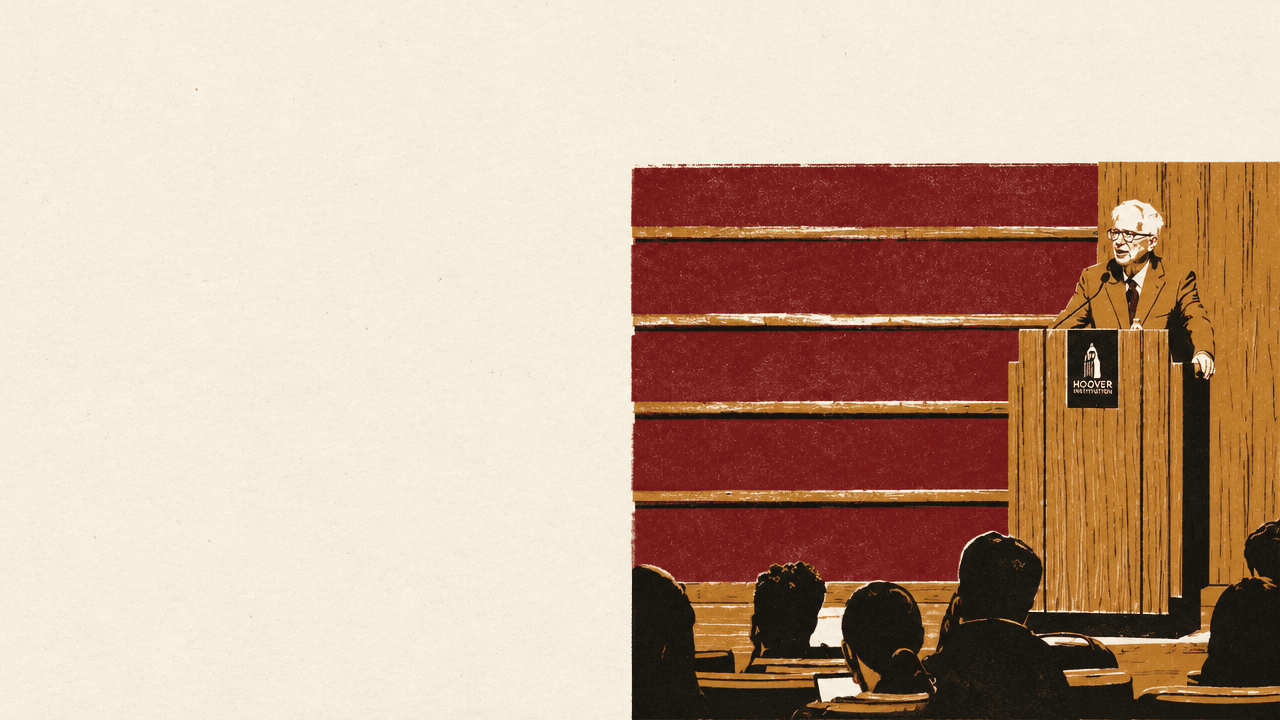
The cases resist a simple story about the court
Michael McConnell frames the question as whether the Supreme Court is applying the law or acting to support or oppose President Donald Trump. He argues that the record is mixed: Trump has won consequential cases, but lost several that mattered greatly to him. Looking at the rulings themselves, rather than treating the court as either an ally or an adversary, is the way to assess that record.


McConnell says intense political reactions to Trump make that assessment difficult. For some people, he says, anything associated with Trump is objectionable and should be stopped; for others, the president is presumed right. Those opposing instincts can turn any ruling into evidence for a prior view. His proposed test is more concrete: examine the cases Trump cared most about and what the court actually decided.
He says the judiciary has performed remarkably well under extraordinary pressure. In his historical framing, three presidents with substantial political support have tried to undermine the court’s independence: Thomas Jefferson, Franklin Roosevelt and Trump. McConnell quotes Trump describing the Supreme Court as “little more than a weaponized and unjust political organization.” He also recalls Trump mocking Republican-appointed justices who ruled against him as merely trying to “look independent.”
If we really care about the rule of law and we care about the courts as an institution that are trying to achieve the rule of law, and not either to be the opponent of the president or the supporter of the president, but actually try to get the law right, it's gonna come out somewhere in between.
The pressure, in McConnell’s account, is intensified by anger on both sides. He says the court has few defenders and cites Gallup polling that, at the time of his remarks, put its public approval at the lowest point in the organization’s history. He offers the cases as a firmer basis for judging the court than the charge that it is simply “in Trump’s pocket.” That makes the mixed record more than a tally: it is his evidence that the court’s decisions do not line up neatly with either political allegiance or opposition.
The biggest losses turned on limits to presidential power
The birthright-citizenship dispute is McConnell’s clearest example of a major loss. Trump issued the executive order on the first day of his second term and attended the Supreme Court’s oral argument, signs McConnell cites as evidence of how much the issue mattered to him. McConnell says the court did not accept Trump’s effort to deny citizenship to children of people in the country unlawfully.
He describes the result as a substantial defeat, while distinguishing the justices’ reasoning. According to McConnell, five justices concluded that the policy was unconstitutional, while one found it unlawful under a statute and did not need to reach the constitutional question. A different justice, McConnell says, left open the possibility that Congress could pass a law concerning what he called “tourist citizenship”—citizenship for children of people in the country on short-term visas. McConnell’s broader point is that seven justices disagreed with Trump’s effort to deny citizenship to the children of people he described as illegal aliens. He regards that as an enormous loss.
The tariff case is another major loss. McConnell, who says he was personally involved in the case, describes the decision as a 6–3 defeat for Trump. He notes that Chief Justice John Roberts wrote the opinions in both the birthright-citizenship and tariff disputes. Together, these cases are among the examples McConnell uses to challenge the idea that the court reliably sides with the president, even though Trump appointed three justices and three others were appointed by presidents of his party.
Other losses, as McConnell lists them, concern different forms of presidential authority. He says Trump could not fire members of the Federal Reserve Board and lost the geofence-warrant case. McConnell also points to the Alien Enemies Act dispute, where the administration sought to use a statute enacted in 1798 against people it described as enemy aliens.
McConnell distinguishes the administration’s description from what he says the statute meant when it was enacted. In his account, “enemy aliens” referred to citizens of countries with which the United States was at war; he notes that the country was not at war with Venezuela or El Salvador. McConnell says the court did not impose a single nationwide prohibition on deportations. Rather, it said those facing deportation could challenge it through individual habeas corpus actions. He calls the result “mostly a loss,” perhaps “a 90% loss.”
McConnell also says the court blocked Trump from deploying the National Guard in cities around the country. Taken together, he describes the decisions as an almost unprecedented set of losses for a president during the first year and a half of an administration. The composition of the court makes the pattern especially significant to him: Trump appointed three justices, and three more were appointed by Republican presidents. McConnell says this record leaves him baffled by legal observers who still describe the court as being in Trump’s pocket.
The wins rested on arguments McConnell says were not unique to Trump
The mixed record also includes important victories. McConnell identifies three of Trump’s most significant wins on the merits: Trump v. Slaughter, the cancellation of temporary protected status, and the dispute over nationwide injunctions. His point is not that these decisions were inconsequential, but that their legal rationales, in his view, were not special concessions to this president.
In Trump v. Slaughter, the court held, as McConnell describes it, that the president may fire members of independent regulatory commissions. He sees the decision as the resolution of a long-running constitutional dispute, not a Trump-specific accommodation. He says he began teaching constitutional law in the 1980s expecting the court eventually to reject the idea that independent commissions constituted a “fourth branch” of government: bodies exercising governmental power without accountability to the democratic process.
For McConnell, the question is structural. If commissioners wield government authority but cannot be held accountable through the elected branches after their appointment, he argues, they sit uneasily within the basic framework of government. He says the issue had been developing over decades, with the court giving presidents “another slice” of authority in successive cases. He therefore treats Slaughter as the endpoint of a gradual movement, rather than a sudden change made to serve Trump.
The temporary-protected-status case presents a different kind of argument. It concerned the cancellation of that status for people from particular countries, including Haitians and Syrians. McConnell says the statute expressly bars judicial review of presidential cancellations. He notes that the challengers offered a more complicated argument for why the statute should not mean what its text says. He considers that reading contrived, and argues that applying the statute’s stated limit on review is not judicial adventurism.
The nationwide-injunction case, by contrast, is significant to McConnell because he says the position Trump won was shared across administrations. The court accepted Trump’s position, but every administration since nationwide injunctions became a prominent issue had taken the same position, he says. In his account, the ruling therefore belongs to a broader dispute about the scope of injunctions, not to a Trump-only effort to expand presidential power.
These explanations distinguish the wins from the losses without treating every result as proof of judicial independence. McConnell’s claim is narrower: some losses rejected positions central to Trump, while the important wins followed arguments he regards as longstanding or shared by other administrations. The same court could rule against Trump on citizenship, tariffs and other exercises of presidential power, yet rule for him where McConnell sees a settled statutory limit, a longstanding constitutional dispute, or a position not confined to his presidency.