ABC Challenges FCC Inquiry as Retaliation for Editorial Decisions



ABC argues that the FCC’s inquiry into its broadcast licenses is already inflicting the constitutional injury it fears: millions in legal costs and programming changes, including its decision to stop inviting political candidates onto The View. Stuart Benjamin, Eugene Volokh, and Jane Bambauer examine ABC’s claim that the agency is using ostensibly neutral concerns about employment practices and political-programming rules to retaliate against coverage officials dislike. The case tests whether courts must wait for final agency action when the regulatory process itself is alleged to be the punishment.
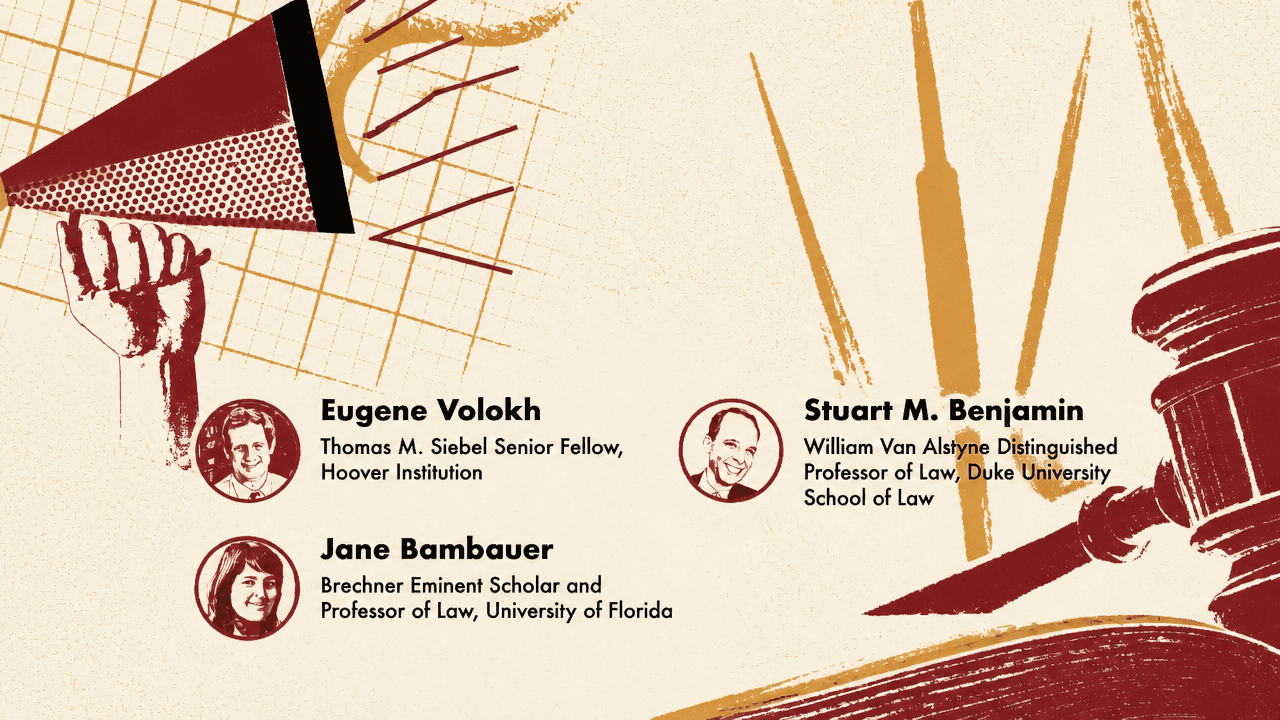
ABC says the licensing inquiry is already changing its speech
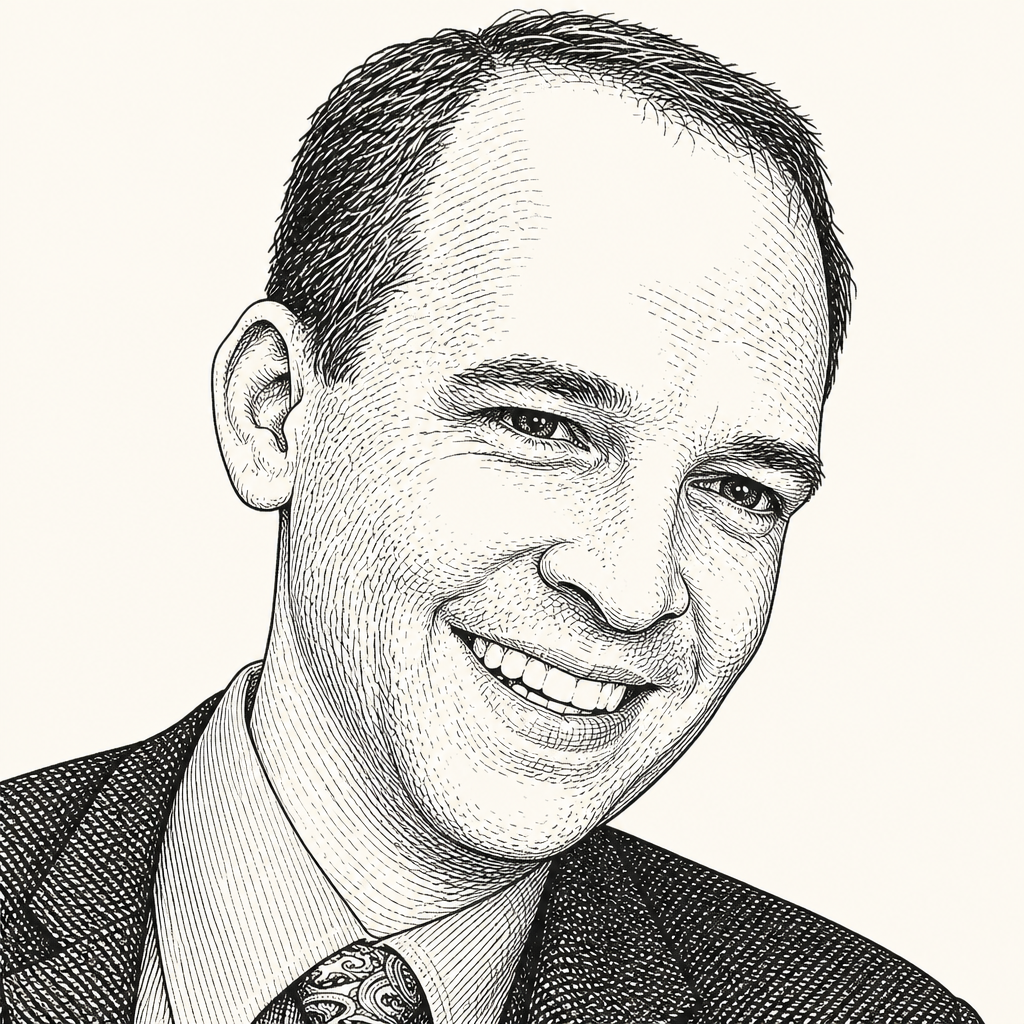
Stuart Benjamin frames ABC’s lawsuit around a practical proposition: an FCC licensing inquiry can impose the injury ABC fears long before the agency revokes a license—or a court decides whether the inquiry was lawful. ABC seeks a temporary restraining order and preliminary injunction against the FCC’s move toward reconsidering, and potentially revoking, the licenses of stations ABC owns. ABC reports that it has already incurred millions of dollars in legal fees and has stopped inviting political candidates onto The View because of concern about how the agency may respond.
That is why an eventual win may not feel like a win. The FCC cannot use this early proceeding to grant ABC a new renewal; at best, Benjamin explains, the agency could withdraw the review after ABC has borne the cost of defending it. ABC’s claim is that the review itself has been deployed to harass the company and influence its programming choices.
This is designed simply as a form of harassment of us because they don't like our ideology.
The factual pattern ABC presents is unusual. The FCC has not undertaken an early look at possible license revocation in more than half a century, Benjamin says, and it has not used such a proceeding against one owner’s multiple stations. The inquiry is directed at stations owned by ABC, rather than at the broader universe of affiliates carrying ABC programming.
ABC’s retaliation theory draws on public statements by President Trump and FCC Chair Brendan Carr. Benjamin says Trump has repeatedly called for ABC’s licenses to be removed because he regards its coverage as unfair, including after what Trump viewed as the network’s failure to cover his July speech. Carr has also publicly linked reconsideration of ABC’s licenses to the network’s conduct involving Jimmy Kimmel.
The FCC’s stated basis is different: possible unlawful DEI practices. Eugene Volokh stresses that this is not an allegation that ABC has aired pro-DEI content or adopted a pro-DEI editorial position. The asserted theory is that ABC may have engaged in impermissible race-based discrimination in employment—conduct that could violate generally applicable employment law—and that such conduct can be considered under the FCC’s expansive public-interest authority.


That framing matters because the FCC is not ordinarily understood as the agency charged with enforcing employment-discrimination law. Yet the statutory standard governing license transfers and revocations—whether action serves “the public interest, convenience, or necessity”—is broad enough to accommodate nearly any asserted concern. Benjamin asks his administrative-law students what would fall outside that standard. The answer, he suggests, is not obvious.
He would be surprised if ABC’s DEI program differed from those of every other major broadcaster. That does not establish that ABC has done nothing unlawful. It explains why selective enforcement is central to ABC’s claim: a facially neutral legal concern can be invoked against one broadcaster because officials dislike its speech, coverage decisions, or perceived political alignment.
The FCC has also revisited its application of political-programming rules. Broadcasters can be subject to equal-time obligations when they give airtime to candidates for office, but the agency historically interpreted the exemption for a “bona fide news interview” program broadly. The exemption had extended beyond conventional news shows to programs such as The Tonight Show with Jay Leno, Donahue, and Howard Stern’s show. The FCC had previously indicated that The View qualified as such a program; it has now said broadcasters should not rely on those earlier determinations and that it is reconsidering The View’s status.
ABC’s position is that the employment inquiry, the renewed attention to equal-time rules, and public attacks on its editorial choices form one pattern. The FCC may identify different regulatory hooks, but ABC contends that the underlying purpose is punishment for speech officials dislike.
Broadcast law permits intervention that newspapers would not face
Broadcasting’s legal position is distinctive not because all media are subject to the same content rules, but because broadcast stations require FCC licenses governed by the public-interest standard. Eugene Volokh puts the contrast plainly: there is no equivalent Federal Newspaper Commission empowered to withdraw a newspaper’s business license for failing to serve the public interest.
That licensing structure has long been accompanied by a constitutional distinction. The Supreme Court has permitted forms of broadcast regulation that it would not permit for newspapers, cable, or the internet. Benjamin’s account is that the modern result is less a coherent media-wide theory than a set of broadcast-specific precedents that the Court declined to extend elsewhere.
The distinctions among the relevant doctrines matter.
| Rule or doctrine | What it concerns | How it operates in the discussion |
|---|---|---|
| Equal-time rule | Access for candidates for political office | Relatively mechanical: airtime for one candidate can trigger obligations toward another. |
| Fairness doctrine | Treatment of competing viewpoints on public issues | Requires more direct government engagement with what counts as a responsive viewpoint. |
| Bona fide news-interview exemption | An exception to equal-time obligations | Historically applied broadly, including to entertainment and talk programs that interviewed political guests. |
| Public-interest standard | License transfer, renewal, and possible revocation decisions | An exceptionally broad statutory basis for FCC action, subject to constitutional limits. |
In Red Lion, decided in 1969, the Supreme Court upheld the fairness doctrine. Benjamin notes that the decision was often celebrated at the time by people more commonly associated with the political left, who favored government measures to ensure an appropriate mix of voices could be heard and, in some cases, hoped comparable requirements might extend to other media.
That extension did not occur. In Miami Herald v. Tornillo, decided in 1974, the Court rejected a comparable right-of-reply requirement for newspapers. A newspaper could favor one candidate or one view without giving rivals access to its pages. A broadcaster faced a different regulatory framework.
A related pattern emerged around indecency. FCC v. Pacifica allowed broadcast restrictions associated with the “seven dirty words.” Benjamin says many people more aligned with the political right supported the decision and hoped its reasoning about pervasiveness could apply more broadly. Congress subsequently regulated other major communications media, including cable television, telephone “dial-a-porn,” and the internet, arguing that those media were as pervasive as broadcasting. In each setting, the Supreme Court treated Pacifica as a broadcasting-only precedent.
The statute itself contains a bar on FCC censorship. But Benjamin argues that the meaningful legal constraint is constitutional rather than statutory. The public-interest standard provides little internal limitation: he recounts that the FCC’s first general counsel said the words had been selected to carry as little specific meaning as possible and to give the new agency as much authority as possible.
Jane Bambauer identifies the conceptual difficulty. Viewpoint discrimination is ordinarily at the core of what the First Amendment forbids. But the fairness doctrine itself aimed to “level out and equalize viewpoint.” If an old broadcast precedent allows government engagement with the balance of viewpoints at all, the line between permissible broadcast regulation and impermissible viewpoint discrimination may seem less crisp than it would in a newspaper case.


Benjamin distinguishes the doctrines rather than treating them as equivalent. Equal time need not require an official to decide which viewpoint is substantively adequate; it can operate through a more mechanical comparison among candidates. A fairness doctrine requires more judgment about which response counts as an answer to a given view. Yet nothing in Red Lion, he argues, authorizes the government to enforce a rule simply because it dislikes a broadcaster’s viewpoint or thinks that viewpoint is contrary to the public interest.
Pacifica reinforces that limit in his account. The lead opinion emphasized that the government was regulating vulgarity rather than viewpoint.
For much of the period after the Reagan administration, the FCC largely restrained itself from using its public-interest authority as an instrument of broadcast-content regulation. That restraint reduced opportunities for courts to revisit Red Lion and Pacifica. There were episodes of heightened indecency enforcement, including a 2006 dispute involving on-air comments by Cher and Nicole Richie that Fox took to the Supreme Court. But the Court resolved that case on other grounds without reaching the First Amendment question.
Benjamin thinks the present Supreme Court might overrule Red Lion, Pacifica, or both if the issue were squarely presented; he notes that Justice Thomas has stated clearly that he believes Red Lion was wrongly decided. A district court considering ABC’s request for emergency relief cannot discard those precedents. But an FCC effort that appears to punish a broadcaster for content could eventually force higher courts to decide whether broadcasting should continue to receive less constitutional protection than other media.
The case turns on whether the FCC’s stated reasons are its real reasons
ABC does not need to establish that every rule the FCC invokes is unconstitutional on its face. Its argument is that the agency may be exercising otherwise available powers for an unconstitutional reason.
Eugene Volokh compares that problem to familiar retaliation claims. A police officer may nominally stop someone for speeding, while the actual motivation is a political bumper sticker. A government employer may cite incompetence while the employee contends that the real reason for dismissal was political speech made outside work. In each example, government has some lawful authority; the question is whether it has been selectively deployed to punish protected expression.
ABC applies that structure to the FCC’s licensing inquiry. The agency may invoke employment practices or equal-time obligations. ABC contends that those stated grounds obscure a different purpose: retaliation for criticism of the administration, for allegedly unfair coverage of Trump, or for decisions about how much airtime to provide administration figures and messages.
Stuart Benjamin says that, before Trump’s second administration, most observers would have regarded such a claim as difficult to press successfully at the beginning of an agency proceeding. Agencies conduct investigations as a normal part of government, and the FCC’s public-interest authority gives it particularly broad room to initiate them. Establishing that an inquiry is not merely burdensome or aggressive but undertaken in bad faith is ordinarily hard.
He identifies two recent FTC matters as important to ABC’s litigation position. In one, the FTC issued a civil investigative demand to the Endocrine Society, which Benjamin says supports surgeries for trans youth. In the other, the FTC issued a demand to Media Matters, which had been sharply critical of Elon Musk and Twitter. District courts in both matters accepted a pretext or bad-faith account at the preliminary stage, despite the FTC’s general authority to investigate. ABC relies heavily on those cases in its complaint.
The FCC’s strongest litigation posture, Benjamin suggests, is not to defend viewpoint-based punishment through an expansive reading of Red Lion. Its lawyers would instead characterize the matter as ordinary governance: ABC may have maintained more aggressive DEI practices than other broadcasters, may have violated rules in ways others did not, and may be under scrutiny for reasons unrelated to content.
That account can invoke the usual presumption that an agency acts regularly and in good faith. It can also maintain that the FCC has information about NBC, CBS, Fox, local television stations, or radio broadcasters that it cannot publicly disclose, and that selective scrutiny alone does not prove retaliatory motive.
But the alleged evidence of motive is unusually public. Volokh calls it an “electron trail”: repeated remarks by Trump and Carr about ABC’s programming, coverage, and licenses. Jane Bambauer suggests that openly partisan rhetoric may be politically useful even if it creates a worse litigation posture for the government. It signals a willingness to fight institutions the administration regards as hostile.
Benjamin sees two possible readings of those remarks. They could be undisciplined litigation mistakes—statements made in anger or for political effect that later make a preliminary injunction more likely. Or the statements could be meant as warnings. If officials want other speakers to understand that unfavorable coverage can lead to expensive scrutiny, explicit threats work even if they weaken the government’s position in court.
Preliminary relief is exceptional because agencies normally get to finish their work
The procedural question is not simply whether the FCC may ultimately prevail. It is whether ABC must first endure the agency’s process and wait for final agency action before a federal court will intervene.
Stuart Benjamin says the ordinary answer in administrative law is yes. Agencies conduct preliminary inquiries, investigations, and internal proceedings; regulated parties ordinarily raise objections within those procedures and seek judicial review after the agency has reached a final conclusion. In the FCC context, Volokh describes the usual route as agency review followed by an appeal to the D.C. Circuit.
Under that approach, an early inquiry into possible license revocation is only preliminary. It may be expensive and distracting, require substantial legal work, and generate adverse publicity. But those burdens commonly accompany government investigations and do not, by themselves, justify halting an agency before it acts.
There are no close recent examples of early license-revocation inquiries because the FCC has not initiated one in more than half a century. Benjamin instead points to the more familiar case of a possible indecency violation: when the FCC opens an inquiry, the broadcaster generally cannot immediately go to court merely because the agency has begun examining the matter. It waits for a decision and then challenges it.
ABC seeks to depart from that sequence. Its position is that courts should not be “willfully blind” or indulge an implausible naivete when the available evidence indicates that a nominally ordinary process is being used to impose speech-related costs. The lesson ABC draws from the Media Matters and Endocrine Society matters is not that any target can enjoin an investigation by alleging bad motive. It is that finality should not require courts to ignore a sufficiently evident retaliatory purpose.
The claimed chilling effect makes timing consequential. ABC reports that it has stopped having political candidates appear on The View. If that change follows from fear of FCC action, then the asserted injury is not confined to a future revocation decision. It is the present effect of uncertainty, legal expense, and regulatory discretion on editorial judgment.
Volokh describes the judicial tension through an old formulation: judges should not forget what they know as people. Courts sometimes conclude that an official action is sufficiently outside ordinary practice, and its apparent purpose sufficiently clear, that they should intervene rather than wait for formal completion. Other courts may insist that motive and legality should be addressed through the regular administrative process after the agency has acted.
For ABC, the timing determines much of the case’s practical value. A preliminary injunction would prevent the challenged process from continuing while the merits are litigated. A victory only after years of proceedings and a completed adverse agency action would not restore the time, legal fees, and programming decisions the inquiry has already extracted.
I think if ABC wins three years from now, I think they regard that as a defeat.
A broad public-interest standard can become a reciprocal political weapon
Jane Bambauer asks whether the breadth and infrequent use of a regulatory power should itself make courts more skeptical when the power is suddenly trained on a controversial speaker. Benjamin agrees that the question has a serious First Amendment dimension.
A standard that permits almost any justification can make selective enforcement harder to detect and easier to rationalize. Benjamin compares the concern to the enforcement of facially neutral laws by racist police officers against civil-rights protesters. The statutory rule may not mention viewpoint, but discretionary enforcement can expose the actual target.
Stuart Benjamin regards the public-interest standard as especially risky because it is so open-ended. The problem is easier to articulate as a constitutional constraint than as ordinary statutory interpretation: Congress intended to confer broad authority on the FCC. But the past 18 months have reinforced his longstanding wariness of the standard precisely because it gives the agency room to characterize so many concerns as relevant to broadcast licenses.
He points to the former FCC chair under President Reagan, whom he says has been particularly forceful in denouncing the current approach. According to Benjamin, that former chair has said the present events illustrate why he abandoned the fairness doctrine as unconstitutional and pulled back from other enforcement tools: they could be used for the kinds of abuses he feared.
The earlier policy of restraint was not a judicial repeal of Red Lion or Pacifica. It was an institutional choice by the FCC, lasting from the Reagan period through Trump’s first term and the Biden administration, not to press its authority in ways that would invite those abuses. Benjamin sees at least two possible futures. Courts could use a case like ABC’s to reconsider the reduced constitutional protection afforded to broadcasting. Or a later administration could restore a hands-off policy without waiting for the Supreme Court.
The more troubling alternative is reciprocity. Benjamin calls standardless discretion under the public-interest standard a “loaded gun.” Once one administration demonstrates that the mechanism can impose real costs on a political adversary, a later administration may see an incentive to use the same mechanism against its own enemies.
Eugene Volokh qualifies the suggestion that there is no legal barrier. Courts may find that a particular use of the FCC’s power is impermissible viewpoint discrimination, whether through emergency relief or later review of a final decision. But a barrier that arrives only after years of process may still leave an administration with practical gains: programming changes, deterrent effects, and legal costs generated before the case is resolved.
The political consequences are uncertain. Volokh declines to predict whether such tactics will prove politically beneficial or costly to Trump or later administrations. Benjamin says judgments about the precedent may depend in part on how Trump leaves office and how future officials interpret the political consequences of his choices. The immediate legal question is narrower: whether the FCC’s broadcast-licensing authority is being used, before any final revocation, to impose costs because of a broadcaster’s viewpoint.
If you run material that the president doesn't like, you might be subjected to who knows what process that will cost you millions.