Courts Can Restrain Executive Power, but the Checks Move Slowly
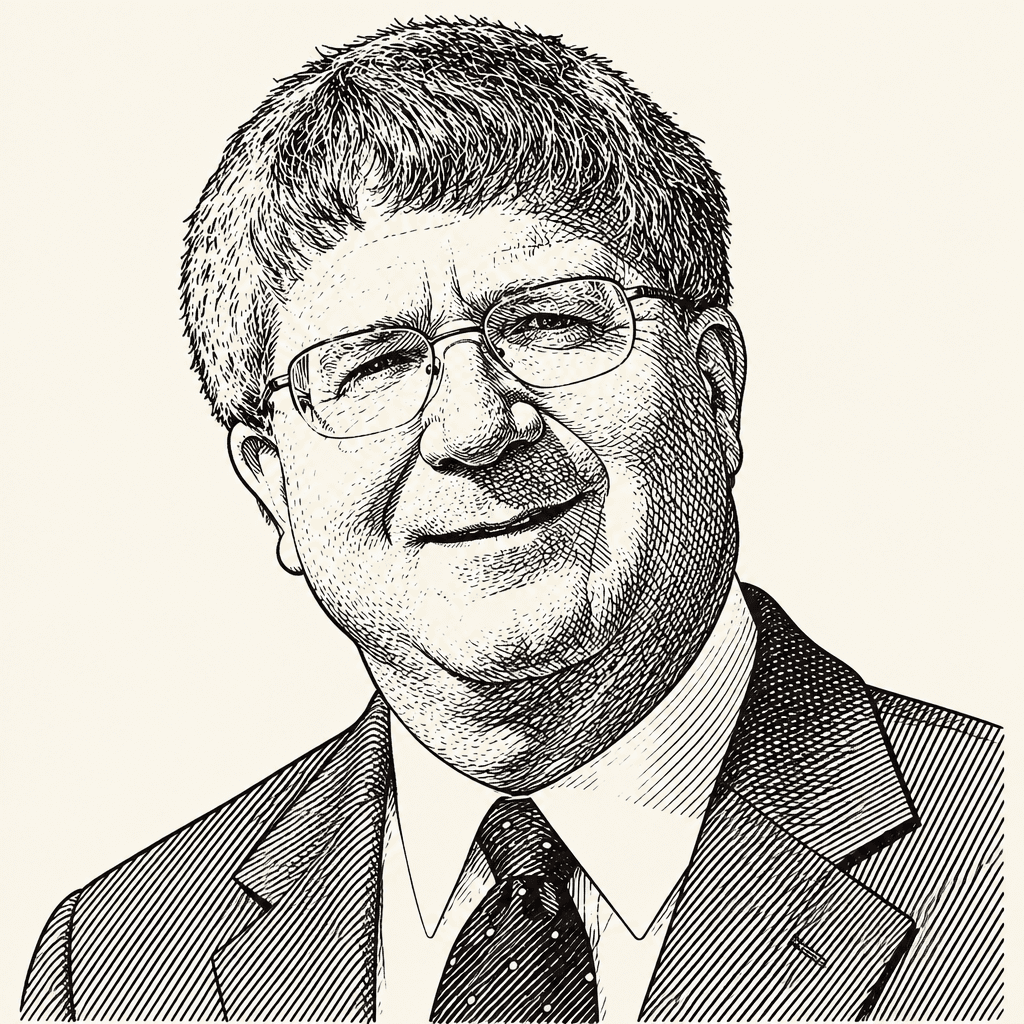
Michael McConnell argues that constitutional checks on presidential power can work, but often move more slowly than the executive branch. In a Hoover Institution discussion, the former federal appellate judge points to immigration enforcement and tariffs as cases where courts challenged administration actions, while arguing that the boundary between lawful executive authority and overreach remains especially difficult to draw in foreign affairs. He also defends a decentralized court system, saying multiple courts should develop legal arguments before a nationwide resolution.
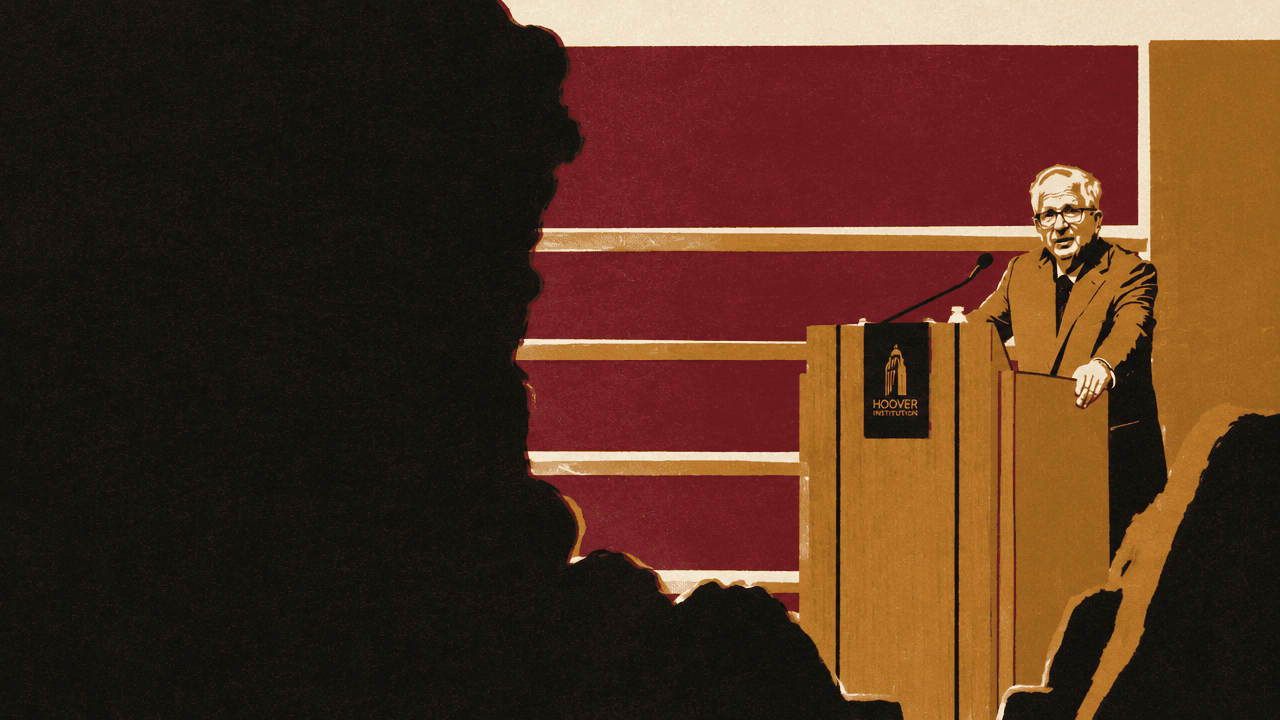
The guardrails are slower than the president
Michael McConnell drew a distinction between executive overreach and executive action that is controversial but lawful. Controversy alone does not establish illegality; courts must determine that through litigation. In the meantime, he said, a president can act faster than the institutions designed to constrain him.

Asked whether the United States could move toward a system in which a popular leader avoids judicial checks, McConnell said American institutions were stronger than many people give them credit for. He did not claim to know whether President Trump was striving for an all-powerful executive. But if that were the aim, McConnell said, the administration was losing on many fronts.
He pointed to immigration enforcement in Minneapolis. Enforcing immigration law, he said, is legitimate. The concern was how enforcement was carried out: McConnell referred to credible claims of due-process violations, people being roughed up, dissenters being silenced, and government power being used in ways he considered more characteristic of an authoritarian regime. He said more than a thousand cases may have been brought in federal court, challenging different aspects of the enforcement.
According to McConnell, courts repeatedly told the administration it was violating the Constitution or the law. He also referred to hundreds of reported instances in which the administration did not comply with court orders. He qualified that description: these were not open declarations that the administration would defy a judge. Rather, he said, officials often did not get around to complying, or gave some explanation for the delay or failure.
McConnell emphasized that the judge leading the federal court in Minneapolis was a longtime Federalist Society member who would be regarded as a conservative Republican. He framed the confrontation not as a court opposing an administration, but as a court opposing what he called the abuse of law and people. Court orders were one source of pressure. He also cited mostly peaceful demonstrations in Minneapolis and elsewhere, and what he described as nationwide revulsion at the conduct.
In McConnell’s account, those pressures helped produce a change: the secretary of Homeland Security resigned, a new person was put in charge in Minneapolis, and the conduct stopped. He said the administration had not tried it again. He described the episode as a moment when the country was close to what the questioner called “Salvadorianism”—a system in which a popular leader evades judicial checks—but said the courts and other institutions helped force a retreat.
He also cited tariffs as an area in which courts and other institutions had countered what he regarded as illegal executive action. The example supported his broader point that institutions can hold, but not necessarily at the speed of the executive. Checks may take considerable time to engage, he said; his advice was to be patient while they do.
Decentralized litigation lets legal arguments develop
The case for limiting nationwide injunctions in Trump v. Casa turns, in McConnell’s account, on the distinction between executive action that is unlawful and action that is merely controversial. Until a legal challenge has been litigated, he said, courts may not know which category a policy falls into. A remedy that applies across the country can therefore reach beyond the dispute a court has considered.
Under the approach he criticized, plaintiffs might lose in several courts, then win in one court that issues a nationwide injunction, shutting down a policy everywhere. McConnell favored allowing courts to reach independent judgments while limiting each ruling to the parties before that court. If courts broadly agree, he said, the result may eventually become nationwide. If they disagree, the legal arguments can develop, and the dispute may reach the Supreme Court after a split among circuits.
McConnell called this process “percolation.” He said it is useful because difficult legal questions benefit from consideration by multiple courts. A nationwide injunction, by contrast, may be issued by one district court on a preliminary basis, without full argument or a developed record. McConnell said that if a nationwide ruling is to settle the law across the country, it should come from the Supreme Court, which is the nationwide court.
He did not describe Casa as eliminating every route to broad relief. Plaintiffs can seek class certification and, if a class is certified, pursue a case on behalf of that class. But they must establish the required elements concerning the class and why the case should proceed in that form. McConnell’s objection was to treating a plaintiff in one case as if that person automatically represented people throughout the country.
The same preference for distributed consideration shaped McConnell’s response to a Canadian student who asked whether the United States should have a single federal court dedicated to reviewing federal administrative action. The student described Canada’s Federal Court as a body that reviews federal administrative actions nationwide, with appeals proceeding to the Federal Court of Appeal and potentially the Supreme Court of Canada.
McConnell explained that people challenging federal action in the United States can bring cases in federal courts around the country because the action may take place in multiple locations. Lawyers may select plaintiffs who live where they want to bring a case. But a decision by one district court does not itself govern the country. He said the U.S. system was deliberately more decentralized, or at least had a retrospective justification in that design: different judges can consider difficult questions before a nationwide resolution.
For McConnell, that dispersion is a feature of the process, not simply a source of inconsistent rulings. Having several judges consider an issue, he argued, is more likely to produce a sound answer than having one judge decide it over a weekend for the whole country. He connected that principle to the broader decentralization of the U.S. system, including its federalism.
Emergency orders should remain provisional
McConnell wished the public understood more clearly that Supreme Court emergency orders are interim, not final decisions on the merits. He said some responsibility for confusion belongs to the Court: in his view, it has chastised lower courts for failing to follow some of its interim decisions.
McConnell considered that inappropriate. An interim order, he argued, governs the case in which it was issued but does not set precedent that lower courts must follow elsewhere. He said the Court seemed to be taking the opposite position. If the Court uses an emergency process, he said, the interim character of its decisions should limit their reach beyond that case. He suggested that the shadow docket had been forced on the Court more than chosen by it.
Drawing on his experience as a federal appellate judge, McConnell described cases that first came before his court on preliminary orders. Judges might initially think one side had the better argument, then reach the opposite conclusion when the matter returned after the facts and legal arguments had been more fully developed. That change, he said, did not necessarily reflect a change of judges. A fuller record could make an initially persuasive answer look wrong.
His concern was not only that the public might mistake an emergency order for a final merits decision. The Court’s own treatment of some interim decisions, he said, can blur that distinction for lower courts as well.
The foreign-affairs line is difficult, not optional
McConnell resisted the suggestion that enforcing separation of powers in foreign affairs is “hyper-legalistic.” He asked what the questioner meant by “hyper,” while defending a legalistic role for courts if that means enforcing the law rather than substituting their own foreign-policy judgment. He acknowledged, however, that the division of authority over military action is difficult to draw.
The founders distinguished total war from more limited actions, McConnell said, including reprisals and retribution. They did not leave a cut-and-dried line between those categories, and he did not think they expected courts to draw one in every case. But he said the founders did expect presidents and Congresses to observe a distinction. He cited George Washington’s view that a president lacked authority to undertake significant offensive operations. A president could use the military in many ways, McConnell said, but initiating a significant offensive operation was not among them.
McConnell described the Korean War as the first major, blatant violation of that understanding in recent times. He contrasted it with the two wars under President George W. Bush, for which Bush sought congressional authorization. President Obama’s nine-month aerial campaign in Libya, by contrast, proceeded without authorization; McConnell said he did not find that convincing. He also said he could not see how the conflict with Iran could be placed on the proper side of the founders’ line.
The distinction, as McConnell presented it, is practical rather than merely technical: when is military force being used to defend the country, prevent further attacks, or stop escalation, and when is the country attacking? The answer may be hard, but difficulty does not make the question an instance of excessive legalism. His emphasis was that the constitutional distinction still matters to the president and Congress.
He treated missile strikes on boats allegedly carrying drugs and the operation to remove Venezuela’s Nicolás Maduro as separate questions. On the boats, McConnell rejected the claim that suspected drug-running amounted to an invasion of the United States. Even if there were evidence that the boats were carrying drugs, he said, the matter belonged to criminal enforcement, not a decision to destroy them with missiles.
He assessed Maduro’s removal differently. McConnell said the United States and international authorities regarded Maduro as an illegitimate officeholder. He called the action “very dicey” under the U.S. separation of powers, while saying it could be justified under international law. He considered the 1989 operation against Manuel Noriega in Panama a close precedent. Those were distinct judgments: the international-law case, in his view, did not remove the separation-of-powers difficulty at home.
McConnell objected to President Trump’s reported statement two days later that the operation was not being carried out to restore democracy, but so that the United States could get the oil. McConnell said he wanted the operation to have been undertaken to restore democracy.
A pardon does not cover future conduct
On a question about Anthony Fauci’s Fifth Amendment claim at a Senate hearing, McConnell said a presidential pardon cannot protect someone from prosecution for future acts. Fauci could not be prosecuted for conduct covered by his pardon, he said, but perjury before Congress after the pardon would not be covered because it had not yet occurred.
McConnell understood Fauci’s position to be that the hearing was a “perjury trap”—an effort to induce him to lie so that he could be prosecuted. But McConnell did not consider that a proper basis for invoking the Fifth Amendment. A witness, he argued, cannot refuse to answer on the ground that he might lie; if that were enough, anyone being questioned could make the same claim. On the legal question, McConnell said, Fauci was not on solid ground.
That conclusion did not mean McConnell thought prosecution was warranted. He said he hoped Fauci would not be criminally prosecuted, largely because he thought such a case would be pretextual: the real aim, in his view, would be to punish Fauci for earlier conduct. McConnell thus separated the scope of the pardon and the availability of the Fifth Amendment from his judgment about whether a prosecution would be appropriate.
The tariff ruling raised a question of consistency
McConnell’s concern about tariffs connected two points in his account of institutional checks. He cited court challenges to tariffs as evidence that institutions were holding up, then questioned whether the Supreme Court had applied its approach consistently when considering the president’s tariff authority.
Asked whether justices had applied their judicial philosophies inconsistently in the cases the questioner named as Barber and Salazar, including a conversion-therapy case, McConnell said Barber involved an issue that had not come before the Court before. Because it was a one-off, he was not sure it made sense to describe justices as inconsistent. Some opinions, he said, were more persuasive than others.
On the tariff issue, McConnell used two different case names in his answer: he referred first to “Learning Resources,” then later called it “Loper Bright Enterprises.” The source does not resolve that discrepancy. His substantive comparison was with rulings against actions by the Biden administration, including student-loan forgiveness, an eviction moratorium, and a vaccine mandate. In those cases, he said, the executive branch relied on broadly worded statutes that had not previously been interpreted or used to authorize the actions at issue.
As McConnell described the Court’s approach in those cases, when an executive invokes an ambiguous statute to authorize a major action that has not been done before, the Court looks for a clear indication of congressional authorization. He considered that a sensible way to handle claims of broad executive power based on vague or unused statutory language.
He believed the same reasoning applied to President Trump’s tariffs. The administration invoked the word “regulate” in the International Economic Emergency Powers Act of 1977, arguing that authority to regulate trade during certain international crises included authority to impose tariffs. McConnell thought that argument resembled the statutory claims rejected in the Biden-administration cases. He would have preferred a unanimous ruling and considered some justices inconsistent for striking down actions by prior administrations while not doing so in the tariff case.