Iran Seeks Hormuz Leverage as War Deepens Economic Strain

Abbas Milani argues that Iran’s leadership sees its ability to disrupt shipping through the Strait of Hormuz as strategic leverage after concluding it cannot defeat the United States and Israel militarily. In the Hoover Institution discussion, he says that leverage coexists with a badly strained economy and divisions within the regime over whether to seek peace and reopen trade or press for concessions. Milani sees the standoff as part of a wider contest over the region’s political future.
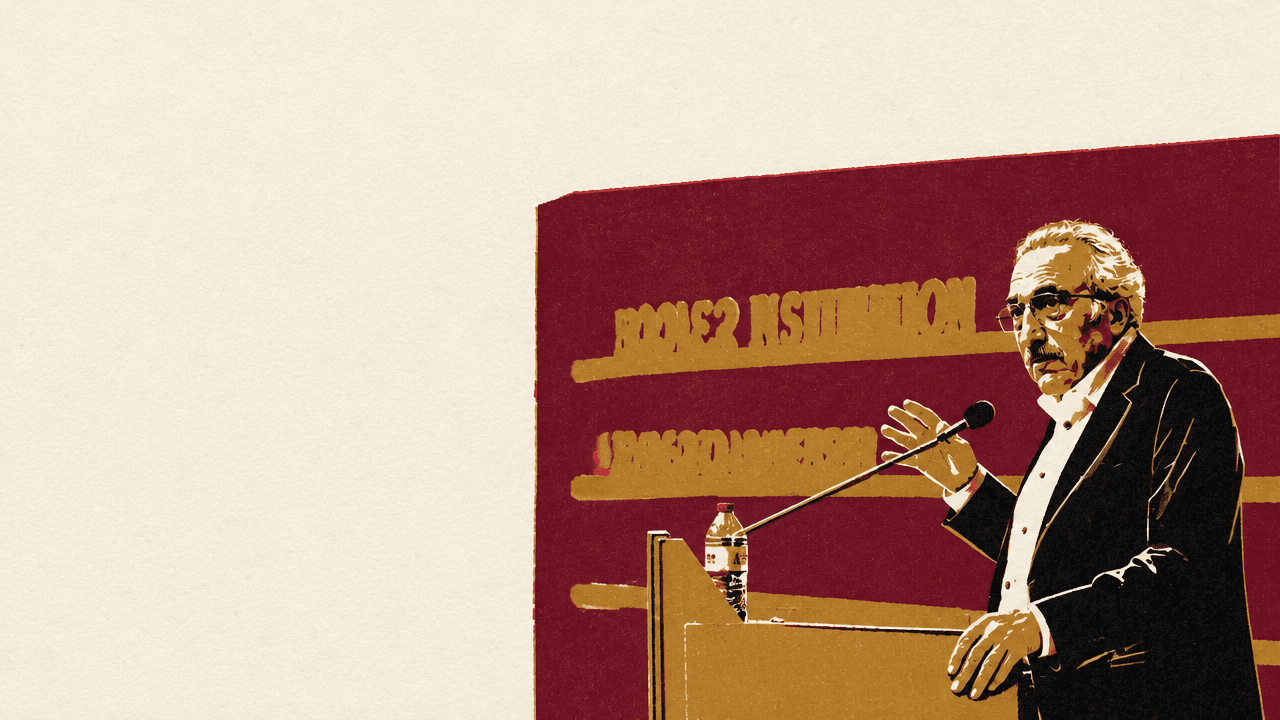
Hormuz has become Iran’s claimed substitute for a nuclear weapon
Abbas Milani describes a shift from “no war, no peace,” discreet negotiations and proxy conflict to a more open sequence of fighting. He says the first, 12-day war saw the United States and Israel destroy much of Iran’s nuclear program, including much of its enrichment capacity and the underground facility at Fordow. A 40-day war followed a period of peace; Milani says he does not understand why either war stopped. He describes the current phase as intermittent attacks by the United States and Iran, including Iranian strikes on US allies and interests.

In the second phase, Milani says, Iran concluded it could not defeat the United States and Israel militarily. It instead targeted what it saw as their vulnerability: the Strait of Hormuz. Iranian officials now describe the ability to close the strait as a weapon equivalent to a bomb. Its disruption, Milani says, affects energy, food and chemical-product shipments, and has raised fears about oil prices and inflation.
Our bomb is, we can close the Strait of Hormuz anytime we want.
Iranian officials, as Milani quotes them, claim victory in both wars. They demand that the United States leave the Persian Gulf and close its regional bases; that Iran control which ships enter and leave the strait and charge for passage; that the United States and Israel stop fighting in Lebanon, Gaza and elsewhere in the Middle East; and that frozen Iranian assets be returned.
Milani doubts those demands will be accepted. He says Iranian officials may be counting on President Trump’s reluctance to enter a prolonged war and concern about higher oil prices. Iran says the strait is closed, while Trump says the United States controls it and passage is free. Milani says very few ships are getting through: he estimates about 10 passed in the previous 24 hours, compared with roughly 100 in an ordinary period without a closure.
Milani says oil prices have not risen as much as might be expected, and points to China as one reason. He describes Beijing as neither openly siding with Iran nor abandoning it: China has offered enough help to signal continued support, while also telling Saudi Arabia and the international community that it does not want Iran to continue the disruption.
Leverage abroad coexists with an economy under severe strain
Iran’s leadership is divided over what the war means. Milani associates the more radical position largely with the Islamic Revolutionary Guard Corps (IRGC), which he says controls roughly half the economy, as well as the military and much of the intelligence apparatus. Other officials, including the president, believe Iran has lost the war and that its biggest challenge is the economy.
Milani cites inflation above 100 percent and a currency that, by his account, has fallen from 7.2 toman to the dollar in 1979 to 198,000 today. He says the currency’s weakness deters investment and expects it to fall further. The government, he adds, cannot supply enough gasoline for domestic use. In cities including Bandar Abbas, Shiraz and Tehran, he says, people wait in long lines for fuel. That shortage is especially stark in Bandar Abbas, which Milani describes as sitting amid some of the world’s richest oil and gas reserves. He says the regime has acknowledged that it cannot produce enough gasoline for domestic consumption and lacks the money to import more.
Some within the regime, Milani says, believe Iran needs to make peace with its people and the wider world and reopen trade. Others think they can force concessions that would preserve the regime and repair the economy while maintaining that Iran won the war. Milani expects that strategy to fail.
As evidence of public discontent, Milani cites a survey conducted outside Iran that reportedly found 82 percent of Iranians would leave the country if they could. He cautions that the poll has methodological problems; even if its figure were cut in half, he says, it would still indicate a widespread desire to leave. In his account, popular opinion has little influence because the regime believes it can use force to stay in power.
The region faces competing visions of its political future
Milani frames the Middle East’s future as a contest between two broad political visions. One is the possibility represented by the Abrahamic Accord: regional states moving away from confrontation with Israel toward coexistence and economic and social reconstruction. He sees the unresolved Palestinian question, particularly the difficulty of a two-state solution, as the main obstacle. Support for such a solution in Israel, he says, declined after the October 7 attacks; Israel’s much more forceful response has made agreement harder. Milani says Saudi Arabia would have joined the accord if there were a possibility of resolving the Palestinian issue, and believes the region may eventually become less focused on Israel’s destruction and more on rebuilding.
The alternative, as Milani presents it, is the Iranian regime’s vision, which he says it calls the “Axis of Evil”: commitment to Israel’s destruction, removing the United States from the region and establishing a political order centered on religious piety rather than secularism and democracy. He calls the choice stark and says the actions of China and Russia, among other factors, will help shape the region’s direction.