California’s Initiative System Has Become a Tool for Organized Interests
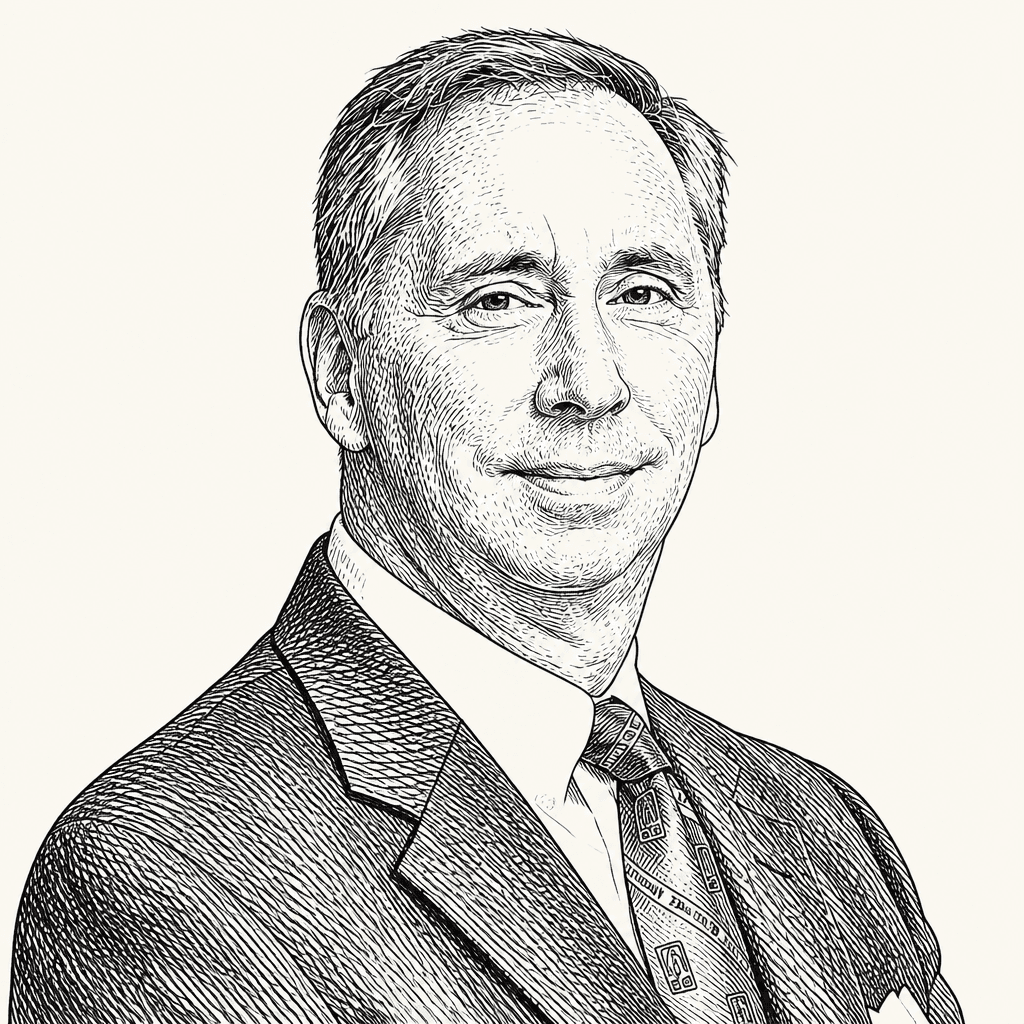
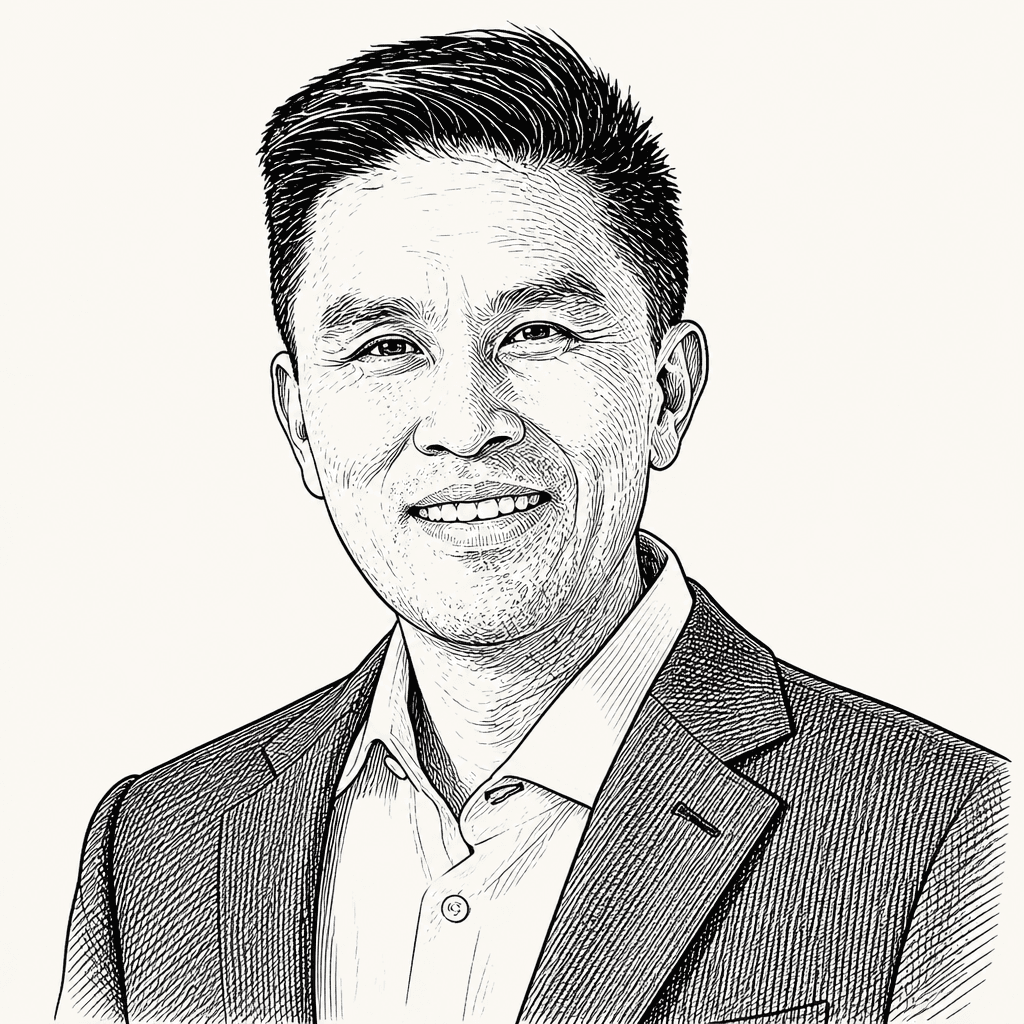
Lanhee Chen argues that California’s initiative system still serves as an escape valve when Sacramento will not act, but has become increasingly dominated by the moneyed interests, consultants and procedural insiders it was designed to bypass. In a Hoover Institution discussion with Bill Whalen, Chen uses the state’s crowded November ballot to show how direct democracy now functions not only as a vehicle for voter policy choices, but as leverage in negotiations, a turnout tool and a way for entrenched actors to preserve power.
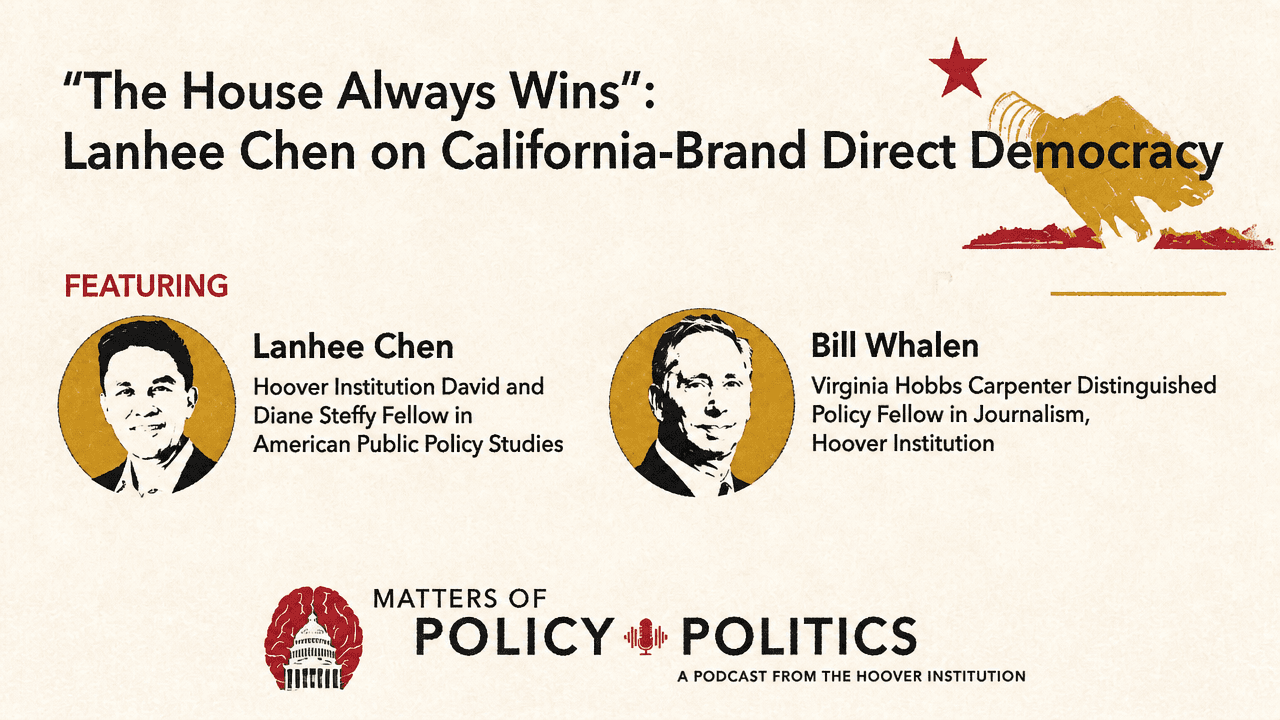
California’s initiative system still works as an escape valve, but not as a citizen process
Lanhee Chen does not dismiss California’s initiative process as a failed Progressive-era artifact. His position is more ambivalent: direct democracy remains useful when Sacramento is unresponsive, but the system now often rewards the interests and professionals it was meant to bypass.
California adopted initiatives, referenda, and recalls as part of Hiram Johnson’s 1911 reform program, intended to curb special-interest control in Sacramento. Bill Whalen frames the present question through the 14 measures headed to the November ballot: whether the process still represents vox populi, or whether it has become “a playground” for individuals and entities with enough money and organizational strength to operate statewide.
The central tension is not only cost. In Chen’s account, initiatives now operate as policy vehicles, bargaining threats, turnout tools, and procedural weapons. The system can still force Sacramento to confront questions it would otherwise avoid, but the same machinery gives organized interests ways to negotiate, confuse, mobilize, or entrench power outside the ordinary legislative process.
Chen’s answer is that the initiative process is both popular voice and special-interest playground. The strongest argument for it, in his view, is that California has “a largely one-party establishment in Sacramento” with its own policy priorities and obligations to certain interests. When the legislature will not consider a policy alternative for political or institutional reasons, initiatives can provide “an escape valve” for voters and policy entrepreneurs.
But the defects are no longer incidental. Whalen notes that the threshold for qualifying a California initiative is tied to turnout in the previous gubernatorial election: about 547,000 signatures for a statutory initiative and about 875,000 for a constitutional amendment, given the lighter 2022 gubernatorial turnout. He cites a Ballotpedia analysis estimating that campaigns spent about $15 per signature in 2024, putting the cost to qualify an initiative around $8 million.
| Measure or figure | Number cited | Who cites it | Why it matters |
|---|---|---|---|
| Statutory initiative qualification | About 547,000 signatures | Whalen | Sets the entry cost for ordinary ballot measures after lighter 2022 gubernatorial turnout |
| Constitutional amendment qualification | About 875,000 signatures | Whalen | Sets the higher threshold for measures that amend the state constitution |
| Average signature cost in 2024 | About $15 per signature | Whalen, citing Ballotpedia analysis | Shows why qualification usually requires substantial financing |
| Estimated qualification cost | About $8 million | Whalen, citing Ballotpedia analysis | Frames the initiative process as inaccessible to most citizen groups |
| Measures headed to the November ballot | 14 | Whalen | Creates voter-load and confusion problems before campaigns even begin |
That cost structure matters because, in Chen’s account, the modern initiative process is “predominantly” a paid-signature-gathering exercise. It has become formulaic: hire the firms, hire the consultants, pay to gather the required signatures, then run a statewide campaign. The process “inure[s]” to the benefit of a limited class of campaign consultants and companies that know how to run ballot-measure machinery.
Chen’s test for reform is twofold: whether the process allows popular opinion to be expressed when Sacramento is not considering it, and whether it is truly citizen-led rather than consultant-led. On the second test, he says California is falling short. On the first, the record is mixed.
The attorney general’s role is one of the clearest pressure points. California’s attorney general writes the official title and summary that voters see for each initiative. Chen argues that this gives the office disproportionate power to shape public opinion, especially because many voters encounter a long ballot only when they are voting and do not have time to study every measure in detail.
Whalen gives a historical example from 2000: Tim Draper’s statewide school-voucher measure was titled by then-Attorney General Bill Lockyer as “School Vouchers, State Funded Private and Religious Education.” Chen’s reaction is that this is exactly the problem. A left-of-center attorney general, he says, can make a right-of-center policy sound “absolutely atrocious” before the campaign argument has even begun.
The attorney general has the ability to shape the opinions of how people feel about an initiative just through that process of being able to write the ballot title and the summary of the initiative.
For Chen, the remedy is not to scrap direct democracy. It is to make the title-and-summary process less political, reduce the dominance of paid signature gathering, improve voter information, and consider procedural rules that reduce confusion from dueling or mutually invalidating measures.
The ballot is not just a policy menu; it is a bargaining table
The 14 measures facing California voters are only part of the story. Several measures that did not reach the ballot are, for Bill Whalen and Lanhee Chen, more revealing about how power works in Sacramento. Whalen describes the day before the ballot was finalized as “crazy horse trading,” comparing it to the NBA draft: measures were qualified, withdrawn, traded away, or used to force deals. Chen’s larger point is that the threat of a ballot measure can be as valuable as passage.
Uber’s withdrawn measure is one example. Whalen says the company had been collecting signatures for an initiative that would have capped attorney contingency fees and limited how much California crash victims can recover in medical costs. It instead reached a deal with trial lawyers that capped medical costs but did not restrict contingency fees.
Chen reads the outcome as evidence of the plaintiffs’ bar’s continuing power in California. Trial lawyers, he says, had the capacity not only to fight and possibly defeat the measure, but to make Uber and rideshare companies look bad. Uber, in his view, did not want that extended confrontation. The settlement demonstrates the broader point: entrenched interests, including trial lawyers and public-employee labor unions, possess “a disproportionate amount of power” over officeholders and policy decisions in Sacramento.
The Howard Jarvis Taxpayers Association’s measure offers another version of the same dynamic. Whalen describes a qualified measure intended to cap real estate taxes and make it harder for local governments to raise taxes. The governor’s office and legislative leaders then agreed to put forward a different constitutional amendment affecting vote thresholds for certain local taxes, while Democrats also agreed to remove a measure that would have made certain tax-limiting measures harder to pass.
Chen places the deal in California’s anti-tax tradition, rooted in Proposition 13, the 1978 property-tax-limiting initiative. For Californians who believe the state’s problem is not insufficient revenue but poor use of existing revenue, anti-tax politics remain potent. But those interests still run into the power of groups that benefit from public spending. A deal can give anti-tax advocates “80% or 90%” of what they want without risking an expensive statewide campaign and possible defeat.
Whalen adds local-election context from Dan Walters’s reporting in CalMatters: in California’s primary, 92 local measures either raised taxes or created bonds that would increase local property taxes for repayment, and only 57.5% passed, roughly four out of seven. Whalen notes that the usual passage rate is closer to 70%.
Chen does not interpret that as a uniform statewide tax revolt. He calls it regional. In the Bay Area, where he lives, local tax increases for schools, libraries, or facilities routinely pass. In parts of Southern California and other more politically diverse regions, he sees more sensitivity to taxes and more skepticism about whether local governments are delivering what tax proponents promise.
Tax campaigns, Whalen says, are politically asymmetric. The pro-tax side can make an emotional argument with teachers, nurses, firefighters, and other “white hats” in society. Opponents often have to make an intellectual argument about economic consequences. Chen agrees that intellectualizing the debate makes it harder to win. He points to Governor Gavin Newsom’s argument against the billionaire tax as an attempt to invert that dynamic: Newsom, in Chen’s account, argues that the measure would hurt teachers and firefighters because its revenue would be directed elsewhere.
The third withdrawn fight involved healthcare unions and hospitals. Whalen says the California Federation of Labor Unions, AFL-CIO, SEIU healthcare workers, and the California Hospital Association agreed to remove two initiatives: one limiting compensation for healthcare CEOs at $450,000, and another requiring healthcare unions to secure direct rank-and-file approval before spending $1 million or more on statewide campaigns.
Chen calls it “you scratch my back, I’ll scratch yours.” The CEO-compensation cap, he says, recurs repeatedly at state and local levels. But the union-spending measure was different because it struck at what union leadership most wants: political power. In his interpretation, union leaders were willing to drop a populist attack on executive pay in exchange for preserving their own ability to spend politically.
Whalen notes that SEIU had tried six times to cap healthcare executive salaries at $450,000 and, since 2012, had sponsored 48 state and local initiatives while spending about $120 million. Most of those measures were either withdrawn or defeated, but the strategy has produced wins, including pressure that helped result in a $25 minimum wage for California healthcare workers.
That distinction matters to Chen. He thinks Californians may be easier to persuade on a healthcare-worker minimum wage than on limiting executive compensation, even in a populist moment. But the broader lesson remains: ballot initiatives are not just vehicles for policy enactment. They are leverage, turnout devices, bargaining chips, and sometimes weapons of mutually assured destruction.
The billionaire tax turns a California measure into a national Democratic test
The measure Bill Whalen expects to dominate the November ballot is the so-called billionaire tax, sponsored by SEIU-UHW. He suggests it could receive more attention than the governor’s race if that race appears undramatic. As Whalen describes it, the proposal would impose a 5% tax on Californians with $1 billion or more in wealth, applying to those living in California as of January 1, 2026. Whalen says the tax would be payable over five years, with about 90% of the money going to healthcare spending.
Lanhee Chen treats the measure as both policy and politics. On policy, he identifies three problems. First, he argues that the threshold may not remain limited to billionaires. In his formulation, “it’s billionaires today, tomorrow it’s centimillionaires, the day after that it’s millionaires.” Second, the benefits are locked almost entirely into one issue area, rather than available for allocation among competing state needs. That, Chen says, is the basis of Newsom’s stated opposition: Newsom wants flexibility over how revenue is used. Third, Chen says the measure would require every California taxpayer to attest annually to net worth, under penalty of perjury and financial penalties, because the tax is assessed on net worth. He calls that invasive and problematic.
The politics are more complicated. Chen says ballot measures often serve as turnout mechanisms. If the governor’s race does not motivate voters, the billionaire tax may energize the Democratic base just as a voter-ID measure may energize Republicans. Measures like these can matter to voters more than candidates do, and parties understand their ability to move turnout up and down the ballot.
The opposition coalition is unusually broad. Chen points to business groups, people directly affected by the tax, and aspirational Californians who may worry that today’s tax on billionaires could become tomorrow’s tax on those with far less wealth. Whalen adds that the California Teachers Association has a straightforward reason to oppose it: the measure directs most revenue to healthcare, not schools. Chen says that is also why the governor has argued that firefighters and teachers would not benefit from this particular tax.
The technology community has become a major actor in this fight. Whalen recalls earlier Silicon Valley mobilization against Proposition 211 in 1996, a shareholder-lawsuit initiative associated with William Lerach. But he sees a more vocal and forward posture now among tech leaders. Chen agrees. He says the tech community is not monolithic, but more founders and executives now factor California’s policy and regulatory environment into decisions about where to locate their businesses and themselves.
For Chen, tech leaders’ concern is not simply immediate self-interest. It is the future of California’s innovation ecosystem: “the next Anthropic, the next OpenAI, the next Nvidia, the next Facebook.” He argues that a wealth tax could accelerate capital flight, destabilize state revenue sources, and weaken California’s role as the “innovation capital of the world.” He also notes that California’s fiscal position is heavily dependent on personal income taxes and especially capital-gains realization, making the revenue base volatile.
The innovation argument is not just about taxes. Whalen raises proposed AI data centers in the Central Valley, where jobs and technological growth run into land, water, and agriculture. Chen adds that Monterey Park, a Southern California community near where he grew up, became, in his account, the first California city or town to pass an initiative banning AI data centers within city limits. He expects more local ballot measures of that kind as populist sentiment grows, which could make it harder for California to lead the AI-driven infrastructure buildout.
The billionaire tax also gives Newsom a national stage. Whalen says Newsom has opposed California wealth taxes consistently, though Whalen also says Newsom has floated a national version that would apply to wealth over $100 million rather than $1 billion. Chen reads Newsom’s Substack argument against the California measure and for his own federal tax concept as the launch of Newsom’s 2028 presidential campaign.
Newsom, in Chen’s view, is trying to create a narrow but meaningful distinction inside the Democratic Party: opposing California’s billionaire tax while supporting a populist principle that billionaires should not pay a lower effective tax rate than hourly wage workers. Chen calls that concept “elegant from a populist perspective” and potentially powerful in a Democratic primary. He says Newsom had to differentiate himself from possible candidates such as Elizabeth Warren, Alexandria Ocasio-Cortez, and Ro Khanna, all of whom Chen treats as likely presidential contenders or figures with reason to occupy more straightforward wealth-tax territory.
Political primaries are about finding massive differences on very narrow pieces of land.
Chen says the California billionaire tax could become a litmus test for the 2028 Democratic presidential field, analogous to the single-payer healthcare debate in the 2020 Democratic primary. Whalen asks whether national Democratic figures might come to California to back the measure, turning it into a national primary fight before the primary. Chen thinks that is precisely why it will draw national attention: Democratic presidential prospects will agree on much, including opposition to Donald Trump, so the disagreements become especially revealing.
Newsom’s opposition could be decisive if he fully deploys his political capital and campaign team, Chen says. It would also give Newsom goodwill with donors who might support a 2028 presidential bid. But Whalen notes the countervailing risk: SEIU has already compared Newsom to Donald Trump, and the union remains influential in Democratic politics. The unresolved question is whether Newsom will campaign visibly against the measure or allow opposition money to do most of the work.
Money is necessary in California politics, but it no longer buys competence by itself
Tech leaders can spend heavily in California politics, but Lanhee Chen warns that political capital does not convert into electoral outcomes as cleanly as venture capital converts into company formation. Bill Whalen raises the problem through Tom Steyer, saying Steyer spent north of $200 million in a failed run for governor in 2026 and north of $300 million in a failed presidential run in 2020.
Chen’s answer is that technology leaders often look at California politics as another solvable system. They are accustomed to solving problems that others said were unsolvable, and they see obvious defects in California’s political structure. But politics is not technology or business. Money matters, but it does not eliminate basic campaign constraints.
His example is San Jose Mayor Matt Mahan, whom Chen describes as having been viewed by some tech leaders as an ideal centrist Democrat for governor. Those supporters put in substantial money, but the scale was not enough to solve the central problem: turning a mayor with limited statewide name recognition into a credible California gubernatorial candidate. Chen says campaigns still involve old rules such as name recognition and low return on many campaign investments.
He does not conclude that tech leaders will fail permanently. He expects them to learn. The question is not whether they can become a counterweight in California politics, but whether they can do it smartly and accept that political systems do not respond to capital as cleanly as technology markets do. Chen’s forecast is that successful technology figures will not continue making the same mistakes; if they remain involved, he expects them to absorb the hard lessons of statewide campaigns.
The mechanics of campaigns have also changed. Whalen describes an older California model: spend heavily on television and radio, send mail, and rely on the party to turn out the base. Chen agrees that this used to be the model: buy “gross rating points” on linear television, especially around high-viewership events like postseason baseball or basketball. He still believes linear television has value, based on his own statewide campaign experience.
But campaigns are increasingly shaped by social media outreach: whether campaigns reach voters on the platforms where they watch content and deliver material that actually moves them. Even that has limits. Chen cites Spencer Pratt’s campaign for Los Angeles mayor, which attracted attention with AI-generated videos. The problem, he says, is that attention is not the same as votes. If the people consuming the content live in Ohio or Utah, they are irrelevant to a California election.
The challenge is scale with precision: reaching actual eligible voters in California with content they will consume and that will affect their behavior. Chen says the space is evolving quickly, and whoever stays ahead of it will have a significant advantage in the state.
Voter ID will be argued as Trump, not procedure
Another November measure, as Bill Whalen describes it, would require California voters to present government-issued ID for in-person voting or provide the last four digits of a government-issued ID designated during registration for mail voting. Whalen notes that 36 states now have voter-ID laws and asks whether the California measure will be a referendum on voter ID or on Donald Trump.
Lanhee Chen says it will be both, but he emphasizes the Trump frame. The concept of voter ID is now so tied to Trump that the California debate will “invariably” become a referendum on him. Chen points to Trump’s recent effort to force congressional consideration of the SAVE America Act, which he describes as a federal version of voter ID, while acknowledging that different proposals have policy nuances.
Chen says the California measure includes ideas he considers common sense for improving election security and trustworthiness. He also says people on both sides have acknowledged that California’s system could work better. But he does not expect that policy conversation to dominate. Opponents, he predicts, will not litigate the details of government IDs or secure mail-voting identifiers. They will ask voters whether they are for or against Trump.
That is a difficult terrain for voter-ID supporters in California. Chen states plainly that being against Trump is the majority position in the state. The question, then, is whether Trump supporters and Californians who support “common sense voter ID” can generate enough turnout to pass the measure despite that framing.
Whalen broadens the point by contrasting California’s Democratic primary advertising, which he describes as relentless Trump-bashing, with a South Carolina Republican primary he observed soon after, where candidates competed over who was most aligned with Trump. Chen says even electoral reform has become a proxy for presidential polarization. A debate about procedure becomes a debate about whether voters like the president.
The voter-ID measure therefore illustrates a second use of initiatives beyond direct policymaking. Like the billionaire tax, it can structure turnout. The substantive question may be election administration, but the campaign frame may be partisan identity. For Chen, that does not mean the policy details are irrelevant. It means the details are likely to be submerged by a larger national conflict that California voters already understand emotionally.
Recall reform is another way Sacramento changes the house edge
The proposed recall-election measure attracts less public attention, but Lanhee Chen and Bill Whalen treat it as institutionally important. Whalen describes it as the kind of technical initiative many voters may overlook, and he suggests ballot order itself can be a game: voters facing 14 measures may become fatigued or, as Chen puts it, “slap-happy.”
Chen’s concern is that the recall measure, as he describes it, would preserve the existing Sacramento power structure. In Chen’s account, if an official is recalled, the position would be left vacant rather than filled through a replacement election, except in the case of the governor, where the lieutenant governor would step in. That would prevent anti-incumbent energy from carrying a replacement candidate into office.
Whalen connects the measure to a longer pattern of institutional rule changes that have fortified one-party control in California. He points to Jerry Brown’s 2011 law removing initiatives from primary ballots unless placed there directly by the legislature; primaries have lower turnout and, in Whalen’s view, gave conservative ideas a better chance. He also cites the change that allowed state budgets to pass by simple majority rather than a two-thirds vote, which reduced Republican leverage in Sacramento. If the proposed recall system had existed in 2003, Whalen says, there would have been no Arnold Schwarzenegger replacement election.
Chen’s metaphor is blackjack. In Las Vegas, he says, the house can increase its edge through small rule changes: requiring a hit on soft 17, reducing single-deck games, altering the odds little by little. Sacramento, he says, does the same thing. Rule changes may look subtle, but they alter the game in ways that make reform harder.
The house always wins.
The point is not that every ballot measure is doomed or that voters never surprise the system. Chen acknowledges that some initiatives have become major political events in California history, including measures related to immigration, school preferences, and social issues. But most are “low-wattage affairs,” and low visibility makes procedural advantage more powerful.
That is why recall mechanics matter. A recall election is not merely an expression of dissatisfaction; it is a pathway for replacing power. If the rules allow voters to remove an official but deny them an immediate replacement contest, the outlet for anti-incumbent energy narrows. In Chen’s account, that kind of procedural redesign is how Sacramento protects itself while appearing to preserve democratic forms.
Reform means reducing manipulation, not ending direct democracy
Lanhee Chen begins from the premise that California should preserve initiatives but make them less vulnerable to money, confusion, and official manipulation. The reforms he entertains are mostly aimed at the transaction costs and information chokepoints that determine who can use the system and how voters encounter it.
He is skeptical of simply raising signature thresholds. Bill Whalen says a higher threshold might create a cleaner ballot, but it could also take “the little guy out of the game.” Chen agrees with the concern and adds another: raising thresholds would increase the role of money and strengthen incentives for professional signature-gathering firms. That would worsen one of the system’s existing defects.
Online signature gathering is more attractive to him. Chen says public research and even voting are moving online in some places, and California should consider whether initiative signatures can be collected through a more stable online platform. The appeal is not simply convenience. If signatures can be collected more easily and securely outside the paid-gatherer model, the process could become less dependent on upfront capital.
He is unequivocal on removing ballot-title authority from the attorney general. Whalen suggests giving the function to a more independent agency, such as the Legislative Analyst’s Office. Chen says he is “100%” for that, citing what he calls “hackery” by recent attorneys general, including Rob Bonta, the current attorney general and Democratic nominee for governor. The goal would be a depoliticized, nonpolitical process for official descriptions.
Chen also raises the problem of dueling initiatives, including measures designed to invalidate other measures. He suggests there may be a way to prevent both from reaching the ballot if one automatically cancels another out, reducing voter confusion and forcing negotiated resolution earlier in the process. Voters are already asked to decide complex statutes and constitutional changes in a single ballot sitting. When measures are written as poison pills against one another, the electorate is asked not only to choose a policy, but to understand how competing legal mechanisms interact.
Whalen adds a more radical reform: time limits for initiatives. If California has term limits for politicians, he asks, should it also have sunset provisions for ballot measures, as Texas has sunset laws for agencies and programs? He acknowledges the explosive implications: Proposition 13 on property taxes, Proposition 209 on affirmative action, and other landmark measures would become periodic fights.
Chen says both sides would dislike a broad sunset rule because both sides have measures they regard as sacred. But he accepts part of the logic. Many initiatives “hamstring” policymakers’ ability to make current decisions about allocating resources. Rather than a blanket time limit, he suggests considering sunset rules for measures that raise revenue, collect revenue, or dictate where money goes. Even that would be polarizing, but he sees some advantage in time-limiting certain fiscal measures.
On Proposition 13 specifically, both recognize that reopening the issue would be one of the largest fights in California initiative history. Whalen imagines the consequences of ending Proposition 13 for long-held Palo Alto property owners locked into old assessments. Chen says the disruption would be massive, and that for many Californians, including “a lot of us,” Proposition 13 is close to sacred.
That exchange captures why reform is difficult. The initiative process is viewed as broken in the abstract, but individual initiatives often become foundational commitments for one coalition or another. Any reform that improves flexibility can look like a threat to hard-won protections. Any reform that preserves those protections can preserve fiscal rigidity. Chen’s approach is incremental: reduce manipulation where the case is strongest, especially around titles, signatures, voter information, and conflicting measures, before trying to rewrite the system wholesale.
Chen is bullish on California, but only with an asterisk
Lanhee Chen closes with a deliberately qualified optimism. Asked whether he is bullish or bearish on California, he says he is bullish because of the state’s natural advantages, human talent, and continuing ability to attract people despite policy failures. But he attaches “a little asterisk” to that optimism.
The list of required fixes is broad: affordable energy, more housing, a business and entrepreneurial environment that makes sense, and a healthcare system he says is under strain because of policy decisions by the current governor and others that have made care unaffordable and inaccessible for too many Californians. He also points to institutional problems: disproportionate power for certain labor units, disproportionate power for trial lawyers, and failures by local governments across the state.
He does not believe one sweeping reform will solve California’s problems. The state needs changes in leadership and mindset across many institutions.
On leadership, Chen is careful not to disparage people who run for office. Having done it himself as the 2022 Republican nominee for state controller, he says candidates deserve some credit for stepping forward. But he doubts the next generation of California leadership will come primarily from the current political class, which he says has shown an inability to think creatively.
He is open to leaders from technology, agriculture, farming, ranching, entertainment, and other parts of the state. What matters is not sector of origin but a different paradigm for what California can be. In his view, the state’s governing approach over recent decades has managed decline rather than reversing it. He worries that the frontrunner for governor is “a manage the decline kind of guy.”
The alternative Chen wants is leadership oriented toward the next challenges rather than maintaining the present trajectory. His optimism rests less on confidence in California’s current institutions than on the possibility that its advantages are still strong enough to be recovered if the state changes how it governs itself.