Experience Made Thomas Sowell’s Arguments About Agency More Persuasive
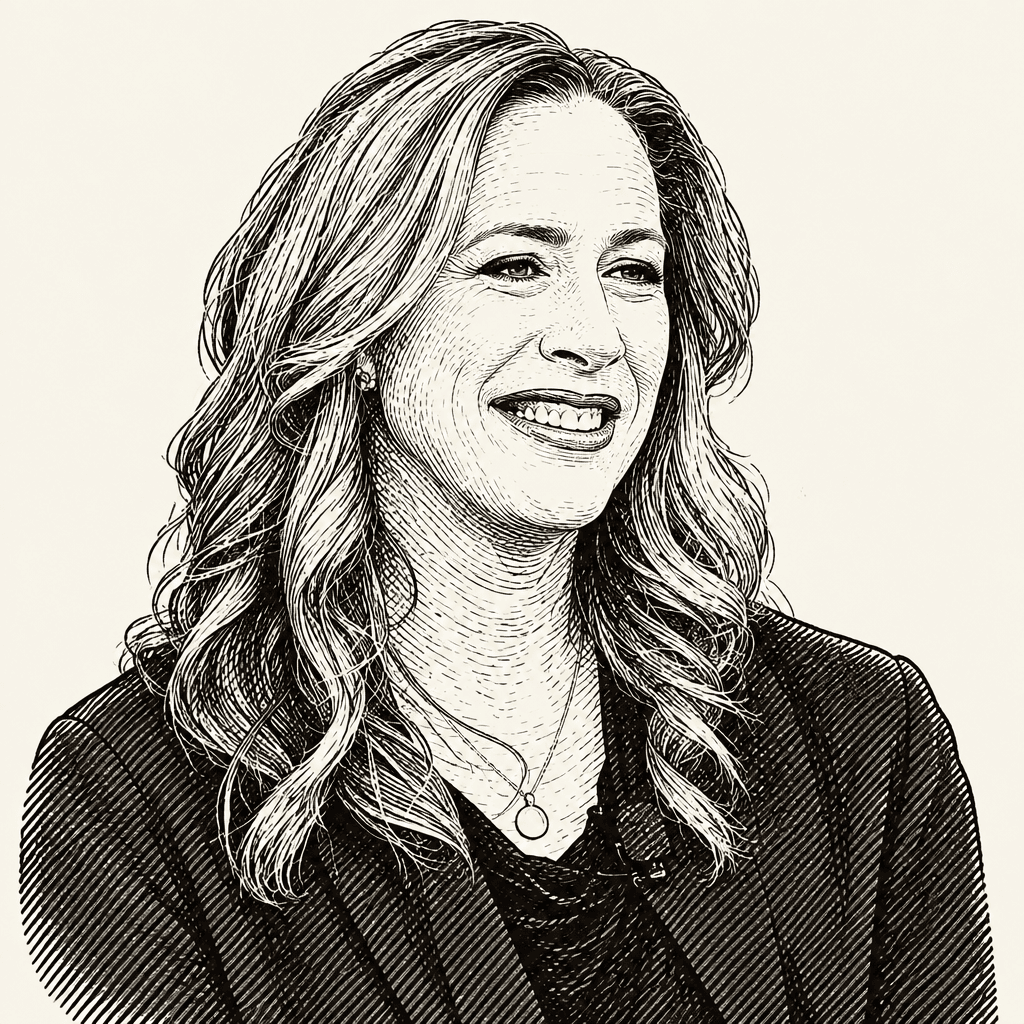 Kimberley Strassel
 Eli SteeleKemi Badenoch
 Mike SteadmanHoover InstitutionThursday, October 15, 202616 min read
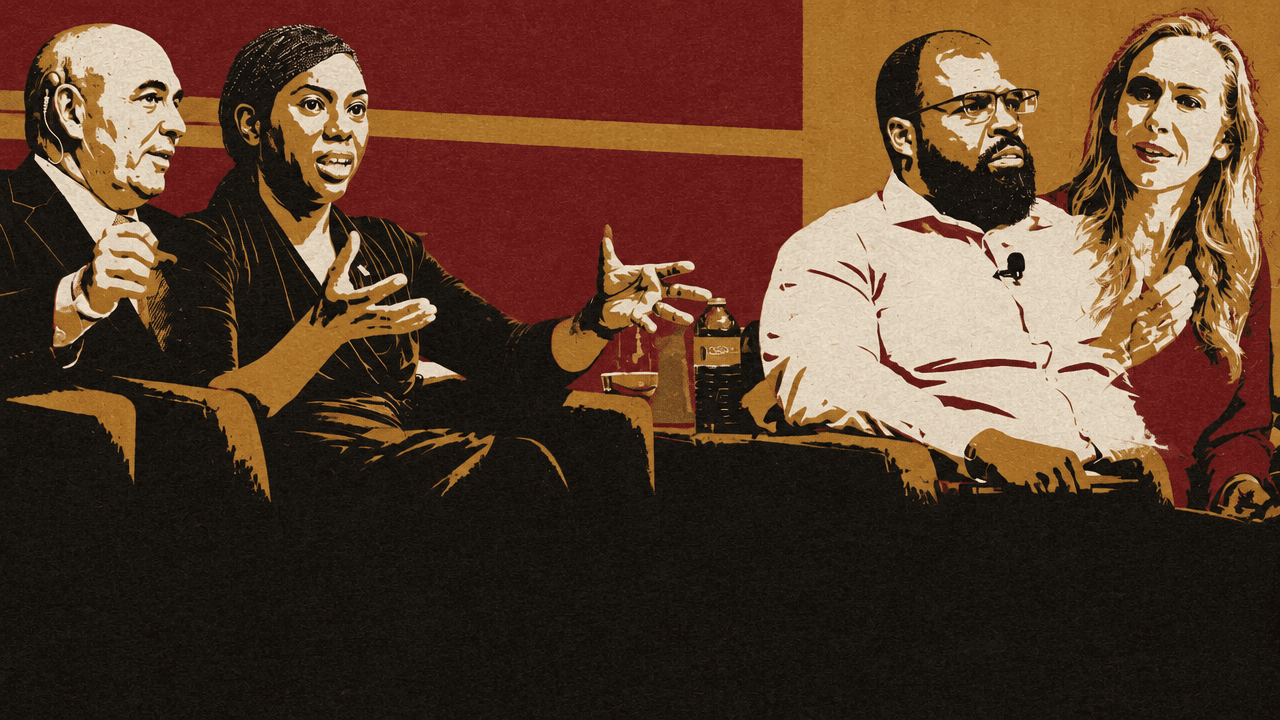
In a Hoover Institution discussion, Kimberley Strassel, Kemi Badenoch, Mike Steadman and Eli Steele traced Thomas Sowell’s influence to arguments that people are not defined by their identities or circumstances—and to readers’ ability to test those arguments against experience. They said wider media access has helped Sowell’s work reach new audiences, while noting that access does not guarantee equal visibility or make his ideas persuasive at every stage of life.
Agency becomes persuasive through experience, not assertion
Thomas Sowell’s influence, as the panelists described it, rests partly on a claim about agency: people are not simply assigned their prospects by their circumstances or identities. But the speakers did not present that claim as a slogan that works on first hearing. Their accounts suggest that experience can change whether someone finds it persuasive—and that access to Sowell’s arguments often depends on routes outside the institutions that might otherwise introduce them.
Kimberley Strassel described growing up in a rural Oregon logging community where no one in her family had gone to college. Her father was an auto mechanic; before college, she thought knowing how to dismantle and reassemble a Chevy small-block engine represented the height of knowledge. Reading A Conflict of Visions introduced her to Sowell’s account of the “tragic” vision. She said she accepted the description, and that ideas she associates with Sowell now recur in editorial-board discussions at The Wall Street Journal. His reach, she added, crosses professional and generational lines: her children talk about him at dinner, and her husband, a metal-fabrication business owner, listens to Intellectuals and Society while working in his shop.
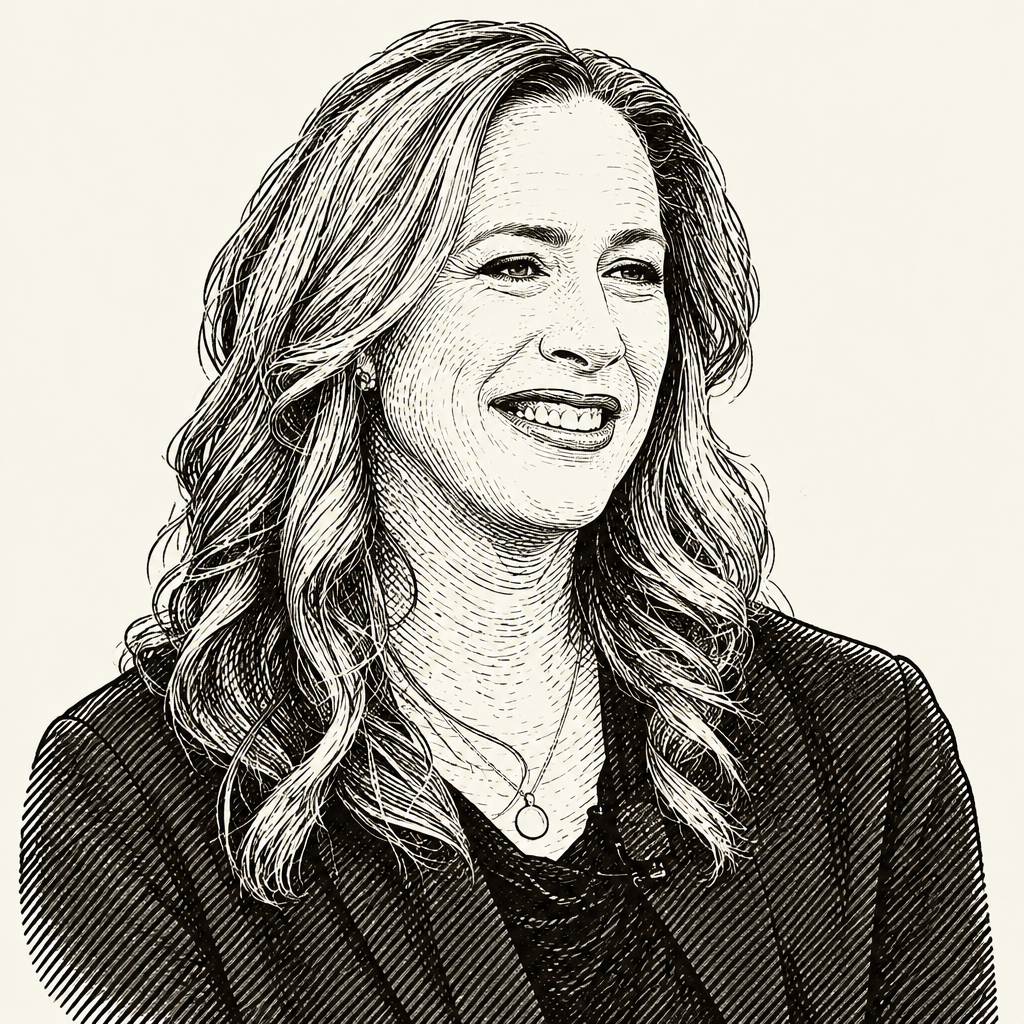
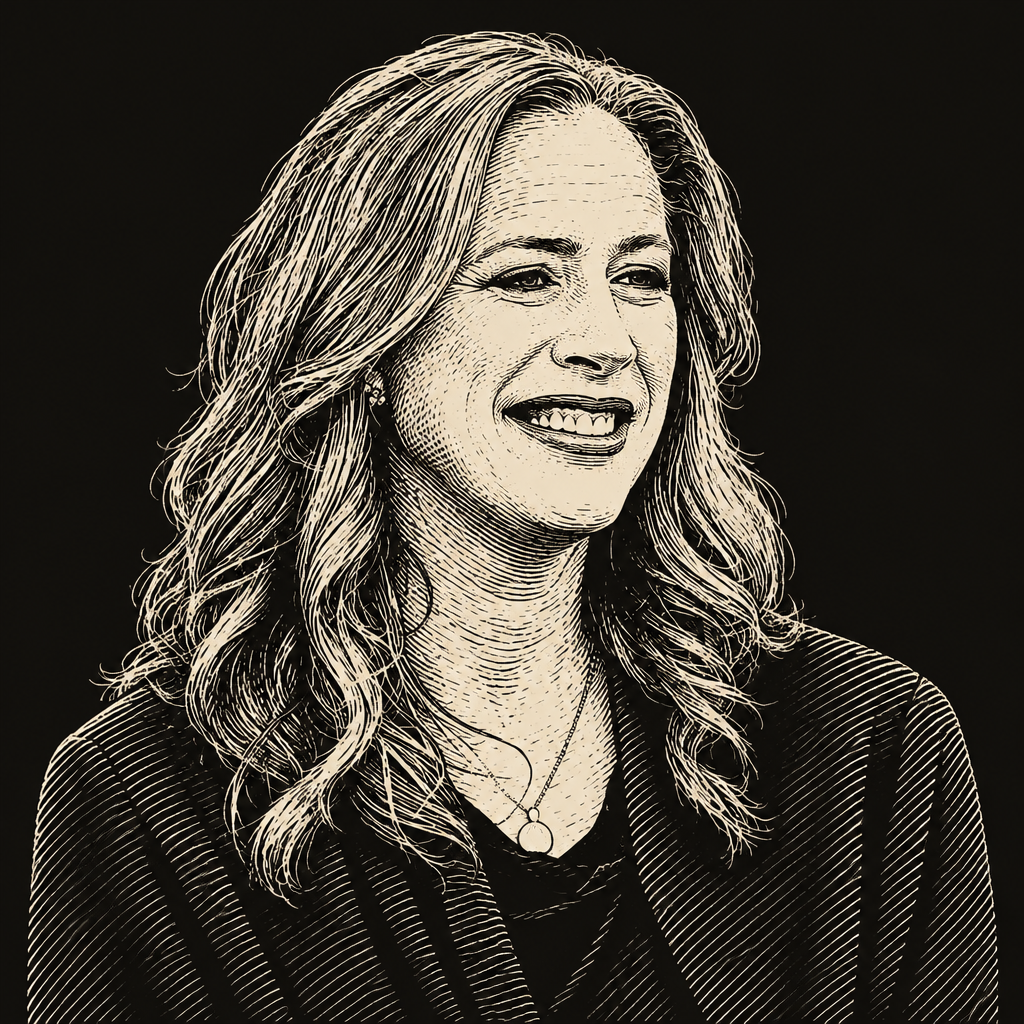
Kemi Badenoch found Basic Economics after a colleague at a software company challenged her knowledge of economics. She said the book helped her understand why countries could be poor, including Nigeria, where she spent much of her childhood. She later realized Sowell was Black. What struck her was that race did not organize the books she had read; he addressed it, she said, when it mattered to the argument.
For Badenoch, that distinction bears on how people are encouraged to understand themselves. She said she had grown up in a country where everyone was Black, and that, after returning to the United Kingdom, she had to learn to “think like a minority.” She came to see as harmful the idea that people should regard themselves as separate from others rather than look for what they have in common. Sowell’s writing, she said, helped her think through that difference.
Mike Steadman encountered Sowell through YouTube clips of Firing Line, after studying history at the Naval Academy and American studies at Rutgers–Newark. His experience running a nonprofit boxing gym in Newark made questions of choice and circumstance concrete. The gym was his primary source of income when the pandemic removed its market. Steadman said businesses fail for two main reasons: there is no market need, or they run out of cash. He then bootstrapped another business, which he said became profitable from the outset, and taught himself podcasting.

That experience changed his view of the choices people make, but Steadman did not present agency as an easy answer to hardship. He said “victimhood mentality” can be difficult to drop. Working with children at the gym also showed him differences between those who had support systems and those who did not. Arguments like Sowell’s once felt to him like “a thumb in your eye,” he said, including when friends at the Naval Academy made similar points. Experience changed how he heard them.
Steadman connected that change to what it can feel like to encounter Sowell before having context for his arguments. He described growing up with circumstances that, “on paper,” appeared to predict against success: a single-parent home, being raised by his mother, and not knowing his father. At the Naval Academy, he said, friends made arguments like Sowell’s that he initially experienced as personal attacks. Later, working with children in Newark, he saw how support systems and culture could affect their prospects. He said those experiences did not make hardship unreal; they altered how he interpreted explanations that treated disadvantage as destiny.
Badenoch likewise stressed that a reader may need to encounter Sowell’s ideas at the right time. She described Katharine Birbalsingh, whom she had known as a self-described Marxist, as someone who became receptive to Sowell after working in a difficult school. Birbalsingh later ran a school with a heavily disadvantaged intake, including many ethnic-minority and Muslim pupils. Badenoch said it emphasized discipline, structure, and high expectations, and that parents were eager to get their children in. She said its pupils were getting into Oxford and Cambridge at a higher rate than pupils at some prominent private schools, including Westminster and Eton.
Badenoch presented the school as an example of practices she said were often described as bad for Black children: strict discipline, structure, and the expectation that pupils should do their best academically. She said Birbalsingh’s school expected pupils to earn As and removed those who misbehaved. In her account, those expectations and the school’s results challenged the idea that disadvantaged pupils should be shielded from demanding standards. She also said Birbalsingh might have resisted Sowell’s message earlier in her life, before her experience in education made her receptive to it.
These stories give the panel’s appeal to agency a particular shape. The speakers did not say that circumstances are irrelevant; Steadman explicitly described hardship and support systems. Rather, they argued that experience can reveal how much is obscured when people are treated as products of a fixed identity or forecast. For Badenoch, that realization came through reading and later through examples in education. For Steadman, it came through business and work with children. Their accounts also explain why a book can be rejected at one point in a person’s life and become compelling later.
Access opens the canon, but visibility does not settle the argument
The panelists linked Sowell’s reach to a change in who can find and circulate ideas. The internet, in their accounts, weakens some forms of gatekeeping; it does not ensure that every argument is heard, or that what people encounter gives them a balanced picture of society.
Steadman said his African American studies education introduced him to figures including Martin Luther King Jr., Malcolm X, Booker T. Washington, and W.E.B. Du Bois, followed by writers such as James Baldwin and Richard Wright. He did not encounter conservative Black thinkers such as Sowell and Glenn Loury through that education; he found them online. That absence led him to ask who decides which voices enter the canon.
He argued that people should be able to hear different perspectives and judge for themselves. He recalled visiting a Harlem bookstore and asking for books on business and entrepreneurship. The response—that the store did not do self-help—struck him as a narrow view of what belonged on its shelves. He also praised Firing Line for hosting people with very different views, recalling appearances by Martin Luther King Jr., Muhammad Ali, Eldridge Cleaver, and Huey Newton. He tries, he said, not to judge people without first finding context for himself.
Kimberley Strassel argued that the expansion of media channels has helped ideas circulate. When she first found Sowell in college, she said, there was no online search to guide her; she had been fortunate to find his book in a student bookstore. Without that, access might have depended on a newspaper review. She recalled a media environment with only a few television stations and argued that the growth in channels made it easier to encounter work older forms of media might not have carried. She saw the internet’s role in circulating Sowell’s work as one example of the wider benefits of expanded access.
Eli Steele addressed the claim that conservatives had ceded film and media by arguing that they should make more work. He said media often reinforces fixed identities, in part because there is money to be made from material that degrades Black people. But he rejected the idea that conservatives have no way into the field: technology now makes it possible to produce work that would have been difficult to make a decade earlier. He and his father are making documentaries; Sowell, he said, put his ideas into books.


Steele also described the pressure that can meet arguments outside a prevailing account. He recalled his father telling him that, when a student gave him a Sowell book in the 1970s, he threw it across the classroom, then later picked it up and read it. Steele used the story to illustrate the difficulty of engaging with ideas that fell outside accepted views. He recalled advice his father attributed to Milton Friedman: keep writing and working, and society will catch up. Sowell’s refusal to follow pressure to conform was part of his importance, Steele said.
The panel’s disagreement about social media sharpened the distinction between access and attention. Strassel emphasized the benefits of wider access: more channels make it possible to find books and arguments that might otherwise remain obscure. Badenoch agreed that social media had helped people find Sowell, but said that repeated exposure to images of racist abuse and disorder made it harder to persuade young people that Britain was not a racist country. She said young people who had not experienced earlier decades could come to see the present through the images and posts repeatedly shown to them. She also warned that hostile states and other actors pushed unrest online, and argued that the political right was not doing enough to counter echo chambers or coordinate its response. Any effort to respond, she added, should remain within the bounds of free speech.
Those positions are not simply opposing verdicts on whether social media is good. Strassel’s point was that expanded channels can help ideas reach people who would not encounter them through older media. Badenoch’s was that more channels also circulate repeated, often distressing images that can shape a young person’s view of society. The same expansion that makes Sowell easier to find, in her account, does not make his arguments equally prominent or determine what else competes for attention.
The panel also considered why contemporary debate around Black intellectual traditions can be hard to see. An audience member asked why the debate associated with Washington and Du Bois did not have a more visible counterpart between Sowell and other Black intellectuals. The question treated their disagreement as potentially productive: why, the attendee asked, could a similar exchange not take place now?
Steadman answered that the debates are happening, but that not everyone is given a platform. He said that people looking for Black leaders often ask where the next Martin Luther King Jr. will come from, while many scholars and writers have been publishing without becoming widely known. He pointed to independent media and podcasts as places where contemporary versions of these arguments can be heard. He had spent hours listening to Coleman Hughes, he said, but such work was not yet commonplace. The task, in his view, is to help spread it.
Steele answered from a different angle. In his broad characterization, the choice had been made to favor politics over development, and he believed that this helped explain why Washington’s arguments were marginalized. He said Washington had been smeared over the Atlanta Compromise and that, as a child, he understood that the subject was difficult to raise. Steele described politics as offering a form of immediate reward while development required sustained work. He pointed to people working on the South Side of Chicago, including a pastor building a community center, and to efforts to improve schools with low levels of grade proficiency. Such work, he argued, means addressing basic problems and persuading people shaped by generations of dependency that development is possible.
Steadman’s emphasis was on the difference between a debate existing and receiving a platform. Steele’s was on the historical and political choices he believed had favored identity-based politics over development. Neither answer made the question of access disappear: even when the arguments are being made, audiences may not hear them. But Steele’s response added a further claim about what he saw as the stakes of the debate—whether public attention goes toward political representation or toward building institutions and capabilities.
Sowell’s arguments travel, but the histories do not transfer unchanged
Badenoch said Sowell helped make the idea of a Black conservative seem ordinary rather than rare. In her view, people are often told that their politics should follow from their skin color. Many Black people she knows are socially conservative, she said, but are encouraged to think that conservatism is not “their thing.” Seeing different perspectives online can help people break out of a “straightjacket” of assumptions about what they are supposed to think.
She also rejected the idea of a universal Black experience that dictates someone’s music, clothing, interests, or worldview. Being Black is sometimes equated with being urban, she said, even though most Black people in Africa are not urban and live in rural communities. People who do not conform can be told they are not “really” Black. In her account, the standard shifts from skin color to a prescribed culture and way of seeing the world.
Badenoch distinguished the histories of minorities in the United Kingdom and African Americans in the United States. She said minorities in the UK had chosen to move there, whereas that was not the African American experience. She did not deny prejudice or discrimination in Britain; she said she had experienced more prejudice based on ethnicity in Nigeria. Her argument was that accounts of ancestral guilt and colonialism do not transfer neatly from one country to another.
She said American political language had become more prominent in British debate, including language associated with Black Lives Matter and critical race theory. Badenoch described the language used during what she called the 2020 BLM “mania” as imported and, in her view, poorly fitted to British history. She noted that the term BIPOC refers to Black, Indigenous, and people of color, while she said Britain’s indigenous people are white. She also cited young people in Britain using the American term “the feds” after encountering it in television and other media.
In Badenoch’s view, oppressor-victim frameworks can impose a narrative on a society with a different history and demographic composition. She cited being called “the black face of white supremacy” by a Labour MP as an example of what she regarded as a contradiction in her opponents’ thinking: they called the Conservative Party racist, she said, but struggled to explain a Black woman leading it except by treating her as a tool of racism. She said she wanted people to see an alternative. Her claim was not that prejudice did not exist in Britain, but that American accounts of race and history could not simply be applied to the UK without regard to its different circumstances.
Steele placed Sowell’s work in the context of the 1960s and the political arguments that followed. He said the United States was confronting slavery, segregation, the treatment of women, and environmental damage, and that the pressure to move away from those wrongs was considerable. He also described the rise of movements including Black Power and Chicano activism, alongside the development of identities organized around group membership. In Steele’s interpretation, the country began to describe people as “something-American,” and identity based on immutable characteristics became a source of political power.
Steele characterized the resulting framework as one in which white people were treated as morally suspect and Black people as victims. As an example, he recalled women-owned businesses identifying themselves during the George Floyd protests as not being “the white males.” He interpreted that as an effort to claim a position in an identity hierarchy. His account presented identity politics not as a neutral description of group experience, but as a system of categories that could shape who possessed moral authority.
He also described the consequences for his father, who, Steele said, lost friends after raising the question of why so many Black students at San Jose State University needed remedial English. Steele characterized his father’s point as an argument that something was wrong and that the system should change, not an attack on the students. He connected the reaction to a broader climate in which criticism of outcomes could be treated as an attack on the system itself.
Steele’s interpretation of Sowell’s argument was that people had failed the system and American principles, not that those principles should be discarded. He described the traditions behind those principles as drawing on Jewish thought, the Enlightenment, the Age of Reason, and Greek ideas. In the political climate he recalled, defending the system could be treated as defending oppression. Sowell’s willingness to argue otherwise required courage, Steele said.
Badenoch’s distinction between British and American histories and Steele’s account of American identity politics share a concern about treating group identity as a complete explanation. But their accounts are not interchangeable. Badenoch emphasized the danger of importing American narratives into a British setting without accounting for different histories. Steele described a U.S. political context in which, as he saw it, identity categories had become a source of power and arguments for preserving American principles could be branded as oppressive. The common thread is their objection to treating identity as a fixed guide to how people think or what they can achieve; the grounds and national contexts of that objection differ.
Changing one’s mind is part of intellectual agency
An audience member asked whether permanent digital records make it harder for public figures to admit that they have changed their minds. Old statements can be retrieved and used to call someone a hypocrite, the questioner argued, even when new experiences or facts have led that person to a different conclusion. The question also raised the possibility that, in an age of AI and rewritten histories, preserving the ability to change position publicly might become more urgent.
Mike Steadman called growth normal. He invoked Muhammad Ali’s line that a person who sees the world at 50 as they did at 20 has wasted 30 years. People change through lived experience, Steadman said, and should not be held permanently to views they held when younger. He also cautioned against treating social media as a complete account of someone’s thinking: a short post is not the same as an extended conversation or a long-form argument. Social media is curated, he said, and should not dictate how people live.
Eli Steele said some people face particular pressure not to change, including those whose public identities are built around race or gender and those who make money from an audience that expects the same positions. He described this as a form of audience capture. But he had also seen people publicly reconsider their views. Some had told him that they once thought his father was a monster and later listened to him and changed their minds. Steele also cited people reconsidering their earlier views of Charlie Kirk. In his view, social media does not remove the possibility of change: people still differ in whether they are willing to reconsider.
Kimberley Strassel connected the question to Sowell himself, whom she said had changed his mind fundamentally. She also pointed to other public figures discussed at the event, including Justice Clarence Thomas, who had begun in one position and later changed. Their earlier views were documented, she said; what mattered was the willingness to acknowledge the change. The important step was to say, “I changed. I learned. I evolved.” Strassel told her children that anything they put on a phone could remain there for the rest of their lives. But the possibility that an old position will be brought back, she said, should not remove the courage to acknowledge learning.
The speakers’ answers differed in what they emphasized. Steadman focused on the ordinary role of experience in changing a person’s views and cautioned against treating social media as a full record of thought. Steele pointed to identity and financial incentives that can make someone’s audience expect repetition, while noting that public reversals still happen. Strassel stressed the example of people who change their positions and then have to say so plainly, despite the risk that their earlier words will be used against them.
Steadman added a further example from the Naval Academy, where he said 18-year-olds from different backgrounds could argue intensely and form first impressions of one another. As they grew older, they might recognize that some of their views had come from their parents or from inherited biases. People need time and space to form their own opinions, he said.
The exchange brings the panel’s account of agency back to public argument. If people are to judge ideas for themselves, they must be able to encounter arguments outside familiar institutions; if they are to learn from those arguments and from experience, they must also be able to revise their views without being treated as permanently bound to an earlier position. For the speakers, Sowell’s influence lies not only in the conclusions readers take from his work, but in the permission to think beyond roles assigned to them.