Coordinated Satellite Autonomy Could Reduce Collision Risk in Crowded Orbit
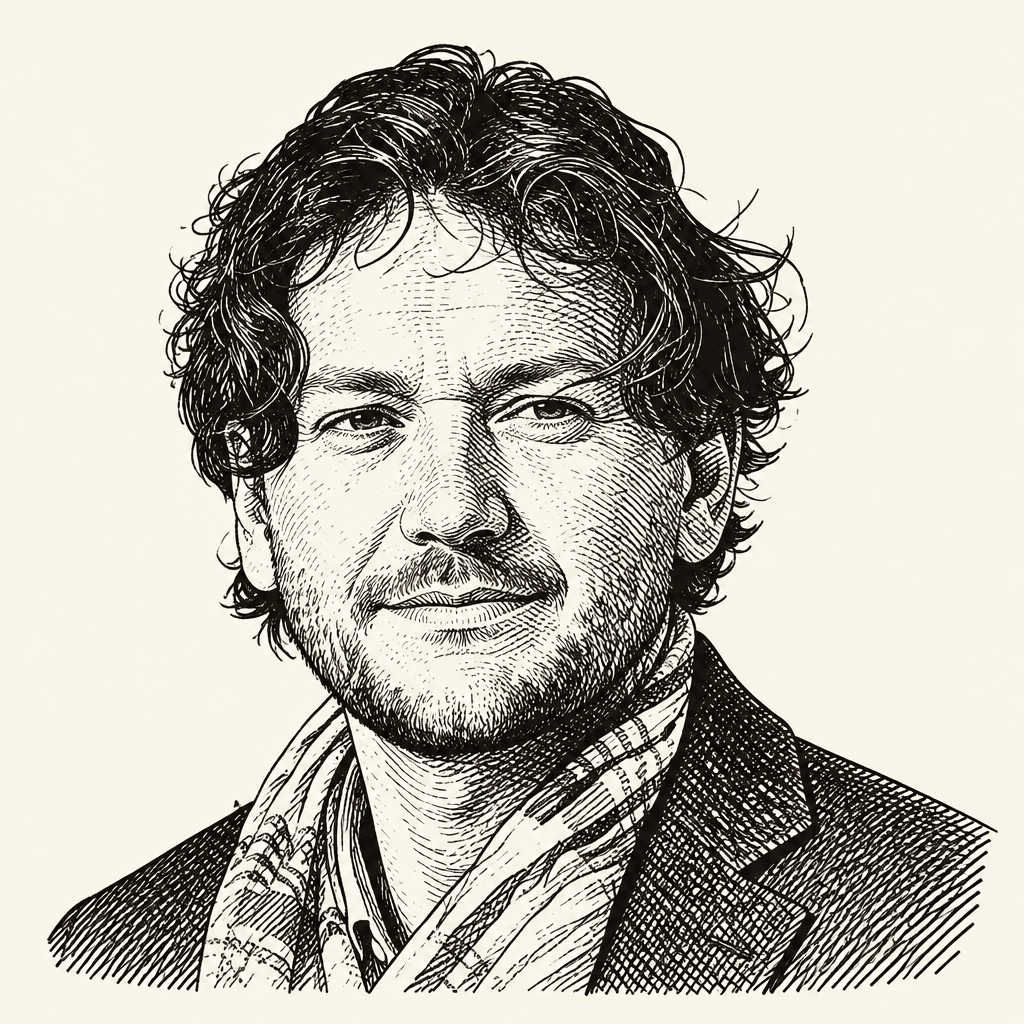
Simone D’Amico argues that low Earth orbit’s growing satellite traffic is dangerous not simply because there are more spacecraft, but because operators lack reliable ways to track and coordinate them. He warns that collisions could set off debris cascades that threaten both access to orbit and satellite-dependent services, and says autonomous, coordinated spacecraft could help manage traffic at scale. But D’Amico says the technology must be paired with shared standards, data-sharing obligations and stronger governance, with the United States taking the lead.
The danger is not simply more satellites; it is unmanaged traffic
Simone D'Amico argues that the central space-security problem has shifted. Since Sputnik’s launch in 1957, the number of countries operating in space has grown from two to more than 100. Thousands of satellites are launched each year, and tens of thousands of commercial spacecraft are planned for the coming decade. Yet the policy framework was built in the 1960s, when fewer than 100 satellites were launched annually.
The treaties governing space, D’Amico says, do not address large-scale proliferation, routine close approaches between satellites, or commercial mega-constellations. They leave gaps in safety, coordination, and accountability. A European Space Agency chart tracks the growth of space objects by type from 1960 to 2010. Against that historical backdrop, D’Amico projects that the number of low Earth orbit satellites could exceed 70,000 by 2031.
For D’Amico, the analogy is road traffic, not a simple count of vehicles. Millions of cars can share roads because drivers operate under rules such as stop signs and right of way. Space has no comparable system. Objects in low Earth orbit travel at speeds of up to 8 kilometers per second, while ground-based radar and telescopes have limited ability to track them. Satellites may maneuver several times a day; collision warnings number in the millions each year, and hundreds of thousands of avoidance maneuvers are conducted every few months. Even so, coverage gaps leave parts of orbit poorly observed. Estimates of an object’s position can become uncertain by kilometers within hours, making timely, reliable avoidance difficult.
A collision can put both orbital access and everyday services at risk
The resulting danger, D’Amico says, is a possible path toward the Kessler syndrome: a collision creates debris, which raises the likelihood of further collisions and still more debris. A single event could trigger a chain reaction, threatening crewed missions, including the International Space Station and China’s space station.
The consequences would extend beyond spacecraft. D’Amico lists global finance, navigation, communications, weather forecasting, and disaster monitoring among the services that rely on satellites. Debris-generating events could also escalate tensions between space-faring nations operating in an increasingly contested environment. In the most severe scenario he outlines, debris could make entire orbital regions inaccessible for decades.
The problem is compounded by the way spacecraft are currently managed. Most still operate as remote-controlled machines, running scripts and relying on ground operators to send commands over long time horizons. There is little real-time coordination between operators or among satellites themselves. Collision avoidance, D’Amico says, still depends on old catalog formats and manual emails exchanged between mission teams.
On the policy side, he sees a similar gap: no nationally or internationally agreed rules for responsible behavior in orbit. Existing voluntary guidance is not enforceable, and there are no binding standards for satellite proximity operations, debris mitigation, or autonomous maneuvering.
Autonomy offers a way to coordinate at the scale the problem requires
D’Amico’s proposed response is not a single device or maneuvering rule. He argues for an integrated autonomy system that lets satellites sense, decide, and act on orbit as a coordinated network rather than as isolated spacecraft. The goal is to manage congestion and avoid collisions in real time.
That capability could serve several purposes. Autonomous proximity operations could extend the working life of spacecraft, support refueling and repair, and remove debris. Coordinated satellites could jointly identify and track objects in orbit. Multiple spacecraft could also act as a scientific instrument, improving remote sensing and the understanding of space weather.
D’Amico points to NASA’s Starling mission as evidence that multi-satellite autonomy can work in orbit. Launched in July 2023, the mission consists of four propulsive nanosatellites and was still operational at the time of his remarks. D’Amico helped lead and co-develop the mission; he and his students developed its distributed navigation system. Starling demonstrated cooperative autonomy across multiple spacecraft, including individual and swarm-level navigation, coordinated decisions, maneuver planning, and execution. The dashboard described in the presentation reports Starling-3 tracking a debris target labeled H-2A DEB at a distance of 306 kilometers and a relative velocity of 7.1 kilometers per second. The demonstration, he says, used avionics designed for low size, weight, and power.
Scaling remains the challenge. Drawing on large-scale, high-fidelity simulations informed by Starling flight data, D’Amico says autonomous coordination can substantially reduce collision risk. In those simulations, hundreds of vision sensors could achieve global coverage of the space-object population within hours, with revisit times of minutes.
D’Amico’s formulation is that “no single technology can stabilize the environment” and that only an integrated autonomy stack can do so.
Technical coordination needs governance and safeguards
No operator or nation is rewarded for contributing to a global solution, D’Amico says, while the international system lacks mechanisms for shared responsibility. He calls for an independent space-traffic coordination system, common standards, and data-sharing obligations. Over time, onboard vision and computing could enable satellites to avoid collisions autonomously—a development he compares to safety belts, airbags, and lane-assistance systems becoming standard in transportation.
That technical proposal does not resolve the governance problem. A hacked or spoofed AI-driven spacecraft could take actions with immediate physical consequences in orbit. Biased or incomplete training data could also produce unsafe behavior in conditions the system has not encountered. D’Amico argues that autonomy therefore needs standards for responsible operation, alongside coordination between operators.
He points to working groups at NASA and the U.S. Space Force as efforts to define responsible autonomy, but says their guidance is advisory rather than binding. The UN’s Long-Term Sustainability Guidelines and the Artemis Accords address transparency and data sharing, in his account, but do not establish enforceable rules for autonomous maneuvering or machine-to-machine coordination. He says there is no global governance framework, certification process for autonomous flight software, or requirement for interoperability and real-time coordination among operators.
D’Amico argues that the United States should lead by establishing norms, data-sharing standards, and interoperable systems. In his proposal, an independent coordination system would provide a way to manage traffic, while common standards and data-sharing obligations would give operators a shared basis for using it. Autonomous onboard collision avoidance could then build on that coordination, rather than substitute for it.