Clinton’s Russia Policy Began With Cooperation, Not NATO Encirclement


Rose Gottemoeller, a former senior U.S. arms control official and NATO deputy secretary general, uses her book Security Through Cooperation to challenge the Kremlin’s account of post-Cold War U.S. policy toward Russia. In her telling, the Clinton administration’s first instinct was not encirclement through NATO enlargement but an effort to build a durable security, economic and political relationship with Moscow, rooted in nuclear risk reduction, space cooperation and practical diplomacy. That argument leads to a more conditional conclusion about the present: cooperation served U.S. security before, she says, but cannot be restored in full while Vladimir Putin remains in the Kremlin.
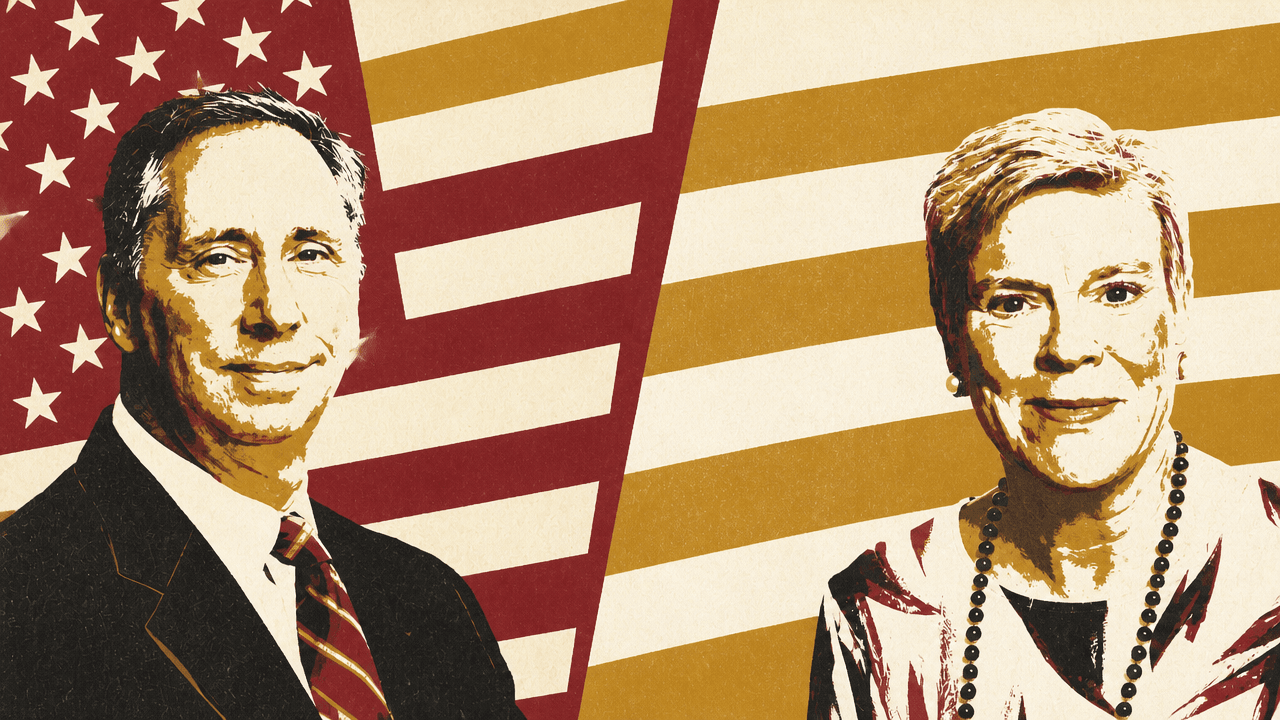
Gottemoeller’s central correction: Clinton’s first Russia policy was cooperation, not encirclement
Rose Gottemoeller says she wrote Security Through Cooperation in part because she had grown impatient with a Kremlin narrative about the 1990s: that President Bill Clinton entered office determined to expand NATO to Russia’s borders in order to threaten aggression against Russia and seek the “existential defeat” of the Russian Federation. That, she says, was not what she saw from inside the National Security Council.
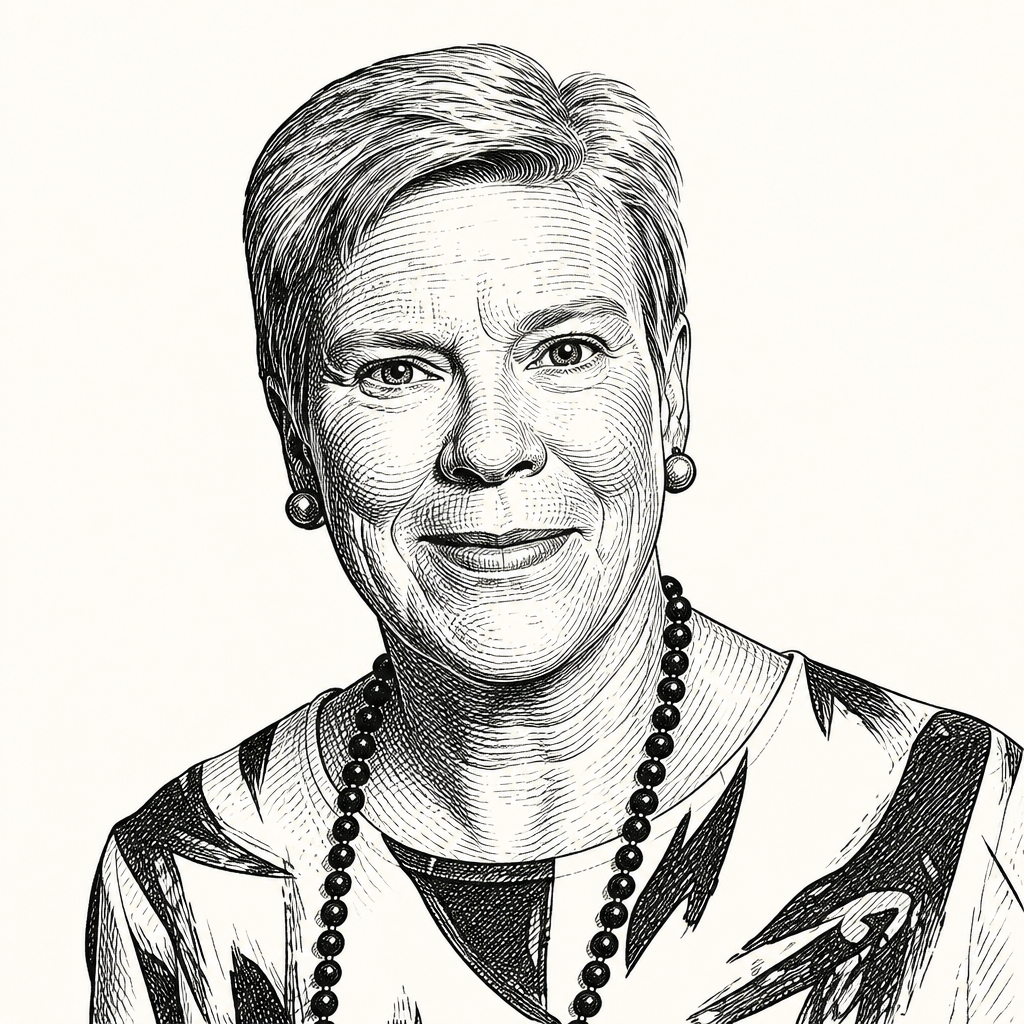
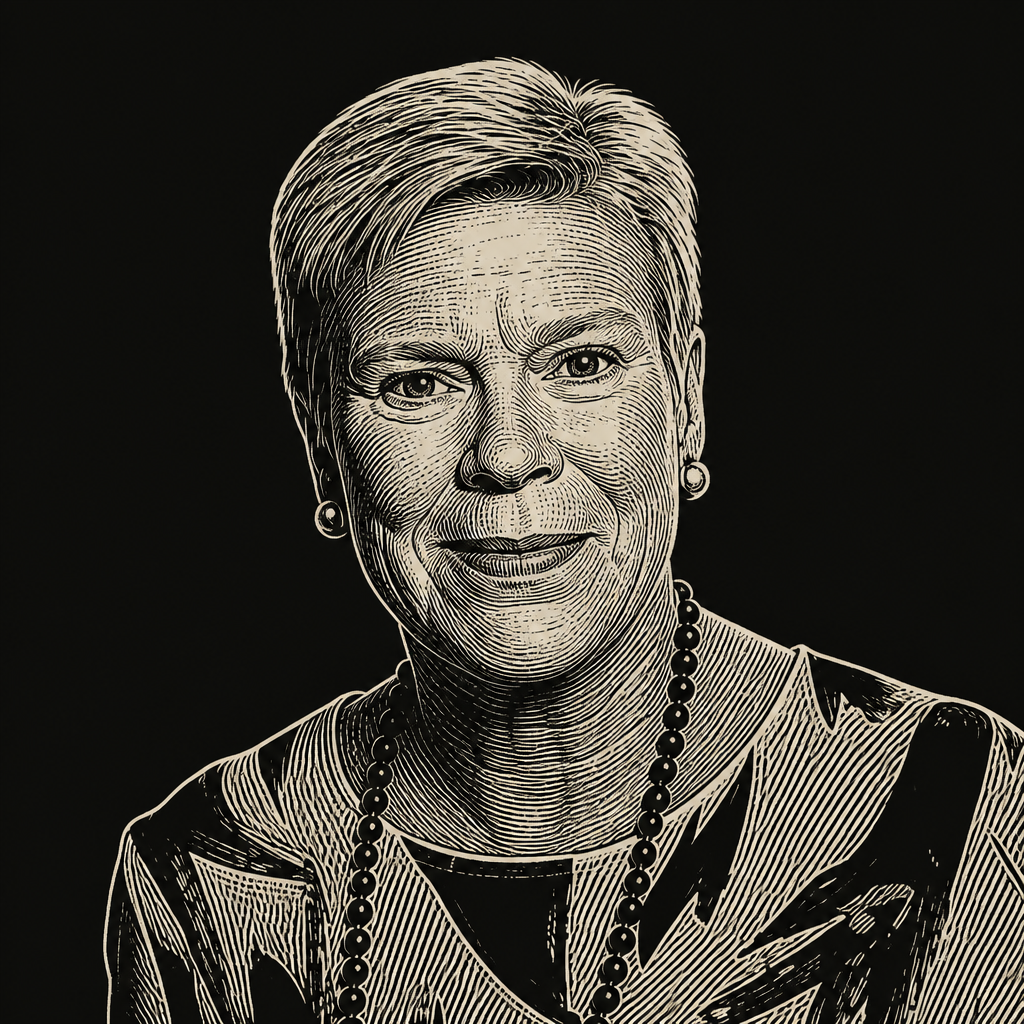
Her memory of Clinton’s first approach is almost the reverse. Clinton’s “first big idea,” as Gottemoeller describes it, was that the United States needed an enduring relationship with Russia across security, economics, and politics, or peace in Eurasia would not hold. His first phone call with a foreign leader was with Boris Yeltsin. Gottemoeller was the note taker for that call.
I know that he actually, as a first idea, said we must have an abiding security, economic, and political relationship with the Russian Federation, otherwise we will not have peace in Eurasia.
The book’s title, Security Through Cooperation: Space, Nuclear Weapons, and US-Russia Relations After the Cold War, is not incidental to Gottemoeller’s account. The Hoover Institution showed the cover on screen, with the subtitle foregrounding the three arenas that structure her argument: space, nuclear weapons, and U.S.-Russia relations after the Cold War. Her claim about the post-Cold War period is built around the idea that there was a major cooperative agenda alongside the better-known story of NATO enlargement. The NATO story has received extensive attention, she says, but “nobody’s written about the other piece of the action at that time,” meaning the intense U.S.-Russian cooperation on nuclear security, technology, and space.
The early 1990s, in Gottemoeller’s telling, were not a simple triumphalist moment in which Washington set about exploiting Moscow’s weakness. She does acknowledge that Clinton had advantages Yeltsin did not: the United States was politically stable, economically healthier, and widely understood as the Cold War’s winner. Yeltsin, by contrast, was governing amid economic dislocation, institutional breakdown, and a violent domestic political crisis. In 1993, he shut down parliament by force, bringing tanks against the parliament building and setting it on fire.
But Gottemoeller says the policy imperative she remembers was stability. The collapse of the Soviet Union created opportunity, including the prospect of bringing Russia into Western markets. It also created danger: nuclear weapons, nuclear material, and military power could be mishandled, sold, stolen, or pulled into black markets. She gives George H.W. Bush and his administration “huge credit” for recognizing during the fall of the Berlin Wall and the Soviet collapse that the transition had to be managed carefully, particularly because of the nuclear stakes.
That frame carried into Clinton’s first years. Gottemoeller says both Bush and Clinton looked to the post-World War II reconstruction of Europe and the Marshall Plan era as a relevant precedent: when political systems had collapsed and countries faced the danger of anarchy, the United States had an interest in helping rebuild order. She adds that, as a former Sovietologist focused on nuclear weapons and nuclear policy, she was personally excited by the opening for “more intense joint cooperation.”
The strongest tension in her account is that Clinton’s early conviction about building an abiding security, economic, and political relationship with Russia eventually collided with pressure from Central and Eastern European leaders for NATO enlargement. Gottemoeller says Clinton’s first conviction was the relationship with Russia, reinforced partly by conversations with George H.W. Bush and, notably, Richard Nixon. Nixon met with Clinton several times in 1993 and was traveling to Russia during that period; Gottemoeller says he was committed to a smooth transition for the Russian Federation.
Only later, over 1993 and into 1994, did Clinton become convinced by figures such as Lech Wałęsa of Poland and Václav Havel of the Czech Republic, who were pressing hard for NATO enlargement. Gottemoeller does not deny that NATO enlargement became policy. Her correction is about sequence and intent: in her account, enlargement was not Clinton’s first animating idea toward Russia, and it did not begin as a plan to threaten Russia’s existence.
The ‘nerd agenda’ treated nuclear security and space as practical cooperation, not symbolism
The cooperative agenda Gottemoeller describes was known inside the period, with some affection, as the “nerd agenda.” It sat beside the larger economic agenda: investment, financial arrangements, and efforts to connect major U.S. corporations with Russian firms in sectors such as oil and gas. The nerd agenda was more technical and, in Gottemoeller’s account, more directly tied to security.
Its first priority was nuclear risk. The United States worried that Russian nuclear weapons or nuclear material could fall into the hands of terrorists, criminal actors, or buyers elsewhere in the world. Protecting the nuclear assets of the Russian Federation was therefore not charity or atmospheric goodwill; it was a U.S. security interest.
Its second priority was technology cooperation, especially in space. Gottemoeller’s own intellectual origin story begins there. She calls herself a “Sputnik baby.” As a child in Columbus, Ohio, her father took her into the front yard, pointed to a small dot in the sky, and told her it was a satellite launched by the Russians. His reaction, as she remembers it, was not simply competitive anger. He understood the Soviet Union could be an adversary, but he was excited by the science. That shaped her early sense that competition and cooperation could exist at the same time.
The same pattern, she says, existed in space policy. Even during the space race and the race to the moon, NASA and the Soviet Academy of Sciences maintained “quiet cooperation.” During détente in the 1970s, that cooperation became more public. The Apollo-Soyuz docking, discussed by Bill Whalen as both a practical rescue arrangement and a symbolic “shake hands in space” moment, gave the two sides a way to show that even strategic competitors could build mechanisms for joint safety.


For Gottemoeller, this history matters because it complicates the view that U.S.-Russian relations were only rivalry, expansion, and threat. Strategic competition coexisted with arms negotiations and channels of scientific and operational cooperation. The post-Soviet period, in her account, was an attempt to use that older logic in a new setting: cooperate where cooperation made both sides safer.
Gottemoeller’s route into that work was technical before it was political. She studied Russian in high school, aided by the federal government’s post-Sputnik investment in science, math, and language education. She attended Georgetown’s School of Language and Linguistics as a Russian major, initially imagining a possible career as a translator or interpreter. She later concluded her Russian would never be at native-speaker level and that she did not want to sit in the interpreter’s booth. She wanted, as she puts it, to be “down on the UN conference floor,” in the middle of the policy action.
At RAND, where she worked for more than a decade, her mentor was Thomas Wolfe, a senior Soviet military analyst writing on the first Strategic Arms Limitation Agreement. That work pulled her into arms control. Her entry into the Clinton administration came through Jan Nolan, a friend and nuclear policy analyst who had been asked to head the Arms Control and Disarmament Agency transition team but had a new baby at home. Nolan asked Gottemoeller to take the job. Gottemoeller calls it a lucky break and says she owes much to Nolan.
The personal detail is not just biographical. It helps explain Gottemoeller’s emphasis on professional expertise as a craft. She was not an official linguist when she took notes for Clinton’s calls with Yeltsin; official interpreters handled that. But her Russian allowed her to catch tone, turns of phrase, and agitation that someone without the language might miss. She was a policy assistant, not a translator, but the language gave her an extra layer of perception in the room. In a period when small signals from Moscow mattered, technical preparation changed what she could hear.
The Clinton-Yeltsin relationship was personal, but the machinery underneath mattered
Rose Gottemoeller says the “Boris and Bill” relationship was real. Clinton and Yeltsin had large personalities, outgoing temperaments, and a shared love of jokes. They laughed with each other, told Russian and English jokes through translation, and seemed to hit it off quickly. She rejects the notion that the warmth was merely staged.
The anecdote she uses to illustrate the relationship comes from the first Clinton-Yeltsin summit in Vancouver in April 1993. Clinton invited Yeltsin to ride with him in the presidential limousine. Gottemoeller was asked to sit with them and informally translate because no official interpreter was in the car at that moment. Clinton pointed out the Russian and American flags displayed around Vancouver. Yeltsin replied that he liked the flags, but they had been hung upside down. The moment, in Gottemoeller’s telling, captured both the humor and directness that made the relationship useful.
Yet she also emphasizes that personality was not enough. The two men could be businesslike when needed, and the broader bilateral relationship required operating machinery beneath presidential rapport.
One important figure in that machinery was Viktor Chernomyrdin, Yeltsin’s prime minister. Gottemoeller describes him as a “remarkable player” who came out of Gazprom with experience managing complicated institutions. Russia’s post-Soviet system was still developing. Unlike the Soviet Politburo model, the new structure had a president as the leading figure on foreign and security policy, while the prime minister managed the government departments and the interagency process. Chernomyrdin knew people, knew whom to call, and knew how to make problems go away inside a disorganized Moscow bureaucracy.
That mattered because Yeltsin’s own capacity was deteriorating. Gottemoeller says it is no secret that he had a drinking problem, and by the mid-to-late 1990s his health had become a serious issue. She notes that Richard Nixon, during one of his trips to Moscow, saw Yeltsin beginning to collapse under the weight of alcohol consumption. Strobe Talbott, as Whalen recalls from the book, described Yeltsin after lunch as “problematic.” By the end of the decade, Gottemoeller says, Yeltsin was worn down.
The working relationship between Clinton and Yeltsin therefore rested on more than their personal chemistry. It depended on parallel structures: Clinton and Vice President Al Gore on the U.S. side, Yeltsin and Chernomyrdin on the Russian side. The Gore-Chernomyrdin Commission became one of the channels for practical work. Its later iterations would bring Gore into contact with several Russian prime ministers, including the last one before the end of the century: Vladimir Putin.
Putin’s shift was not inevitable in the beginning, but Gottemoeller locates several turning points
Rose Gottemoeller says Vladimir Putin, at the start of his rise, did want to work with the United States. When Yeltsin told Clinton in Istanbul that the next leader would be Putin and that he liked democracy and cooperation with America, Gottemoeller says the claim was plausible at the time. She remembers Gore meeting Putin as part of the Gore-Chernomyrdin process and getting “bad vibes”; they did not hit it off. But she also gives George W. Bush credit for trying to build a stable relationship with Russia.
Bush’s effort included inviting Putin to his ranch in Crawford, Texas, where the imagery included cutting brush and Texas barbecue. Gottemoeller says Putin was responding well at the time. She repeats the often-cited point that Putin was the first leader to reach Bush after the September 11 attacks and offered Russian help if the United States needed it for its own defense. In those early years, she says, the effort to develop cooperation was honest on both sides.
The “Putin conundrum,” as Whalen frames her book’s Chapter 5, is how that leader became the Putin who now treats the United States as a threat. Gottemoeller discusses several possible explanations and weighs them differently.
The first is the U.S. withdrawal from the Anti-Ballistic Missile Treaty. Gottemoeller does not dismiss it as irrelevant, but she does not think it was, at the moment, the decisive cause. She was in Moscow when the Bush administration notified Russia of the withdrawal and expected an icy reception when she went to the Kremlin to meet Marshal Sergeyev, a former chief of the general staff and then a military adviser to Putin. Instead, Sergeyev responded, in her telling, sensibly: Russia would defend itself but would not overreact. That experience leads her to downplay the immediate impact of ABM withdrawal as the main explanation for Putin’s turn.
The second factor was domestic: Mikhail Khodorkovsky. Between 2000 and 2003, Khodorkovsky was Russia’s richest man and a highly successful businessman. He began using his money to build a political foundation and think tank. Gottemoeller recalls being invited by his foundation to Moscow for a conference on Russia’s future. The possibility that a newly minted oligarch could emerge as a political rival, she says, “really seemed to get under Vladimir Putin’s skin.” In October 2003, Putin had Khodorkovsky arrested. Khodorkovsky spent years in prisons and camps before going abroad.
Gottemoeller sees this as one of the most important moments for Putin because it revealed his refusal to allow genuine rivals and, by implication, “true democracy” in Russia. The issue was not simply an oligarch’s fortune. It was the emergence of independent political power.
The third factor was Ukraine’s democratic drift away from Moscow’s control. Gottemoeller points first to the Orange Revolution, when Ukrainians rejected the candidate the Kremlin was trying to impose and resisted Russian political pressure. She says Putin concluded from that episode that Ukraine might be heading in its own direction: toward Western Europe and toward democratic practice. That, in her view, was a major wake-up call for him.
A decade later came the Maidan, or Revolution of Dignity. Gottemoeller notes that the immediate pressure point then was not NATO but the European Union. Ukrainians were trying to sign a cooperation agreement with the EU. That, she says, set Putin off, leading to the standoff, the seizure of Crimea in spring 2014, and the war in Donbas, which she calls a civil war in Ukraine’s eastern provinces.
This distinction matters in her account because contemporary Kremlin complaints focus heavily on NATO. Gottemoeller’s chronology emphasizes that the 2013–2014 crisis centered on Ukraine’s European orientation and democratic choice, not a NATO accession process.
New START required calm, tradeoffs, and knowing when not to show temper
Rose Gottemoeller was the first woman to lead U.S. nuclear arms control negotiations. She corrects Whalen slightly when he says she was the first woman to lead negotiations: specifically, she was the first woman to lead nuclear arms control negotiations.
Her selection for the New START talks, in her view, rested on two forms of preparation. First, she had spent years in nuclear policy, beginning at RAND and continuing through work on Soviet and Russian military issues. Second, she had lived and worked in Moscow from 2006 to 2008, just before Barack Obama took office, and had organized regular roundtables with Russian experts about what the next arms control deal should look like. She brought both Republican and Democratic experts to Moscow because she did not know who would win the 2008 election and wanted the Russians to understand the range of U.S. options. That process gave her preparation and visibility.
She also explains the difference between SALT and START in conceptual terms. SALT, the Strategic Arms Limitation Talks, produced agreements focused on limiting existing force structures. SALT I was signed and concluded in 1972; SALT II was more ambitious but still fundamentally about limitation rather than reduction. START, by contrast, put reduction at the center.
The shift was driven partly by technology. Multiple independently targetable reentry vehicles, or MIRVs, changed what it meant to limit missiles. If a treaty limited the number of missiles but a single missile could carry many warheads, then the number of warheads could still grow. Gottemoeller cites the feared case of the Soviet SS-18, which could potentially carry many warheads. That technological development forced a change in negotiating philosophy: limiting launchers was not enough; the sides had to reduce.
Her own negotiating style was deliberate and calm. She says she tends to keep talking, keep describing U.S. needs, and keep delivering talking points. That steadiness made some members of her own delegation nervous early in the 2009 negotiations because they thought she was not showing enough temper.
Gottemoeller accepts Whalen’s analogy that diplomacy requires some poker-like discipline: negotiators must be circumspect about final objectives, hold them closely, and exchange movement for concessions. But she finds blackjack an even better analogy because arms control requires tradeoffs across many issues. A concession on warhead numbers might be linked to language on missile defense. The negotiation is not a single pot; it is a wide grid of interdependent choices.
You know, you have to do tradeoffs across a very wide range of issues.
Her description of Russian diplomatic style is similarly unsentimental. Asked whether Russians tend to be cold or to browbeat, she answers: both. They are very good diplomats, she says. They can browbeat, give the cold shoulder, or turn on charm when it serves the negotiation. In that environment, calm is not passivity. It is one way to keep control over the tempo and the trade space.
At NATO, Gottemoeller says Trump had a point on burden-sharing
Rose Gottemoeller says she was surprised when, in 2016, a senior State Department figure asked whether she would be interested in becoming NATO deputy secretary general. Her career had been dominated by bilateral work with Russia and other former Soviet states, not service inside NATO. President Obama eventually put her forward as the U.S. candidate in a competitive selection process, and she served from 2016 to 2019.
That placed her at NATO during the first Trump administration, and as the highest-ranking American there. She had left the State Department and gone to NATO as an international civil servant, which proved important. Trump had no real legal means to recall her, although he could have made it difficult for Secretary General Jens Stoltenberg to keep her in place. In the end, she says, her presence had value. She could talk to Washington, provide early warning about what might come next from Trump, and explain NATO’s utility to the United States at a moment when those questions were becoming more pointed.
Her judgment on Trump and NATO is not one-dimensional. She accepts Whalen’s framing that one school of thought saw Trump as a bull in a china shop, treating friends and allies in a way that was too unfiltered and insufficiently diplomatic. But she also says the other school of thought had merit: many allies were not carrying their share of the defense burden.
Gottemoeller says she and Stoltenberg believed during the first Trump administration that allies were effectively freeloading on the United States. She places Trump’s complaints in a long lineage: John F. Kennedy complained in 1962 about allies not paying their fair share, and every president since had raised the issue. What made Trump different, she says, was his threat to withdraw from NATO and his threat not to fulfill the Article 5 commitment to defend allies under attack. Those threats, in her view, finally got NATO members to wake up.
The specific benchmark she cites was 2 percent of gross domestic product on defense. Gottemoeller says allies had promised that level in 2014, after Putin first invaded Ukraine, but had not followed through. Trump’s pressure, in her assessment, got them moving. She calls that a good thing.
Her current assessment of the Trump-NATO relationship is more strained. Gottemoeller says the president is frustrated with individual NATO allies that, in her description, have not stepped forward to support and help him with what she calls his war in Iran. She says he has poured that frustration with member states onto NATO as an institution and talks about punishing individual members, with talk of withdrawal again coming to the fore.
Gottemoeller stresses the distinction between NATO acting by consensus and individual NATO countries choosing whether to support a U.S. initiative. She says similar tensions arose when George W. Bush invaded Iraq and many NATO allies did not want to join that effort.
Even so, she returns to the same point: in her view, Trump started the process of forcing allies to take more responsibility for their defense, and that development should not be dismissed.
NATO has teeth, but European defense will have a more European character
Rose Gottemoeller rejects the fear that NATO could become the League of Nations. The difference, she says, is that NATO has “hard security” built into it. It has military operational capacity, a command structure connected to EUCOM while also operating multilaterally, and hard power assets. As allies increase defense spending, replace old weapon systems, and build new capabilities such as drones, NATO’s material capacity is growing rather than hollowing out.
Whalen summarizes the contrast as the League of Nations “tut-tutting” while NATO has teeth. Gottemoeller agrees: NATO has hard security assets.
But she does not think NATO can simply return to its pre-Trump structure, even under a future U.S. president who is friendlier to the alliance. European leaders, she says, understand there is “no going back to the status quo ante.” They need to take more responsibility for their own defense. Defense in Europe will have a more European character, while still including Canada as a NATO member.
The shift changes the leadership problem. The United States was long “primus inter pares,” first among equals. Gottemoeller says the United States is not trusted right now, and even a new president cannot simply turn the clock back. Other leaders will have to come forward inside NATO. The difficult question is how they will exercise leadership amid competition among them.
For the next U.S. president in 2029, Gottemoeller’s advice begins with recognizing the value of allies. She calls them force multipliers for the United States. Trump, in her view, was right to push them to build defense capacity, but the next president may encounter a different alliance: more capable, more modernized, and more willing to stand up for itself.
That could be uncomfortable for Washington. Gottemoeller is forecasting a more European character to defense in Europe and a partnership in which the United States may no longer be first among equals in the same way. She sees that as a basis for rebuilding trust and cooperation inside NATO.
Real cooperation with Russia will require a post-Putin Kremlin
On Russia’s future, Rose Gottemoeller draws a hard line around Putin. Whalen poses a scenario in which the war in Ukraine winds down without a decisive victory, more like Korea: an armistice or truce in 2027 after exhaustion. He asks whether Trump should go to Moscow in 2028, noting that Ronald Reagan visited Moscow in his last year.
Gottemoeller says it depends on the goals and the national interest at the time, but she argues that the next president, not necessarily Trump, should make the move to reestablish cooperation. Then she sets the condition: she does not believe the United States can return to full cooperation with Russia while Putin remains in the Kremlin.
She is careful not to predict Putin’s timeline or call for regime change. She says Russia’s system must replace its own leader. But because of Putin’s invasion of Ukraine, his aggressive behavior toward Ukraine, and hybrid threats against Europe and the United States, she says Putin clearly considers the United States the enemy. That makes deep cooperation impossible, in her view.
There may be limited pragmatic business ties, especially in gas and oil, which she says are always top of mind. But the deeper cooperative model that her book describes — the model of nuclear, space, technology, political, and security engagement — would require a new leader in Moscow.
That conclusion does not negate her broader argument for cooperation. It narrows its timing and conditions. Gottemoeller is not arguing that cooperation is available at any price, with any leader, under any circumstances. She is arguing that cooperation has served U.S. security before and may be necessary again, but not while Putin remains in the Kremlin.
Deal-making can open doors, but diplomacy is what makes agreements work
Rose Gottemoeller gives Trump’s “real estate guys” approach to foreign policy a limited defense. Whalen frames the contrast as one between professional diplomats — people who came up through schools, policy work, and government ranks — and dealmakers such as Jared Kushner and Steve Witkoff moving quickly around the world. Gottemoeller says the approach can work in certain circumstances. As her example, she points to the Gaza ceasefire and hostage releases, saying those would not have happened without Trump and his rapid-fire dealmaking style.
But she says making the deal is only the first stage. “Then you have to stitch together the peace,” and that work is painstaking. In Gaza, she says, the peace has not yet been stitched together, and reconstruction has not been solved.
Her critique is not that dealmakers cannot create movement. It is that what follows the handshake requires technical and diplomatic work: where the money comes from, how a fund is structured, who performs the work, what rules govern it, and how corruption is prevented. She even uses the real estate analogy against the real estate approach: in a property deal, too, shaking hands and exchanging checks is not the end. Legalities and implementation still have to be carried across the finish line. She says they “ought to get that,” but “they don’t seem to.”
Whalen raises Condoleezza Rice as an example of a national security professional who had studied foreign policy and served on the National Security Council before becoming secretary of state. Gottemoeller agrees that executive experience can be valuable, depending on the executive’s temperament and management style. The key, in her formulation, is understanding that governing and diplomacy are team sports. A large enterprise cannot be managed alone, and a deal cannot be made successful by one person’s instincts alone.
That view also underlies her advice to young people who want to enter the field. Asked what a young woman studying Chinese, Arabic, or another difficult language should do if she wants a career like Gottemoeller’s, she says: “take good risks.” Her own example is Jan Nolan’s call asking her to take the Clinton transition job. Gottemoeller was nervous and had young children at home. Her husband told her she would never forgive herself if she did not try. She took the risk, and it changed her career.
I always say the first thing is take good risks.
The advice is not recklessness. She says young people should consider risks carefully and talk with spouses, partners, and mentors. But careers move, in her account, when people take risks worth taking.