Economic Models Must Explain the Choices Behind the Data

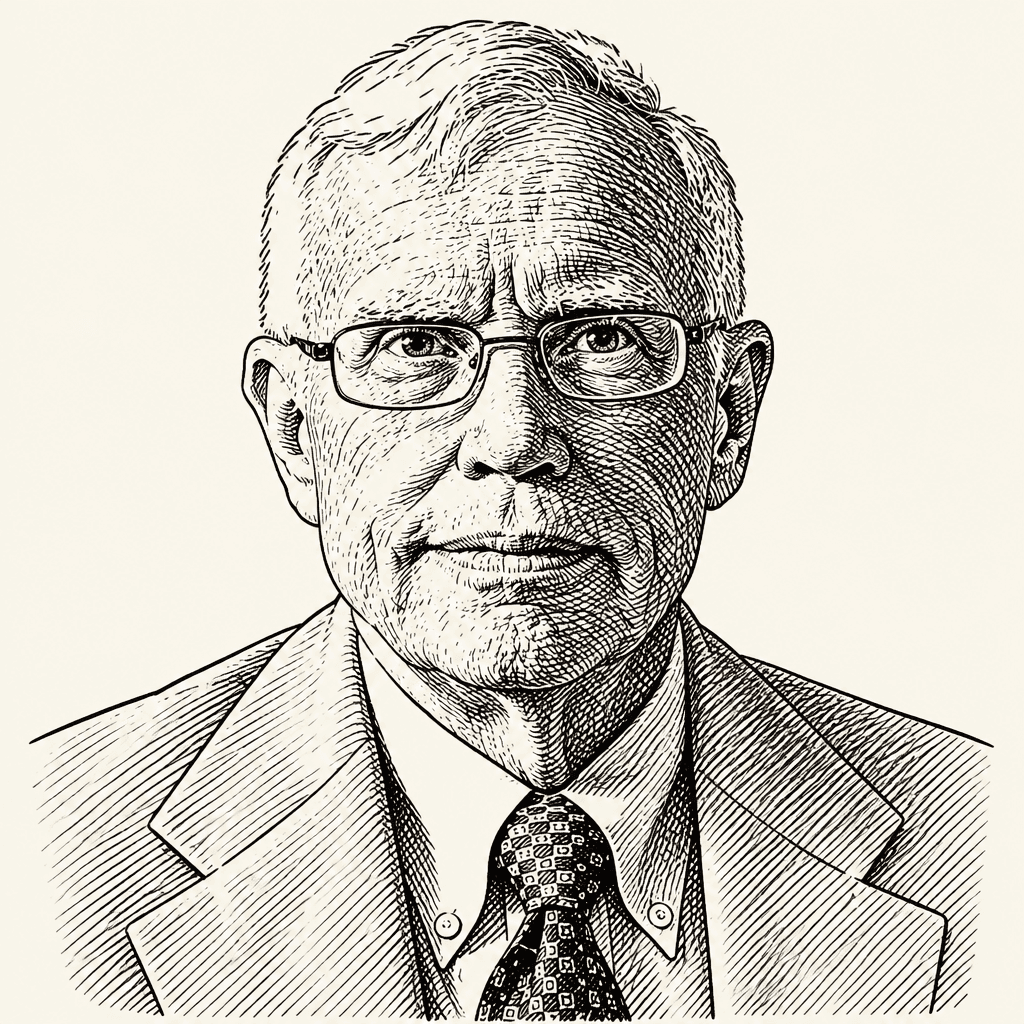
Nobel laureate James Heckman argues that economic research should explain how choices and environments produce the outcomes measured in data, not stop at a statistical estimate or experiment. In a conversation with Jon Hartley, the University of Chicago economist applies that standard to early-childhood investment, labor-market methods and the Chicago School’s intellectual culture. His central claim is that skills develop over time and that empirical findings need an account of the mechanisms behind them.

Human capital begins before schooling—and extends beyond earnings
James Heckman argues that human capital is broader than education and the returns to years of school. In his account, social and emotional skills matter alongside cognitive ability—not only for earnings, but also for health and criminal participation. His work on early childhood grew from a broader question: what skills are formed, when are they formed, and which investments help people make use of later opportunities?
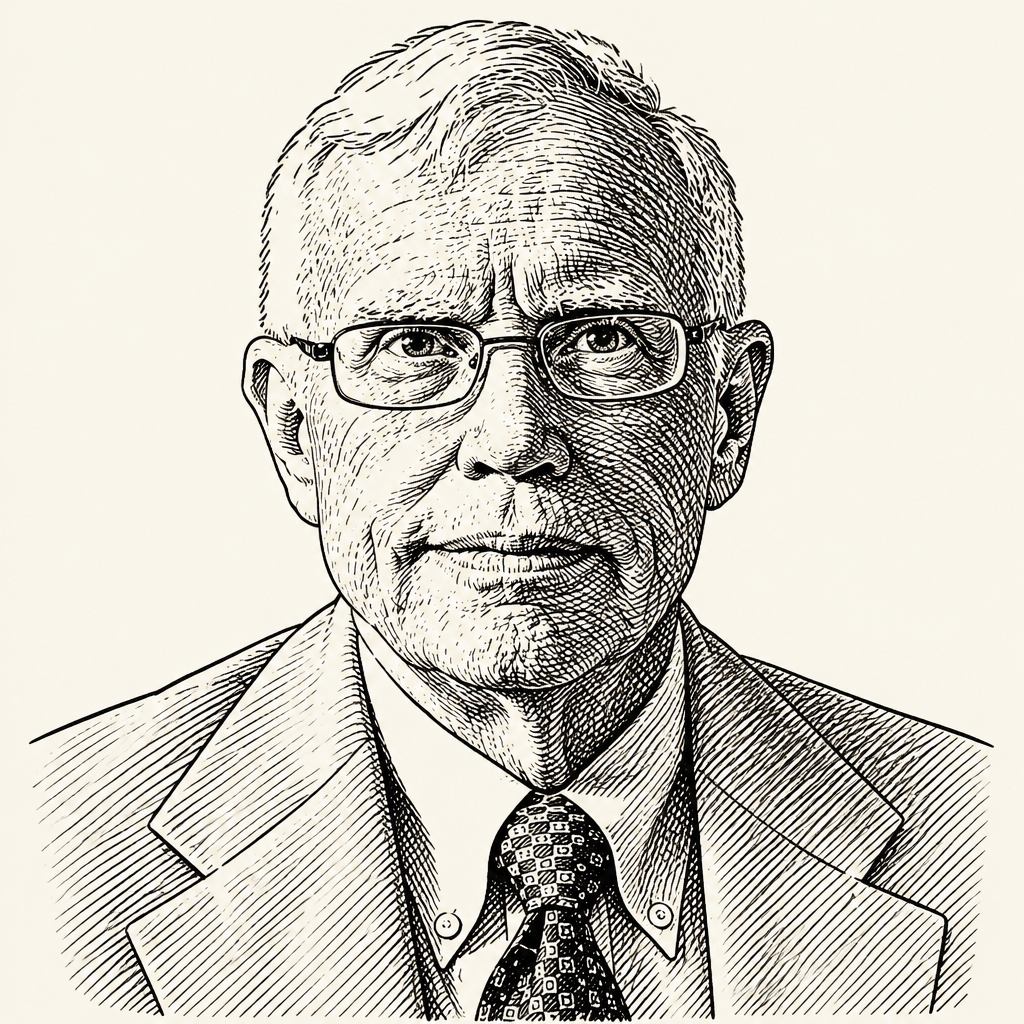

The path to that question was not a direct one. Heckman first became interested in economics as an undergraduate, after starting out in physics and moving to mathematics. At a small liberal arts college in Colorado, a reading course on economic growth introduced him to Adam Smith, Ricardo, Marshall and Arthur Lewis. Lewis’s broad treatment of growth—connecting economics with politics and anthropology—made the subject compelling. Heckman entered graduate school expecting to work on economic growth.
He arrived at Chicago with a strong technical background in mathematics, statistics and econometrics. He initially regarded some of his colleagues’ work as comparatively “soft,” but was drawn to the problems they were trying to solve. Theodore Schultz, for example, had strong economic intuition even without much mathematical training. Schultz and agricultural economist D. Gale Johnson studied how agriculture was changing, including in China as it opened up. They used the limited reports available to reason about inefficiencies in collective farming, restrictions on migration and the effects of incentives. Schultz also studied whether people in high-mortality countries had reason to invest in education: the basic economic idea was that people expecting shorter lives might be less likely to invest in a long-term return, and he tried to test it with the best data available.
That combination—an intelligible economic idea, brought to bear on a consequential problem and tested against evidence—became central to Heckman’s own approach. Gary Becker’s work on human capital made a particularly strong impression. When Heckman was a graduate student, he recalls, human-capital research was treated as marginal beside the more formal work of general-equilibrium theory. He saw something new in Becker’s book and room to develop it. At Columbia, he learned from Becker and Jacob Mincer, as well as from their students and colleagues. What mattered was the close engagement between theory and data, and the effort to use both to answer real economic questions.
The family became one such question. Mincer’s work on women’s labor supply treated rising wages and expanding opportunities as part of an explanation for women’s increasing work, while making room for fertility and time allocation within the household. Heckman also recalls the work of Arleen Leibowitz, who examined how a mother’s education could affect a child’s outcomes. In the same period, radical economists offered a different explanation for the relationship, emphasizing class, nepotism and political connections. Both groups were studying similar relationships in the data, Heckman says, but the available evidence could not settle the disagreement. The episode made the need for plausible mechanisms—and better ways to distinguish among them—plain.
Heckman’s own interest in childhood development took shape through a different line of research: government job-training programs. He had studied education and then became involved in evaluating training programs, including work connected with the Job Training Partnership Act. The programs were meant to improve trainees’ prospects, and the evaluation gave him a chance to compare experimental and nonexperimental methods. He also visited a program in Corpus Christi, Texas, where staff described a short GED-preparation course as a way to turn young people into high-school graduates in six or eight weeks. He wondered how such a brief intervention could substitute for years of schooling.
His broader results from job training left him pessimistic. In his account, most programs he studied did not produce much benefit. He recalls an exception involving young women who had been forced out of school, often after becoming pregnant, and later reentered education or the labor market. Some went on to ordinary careers, including college after receiving a GED. But when he looked at young people who had reached age 18 or 19 with weak skills and low motivation, he found it difficult to see how training could make up for what had not been built earlier.
A lecture on brain development by neuroscientist Harry Chugani offered another starting point. Heckman and his wife attended it by chance at Chicago’s Erikson Institute. Chugani discussed the importance of the early years for the developing brain. Heckman began asking whether interventions earlier in life might shape capacities that later programs struggled to change. He partnered with child-development researchers who had collected data but, in his view, were not using the analytic methods needed to get the most from it. He says some studies reported benefit-cost ratios without standard errors and did not always examine differences between boys and girls. He began by helping analyze researchers’ data, then became a co-author and developed follow-up work with students and collaborators including Flavio Cunha, Pedro Carneiro and Lance Lochner.
The early studies appeared to show strong returns, but Heckman also saw results and measurement choices he wanted to examine more closely. He proposed following participants into adulthood, and eventually into their thirties and fifties, to ask whether effects had lasted. The Perry Preschool study became one focus of that work. Heckman says follow-up research found persistent effects, though not always in the outcomes that had initially attracted attention.
Early discussion often focused on IQ, and critics pointed to “fade-out” when some measured IQ gains diminished. Heckman says some dimensions did fade, but participants continued to show outcomes such as school completion and academic motivation. In the Perry work, he says, researchers found that children who were more academically motivated also performed better on achievement tests. He argues that the question is not only whether an early test-score advantage remains visible, but whether the intervention changed capacities that affect what people do next.
Heckman and his collaborators therefore broadened the set of skills they studied. Alongside cognitive skills, they examined motivation and social and emotional capacities. Some of the measures used in early research, he says, were “very defective”; IQ tests and the abilities they capture change as children develop. He describes later work with psychologists on measuring cognitive and non-cognitive skills, including capacities related to executive functioning and staying on task. In his interpretation, capacities psychologists had often described as traits can also be understood as skills: they can be built and shaped.
The distinction between a skill and a fixed trait changes the policy question. If an outcome is treated as a stable characteristic a child already possesses, an intervention may appear to have little to offer. If it is a capacity that can develop, the timing and design of investment become part of the explanation. Heckman says his work shifted toward what he calls the economics of learning: not only the wage return to another year of schooling, but how people acquire the capabilities that make later learning possible.
He also resists treating education as a signal alone. In the signaling account he describes, schooling does not add productive capacity; it mainly reveals that a person was already capable. Heckman points to the early-childhood studies as evidence that this is incomplete. He says participants showed changes in motivation and other dimensions, and that those capacities were relevant not only to earnings but also to health and criminal participation. When researchers estimated the share of variation in the present value of earnings explained by IQ, he recalls a figure of roughly five or six percent. Other factors did not each explain an overwhelming share either, but social and emotional skills mattered across outcomes.
Heckman says his research considers health, earnings, criminal participation and civic participation, including voting. The point is to include dimensions through which early environments may affect later life, rather than limit the account to IQ, years of schooling or wages.
The family is one mechanism he returns to. He traces the question back to work by Mincer and Becker on households, fertility and the allocation of time, and to Leibowitz’s work on maternal education and children’s outcomes. Marshall, Heckman notes, had also written about the family’s role in children’s human capital and the influence of mothers. For Heckman, the difficulty has always been to identify what is happening within families, rather than infer a mechanism from the correlation between parents’ education and children’s outcomes.
In current work, Heckman says, he and collaborators have separated out parent engagement as one component of early-childhood programs. He describes that component as producing returns nearly as high as more comprehensive programs. He points to a study in poor rural Gansu, in western China, where parents receive about an hour of instruction a week on interacting with their children. The parents are treated as guides in children’s development: the intervention gives them ways to engage with the child, rather than relying only on services delivered directly to the child. Heckman says the researchers find long-term benefits.
The Gansu example makes the family part of the mechanism through which children learn. Heckman connects it to his broader view that skills are produced over time and that children’s capacities interact with their environments.
For Heckman, this work also affects how poverty is described. He objects to treating household income as a complete measure of the conditions shaping a child’s development. Income matters, but his account emphasizes parenting and the environment in which learning takes place as well. Policy assessments, in this view, should ask what resources and interventions do for children’s capacities and their ability to benefit from later opportunities.
That logic informs Heckman’s disagreement with William Bowen, then associated with a proposal to provide scholarships to disadvantaged students who had completed high school. Heckman argued that some students would not yet be ready to benefit from college, and that a scholarship arriving at age 17 or 18 could therefore come too late. He says the prior task is to help build the skills that allow students to use the opportunity. Students with high motivation and cognitive ability can receive substantial benefits from college; his concern is whether students have had the chance to develop the skills needed to learn from it.
Heckman sees this as an extension of the human-capital tradition he encountered through Becker, Mincer and Schultz, not a departure from it. His research still draws on formal models and econometrics, but he uses them to study a broader set of skills and a longer span of development. The object is not schooling by itself. It is the formation of capacities across childhood and adulthood, and the conditions under which people can develop and use them.
A model should explain the choice behind the data
The James Heckman selection correction began with a practical problem in the study of women’s labor supply. Researchers wanted to estimate hours worked as a function of wages, but many women in the data were not working—and therefore had no observed wage. Heckman recalls that only about half of prime-age women in the samples he was considering worked. A common response was to estimate wages for working women and impute them to nonworking women with similar characteristics. He thought that approach ignored the reason wages were missing.
The absence of a wage was itself connected to a choice. A woman who did not work could have a reservation value for time at home that exceeded the market wage available to her. Heckman’s approach was to use both pieces of information: the wages observed for working women and the choices that kept others out of the labor market. His paper, “Shadow Prices, Market Wages, and Labor Supply,” used an economic model of those choices to guide the statistical treatment of selection.
He traces the work to his interest in labor supply and the new longitudinal data sets becoming available while he was a student, including the National Longitudinal Survey of Youth and the Panel Study of Income Dynamics. He developed the selection analysis after graduate school, while at Columbia. He says the paper was not part of his dissertation. Jacob Mincer liked it, and Becker did too. For Heckman, the important point was not simply correcting for missing wages. The model made it possible to interpret the value of women’s time and connect observed labor-market participation with choices about work at home.
The economic reasoning also affected how he interpreted changes in women’s wages. A simple supply argument might predict that as more women enter the labor market, wages should fall. But if women who had stayed out of the market had high reservation values for time at home—perhaps because of childrearing or other household production—then the women entering employment could be disproportionately educated and highly paid. Heckman describes later work by other researchers as supporting that interpretation. It is an example of why he wants econometric methods to recover the process that generated the data, rather than report a statistical relationship without an account of the choices behind it.
This commitment to modeling choices shapes his criticism of the “credibility revolution” in empirical economics. Heckman does not reject experiments or natural experiments. He rejects treating a treatment effect, a p-value or a design label as a substitute for an economic explanation. His objection is not that causal identification is unimportant; it is that an estimate’s interpretation, scope and mechanism remain questions after identification.
He acknowledges why experimental and quasi-experimental methods gained influence. In his account, some early structural models were specified with considerable arbitrariness, and their assumptions were not adequately tested. He says that some resulting papers were poor. That history matters to his critique: he is not defending every structural model simply because it uses economic theory. A structural approach can be fragile when its assumptions are imposed rather than examined.
Heckman focuses on Robert LaLonde’s comparison of experimental and nonexperimental estimates of a job-training program. The paper appeared to show that nonexperimental methods could not reproduce experimental findings. Heckman says the comparison was persuasive to many economists, including initially Becker, but argues that it was not the end of the matter. He and Joseph Hotz later showed, he says, that standard econometric specification tests could have ruled out the poor estimators in the comparison and led to the same inference about the program. Heckman says that result, published in 1989, received little attention. His point is that the episode should not be read as showing that all nonexperimental analysis fails; it also raises the question of whether the models and specifications being compared were adequate.
Experiments have their own history in economics, which Heckman situates before the later prominence of randomized controlled trials. He recalls the New Jersey negative income tax experiment, designed to examine responses to cash transfers and associated with a broader effort to test proposals such as Milton Friedman’s negative income tax. As a graduate student, Heckman says, he helped enroll some early participants in Trenton. He also credits people in the social-policy research world, including Judy Gueron and the Manpower Demonstration Research Corporation, with carrying out many training experiments.
The issue, then, is not whether experiments are legitimate. Heckman regards them as useful evidence and says their relative simplicity can make results easier to replicate. His concern is what happens when an experimental estimate is treated as the answer rather than as one observation to be explained alongside other evidence. A design may identify an effect for a particular population, time and institutional setting. It does not automatically tell the researcher what mechanism produced the effect, whether the effect persists, or how far it travels beyond the setting studied.
His example of Card and Krueger’s minimum-wage study illustrates the distinction. The study compared fast-food restaurants on opposite sides of the Delaware River, where the minimum wage differed, and found little immediate employment effect. Heckman asks what adjustment mechanisms might explain the result. Firms may continue operating after a wage increase if they can still cover variable costs, even if they do not expand. Employers might adjust through prices or other margins. He points to work by Tom MaCurdy on price adjustment and notes that if fast-food prices rose, low-wage consumers could bear some of the cost. These possibilities show why, in Heckman’s view, a short-term employment estimate requires an account of the broader economic response.
The same caution applies when a study reports a local treatment effect and then makes claims beyond the population or setting it identifies. Heckman asks what the estimate represents and why its mechanism should apply elsewhere or over a longer period. A statistically credible estimate can be informative without supporting every broader claim made from it. For him, the work is incomplete until researchers explain the economic meaning of the parameter and consider other margins of adjustment.
In Heckman’s formulation, an experiment is “a piece of information, it’s not the story.” His criticism is that some empirical work stops once a coefficient or treatment effect has been produced. He says that reporting a local average treatment effect without asking what it measures, why it matters, or how it relates to short- and long-run outcomes can leave the reader with a number but no economic account.
He also criticizes how the approach has sometimes been presented as a general standard of scientific credibility. He describes its spread partly as a matter of professional sociology and networks, and says that claims associated with it can become dogmatic. His methodological claim is that the tools can be useful, but they do not eliminate the need for interpretation, model criticism or evidence beyond the original design.
Heckman’s account of the Job Training Partnership Act illustrates why he resists treating studies as tests of hypotheses fixed in advance. Working with Jeff Smith and others, he says, the researchers found that roughly 80 to 90 percent of the job-training sites offered participation declined. The sites that did take part could select trainees in ways that helped them qualify for performance incentives. In Heckman’s interpretation, sites were filtering participants to improve the outcomes on which they were judged. He says this was not something the researchers knew to preregister as a hypothesis. The study revealed a feature of the program’s incentives and implementation that mattered to interpreting its results.
The point is not that preregistration has no purpose. Hartley raises its role in limiting p-hacking, and Heckman agrees that researchers can search through analyses in ways that produce misleading results. His concern is that a preregistered hypothesis does not record every decision that shapes an estimate. Researchers may fit different models, choose control variables and make analytic decisions along the way. A plan recorded in advance does not necessarily reveal the full sequence of analysis or the alternatives considered. Heckman asks whether researchers report all the models and steps they try, and says the mere presence of a preregistration does not answer that question.
For Heckman, the deeper problem is treating empirical work as if it were only hypothesis testing. An experiment can produce findings the researchers did not know to anticipate. The next task is to understand them and decide what to investigate next. A study should therefore be allowed to reveal unanticipated features of behavior or implementation, not only return a verdict on a narrow, predeclared proposition.
His alternative is not to abandon safeguards. He says replication is valuable, and he recognizes the appeal of simple statistical methods: other researchers can often reproduce them more readily than a complicated structural model. He also wants researchers to test auxiliary implications. If an explanation is right, should it show up in related data or settings? What happens when researchers change the assumptions or “kick the tires” on the result? These tests extend inquiry beyond whether one estimate clears a conventional threshold.
He calls the broader approach abductive: assemble available evidence and ask which explanation, or set of explanations, is most plausible. The concept does not require a single definitive mechanism. It requires attention to alternatives and to evidence from more than one source. Heckman cites economic history as an example. Robert Fogel’s work on railroads, as Heckman describes it, brought together evidence about competing transportation possibilities, including canal costs and the practical consequences of infrastructure such as barbed-wire fencing. The analysis did not depend on one statistical tool applied to one data set; it assembled different kinds of information to assess what railroads changed.
He also invokes Milton Friedman’s Theory of the Consumption Function. Heckman notes that the book contains no p-values, but brings together budget studies, time-series evidence and observations across groups, including farmers, postal workers, and Black and white households. In his reading, the case rests on the convergence of findings across settings, rather than a single test statistic. This is the sort of empirical work he wants to preserve: evidence remains essential, but its value comes partly from how it contributes to an explanation that can be tested in more than one way.
The contrast he draws is not between theory and evidence. It is between using a model to organize and interpret evidence and treating a statistical design as sufficient in itself. He says a good empirical argument may include experiments, natural experiments and statistical tests. It should also ask what behavior produced the observed result, what other outcomes the proposed mechanism implies, and whether evidence from other contexts is consistent with the explanation. In his view, those questions are what make causal estimates useful to economics rather than just technically credible.
Heckman recognizes that structural models bring their own problems. He says early structural work could be arbitrary and insufficiently tested, and he acknowledges that some complicated models are difficult for other researchers to compute or replicate. He cites dynamic models in industrial organization as examples of work that can require substantial computation. His defense of structural analysis is that economic structure can make assumptions explicit and connect estimates to choices, incentives and behavior. Those assumptions still need scrutiny, and the model must be tested against evidence rather than treated as an explanation merely because it is formal.
That distinction helps explain why he is not simply opposed to experiments. He praises a study by Dennis Aigner on time-of-day electricity pricing in Southern California as an example of an experiment paired with an intertemporal model. The question was whether lower prices in the evening, when demand for air conditioning eased, could shift appliance use away from peak periods. The model helped make the timing decision and the potential response part of the analysis. For Heckman, the experimental variation and the economic model belong together.
He makes a similar point about newer empirical work in industrial organization. He says many researchers in that field use multiple sources of data and economic models, and he sees that combination as closer to the abductive approach he favors. His concern is not with a particular design label. It is with whether researchers use all relevant evidence, consider competing explanations and tell the reader what the result means.
Chicago’s method was a shared language, not a journal strategy
For James Heckman, Chicago’s distinctive intellectual culture was built around a common price-theoretic language: start with a clear economic idea, then use whatever formalism or evidence is needed to understand the problem. It did not require every economist to study the same field. Heckman recalls attending workshops in monetary economics, industrial organization, labor, trade, econometrics and law and economics. The details differed, but he could often recognize the same underlying questions about incentives, prices and choice.
Harry Johnson advised him to read every dissertation he could. Heckman took the suggestion seriously, attending defenses across fields. He says the practice helped him see how a shared set of concepts could let economists understand and contribute to work outside their specialties. Workshops brought together people who might not otherwise have crossed paths; the value was in the exchange itself, not merely in presenting a finished paper.
He remembers Chicago discussions as serious but not careerist. Researchers were not primarily trying to place a paper in a leading journal. Becker’s work on the allocation of time, for example, circulated among journals before publication in what was then regarded as a less prestigious outlet. Heckman recalls Columbia economist Kelvin Lancaster telling junior faculty that the department cared about the quality of their work, not where it appeared. The test was whether there was an idea worth developing.
That did not mean simplicity for its own sake. Heckman distinguishes a simple core idea from a thin model. A model may take years and many pages to work out. But adding dimensions to a familiar framework is not automatically a contribution; the question is whether the addition yields new understanding. He recalls reading a highly abstract price-theory book that avoided derivatives, only to finish it unsure what new economics he had learned. His complaint was not about abstraction itself, but about formal machinery that did not produce insight.
The culture he describes depended on scholars engaging seriously with one another’s work. He recalls seminars that ran late into the night, arguments across subfields and faculty who read the papers being considered for tenure themselves. In a tenure meeting early in his career, he was struck by how closely senior economists had studied a candidate’s work. He recalls the standard as asking whether the faculty had learned anything from it, rather than simply counting publications or collecting outside letters.
That standard was possible, he says, because senior faculty had the time and inclination to read candidates’ work and judge it directly. He remembers the process as demanding: colleagues knew the work, discussed it closely and were willing to challenge it.
He believes that standard and the shared culture behind it have weakened. Economics has become more specialized, he says, and scholars are less likely to attend workshops outside their fields. He also sees greater emphasis on professional advancement and external markers. Chicago still has strong economists, he stresses, but he misses the older sense of a community organized around common ideas and the effort to solve important problems.
Heckman’s criticism is not that specialization itself has no value. His concern is that specialists may lose the shared language that once made it possible to carry arguments between fields. When researchers no longer attend one another’s workshops or engage with work beyond their own subdiscipline, the chance to challenge assumptions from a different angle declines. He describes the earlier culture as a moving community of scholars: people heard unfamiliar work, discussed it afterward and learned from methods and questions they might not otherwise encounter.
His criticism of behavioral economics follows the same concern. Heckman argues that some behavioral explanations treat departures from conventional rationality as evidence that people are simply wired to make mistakes, rather than asking what constraints, incentives or information could explain the behavior. He cites Becker’s account of behavior under a budget constraint: even a random cloud of “molecules,” confined by a boundary, must shift when the boundary changes. For Heckman, this illustrates how a basic economic structure can generate a directional prediction without assuming that people calculate perfectly.
His objection is to explanations that stop at “people are irrational” without investigating the mechanism. A puzzling pattern should prompt economists to ask why it occurs and what would make it persist. Heckman gives taxi drivers’ work patterns as an example: he says some behavior described as a departure from standard theory could be explained by a backward-bending labor supply curve. His point is that an apparent anomaly should be tested against existing economic mechanisms before it is treated as evidence that people are systematically irrational.
Heckman describes the behavioral shift as moving the source of constraint from the budget set into the mind: if people make a choice that looks mistaken, the explanation becomes that they are disposed to make that mistake. He argues that this can end inquiry too soon. In his view, economists should ask why an apparent arbitrage opportunity goes unexploited, or what features of a decision explain an observed pattern, rather than treating a mistake as self-explanatory.
He argues for treating standard economic ideas as hypotheses to be examined, not as doctrines to protect or discard. If a model fails, the failure can be informative. But he wants economists to identify what is failing and why, and to distinguish that work from simply labeling behavior irrational.
For Heckman, price theory provided a shared starting point for that kind of argument, not a guarantee that every prediction was right. A common core made it possible for economists in different fields to challenge one another’s explanations in terms they could understand. He sees less of that cross-field exchange now. His criticism is directed at a change in intellectual practice, not a claim that contemporary Chicago has no good economists or that all behavioral research is alike.
Markets are powerful, but they are not the only way to coordinate
A meeting with Argentine president Javier Milei brought Heckman’s views about markets and public provision into a practical discussion. Heckman describes Milei as an ardent libertarian who wanted to talk economics. Their conversation covered education and how Argentine workers might adapt more quickly to high-technology foreign investment.
Heckman described workforce training in South Carolina, where community colleges helped former textile workers build basic skills and learn the technologies used by firms relocating to the state, including BMW and BASF. He compared the arrangement to a version of apprenticeship training: workers developed general educational skills while learning what particular employers needed. In his telling, the workers had previously done low-skill textile work; the training aimed to bring them toward high-school-level reading and writing while preparing them for the technology used by incoming companies.
Milei also argued for having a market for everything. Heckman pushed back. Some goods can be provided through agreement or voluntary cooperation without a market transaction, he said, as in standard public-goods problems. He invoked situations such as a flood, fire or war, when people may work together for a common purpose without individual compensation. Markets can be useful, but they are not necessarily required for every form of coordination.
Heckman says he was impressed by Milei’s willingness to argue and listen, as well as by his economic advisers. He remains uncertain whether Milei can succeed politically. Heckman’s concern is that Argentina’s Peronist political culture runs strongly against the president’s program of economic freedom and markets. He says he hopes Milei succeeds, while acknowledging that he is not a close observer of Argentine politics.