Monetary Policy Moved From Monetarism to Inflation Targeting
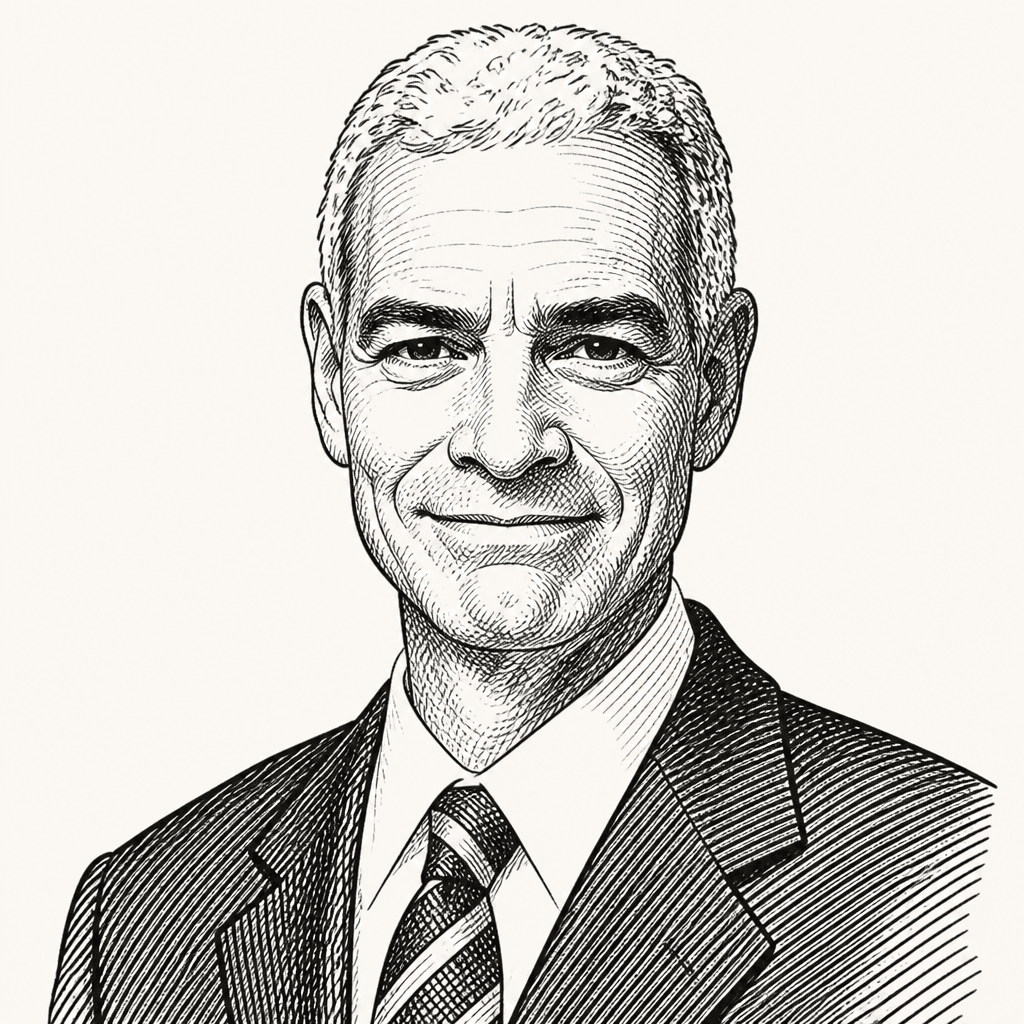

Mickey Levy argues that the Federal Reserve should treat money growth as an important warning signal, not as a mechanical target. Drawing on his work with the Shadow Open Market Committee, founded in 1973, he says the group was right to link excess money growth to inflation in the 1970s but later overreached as the relationship between money and spending became less reliable. In conversation with Jon Hartley, Levy applies that distinction to the pandemic-era surge in inflation and the Fed’s balance sheet, while Hartley highlights how inflation targeting has helped anchor expectations.
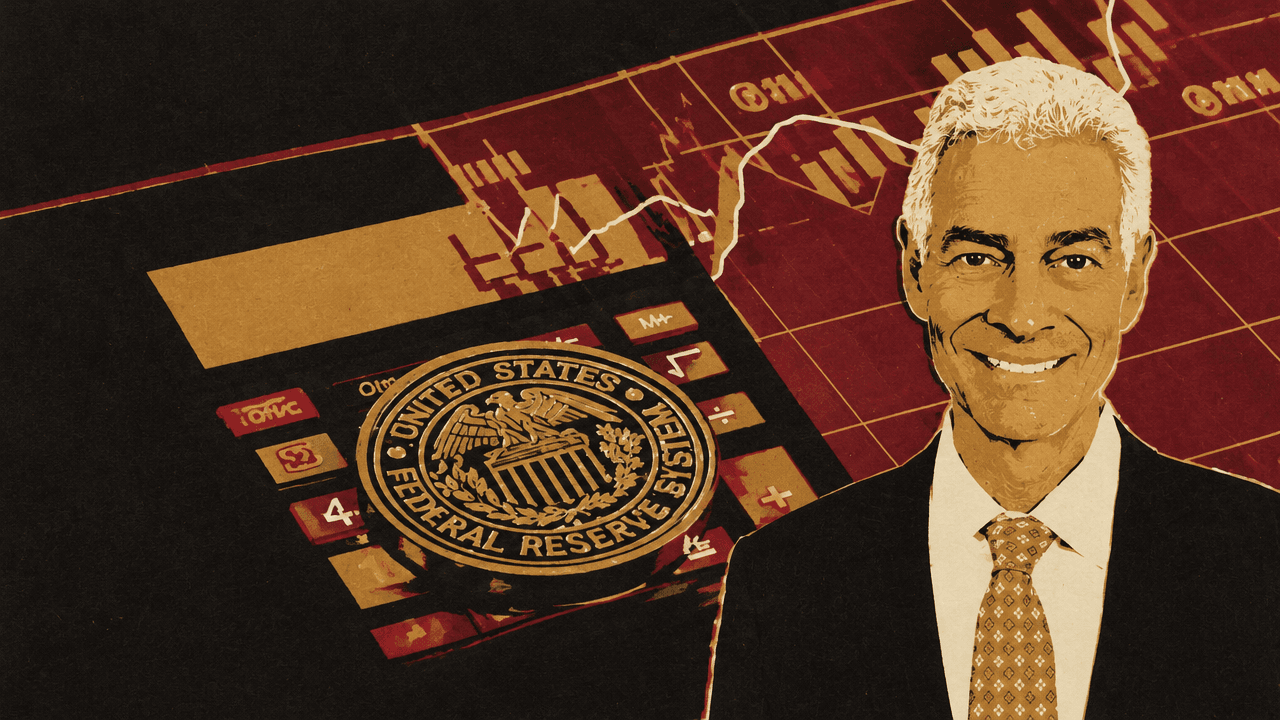
The 1970s made monetary policy impossible to ignore
The turn toward monetary explanations of inflation followed a decade in which policy repeatedly failed to contain it. In Mickey Levy’s account, the trouble began before the 1970s: a large increase in spending for the Vietnam War in the mid-1960s was accommodated by the Federal Reserve, and inflation that had averaged about 1.5% after the Korean War rose above 6% by 1970.

Arthur Burns became Fed chair in February 1970. Levy says Burns supported wage and price controls in 1971 and, after they were imposed, presided over a highly accommodative monetary stance. Levy says that accommodation may have been coordinated with President Nixon’s reelection campaign. It accelerated nominal GDP; while price controls held down prices, much of the increase appeared in real activity. When the controls came off, inflation rose sharply. It had reached about 8% before the first Arab oil embargo in October 1973, then climbed further.
The decade brought a deep recession, persistently high inflation, and a loss of confidence in the Fed. Levy points to the dollar crisis that led the US government to issue bonds denominated in foreign currencies, even before the second oil embargo in 1979. Yet much of the economic literature in the middle of the decade still treated inflation as cost-push, blaming forces such as wages and budget deficits rather than monetary policy.
The Shadow Open Market Committee, formed in 1973 by Allan Meltzer, Karl Brunner, and Anna Schwartz, argued against that view. Its central claim was that excess money growth generated excess aggregate demand and inflation. Levy says the committee was right to press the point: poor economic performance, he argues, helped move the economics profession toward recognizing money’s role.
The change in policy came with Paul Volcker, whom Levy describes as willing to act forcefully against inflation. Before Volcker became Fed chair, Levy attended a small seminar at AEI where Volcker and Alan Greenspan debated whether gradual tightening could bring down inflation and expectations, or whether a more severe intervention was needed. Greenspan argued for gradualism, citing the risk of higher unemployment through the Phillips curve. Volcker argued that the Fed had to act decisively:
You have to go cold turkey, and you have to be very strong and forceful.
Volcker later began an anti-inflation program that Levy says turned the tide. The exchange also captures the change in how inflation was understood: Levy recalls that mid-1970s economic writing commonly emphasized cost-push explanations, while the Shadow Committee argued that money growth could fuel demand and inflation. In his telling, the monetary argument gained force amid poor results and a Fed that had lost credibility.
Levy’s early career put him close to several strands of this policy history. He studied public policy at Berkeley, where the newly founded Graduate School of Public Policy was led by Aaron Wildavsky. Wildavsky’s interests extended beyond budget policy to how governments set national priorities. He hired economist Bill Niskanen, who became an important influence on Levy’s thinking about economics and the proper role of government. The two worked together and wrote several papers, including an early paper on school choice. Niskanen told Levy the idea was early, but that its time would come.
That period drew Levy toward public finance and analytical tools for evaluating policy, rather than monetary policy. At the Congressional Budget Office, founded in 1974, Levy was one of Alice Rivlin’s early hires. Working in tax analysis, he learned the budget process as Congress established its budget committees and the CBO as a congressional counterpart to the administration’s Office of Management and Budget.
At AEI, Burns hired Levy to research a book on inflation. Levy says that none of its 12 chapter topics treated monetary policy as a cause of inflation; Burns instead emphasized cost-push explanations, deficits, labor unions, and welfare. Levy describes the work as a kind of postdoctoral education in the literature. It also exposed the divide between Burns’s account and the monetary argument the Shadow Committee was making. AEI brought Levy into contact with economists who later formed part of the Reagan-era policy world, and gave him a place to research tax and fiscal issues as well as inflation.
Money is an indicator, not a mechanical rule
The Shadow Committee’s case for money growth did not make a fixed money-growth rule permanently workable. Levy says the committee was right in the 1970s but overplayed monetarism in the 1980s and 1990s, when velocity—the relationship between money and nominal spending—became unstable. The committee continued to favor rules targeting monetary aggregates, including the monetary base, even as money demand fluctuated. When the relationship between money and spending changes, a given growth rate of money no longer implies a dependable path for nominal spending.
That instability weakened the practical case for treating a fixed growth rate as an operating rule. Jon Hartley notes that Milton Friedman had advocated steady annual money growth, with little need for discretionary policy, while Meltzer emphasized the monetary base. Levy’s account of the committee’s later position is more qualified: it still favors rules-based policy and sound money, but is now more eclectic and does not insist on a strict monetarist rule.


The legal reporting requirements of the late 1970s were part of this history, but not the same thing as a workable operating target. Levy says the Federal Reserve Act of 1977 and the Full Employment Act of 1978 required the Fed to submit economic forecasts and money-growth targets to Congress. Volcker submitted money figures, Levy says, but ignored them in practice. For Levy, the lesson is not that money has no policy relevance; it is that money growth cannot be relied on as a stable control knob.
His current position is that the Fed should pay attention to money, especially when it moves dramatically. Moderate changes in M2 growth—for example, from 4% to 6% and back—need not be alarming. A surge such as the roughly 40% increase in M2 in 2020 and 2021, in his view, should prompt policymakers to ask what is happening. Money is a signal to investigate the scale and sources of demand, not a rule that automatically dictates an interest-rate decision.
Levy attributes the pandemic-era surge to the scale of the fiscal response. He describes three large income-support packages: the CARES Act in March 2020, an omnibus act in December 2020, and the American Rescue Plan in 2021. In his account, the spending provided more income support than was needed, and total deficit spending increased by 25% of GDP. Much of the money went to people who already had jobs; they deposited it in banks and mutual funds, where it appeared in M2.
Levy says the Fed later accommodated part of the fiscal expansion through purchases of Treasuries and mortgage-backed securities, monetizing half of the increase in debt. Had the Fed tracked money growth, he argues, it could have asked sooner whether its macroeconomic model captured the scale of the fiscal and monetary stimulus. Instead, he says, it attributed inflation to “transitory” supply shocks while nominal GDP—his measure of current-dollar spending and aggregate demand—was accelerating at its fastest pace in modern history.
Hartley agrees that monetary aggregates are not necessarily controllable enough to serve as the Fed’s policy instrument, but argues they can help forecast inflation. A large increase in M2, in his view, signals that something significant may be underway, particularly if velocity is not falling to offset it. He also points to the long-run relationship between money growth and inflation across countries. That is consistent with Levy’s distinction: money can inform forecasts and policy deliberations without serving as a stable, directly controllable target.
For Levy, the case for monitoring money is practical, not just academic. He says he began warning in mid-2020 that inflation would rise substantially, based on the increase in fiscal and monetary stimulus and the rapid recovery in activity. He recalls being laughed at: the country was in a COVID shutdown, and there had been months in which CPI declined.
Rather than replace the Fed’s complex macroeconomic model, Levy proposes a checklist for each Federal Open Market Committee meeting. Policymakers could keep using the model while also reviewing broader indicators, including aggregate demand, nominal GDP, money supply, and the Taylor rule. Most of the time, he says, those measures might be consistent with the Fed’s central analysis. If one is far outside the range suggested by the others, the discrepancy should prompt the committee to ask what is happening.
The checklist is meant to make the Fed less vulnerable to forecasting errors, not to eliminate judgment. Levy says forecasting the economy with certainty is very difficult and that policymakers are prone to mistakes. Broader measures could help them notice when their main model is missing something. He has urged the Fed to build such indicators into its deliberative process while continuing to rely on its existing model.
The crisis showed why reserves and broad money can diverge
The response to the 2008 financial crisis complicated claims that central-bank asset purchases necessarily produce inflation. Levy distinguishes emergency liquidity measures from later rounds of quantitative easing. During the acute crisis in the fourth quarter of 2008, he says, the Fed under Ben Bernanke made a credible effort to keep liquidity available in markets. Levy dates the Fed’s initial mortgage-backed-security purchases to the end of November 2008 and says those purchases addressed assets at the heart of the crisis. Later rounds included Treasury purchases.
Those purchases increased bank reserves and the monetary base, Levy says, but did not produce a comparable increase in M2. In his account, the reserves moved between the Fed and large banks rather than being put to work in the wider economy. Severe credit constraints and a sharp loss of wealth weighed on spending. Levy also says the Obama administration’s 2009 recovery legislation did not stimulate aggregate demand as intended. He attributes the absence of the inflation some monetarists expected partly to the lack of a large increase in broad money.
For Levy, the distinction between reserves and money helps explain why the Fed could expand its balance sheet without producing an equivalent expansion of deposits and spending. The crisis-era experience does not mean that asset purchases never affect the economy; it is why he resists treating an increase in the monetary base as sufficient evidence that broad money or demand must rise.
He describes the condition of the banks as a separate failure exposed by the crisis. With the exception of JPMorgan and Goldman Sachs, Levy says, large banks often did not understand what was in their portfolios or how to measure their capital and risks. Some held hundreds of billions of dollars of mortgage-backed derivatives so complex that their risks were difficult to assess. Levy says the Fed had presumed that banks understood their own exposures, while bank supervisors also struggled to understand the derivatives and the covenants involved in servicing the debt. He says banks were forced to learn what was in their portfolios only after the Fed established stress tests.
Levy supports the emergency actions but says the Fed went too far with QE3. In his reading of Bernanke’s August 2012 Jackson Hole presentation, QE3 was no longer framed as an emergency response. It was presented as a way to increase employment. Levy sees that as a shift: an unconventional policy used in a crisis became a conventional instrument for pursuing the Fed’s dual mandate.
The change in purpose matters to Levy because, in his view, the Fed has not explained how maintaining its current balance sheet contributes to that mandate. The debate has instead focused on the disruption that might follow from reducing it. He does not argue that all quantitative easing was unjustified; he distinguishes liquidity support during acute market stress and the initial mortgage-backed-security purchases from later purchases intended to support employment.
A balance sheet can become hard to reverse
Levy does not think the Fed can rapidly return to its pre-crisis balance sheet without disturbing short-term funding markets. He agrees with the view that the current balance sheet reflects mission creep, but says it cannot be reduced dramatically and quickly without risking unwanted distortions. The policy question is not whether funding markets should experience any volatility: some volatility is inevitable. It is how much should count as undesirable.
Hartley points to the 2019 repo-market disruption during the Fed’s attempt to run down its balance sheet, and to post-crisis regulation that makes a return to a reserve-scarce system harder. In his account, the Fed chair and the FOMC cannot unilaterally end the ample-reserves system; doing so would require Congress to roll back a substantial part of Dodd-Frank. Levy does not directly resolve that institutional question, but agrees that reducing the balance sheet too rapidly could damage short-term funding markets.
Levy sees a broader problem in that bind. Government agencies can adopt a policy and later find it difficult to reverse, even when the rationale for maintaining it is unclear. He recalls that Fed officials once presented estimates of how much each increment of quantitative easing reduced long-term yields, but later said the impact was not as large as they had thought. Now, he says, the argument over the balance sheet focuses less on how maintaining it serves the Fed’s mandate than on the possible costs of reducing it.
He supports independent advisory panels intended to challenge the Fed’s thinking. Levy describes the institution as well-meaning and credible but insular, prone to listening to a narrow range of views and making large mistakes. He hopes the panels can create internal discussion about what drives inflation, how it is measured, and how the Fed communicates.
The measurement question is concrete. Levy says the Fed once focused on the GDP deflator, then the CPI, before Alan Greenspan shifted its preferred measure to the PCE price index. He argues that the CPI is the better measure of consumers’ out-of-pocket expenses and that the Fed should consider measures beyond its usual framework. The point is not simply which index is theoretically preferable: the choice affects how policymakers interpret whether inflation is meeting their objective.
Inflation targeting can anchor expectations without settling the target
Hartley argues that inflation targeting has helped keep long-term inflation expectations anchored, including through the financial crisis and the pandemic-era inflation surge. He traces the adoption of explicit or implicit targets across developed economies from the late 1980s and early 1990s; the Fed formally announced a 2% PCE target in 2012. But he also identifies open questions: which price index should be used, whether the Fed should make up for past misses, and whether it should target an average inflation rate over time.
Levy agrees that inflation targeting and the Fed’s credibility are valuable. He is less persuaded by the analytical case for 2%. Price stability, he says, would be preferable, though he recognizes the argument that a positive target helps guard against deflation and leaves room to cut rates in a downturn. He would rather have zero inflation but considers 2% acceptable.
The disagreement is therefore about the target’s level and design, not whether a clear framework matters. Hartley points to anchored expectations as evidence that targeting has worked. Levy says the Fed’s credibility is a major asset, while questioning whether the case for 2% settles the choice between a point target, a lower target, or a range.
After the financial crisis, Levy says, the Fed worried that inflation persistently below 2% could weaken inflation expectations. Policymakers also believed the natural real interest rate was falling, increasing the risk that rates would hit the effective lower bound. Those concerns contributed to the 2020 strategic plan, which introduced asymmetry into the dual mandate: it emphasized employment and encouraged inflation to run above 2% without defining a numerical limit for an acceptable overshoot. Levy calls that a poor way to conduct monetary policy.
He connects the framework to what he sees as the Fed’s tendency to fine-tune the economy. In Levy’s view, the Fed’s discretionary judgment has contributed to major mistakes. Stable, low inflation is a better environment for job creation and maximum employment, he argues. A more rules-based approach, combined with broader measures of demand and inflation, would reduce the risk that policymakers try to manage the economy too precisely.
Levy also questions the appearance of precision in a single target. He says the Fed considered a range—such as 1.5% to 2%—before adopting a point target, partly because officials thought a single figure would help credibility and communication. Yet in the four years before COVID, he says, CPI inflation averaged 2% while PCE inflation averaged about 1.6%. The divergence reflects, in part, that price measures differ and involve choices such as quality adjustment. Levy hopes the Fed’s measurement work will address those issues. He does not claim that a range would have resolved the larger debate, but says it could have changed how policymakers interpreted those years.
The choice of measure matters to the framework as well as to measurement research. Levy argues that CPI better captures consumers’ out-of-pocket expenses; Hartley notes that the target could instead be expressed through CPI, PCE, or the GDP deflator. Their exchange leaves two questions distinct: whether the Fed should aim at 2%, and which index best captures the prices that matter for that aim. Levy’s case for considering CPI is tied to the experience of households facing rising prices. He cites a 30% rise in CPI since just before COVID and increases of 40% to 50% for some frequently used goods and services. In a 2023 Wall Street Journal piece, he titled the issue “lower inflation but higher prices”: even if the rate of increase slows, the higher price level remains a concern for consumers.
Levy separates the inflation target from the question of the neutral interest rate, or R-star. He considers R-star an important concept, but one that is unobservable and impossible to measure precisely. It can still guide policymakers trying to judge whether interest rates are accommodative or restrictive. Levy says a 2% real rate, as in John Taylor’s original 1993 work, seems plausible under conditions of healthy growth and strong expected returns on capital. He also says R-star moves and should not be treated as a precise value.
Hartley makes a related practical point: whether or not policymakers publish an estimate, setting interest rates requires some working sense of where neutral lies. He questions whether model-based estimates, which can be unstable and imprecise, are the best guide, and says surveys of market participants or Federal Open Market Committee participants offer another way to assess what people think the long-run rate is. Levy’s response is that R-star is more than an academic exercise, but it remains a guideline rather than a directly observable policy variable. They agree on the need to distinguish accommodative from restrictive policy; the limits of measurement determine how much confidence to place in any estimate.