Economic Freedom, Not Managed Equality, Drives Growth

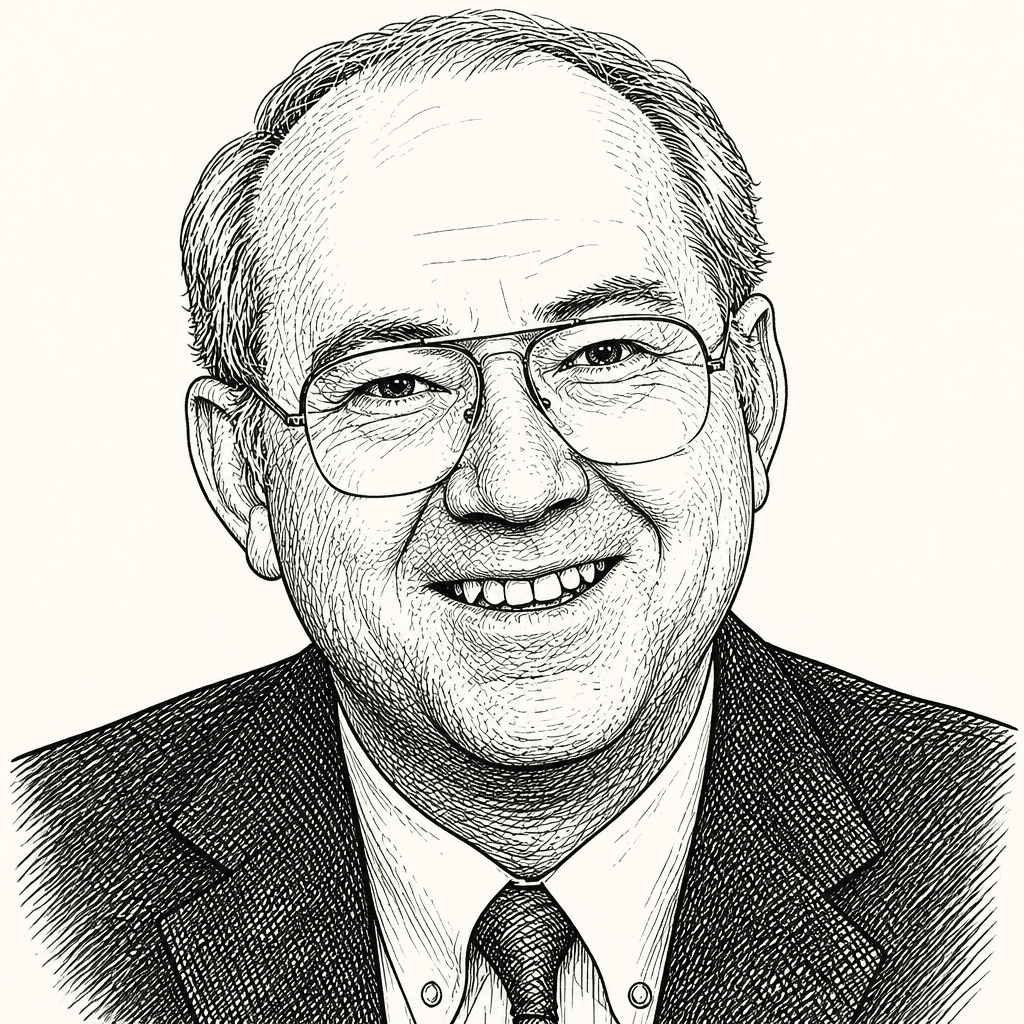
Former US senator Phil Gramm, in a Hoover Institution conversation with economist Jon Hartley, argues that America’s debates over inequality, poverty, deficits and financial crises are distorted by measures and narratives that leave out central facts. Drawing on his books and legislative career, Gramm makes the case that economic freedom, not directed investment or redistribution, has been the main source of US growth and mobility. He contends that official inequality statistics undercount transfers and taxes, that the 2008 crisis stemmed from housing policy rather than Gramm-Leach-Bliley, and that efforts to substitute government judgment for markets reliably fail.
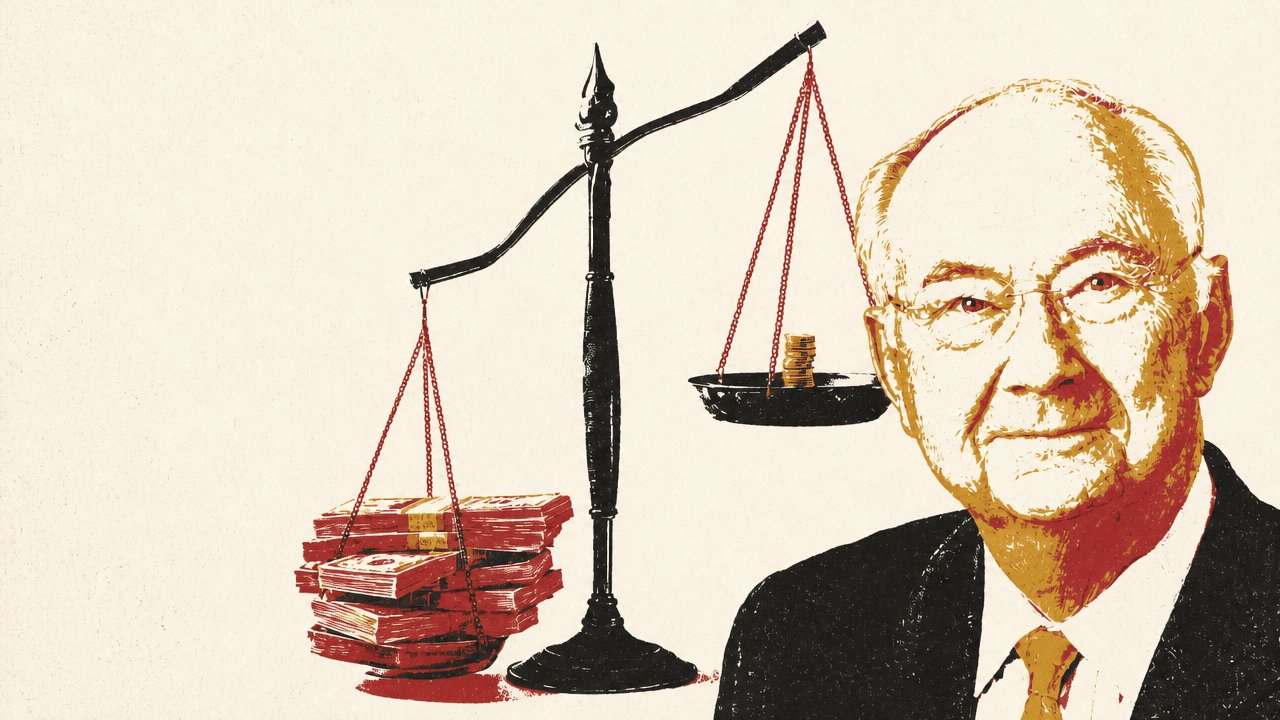
Economic freedom is Gramm’s empirical test
Phil Gramm frames economic freedom as an empirical proposition rather than a moral slogan. His case is not that markets deliver perfection, or that American capitalism eliminates hardship, but that freedom has produced more opportunity and higher living standards than any plausible alternative. “My belief in economic freedom is not faith,” he says. “It’s evidence. Economic freedom works.”
Gramm presents that argument in The Triumph of Economic Freedom, written with Donald J. Boudreaux and shown repeatedly on screen during the discussion. The cover identifies the book’s subtitle as Debunking the Seven Great Myths of American Capitalism. Gramm says the book is organized around seven key periods and issues in American history, from the Industrial Revolution through contemporary debates over poverty and inequality, because Americans’ views of capitalism are shaped by their perception of how those episodes worked.
His method, as he describes it, is to state the conventional case in its strongest form before answering it. He says the conventional view is reflected in the best-selling high-school American history book and the best-selling college American history textbook. He likens the structure to Thomas Aquinas: lay out the undisputed facts, present the myth, and then rebut it. Fourteen people read the manuscript, Gramm says, and nine told him he had gone too far in making the opposing case — so far that they thought he was writing in support of it. He says he and Boudreaux kept the approach because they did not want to knock down a straw man.
For Gramm, the United States is the chief evidence. America, in his telling, did not become “the greatest and richest country in the world” because uniquely brilliant people happened to settle there. It became that country because its institutions gave ordinary people more opportunity and freedom than people elsewhere. That opportunity, not elite direction, is what allowed extraordinary results.
He roots the argument in the history of capitalism’s critics. Marx, Gramm says, understood the Industrial Revolution’s productive power more clearly than most of his contemporaries, describing it as having unleashed more productive forces in a century than all previous generations combined. But Marx also described capitalism as destroying the bonds of feudalism and leaving “naked self-interest and cash payments” between people. Gramm’s response is that this phrase, intended as condemnation, describes economic freedom: the breakdown of inherited hierarchy and the rise of voluntary wage contracts. “Now we know naked self-interest and cash payments as economic freedom,” Gramm says. “What happened is, it freed people from feudalism.”
The destructive side of capitalism, in Gramm’s account, was destruction of feudal constraint. People voluntarily left rural Britain and rural America for better lives, and they built from there. That does not make the system heavenly. He says plainly that it is better to be “born brilliant and beautiful and rich” if one can manage it. But being born “ugly and ordinary and poor,” he says, is not disqualifying in America, and he presents his own life as evidence: neither parent graduated from high school; his brother was the first in the family to graduate from high school, attend college, and graduate from college.
That biography is not incidental to Gramm’s argument. He was born at Fort Benning, grew up in Columbus, Georgia, and came to economics almost by accident. After running out of money at the University of Georgia, working for 18 months, and returning with credits that did not fit neatly into a degree plan, he first considered physics. A professor warned him that unless he loved physics more than anything else, he should not pursue it. Gramm then saw a National Science Foundation poster listing starting salaries for PhDs in 1963, with economics at the top. He signed up thinking economics had something to do with the stock market, and says the field immediately captured him because it formalized the world he had grown up in.
His confidence in economic freedom comes partly from personal mobility and partly from comparative judgment. If government could run things better than freedom, he asks, why did people not tear down the Berlin Wall to enter Eastern Europe? Why, in his account, did China grow rapidly when it adopted more market-oriented policies, and why did its growth stagnate again when it adopted worse policies?
Jon Hartley agrees with the broad proposition that economic freedom causes growth, describing the growth formula as strong legal institutions, rule of law, lighter regulation, and lighter taxation that allow innovation. Hartley also suggests that younger generations, having not lived through the Soviet Union, may have missed a formative lesson about the consequences of suppressing markets. Gramm accepts the point but makes it broader: history, he says, is full of repeated failed experiments, and socialism has been tested across “at least 5,000 years of recorded history” without working.

Gramm’s criticism extends beyond the left. He also attacks what he calls a “new right-wing element in the Republican Party” that believes government should decide where investment occurs, pick favored sectors, and beat China through public direction of capital. He likens this view to Plato’s guardians: chosen people in government deciding where growth can occur. His judgment is categorical: “Bad policies fail, not sometimes, and not in some places, they fail all the time in all places.”
He points to China as a contemporary instance of his broader claim. China rose rapidly after adopting more market-oriented systems, Gramm says, but the Communist Party could not tolerate the success of Jack Ma. In attacking him, Gramm says, it destroyed half the equity value of China’s technology industry in a week. His lesson from the example is blunt: “As freedom dies, so does opportunity and growth.”
The inequality debate turns on what counts as income
Phil Gramm says the official picture of American inequality depends heavily on what is excluded from income. His critique begins with a methodological claim: Census Bureau measures misstate the distribution of income because they omit much of what government gives poor households and ignore taxes paid by higher earners. He calls this one of two facts “everybody ought to know,” and says it is “irrefutable.”
The Census Bureau, as Gramm describes it, does not count as income payments in which the government pays a bill on someone’s behalf. That omission was less consequential before the War on Poverty, he says, but modern welfare programs are heavily in-kind. A debit card used to buy groceries is not counted as income. Rent subsidies are not counted as income. Medicaid payments are not counted as income. Yet, in Gramm’s formulation, 70 percent of what American middle-class families spend their income on is provided to poor people through these programs without being counted as income to the recipients.
The result, he says, is a distorted inequality ratio. The Census Bureau reports that the top 20 percent of income recipients have 16.7 times the income of the bottom 20 percent. But if transfer payments are counted as income to recipients and taxes paid are counted as losses to those who earned the income, Gramm says the ratio falls to 4 to 1.
His point is not that a 4-to-1 ratio settles the fairness question. “You can say 4 to 1 is too much,” he says. “But there’s a big difference between 4 to 1 and 16.7 to 1.” The implication is that the political argument changes when redistribution is made visible in the income measure rather than treated as invisible assistance outside the distribution.
Jon Hartley introduces Thomas Piketty’s Capital in the Twenty-First Century as a central text in the renewed progressive focus on inequality, and says he is less concerned with relative measures than with poverty and growth: absolute measures of living standards and need, rather than whether someone’s wealth creates what he calls a “jealous externality.” Hartley allows that inequality can sometimes reflect underlying problems, giving South Africa as an example where high inequality may be tied to long-running constraints on economic freedom and opportunity under apartheid. But he emphasizes that countries which allow people to succeed will also have inequality.
Gramm’s criticism of Piketty’s method has four parts. In Gramm’s account, Piketty compares the top 1 percent — or the top one-tenth of 1 percent — with the bottom 50 percent; counts no government transfer payments as income; does not take taxes into account; and treats unrealized asset gains as income. Under that method, Gramm says, a high-income person’s income is not what the person actually received in the year, but what it would be if the person sold all assets annually and paid taxes on them.
His illustration is deliberately expansive: cashing out a retirement account, selling a house, selling a car, selling everything, and treating the resulting taxable proceeds as annual income. “Nobody in the world measures income that way except socialists,” he says.
He connects that criticism to a ProPublica tax-return episode. Gramm says the outlet obtained tax returns for people including Bill Gates and Warren Buffett and reported that they paid little tax. Gramm’s interpretation is that ProPublica took actual taxes paid from the returns but used an income figure based on what Buffett or Gates would have owed had they sold all assets in that year and paid taxes on the gains. The implication, for Gramm, is that the presentation made taxes look low by changing the denominator.
The language of income also matters to him. He objects that Piketty, in Gramm’s account, does not say people “earn” income: they “take it,” “seize it,” or are “given it.” Gramm treats this as more than semantics. It reflects, in his view, a moral framing in which high income is presumed to be extraction rather than production.
Mobility is the rebuttal to a static picture of class
Phil Gramm argues that income distribution statistics become misleading when they are read as if people stay permanently in the same place. His mobility claim is that “the great bulk” of Americans born and raised in the bottom income quintile work their way into a higher bracket during their lifetimes, including 8 percent who reach the top.
He does not deny that being born into wealth confers advantages. A child of Warren Buffett, he says, would probably be better off, though he immediately qualifies that it is not automatic: there are people richer than Buffett’s children who worked for Buffett’s child. The core claim is that mobility is available, not effortless. Putting “three successful generations together” can make a family rich, but doing so requires sustained work, delayed consumption, wealth accumulation, and transmission of values from parents to children to grandchildren.
This is also where Gramm’s definition of the American dream becomes concrete: doing better than one’s parents. He tells a story about Mary L., the woman who runs his business life, who had worked for him for 19 years and had just bought her first house. She told him that although she knew what he was writing in his books was true, it was still hard to make ends meet. Gramm told her to compare the first house she bought with the first house her mother bought. Her response, as Gramm recounts it, was that her house was nicer than any house her mother had ever lived in, including her mother’s current house.
Gramm’s conclusion is not that financial pressure is imaginary. It is that the “ends” people are trying to make meet have moved outward. Living standards rise, and expectations rise with them.
He gives several examples to mark the change. In 1960, he says, half of all poverty housing lacked full indoor plumbing. Today, 80 percent of poverty housing is air-conditioned. Forty percent of Americans defined as poor own their own homes. He says that when he began work on The Myth of American Inequality with John Early and Robert Ekelund, he still pictured poverty as an unmarried woman with several children, but that image is “50 years out of date.” The average poverty household, he says, now has between 1.7 and 1.9 members.
| Claim | Gramm’s stated figure |
|---|---|
| Census income ratio of top to bottom quintile | 16.7 to 1 |
| Ratio after counting transfers and taxes, according to Gramm | 4 to 1 |
| Americans born in the bottom quintile who reach the top | 8% |
| Poverty housing without full indoor plumbing in 1960 | About 50% |
| Poverty housing with air conditioning today | 80% |
| Americans defined as poor who own their home | 40% |
| Average poverty-household size today | 1.7 to 1.9 members |
Jon Hartley agrees that the policy target should be poverty alleviation through growth rather than inequality reduction as such. He cites research using a constant poverty line: if the same absolute standard is applied over time, he says, about 20 percent of people lived below that line when the War on Poverty began around 1960, compared with around 2 percent today. He presents that as evidence of massive improvement on absolute living standards.
For Gramm, the decisive comparison is not between current Americans and an imagined ideal society. It is between current Americans and people in earlier eras or other countries. “Is it perfect? No,” he says. “But is it better than it has ever been? And are we in the best place that anybody is in the world?” His answer is yes, with one caveat: if someone lives in New York City, he says, that person chose to live there and could live in Texas or Florida.
Gramm links the inequality debate back to a deeper tradeoff. He quotes Will Durant’s formulation that opportunity, freedom, and equality are “sworn enemies”: when one lives, the other dies. If people are set free, Gramm says, some will work hard and succeed and others will not. The effort to promote artificial equality requires killing freedom, and that trade, in his view, makes everyone poorer while still failing to reach the most powerful. Talented people, he says, gain control of government, so leveling reaches “everybody else like me” rather than the truly insulated.
The deficit story starts before Reagan
Phil Gramm rejects the idea that Reagan-era tax cuts are the simple origin of the modern debt problem. To understand the Reagan deficits, he says, one must start with the 1970s, which he calls “one of the most misunderstood periods in American history.”
His account begins with inflation and bracket creep. Starting in earnest in 1973, he says, the United States experienced nine years of 9.2 percent average inflation. The tax code had many brackets — more than 15 on average during the period — so inflation pushed households into higher brackets rapidly. Congress cut taxes five times during the decade, Gramm says, but never enough to offset bracket creep. The tax burden rose, the size of government expanded, and America “in essence” became a welfare state. Non-defense spending grew at rates he describes as unprecedented in the postwar period.
By the time Reagan took office, according to Gramm, defense had been cut dramatically while the Soviet Union was advancing globally; social welfare spending had exploded; and the tax burden was so high that the Democratic-run Congressional Budget Office warned Congress two years in a row that it risked recession because taxes constrained growth.
Gramm’s role in the Reagan program began before Reagan entered the White House. He came to Washington two years before Reagan and met David Stockman on the Energy and Commerce Committee. They worked together on health care, energy, and a budget they called the Bipartisan Recovery Budget in 1980. Gramm recalls the macroeconomic setting: 13.5 percent inflation, 21.5 percent prime interest rates, 12.2 percent unemployment — the highest of the postwar era by his account — and a double-dip recession. When Reagan was elected and Stockman became OMB director, Gramm says, their budget became the Reagan program. Gramm, then a Democrat representing a district with no Republicans, became the author of the Reagan program in the House. At the critical point, he says, it passed by one vote.
He credits the Reagan program, along with Paul Volcker’s Federal Reserve, with bringing inflation down faster than expected and restoring growth. He also gives Jimmy Carter explicit credit for appointing Volcker and for major deregulation in transportation and communications, which Gramm says helped define the modern economy. Reagan, in his telling, expanded deregulation into energy and completed it in other areas.
By 1984, Gramm says, the economy was growing at 7 percent, inflation had fallen, and many people stopped focusing on deficits. Gramm says he did not. The logic behind Gramm-Rudman was institutional: every spending constituency had someone watching over a member of Congress’s shoulder to see whether he cared about “the old, the poor, the sick, the bicycle rider,” and countless other groups. No comparable organized force watched the other shoulder to ask whether the member cared about taxpayers, children, or the country’s future.
Gramm-Rudman, as he describes it, tried to set a limit on the deficit and force special interests to compete against one another. He compares it to the Constitution’s checks and balances: a procedural structure to discipline competing claims. It worked for a time, he says, but Congress cheated on it. Then the Supreme Court struck down the triggering mechanism he had accepted to get the law through a Democratic-controlled House. To restore the mechanism, he says, proponents had to accept that the next president after Reagan would decide whether to continue it. Gramm says President Clinton killed Gramm-Rudman.
Yet Gramm also credits the Clinton period with budget balance. At the end of the Clinton administration, he says, the budget was balanced three times because of the peace dividend after the Cold War, control of social-spending growth, and an economy that had grown larger relative to government. In his account, the modern debt problem emerges after that point from an explosion in social spending. “That’s the source of the deficit and the debt today,” he says.
Gramm-Leach-Bliley is not where Gramm locates the financial crisis
Phil Gramm defends Gramm-Leach-Bliley with two separable claims. The first is legal: he says the law did not deregulate banking in the way its critics claim. The second is causal: he says the 2008 crisis was driven by housing policy and subprime mortgage risk, not by allowing common ownership of banks, securities firms, and insurance companies.
Jon Hartley introduces the law by noting that it allowed commercial banks and investment banks to merge, undoing Glass-Steagall’s separation. Hartley argues that blaming Gramm-Leach-Bliley for the global financial crisis is misplaced because the troubled institutions in 2008 were often not merged universal banks: investment banks such as Lehman Brothers, Bear Stearns, and Morgan Stanley, or commercial banks such as Wachovia and WaMu. Merged institutions such as JPMorgan, Hartley says, held up and helped provide solvency to the rest of the system.
Gramm agrees and shifts the causal account to federal housing policy. He says the subprime crisis was caused by the federal government. In his account, President Clinton ran on using private wealth for public objectives, but once in office could not use union pension funds to “do good” because unions wanted those funds to do well for their members. Clinton therefore turned to the Department of Housing and Urban Development, which Gramm says pursued a policy of lowering lending standards.
That policy, in Gramm’s description, had several channels. Regulators pressured banks under the Community Reinvestment Act to make subprime loans. Congress set a quota — eventually as high as 56 percent — requiring that home loans securitized by Fannie Mae and Freddie Mac be subprime. By the time the crisis hit, Gramm says, 50 percent of all loans being made were subprime. When housing prices stopped rising and then fell, borrowers owed more than their houses were worth. Gramm describes them throwing the keys back into the living room and walking away, producing massive default.
He also argues that bank balance sheets were distorted by regulatory treatment of mortgage-backed securities. Banking regulators, he says, treated mortgage-backed securities as being as secure as sovereign debt. Because mortgage-backed securities paid more interest than government bonds while carrying the same regulatory risk weight in this account, banks held them. When those securities lost value, Gramm says, it destroyed the financial base of the global banking system.
His UBS example is meant to show how pervasive the exposure was. Gramm was vice chairman of UBS Investment Bank at the time. He says UBS was the best-capitalized bank in the world and held $50 billion of mortgage-backed securities; any other bank with that balance sheet would have gone broke, and UBS was typical.
On Gramm-Leach-Bliley itself, Gramm says Glass-Steagall had been under challenge for 30 years by the time he chaired the Senate Banking Committee. Banking had become international, and competitors around the world operated under different rules. The United States, Japan, and Korea — whose banking laws the United States wrote after World War II, Gramm notes — kept banking, securities, and insurance as separate businesses.
Gramm-Leach-Bliley, as he describes it, allowed highly capitalized financial-services holding companies to own a bank, a securities company, and an insurance company. But it did not allow them to commingle capital. They could not take capital out of the bank to subsidize securities, or out of securities to subsidize banking, except through lawful earnings distributions. Nor, he insists, did the law deregulate the underlying entities: each continued to be regulated as before.
The outcome, in Gramm’s telling, was that before the law, most of the world’s largest banks were Japanese; today, most are American. During the financial crisis, he says, the Gramm-Leach-Bliley holding companies held up.
His political interpretation is that the Obama administration wanted to expand government control of the financial sector and therefore blamed deregulation for the crisis. Gramm says there had been no financial deregulation in the 30 years before the crisis and that banks had more capital when the crisis began than they had 30 years earlier. The securitization failure, he argues, was at Freddie Mac and Fannie Mae rather than at banks as such.
Bad local government becomes a cost-of-living problem
Jon Hartley turns Gramm’s economic-freedom framework toward housing, land use, and occupational licensing. If the goal is reducing poverty and improving living standards in absolute terms, Hartley asks, what about 21st-century regulatory reforms that would make it easier to build housing and reduce barriers to work? He cites coastal cities — San Francisco, Los Angeles, New York, Washington — where building is difficult, and notes the political challenge: homeowners often must vote for reforms that could reduce their own home values.
Phil Gramm answers through migration. People are leaving Los Angeles and New York City, he says, because they want to “get away from bad government.” They rent U-Hauls and drive to Texas or Florida. In Texas, he says, if someone wants to build something and it does not harm neighbors, they can build it. Texas lacks a state income tax because it lacks big government, he says. It also has among the lowest welfare payments in the country, but if someone wants to work, he adds, that person does not have to pay state or local income tax.
People “vote with their feet,” in Gramm’s phrase. If New York wants to lose productive people, he says, it can continue on its present road, and he thinks it has chosen to do so in the short term. The correction, in his view, will come only when conditions worsen enough that voters or leaders change course.
He attributes the political persistence of high-cost governance to constituencies that want something from government: pension benefits they did not pay for, welfare benefits that allow them not to work. Those constituencies, he says, drive the politics of those places. He calls the deterioration of New York sad because of the city’s historic importance. The old New York Stock Exchange building, he says, is “holy ground,” and he dislikes seeing it “desecrated.” But democracy allows bad choices as well as good ones.
Hartley adds his own example: he is moving from California to Texas, one data point in the migration trend he and Gramm are describing. He notes that Houston lacks a zoning code and says Texas and parts of Florida show the benefits of low taxation, stable or lighter regulation, and more affordable housing.
The price theorist entered politics through the energy crisis
Phil Gramm describes his political career as an extension of the economics he taught rather than a departure from it. After earning his PhD at Georgia, he went to Texas A&M, where he taught for 12 years. He and Wendy Gramm, also an economist, built successful academic careers and a life in Texas. They had one of the nicest houses in town, two children, and, as Gramm puts it, “everything we touched turned to gold.”
The break came from the economic pessimism of the 1970s. Gramm says he became increasingly unhappy about what was happening in America. He rejected the idea that the United States was running out of oil and gas and objected to the rhetoric that Americans needed to learn to live on less because “the joy ride is over.” That, he says, was not the America he had signed on for.
He wrote an article for The Wall Street Journal on the energy crisis, the first of what he says became more than 150 Journal pieces. Unlike academic publishing, where he did not know who read the journals beyond perhaps his tenure committee, the article generated first-class mail. He sensed that people wanted to understand how free markets and prices worked. He began speaking on energy, testified before the Senate Energy Committee, and entered the public-policy debate.
He says he was bad at politics at first and uncomfortable glad-handing strangers. But he “learned to do what I needed to do to do what I wanted to do.” He was elected to Congress by 122 votes. Later, after switching from a Texas Democrat in a district with no Republicans to a Republican senator, he says he was elected to the Senate by a million votes.
Gramm also treats teaching as part of his public legacy. He calls former Congressman Jeb Hensarling, one of his students at Texas A&M, “as close to a son as I have” outside his immediate family. He notes that the same classroom contained two future banking-committee chairmen: Gramm and Hensarling. Three people who worked for him or were students of his became members of Congress, he says. One reward of teaching, in Gramm’s account, is that students remain students for life.
His description of public life repeatedly returns to the economist’s problem of incentives. Gramm-Rudman was designed to force budget claimants to compete. His defense of economic freedom rests on decentralized choice. His critique of housing policy, welfare, and financial regulation is that government incentives distorted private decisions. Even his origin story in economics is about price signals: a salary chart changed his field, and the field gave him a language for the world he already knew.