Third Way Civics Brings Civic Learning Into Courses Across Disciplines
Trygve Throntveit argues that colleges can help address a civic crisis he describes as Americans’ declining ability and willingness to work across differences. His proposed model, Third Way Civics, folds civic inquiry and dialogue into regular coursework, asking students to examine primary sources and reason together rather than receive prescribed conclusions. Throntveit says pilots across more than 50 courses have shown gains in civic engagement and willingness to listen to people with whom students disagree.
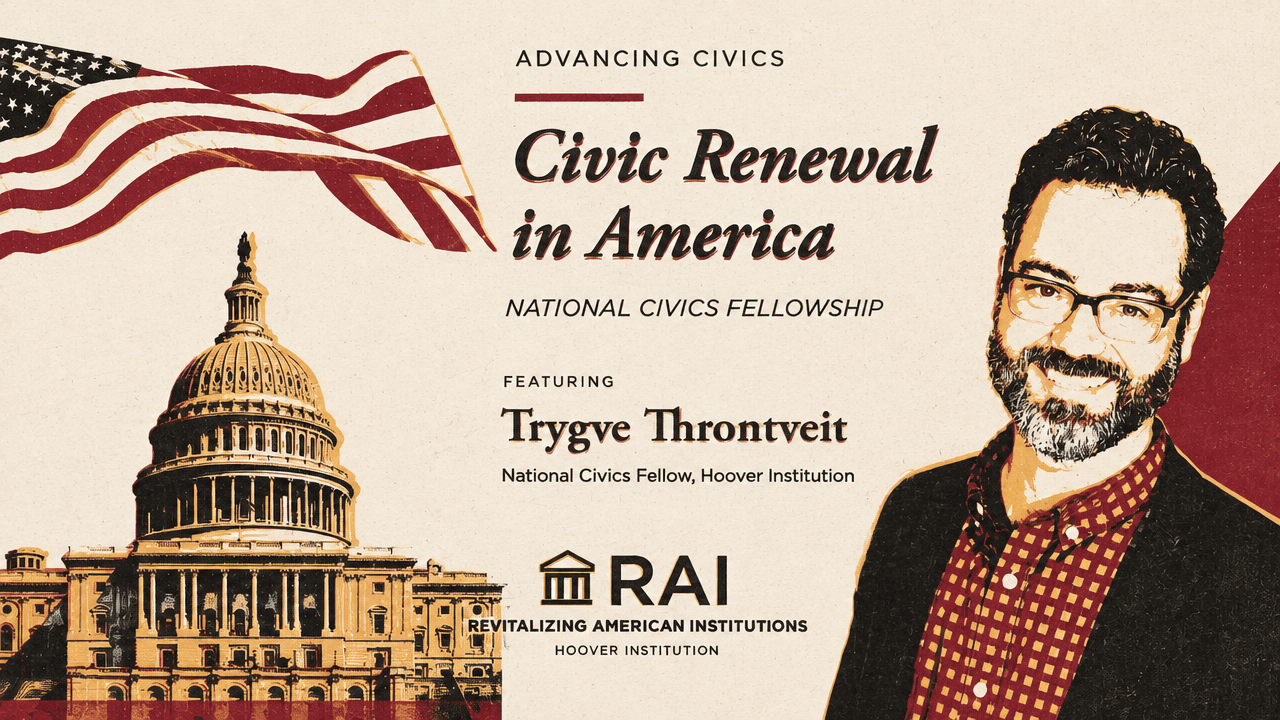
The civic problem is also a problem of how students learn
Trygve Throntveit describes a civic crisis: too many Americans, he says, have lost both the ability and the willingness to think, talk, and work across differences. The problem extends beyond political disagreement into ordinary interactions. For Throntveit, colleges and universities are a particularly visible test of whether people can learn to reason and cooperate across divides.
Higher education, he argues, should teach more than facts and formulas for getting ahead. It should also help students learn how to think, reason, cooperate, and coexist with people who differ from them. Yet many Americans now regard colleges as expensive and divisive, or even hostile to common civic life. Throntveit links that perception to a decline in trust in higher education, with consequences for the country’s social and cultural fabric and its institutions.
His proposed response, Third Way Civics, aims to make civic learning part of students’ regular coursework rather than a separate subject or an ideological lesson. The program’s definition is deliberately broader than a single course: it is a course—or a style of course—that can be adapted to different subject areas and settings. Its purpose is to infuse civic inquiry, civic identity-formation, and civic capacity-building into undergraduate teaching and learning.
Those three aims connect the method to the ordinary work of a classroom. Students inquire into civic questions, develop a sense of themselves in civic life, and build the capacity to participate in it. The point is not to add a prescribed political conclusion to a course, but to make the way students learn contribute to their ability to engage with one another and make decisions.
Students examine primary materials without being handed conclusions
Throntveit says Third Way Civics does not take sides or tell students what to think about the past or present. Instead, it puts them in direct conversation with primary sources and with one another. Students work from documents or artifacts produced during the period they are studying, or by the actors involved. They learn facts and skills through that encounter, while also practicing problem-solving that draws on different perspectives and talents.
The instructor’s role is not to serve as an ideological champion or the arbiter of what students should conclude. Throntveit is not arguing that professors have no role; he is asking them to change the aims and practice of teaching so students do more of the work of examining material and making sense of it together. The distinction matters: the method rejects prescribed answers, not instruction as such.
That shift creates a real tension. Students are asked to address urgent topics using primary materials, without a lecture or secondary text to guide their interpretation. Throntveit acknowledges that this can feel like throwing them into the intellectual deep end. The approach depends on students being willing to work through material and disagreement without first receiving an authoritative account of what it means.
For instructors, then, the change is not just a different reading list. Throntveit says it may require changing the content or aims of a course, how it is taught, and even how the instructor conceives of teaching itself. Students need room to investigate and deliberate, but they also need to develop the facts, skills, and problem-solving strategies that make that work possible. In his account, the goal is to equip them to make decisions about their own lives and times rather than supply conclusions in advance.
The civic purpose is practical as well as intellectual. Throntveit says citizens need to learn from one another, make sense of things together, and work to improve each other’s lives—even when those lives differ profoundly. Third Way Civics treats coursework as a place to practice those capacities, rather than assuming that students will acquire them separately from their academic work.
The case for the model rests on pilots and reported gains
Throntveit calls Third Way Civics a proven model, citing pilots in more than 50 courses at more than a dozen institutions across five states. The settings have included community colleges, liberal arts colleges, private and regional public universities, and public flagship universities. Faculty have used it in the humanities, social sciences, and natural sciences, suggesting that he sees it as a teaching approach adaptable across disciplines rather than a stand-alone civics course.
He reports that students show marked gains in civic engagement, greater willingness to vote and engage politically, and a stronger disposition to listen to people with whom they disagree. The results he describes map onto the model’s stated aims: participation, engagement across difference, and the ability to work through problems with others. His case is that those capacities can be cultivated within the courses students already take.
The proposal asks instructors to give students tools, skills, confidence, and hope, rather than answers about what to think. Throntveit says Third Way Civics is not the only way to address the civic crisis, but argues that it is one that works. Its wager is that classroom practice can help rebuild civic life by making inquiry and disagreement part of learning itself.