Republican Losses Expose Voter Backlash to Trump’s Economic Policies
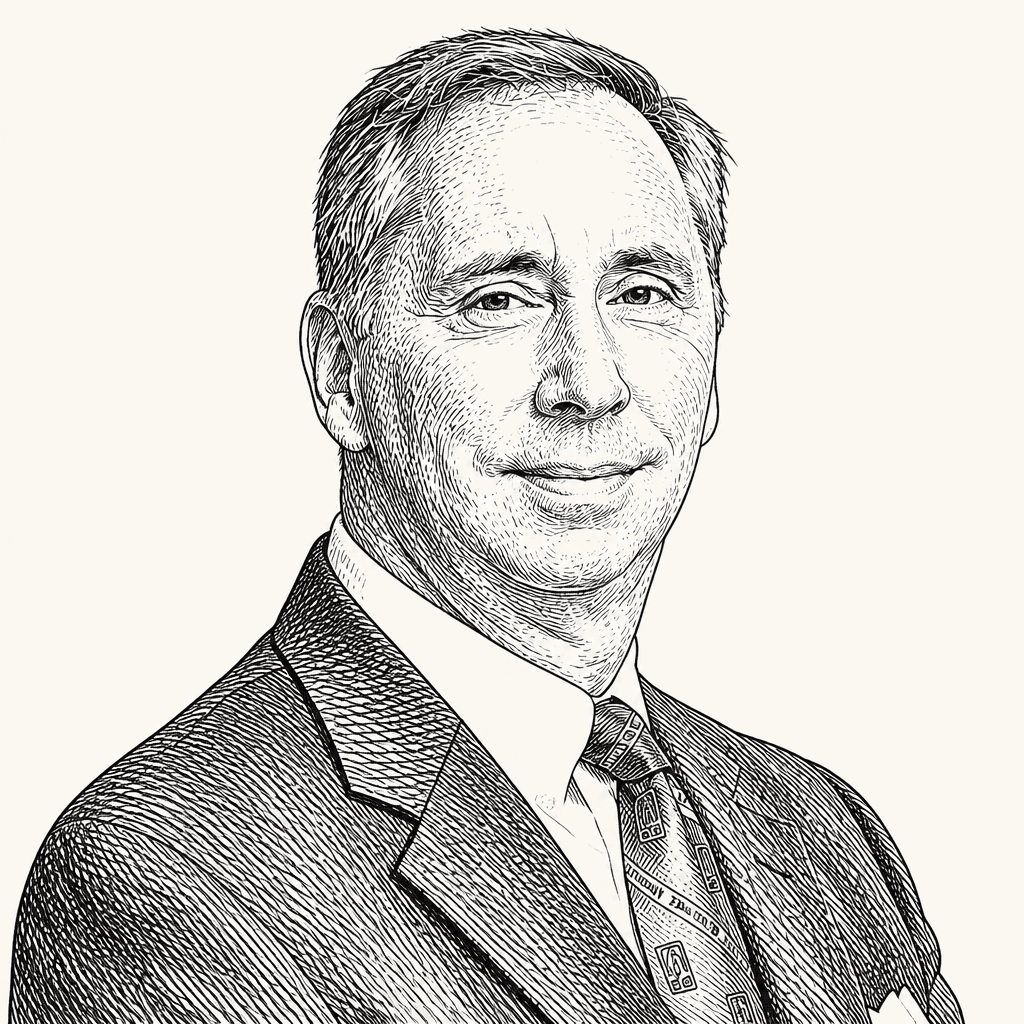
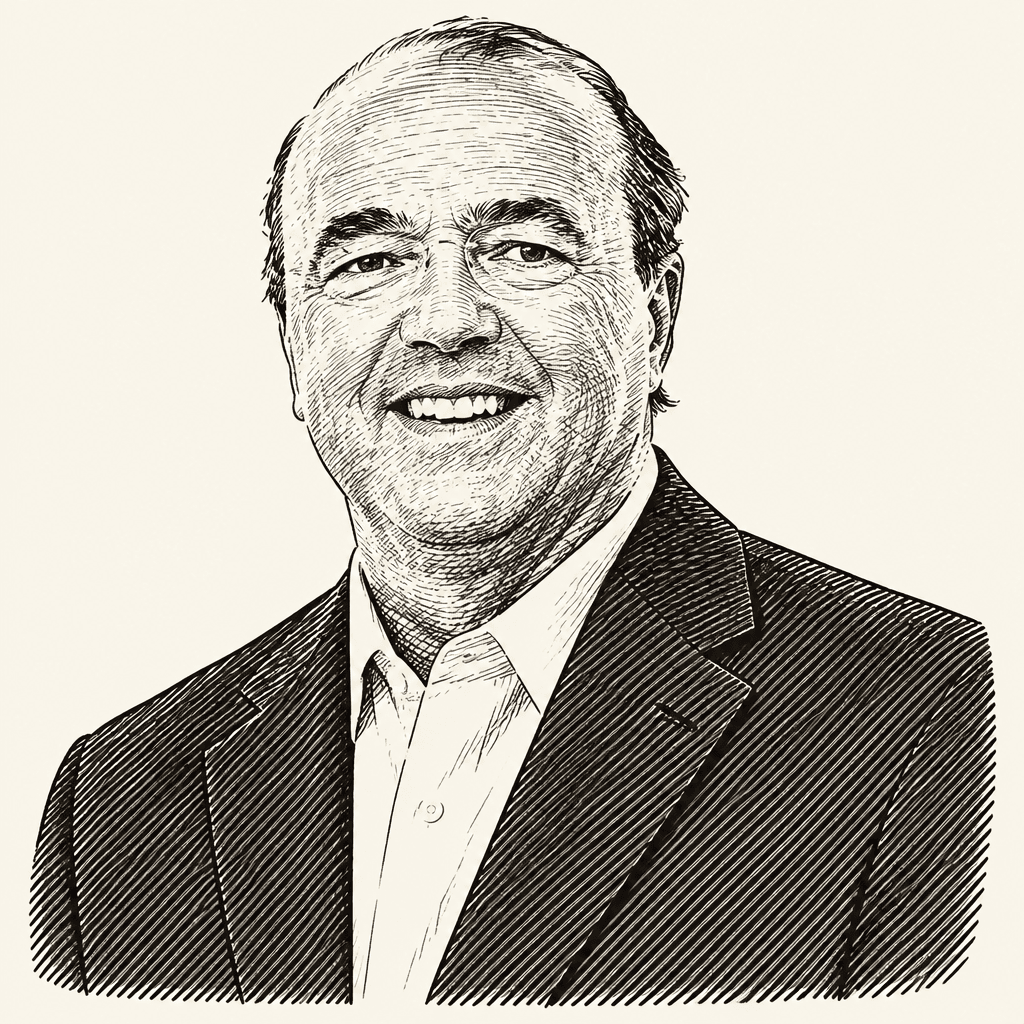
Robert Grady argues that Republicans’ 2026 losses show the limits of treating Donald Trump’s victory as a mandate: voters were reacting to economic concerns and policies such as tariffs, while even strongly Republican Wyoming rejected candidates who relied on Trump’s endorsement. The Hoover Institution overseer sees both parties facing a test of what comes next—Democrats must decide how to use their gains, and Republicans whether to move beyond Trump’s approach. He also argues that competing with China requires Americans to understand its advances firsthand, without mistaking greater contact for an end to strategic rivalry.
The losses looked less like a surprise than a warning about policy
Robert Grady’s explanation for the Republicans’ poor 2026 election performance begins with signals he says were already visible in polling: Donald Trump was deeply unpopular on the economy and inflation, and voters opposed his tariff policy. Grady reads the results as a warning that support for Trump could not substitute for attention to voters’ economic concerns or to the priorities of particular states.
In a YouGov poll before the election, Grady says, 18 percent of independents approved of Trump’s handling of inflation and 80 percent disapproved. He also cites a poll in which 25 percent approved of Trump’s tariff and trade policy and 57 percent disapproved. Before the 2024 election, he says, 90 percent of a YouGov sample did not know what a tariff was. By 2026, he argued, voters knew more about the policy—and mostly disliked it.
Grady compares the result with earlier midterm-style setbacks, including the Republican gains associated with Newt Gingrich in 1994 and the 63 House seats Democrats lost in 2010, two years after Barack Obama’s election. But the consequences, he says, depend on how a president responds. After the 1994 election, Bill Clinton moved toward the center, embraced what he called triangulation and won reelection in 1996. Grady contrasts that with Obama’s response to the 2010 losses: Obama made income inequality a defining issue and emphasized divisions of class and race. In Grady’s view, that approach helped set the stage for Trump’s 2016 victory. That is Grady’s interpretation of the political sequence, not a claim that the election results alone establish a direct cause.
Grady describes the more recent elections as a sequence of reactions: Trump’s 2024 victory as a response to Joe Biden’s move left, and the 2026 results as a response to Trump. His broader point is that presidents can mistake a narrow or contingent win for a mandate to pursue an ambitious program. Biden, he says, barely won in 2020 but took office wanting to be “the next Franklin Delano Roosevelt.” Trump won in 2024 by about 1.5 percentage points, Grady says, but described the result as a landslide and moved quickly to policies that were unpopular.
The question after the election, as Grady frames it, is how both parties use the results—and whether Trump treats the loss as a reason to change course. He considers two possibilities: that a president with only two years left will become more confrontational, or that he will try to moderate, as Ronald Reagan did after Iran-Contra and Bill Clinton did late in his term. Trump’s first personnel move offered little evidence of a turn to the center: Grady identifies Stephen Miller, an architect of Trump’s immigration policy and a tariff supporter, as his first hire.
Wyoming shows the limits of campaigning on Trump’s endorsement
Wyoming offers Grady a sharp example of the distinction between support for Republican policies and support for a candidate whose campaign centers on Trump. He describes Wyoming as the country’s most Republican state. Trump’s share of the vote there rose from 67.4 percent in 2016 to 71.4 percent in 2024, giving him the largest margin in the state in each of his three presidential races. Yet in the August 2026 Republican primary, Grady says, Trump’s endorsed candidate for governor, state Superintendent of Education Megan Degenfelder, lost by 15 points to Eric Barlow, a state senator and former House speaker.
Grady says Degenfelder’s campaign materials focused on Trump’s endorsement rather than what she would do for Wyoming. Barlow, a rancher and small-business owner, talked about energy, agriculture and jobs. Grady stresses that a non-MAGA Republican in Wyoming remains pro-Second Amendment, pro-life and anti-tax. The contest, in other words, was not between a conventional Republican and a Democrat.
A similar fight had played out in the state legislature. Wyoming’s Freedom Caucus, which Grady describes as the MAGA wing, took control from non-MAGA Republicans in 2024. In 2026, he says, 13 MAGA incumbents lost, and 20 candidates running for open seats lost contested races to non-MAGA Republicans. By August, the Freedom Caucus had lost control of the legislature.
Grady calls the result a possible sign that Wyoming had passed “Peak Trump” or at least “Peak MAGA.” He also cites an Ipsos poll, described in the discussion as having come out that morning, which asked Republicans whether the party’s 2028 nominee should take the same approach as Trump or a different one. Grady says 46 percent favored a different approach, more than favored the same one.
Grady identifies two concrete sources of dissatisfaction in Wyoming. Farmers opposed tariffs, which he says brought retaliation from trading partners and reduced demand for farm products. They also faced higher fuel costs after the Iran war raised diesel and gasoline prices. For farmers, he argues, that meant lower revenues and higher costs.
He connects those concerns to Republican losses in the Midwest, including Iowa and Kansas. Trade with Canada was also salient in northern states such as Maine, Michigan and Minnesota, he says. In Michigan, Republican Senate candidate Mike Rogers ran an ad saying, “Here in Michigan we know Canada is not our enemy,” which Grady presented as a break with Trump’s trade posture.
The examples suggest that voters in these places were responding to the effects of policies on their industries and communities, not simply choosing between MAGA and non-MAGA labels. In Wyoming, the state-level results also showed, in Grady’s account, that voters could favor core Republican positions while rejecting a candidate whose main message was Trump’s endorsement.
Neither party can treat the election as a settled mandate
Bill Whalen observes that Democrats did not campaign on a detailed equivalent of Gingrich’s Contract with America, or on a simple attack against a do-nothing Republican Congress. With the results in hand, the question is what Democrats will do with the power Whalen says they won.
Robert Grady expects a fight over the Democratic Party’s direction. On one side are progressives who want a forceful national agenda, including Medicare for All, a wealth tax, universal basic income and ending aid to Israel. Grady points to Michigan’s Abdul El-Sayed, who he says supports several of those positions, and to Elizabeth Warren’s repeated calls to “tax the billionaires.”
But Grady argues that many of the candidates who helped deliver Democratic victories ran as moderates. He names Annie Andrews in South Carolina, Josh Turek in Iowa, Roy Cooper in North Carolina and Adam Hamilton in Kansas. The election, in his reading, therefore does not settle which agenda voters endorsed.
Chuck Schumer faces an additional pressure point. Grady says Schumer has announced that he will seek election as majority leader and is up for reelection in 2028. He expects Schumer to feel pressure to move left. At the same time, Grady says Alexandria Ocasio-Cortez has said she would vote against Schumer, and that political operatives he knows generally believe she would beat him in a primary if she ran.
Republicans, meanwhile, have to decide what parts of Trump’s program to keep. Grady sees an opening for a candidate who can talk about economic life in human terms, rather than relying on statistics and abstract defenses of capitalism. The question is not only who can win a nomination, but whether either party can build a message that reaches beyond its most committed voters.
The 2028 field is one sign of that uncertainty, though it remains unsettled. Grady calls Georgia Senator Jon Ossoff one of the election’s biggest winners: he says Ossoff won by 18 points in Georgia, a result that prompted questions about whether he should run for president. Grady argues that politicians sometimes have to answer an opening when it appears rather than wait until they feel more experienced. He recalls Chris Christie declining to run in 2012, when he was popular as New Jersey governor, and waiting for 2016. By then, circumstances had changed.
California Governor Gavin Newsom presents a different calculation. Grady thinks Newsom could be formidable in a general election against Vice President JD Vance, in part because he has tried to soften his image as a hard-left California liberal. Grady cites Newsom’s appearance on Joe Rogan’s show, his criticism of allowing boys in girls’ locker rooms, and his opposition to California’s billionaire tax. Whalen points out that these positions may put Newsom at odds with progressives, particularly because Newsom has also supported a national billionaire tax. Grady agrees that choices that might help Newsom in a general election could cost him with primary voters.
Grady doubts Ocasio-Cortez would perform well in a national campaign, particularly on foreign policy, but says a Senate run in New York would be a safer route. On the Republican side, he doubts Vance can win a general election, though he sees him as well placed to win the nomination. He sees Secretary of State Marco Rubio as a possible alternative who can speak to policy-minded Republicans while remaining acceptable to Trump’s base. A presidential bid, Grady notes, would likely require Rubio to leave the State Department.
Grady also points to former Virginia governor Glenn Youngkin, who accepted Trump’s endorsement without campaigning as an all-in MAGA candidate. That balance, he argues, could make Youngkin formidable in a general election. Whalen counters that competence may be a stronger argument with general-election voters than in a primary.
The candidates are not the only vulnerability for Republicans. Grady recounts Donald Trump Jr. declining to rule out a 2028 run at a public conference. Asked about the appearance of conflicts of interest while he and his family were doing business internationally, Trump Jr. said that the family had previously avoided global business to prevent even the appearance of a conflict, but that “this time, we’re going to do whatever we want.” Grady connects the remark to voters’ concern about corruption: he says exit polling found that 90 percent of voters called corruption a crucial or significant issue, and half said it was crucial.
Grady says voters were reacting to what they saw as profiteering by the president’s children and associates, as well as the president’s meme coin. He also says Republicans had their own corruption concerns, citing allegations of large-scale fraud involving public programs in Minnesota. Grady criticized then-lieutenant governor Peggy Flanagan’s response, saying she denied knowledge of the fraud and defended those accused rather than calling for investigation. His point was that corruption could trouble voters in both parties, though he described different concerns among Republican and Democratic voters.
That issue intersects with the public standing of technology companies. Grady says controversies involving wealthy executives and their businesses can feed criticism of technology, data centers, AI and billionaires. He calls the backlash against tech companies on the left striking given that he sees those companies as among the country’s most successful and widely used businesses. The concern, in his account, is not only reputational damage to particular executives. It is that their controversies may make it harder to defend the industry and the investments required to compete.
Data centers test whether growth can be made tangible
The backlash against data centers is a test of whether a pro-growth argument can reach voters wary of the infrastructure required to support it. Robert Grady says large technology companies underestimated public concern. Opposition has become bipartisan: he cites New York Governor Kathy Hochul’s moratorium, restraints on new projects imposed by Josh Shapiro, whom he describes as a moderate, and Texas Governor Greg Abbott’s requirement that proposed data centers undergo audits. Those audits, Grady says, examine whether a project has enough energy and water and whether it will strain the grid.
Grady links opposition to broader unease about AI. He says more than 70 percent of Americans think AI will have a negative effect, while 80 percent of the public in China thinks it will be positive. People in the United States worry about job losses, among other consequences. That response, he argues, means the data-center fight is not over. Technology companies are beginning to spend money to explain the benefits, including job creation and the need for computing capacity if the United States is to compete internationally.
Those benefits, in Grady’s account, are not self-evident. If companies want public support, they will have to make a case for what data centers mean for people’s communities and economic prospects, not only for the strategic importance of AI.
He makes the same point about economic growth more broadly. Grady sees political room for a center-right program organized around a better life for children and grandchildren, with growth as a means rather than a slogan. That means discussing jobs, college costs, safe communities and care for aging parents, while making the case that the country needs to compete in the world economy.
He also argues that such a program should preserve investment in basic research. He favors lower taxes and less spending, but says the United States should not dismantle the research enterprise that produced advances in high-performance computing, materials science and biomedical research. Growth, in his account, depends on both fiscal discipline and investment in the capacities that support innovation.
Grady ties that vision to the federal deficit. He says the United States cannot keep adding $2 trillion a year to its debt indefinitely. He invokes a formulation associated with Hoover colleague Niall Ferguson: when a country spends more on debt interest than on national security, it faces the “fatal arithmetic of imperial decline.” Grady also describes an unsuccessful effort by Treasury Secretary Scott Bessent to support Treasury prices by buying securities. In his telling, a few billion dollars of intervention cannot solve the problem if the government is issuing $2 trillion in new debt a year, in addition to refinancing existing debt.
His proposed political argument is to connect deficit reduction to growth and living standards: reduce the deficit, support growth and improve the prospects of ordinary households. That is different from presenting fiscal restraint as an end in itself.
A related case for growth, Grady says, should include America’s allies. He calls the network of partners the United States’ strongest strategic asset in competition with China—one China cannot replicate. He therefore questions the logic of imposing tariffs on allies such as Canada, South Korea, Australia and European countries while asking them to help the United States compete.
China’s modernization and the case for more direct contact
Robert Grady’s assessment of competition with China is informed by a trip there with a Hoover and Stanford delegation. He had last visited in 2013, after making roughly two dozen trips beginning in 1998, when his firm helped take three Chinese companies public in the United States. Later, at Carlyle, he visited as the firm opened offices in Beijing and Shanghai and invested in Ctrip, an online travel company.
The return visit showed him a country that had continued its rapid industrialization. He describes China as modern, prosperous and cleaner than he remembered, with more than half the cars on the road electric. The delegation visited companies working in robotics, electric vehicles, industrial production, battery materials and AI. Grady says China is “racing ahead” in these fields, and argues that Americans should go to China and understand what the country is doing if they want to compete successfully.
The trip also brought questions about the American election. Grady says people in China wanted to know how the United States could change policy every two years and manage its economy under a system so different from China’s planned state economy. They were also trying to understand what Trump’s actions meant. Grady describes a contrast between the language of cooperation at summits and the continuing reality of competition: tariffs and export controls remain in place, and he says Chinese actors continue efforts to capture or steal American intellectual property. He also describes concerns about exit bans on business executives and says the delegation was advised to leave with the group rather than travel alone.
At street level, however, Grady found a country that felt familiar. People were friendly, and he saw many people wearing New York Yankees hats. He says Chinese citizens encounter a different image of Americans in person than they do in state media, just as Americans who do not travel to China may know little about the country beyond its policy conflicts. He recalls his former boss, George H. W. Bush, saying, “It’s hard to hate up close,” and argues for restarting exchanges and visits as a way to reduce tension.
The imbalance in educational exchange stood out to him: Grady says there were only 3,000 Americans studying in China, compared with 275,000 Chinese students studying full-time in the United States that year. He presents that disparity as a reason for more Americans to learn about China directly, not as an argument to ignore the strategic competition.
For public companies, the institution can outlast the executive
Bill Whalen raises the case of Nvidia chair Jensen Huang amid discussion of possible chip smuggling into China, and asks what investors should make of technology companies whose CEOs have become highly visible public figures. Whalen’s framing was conditional: he asked what it would mean “if it turns out” that a person he called Huang’s paramour was smuggling Nvidia chips into China. The discussion does not establish that the allegation is true. Grady distinguishes between large public companies and earlier-stage ventures.
For a large public company, Grady argues, the CEO’s prominence can obscure the institution behind the person. He points to Nvidia’s thousands of employees and says the company has a capable leadership team, including a CFO who was serving as acting CEO. The relevant questions for investors, in his view, are what the company does, whether it has a durable advantage, how its product compares with competitors, and whether its margins and growth justify its valuation. He describes the media’s fixation on CEO personalities as excessive.
We’re underwriting two things. We’re underwriting a business plan. Does this make sense? Do you have a moat? Do you have a differentiated technology that’s gonna be hard for somebody to replicate? And we’re underwriting a team. Can your team do it?
In venture capital and middle-market private equity, Grady says, the founder and team are central to underwriting an investment. Investors assess both the business plan—whether there is a defensible advantage and a path to strong margins—and the team’s ability to execute it. He says his firm’s portfolio studies found its strongest returns when investors correctly assessed the talent at the outset and did not replace the CEO. He acknowledges that a CEO change may happen because a business is already underperforming, but says the results after a change were weaker.
Grady has a long history with Nvidia: his former firm, Robertson Stephens, took the company public in the late 1990s. At the time, he thought of it as a maker of graphics chips for gamers. Huang later described the company as an “overnight success story made over 35 years.” Grady calls the current situation tragic, but sees a difference between the public company and the founder-led start-ups where investors must judge whether one person can make the business work.
He also worries that controversies involving prominent executives can become ammunition against technology companies more broadly, including data centers, AI and billionaires. In his view, an allegation involving Nvidia could damage the case for a constructive relationship with China even while competing with it: the conclusion some people might draw, he says, is that China is still spying. The resulting political backlash may be aimed not only at individual leaders, but at some of the country’s most successful technology companies.
States compete on the practical conditions for business
The discussion of economic growth also turns to decisions made by state governments. Robert Grady says investors look at whether a state is open and welcoming to business, alongside its finances and business climate. Whalen points to states advertising their advantages and asks what, beyond promotion, helps an investor judge whether a state has its act together.
Grady names the practical conditions: speed of permitting, electricity costs and reliability, taxes, and the availability of talent. He says electricity reliability and cost have hurt California. The movement of venture-capital and private-equity firms from California to Florida, Texas and, increasingly, Tennessee reflects a mix of considerations, he says. Those states have no state income tax, while California’s top rate is about 13.5 to 14 percent, before other taxes. The tax burden matters, but it is not the whole story.
Talent and the surrounding business ecosystem remain a major advantage for California, Grady says. The state still has the country’s largest concentration of venture capital, supported by an installed base of technologists as well as lawyers, investment bankers and investors who help companies form and grow. Massachusetts, he says, also has a vibrant investment community. Other states are trying to build similar ecosystems, and Grady says Tennessee and Texas are succeeding in attracting business. A company’s assessment of a state therefore includes both its costs and whether it can recruit the people and services it needs.
The conversation distinguishes moves between states from moves out of the country. Grady cites a study by Michael Porter, saying that 70 percent of corporate moves over the prior couple of decades were between states rather than between countries. That mobility, in his view, gives governors a practical reason to consider tax rates, permitting and energy availability. Companies can move when they judge those conditions to be more favorable elsewhere.
He offers New Jersey under former governor Chris Christie as an example of a state trying to reverse a pattern of business departures. Grady says the state had lost businesses and corporate headquarters for years before Christie took office. In his first four years, Grady says, New Jersey attracted more than 100 companies back, while unemployment fell and tax revenues rose. He presents the record as a case for a governor’s ability to make the state more hospitable to business.
Grady also describes a dispute in New York over the location of Citadel’s headquarters. The firm chose Miami over New York. Afterward, New York Mayor Eric Adams promoted a tax on second homes and held a press event in front of Ken Griffin’s New York residence. Griffin objected, Grady says, arguing that the event exposed him and his employees to safety risks. Grady connects the episode to the broader question of how business leaders experience a state’s climate—not only its tax rules, but also how officials treat and publicly identify them.
A more stable politics would require competition for the middle
Robert Grady describes the United States as having moved from decades of Democratic dominance in Congress to rough parity. Since the early 1990s, he says, the country has been close to evenly divided. He cites a Gallup poll in which 27 percent identified as Republican, 27 percent as Democrat and 45 percent as independent.
He sees several forces pushing politics toward the fringes. Redistricting and campaign finance protect incumbents: in a Stanford paper based on 25 years of elections, Grady found that the average House, Senate or state legislative incumbent outspent the average challenger by nearly 12 to 1 on election day. Social media then reinforces existing views by feeding people more of what they already engage with. A fourth factor, he says, is geographic sorting: liberals move toward places such as California or New York, while conservatives may leave those states for Texas or Tennessee.
Some reforms aim to make candidates compete for voters beyond their party. Grady mentions California’s top-two primary, in which the two highest finishers advance regardless of party, but says he has not seen much evidence that it has achieved that purpose. Bill Whalen adds that parties can game the system by helping a weaker opposing candidate reach the general election. Ranked-choice voting is another proposal, though the speakers question its performance, pointing to Alaska’s still-unresolved result nearly two weeks after the election.
For Grady, institutional rules are only part of the answer. He names economic growth, better education, safe streets and international competitiveness as issues on which many Americans could agree. The question is who can lead on them in a way that earns support. He argues that effective leaders explain why a policy is in the public’s interest and persuade people to support it. “Real leaders don’t read polls,” he says. “They change polls.”
Whalen and Grady also describe a lost habit of political comity. Whalen recalls senators talking in the Capitol Hill squash club; Grady remembers Tip O’Neill and Republican leader Bob Michel disagreeing on the House floor and then sharing a drink and trying to find a way forward. Their point is not that the parties stopped disagreeing. It is that, in their recollections, disagreement once coexisted with personal relationships and negotiation.
Grady’s account of the political system combines that interpersonal change with structural pressures: district boundaries, campaign finance, social media and geographic sorting. He suggests that reforms might encourage candidates to compete for a broader electorate, while Whalen emphasizes the role politicians themselves could play in restoring civility. Neither presents a single fix. The discussion ends with a question they leave open: how to build more common ground around issues such as growth, education, safety and competition with China while allowing disagreement on others.