AI Narrows Ugandan Breast-Cancer Vaccine Targets From 15,000 Sites to 15
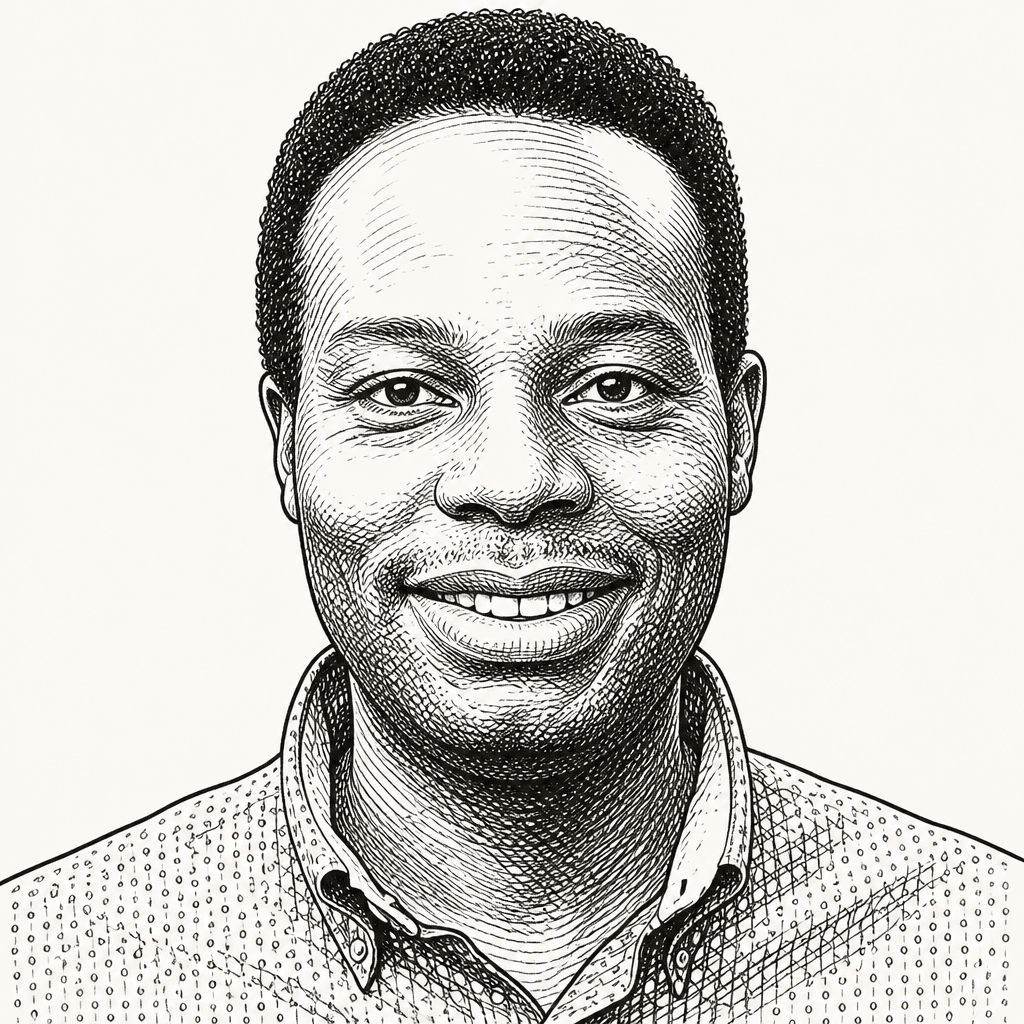
Dr. Daudi Jjingo of Makerere University argues that AI-enabled biology can move Ugandan breast-cancer research earlier and closer to where the disease burden is being seen. In a Google DeepMind source, he describes using tools including AlphaFold and AlphaGenome to narrow 15,000 possible sites in a highly expressed breast-cancer protein to 15 candidates for lab validation, a step he says could eventually support vaccine development. The source presents the immediate change not as a finished vaccine, but as local capacity: work Jjingo says once required better-resourced settings abroad can now be done with a laptop and server access.

Uganda’s breast-cancer problem is showing up earlier than the health system often catches it
Daudi Jjingo says Uganda is seeing breast cancer earlier than other parts of the world, while testing often comes only after symptoms appear. He gives the scale as one in twelve females getting breast cancer at some point in their life, and says survival is lower partly because cancer testing is not done as regularly.
The shift he wants is earlier screening “at a genetic level.” In his account, women in Uganda often get health-care assistance when they are already seeing symptoms; if screening happened much earlier, he says, “we’d be able to do much better.”
That genetic-level emphasis is visible in the work shown on screen. A code editor is labeled “ALPHAGENOME ANALYSIS OF BRCA1 NON-CODING VARIANTS,” followed by genomic data tracks labeled “BRCA1” and “breast epithelium.” An unidentified speaker points to a variant and says it shows “a higher expression.” The source connects these screens to Jjingo’s broader aim: understanding breast cancer earlier through genetic and molecular analysis.
The vaccine path depends on narrowing targets before the lab work
Jjingo describes the work as target identification. “A lot of the work that we’re doing,” he says, “is to identify targets that could be used as vaccines.” An unidentified speaker says the team identified a protein highly expressed among breast cancer patients, and that if the targets are validated in the lab, the result “could be life-changing for breast cancer here in Uganda.”
The research is presented as a narrowing process: a way to reduce a large biological search space to a smaller set that can be tested. Jjingo says the team began with 15,000 sites within the protein. Using AlphaFold, they reduced the range to 15.
| Stage | Scope described | Status |
|---|---|---|
| Initial protein search space | 15,000 sites within the protein | Starting set described by Jjingo |
| Narrowed target set | 15 sites | Narrowed computationally using AlphaFold |
| Vaccine development | Possible candidate if targets are effective | Dependent on laboratory validation |
Jjingo’s next step is experimental confirmation: “If they turn out to be effective, then we have a candidate for vaccine development.”
If they turn out to be effective, then we have a candidate for vaccine development.
The visuals reinforce the same workflow without claiming a finished vaccine. A projected slide labeled “Breast cancer proteins in AlphaFold DB” shows a 3D protein structure and charts. A laptop screen attributed to alphafold.ebi.ac.uk displays a 3D protein structure model at “alphafold.ebi.ac.uk/entry/A0A024RBF3.” A later slide is titled “Top Five predictions with AlphaFold peptides” and labels molecular components including “TCR α,” “TCR β,” and “MHC-1.” Together, the screens point to protein-structure analysis, peptide prediction, and possible target sites as the immediate scientific terrain.
The enabling shift is doing this work in Uganda
The infrastructure claim is as important as the biological one. Daudi Jjingo says this type of research previously would have been done abroad, because those environments had the necessary resources. With tools such as AlphaGenome, AlphaFold, and Antigravity, he says, the work can now be done locally because the capital cost is much lower.
His description of the required setup is deliberately modest: “Once I have a laptop and connect to a server, that gives me a lot of power.” He says that connection gives access to “the latest tools” and “the most powerful technology.”
That is what Jjingo means when he says Google DeepMind is “democratizing the kind of science that we can do.” The phrase is tied to a concrete shift in capacity: research that he says once depended on better-resourced environments abroad can now be conducted by a team at Makerere University with a laptop, a server connection, and AI-enabled biological tools.
The local placement matters because the disease pattern he describes is local as well. Uganda, in his account, is seeing earlier-onset breast cancer, lower survival, and irregular testing. The tools he names do not make validation unnecessary; they make the upstream search for genetic and protein-level targets more feasible where the burden is being observed.
The public-health ambition runs through a narrow scientific bottleneck
Daudi Jjingo closes the logic by asking the viewer to “imagine a cancer vaccine.” That, for him, is where there could be “straight translation from our research to public health impact, here and globally.”
The path described in the source is sequential. Uganda’s breast-cancer burden motivates earlier genetic-level analysis. The team examines variants and protein expression, including a protein described as highly expressed among breast cancer patients. AlphaFold and related tools help reduce 15,000 possible protein sites to 15 candidates. If those candidates prove effective, Jjingo says they become candidates for vaccine development.
The immediate achievement is the compression of a broad target search into a small set of candidates, and the ability to do that work from Uganda with a laptop, server access, and modern AI tools. Jjingo’s public-health ambition depends on what happens next, but the source presents the computational narrowing as the step that makes the next stage more reachable.