The 2028 Election Is the Critical Test for U.S. Democracy


Political scientist Barbara F. Walter argues that the United States is becoming more vulnerable to political violence as democracy weakens and political parties increasingly align around racial and religious identity. She expects the November midterms to be relatively peaceful if Democrats win decisively, but says the deeper risk will persist: efforts to hold on to political power could make the 2028 election a more dangerous test of whether American democracy remains competitive.
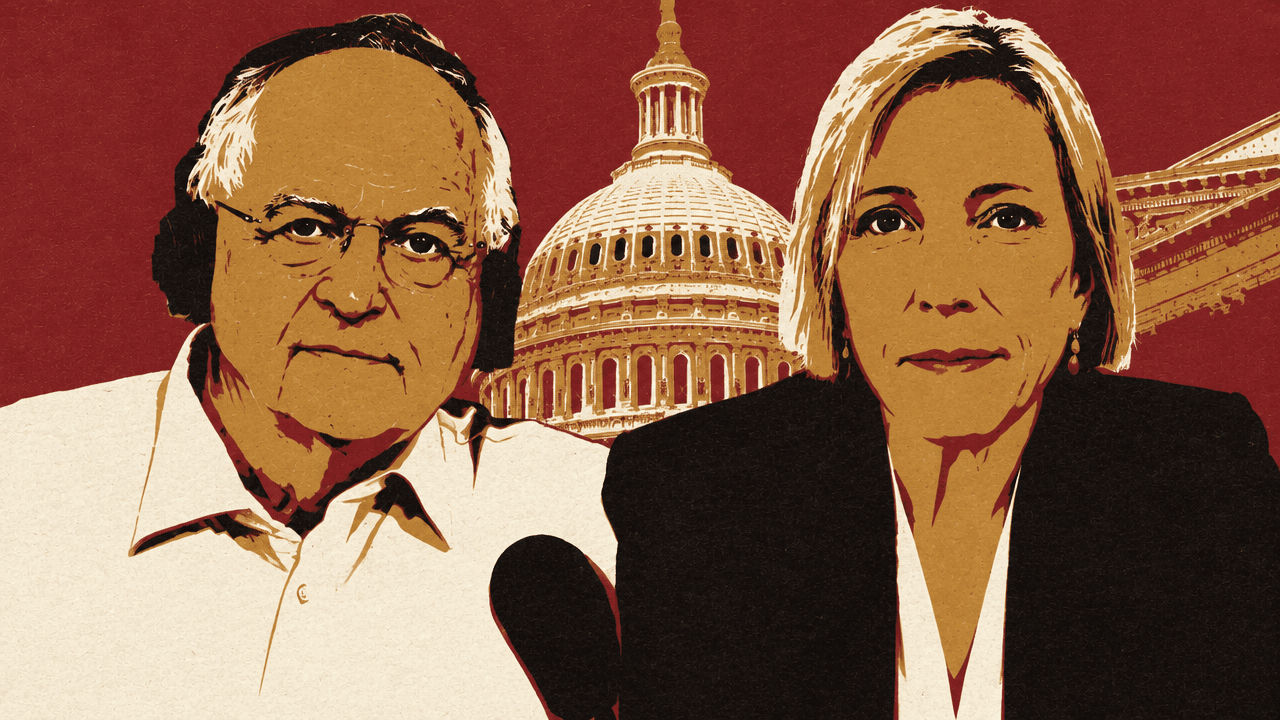
A peaceful midterm would not settle the longer-term risk
Barbara Walter expects the November midterms to be relatively peaceful. She thinks Democrats are likely to win decisively, making it harder for Donald Trump and his allies to change the outcome. If Democrats appear to win but Republicans retain control of Congress, she expects protests, though not necessarily violence. A close or contested result, she says, would be more concerning than an overwhelming one.


Her warning is about the conditions that may persist beyond election day. Walter sees the United States as a weak democracy with political parties increasingly organized around racial and religious identity. She says those conditions have worsened, particularly since Trump returned to power. The midterms may pass without major unrest, while the broader risk accumulates over years.
The Financial Times displayed a chart comparing the United States and the United Kingdom, captioned “Dissatisfaction with democracy has jumped recently in the US and UK.” It showed the percentage of survey respondents dissatisfied with democracy in each country.
Martin Wolf asks whether a model developed using countries with poorer economies and more fragile democratic histories can be applied to a republic with a long institutional past. Walter says it can, while cautioning that the United States will not necessarily resemble those countries in every respect. She says the model found an annual risk of political violence of about 0.4 percent when the relevant conditions are present; the risk rises when they persist.

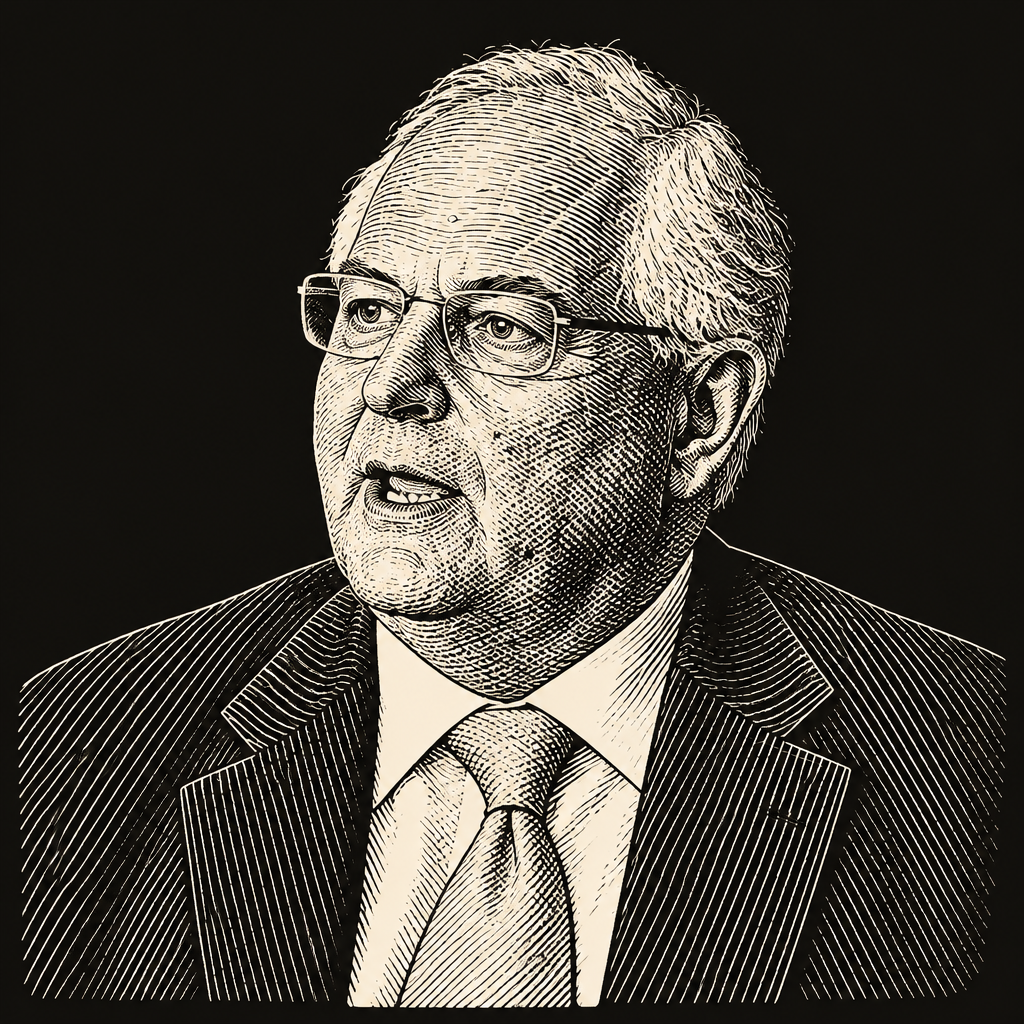
The key moment is going to be in 2028.
That longer horizon helps explain why Walter can expect a relatively peaceful midterm and still warn of danger. Her concern is less that violence is certain next week than that political conditions and future electoral contests could make it more likely.
Weak democracy and identity-based parties are the model’s warning signs
Walter served on the CIA-run Political Instability Task Force, whose purpose included developing a model to identify countries at risk of instability or violence within the next two years. Experts initially offered data analysts 38 possible risk factors, including poverty, inequality and discrimination against minority groups. Walter says the model identified two factors as especially important.
The first was anocracy: a partial, weak democracy combining democratic and autocratic features. Elections may be held, but the system has autocratic elements; Walter gives as an example a country where the same party tends to win every election. The second factor was political parties organized principally around race, religion or ethnicity rather than ideology. She points to early-1990s Yugoslavia, where people voted along Serb, Croat and Bosnian Muslim lines.
Walter says that when both features are present, the task force placed a country on a watch list for instability or violence. In her view, if the task force were allowed to study the United States, it would currently be on that list, because both conditions are present and worsening. Wolf cites recent V-Dem data showing a rapid decline in the United States on the democracy-to-anocracy scale; Walter calls it the fastest decline of any advanced industrial democracy in the history of the world.
Walter connects those conditions in the United States to demographic change and the struggle to retain political power. By around 2045, she says, the country is expected to move from a white-majority to a white-minority population. In the cases she has studied, she says, violence is often initiated not by the poorest or most oppressed group, but by groups that were once politically and economically dominant and feel they are losing status. She identifies white Christian men as the group that has held political and economic dominance in the United States, and says measures including salaries, employment, education and health outcomes show white men declining relative to others.
That perceived loss of status, Walter argues, helps explain the transformation of the Republican Party and the rise of Trump. People who believe they are losing power may feel aggrieved by the advancement of others, she says. They may still have access to political levers and try to use them to preserve their position.
Walter links that effort to developments she says disproportionately harm non-white Americans, including voter suppression, cuts to education, health care and social services, and the repeal of Roe v. Wade. She also points to the “tradwife” movement. In her view, these developments reflect resistance to the political rise of groups that were previously marginalized.
The party coalition has changed, too. Before 2008, Walter says, white voters were divided between the parties, and many white working-class voters supported Democrats because of the party’s economic and social policies. After Barack Obama’s election, she says, white working-class voters increasingly gravitated toward the Republican Party, drawn by a message of hope, power and agency. Walter says the Republican Party is now 80 percent white, in a country that is multiracial, multi-ethnic and multi-religious. She argues that racial identity and status help explain why some white voters support a party whose policies, in her view, hurt them.
The historical parallel is about losing political power
Wolf asks whether the politics Walter describes amount to an attempt to extend the Jim Crow system beyond the South and make its logic national. Walter agrees, drawing a parallel with the political crisis before the Civil War.
In her account, Southern landowners seceded after Abraham Lincoln won the 1860 election without the support of the Confederate states. Before then, she says, a president could not reach the White House without Southern backing, allowing the South to ensure a pro-slavery president. Immigration was increasing the Northern population and its electoral strength, while Southern white landowners understood that they could lose control of the federal government and that slavery might eventually be abolished.
Walter says white landowners used racial fear to keep poor white voters aligned with them. They warned that freed Black people would take jobs and threaten white families. She sees a related dynamic today: as non-white populations grow, and are perceived to vote disproportionately for Democrats, some white voters fear losing electoral power. In her account, efforts to suppress those votes are part of the response.
The comparison does not mean that the United States is on the verge of uncontrollable violence. Wolf notes that the civil rights era included riots, bombings and other violence, yet the republic endured. Walter says an important difference is that the White House then was enforcing civil rights, whereas she sees the current president as seeking to intimidate citizens, suppress them and concentrate power.
She distinguishes between conditions that make violence more likely and events that can trigger it. Elections are one trigger, particularly consecutive elections in which the losing side believes the result was manipulated or stolen. Walter says the MAGA base believes Joe Biden stole an election, and that Trump is extending the same claim to the midterms. She expects that narrative to be used again in 2028, and says some Republicans may see resisting a Democratic victory as a duty or a right.
Protests are another potential trigger. Walter says protests can remain peaceful for a long time; violence becomes more likely when a government responds with harsh, disproportionate force. In her view, seeing the government attack civilians can radicalize people.
She also describes a different possible path to violence. If Republicans create a political playing field so tilted that Democrats cannot take power even when they win votes, Walter says, the left could eventually turn to violence. People excluded from politics may resort to force if they see no other way to affect change. She describes the far right as the more immediate danger, while warning that prolonged political exclusion could eventually produce an uprising from the left.
Walter’s optimism depends on whether political losses remain reversible
Wolf argues that when each side regards the other as illegitimate, elections are structurally fraught. Walter agrees that this is a fight both sides believe is worth having, but does not treat major violence as inevitable.
She says she remains hopeful that the United States will avoid major violence. Her optimism rests partly on her expectation that the MAGA movement will lose momentum when Trump leaves the political scene. She doubts that an easy substitute will emerge for a figure she describes as unusually charismatic and powerful. If the United States remains a democracy, she thinks Republican leaders may conclude that they need to broaden their coalition.
Walter also points to the possibility of a White House and FBI willing to monitor far-right groups and arrest their leaders if they break the law. She says those groups have militias and have talked about and trained for violence, but have been quiet while Trump is in the White House.
Her optimism has a limit. If Republicans succeed in weakening democracy so that Democrats can no longer compete, Walter expects a different danger: more than half the country could have no voice in politics while being governed by a party whose policies they see as harmful. In that circumstance, she says, the more likely uprising over time could come from the left.
Walter says the United States may be closer to a decisive turn than many people think—within the next two years—but identifies 2028 as the critical electoral test. Countries that move from democracy into anocracy remain in that unstable middle zone for an average of seven to twelve years, she says. Countries with winner-take-all majoritarian politics, like the United States, tend to remain there longer.
Walter says about half of countries in that position continue toward autocracy, about 30 percent remain in the middle zone, and about 20 percent return to full democracy. Reform is possible, but difficult. When it happens, she says, it tends to begin in the first electoral cycle after a country enters the anocracy zone. For the United States, she identifies that test as the 2028 election: will the executive branch concentrate more power and make future elections less fair, or will a surge in voter participation remove those in power and open a path to reform? She cites Serbia, Hungary and Brazil as examples of voters removing leaders.
A midterm victory would move the test from voting to governing
Wolf returns to warning signs Walter listed in an earlier Substack post: federal changes to voting rules, partisan officials delaying or refusing to certify results, the replacement of election administrators with political loyalists, rhetoric that delegitimizes defeat in advance, and heavy spending that could shift the contest. Walter says those tactics are happening. She adds that she had not expected the degree to which the Justice Department and FBI would be weaponized.
What keeps her hopeful is her reading of voter sentiment. She says voters see a president they consider corrupt and harmful, and are angry about high gas prices and rising inflation. Early voting is high for a midterm, she says; the left and independents are energized, while Republicans appear less eager to vote. If that produces an overwhelming Democratic victory, she expects it to be difficult to overturn.
Even a decisive result would not end the conflict. Walter says winning the midterms would be the easy part for Democrats; governing afterward would be harder. She expects Trump to use his veto and executive powers to block their agenda. A Democratic-controlled Congress, especially if Democrats also control the Senate, would have real power: Walter describes Congress as the main check on presidential power and says the Republican-led Congress had chosen not to exercise that power during the preceding two years.
Democrats would need to use their authority, she argues. They could check the president, advance parts of their agenda and position themselves for 2028. But if they fail to act, or cannot overcome Trump’s resistance, voters may conclude that Democrats are weak, potentially helping Republicans in the next presidential election.