Democrats’ Midterm Landslide Rejected Trump but Did Not End Trumpism

Paul Krugman argues that the Democrats’ sweeping midterm victory was a broader rejection of Donald Trump’s politics, not simply a protest over prices—but it does not amount to a settled mandate for a new Democratic programme. In a discussion with Martin Wolf, he says control of Congress gives Democrats tools to investigate alleged wrongdoing and challenge the administration, while warning that the result neither secures American democracy nor repairs institutions weakened under Trump.
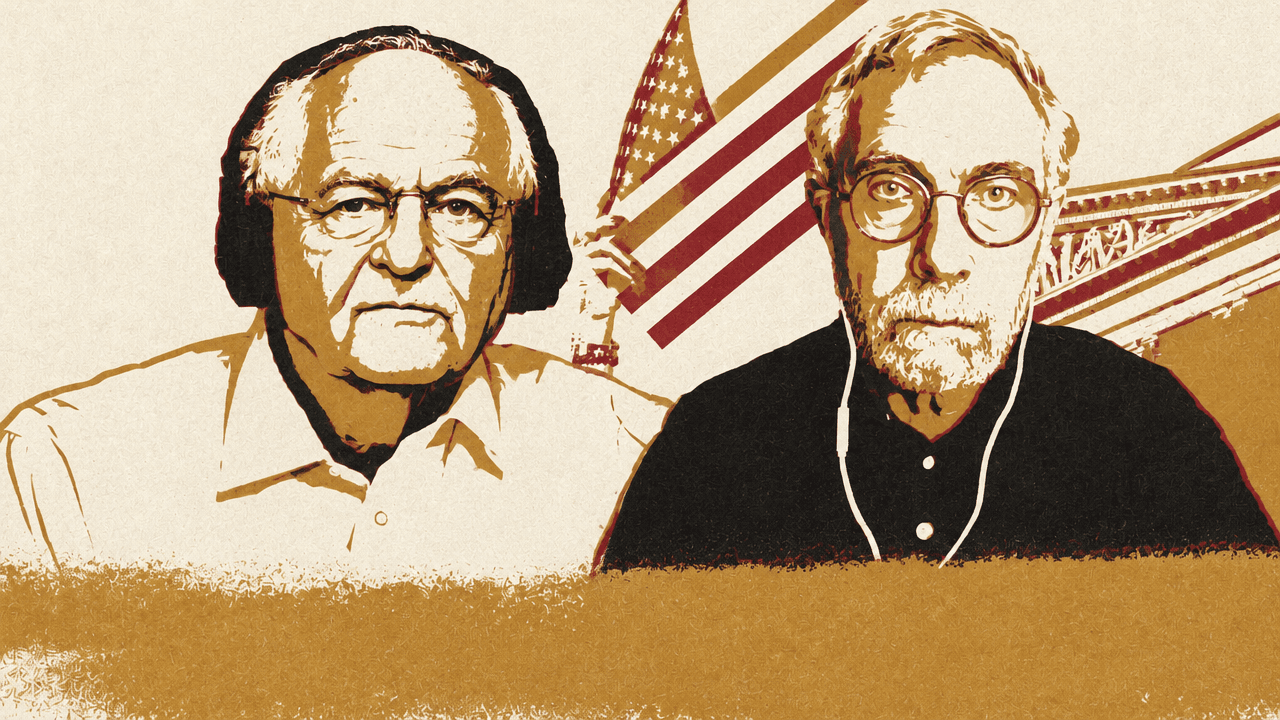
A vote against Trump was larger than an economic protest
The Democrats’ sweeping midterm victory was not simply a verdict on prices, Paul Krugman told Martin Wolf. Krugman sees economic discontent as part of the result, but argues that the scale of the swing points to a broader rejection of Donald Trump’s politics.
Krugman compared the result with 2024, when Trump won the popular vote by about 1.5 percentage points in an election Krugman described as driven substantially by the economy. He estimated that Democrats would win the House popular vote by around 13 points. That gap, he said, was too large to explain only by voters’ experience of prices.
The movement among Hispanic voters, and the surge among Black voters, also suggested to Krugman that concerns extended beyond the cost of living. Some Hispanic voters had backed Trump in 2024 because they believed his promises to cut grocery prices. Now, Krugman said, many were reacting to the sight of friends and relatives being “grabbed on the street by masked men.”
He also pointed to corruption. Voters named the economy first and corruption a strong second among their concerns. The election, in his reading, registered discontent with both material conditions and the conduct of the administration.
That does not mean voters embraced a fully formed Democratic alternative. Krugman agreed with Wolf that the result looked more like a rejection of Trump and Republicans than an enthusiastic endorsement of a new programme. The party has produced younger, charismatic politicians, he said, including Jon Ossoff, whom he compared to Barack Obama “with more edge.” Its agenda may be more clearly centre-left than before, but remains ill-defined. “They don’t have a thrilling agenda, or at least not so far,” Krugman said.
Wolf raised the risk of reading too much into the result. Democratic gains after the 2006 midterms preceded Barack Obama’s election, yet Trump became president two terms later. Krugman agreed that the underlying political threat had not disappeared. He estimated that roughly 25 to 30 per cent of the US electorate was comfortable with authoritarianism and uncomfortable with democracy—a proportion he said was similar in other Western countries. That bloc is large enough, under the right circumstances, to win.
Nor should Democrats assume that future authoritarian leaders will be as incompetent or corrupt as Trump, Krugman warned. The result was a striking repudiation, not proof that Trumpism cannot return.
Congress can expose wrongdoing, but the presidency still sets limits
Democrats take control of both chambers of Congress, but Trump remains president, with substantial executive power. For Paul Krugman, the most immediate change is that Democrats will control congressional investigations.
Committee chairs will have subpoena power and the ability to sanction witnesses who refuse to testify. Krugman said that power matters because control of Congress had been used to keep a lid on alleged wrongdoing. He expects the incoming Democratic leadership to pursue investigations more aggressively than in earlier periods of Democratic control. The prospective head of the House Oversight Committee, he noted, had posted: “lawyer up.”
The impact could extend beyond what hearings establish. Krugman argued that officials across the executive branch have been following Trump’s orders even when, in his view, those orders appeared illegal. With congressional scrutiny, officials and businesses that have accommodated the administration may begin asking whether their actions could expose them personally to legal consequences.
Investigations could also bring attention to matters Krugman believes voters suspect without fully understanding. He said he would like to see a survey asking how much voters know about the money Trump has made while in office, including crypto transactions and what Krugman called purchased pardons. He added that voters may have a general sense that Elon Musk has done harm without knowing the details.
Major media organisations, Krugman argued, have often failed to report on such matters, or have presented unequal conduct as though it were symmetrical. Congressional hearings can make an issue newsworthy: video of Trump-related witnesses struggling on the stand, he said, could bring allegations to a wider audience. Corruption had already figured in the vote, though he stressed that voters who identified corruption in both parties were not thereby claiming the scale was comparable.
Investigations are not the only tool. Democrats can pass bills and force Trump to veto them, putting Republicans on record if they vote to uphold a veto of a popular proposal. Krugman saw a possible exception in Ukraine policy, where enough Republicans might join Democrats to override a veto. But he did not expect major Democratic priorities such as a new health-care programme, Medicare for All, or a nationwide wealth tax on billionaires to become law in the next two years.
The same logic could apply to impeachment. Krugman said some Trump officials, including Pete Hegseth, were deeply unpopular within their own party. But Trump might fire them before Congress could impeach them. Even if an impeachment did not remove an official, forcing Republicans to oppose it could have political value.
Budget brinkmanship is the place for caution
The budget may force Democrats to make a harder strategic choice than investigations or veto fights. Paul Krugman said Trump would no longer have the kind of legislature that passed his “one big beautiful bill” act. A dispute could lead to a shutdown or another confrontation over the debt ceiling, at a time when the US fiscal position already concerns him.
Krugman described himself as a deficit dove, but said he was uneasy about deficits of 6 per cent of GDP at full employment and debt at 100 per cent of GDP. By those measures, he said, the US and France looked identical. The difference, in his account, was that the US borrows in its own currency, which is also the world’s dominant currency; that had so far spared it a France-style rise in borrowing spreads.
The politics of a shutdown are uncertain. Past examples suggest the party blamed for halting government has suffered, Krugman said. But previous confrontations involved a more popular president than Trump, whose approval Krugman described as around 35 per cent, with almost no strong approval. He said it was not clear how that difference would affect the political calculation.
Martin Wolf urged Democrats to avoid a crisis that could plausibly be presented as their fault, particularly because the voters who backed them may not want a confrontation that disrupts government. Krugman agreed that this was an area requiring finesse, and said he did not know how Democrats should play it. They might try to defund specific items, such as a proposed ballroom or Immigration and Customs Enforcement, but provoking a full fiscal crisis would be a tougher call. The choice, he said, could depend on how outrageous Trump’s demands and conduct became.
The result checked a rigged system; it did not repair it
Paul Krugman cautioned against treating the election as proof that US democracy is secure. Krugman characterized the election system as heavily rigged in Republicans’ favour: because of Republican gerrymandering, he estimated that Democrats probably needed a 4–5 per cent popular-vote margin to take the House. A Democratic margin of around 13 points overwhelmed that advantage. In some cases, the maps may even have backfired on Republicans.
He compared the result with Hungary under Viktor Orbán, where, in Krugman’s account, a system designed to make defeat difficult was overcome by an enormous surge of voter revulsion. In both cases, he said, the backlash was “too big to rig.” That outcome is encouraging, but it is not a safeguard that can be relied on next time.
The damage he sees goes beyond election rules. Trump’s treatment of international agreements, Krugman argued, has weakened the credibility of US commitments: other governments will know that a future Trump-like president could simply disregard an agreement. The same problem applies to government agencies. Even if a Democratic president and Congress take office after 2028, Krugman questioned whether experienced civil servants would return to institutions where their work might be meaningful for only four years.
He described the loss of people who had accepted lower pay in government because they believed their work mattered. That applied in places such as the Treasury and the Federal Reserve, he said, and extended to the military. Krugman referred to surveys suggesting that a majority of military officers had either left or were strongly considering leaving. After experienced officers were dismissed for lacking political loyalty and less competent people were brought in, he asked, could the military be rebuilt as it had been?
Wolf added the Justice Department, foreign service, intelligence services and Internal Revenue Service to the list of institutions needing repair. Krugman pointed to an example he called almost absurdly mundane: Social Security checks carrying political messages praising Trump. If even basic administration becomes politicised, he asked, how can government recruit people to competently collect payroll taxes and distribute pensions?
Krugman said the old bipartisan establishment—sometimes called “the Blob”—had provided a degree of continuity across administrations. In his view, that shared understanding has collapsed, leaving politics everywhere and no obvious basis for restoring credibility in US policy. Wolf put the consequence starkly: in trying to blow up what the administration called the “deep state,” Trump’s allies risked blowing up the state itself. A modern society, he said, cannot easily function without one.
A Democratic Congress cannot remove the president’s foreign-policy reach
A Democratic Congress cannot remove all the risks of the remaining two years. Martin Wolf noted that the presidency retains substantial power, particularly in foreign policy, and asked whether Trump might feel he had little to lose after the election.
Paul Krugman cited speculation that Trump might resume bombing Iran after the midterms, including rumours—whose basis Krugman explicitly said he could not check—that use of a tactical nuclear weapon had been seriously considered. He said the scale of the Democratic victory might have discouraged such action, but emphasised that this was uncertain. Foreign policy and military action, he said, remained areas where Trump could do immense damage; he was less sure how much he could still do domestically with a large Democratic majority in Congress.
Wolf stressed that the consequences would reach beyond the United States. Krugman’s concern was not only that another Trump-like figure could emerge, but that the country had already weakened its position in the world. He said US military and diplomatic credibility had been badly damaged, as had scientific institutions. Wolf added universities and the health department, where Robert F. Kennedy Jr. was serving.
Krugman’s fear was not abstract.
I don't want my country to be a pitiful, helpless former giant.
He argued that the damage had accumulated in only two years. Wolf said Xi Jinping and Vladimir Putin were among those in a stronger position than they had been two years earlier, and that any recovery would take a long time.
Big donors helped Republicans lose touch with voters
Paul Krugman described the influence of wealthy donors as consequential but not mechanically decisive. When 20 donors account for roughly 15 per cent of campaign spending, he said, it is reasonable to speak of an oligarch class. He argued that wealthy donors had helped Trump win office and had played a major role in the 2024 campaign, including helping Republicans win at least one or two Senate seats.
Those donors spent heavily again and lost across much of the latest contest. Krugman cautioned that the circumstances were unusual: Democrats cannot count on Republicans always being led by someone as politically toxic as Trump.
His more counterintuitive point was that concentrated donor influence may have distorted Republicans’ understanding of public opinion. The party, he argued, had become too insulated and had adopted positions shaped by what Musk wanted to hear. Krugman suggested that Musk’s purchase of Twitter may have strengthened the centre-left indirectly by creating a skewed information environment for the right. Republicans mistook what they encountered on the platform for what Americans generally cared about.
He pointed to Republican campaign advertising as an example: about $160 million, he said, was spent on transgender issues. In Krugman’s view, that spending reflected a mistaken sense of the public’s priorities, shaped by an information environment in which those issues seemed more important than they were to voters generally.