Investigations and Popular Bills Offer Democrats a Path to Durable Opposition

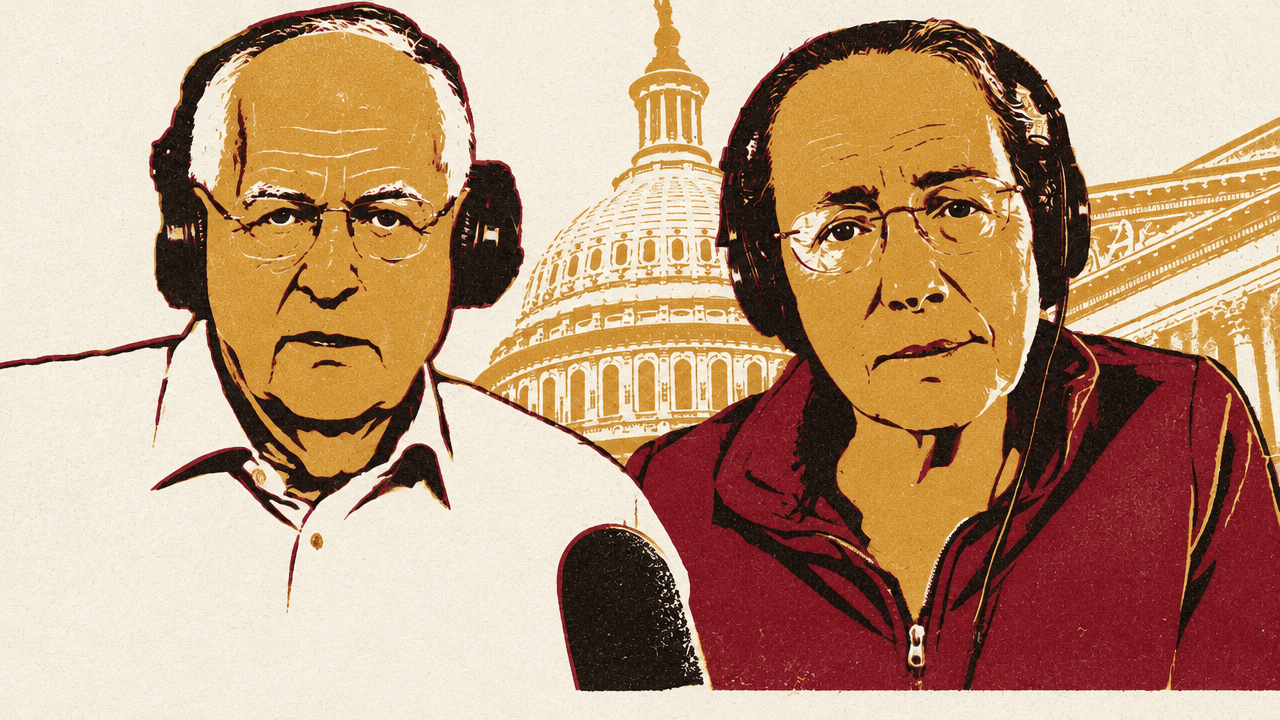
Historian Heather Cox Richardson argues that the Democrats’ victory was a rebuke not only to Donald Trump but also to an economic order she says has concentrated wealth and left voters with too little control over their lives. Speaking with Financial Times columnist Martin Wolf, she urges Democrats to use their new congressional power to investigate the administration and advance popular, practical legislation, while resisting what she calls a constitutional crisis. Richardson says the election creates an opening for a broader political coalition, but does not guarantee that MAGA’s influence will fade.
The result may reject an economic settlement, not just a president
For historian Heather Richardson Heather Cox Richardson, the Democrats’ victory is not only a rebuke to Donald Trump. She reads it as a challenge to the economic vision that has shaped the Republican Party since the 1980s: tax cuts and reductions in social services, alongside a concentration of wealth that, in her view, has left ordinary Americans with too little control over their lives.
Corruption in the Trump administration was a prominent concern for voters, Richardson says, but the results also reflect broader economic grievances. She points to the rise of data centers, which she says have become unpopular across party lines and symbolize the loss of control over public spaces to wealthy interests. The election, in her interpretation, was not simply about the price of eggs. Voters want healthcare and wages that allow someone working a 40-hour week to pay rent. These demands, she says, are about restoring liberal democracy, not replacing it with a more radical alternative.
That reading fits Richardson’s account of recurring political cycles. When voters conclude that government and the economy are organized to benefit a small, wealthy group, she says, rebellion can produce legislation that spreads economic opportunity more widely. Those seeking to concentrate wealth can then portray government action for the broader public as “socialist” redistribution to undeserving groups. By dividing voters, they can regain power. Richardson sees versions of this pattern in the 1850s, the 1890s and the 1930s.
She connects the cycle to the founders’ concern that power tends to concentrate in a small group. In her account, the constitutional system’s checks and balances were meant to guard against that outcome. The struggle between democracy and oligarchy is therefore not a departure from American history but a recurring problem built into it.
Richardson is careful not to present the current moment as settled. “I’m a prophet of the past, not the future,” she says. The result could be reversed, but she sees reasons to think the change runs deeper than anger at Trump: demographic shifts, including the passing of the baby-boom generation, and the growing prominence of public discussion about billionaires and economic inequality. Texas’s move toward the Democrats matters to her in part because it is one of the country’s youngest states.
For Richardson, the risk is not only that MAGA remains politically powerful. If it doubles down against demands for broadly popular changes, she warns, voters could turn away from liberal democracy itself. She compares the danger to the political climate Franklin Roosevelt faced in 1933.
The 1850s show how opposition can become a coalition
Richardson’s most detailed historical parallel is the 1850s, when, she says, two established parties failed to confront the growing influence of what Northerners called the “Slave Power.” Southern enslavers, in her account, had taken over the Democratic Party and gained influence over the Supreme Court, the Senate and the presidency. Many Northerners, meanwhile, were focused on economic opportunity and assumed that their control of the House of Representatives would be enough to protect them.
The Kansas-Nebraska Act of 1854 changed the stakes. It overturned the Missouri Compromise, which had restricted the spread of slavery into western territories. Richardson says that allowing slavery to expand westward threatened to make it national, despite the views of the majority of Americans living in the North.
The political response began, in her telling, with roughly 30 congressmen who disagreed on many issues but shared opposition to losing democracy to the Slave Power. In the following years, anti-Nebraska candidates won state elections across the North and gained influence in Congress. They began to debate what American democracy should mean. Abraham Lincoln was one of several voices in that debate, Richardson says; his eventual significance lay in helping articulate a vision of democracy and economic opportunity that could hold a broad coalition together.
The comparison matters because Richardson sees Democrats and anti-MAGA Republicans facing a similar opening: they may agree about what they oppose before knowing what they want to build. She does not view that uncertainty as a weakness. In the 1850s, new leaders and ideas emerged through experimentation. Politicians floated positions, gauged the response and adjusted. A coalition took shape around ideas that a majority could support.
That is why Richardson resists calls to settle now on a leading candidate for 2028 or a finished Democratic platform. She sees the lack of a single voice as part of a political process that could produce a new vision. The question, as she frames it, is what democracy should require of government in the 21st century.
Investigations and practical bills can make the opposition legible
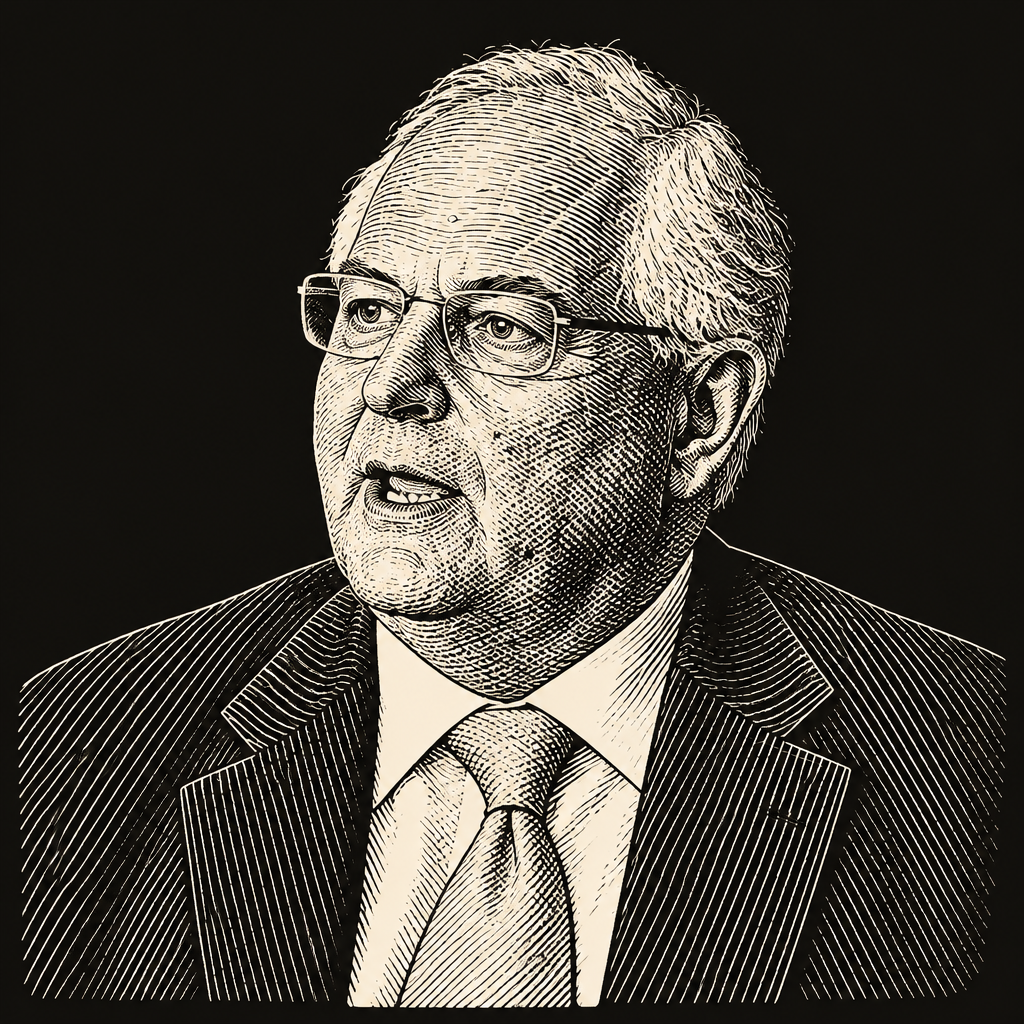
With Democrats in control of Congress, Martin Wolf Martin Wolf asks how they can turn their victory into a durable coalition. Richardson recommends two kinds of work: investigate alleged lawbreaking by the administration, and pass specific bills that make visible differences in people’s lives.

Investigations would serve more than a partisan purpose, she says. They could inform the public about what the administration has done, what is legal and what may need to change. She cites the administration’s actions, including the bombing of small boats in the Caribbean and eastern Pacific, as matters that should be examined. In her view, these inquiries are part of restoring the rule of law and explaining to voters what has happened in their name.
On legislation, Richardson urges Democrats to avoid relying on large omnibus bills that bundle many proposals together. Instead, they should put popular policies into short, individual bills. Her example is extending Supplemental Nutrition Assistance Program benefits so people can afford food. Even if Trump or Vice-President JD Vance vetoed such measures, she says, the contrast between proposals voters want and the administration’s priorities would be clear.
That does not rule out working with Trump when doing so could advance policy. Richardson praises the idea, raised by Michigan senator-elect Abdul El-Sayed, of calling universal healthcare “Trumpcare.” The label matters less than getting the policy enacted, she says; giving Trump credit could help secure support. She also points to New York mayor Zohran Mamdani’s dealings with Trump as an example of political bargaining that can produce results.
Richardson says such policies are not as unpopular or extreme as some portray them. She cited a figure of 57 per cent of Republicans supporting universal healthcare, but no supporting source was provided in the material available here, so the figure cannot be verified. On taxes, she agrees with Wolf that a more social-democratic programme would require confronting Republican opposition to tax increases. But US taxes are low compared with those in comparable countries and, she says, low by the country’s own historical standards as wealth concentrates at the top.
The parties themselves have changed across American history. When Wolf observes that the Republican Party that created the income tax was a different party, Richardson agrees, but notes that it has passed through multiple iterations. She contrasts Treasury Secretary Andrew Mellon’s tax rebates in the 1920s, which she says weakened progressive taxation after the First World War, with the top income-tax rate of 91 to 92 per cent under Republican President Dwight Eisenhower. That history shows, she argues, that a different Republican position on taxes is possible—and that addressing inequality is imperative.
The debt ceiling is a dangerous lever, but compromise is not business as usual
The question of congressional power is not only what Democrats can investigate or legislate. Wolf raises budgets and the debt ceiling as potential leverage, while warning that a confrontation could cause a crisis. He asks how far Democrats should use those powers to constrain the administration and when they should seek a modus vivendi instead.
Richardson distinguishes the near-term government funding deadline from the debt ceiling. She says the current funding arrangement expires on December 11, while Republicans still control both chambers, and expects Congress to continue funding the government at previous levels, effectively postponing the dispute for the incoming Congress. She also predicts Democrats will seek some form of clawback of the large sums allocated to Customs and Border Protection and Immigration and Customs Enforcement, which she says were intended to fund those agencies through the end of Trump’s term.
The debt ceiling is a separate problem. Richardson notes that some Democrats and Trump have both indicated support for getting rid of it, though for different reasons. Abolishing the ceiling would not address the underlying debt, which she puts at more than $40 trillion. She calls the situation an existential crisis for the American economy and government, and for the world economy, and says she is horrified that it has become a political football.
On the larger question of fighting or accommodating the administration, Richardson says she is not the one making decisions in Congress. But she argues that the premise of ordinary cooperation has already broken down: in her view, the administration has acted as if the Constitution’s constraints and the authority of the courts do not apply. Democrats should therefore act on the assumption that the country is in a constitutional crisis.
We are in a constitutional crisis and we cannot get along with the people who are causing that crisis. It’s like the firefighters getting along with the arsonist. It doesn’t work that way.
Her case for confrontation is also political. Richardson says the public mood has shifted toward wanting fighters, including politicians willing to stand up to technology interests and the concentration of wealth. She argues that the apparent divide between establishment Democrats and progressives can obscure how many of their proposals are broadly popular. The choice, in her view, is not simply between confrontation and practical policymaking: Democrats can resist the administration while advancing specific changes voters support.
MAGA may lose its grip without disappearing
Asked whether the election marks the end of MAGA, Richardson distinguishes between the movement’s place in American society and its role within the Republican Party. Its supporters will remain part of the country, she says; what may be ending is MAGA’s position as the party’s driving force. The Republicans, like the Democrats, will have to reinvent themselves. That is a possibility, not a settled outcome: Richardson says the election could still be erased, and the political future depends on what happens next.
Richardson expects Trump to continue pursuing a foreign policy organized around US control of the Western Hemisphere and access to fossil fuels. She points to Venezuela and Cuba as examples of the administration’s ambitions, and says Trump has framed some domestic actions, including deportations at the southern border, as foreign-affairs matters. In her view, he has more room to act in this area partly because of how the Constitution has been interpreted by the current Supreme Court. She expects him to do more, not less, in foreign affairs, but says Congress’s willingness to fund his initiatives remains consequential.
Wolf raises the risks of that latitude: the possibility of further foreign-policy blow-ups, including action involving Iran, and the question of whether Congress will constrain or fund the administration’s choices. Richardson notes that the military faces problems with munitions and funding, and asks whether senators will support Trump’s course or stop a war with Iran. She does not expect the United States to change direction during the next two years, but does not think the current approach will last.
Richardson rejects Wolf’s description of Trump’s foreign policy as merely erratic. She sees a strategy in his apparent acceptance of spheres of influence, which she connects to Russian president Vladimir Putin’s approach. She describes Putin as weak, with a troubled economy and a war in Ukraine that has turned against him, and says Trump is propping him up.
For Richardson, the deeper international problem is that the rules-based order has weakened without a clear replacement. She says the approach under President Joe Biden and Secretary of State Antony Blinken—bringing countries together in ad hoc groups to address shared problems such as fentanyl or border crossings—offered one way to cooperate. But she says it did not answer what countries can do when a leader refuses to follow shared rules.
She sees a related proposal in Canadian prime minister Mark Carney’s suggestion that middle powers cooperate without relying on the largest countries. Unlike the Biden-Blinken approach, which assumed the United States would be present at the tables, a middle-power coalition would not depend on that assumption. Richardson calls the idea attractive, but says it faces the same unresolved test: how could such a group constrain leaders who reject common limits, including the UN principle against invading neighbouring countries?
That question leads back to the US election’s stakes beyond Washington. Wolf says the country’s political drama has vast global significance. In his closing remarks, he asks whether institutions damaged during Trump’s presidency can regain the vitality of the constitutional system, whether the United States can recover a stabilizing role for liberal democracies, and whether it can regain the trust placed in it. The election, he says, is an encouraging moment, but it leaves those questions open.