A Democratic Midterm Win Would Constrain Trump, Not End Europe’s Populist Surge


Timothy Garton Ash argues that a sweeping Democratic victory in the US midterms would show that a damaged democracy can recover, but would not end Europe’s exposure to Donald Trump or the rise of nationalist parties. In his discussion with Financial Times columnist Martin Wolf, Ash warns that European populists are likely to gain ground in coming elections, even as he sees scope for liberal parties to recover. He says Europe must strengthen its own defence and political capacity while rebuilding support among voters who feel liberalism has left them behind.

A Democratic midterm victory would constrain Trump, not remove Europe’s exposure
Timothy AshIn the scenario Martin Wolf puts to him—a sweeping Democratic victory in the US midterms—Timothy Garton Ash sees good news for Democrats elsewhere, but not a decisive change in America’s relationship with Europe. Such a result would suggest, he says, that a significantly eroded democracy could recover. Congress could constrain a president through its control of public spending. But Donald Trump would remain in the White House, with control of foreign policy. On Ukraine and European defence, Ash warns, Trump could still be “just as dangerous if not a little more so now than he was before the midterms.”

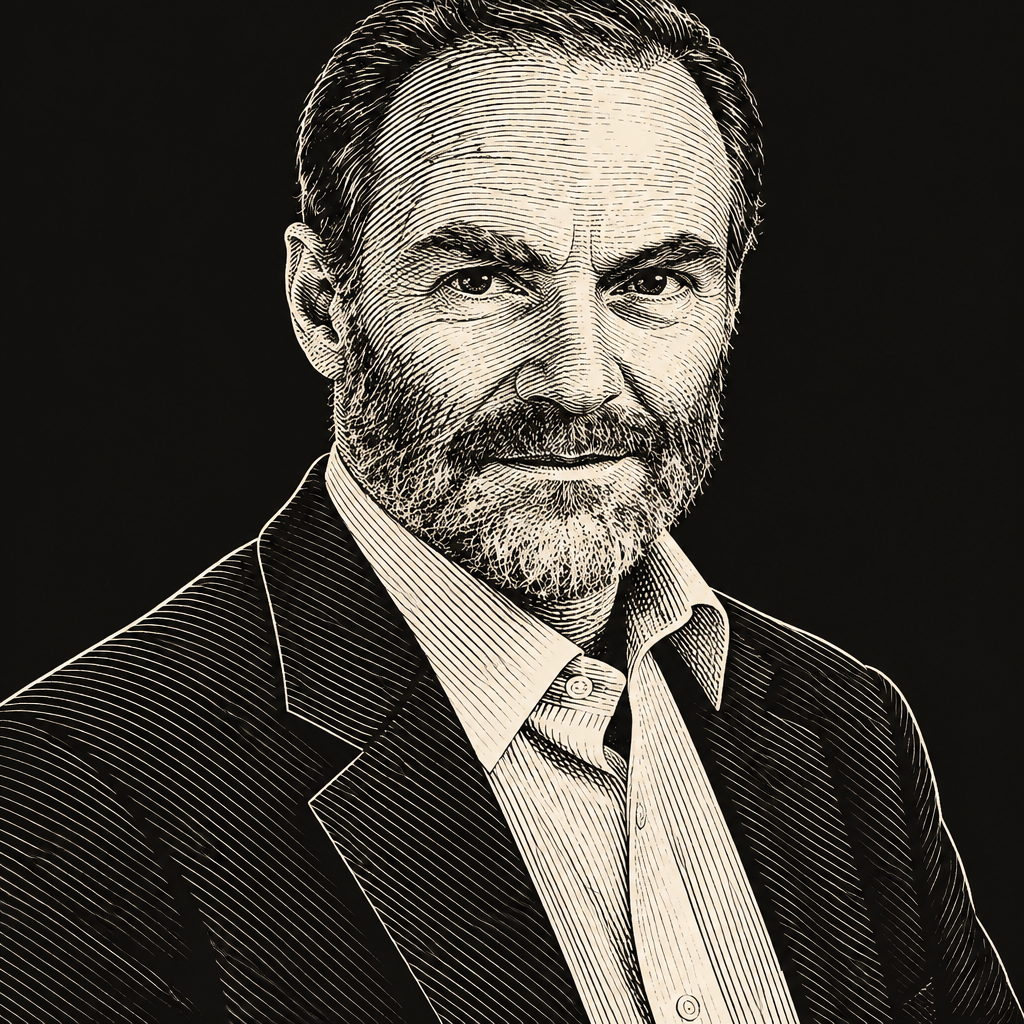
That distinction shapes Ash’s advice to Europeans: do not overstate either the direct or indirect effects of a midterm result. Build greater resilience and independence from the United States, and strengthen connections with other democratic countries. The test of whether the US returns to a more liberal international role, he says, would be the 2028 presidential election.
Ash also cautions against treating the moment as a replay of the early 1990s. After the fall of communism, he says, the outcome of transitions from Soviet-style regimes and centrally planned economies was genuinely uncertain. A joke from the time asked whether an aquarium could be turned back from fish soup. The overconfidence came later, in the early 2000s, when successful transitions and EU and NATO enlargement made liberal democracy appear to be history’s natural direction.
That belief followed real achievement: Europe had never been closer to being “whole and free” than around 2004–05. But Ash says the liberal international project began to encounter resistance just as confidence in its permanence grew. His prescription is not to dismiss the progress, but to stop treating it as guaranteed.
Populist victories share roots, but Europe has its own fault line
Ash argues that the rise of populist parties in Europe is not simply an export of American politics. He sees strong economic and cultural similarities across democratic capitalist societies, alongside conditions specific to each European country. The Trump administration’s support for European nationalist parties is, in his account, a new factor whose effects vary. Ash says Trump’s support helped Poland’s Karol Nawrocki and may have helped Germany’s Alternative for Germany, or AfD. In the scenario he describes, support from Trump and JD Vance for Viktor Orbán did not help Orbán in Hungary and may have harmed him.
Ash says major nationalist-populist parties have become less willing to be closely associated with Trump, naming Marine Le Pen, Spain’s Vox and Britain’s Reform UK. He considers that a significant shift, but not one to overstate. His forecast for what he calls the coming “mega cycle” of European elections remains that anti-liberal nationalist populists will win in many places. He points to the AfD’s strong results in two eastern German states, the apparent prospect of a governing alliance between Spain’s centre-right Partido Popular and Vox, and Le Pen’s perceived strength ahead of the French presidential election. Elections in Italy and Poland, he says, also appear to be moving in that direction.
Some expect nationalist parties in government to moderate, as Ash says Giorgia Meloni has done. But he argues that several such governments would have a different effect from one. “Five Melonis is something very different from one Meloni,” he says: a single leader may have to adapt to the centrist mainstream, while several leaders of the same political tendency could make that tendency the mainstream.
Europe’s distinctive tension, in Ash’s account, is the European Union itself. He describes it as an “empire by consent”: a liberal, non-hegemonic structure that nevertheless places authority above the nation state. The nationalism these parties share pushes against that supranational authority. Ash compares Le Pen’s demand to get French money back with Margaret Thatcher’s slogan, and cites AfD leader Alice Weidel’s argument that German money should stay in Germany. He expects pressure for European disintegration to grow just when the continent needs more integration, particularly in defence.
Still, Ash considers a reversal of populist rule plausible. Nationalists, he argues, are poorly suited to sustained cooperation: “an international of nationalists is a contradiction in terms.” He also expects them to struggle to produce solutions. In his account, support for these parties often expresses frustration with liberal-centrist governments that failed to deliver. He points to Emmanuel Macron, who brought liberals into a large centrist bloc promising to improve France economically and in other ways. Macron, Ash says, failed to deliver, leaving France in a “terrible mess” and voters with a choice between the hard left and hard right.
Recovery, Ash argues, would require new energy, ideas and candidates able to appeal to people liberal parties have lost. They would need an emotional connection with voters and, as he puts it, to “speak human.” The difficulty is whether there is enough time: renewal may take three to five years, while Europe faces military pressure from Russia, economic competition from China and political uncertainty from the United States.
Democratic repair depends on institutions—and can create its own legitimacy problem
Martin WolfWolf asks how a country can reverse damage when governments weaken courts, civil services, intelligence agencies and other institutions. Ash calls this “the question of questions.” His first prescription is preventive: before illiberal parties take power, reinforce the institutions that protect pluralism and constrain majorities, including judicial independence, a neutral civil service and security services, and public-service broadcasting.


Ash rejects banning parties such as the AfD as the right model of “defensive democracy.” For him, a democracy capable of defending itself depends on separation of powers and countervailing checks and balances, not simply on excluding political opponents. But timing matters: if those institutions have already been partly or extensively damaged, restoring the rule of law becomes much harder.
The contrast Ash draws between Hungary and Poland helps explain why. In his account, Hungary’s government had a two-thirds constitutional majority, allowing it to make sweeping changes by legal means. In Poland, Ash says, the relevant political actors lacked that majority and tried to proceed gradually, hoping a presidential election would provide a legal route to change the system. Their candidate lost; Ash cites Trump’s support for the opponent as one factor.
Ash’s conclusion is deliberately uncomfortable. He argues that restoring the rule of law in a larger sense might sometimes require “quasi-revolutionary steps” that do not strictly comply with the letter of existing law. The tension is between following the law as it stands and restoring the broader system of law and pluralist checks that, in his view, has been undermined. Wolf’s question raises the risk that such a restoration could itself be regarded as illegitimate in a divided society, particularly if those pushed aside accuse their successors of acting as their predecessors did. Ash calls the territory risky, but argues that if such steps are necessary, they should be taken quickly and once.
Democrats would need to treat a midterm win as rejection, not endorsement
In the scenario Wolf describes, Ash warns Democrats against reading a midterm victory as evidence that voters have fallen back in love with the party. He characterizes the result as a passionate rejection of Trump’s policies, not a heartfelt endorsement of the Democrats, whose popularity he says is “almost as low as his.” The party’s immediate test would be to show it could deliver on the cost of living and the issues ordinary voters cared about.
Ash describes the party as divided between centrists and progressives or “democratic socialists,” and warns that Democrats are particularly capable of turning on themselves. For 2028, he favours an attractive, more centrist candidate who could reach voters beyond the party’s existing base, including in states such as Texas and Kansas. Voters in those states, he says, might back Democrats in the midterms without doing so in a presidential election. When Wolf suggests a candidate with Barack Obama’s kind of appeal, Ash says he cannot say who that candidate would be. His priority is to focus on who could win: “lesson number one when you’re trying to restore democracy is, win the next election.”
In Congress, Ash advises Democrats to demonstrate that they can improve people’s lives despite Trump remaining president. He warns against returning to culture-war politics, which he says would lose votes, and advises against impeachment. Investigations, by contrast, are warranted, particularly into what he calls the Trump administration’s “transparent, outrageous, obvious corruption.”
Ash connects that argument to a broader concern about political economy. He says democratic capitalism’s great achievement was to separate wealth from power; the Trump administration, in his view, is bringing them back together in a form of oligarchy. Exposing that concentration, he argues, could speak to the concerns of working- and middle-class voters as well as anger about corruption.
Europe needs shared capacity, but its politics remain national
Timothy AshEurope cannot rely on the United States while Trump is president, Ash says, but it has room to strengthen its own capacity. In defence, he proposes a more European NATO. He points to national commands along NATO’s eastern frontier: German command in Lithuania, British command in Estonia and French command in Romania. He also calls for better-coordinated arms procurement. In his view, the problem is not only how much European countries spend, but how inefficiently they spend it: he cites the existence of 14 different kinds of tank.
Beyond defence, Ash says Europe needs greater strength in digital technology and artificial intelligence, with capabilities built somewhere across the technology supply chain. At present, he says, Europe has one major card in advanced chips: ASML, the Dutch company that makes machines used to manufacture the most advanced chips. He also calls for more integrated European capital markets and fewer barriers within the single market. Ash tentatively recalls estimates—he thinks from the IMF—that internal barriers are equivalent to a 44 per cent tariff on goods and a 110 per cent tariff on services. These proposals, from shared defence capacity to a more integrated market, are ways to build European strength in areas where he believes individual countries cannot do enough on their own.
The structural obstacle, Ash argues, is that the policies needed are European, while democratic politics remain national. He expects elections in more European countries over the next year to 18 months to move in the wrong direction. That makes the second half of the decade “make-or-break time” for the European project as it has existed since 1945. He does not predict a return to 1933 or 1939, but warns of a familiar European outcome: the gradual weakening and disintegration of an order built over decades.
Ash also broadens the idea of the West beyond its traditional transatlantic core, to include the widest possible community of democratic powers, including Japan and South Korea. He warns of a possible reversal: a liberal internationalist United States facing an anti-liberal nationalist Europe if a Democrat does not win the 2028 presidential election and European elections go as he fears. Both sides of the Atlantic would have to come out right. His formulation is “pessimism of the intellect, optimism of the will.”
Britain, Ash says, remains important in Europe economically, militarily and in diplomacy, intelligence, technology and financial services. He says reversing Brexit would be difficult, partly because the EU is unlikely to offer a deal as favourable as Britain’s previous one and negotiations would be difficult before they began. Ash describes British politics as divided between a left bloc competing over pro-Europeanism and a right bloc competing over anti-Europeanism, including proposals to leave the European Convention on Human Rights—a step he says would undermine Britain’s existing Brexit deal. Even in the best case, he estimates, it could take two terms of British politics before Britain was ready to negotiate re-entry. What the EU would look like by then is an open question.
Liberalism lost support when it narrowed its promise
Ash first wants to preserve the scale of post-1989 gains before explaining their reversal. Poland, a country close to him, had an economy whose 1989 GDP at purchasing-power parity was estimated at about half Spain’s; by the year before the discussion, he says, it had just overtaken Spain. He calls the transformation extraordinary.
The mistake, Ash argues, was to treat an exceptional period of success as a permanent direction of history. He identifies hubris in the early 2000s, and a second failure in reducing liberalism to its economic dimension. Liberalism, he says, also needs social, political and cultural dimensions. Inequalities of wealth became inequalities of power, while many people who had not attended university did not experience liberal society as offering them equal respect.
Ash invokes the liberal philosopher Ronald Dworkin’s principle of “equal respect and concern for every member of society.” In his view, liberals failed to honour that principle economically or culturally. He cites Hillary Clinton’s phrase “basket of deplorables” as an example of the contempt some voters felt was directed at them. Liberalism appeared to be for educated liberals alone.
Wolf asks whether a failure to control migration was also part of the problem. Ash agrees. The issue, he says, is not only the number of arrivals in a given year but the scale of social change: where roughly one person in 20 had a migration background 60 years earlier, a typical Western European country now has about one in four; in Germany, he says, one in three among the younger generation, and in some cities one in two. He cites Rotterdam at 56 per cent. Ash argues that the mistake was large-scale migration, some of it uncontrolled, without sufficient integration. His alternative is more tightly managed immigration alongside better integration, so that people who arrive legally can become full members of society and receive equal respect.
He also points to external challenges. Russia and China, he says, are attacking the liberal order, while China offers what he calls an alternative model of “developmental authoritarianism”—an alternative that was not present in the same way in 1989.
Hope rests on the possibility of rapid change
Timothy AshAsh’s hope comes partly from the speed with which political conditions can change. When he first met Václav Havel in 1984, Havel had recently spent four years in prison. It seemed implausible, Ash recalls, that the small group of dissidents around Charter 77 would soon lead the Velvet Revolution and turn the country into a liberal democracy. Politics, he says, can be “the art of the impossible.”
Ash also points to Hungary, Serbia, Brazil and the United States as examples of democratic reversals. “Rumors of the death of democracy have been very much exaggerated,” he says. The task, in his view, is to mobilize young Europeans and young citizens elsewhere before it is too late. Politics can turn for the better quickly, as it did in 1989, but it can also turn for the worse. For Ash, that uncertainty is a reason to keep fighting, not to assume the outcome is settled.