A Democratic Midterm Win Would Not Restore Allied Trust in the United States


Historian Anne Applebaum argues that the US midterms will test whether voters and Congress can constrain an administration she says is weakening democratic checks at home and treating traditional allies as expendable abroad. A Democratic victory could show that Trump-aligned politics is not inevitable, she tells FT chief economics commentator Martin Wolf, but would not by itself restore the trust or reliability allies once associated with the United States.
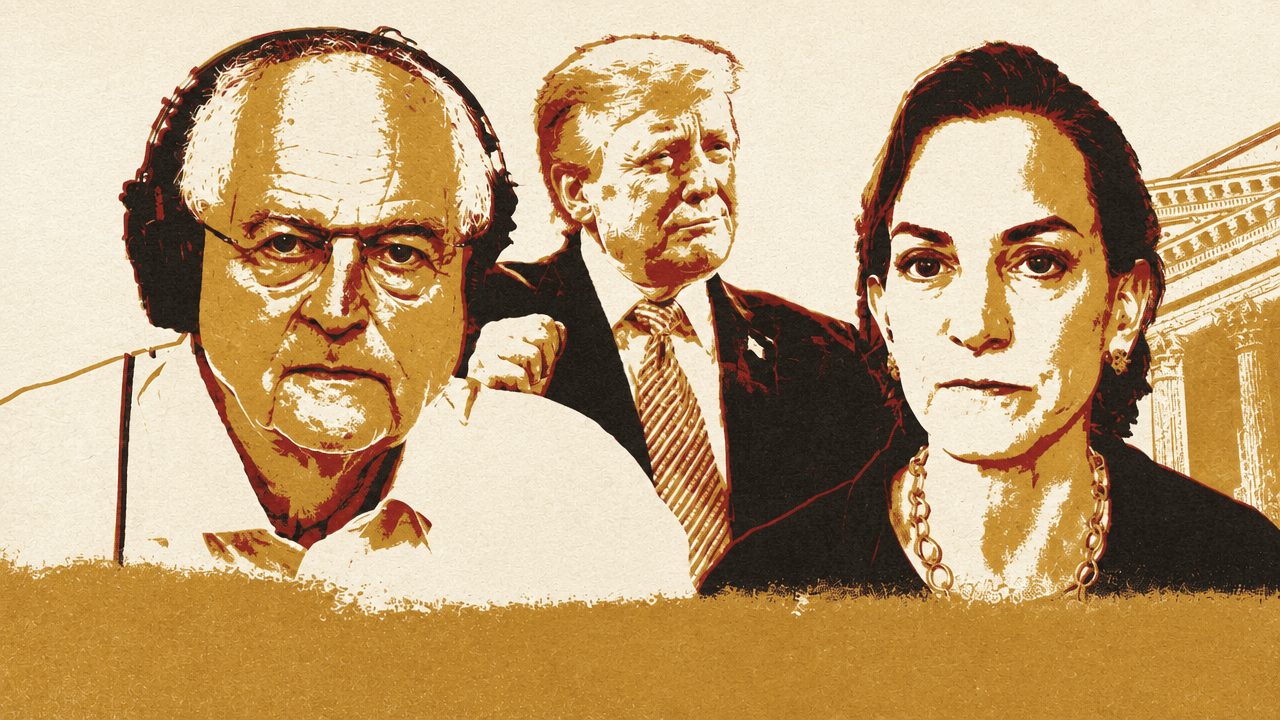
The election tests whether American institutions can still constrain executive power
Anne Applebaum argues that the midterms are consequential not only because they may change which party controls Congress, but because they test whether voters want the United States to act as it does now. She describes an administration that does not see the US as leader of the democratic world or treat its traditional allies as especially important. Instead, she says, it claims a right to act imperially in its own hemisphere—seeking mineral rights or changes of government in places including Latin America, Canada and Greenland—and to serve the interests of the president’s ideological allies and associated business groups elsewhere.


Applebaum sees a parallel change at home. The administration, she says, has argued that government should be dismantled and regulatory agencies politicized. If Democrats cannot win control of Congress, perhaps with support from some Republicans, she warns, it will be harder to stop what she calls the “cannibalization” of government and to ensure free elections in 2028.
The election’s integrity is therefore part of the stakes, not a settled premise. Applebaum emphasizes that the US does not have one national election authority that a president can control with a single decision: elections are administered through 50 state systems, sometimes with different arrangements within a state. That makes the system harder to capture centrally, but, she says, it has not prevented efforts to influence the result.
She points to federal efforts to encourage states to redraw electoral boundaries in ways that benefit Republicans, and to demands that states hand voter rolls to the Department of Justice. States challenged the latter demands in court and, in most cases, prevailed. She also describes claims of widespread illegal-immigrant voting, for which she says there is no evidence, as a narrative that could be used to justify federal forces at polling places or challenges to close results.
Applebaum distinguishes those actions from fears and reports she cannot verify. Some people fear that ICE, the FBI or other federal forces might be sent to polling places, potentially frightening eligible voters away; she does not describe that as an established plan. She says she has heard stories about attempts to use an emergency declaration to annul or stop the election, but cannot say whether they are true. Her warning is that challenges could arise before, during or after voting, and that the possibility cannot be dismissed given the effort to block the 2020 result on January 6, 2021. She suggests that turnout and the scale of any victory could matter, without claiming to know how they would affect a challenge.
Martin Wolf asks whether the US has lost its standing as a model of free elections. Applebaum says she does not think other countries look at the American political system and want to reproduce it. But Trump-aligned movements do imitate its tactics. She cites Jair Bolsonaro’s attempt to overturn Brazil’s election result and the role of his son in Brazil’s approaching election, as well as Trump-like parties in Europe.
That influence, she says, is distinct from admiration for American institutions or outcomes. The US has powerful companies, but Applebaum argues that its wider economy is not a model most people would choose: many people lack health care, and Americans die younger than people in Europe or Japan.
American unreliability benefits its rivals, while a political reversal would not restore trust
Asked who benefits from declining American authority, Anne Applebaum distinguishes Russia’s direct gain from China’s reputational one. She calls Russia a beneficiary of the change from Joe Biden to Trump: Biden, despite criticism that he did not do enough for Ukraine, was an ally; Trump, she says, is not. In her view, Trump has helped persuade Russia that it can win the war. That damages Ukraine and alarms Europeans, who regard a Ukrainian collapse as a catastrophe for their own security.
China benefits, Applebaum argues, from the perception that American alliances and influence are weakening. As confidence in American democracy falls, China can present itself as a rule-abiding power. Against the disorder Trump projects, that image may appeal to some countries.
Illiberal movements within democracies can also find encouragement in Trump’s example, though Applebaum cautions that his interventions may backfire. She cites his attacks on Canadian prime minister Mark Carney, which she says made Carney unusually popular. More broadly, she says, the impression that America is unreliable, weaker and unpredictable gives autocratic governments and movements material for their longstanding argument that democracy does not work.
The question is whether a Democratic victory could restore allied trust. Martin Wolf asks whether Europe should regard the current US as an enemy. Applebaum rejects that word. Parts of the American military and security system continue to work with European allies and Asian democracies, she says, and many people in business, finance and ordinary life remain attached to Europe. But those ties do not remove the need for Europe to prepare for a less dependable partner.


A Democratic victory, in Applebaum’s account, would remind other countries that MAGA is not inevitable and that a different part of American politics remains active. It would not erase the movement or its support among voters and in Congress, or return the US to its previous position. She expects the country to be weaker by the end of the next two years, citing its performance in the Middle East and its alignment with Putin as sources of that weakness. The result could offer a limited signal about the persistence of political opposition; it would not by itself restore the trust or reliability that allies once associated with the US.
That preparation is about sovereignty as well as defense. Europe needs its own information and cloud technologies, and some of its own military technologies, so that it cannot be abruptly undermined by an American company acting with the US state. It also needs to move quickly from older military platforms toward drones and unmanned warfare, which Applebaum expects to dominate the coming decades. New relationships—with Canada and India, for example—are part of the adjustment. She calls these measures “basic hygiene”: ways to reduce exposure to the worst possibilities without ending the relationship with the United States.
European elections may reward either a route back to the center or a politics of provocation
The midterms may influence European campaigns because political actors watch which strategies succeed elsewhere. Anne Applebaum says a Democratic wave could offer center-left and center-right parties evidence that it is still possible to win in a media environment that rewards extremity and attention. A Republican victory—or even a result close to an even split—could instead encourage both the European far right and, unexpectedly, the far left to conclude that being the most outrageous person in the room is the winning strategy.
She sees similar political dynamics in countries with very different histories and social structures. Living part-time in Poland and part-time in the United States, she finds the countries’ politics strikingly similar in their polarization and arguments, despite their differences. Applebaum attributes that resemblance in part to a shared media environment: people in both places use the same platforms and apps, and political tactics that attract attention in one country can be adopted in another.
Martin Wolf sums this up as the globalization of “extreme indeed crazy politics.” Applebaum accepts the description as a bleak way to put it, then points to the incentives behind it: on YouTube and Twitter, she says, attention is rewarded, and extremity is one way to attract it. In her account, the dynamic is not only political; it is also a business model.
Applebaum says the US supports far-right European parties in part because the European Union can regulate American companies. Russia also wants to undermine the Union, she argues, because it can obstruct Russian influence, particularly in eastern Europe, and limit the freedom to make deals in a political order more permissive of corruption.
That does not mean Applebaum considers the Union’s destruction inevitable. She notes that leaving the euro would carry severe costs for a large country such as France, and says the consequences of Brexit have helped European leaders understand the damage that leaving can do. She sees more room for attempts to change the Union’s rules or budget than for dismantling the whole project.
She also cautions against treating every far-right party or policy as a threat to democracy. European parliamentary systems generally require parties to form coalitions, which can require compromise. Far-right parties have held leading or important roles in some countries without, in Applebaum’s view, destroying democracy. Nor is opposition to immigration policy by itself opposition to democracy. A party can argue that immigration is too high, too low or poorly managed while still operating within the democratic system; she gives the Social Democrats in Denmark and the center-right in Poland as examples of parties with restrictive immigration positions.
For Applebaum, the decisive distinction is whether a party aims to transform the political system by undermining democratic checks and balances and capturing them for itself. The threat lies not in one policy position alone, but in an ambition to disable the constraints that make political competition possible.
Congress could constrain the president without taking away his power
Martin Wolf questions how much a new Congress could alter foreign policy when the president retains broad authority. Anne Applebaum agrees that the president would remain powerful, but says Congress has meaningful tools: it controls the budget, can block funding, can investigate wrongdoing, and can pass and enforce laws. A Democratic Senate, she says, would matter; Democratic control of both chambers could also influence appointments, budgets and policy. She does not claim to know which specific measures Democrats would use, saying that much would depend on the numbers and that lawmakers would be looking for creative solutions.
The effect would not be limited to formal powers. Applebaum expects a change in the atmosphere around the presidency. If Congress provides a counterweight, she says, the sense of impunity may recede, and officials, companies and law firms may be less inclined to obey in advance or fear speaking against the president. That shift could affect the president’s conduct abroad as well as at home.
Wolf notes that a president would retain the veto and that overcoming it is difficult. Applebaum agrees that Trump would remain powerful and cautions that his behavior could become more extreme in the second half of his term. She says it is not clear what a “lame duck Trump second half” would look like.
For Europe, Applebaum identifies a more immediate security priority: helping Ukraine win the war. The outcome, she says, could preserve the Ukrainian state even if the war ends along the current contact line, provided Ukraine has defensible borders and there is some negotiation over occupied territory. That is a baseline for European security.
She warns against assuming that a Ukrainian defeat would let Europe stop worrying. In the scenario she sketches, millions of refugees could leave Ukraine; the country might become a guerrilla-war state; and Russian troops could move west. Applebaum says Russia’s economy is predicated on prolonged war and its education system is being redirected toward producing warriors. If Russia won, she argues, Europe would face a much larger threat and would need to multiply its defense spending.
Her prescription is to give Ukraine the defenses it needs and the offensive weapons required to strike enough Russian targets to convince Moscow that the war cannot be won. European governments, she says, should concentrate on that task over the coming year, before their own elections take over the political agenda.
Asked what electoral result would show that illiberalism is not inevitable, Applebaum declines to predict the outcome or specific Senate races, saying she does not believe opinion polls. She says winning both houses would be a basic prerequisite for beginning change, with a House majority large enough to govern—around 15 or 20 seats, in her estimate. Without that kind of result, she says, people would keep fighting for it in 2028.