Synthetic Cells Achieve Genetically Encoded Feeding and Division
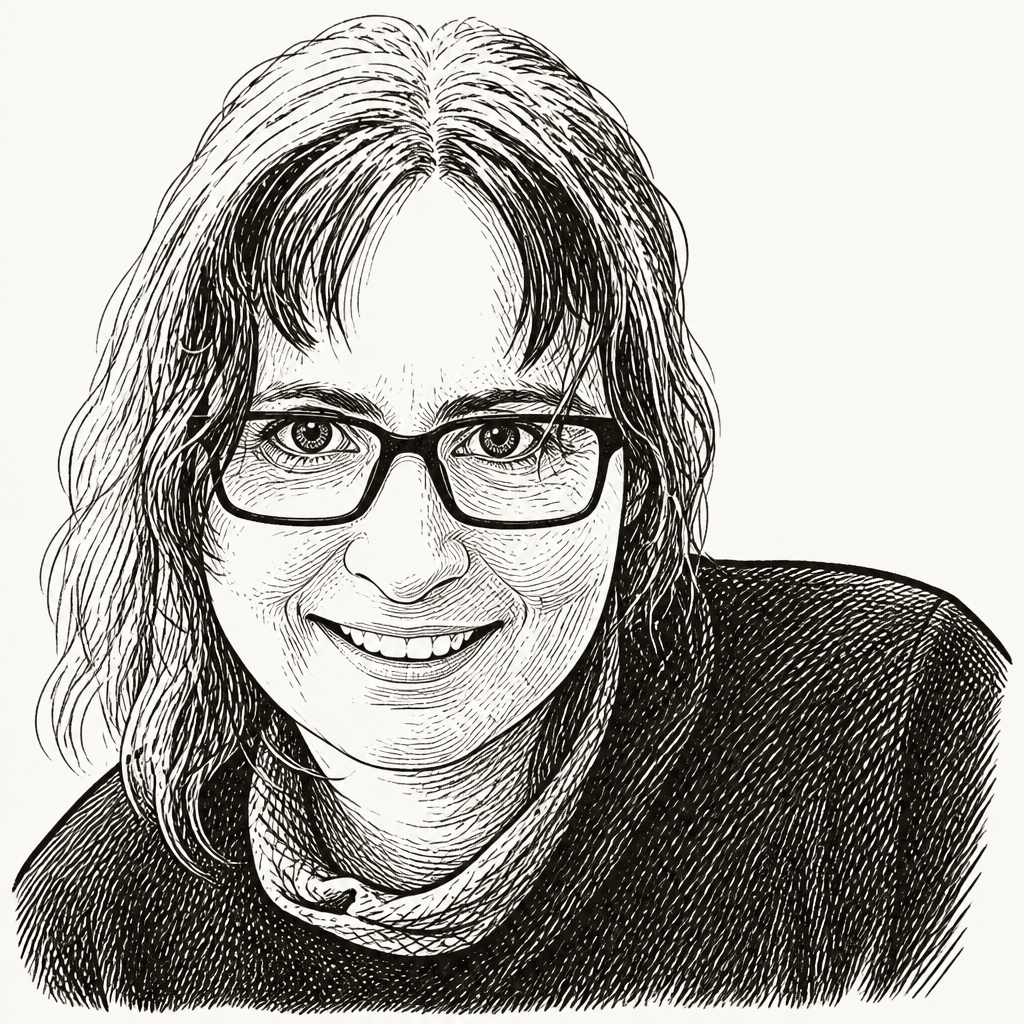
Kate Adamala, a synthetic biologist at the University of Minnesota, argues that her lab’s “spud cells” mark a meaningful but limited step toward constructed life: defined vesicles can now use genetic programs to recruit nutrients and initiate division. The cells still rely on externally supplied ribosomes, transfer RNA and nutrients, and they do not yet reproduce reliably or evolve autonomously. For Adamala, the practical question is less where life begins than whether cellular functions can be assembled into a controllable platform for making useful molecules.
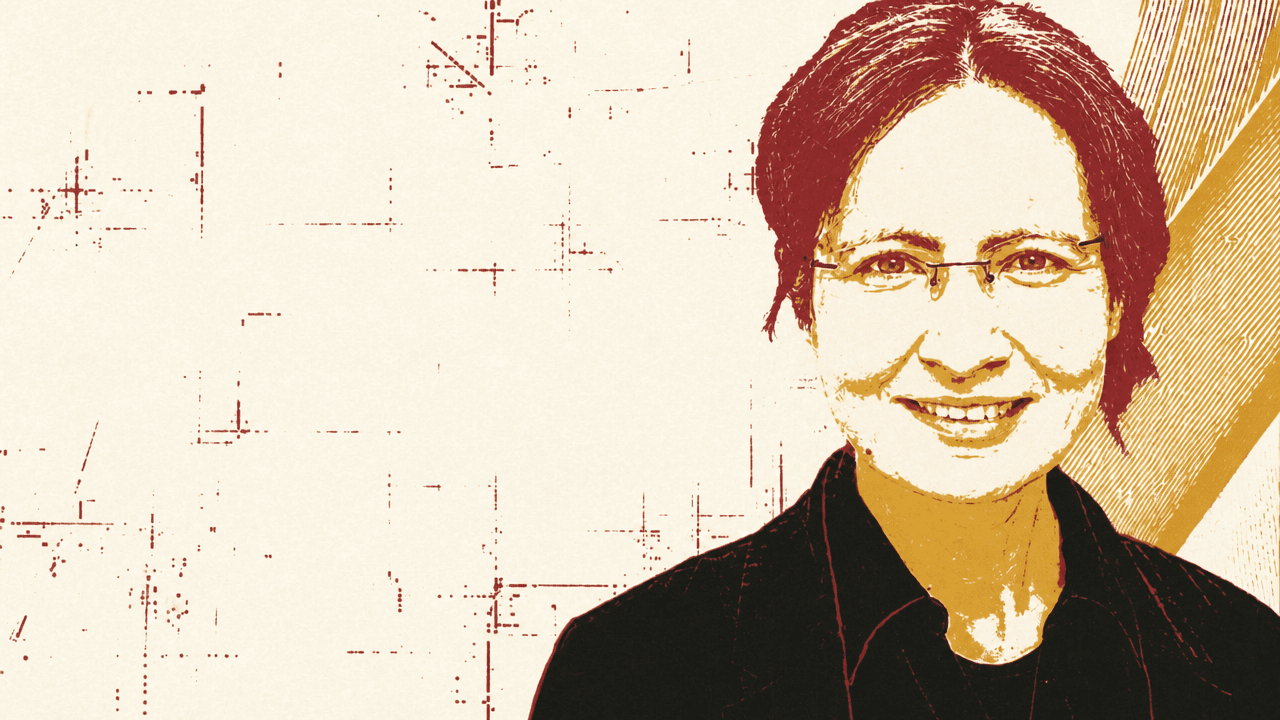
The frontier is a cell that can feed and divide—but not yet reproduce itself
Kate Adamala’s lab has built a defined synthetic-cell platform that combines genetically encoded feeding and genetically encoded division in the same system. The result, called a spud cell, is not an autonomous organism and does not yet reproduce reliably. But it demonstrates that a constructed vesicle can use its internal genetic program to recruit nutrients and initiate division rather than merely being acted on from outside.
That combination is the milestone. The platform still depends on externally supplied components, including ribosomes and transfer RNA purified from E. coli; it cannot make its own ribosomes; and division does not reliably preserve complete DNA in every daughter cell. Smith notes that only about 30% of divided daughter cells carry complete DNA. The system can be selected once researchers introduce a favorable mutation, but it does not yet generate heritable variation robustly enough to count as evolving on its own.
| Capability | What the spud cell does now | What remains external or unresolved |
|---|---|---|
| Feeding | Expresses proteins that recruit food-bearing vesicles | Nutrients and food-bearing vesicles are supplied from outside |
| Division | Can initiate membrane division through genetically encoded recruitment | Division does not reliably preserve complete DNA in each daughter cell |
| Protein production | Uses translation machinery to express selected genes | Ribosomes and transfer RNA are purified from E. coli |
| Evolution | Can select an experimentally introduced advantageous mutation | Does not yet generate useful heritable variation autonomously |
The spud cell begins with purified, biologically derived components: mostly proteins purified from bacteria or other sources, plus small molecules supplied in defined concentrations and conditions. The components are not made atom by atom from nonbiological matter. Their significance, in Adamala’s account, is that researchers know what is in the system and can specify its composition, pH, and solution environment.
Mixed under the right conditions, those molecules restart elements of protein translation and metabolism. Researchers add plasmid DNA carrying selected genes and enclose the mixture in a lipid vesicle, a membrane-bound bubble resembling a natural cell membrane.
Feeding involves nutrient-rich liposomes or exosomes supplied from outside the spud cell. The cell expresses proteins that function as docking tags, recruiting those food-bearing vesicles to fuse with its membrane. The incoming material enlarges the membrane and adds nutrients to the interior, where it can be metabolized. Adamala compares the behavior to “a little bird opening his mouth.” The system can also import molecular nutrients through membrane pores, as many natural cells do. Its uptake of larger vesicles resembles phagocytosis.
Craig Smith initially characterizes division as mechanically imposed. Adamala distinguishes between early experiments, which used mechanical division, and later results showing genetically encoded division. In the latter case, the spud cell expresses a protein that inserts into the membrane; that protein recruits a large externally supplied protein, which induces membrane curvature and leads to division. The curvature-inducing protein comes from the medium, but the recruiting step that initiates division is genetically directed from within the cell.
There is a mechanism where a spud cell expresses a protein, and that protein goes to the membrane and pokes its head out of the membrane. And when that protein is present, it recruits a giant protein from the environment that induces curvature of the membrane, and that leads to division.
Adamala does not describe the result as a finished synthetic organism. The cells cannot survive outside the laboratory because they require chemicals unavailable in the wild. Her Sputnik analogy is a claim about possibility, not completion: the work shows that a deliberately constructed molecular system can begin to escape what she calls the “gravity well of evolution.”
We built the whole thing from scratch and it’s definitely a milestone, but it’s not a mic drop. We’re not done. We’re not going home yet.
Ribosome assembly is the loop that remains open
The largest immediate obstacle is not putting DNA into the synthetic cell. It is giving that cell the ability to construct its own ribosomes.
Ribosomes are the molecular machines that translate genetic instructions into proteins. The current spud-cell system receives ribosomes and transfer RNA purified from E. coli. Those imported components enable protein production, but they leave the system dependent on externally manufactured cellular machinery.
Adamala says the DNA for ribosome-related proteins and transfer RNAs is comparatively straightforward to introduce. Her lab can express the relevant proteins. The deeper problem is that the proteins and RNAs do not simply form an active ribosome when produced and combined inside a synthetic cell.
She identifies ribogenesis as perhaps the single biggest unresolved problem in bioengineering. Researchers can collect the purified components, but unless they receive substantial external assistance they do not reliably approximate an active ribosome.
Adamala cites prior work from George Church’s lab showing that purified ribosomal components can be reassembled under highly specialized conditions to yield some detectable ribosomal activity. But that is not the robust, self-contained process required for a synthetic cell that continuously makes its own ribosomes as it operates.
The clue comes from natural cells. In living organisms, ribosome construction happens in stages as protein and RNA components are being made. The cell does not wait until all pieces are complete, place them in a pile, and assemble them afterward. Assembly proceeds concurrently with production.
Adamala suspects synthetic systems are missing some part of that choreography: perhaps a protein, a small molecule, an environmental factor, or the exact sequence in which components must appear and bind.
You can’t just let it all wait there, sit, and then assemble. You have to keep assembling it as it’s being made.
Selection is possible; autonomous evolution remains a scale problem
Kate Adamala separates two ideas that are often run together: selection and evolution.
Her team introduced mutations into DNA artificially and observed that mutations improving feeding could make some cells grow more aggressively, become larger, and outcompete others. That is selection: once a more favorable variant is placed into the population, it can win across generations.
But the present system is not yet evolving in the fuller sense because it is not producing those variants spontaneously in a dependable way. Adamala has to supply the mutation. She says spontaneous mutations would likely arise if the population were scaled sufficiently, but presents that as an expectation under immense volume and time, not as a demonstrated capability of current spud cells.
A primordial sea could provide millions of years and vast volume. A laboratory cannot. “I work on the scale of a length of the PhD,” Adamala says, “not length of the primordial evolution.”
Craig Smith asks whether increasingly capable AI models could simulate large numbers of molecular-evolutionary iterations, compressing processes that might otherwise take geological time. Adamala says this is “absolutely possible” and that her lab is working with collaborators to develop such a model.
Her qualification is the data. Useful AI models require extensive, clean, high-quality training data, she says. The immediate effort is therefore to build the data and models that could speed iteration and evolutionary search rather than to claim that AI has already solved the problem.
A fluorescent protein is proof of programming, not proof of production
Adamala’s long-term purpose is to make biology a general-purpose technology: a platform that can be directed toward a new output without re-engineering an entire natural organism and its many dependencies.
Her analogy is a general-purpose computer. A person can use the same machine for work or for watching dog videos without rewriting its operating system. Natural biology, she argues, does not have that kind of modularity. It is powerful but full of complicated, incompletely understood dependencies. A natural cell is not fully chemically defined and cannot be fully described, so it cannot be fully engineered on demand.
A synthetic cell could instead be given a chosen genetic pathway to produce a specified output: a drug, diagnostic, industrial chemical, or material. It retains biological advantages—using energy and feedstock to make products, growing, and potentially making more of itself—while offering greater control over its components and instructions.
The present evidence chain is much narrower. The spud cell can express green fluorescent protein, or GFP, a fluorescent marker originally derived from jellyfish. That establishes that the system can execute a programmed protein-expression task. It does not establish useful manufacturing. Adamala says that, to her knowledge, no economically valuable product has yet been expressed in a synthetic cell.
The manufacturing problem is scale. Programming a cell to make a product is one task; obtaining a sufficiently large, productive population is another. Adamala says insulin would be especially difficult because it requires post-translational processing after the protein is produced. Other products may arrive sooner, including certain antibiotics and protein therapeutics involving noncanonical amino acids—building blocks beyond the 22 amino acids organisms ordinarily use in proteins. The current platform could potentially be programmed to make many of those.
Programming it to make something is relatively easy. Programming it to make something at scale is hard.
If the cells could grow and divide robustly, the production model could be relatively direct. A population of synthetic cells could express a desired molecule internally, after which researchers might break open the vesicles and purify the product. Easier still, Adamala says, would be programming the cells to secrete their product into the surrounding medium.
More complex outputs, including plastics and other materials, may require multi-enzyme pathways rather than a single protein. Adamala says researchers have shown that polymers can be made in the cell-free system that forms the spud cell’s cytoplasm. But without economical scale, that chemistry remains prohibitively expensive.
Life is a useful continuum, not a design specification
Adamala does not treat the question “What is life?” as one with a clean scientific answer waiting to be discovered. She argues that there is no sharp molecular boundary between life and non-life—only a continuum of organization and complexity.
Craig Smith raises NASA’s working formulation: life as a “self-sustaining chemical system capable of Darwinian evolution.” Adamala calls it a “fantastic definition,” then points out that applied strictly to an individual person it excludes her. An individual human is not itself capable of Darwinian evolution; the population is.
A human can be legally and medically dead while many of their cells remain active, and while bacteria in their gut continue living. Those bacteria are constituents of a person without being the person. For Adamala, this makes the definition problem interesting but secondary to the engineering work.
To me it’s beside the point because I think there is no clear boundary on the molecular level between life and non-life. I think life and non-life are opposite ends of a continuum.
Her broader view is that life is a complex behavior of molecules. When relevant molecules are placed in the right conditions and environment, they self-assemble; what humans call life is an emergent property of that assembly. In this framing, gaps in scientific understanding indicate missing data rather than a phenomenon outside physical explanation.
Electrical discharges may have supplied energy for some origin-of-life reactions, she says, but those discharges too arise from material conditions. Adamala sees no loss of wonder in that account. The universe’s physicochemical conditions, in her telling, enabled molecules that are predisposed to organize into life.
The practical question is therefore not whether a spud cell crosses a philosophical threshold. It is which cellular capabilities can be deliberately assembled, controlled, inherited, and made useful.
Mirror life is dangerous precisely because it may evade ordinary recognition
Adamala draws a sharp safety distinction between spud cells and mirror life.
Every biological molecule can occur in two mirror-image forms, known as enantiomers. Earth’s biology overwhelmingly uses one orientation for the DNA, RNA, proteins, and other molecules of life. The other orientation has the same basic chemical relationships in mirror form. Mirror enzymes can recognize mirror substrates; mirror proteins can interact with mirror DNA. In principle, that means researchers could construct an entire mirror biology from the opposite molecular orientation.
The appeal was insulation. A mirror therapeutic might avoid immune recognition. A mirror-biological manufacturing system might be protected from contamination by ordinary environmental pathogens, phages, or viruses because natural biology and mirror biology would have little or no molecular crosstalk.
The danger, Kate Adamala says, is the same insulation. Immunologists and environmental biologists pointed out that an organism sufficiently stealthy to evade ordinary recognition might also replicate uncontrollably in the environment. Adamala says the resulting biosafety and biosecurity analysis led to the conclusion that a mirror cell should not be built because there is no safe way to do so.
We concluded that as cool as it sounds to make a mirror cell, it should never be done because there is no way to do it safely.
She says that, following a 2024 call for a pause, the major research initiatives around the world aimed at building mirror cells or technologies leading to them have stopped.
Spud cells do not cross that red line in Adamala’s account. They use ordinary biological enantiomers and therefore remain susceptible to the same controls and vulnerabilities as other engineered natural biology: antibiotics, immune recognition, predation, viruses, and engineered mechanisms intended to halt replication after an environmental escape.
The central bottleneck for mirror life remains material rather than conceptual. There is no abundant source of mirror biological components, especially mirror ribosomes. Some mirror molecules exist naturally, Adamala says, but not in the quantities or complexity needed to construct a mirror cell. Most complex biological molecules in nature are products of life, and life is highly selective about which molecular orientation it uses.
AI may help researchers understand mirror molecules, Adamala says, but it does not provide physical access to their building blocks. In her view, neither AI-assisted molecular understanding nor the spud-cell platform materially solves the problem of obtaining the mirror components required for mirror life.
Replacing petrochemical production is the practical case for engineered life
Adamala’s interest in synthetic cells combines origin-of-life curiosity with a practical ambition: she wants biology to make the molecules on which industrial civilization depends.
She describes the goal as “moving atoms with biology” rather than relying on “dead biology,” meaning petrochemicals. The target is broader than carbon capture or a hypothetical cell that consumes carbon from the air. Civilization needs a way, she says, to make the many molecules it currently obtains from oil.
That transition is, for her, a condition of maintaining a habitable planet while preserving a high standard of living. Stopping climate change would only be the beginning; the next tasks would include reversing damage and mitigating its effects. Without a way to engineer biology to make needed molecules, she argues, civilization cannot continue its current way of life while keeping the planet habitable.
The claim is not that spud cells can already do this work. Their importance lies in the platform direction: a defined system intended to take feedstock and energy, make chosen products, and eventually grow and divide robustly enough to lower production costs.