Japan’s Limited Aims Helped End the Russo-Japanese War on Favorable Terms

Sarah Paine argues that wars are easier to start than to end, and hardest to end on favorable terms. Using the Russo-Japanese War as her main example, she says Japan secured a favorable settlement by keeping its aims limited, recognizing what it could not afford to sustain, and preparing a route to negotiation before its military position deteriorated. She warns that expanding war aims, inviting outside powers into a conflict, or mistaking conventional victories for lasting control can make a settlement harder to reach.
Japan won by knowing what it could not afford to keep doing
Sarah Paine frames war termination as a problem with three levels of difficulty: wars are easy to enter, hard to leave, and harder still to leave on the terms you wanted. The Russo-Japanese War, she argues, offers a model of how a weaker power can end a regional war on favorable terms—provided it defines achievable aims, recognizes its limits, and prepares an exit before the battlefield forces one.


The material imbalance was stark. Russia had 59 times Japan’s territory, 2.7 times its population, 14 times its industrial base, 1.7 times its resource endowment, 3.75 times its army, and 1.4 times its navy. Yet Japan won the war’s settlement. The contest began over competing imperial ambitions in Korea and Manchuria. Russia had sent troops into Manchuria during the Boxer Rebellion to protect its railway concessions, then stayed after the rebellion ended. Japan proposed a bargain: Russia would recognize Japan’s sphere of influence in Korea, and Japan would recognize Russia’s in Manchuria. Russia, Paine says, was not interested in that arrangement; it expected to gain the whole area and discounted Japan’s ability to resist.
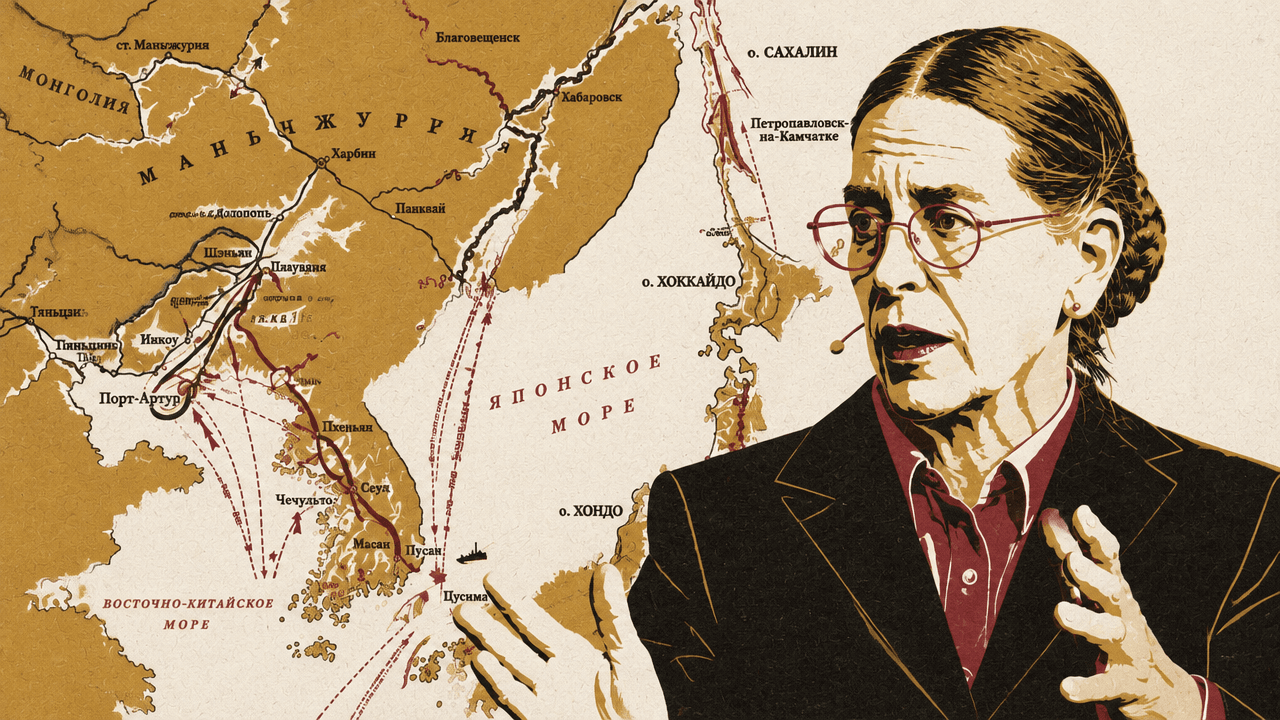
Japan decided the clock was running out. It attacked Russia’s naval base at Port Arthur because the fleet there threatened Japan’s sea lines of communication—the routes by which Japan moved troops and supplies. Japan blockaded the port, but a blockade also required an army to invest it on land. That tied up one of Japan’s four armies, a quarter of its available force. Japan’s wider plan depended on moving north along Russia’s railway toward Harbin, fighting a series of battles, and seeking a large, annihilating battle. It did not have enough soldiers to do that while also keeping a large force at Port Arthur. Japan needed the army at the siege to join its other armies farther north.
The siege became costly. General Nogi’s repeated frontal assaults against the fortress cost Japan roughly 45,000 men, according to Paine—about the size of one of Japan’s armies. The eventual solution was to capture 203 Meter Hill, establish observers there, and bring up heavy siege guns. From that height, Japanese spotters could direct fire onto the Russian ships in the harbor. After the guns arrived, the fleet was destroyed within days. Port Arthur itself surrendered nearly a month later, even though Paine says the Russians still had enough provisions—and 3,000 horses—to hold out longer. Russia had failed to consider how keeping the fortress active could tie down Japanese forces to its advantage.
The war’s limited aims mattered as much as its battles. An unlimited objective, in Paine’s account, is regime change. Japan did not set out to overthrow the government in St. Petersburg. Russia’s initial thought of invading Japan and overthrowing its government quickly proved infeasible; Paine does not present that as Russia’s settled war objective. The contest instead concerned territory and influence. Japan wanted Russia out of Korea and sought gains in Manchuria. It achieved those aims and more, securing a sphere of influence in Korea and the southern half of Russia’s railway concessions in Manchuria, including the naval base and its equipment.
For Paine, that is why battle counts alone cannot determine whether a war succeeded. The test is whether a state achieved the objective for which it fought. She invokes the United States in Vietnam as a case where winning most conventional battles did not amount to winning the war. Russia, meanwhile, gained nothing from fighting Japan. The expense also carried an opportunity cost: money spent on the war was unavailable for other uses, such as expanding railways in European Russia—an investment Paine says would have helped Russia during World War I. The point is not just that war consumes resources, but that it diverts them from other capabilities a state may later need.
Japan’s favorable settlement was not simply a battlefield outcome. Its leaders had planned for mediation before the war began. Prime Minister Itō Hirobumi arranged for diplomat Kaneko Kentarō, a Harvard graduate and acquaintance of Theodore Roosevelt, to approach the president about mediating. The peace talks would be conducted by another Harvard alumnus, Baron Komura. Japan was betting that the United States would help bring the war to an end. When Japanese leaders judged that they could not afford another major battle, that channel was ready.
The lesson is not that a weaker state can always outmaneuver a stronger one. Japan’s position was precarious, and its success depended on getting its limited aims recognized before Russian capacity in the theater overwhelmed it. Its leaders understood that they did not have the resources to invade Russia’s capital or force regime change. They sought an exit through negotiation—and, in Paine’s telling, ended with more than they had initially demanded. The settlement also confirmed Japan as the dominant regional power in East Asia, while granting it the southern half of Sakhalin and a substantial position in southern Manchuria.
The decisive moment may be a battle, a budget, or a political collapse
The difficulty is knowing when to stop. Paine uses Clausewitz’s “culminating point of attack” for a battle or campaign: the point beyond which an attacker no longer has the strength to keep advancing safely. Go farther, Clausewitz warns, and the balance can turn; the original attack may provoke a stronger reaction. A “culminating point of victory” applies to the whole war. Fall short, and the war’s aims go unmet. Exceed it, and the winner risks overextension or widening the war—often through intervention by a third party.
Port Arthur illustrates how reasonable analysts can disagree about where an operational campaign culminates. Paine’s preferred answer is Japan’s capture of 203 Meter Hill. The hill removed the Russian fleet’s protection: once the Japanese had observers above the harbor and heavy guns in place, the ships were vulnerable. On this reading, their destruction became a matter of time, and the repeated frontal attacks stopped after the hill was taken.
A competing answer is that the culminating point came only when Japan destroyed the fleet. The fleet was the operational goal, and while it remained in the harbor it tied down Japanese naval and army forces. The hill made destruction possible, but taking the hill was not the same as accomplishing the objective. Paine uses the two interpretations to show what historical argument requires: a thesis, evidence, a counterargument, and a rebuttal that answers the counterargument rather than repeating the thesis. The disagreement is not merely about which date to circle. It turns on whether the campaign’s objective was to secure the position that made the fleet indefensible or to destroy the fleet itself.
She also distinguishes a “decisive battle” from a battle that is simply important. Following Clausewitz, she uses decisive to mean a battle that wins the war; Clausewitz says that battles settling entire wars are rare. Port Arthur was pivotal, not decisive: it closed some options for Russia and opened others for Japan, but other battles and the peace settlement still followed. Calling a battle “important” does not specify what changed. “Pivotal” identifies a battle that alters the possibilities; “decisive,” in Paine’s stricter usage, says the war was won there.
The war’s culminating point of victory is less clear-cut. Paine offers five candidates rather than presenting one as settled: Russia’s 1905 Revolution, the land battle of Mukden, the financial crisis, the naval battle of Tsushima, or Japan’s seizure of Sakhalin Island. Each identifies a different constraint on Russia’s ability to continue, and each implies a different answer to when Japan had reached the point at which further fighting would add less than it cost.
The 1905 Revolution points to domestic politics. Demonstrations, strikes, and petitions demanded a legislature, which Russia lacked. Paine describes a population becoming more urbanized and educated, with demands for political participation growing as the war went badly. Reservists were rioting as they gathered to be sent to Asia. When troops fired on a peaceful crowd approaching the Winter Palace on January 22, Bloody Sunday damaged the government’s legitimacy. Nicholas II soon made concessions and established a weak legislature. On this account, the political shock at home helped make continued war untenable.
Paine uses Clausewitz’s image of a Bologna flask to describe the uncertainty involved in judging an opponent’s resilience. A flask can be strong enough to hammer a nail, yet shatter if its surface is scratched. A state under pressure may stiffen its resistance—or suddenly break. That distinction is hard to assess in advance. Paine contrasts Nicholas II’s decision to give up with the North Vietnamese willingness to continue fighting. For an autocrat, the ruler’s decision can make a political break decisive.
Mukden offers a military explanation. Japan committed nearly everything it could field, including men too young, old, or tired to fight. It still had 125,000 fewer soldiers than Russia. Japan had counted on winning before the Trans-Siberian Railway could move enough Russian troops to the front. Its carrying capacity rose from 20,000–40,000 troops a month at the beginning of the war to 100,000 by the time of Mukden. Paine says Russia had nearly 800,000 troops in the theater by August 1905, while Japan had sent its entire force—fewer than 700,000. Had Nicholas committed to one more battle, Japan might have faced a much worse position. Instead, Japanese leaders called for peace talks after Mukden. Yamagata’s argument was that Japan had exhausted its own forces and lost officers it could not readily replace, while Russia still had powerful forces at home.
The financial account points to the same shrinking window. Both sides borrowed heavily. Japan’s borrowing became cheaper after battlefield successes, and it secured two more loans after Mukden. Russia, already weakened by a recession and poor harvest, failed to obtain a loan after the battle. Paine says that after peace was made, Russia raised money simply to move its troops back from Asia. On this interpretation, the Tsar’s “piggy bank” had run dry. The financial case also complicates the idea that the battlefield alone determined the outcome: Japan could keep borrowing at lower rates, while Russia’s request for another loan was rejected.
Tsushima provides a stark naval candidate. Russia did not need to fight a major naval battle to supply its forces; it could use the railway. Yet Nicholas sent the Baltic Fleet across the world to relieve Port Arthur, and then sent the rest of his naval assets. At Tsushima, Japan lost three torpedo boats. Russia lost or scuttled battleships, cruisers, destroyers, and auxiliaries; the Japanese also captured ships, increasing the size of their fleet. Paine treats the battle as an especially lopsided loss, but the question is whether that loss itself forced the settlement or whether it was one part of a wider collapse in Russia’s military, financial, and political position.
A final candidate is Sakhalin. Japan took Russian territory near the end of the war, giving it something to trade at the peace talks. Losing territory to Japan was a blow to Russian prestige, especially given the racial prejudices of the time, while the island’s fishing grounds were useful but not essential to Japan. Paine suggests that the seizure may have been the final shock to Nicholas’s resolve, without claiming that this explanation settles the question.
The five candidates are not mutually exclusive causes in a simple sequence. A domestic crisis can constrain a ruler’s choices; a failed loan can make the next campaign harder to finance; losses at sea can alter the bargaining position; and a territorial seizure can add urgency to negotiations. Paine leaves the choice of culminating point to the analyst, asking readers to weigh which pressure best explains why the war ended when it did.
Limited aims make settlements possible; expanding them can make victory unaffordable
The difference between limited and unlimited objectives is central to Paine’s account of war termination. A limited war seeks something short of overthrowing the enemy: territory to annex, a frontier district to occupy, or leverage for peace negotiations. An unlimited war seeks to render the enemy politically helpless or militarily impotent, so it must accept whatever settlement the victor imposes. The military effort required depends on the political aim. As Clausewitz puts it, the political objective—not the size of the forces committed—determines what the military must accomplish.
Limited aims are harder to specify. Governments may avoid stating them clearly, or may hope to gain more than they have publicly promised. That ambiguity leaves military officers unsure what success means. In a limited war, the settlement also depends on the defeated side’s assent. Its government remains in power and must negotiate, which means it can cause problems again later. Unlimited aims are conceptually simpler—regime change—but often much harder to execute. If a population or government faces annihilation, it may fight with desperation rather than submit. Sun Tzu’s term for this is “death ground”: soldiers fight to the death when there is no alternative.
Paine contrasts the difficulty of the two forms this way: unlimited wars are conceptually simple but difficult to execute; limited wars are conceptually difficult but easier to execute, especially when the aim is narrow. In an unlimited settlement, the defeated party has no say in the outcome. Paine notes that the United States kept Emperor Hirohito after World War II because he could lend legitimacy to reforms, even though the war against Japan had an unlimited objective. The example distinguishes the goal from the method of settlement: keeping the emperor did not mean the defeated Japanese government had negotiated the terms of peace.
The Gulf War of 1991, in Paine’s telling, shows the advantages of a clearly stated limited aim. Saddam Hussein invaded Kuwait while Iraq was broke after its war with Iran. He wanted to eliminate Iraq’s debt to Kuwait and gain control of Kuwait’s oil fields. George H. W. Bush’s National Security Directive 54 set out the coalition’s objectives: force Iraq out of Kuwait, restore the Kuwaiti government, protect Americans abroad, and promote security and stability in the Persian Gulf. Paine argues that the United States and its partners met those aims. The stated objectives gave military and political leaders a defined endpoint; the coalition did not make regime change in Baghdad its objective.
The coalition also meant the United States did not bear the war’s costs alone. Paine says allies provided more than 200,000 troops, paid over $50 billion to the United States, and contributed another $14 billion to coalition partners. The coalition suffered 392 deaths, including 258 Americans, compared with an estimated 20,000–35,000 Iraqi military deaths and up to 3,000 Iraqi civilian deaths. Iraq, unlike Japan in the Russo-Japanese War, was diplomatically isolated: wealthy states and almost all of its neighbors were aligned against it. Paine’s point is not simply that limited wars are cheap, but that a narrow objective, allied backing, and an isolated opponent can make a war’s costs and endpoint easier to manage.
Korea shows what can happen when the objective shifts. The peninsula’s southern land border was only about 250 kilometers, and the United States’ naval advantage could help blockade the coastline. But North Korea shared a roughly 1,400-kilometer border with China, creating a supply route that could not be cut off. Both sides had powerful external supporters, so aid could keep the fighting going. The war cost many lives and devastated territory.
The United States also wavered over whether it wanted to restore the prewar division or reunify the peninsula by force. After North Korea invaded the South, the United States and UN partners intervened. MacArthur’s Inchon landing succeeded, and he pursued the possibility of taking the entire peninsula. When his forces approached the Chinese border, China intervened with hundreds of thousands of troops. The conflict widened, MacArthur was removed, and the eventual armistice restored a divided peninsula at high cost. The military opportunity to advance, Paine argues, did not itself justify expanding the political objective. The minimum aim—preserving South Korea—was achieved, but the pursuit of more carried the war beyond its culminating point of victory.
The Korean case shows why third-party intervention can mark a shift in the war rather than simply add another force to the same contest. North Korea’s invasion began as a civil war. US and UN involvement made it a regional war; the prospect of a wider conflict followed as the United States advanced toward China’s border. The intervention changed the opponent, the supply situation, and the scale of the fighting. Paine’s general warning is that a military success can create new risks when it moves beyond the political objective that justified the war.
A regional war can become global before either side can contain it
A regional war can widen when the theater is large, the fighting lasts, and outside powers have both the opportunity and the incentive to intervene. Paine’s examples show that the original participants may not control who joins or what those new participants demand.
In the American Revolution, the thirteen colonies did not seek regime change in London. Britain did seek to destroy the Continental Army and Congress, making the conflict existential for the rebels. As the war dragged on across a large theater, Britain’s rivals had time to act. France allied with the colonies in 1778; Spain allied with France in 1779; Britain declared war on the Dutch in 1780. Fighting spread to the Caribbean, India, and other theaters. Britain ultimately decided that retaining the Caribbean possessions mattered more than keeping the colonies. What began as a regional conflict had become a global war, changing the calculation of what Britain was willing to defend. The colonies’ limited objective and Britain’s more expansive one also gave the Americans a reason to keep fighting that Britain’s rivals could exploit.
World War I began, in Paine’s account, with powers expecting limited regional gains. But even within alliances, aims diverged. Britain wanted the status quo; France wanted Alsace-Lorraine; Italy sought territory in the eastern Mediterranean; Russia wanted influence in the Balkans. Austria-Hungary and the Ottoman Empire had their own Balkan aims, while Germany sought colonies. The parties could not easily agree on a settlement among themselves, much less one the enemy would accept. Nor could they readily abandon allies on whom they depended. The result was not one coherent war aim, but parallel struggles that made settlement more difficult.
This alliance problem bears directly on termination. Even if one government is prepared to stop, it may not be able to offer terms its partners will accept. And if an alliance cannot agree on the purpose of the war, it may be difficult to define what counts as enough. Paine’s account emphasizes that the barriers to peace can exist inside a coalition as well as between opposing sides: parties may be unwilling to leave allies, while also having incompatible ideas about what the war should produce.
Japan’s war in China illustrates how an effort to secure resources can widen into a contest that draws in outside powers. Paine links the background to the trade collapse during the Great Depression. The United States raised tariffs through the Smoot-Hawley Tariff; trading partners retaliated, and global trade fell. Japan, which depended on trade, saw its partners leave it exposed. It sought economic independence by invading Manchuria, then expanded its project to all of China. That move turned a territorial seizure into an existential threat for the Chinese. Competing Chinese factions stopped fighting one another and resisted Japan, eventually forcing a stalemate and worsening Japan’s economic position.
Japan then tried to cut off foreign aid to the Nationalists, hoping they would capitulate. Instead, its attacks in December 1941 targeted not just Pearl Harbor but also British, American, and other positions across Asia and the Pacific. The great powers did not withdraw. The United States, Britain, Australia, and New Zealand became more deeply involved in support of Chiang Kai-shek. The strategy intended to isolate China instead brought more powerful partners into the conflict.
Across these cases, Paine identifies recurring risks: large theaters are hard to garrison and isolate; protracted fighting gives third parties time to intervene; an enemy with powerful friends is harder to defeat; and unlimited aims tend to produce an opponent unwilling to compromise. As losses accumulate, a belligerent may become less—not more—willing to accept a settlement. Intervention can also change the war’s character: the local contest that leaders thought they were managing may become a regional or global conflict, with new objectives, new supply routes, and new costs.
Conventional defeat does not end a war if the opponent can keep fighting
The second pathology is a conventional victory that fails to produce submission. An opponent can lose battles, reconstitute its forces, and turn to guerrilla warfare. The resulting insurgency denies the victor control and imposes costs over time. Paine describes it as costly both for the intervening power, which may remain indefinitely, and for the insurgents, who fight under difficult conditions.
Japan’s war in China shows the bind. The Nationalists lost conventional battles but continued to rebuild and fight; both Nationalists and Communists also organized guerrilla forces. Japan wanted the territory to generate income, not drain resources through garrisoning. But it could not stabilize the theater while resistance continued. Concentrating troops against the Nationalist army left the rear open to guerrillas; dispersing troops to control the rear allowed the conventional opponent more room to act. The Japanese victory in individual battles did not solve the problem of governing the territory or extracting the economic value they sought.
Paine relates this logic to the American Revolution. The Continental Army forced the British to concentrate, while local militias operated across the country. Washington was initially wary of the militias, she says, but came to see their value as a cost-imposition strategy. The underlying calculation is the “value of the object”: how much each side values its political aim. For a population fighting at home, the stakes may be existential. For an intervening power far from home, the objective may be less valuable. The weaker side can try to raise the costs until the outsider leaves.
Paine says this pattern later appeared in Vietnam, Iraq, and Afghanistan. The point is not that these conflicts are identical, but that conventional superiority does not necessarily overcome the difference in stakes. A force trying to stabilize a distant country may face an opponent for whom the conflict is about home and survival. When the cost of staying keeps rising, the outside power may eventually decide to leave even if it has not been defeated in conventional battle.
The 2003 Iraq War began with an unlimited objective: regime change in Baghdad. Removing the government was comparatively easy; governing what followed was not. Paine describes Iraq and its neighbors as mosaic societies in which political identities were often tied to ethnic or religious communities more than to a shared national identity. Building state institutions in that setting was difficult, especially amid competition among communities.
She contrasts Iraq with Korea, where people shared a national identity even though they fought over state institutions. In Iraq, the challenge was not only building a state but doing so amid internal divisions and outside involvement. The geography also changed with the objective. The Gulf War’s limited aim involved a 158-mile border between Iraq and Kuwait. Regime change exposed a much larger perimeter—more than 2,000 miles of borders with neighboring states. Saudi Arabia, Iran, and Turkey all had regional ambitions, Paine says, and were likely to be involved. A bombing at the al-Askari mosque in 2007 helped set off a major sectarian conflict, underscoring how a single incident could further destabilize the country.
The contrast between the two Iraq wars is therefore not only one of military success or failure. In the first, the coalition had a defined, limited objective and a comparatively contained theater. In the second, regime change made the victor responsible for the political order that followed, across a much larger and more contested space. The first war ended after the coalition achieved its stated aims; the second confronted the United States with the task of building institutions and securing a country whose political divisions and neighbors could sustain further conflict.
The questions to ask are about aims, stakes, allies, and access
Paine’s practical test for war termination begins before a war, but remains useful during one. First, identify which participants have limited or unlimited objectives, and against whom. An objective can be limited against one opponent and unlimited against another. Second, ask how the objectives align: who shares a primary adversary, and what settlements could the members of an alliance accept? Third, compare the value of the object. Is the outcome existential for one side and merely desirable for another? Fourth, examine geographic access and sanctuary: who can reach the theater, who can supply it, and what areas are difficult to attack? Finally, look for asymmetries across all of these factors.
The questions matter because battlefield strength does not by itself determine whether a war can end. A state may have more troops but less ability to finance them, less political resilience, or fewer allies. A weaker party may be willing to endure costs that a distant intervener will eventually decide are not worth paying. A military advance may also invite a third party into the war, changing its character and raising the price of victory. Geography can amplify that effect: a long border or an inaccessible sanctuary can allow an opponent to keep receiving supplies even after losing a series of battles.
Paine’s framework also asks against whom an objective is unlimited. A state might seek limited gains from one neighbor while pursuing regime change against another. That distinction affects which parties have reason to align, how threatened each feels, and whether a settlement with one opponent can end the wider conflict. The question is not simply “Who is winning?” but “What would each participant accept as an end, and what can each do if it does not get that?”
The recurring problem is a mismatch between what leaders want, what their forces can accomplish, and what the opponent is prepared to endure. Japan’s success in 1904–05 depended on defining limited aims and arranging a route to negotiation before its military window closed. The Gulf War had a similarly explicit endpoint. In Korea, changing the objective helped draw China into the war. In China and Iraq, conventional force could not by itself produce a stable settlement. Paine’s questions are meant to expose those mismatches before leaders mistake a battlefield opportunity for a politically sustainable outcome.