Alien Life Is Likely, but Interstellar Visitation Remains Unproven
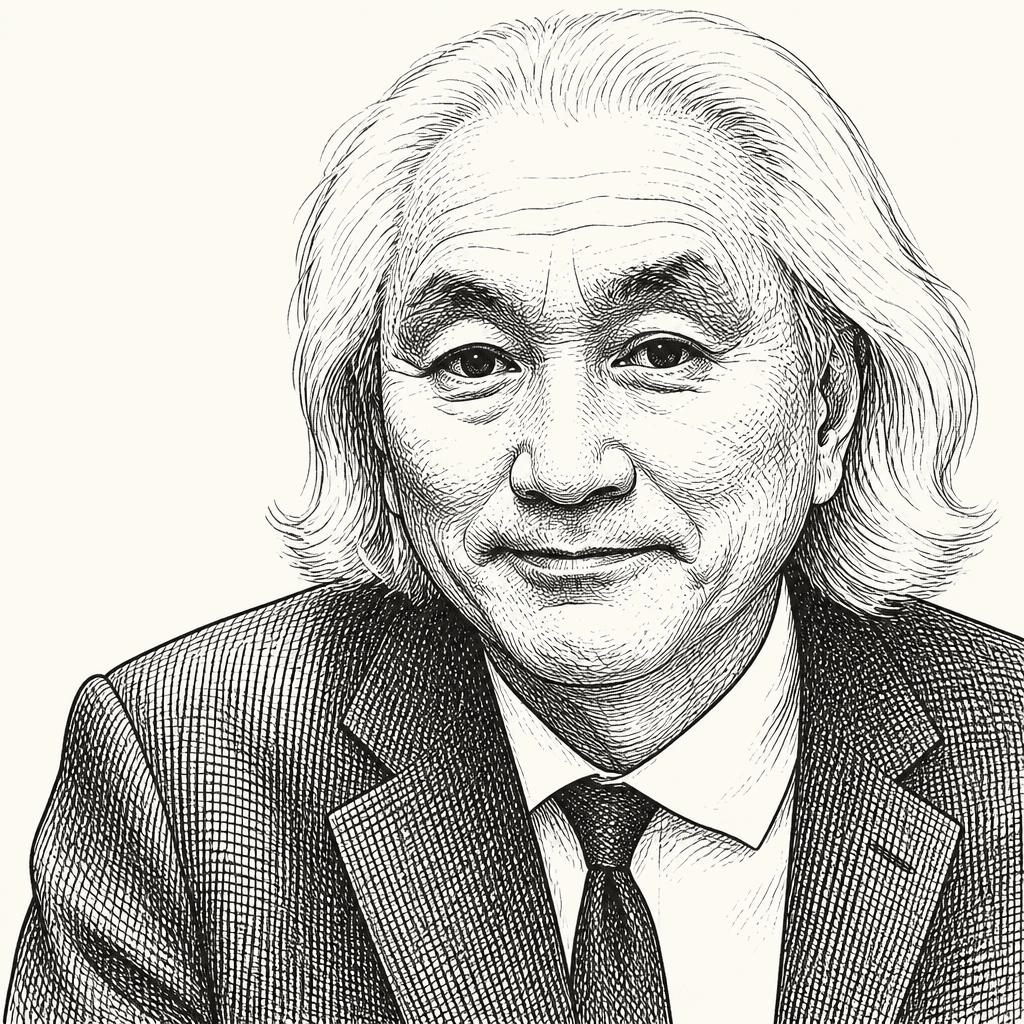
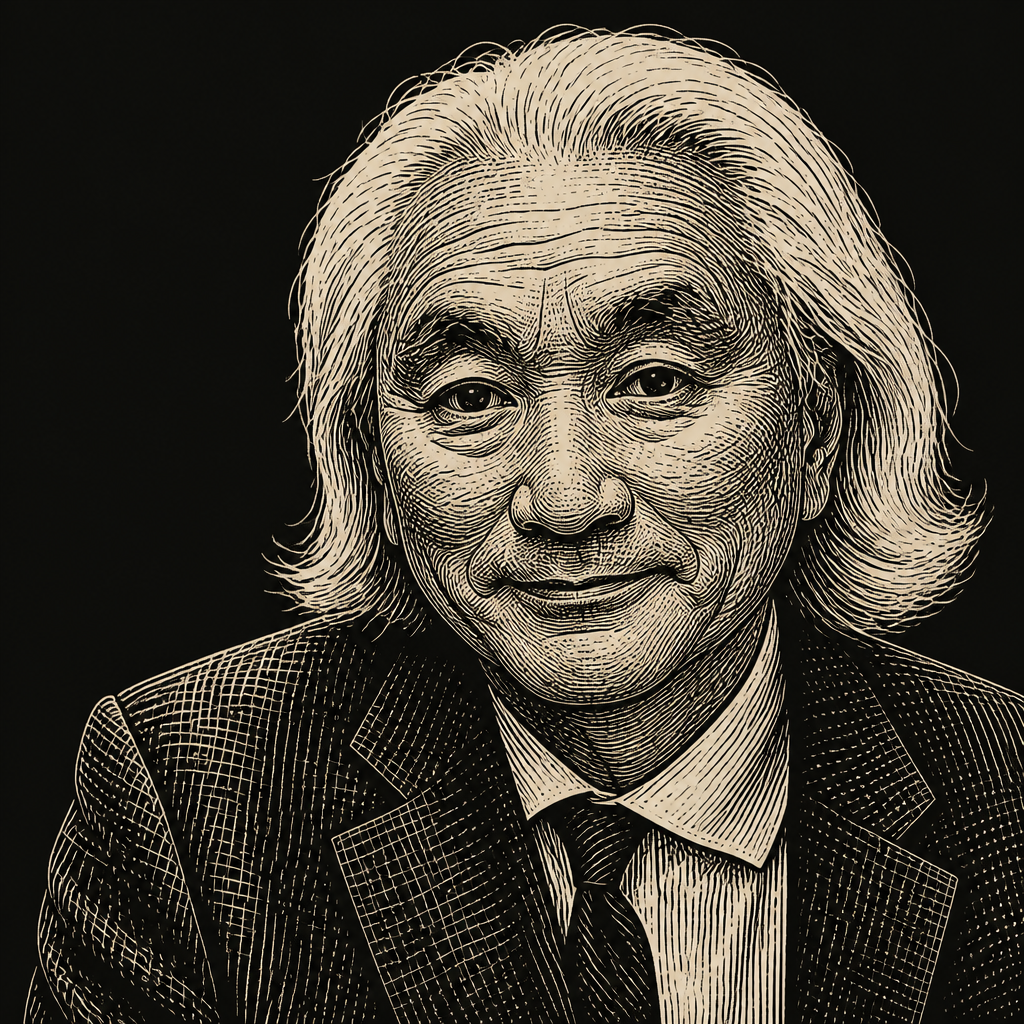
Theoretical physicist Michio Kaku argues in a Diary of a CEO interview that extraterrestrial life is highly likely, but that evidence of alien visitation remains inconclusive and interstellar travel would require physics far beyond present human capability. He uses that distinction — between observed reality, mathematical possibility and speculation — to frame claims about UAPs, string theory, black holes, the multiverse, AI, quantum computing and longevity. His central warning is that science is expanding what may be possible faster than humanity has proven it can manage the consequences.
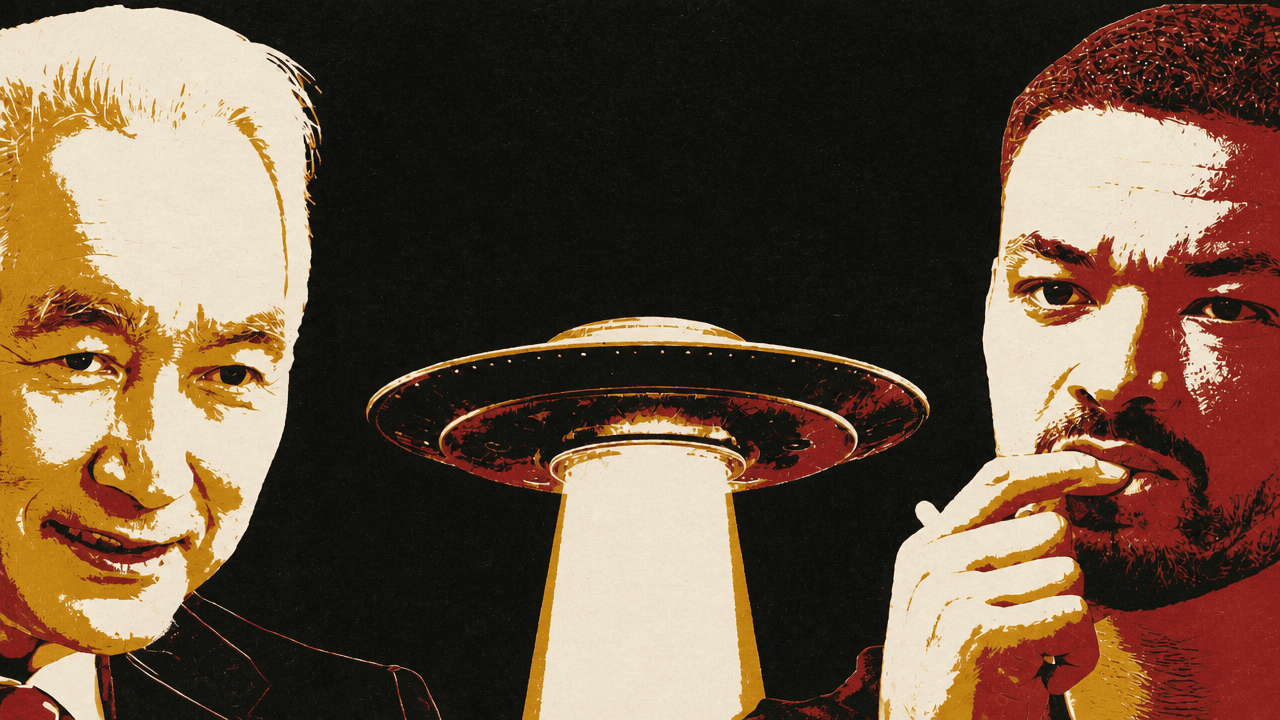
The question is not whether life exists elsewhere, but whether it can get here
Michio Kaku treats extraterrestrial life as highly probable, but separates that from the harder question of visitation. On the numbers he gives, the Milky Way has about 100 billion stars, and perhaps ten percent have planets that are Earth-like or similar to Earth. “The probability of life existing among those stars,” he says, is “almost 100%.” The problem he emphasizes is transit.
A Saturn V rocket, Kaku says, would take 70,000 years to reach the nearest star. Alpha Centauri, the closest star system to Earth, is about four and a half light years away. A comparison shown on screen converted four light years to roughly 23.5 trillion miles and estimated that at SpaceX Dragon’s stated speed of 17,500 mph the journey would take about 167,000 years. Kaku’s conclusion is that any civilization able to visit Earth would have to be “hundreds” or “thousands” of years more advanced than humans.
That leads him to the only plausible opening he sees in physics: not faster travel through ordinary space, but the manipulation of space itself. Gravity bends space already. The unresolved question is whether a civilization could bend space enough to create a warp that makes interstellar travel practical without locally violating Einstein’s speed limit. Kaku describes this as physically possible in principle, but not settled. The laws of physics allow the possibility of space warps, he says, but “of course you need energy, fantastic amounts of energy.”
Steven Bartlett presses him on whether reported UAP sightings should be taken as evidence of extraterrestrials. Kaku’s answer is deliberately tiered. He distinguishes close encounters of the first kind, where someone sees something in the sky; the second kind, where there is tangible evidence such as an engine, body, wreckage, or hardware; and the third kind, where people actually encounter the beings. Humanity, he says, is still at the first kind. There are images and sightings. There is not, in his view, a laboratory alien or a piece of alien craft.
Kaku’s treatment of grainy black-and-white targeting or infrared clips is not dismissal, but it is not endorsement. “We go where the observation goes,” he says, and for now the observations do not verify what people claim to have seen. He says 95% of sightings can be explained with known physics. The remaining 5% are “either optical illusions or they are evidence of visitation.” He refuses to rule out either.
That refusal is a recurring line in his thinking. When asked later whether he has reviewed the recently declassified batch of about 160 UFO sightings, Kaku says he has, and that he did not find a smoking gun. He describes them as “lights dancing in the sky without any commentary,” complicated by the fact that camera images are two-dimensional and make distance hard to judge. He is open to the possibility that some are extraterrestrial. But he sees “no aha moment.”
Bartlett tries repeatedly to force a binary answer: if Kaku had to bet everything on whether non-human life has contacted Earth, would he say yes or no? Kaku first says, “I don’t know.” Then, when pushed, he says “maybe yes,” immediately stressing the word “maybe.” He will not convert an intuition into a claim of evidence.
I’d say there’s not enough conclusive evidence. There’s no aha moment. I just see a lot of maybes.
His strongest extraterrestrial speculation comes not from the videos alone, but from the implied physics if the videos are genuine. If UAPs are real craft performing the maneuvers reported — zigzagging, diving from 70,000 feet, entering water — Kaku says the occupants are probably not organic. Those accelerations and stresses would crush bones or crack known devices. “Either they’re fake or they’re extraterrestrial,” he says of such maneuvers. If they are extraterrestrial, he thinks they are likely robotic.
That also shapes his answer to whether aliens would have empathy. If they were capable of destroying humanity and wanted to, he says, they could have done so long ago. He invokes the idea of Earth as a kind of zoo: not necessarily a place visited for ridicule or entertainment, but one that might be observed without the observers revealing themselves. His argument is that this would fit the absence of conquest.
The U.S. military secrecy question is less mysterious to him. One traditional explanation for withholding alien information is that the public is “not ready.” Kaku offers another: UFO stories can serve as cover. A visual note says the U.S. government capitalized on and promoted UFO myths as a disinformation cover to protect Lockheed U-2 and A-12 OXCART programs during the Cold War, both developed at Area 51 for reconnaissance. Kaku says military secrecy also protects experimental aircraft and novel forms of transport. The U.S. military, in that account, may lie not because it is hiding aliens, but because UFO ambiguity is useful.
Tabby’s Star shows how anomaly becomes speculation
The most concrete astronomical anomaly discussed is a star whose brightness has been observed dropping by about 20%. Bartlett identifies the example from Kaku’s previous appearances; an on-screen explainer names it as Tabby’s Star, officially KIC 8462852, known for unusual brightness drops of up to about 20%. The same note says the anomaly led to speculation about a Dyson sphere, a hypothetical alien megastructure for collecting starlight, while adding that NASA says dust is a more likely explanation.
Kaku explains why the dip is unusual. A planet passing in front of a star should not block that much light. Jupiter, he says, is about 1% the size of the Sun, so a Jupiter transit would reduce the Sun’s light by perhaps 1 or 2%. A 20% drop suggests something much larger. One possibility, he says, is an orbiting object or structure that eclipses the star as seen from Earth.
Bartlett initially frames the theory as an advanced civilization surrounding a star with a metal sphere to capture energy. Kaku clarifies that the relevant version here is not necessarily a complete shell, but an orbiting globe or structure that passes in front of the star and causes the dip. He also describes the broader idea: a civilization with enormous energy needs might seek the easiest major energy source available, its mother star, by building an envelope or megastructure that absorbs much of its output.
A Star Trek: The Next Generation clip and a rendering of a star surrounded by a spherical metallic framework serve as analogy rather than evidence. Kaku’s point is narrower: a large brightness reduction invites hypotheses that exceed ordinary planetary transit. A civilization-scale energy collector is one of several theories. It “can’t be ruled out,” not “has been shown.”
That distinction matters across Kaku’s handling of UAPs and extraterrestrial life. His posture is neither debunking as reflex nor belief as default. Tabby’s Star functions as the cleanest case of that style: the data point is unusual; ordinary explanations remain; exotic explanations are allowed but not promoted beyond the evidence.
The theory of everything is Kaku’s organizing ambition
Michio Kaku identifies his life’s work as string theory, specifically string field theory, a branch he says he developed. He presents it as an attempt to complete the project that occupied Einstein’s last decades: a theory of everything. In Kaku’s formulation, that would be an equation perhaps no more than an inch long, one that unifies the fundamental forces and allows physicists, using Einstein’s phrase, to “read the mind of God.”
A community note defines a theory of everything as a hypothetical framework that unites all four fundamental forces into a single master equation. Kaku names those forces: gravity, electromagnetism, and the two nuclear forces. Gravity keeps us here; electromagnetism lights the world; the nuclear forces govern the atomic nucleus and radioactive processes. Steven Bartlett tries to narrow the idea to “everything physics,” but Kaku rejects the limitation. Physics gives rise to chemistry, chemistry to biology, and from that comes the universe as experienced.
| Force | How the source describes it |
|---|---|
| Gravity | Keeps us here and bends spacetime itself |
| Electromagnetism | Light, electricity, magnetism, and chemistry |
| Strong nuclear | Binds protons and neutrons in atoms |
| Weak nuclear | Drives radioactive decay and powers the sun |
String theory’s core claim, as he explains it, is that particles are not point-like at the deepest level. A proton, electron, neutron, or neutrino is a vibration of a tiny string. From a distance the string appears as a point particle. Magnified, it is a vibrating object, and each mode of vibration corresponds to a different particle. Kaku’s metaphor is musical: one string, many notes. The apparent zoo of hundreds of subatomic particles becomes, in this picture, many vibrational modes of one underlying entity.
He uses particle accelerators to explain why physicists believe there is a particle zoo to be explained. Machines such as the Large Hadron Collider smash particles together and infer fundamental structure from the debris. The standard model, he says, explains the subatomic particles other than gravity. String theory aims to go beyond that and include gravity as well.
Dark matter enters as a possible “next octave.” A chart shown during the discussion says dark matter is thought to make up about 85% of all matter in the universe and is inferred from gravitational effects because it does not emit, absorb, or reflect light. Kaku calls dark matter invisible matter surrounding the Milky Way and says there is a Nobel Prize waiting for whoever figures out what it is. He cannot prove that dark matter is a higher vibration of the string, but he thinks some higher vibrations may not interact with light, making them invisible. That possibility would place dark matter inside the same musical logic as ordinary matter: not a separate ontology, but a higher mode.
His confidence that a final equation exists comes from the history of physics. Equations have grown simpler over time, he argues. Newton’s equation, Maxwell’s equations, and the equations for the nuclear force can be written on one sheet of paper. The unresolved force is gravity’s full unification with the others. Because the known pieces are compact and powerful, he expects the final equation to be simple as well.
We want that one equation which is the secret of the universe.
Kaku’s personal origin story is tied to that ambition. At eight years old, he read that a great scientist had died and failed in his last attempt to find a final theory. He later learned the scientist was Albert Einstein. That failure, rather than deterring him, gave him a life project: to join the effort to complete Einstein’s dream. He says he has been studying the universe since then.
The source does not present string theory as experimentally settled. Kaku acknowledges ignorance at the edge: physicists can use string theory to reach the instant of the Big Bang and even before, in his account, but then the question becomes where string theory itself came from. “At that point,” he says, “our ignorance takes over.”
The Big Bang may be less an origin than a bounce
Michio Kaku accepts the Big Bang as the best description of the expanding universe, but he considers the phrase misleading. A Big Bang, he says, is the cosmic explosion roughly 14 billion years ago that created the expanding universe. The evidence is expansion: stars and galaxies moving away from each other, like points on an inflating balloon. The universe is expanding rather than contracting.
When Steven Bartlett asks what it is expanding into, Kaku answers “hyperspace.” We experience three dimensions of space and one dimension of time. In string theory, he says, there are 11 dimensions. A community note frames this as M-theory’s 10 spatial dimensions and one time dimension, with extra dimensions thought to be curled up at tiny scales, while stressing that this remains unproven mathematics rather than observed reality.
The deeper question is what caused the Big Bang. Kaku says physicists do not know, but string theory offers a possibility: if one runs time backward, the universe collapses to something very small, but instead of a singular bang as an absolute beginning, it bounces. “There was no bang,” he says in this model; there was a collapse and re-expansion.
He later elaborates with the “bubble bath” picture. Empty space, he says, is not truly empty. It is frothing with tiny bubbles that pop into existence and annihilate back into nothingness. One day, in this speculative account, one such bubble did not return to the vacuum. It kept expanding, and that expansion became the Big Bang. The theory implies universes are dynamic and that universes may be continually created.
This is where the multiverse enters. Our universe may be one bubble among others, floating in an 11-dimensional setting we cannot see. Kaku says “multiverse” has entered popular language through comic books and films, but its origin here is physical: the idea that our universe could coexist with other universes. He does not claim this is established. He says it is what string theory suggests.
Bartlett raises a common version of “many worlds”: if there are infinite worlds, must there be another Steven Bartlett with an identical life except for tiny differences? Kaku corrects the inference. Many-worlds-type theories can involve infinitely many universes without requiring exact repetition. Infinity does not automatically mean that every arrangement recurs. An infinite set can contain no exact duplicate. An identical Earth is possible in such a framing, but not necessary.
The multiverse is also part of Kaku’s answer to cosmic scale. Earth is a dot in the Milky Way; the Milky Way is one of trillions of galaxies; each galaxy may contain roughly 100 billion stars. Bartlett describes feeling both relieved and diminished after looking through telescopes in the desert and realizing the scale involved. Kaku responds not with human centrality but with intellectual fellowship: somewhere on the other side of the Milky Way, he imagines an alien writing the same equations in another notation. The laws are universal. The shared project is understanding matter and energy.
Even though we speak different language, even though we’re on different sides of the universe, we’re all part of the same club.
That is as close as Kaku comes to a cosmic meaning supplied by physics. The equations may not tell humanity what life is for. But they imply that intelligence, wherever it appears, confronts the same underlying structure.
Black holes expose the gap between calculation and speculation
Michio Kaku’s explanation of gravity begins with a simple demonstration using objects as the Sun, planets, and asteroids. Planets orbit the Sun because the Sun warps the space around it. Gravity is the byproduct of the warping of space. Einstein’s achievement, as Kaku presents it, was to show that space is not merely a stage on which objects move. It curves.
He applies the same logic to why we remain on Earth. The Earth is spinning, yet we are not flung away. “Gravity” is only a word unless one asks what causes the pull. Einstein’s answer, Kaku says, is that the Earth warps the space around us and pushes us into the floor. The visual demonstration accompanying the explanation shows wireframe spacetime bending under the Earth and Sun.
A black hole is what happens when a star or concentrated mass becomes so dense that gravity pulls the surrounding structure inward beyond escape. Kaku says physicists now believe there is a black hole at the center of almost every galaxy, including the Milky Way. Looking toward Sagittarius, he says, means looking toward the black hole in our own galactic backyard. An on-screen note identifies it as Sagittarius A*, about 26,000 light years from Earth.
Kaku is careful about formation. It is not clear, he says, whether galaxies came first or black holes came first. One possibility is that a black hole formed from concentrated gas and drew stars and other material around it to create a galaxy. In either case, the matter ultimately traces back to the Big Bang.
The event horizon is the decisive boundary. Kaku describes it as a ring or sphere around the black hole, a point of no return. Once an object passes it, escape would require traveling faster than light. He explains this through escape velocity. To leave Earth, astronauts need roughly seven miles per second. For a black hole, the escape velocity at the event horizon is the speed of light. Since faster-than-light escape is not possible under ordinary physics, whatever crosses never returns.
What is inside? Kaku’s answer is explicitly speculative: if he knew, he says, he would win a Nobel Prize. But if forced to guess, he would call it an entrance — perhaps a gateway to another universe. A sufficiently warped space might connect to another region, creating something like a wormhole. The source’s explainer describes a wormhole as a theoretical passage through spacetime that could create a shortcut for long journeys, predicted by general relativity but never discovered.
The connection to interstellar travel is direct. Conventional rockets make Alpha Centauri impractical. A shortcut through warped spacetime is the kind of possibility one would need. Kaku does not say wormholes exist. He places them in the same category as space warps: allowed as theoretical structures, unobserved, and potentially essential if cosmic travel is ever to exceed the brutal limits of ordinary distance.
Reality is not fake, but perception is a survival filter
Michio Kaku is skeptical of simulation theory. Steven Bartlett presents Nick Bostrom’s three-part argument: civilizations may destroy themselves before running ancestor simulations; advanced civilizations may have no interest in such simulations; or we are likely in a simulation because simulated realities would vastly outnumber base reality. Kaku adds a fourth option: there is no simulation at all.
His objection is not that the world feels real. It is that simulation theory conflicts, in his view, with quantum theory’s probabilistic structure. The universe is based on probabilities: the probability that uranium atoms fire in ways that make nuclear weapons possible, or that hydrogen fuses in stars. Physics can calculate atomic and chemical probabilities with enormous accuracy. Kaku does not see simulation theory as part of that framework. He calls the puppet-show version of reality a “fairy tale.”
But he is not defending ordinary perception as complete reality. When Bartlett points to psychedelic experiences and asks whether one inhalation of DMT can reveal how fragile perceived reality is, Kaku says the reality humans experience is “a partial fiction.” Our senses retrieve only a tiny fraction of what exists. A diagram of the electromagnetic spectrum shown in the source includes gamma rays, X-rays, ultraviolet, visible light, infrared, microwaves, and radio. Humans see only the visible slice.
That means the room is full of realities we cannot see: ultraviolet radiation, infrared, cosmic rays, radio waves. Perception is not a transparent window onto the whole. It is a biologically useful interface. “It’s a good illusion for survival,” Kaku says, but not the full spectrum of reality.
Evolution explains the filter and its errors. If early humans heard rustling in the forest, they might infer a tiger even when none was there. Nine times out of ten, that could be false; the one time it was true, the overactive detection system saved them. We are here, Kaku says, because our senses are biased toward survival, not truth in the exhaustive sense. We do not see infrared or ultraviolet because it was not necessary for survival.
This model also explains why animals inhabit different realities. Bats use sonar. Dogs have far stronger olfactory systems. Their world is not identical to ours because their sensory priorities differ. Bartlett’s dog, Kaku suggests, lives in a different reality through smell.
Where Bartlett wants to press the question toward meaning — what is all of this, what is the point — Kaku refuses a universal answer. He says individuals create their own meaning. Survival matters because, without survival, there is no history, memory, or story. But he is not sure the universe has a point. His position is practical and existential rather than cosmic: people create worlds of meaning sufficient for themselves.
Consciousness, in Kaku’s account, is awareness and the ability to give meaning to things. The human brain’s frontal capacity is also a time machine. Humans are obsessed with the future: dinner tomorrow, friends and enemies, college, next year, plans. Animals, he says, are mostly concerned with immediate survival. Humans lack claws, fangs, wings, speed, and great strength; we survive by modeling the future. That future-oriented cortex is why we ask questions about origin, meaning, and destiny.
Religion gives Kaku a social explanation, not a scientific one
Michio Kaku describes his own religious background as mixed. Most of his family were Buddhists from Japan; his father was Christian and sent him to Sunday school. As a physicist, he calls himself agnostic. Physicists, in his description, go where evidence takes them, including into areas that are mysterious or uncomfortable. At the boundary where physics no longer explains why string theory exists, he says ignorance takes over.
He does not treat Genesis as a literal scientific account. Asked about Adam and Eve and the creation of the world in seven days, he calls the story a “compelling fairy tale” and a metaphor. Even religious teachers, he suggests, understand that “day” cannot mean a universal 24-hour Earth day in a cosmos where planets have different rotations and days. The Genesis story, in his account, organizes religion into a form people can understand and feel.
That does not make religion useless. Kaku gives it an evolutionary function: it binds intelligent groups that would otherwise fracture. Among animals, hierarchy can hold a group together through the alpha male. As humans became more intelligent, they could argue, challenge leaders, and splinter. Religion supplies a higher authority. Someone says they are strong, but also that they speak for someone stronger: God. If people disobey, divine sanction follows. “God is a glue,” Kaku says, holding sentient beings together when intelligence alone might produce endless conflict.
He does not call himself an atheist because he sees truth in religion as a way of behaving. Religion teaches people how to be good to their neighbor. It gives guidance, not necessarily an explanation of existence. It can provide a reason for existence even if it does not reveal the meaning of existence.
His account of morality is less theoretical when he talks about the Army. Kaku served in the United States Army for two years at the height of the Vietnam War. He recalls Life magazine publishing the faces of all the GIs who died in one week, without commentary. He says 500 GIs were dying every week. The LIFE cover shown on screen reads, “The Faces of The American Dead in Vietnam,” and inside pages are labeled “Vietnam One Week’s Dead May 28 - June 3, 1969.”
The experience forced him to confront death and the fact that enemies also have religions, moral worlds, and willingness to sacrifice. He tells a story from grenade training: a sergeant with scars on his face and neck had been approached by a Vietnamese boy asking “candy, candy.” The boy revealed a hand grenade and threw it. The sergeant hit the ground, but one side of his body was saturated with shrapnel. Kaku’s lesson was not a simple condemnation of the boy. It was that the boy believed in something strongly enough to do that.
That experience made Kaku question slogans and tribal certainty. He remembers singing in the morning, “I wanna go to Vietnam, I wanna kill a Charlie Cong,” and later asking why. Were they on the right side or wrong side? Maybe, he says, he was on the wrong side. The Army, not physics, was the major event that changed how he viewed other people.
On warfare more broadly, Kaku says conflict has been integral to human evolution and is visible in the animal kingdom. But humans differ from animals because they can make moral decisions. Animals operate by survival, strength, and access to food. Humans do not have to remain trapped in that pattern. His hope is that the human brain can be used to think through conflict and create a better world.
AI is useful, dangerous, and still not the kind of intelligence Bartlett thinks it is
Michio Kaku’s view of artificial intelligence is more restrained than Steven Bartlett’s. Bartlett argues that current AI models are described as PhD-level and that neural nets are inspired by the brain. Kaku pushes back. “You cannot talk PhD physics with them,” he says. In Kaku’s account, current systems are programmed; they work with existing material; they are not original in the way a great scientist is original.
He ranks today’s robots near the intelligence of an insect: they carry out orders but do not plan or articulate thoughts. Over time, he expects them to move from insect-like to mouse-like, rabbit-like, dog- or cat-like, and eventually monkey-like. At that point, he says, they become potentially dangerous.
The dispute with Bartlett turns on creativity. Bartlett argues that AI can make a photograph that has never existed before, which seems creative. Kaku says it does so on the basis of what did exist before — a rearrangement. Bartlett counters with Michael Jackson, showing footage from The Little Prince that appears to have influenced Jackson’s movement. Even a creative genius recombines influences. Kaku accepts that art’s bottom line is mimicry, but says true creativity arranges things in an original way that looks fresh.
When Bartlett moves to Newton, Kaku draws the distinction more sharply. Newton asked why Earth goes around the Sun and created calculus and the inverse-square law. For Kaku, true creativity can emerge “from almost nothing,” like a supernova. Robot creativity is imitative.
That does not mean AI cannot contribute to science. Kaku says many new laws of physics are guided by known laws, recombined in different ways. Future breakthroughs could be guided by the past, and AI may help in that process. He also says AI may help cure cancer and many diseases this century.
His concern is dual-use technology. Every invention can be used for good or bad. The bow and arrow can provide food or kill a neighbor. AI can reduce labor costs, create wealth, and make processes faster, cheaper, and better. It can also be weaponized. Kaku points to the battlefield, specifically Ukraine and Russia, and describes aerial weapons that use wires and artificial intelligence to lock onto targets in ways that resist standard countermeasures. An explainer describes AI wire-guided weapons using physical cables plus onboard computer vision to track targets while resisting radio jamming, raising concerns about human control in warfare.
Bartlett later shows live-streamed humanoid robots sorting packages beside a human worker. The on-screen comparison shows a human labeled “INTERN” and a robot labeled “F03,” with package counts and a full work shift timer. A later frame shows the human on a break while the robot continues sorting. Kaku’s response is that menial jobs — repetitive jobs requiring arms and legs — will be phased out. New jobs will require thinking, human relations, organizing, and directing others. The workforce will need retraining so humans become “masters of the robots,” as humans are masters of hammers and chisels.
Bartlett challenges that line with AI agents that can plan and execute tasks online, and with delivery robots in Los Angeles that roll along sidewalks with food. Kaku remains unimpressed by the example’s generality. A sidewalk robot is “just crawling on a sidewalk.” Humans can do much more. When Bartlett says agents make decisions like humans, Kaku says the user still tells the system what to do; the computer searches references, internet pages, and options. He contrasts that with a general robot capable of going to a supermarket and buying eggs — something he says robots cannot do.
His long-term answer to powerful robots is not simply regulation or resistance. It is merger. If robots become more powerful and eventually able to reason, plot future histories, and make choices, humans must either become super-powerful themselves or merge with them. By “merge,” Kaku means becoming partly robotic while still looking human: implants or connections that give superhuman abilities, with the brain connected directly or remotely to a system that performs calculations better than unaided humans can. The goal is to avoid a future conflict in which autonomous machines outmatch us.
Quantum computers threaten the code layer of modern society
Michio Kaku calls the quantum computer “the future.” The source shows the familiar chandelier-like machine inside a metallic enclosure, with an explanation that quantum computers use quantum physics to process information differently from ordinary computers and solve certain complex simulations or optimization tasks far faster than today’s supercomputers.
His basic contrast is between digital switches and atomic computation. Ordinary computers use transistors, which are up or down, on or off. Quantum computers compute on atoms. Where a digital bit has two states, Kaku describes the quantum basis as involving the space between zero and one — in principle, an infinite number of states. Steven Bartlett restates the contrast as binary yes/no versus processing information in many directions at once. Kaku agrees that the latter is “way more powerful.”
The social risk he emphasizes is cryptographic. Quantum computers could become powerful enough to break known digital codes. A community note shown during Bartlett’s Google example says Google has warned that encryption currently used to keep information confidential and secure could be broken by a large-scale quantum computer in coming years, and that Google has set 2029 as its timeline for moving to quantum-safe encryption because stolen data could be stored now and decrypted later.
Kaku says the CIA follows quantum computing closely because code-breaking is central to national security. If a thief has a bank customer’s digital code, that customer’s savings can disappear. If quantum computers can crack digital codes generally, he warns, “capitalism would vanish,” “society would come to a halt,” and chaos could follow. Those are Kaku’s consequences, and they rest on his premise that modern finance and social order depend on codes being hard to break.
He does not claim the crisis has already arrived. “We’re not there yet,” he says. Some people predict a few decades; some think sooner. Kaku does not know the timeline. His claim is that the world is gambling on finding a way to prevent quantum computers from breaking digital computers before the threat fully matures.
Quantum computing is also presented as part of the same broader century-scale future as AI, longevity, and spaceflight. It is not science fiction in Kaku’s view because quantum computers already exist. The uncertainty is scale, reliability, and timing — not whether the underlying machines are real.
Immortality is close enough to be dangerous
Michio Kaku’s most provocative biomedical claim is that “immortality is tantalizingly close,” but his explanation immediately introduces the obstacle. At the ends of chromosomes are telomeres, which he describes as a cellular clock. Each time a cell reproduces, telomeres shorten. When they become too short, they fray, fall apart, and the organism dies. Graphics during the discussion show cell division and shortening telomeres, then an animation of chromosome ends fraying.
The countervailing discovery is telomerase, described in an on-screen note as an enzyme discovered in 1984 whose function is to maintain chromosome length by rebuilding telomeres. Kaku says telomerase “stops the clock.” If telomeres track lifespan and telomerase can stop that clock, indefinite lifespan becomes conceivable within biology and physics.
The bad news is cancer. Cancer also uses telomeres and telomerase to live forever. Kaku says cancer kills because cancer cells are immortal in principle. So the problem is not simply how to activate longevity mechanisms; it is how to extend the human lifespan through telomeres without waking up cancers.
He frames this as an active scientific and medical problem, not a fantasy. “This is not science fiction,” he says. The secret of immortality is close because cells already show the relevant mechanisms. But the price of manipulating them incorrectly is cancer. The work is to separate healthy lifespan extension from malignant immortality.
Kaku’s broader forecast for 2100 includes humans on the Moon, perhaps Mars, and probes beyond; AI-supported medicine; cures for cancer and other diseases; and the beginning of solving what he calls the immortality crisis. He does not predict that ordinary humans will definitely live forever in the near future. He says an indefinite lifespan is possible.
Progress has put humanity on a knife edge
Michio Kaku’s century-scale optimism is inseparable from a new capacity for self-destruction. Decade by decade, he says, human progress is enormous. A few decades ago there were horse-and-buggy societies; before that plows; before that barbarism. The smallest meaningful unit of history, in his view, is the decade, because shorter periods are noisy and accident-prone. Over decades, the direction of technical capability is unmistakable.
But Steven Bartlett’s counterpoint is that the same progress increases the probability of catastrophe. Nuclear weapons, designer germs, AI, and other technologies create failure modes previous generations did not have. Kaku agrees. For the first time in human history, we can destroy ourselves. He dates that capacity largely to the last 80 years.
You tilt it the wrong way and there’s world war. You tilt it the other way and there’s food and luxury for everyone.
This is his governing image for the future: humanity is on a knife’s edge. The same scientific power can produce abundance or collapse. AI can cure disease or guide weapons. Large-scale quantum computers can unlock new computational regimes or threaten digital codes. Space technologies can extend human presence or amplify military competition. Biology can lengthen life or produce designer pathogens.
His answer is not fatalism. He believes humans will likely return to the Moon, go to Mars, and perhaps send probes farther. He thinks a theory of everything may be close. He thinks AI and quantum computing will transform medicine and society. But those futures are contingent on decisions. The laws of nature permit extraordinary power, and human institutions must decide how that power is used.