Elected Leaders Can Hollow Out Democracy Without Abolishing Elections

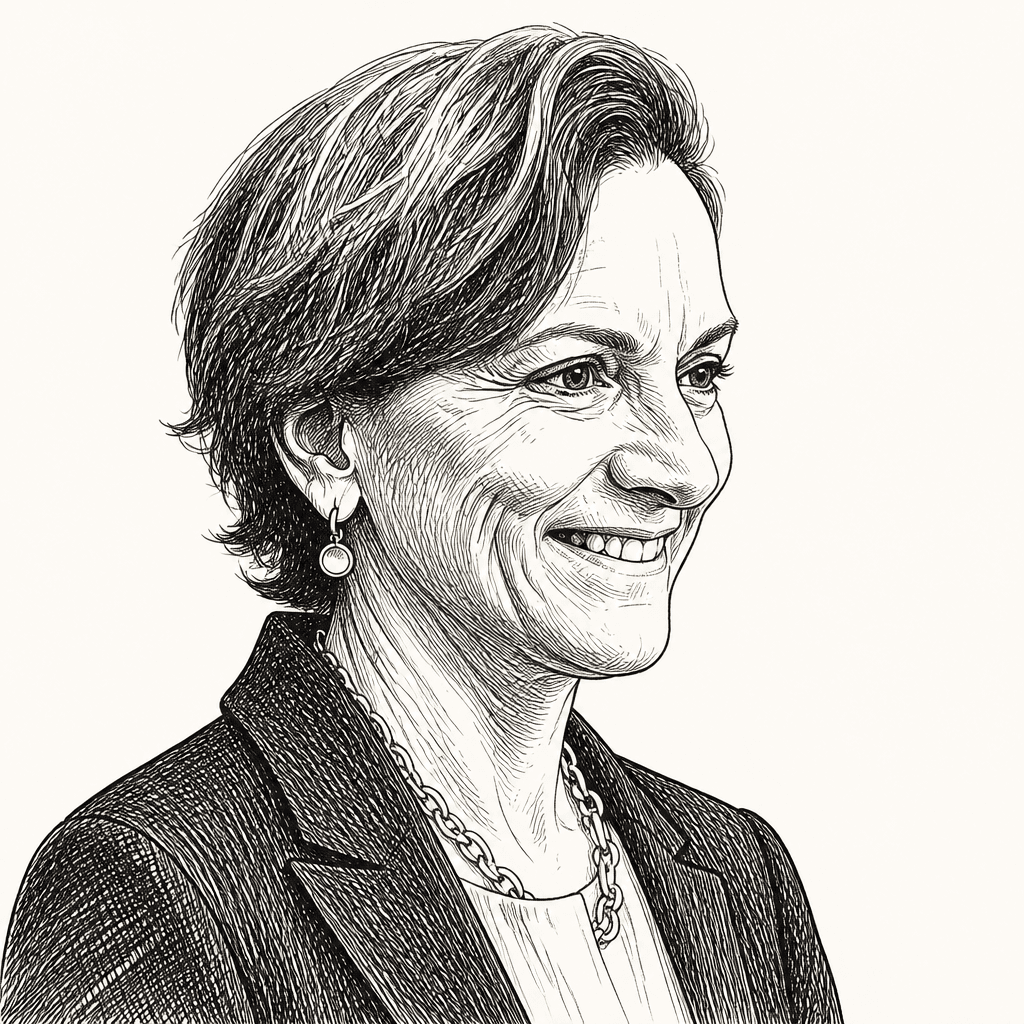
Pulitzer-winning historian Anne Applebaum argues that the United States is entering the kind of democratic danger she once studied in Soviet and post-Soviet systems: not a sudden coup, but institutional capture by elected leaders who keep democratic rituals while changing the rules. In a conversation with Steven Bartlett, Applebaum says the warning signs are corruption, manipulated elections, loyalist personnel, information control and unaccountable coercive power — mechanisms that can turn a democracy into an unfair, one-party system before many citizens recognize the shift.
The danger is institutional capture from inside the system
Anne Applebaum’s central warning is that modern democracies usually do not end in the cinematic way people imagine. The failure is less often tanks in the street or an attack on a presidential palace than a legitimate election followed by the systematic hollowing-out of the institutions that make the next election fair.
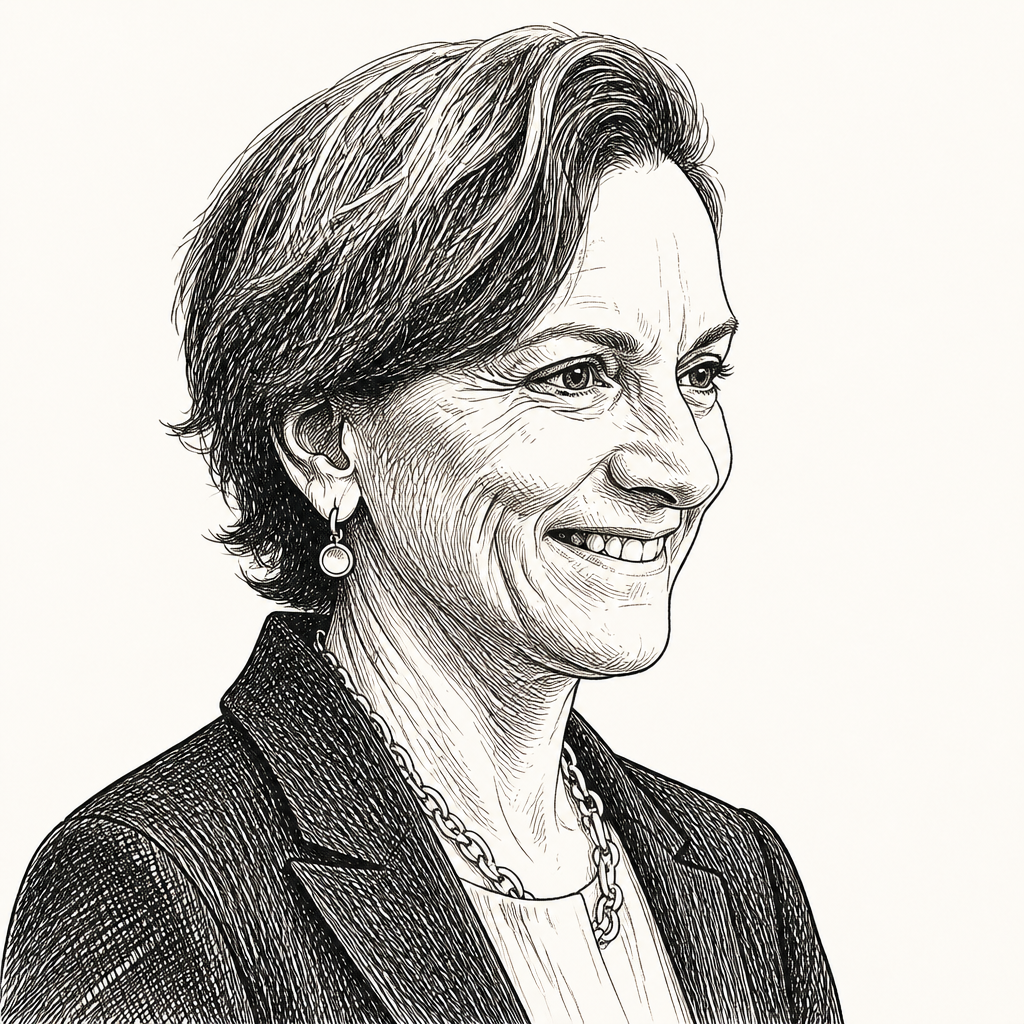
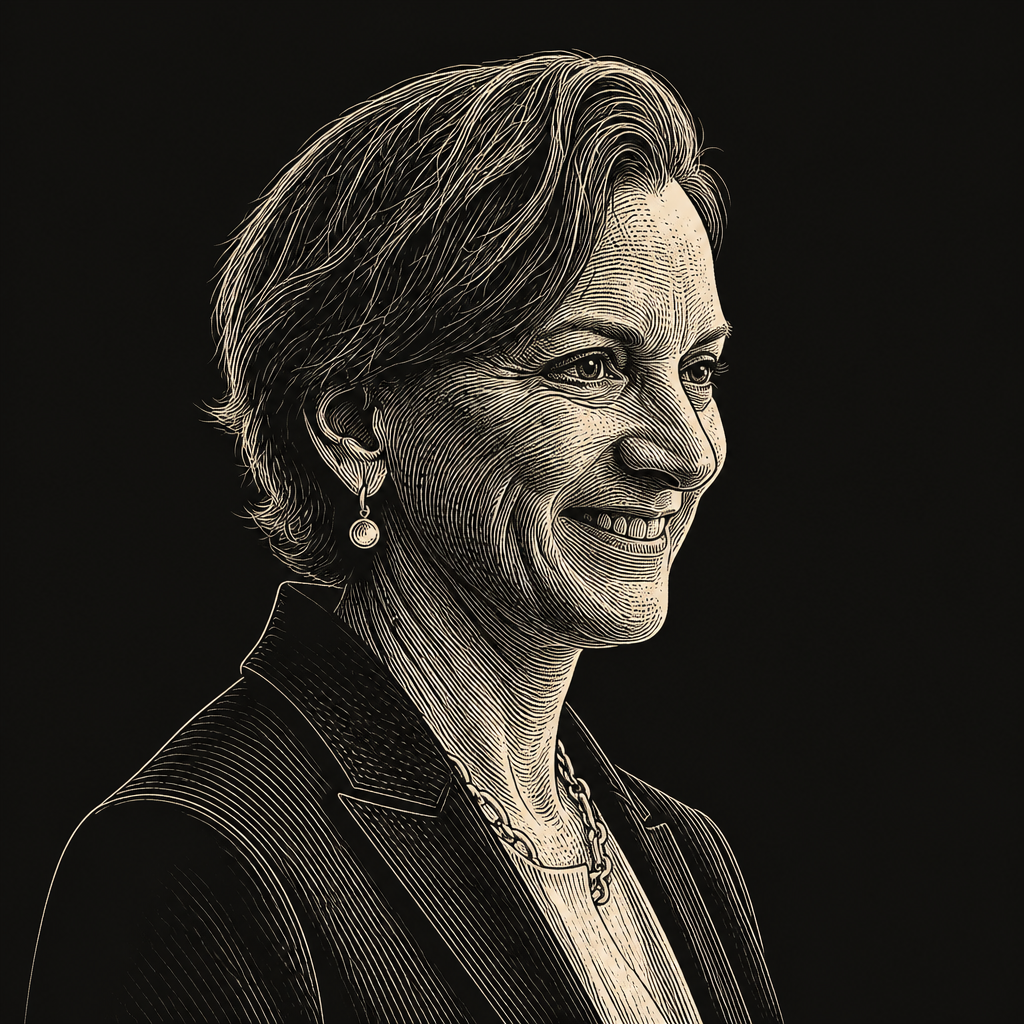
Applebaum came to that view through work that began with the Soviet Union. She first went there as a student, later worked as a journalist in Warsaw as the Warsaw Pact ended, and spent years writing history about how a small number of people could maintain control over a vast space. For a long time, she said, she thought she was writing about a system that belonged to the past. Over the last decade, she concluded that many of the mechanisms she had studied were returning in new forms.
Most people think democracies end with a coup d'état or, you know, tanks in the street or somebody shooting up the presidential palace. But actually in the modern world they mostly end because someone who is legitimately elected begins to take apart the system.
The change she regards as most important is not simply that voters are angry or that parties alternate in power. It is that political parties in several established democracies, “most notably the United States but not only,” have come to power with an explicit intention to alter the system so they can remain in power indefinitely.
Her model for that process is Viktor Orbán in Hungary. Orbán was elected legitimately, with a large margin, and then, in Applebaum’s description, began “slowly” capturing the state. Democracy depends on institutions that are not owned by the ruling party: independent courts, independent electoral bodies, independent media, and a meritocratic bureaucracy. The reason is structural. A democracy requires the winner of an election to preserve the rules under which its bitter enemies can compete again and perhaps win. It requires the loser to accept defeat because the system remains fair enough to try again later.
When that mutual commitment breaks down, Applebaum said, the result is not necessarily immediate dictatorship. It can be unfair democracy: elections that still occur, parties that still exist, speeches that are still made, but rules, institutions, maps, courts, media ownership, law enforcement, and bureaucratic appointments increasingly tilted toward one side.
The United States matters, in her argument, because of its size and its historical role as leader of the democratic world. If democratic decline can occur there, it becomes both frightening to defenders of democracy and suggestive to would-be imitators elsewhere: “If you can do it in America, you can do it here.”
When Steven Bartlett said part of him felt such a collapse could never happen in America, Applebaum answered that the comparison should not be only between liberal democracy and Russia. There are systems in between. The United States, she said, already has its own history of unfair democracy: the American South before the civil rights movement, where many states functioned as one-party systems, voting was restricted, and Black citizens were often excluded or heavily impeded from voting. She believes some figures in Washington are working from that historical memory.


A regime map on the table categorized countries by regime type: liberal democracy, electoral democracy, electoral autocracy, and closed autocracy. Applebaum pointed out that its makers no longer classified the United States as a liberal democracy but as an electoral democracy, meaning less free than systems where electoral rules are clear and not designed to favor one party. Europe, Australia, Japan, and South Korea were described as mostly still liberal democracies; much of the rest of the world was shown as some form of autocracy or democratic gray zone. Compared with a decade or two earlier, she said, the map would have been “a lot bluer.”
For Applebaum, the realistic danger for the United States is not necessarily that it becomes Russia. It is that it becomes an “autocratic gray zone” or an effective one-party state: a country where one party can win repeatedly because district maps, voting rules, federal enforcement, and administrative power make national defeat structurally unlikely.
The mechanics of capture reinforce one another
Applebaum’s framework for democratic dismantling has five parts: corruption, elections, personnel, information, and power. They are not separate boxes so much as mutually reinforcing ways to transform a democracy while retaining many of its outward forms. The common thread is capture: of money flows, electoral rules, public offices, information systems, and coercive institutions.
| Tactic | Applebaum’s description | Examples discussed |
|---|---|---|
| Corruption | Turns public power into private gain and into a loyalty system. | Trump family business interests, Saudi-linked deals, Kushner’s fund, and Applebaum’s claim that the Justice Department has been politicized. |
| Elections | Changes who can vote, how votes are weighted, or whether results can be accepted. | Gerrymandering, voter-ID proposals, narratives about illegal immigrant voting, and Orbán’s constitutional changes. |
| Personnel | Replaces neutral expertise with loyalists. | Civil service politicization, pressure on Jerome Powell and the Federal Reserve, and Justice Department loyalty. |
| Information | Shapes what citizens can see, say, and believe. | Media ownership pressure, TikTok/CBS/CNN concerns, universities, the Kennedy Center, and China and Russia’s internet control. |
| Power | Controls coercive institutions and the use of violence. | ICE as a masked, militarized, nationally accountable force in Applebaum’s description, and the administration’s response to protest deaths discussed in the source. |
Corruption, for Applebaum, is both a symptom and a tool of authoritarianism. It increases when legal institutions are controlled, because agencies that would normally investigate high-level wrongdoing no longer do so. She argued that Trump has taken over the Department of Justice and installed loyalists who are interested in prosecuting enemies because they are enemies. If the FBI and Justice Department are politicized, the ordinary check on White House corruption disappears. Corruption also becomes a means of discipline: support the leader, avoid criticism, and your business will prosper; oppose him and contracts, regulation, or legal attention may turn against you.
Election manipulation is the hinge because it changes whether the opposition can realistically win. Applebaum treated attacks on elections as one of the clearest signs that a democracy is in trouble: not merely whether a vote is formally held, but whether rules are changed so that some citizens have more difficulty voting, some votes count for less, districts are engineered to predetermine outcomes, or losing leaders can plausibly challenge results they dislike.
Personnel is the less dramatic but essential layer. A modern state regulates insurance markets, measures pollution, builds roads, administers health systems, and manages complex public functions. Applebaum’s argument is that the people doing those jobs should know how to do them. In corrupt autocracies, those posts go to the president’s cousin, a vice president’s friend, or a loyalist.
Information control, in her account, no longer means only censorship in the old sense. It can mean pressure on television stations, friendly acquisitions of media properties, platform ownership, university pressure, cultural institutions, and the shaping of online environments. Power, the fifth tactic, means control over coercive bodies and the use of violence. In an autocracy, citizens who do not go along with the system do not merely lose an argument; they can be threatened physically.
The five tactics matter because they reinforce one another. Corruption is easier when prosecutors are loyal. Elections are easier to bend when information is distorted. Media pressure is easier when regulators can punish owners. Coercive power is more dangerous when courts and local authorities cannot constrain it. Applebaum’s account is therefore less a list of abuses than a description of how a political system is converted while continuing to call itself democratic.
Election rules can preserve the ritual while hollowing out the result
Anne Applebaum used Orbán’s Hungary as a reference point for election capture. After winning large parliamentary majorities, she said, Orbán repeatedly altered Hungary’s constitution in ways that advantaged him, including changes to constituencies and how votes were weighted. The lesson she drew was that elected leaders do not need to abolish elections to undermine democracy. They can change the conditions under which elections happen.
In the United States, Applebaum’s key example was gerrymandering: drawing electoral maps to favor one party. She explained the term through its early 19th-century origin, when a district drawn under a politician named Gerry was said to resemble a salamander. The contemporary consequence is not just unfair representation. Once officials sit in safe districts and no longer need to contest elections seriously, she said, corruption and bad government follow. Politicians who cannot lose have less reason to care about constituents and more opportunity to serve themselves or allied business interests.
She used Nashville as an example: instead of one coherent urban constituency likely to elect a Democratic representative, the city can be split across several districts designed so that Republicans win. That kind of districting, she said, is “unbelievably anti-democratic.” She also described the current American “gerrymandering contest” as dangerous because both parties can become absorbed in map manipulation rather than fair representation.
Voter ID proposals were another warning sign. Applebaum said that while the United States already has forms of voter identification and many people have driver’s licenses, the proposed changes she was discussing would require passports or birth certificates. A DOAC on-screen note estimated that, as of early 2026, roughly 166 million Americans, about 47.5%, did not have a valid passport. The same note said a 2024 survey found more than 9% of voting-age citizens, about 21.3 million people, lacked ready access to citizenship papers, while just under 2%, about 3.8 million, had none at all.
The burden would fall unevenly, in Applebaum’s account. Married women, she said, could need to present a passport, birth certificate, and marriage license because the name on a birth certificate may not match a current legal name. Bartlett read additional figures stating that roughly 24% of voters aged 18 to 29 lack qualifying documents, 11% of citizens of color lack them, only one in five households earning under $50,000 has a passport, and 69 million women have birth certificates that do not match their current legal name due to marriage.
Applebaum acknowledged political risk in the proposal because many Republicans also lack passports. But she said she believed the administration had calculated that the net effect would suit it better. Her broader claim was that when a ruling party looks for ways to “shape the voting population” and “massage the outcome,” it is behaving like other democratically elected parties that slide toward one-party rule.
The proposals also operate as narrative. Applebaum said the administration promotes the idea that many illegal immigrants are voting, which she called a conspiracy theory with no evidence. She argued that the point is to create a rationale for disqualifying Democratic votes, especially in cities, if an election result is contested. Trump, she said, used such claims during the previous election, and similar claims could be used again if a recount or dispute is needed.
She tied this to Trump’s refusal to accept the 2020 election result. In her words, he staged what was intended to be an electoral coup, and it failed. Her warning was that it is now naive to say no one would dare try to block an election or overturn a result. “It happened already,” she said, “and so of course it can happen again.”
Applebaum did not predict that Trump himself would seek a third term; she said she did not think so because she did not think he wanted one. But she did think people around him might try to shape future elections to ensure that a Republican wins. Bartlett suggested Trump’s children or the broader MAGA movement might try to keep power within the family or movement. Applebaum said that was possible, and used the question to distinguish Trump’s second term from his first: after January 6, many conventional Republicans left Trump’s orbit, while people who disliked liberal democracy or wanted radical change were attracted to him precisely because he had tried to overthrow the system.
Corruption turns public authority into a private business model
Anne Applebaum identified high-end corruption as one of her immediate worries inside the United States. The program displayed two jars filled with dollar bills: one labeled “2024 $2.3 billion,” the other “2026 $6.5 billion.” Steven Bartlett described these as Donald Trump’s reported net worth when he went into office and two years later.
Applebaum said the issue is not merely that presidents have had “whiffs of corruption” around them or relatives trading on a name. Her claim is that the United States has “never had a president running businesses while in office” in a way where counterparties appear to be seeking political benefit. She cited the Trump family’s business in Saudi Arabia, including a deal with a Saudi company she named as Dar Al Arkan. A DOAC on-screen note described the partnership as involving Dar Global, the international arm of Saudi developer Dar Al Arkan, on Trump-branded luxury property projects in the Gulf. Applebaum said Saudi leaders have political interests with the United States, and money flowing to Trump family interests creates what she views as an overwhelming conflict.
She also cited Saudi Arabia’s $2 billion investment in Jared Kushner’s fund. The point, in her argument, was not that Saudi officials “just liked Jared Kushner,” but that Kushner is Trump’s son-in-law. Kushner, she added, is also involved as the Trump administration’s negotiator in the Middle East, meaning he is negotiating with people who are also business partners.
Bartlett raised the defense that Trump supporters might say the businesses are run by his children rather than by him directly. Applebaum’s answer was blunt: “Everybody knows that they’re his kids.” The appearance of conflict, she said, is not marginal but “overwhelming.”
Applebaum used the term kleptocracy for this pattern: public power used for private gain. Her argument is that if the White House is making decisions not on what is good for Americans but on what is good for the president’s company, the system begins to resemble the logic of Russia, where state decisions serve the interests of rulers and their networks. China, she said, is more complicated and more sophisticated, but there too decisions serve the ruling party rather than the welfare of the public.
That is why she returned repeatedly to the rule of law. In a democracy, rule of law means judges and legal institutions make decisions according to the constitution and laws. In an autocracy, she said, the system becomes rule by law: law is what the person in power says it is.
The practical distinction is simple. In a rule-of-law system, if a broadcaster or podcast host says something offensive to the leader, courts are supposed to ask whether a law was broken and whether free speech protections apply. In rule by law, someone from the Kremlin, the White House, or the seat of power can call and say the person should be jailed, regardless of the legal framework.
Applebaum gave a concrete example from Hungary. A company CEO is approached by people who want to buy a majority stake. The CEO refuses. Then windows are broken at the CEO’s home. Children are harassed on the way to school. Employees start encountering legal problems. Regulators appear. A tax inspection begins. Eventually the pressure becomes so intense that the owner gives up, sells, and leaves the country. Applebaum said this happened to someone she knows.
Her point was that autocratic power does not need to nationalize every company or censor every sentence visibly. Once legal and regulatory machinery can be used selectively, the state can decide which businesses thrive and which fail. Government contracts can be awarded not through impartial procurement but according to friendship, political donations, loyalty, or investment in the ruler’s ventures.
A displayed Trump post about Anthropic became an example in the discussion. In the post, attributed on screen to Donald J. Trump, Trump accused “the Leftwing nut jobs at Anthropic” of trying to “STRONG-ARM the Department of War” by imposing its terms of service, saying the United States would never allow a “radical left, woke company” to dictate how the military fights wars. Bartlett framed this as a case where an AI company’s refusal to provide access under certain conditions was followed by threats to restrict its government work.
Applebaum did not litigate that specific case in detail. She used it to restate the larger danger: Americans are not used to the government deciding which companies live and die. In a democratic system, at least in theory, government regulation is supposed to benefit ordinary people. In a corrupt or autocratic system, regulatory and contracting power becomes a reward-and-punishment mechanism.
Tech leaders are bending toward power, but Applebaum thinks that is shortsighted
Steven Bartlett asked whether the big tech CEOs visiting the White House, praising Trump, and avoiding criticism were examples of corruption’s disciplinary power. Anne Applebaum said yes: they have understood that if the administration requires them to “genuflect” and be sycophantic to secure business deals, they will do it. If they have to donate to Trump’s White House Reconstruction Fund or inauguration, she said, they will do that too.
A DOAC on-screen note described the White House Reconstruction Fund as a private fund for Trump’s planned $300 million ballroom, requiring demolition of the East Wing, with reported donors including major tech firms such as Amazon, Apple, Microsoft, and Google. The same note said Google donated $22 million as part of a settlement from a 2021 lawsuit involving Trump’s YouTube suspension.
Bartlett used Sam Altman as an example of the broader pattern. He said that in 2016 Altman had called Trump an unprecedented threat to America, a potential economic disaster, irresponsible “in the way dictators are,” and compared his rhetoric to the “big lie” tactics of historical authoritarians. Bartlett contrasted that with Altman appearing beside Trump at the White House, saying nice things and offering no criticism.
Applebaum called this one of the strangest aspects of the administration. “If I were that rich,” she said, “what’s the point of being rich unless you can say what you think?”
Bartlett offered a theory: for tech leaders, money is a proxy for status, and the deeper fear is losing status to direct competitors. If Sam Altman criticized Trump and suffered commercially, Bartlett argued, the painful part might not be the loss of money but losing to Anthropic, xAI, or Gemini within the peer game of tech oligarchs.
Applebaum accepted part of that diagnosis but called the behavior shortsighted. If the American political and legal system declines, she said, tech leaders will suffer too. “Pay to play” works only while one is winning. A ruler can decide that he is tired of the current oligarchs and wants different ones, as happened in Russia and China. A DOAC on-screen note described Putin’s dismantling of the political influence of 1990s-era oligarchs and replacement of independent power brokers with state-dependent backers.
Applebaum also argued that resistance can carry commercial and reputational gains. Anthropic may already have discovered this, she said, and some law firms did as well. Some firms settled lawsuits; others refused, sued, and won. Those that did not submit are thriving, in her telling. There can be value, even status value, in saying: we are independent, we have rules, we have legal ethics, and we are behaving as patriotic Americans.
The bigger picture, she said, is that these companies depend on the United States as their main market, labor pool, and operating environment. If the United States suffers, so do they.
Information control now runs through ownership, platforms, and institutions
Anne Applebaum emphasized that modern censorship is often not a man crossing out sentences. It is control over ownership, platforms, universities, cultural institutions, regulators, and algorithms.
China is the extreme case in her description. Since the 1990s, she said, the Chinese internet has been constructed so the government can control it. There is no outside internet for most users; activity is known or accounted for by the authorities, and the internet is connected to surveillance cameras and databases that allow people to be tracked. Russia, she said, is moving in that direction by cutting off access to Western social media.
In the United States, she sees a less complete but still significant attempt to shape the information space. Federal regulators can pressure television stations. The president can favor certain buyers for media companies. Applebaum named TikTok, CBS, and CNN as media properties where Trump, in her view, is trying to get sympathetic people in charge. She compared the pattern to Orbán’s Hungary and Erdoğan’s Turkey, where leaders encouraged or helped friendly businesspeople acquire media properties. Control comes through ownership and pressure rather than direct line edits.
Universities and culture also fall within the information sphere. A DOAC on-screen note described a legal and financial battle between the Trump administration and Harvard University, including attempted freezes of research grants and attempts to revoke visas for international students, with courts temporarily blocking some moves. Applebaum said Harvard refused to make a deal and sued because, in her account, the administration was trying to decide who could teach which courses at Harvard. She said she did not believe there was a precedent for that.
She also said the Trump administration took over the Kennedy Center, tried to change its nature, and tried to influence who could perform there. According to Applebaum, the result was that the institution had been shut down for two years.
Steven Bartlett pressed the point that speech pressure exists on both the left and right, citing “cancel culture,” pressure on platforms during the Biden-Harris administration, the Hunter Biden laptop story, and Democratic efforts to reform Section 230. Applebaum accepted that there is a left-wing illiberal instinct and a right-wing version, and said genuine free-speech defenders should call out both. But she distinguished between institutional or peer pressure, or government officials flagging content as possible disinformation, and the president using state power to change ownership or dictate control of the system itself.
Her position on platforms was not laissez-faire. Section 230, she said, lets platforms avoid rules that apply to newspapers and other publishers. She was unsure whether repealing it is the right solution, but argued that the online world should conform to the same laws as the offline world. Child pornography illegal offline should be illegal online. Recruiting for ISIS illegal offline should be illegal online. Electoral spending laws should apply online as well as on television.
She acknowledged the trade-off. Some countries have bad laws. Speech questions are sensitive. One person’s terrorist speech can be another’s free speech. But she maintained that democratic sovereignty requires the ability to enforce national laws on platforms operating inside a country. Germany’s ban on Nazi symbols, she said, would not work in America, but Germany should be allowed to make that choice for itself.
Her larger distinction was between the difficult, normal negotiation over speech norms and the autocratic project of controlling the system itself: which platforms exist, who owns them, what people can access, and whether criticism of the ruling party can circulate.
Coercive power becomes dangerous when it is unaccountable
Anne Applebaum identified ICE as an unprecedented national force in American life: a single national police force in combat uniforms, often masked, operating outside the normal restrictions and accountability of local police. ICE is formally an immigration enforcement agency, she said, but its use has gone beyond prior American immigration enforcement. Its officers, in her description, often wear military-style uniforms, use unmarked vehicles, and are not accountable to local mayors or governors. That makes them accountable upward to the Department of Homeland Security and the president.
The significance of that structure became clearer, Applebaum argued, in the administration’s reaction to deaths during protests and arrests in Minnesota. A DOAC on-screen note described ongoing protests against ICE in Minnesota and said two deaths had been registered, naming Alex Pretti and Renée Good as 37-year-old U.S. citizens. Applebaum said what horrified her was not only the deaths but the response from the administration. Instead of calling for investigation and accountability, she said, figures including Vance and Noem immediately treated those killed as guilty. Her conclusion was that the instinct was to put the force above the law.
That is the line she draws between law enforcement and paramilitary power. A police force that can harm citizens and remain unaccountable is not serving the public in a democratic sense; it is serving the ruling party.
The same logic appeared in her broader account of autocracy. Most autocracies, sooner or later, want a repressive system that is physical as well as informational. People who do not go along with the system must be threatened in some way. The point is not that every coercive institution is automatically autocratic. It is that when a force becomes masked, militarized, centrally loyal, locally unaccountable, and treated as immune from investigation, it begins to resemble the kind of power ministries autocrats rely on.
Applebaum also linked coercive power to political exclusion. One of her worries inside the United States is that democratic deterioration creates a class of people who no longer feel they have a stake in politics, who may stop voting and withdraw from the national conversation. That exclusion, she said, can move in violent directions. A democracy that pushes citizens out of politics and then deploys unaccountable force against disorder is not merely facing a policing problem; it is degrading its own mechanisms of consent.
The autocratic appeal is stability, hierarchy, and escape from politics
Anne Applebaum did not assume that everyone automatically prefers democracy once properly informed. She argued that authoritarians appeal to real human needs: stability, security, hierarchy, tradition, and relief from the constant demands of democratic citizenship. Democracy requires participation. It involves change, conflict, tolerance, and uncertainty. Autocracy presents itself as safety and order.
She called that promise partly false, but not ineffective. Russian and Chinese state narratives — including the social media campaigns they run inside the United States, the United Kingdom, and Europe — promote authoritarianism as stability, safety, traditional values, and hierarchy. Some people find that deeply attractive.
In societies where the state controls information, security services, and the monopoly on violence, that appeal becomes difficult to challenge even if a majority wants something else. Bartlett struggled to understand why Russians tolerate Putin remaining in power for decades. Applebaum’s answer was that what they think may not matter. There is no meaningful public forum in which to express the view that Putin should retire. Saying so could lead to arrest. Over time, people adjust their speech and behavior because politics is dangerous.
Her earlier work on the Soviet Union shaped this view. Soviet propaganda constantly announced success: how much hay had been grown, how much steel had been produced. Much of it was fake. The interesting question, she said, was whether people believed it. Her answer was “a little weird”: it was convenient to believe it, or at least to say one believed it. When there is no safe way to say what one thinks, the distinction between private belief and public compliance loses political force.
She sees Russia returning to that condition after a brief period in the 1990s and early 2000s when people spoke openly, debated the country’s future, and challenged the Kremlin through independent media. A DOAC on-screen note said that by 2001, NTV’s takeover marked a shift back toward centralized control. Applebaum described the present as a place where expressing views is again dangerous and many people simply try to stay out of politics.
The same logic explains why leaving an autocratic country is not a simple solution. Bartlett asked whether a Chinese citizen who dislikes the system can simply leave. Applebaum answered with practical constraints: Where would the person go? Could they get a visa? Could they work? Speak the language? Bring professional qualifications? Support relatives? Build a life? People can and do leave China and Russia, but emigration is not always practical, even for those who dislike the state.
Her point is that autocracy is not only a set of laws. It is an environment that narrows the imaginable choices available to ordinary people until withdrawal becomes rational.
America’s allies are already hedging against betrayal
Anne Applebaum’s warnings were not confined to domestic institutions. She argued that the international order built after 1945 is breaking down, partly because the United States was one of its pillars and is changing internally, and partly because autocratic powers have been challenging it for years.
She dislikes the phrase “liberal world order” because it sounds vague, but she described a post-1945 system based on the United Nations, rules, treaties, diplomacy, and the norm that borders in Europe would not be changed by force. Russia’s invasion of Ukraine violated that order deliberately, she said. In her view, Russia wants Ukraine to disappear as a nation and become a colony of a revived empire.
But Ukraine is not only a territorial war in Applebaum’s argument. It is a war over political language. Putin’s fear, she said, is a street revolution like Ukraine’s 2014 uprising: people protesting corruption, demanding democracy, and seeking integration with Europe. In autocratic societies where freedom of speech, justice, and accountable government are absent, the language of liberal democracy can become “explosive and exciting,” as it was when such ideas first appeared in the Declaration of Independence. That is why autocrats seek to undermine those ideas abroad through propaganda, disinformation, and alternative narratives.
Trump’s foreign policy, as Applebaum described it, accelerates the breakdown for a different reason: allies no longer know whether the United States can be relied on. Asked whether things return to normal after Trump, she said many things will not be normal again. If a country does business with the United States or depends on it for security, she would advise having “plan B.”
She said NATO needs a plan for what happens if the United States “flakes out.” The next president could be JD Vance, whom she described as even more committed to making America into a one-party state. Or it could be a Democrat who uses a broken system differently. Once norms are broken and laws changed, any future leader can exploit them.
The result, she said, is global hedging. Countries are building alternative relationships because they cannot assume American continuity. She cited an EU-India trade agreement, Canada initiating a security relationship with the EU, internal NATO conversations about what Europe would do if the United States did not help after a Russian attack, and “middle powers” such as Brazil, India, EU countries, Japan, and Canada building new links. Mark Carney of Canada, she said, used the term “middle powers.” Canada, once almost fully integrated with the U.S. economy, is now thinking about how oil and gas wealth can protect sovereignty and which partners it should pursue, including China and India.
The sharpest example was Greenland. Applebaum said the breaking point for many Europeans was Trump suggesting that the United States might invade Greenland, an autonomous Danish territory. The program showed a text overlay stating that in 2025 Trump renewed efforts to acquire Greenland, called it vital to U.S. security against Russia and China, threatened tariffs on Denmark, and refused to rule out force while Greenland and Denmark said it was not for sale.
Applebaum said Denmark, a pro-American country with deep business, travel, and security ties to the United States, had to begin imagining a U.S. invasion. In her telling, Danish officials had to think through whether to blow up airports in Greenland, shoot down American planes, or fire on American soldiers. Germany and other allies had to consider the implications if Denmark shot down a U.S. plane. Even though the crisis passed after Trump appeared to confuse Greenland and Iceland in a Davos speech, Applebaum said “no one has recovered.” Allies saw the United States as an unstable power capable of real damage.
For Americans, she said, this is bad news. American prosperity after World War II has been tied to global trade dominance and especially to European relationships. American security dominance also depends on bases in Europe, which are not only for Europe’s protection but for U.S. power projection into the Middle East and Africa. If those bases disappear, the United States becomes more distant from the world. The dollar’s dominance, U.S. goods, and American tech dominance could all become vulnerable. Applebaum said Canadians are boycotting U.S. products; in Denmark she saw an app that lets shoppers identify whether a supermarket item is made in the United States so they can avoid buying it. Europeans are also exploring cloud storage and payment systems in Europe because the United States may be unreliable.
“We’re just at the beginning,” she said, “of what could be quite a big change.”
War becomes more dangerous when no one can tell the leader no
Anne Applebaum connected autocracy to war in two ways. First, leaders in declining democracies and autocracies sometimes use war to consolidate their base at home. Second, autocratic decision-making deprives leaders of honest dissent and strategic correction.
She believed Trump misjudged the war in Iran as discussed in the interview. Bartlett contrasted it with Venezuela, where he said Trump had “flown into Venezuela and took Maduro out of bed,” which seemed to go as Trump expected, and then spoke publicly about oil transfers to the United States. A Trump post shown on screen said the interim Venezuelan government would turn over between 30 and 50 million barrels of sanctioned oil to the United States, to be sold at market price, with the money controlled by Trump as president to benefit Venezuela and the United States. Bartlett described it as startling to remove a world leader and then talk the same day about taking the country’s oil.
Applebaum said the Venezuela action was not the behavior of a 20th- or 21st-century president. In her view, Trump’s interest was not democracy-building but dominating a country and getting a share of oil revenues. Venezuela, she said, remains a dictatorship, still run by the same regime though led by a different person. She contrasted that with George W. Bush, whom she said made huge mistakes, but did not describe the Iraq War as a project to run Iraq and steal its oil. Bush’s stated idea was to make Iraq into a democracy, a long and bloody path that, Applebaum noted, resulted in Iraq being democratic now. Trump, she argued, “doesn’t even think like that.” He wants a deal with a dictator and then to move on.
Iran, she said, was different from Venezuela. The Iranian regime is embedded. It had plans for leadership decapitation scenarios, including a decentralized defense structure and proxy groups across the Middle East, and it may have control over the Strait of Hormuz. A DOAC on-screen note described Iran’s “Mosaic Defence” as a decentralized military system designed to keep the regime operating if senior leaders in Tehran are killed or communications are cut. Applebaum said Trump was told some of this, but not in a sufficiently forceful way. In a system where aides fear contradicting the leader, no one says clearly: “Mr. President, this is a bad idea.”
Her deeper criticism was that Trump failed even to speak to or about Iranians. Iran’s regime, she said, is deeply unpopular and one of the ugliest on the planet, yet there seemed to be no communication with democratic opposition groups or even with Pahlavi, the son of the Shah, and monarchist opposition currents. That omission mattered because it showed, in her view, that the objective was not a better Iran but domination.
Applebaum described Trump as someone without strategy: little interest in what happened before his presidency, little knowledge of Iran’s history, little concern for what happens later, and intense focus on whether he is “winning” in the present. Winning may mean beating a journalist, winning an argument, claiming victory in a war, or seeing favorable polls. The problem is that strategic thinking often requires accepting that one is not winning immediately, because the aim is long-term.
Bartlett observed that Trump’s repeated insistence that the Iran war was going well made him suspect the opposite. Applebaum agreed that a president who lies constantly corrodes trust: even if the war were over, she said, people would not believe it because the track record is poor.
Democracy is fragile because it depends on habits, not just rules
Anne Applebaum resisted Bartlett’s suggestion that the United States might simply be following an empire’s 250-year life cycle. Bartlett cited Sir John Glubb’s “Fate of Empires” model, moving from pioneers and conquest to commerce, affluence, intellect, internal division, inequality, debt, and collapse. He noted that from 1776 to 2026, the United States is exactly 250 years old, and described the present as consistent with the final stages of such a model: political division, wealth inequality, national debt, and a loss of civic duty.
Applebaum agreed that this describes what is happening in the United States, but rejected the underlying determinism. She said she feels strongly that historical inevitability is dangerous. Believing decline is unavoidable reduces the willingness to act. So does believing everything will be fine because liberal democracy has already triumphed. What happens next year depends on what people do now: choices, arguments, civic participation, and political action.
She sees the complacency of the 1990s as a cautionary example. After the fall of the Soviet Union, Americans and Europeans believed democracy had won the war of ideas and would maintain itself. That confidence caused them to miss democratic erosion, Russia’s rise, China’s significance, and other changes because they assumed they were simply winning.
Applebaum accepted that human nature is constant and that some portion of any population will have authoritarian instincts, while another portion will have liberal or libertarian instincts. But she emphasized accident and contingency. Boris Yeltsin, ill and nearing the end of his presidency, chose Vladimir Putin as successor because Putin was expected to be loyal to the Yeltsin family and not prosecute them. At the time, Applebaum said, nobody imagined Putin as an imperial dictator seeking to reconquer parts of the former Soviet Union. If Yeltsin had chosen Boris Nemtsov, whom Applebaum described as open-minded and interested in integrating Russia with Europe, the world might be very different. There was nothing inevitable about that decision.
On capitalism and inequality, Applebaum pushed back against the idea that democracy naturally creates oligarchic capitalism. She argued almost the opposite: successful postwar democracies often tended toward equality. The Scandinavian countries discussed earlier as highly happy are relatively equal, with large welfare states and redistribution. The United States in the 1950s, she said, had significant social mobility and a broad wave of prosperity, and also saw democracy expand through the civil rights movement.
The danger now is that tech oligarchs possess wealth and power far beyond individual politicians and can organize the information space. Applebaum asked how long such people will want to live in a democracy where everyone gets a vote and wealth is supposed to be more evenly distributed. Some members of that community, she said, have become illiberal or anti-democratic for exactly that reason.
The same concern shaped her prescription for citizens. People in democracies can vote, and therefore should vote in all elections, including local ones, with knowledge of whom they are supporting. Nihilism — “they’re all the same,” “it doesn’t matter,” “everyone is corrupt” — is exactly what autocrats want. Putin wants Russians out of politics. Chinese leaders want their citizens out of politics. When too many citizens in a democracy adopt that same withdrawal, Applebaum said, it is time to worry.
She urged attention to how leaders speak about institutions: the press, judges, the judiciary, the civil service. A real democrat, in her view, respects those institutions and wants them preserved so the next election remains fair.
Reality-based journalism is part of the democratic infrastructure
Steven Bartlett raised political bias in mainstream media and described the economic incentives that pull media organizations toward capture. If an outlet’s audience wants anti-Trump stories, critical stories produce more reach, engagement, and subscribers than stories praising Trump. Geography reinforces the bias: an office in New York or Los Angeles is statistically likely to hire people with certain political views. Bartlett said that as a podcaster, he feels the pressure: interview Kamala Harris and one side attacks; interview Ivanka Trump and another side attacks. The temptation is to join a tribe for protection.
Anne Applebaum’s answer was that media organizations have to fight those incentives. The real task is not performative balance but establishing what is true. Journalists go into the world, gather information, investigate what happened, and try to report it accurately. If that process leads to the conclusion that a president or opposition leader is lying, accusations of bias will follow. But for democracy, she said, it is essential that the profession of establishing reality continues to exist.
Bartlett agreed and distinguished his role from that of investigative journalists. He said rigorous truth-seeking journalists have skills he does not claim, and that losing them would endanger things he values and has benefited from, including as a young Black man in business whose opportunities were shaped by earlier reporting and exposure of social realities.
Applebaum added a newer concern: AI and online information may further detach people from reality. If AI models only access what is available online, they miss the world where things happen that are not online. Knowing what is really happening in Ukraine or Iran requires people on the ground, not only feeds and models.
Bartlett’s own fear was personalization. Algorithms increasingly know what to serve each person to maximize dwell time and ad revenue. A phone’s “suggested for you” feed can turn one video of a street fight into a stream of similar videos, making the viewer believe fights are everywhere. Applebaum agreed that people now live inside their own algorithms.
For democracy, she said, polarization is especially toxic. When the other side is not merely wrong about taxes but an existential enemy whose victory means the world ends, normal democratic debate and elections become difficult.
Regime change would feel like a change in the rules of everyday life
Near the end, Anne Applebaum said the most important unaddressed question was what regime change would really feel like in Western countries. Steven Bartlett initially treated regime change as electing a new person. Applebaum meant something deeper: waking up in a society whose values and practical rules have shifted.
Free speech is one example. Democratic societies argue about its limits: hate speech, platform moderation, legal boundaries, and offensive material. But what if the underlying value changed and free speech itself was no longer assumed to be good? Meritocracy is another. People in democratic capitalist societies often assume that with work, ability, luck, and study one can succeed. What if that stopped being true, and the only reliable path was having a cousin in the ruling party?
Applebaum said her books have often examined precisely that kind of transformation: how Soviet power took over Eastern Europe after World War II, how occupation changed eastern Ukraine, how regime change alters the “deep rules” of society. People in stable democracies rarely reflect on those deep rules because they live inside them.
That is why her work became personal. She saw the Soviet Union when it still existed, studied in Leningrad when it was still Leningrad, and felt, even briefly, what a heavily autocratic society was like. She spent much of her life trying to understand how it worked and why people went along with it.
She also described a shift in her own writing around 2014 and 2015, when she realized she was no longer only writing about the distant past. She was living through a historical shift and felt the need to record it as an eyewitness. “Twilight of Democracy,” she said, began with a party she gave and became an account of how people she knew had changed. Many were center-right anti-communists, Thatcherites, Reaganites, or similar figures who became radicalized. Her dual American and Polish life, and her marriage to a Polish politician, may have made those shifts affect her personally and made patterns across countries easier to see.
Her broad goal is not to elect a particular person. It is to remind people why democracy matters, how it declines, and how to fight back.
It’s the water we swim in. We’re the fish. The idea that there would someday not be water is unimaginable.
Bartlett ended by saying democracy had been easy for him to take for granted because he had lived his life in the West. Applebaum’s closing metaphor was that this is normal: democracy is the water democratic citizens swim in. The danger is that the absence of water remains unimaginable until it is too late.