Alien Life Is Probable, but UFO Claims Still Lack Physical Evidence
 Barack Obama
 Donald Trump
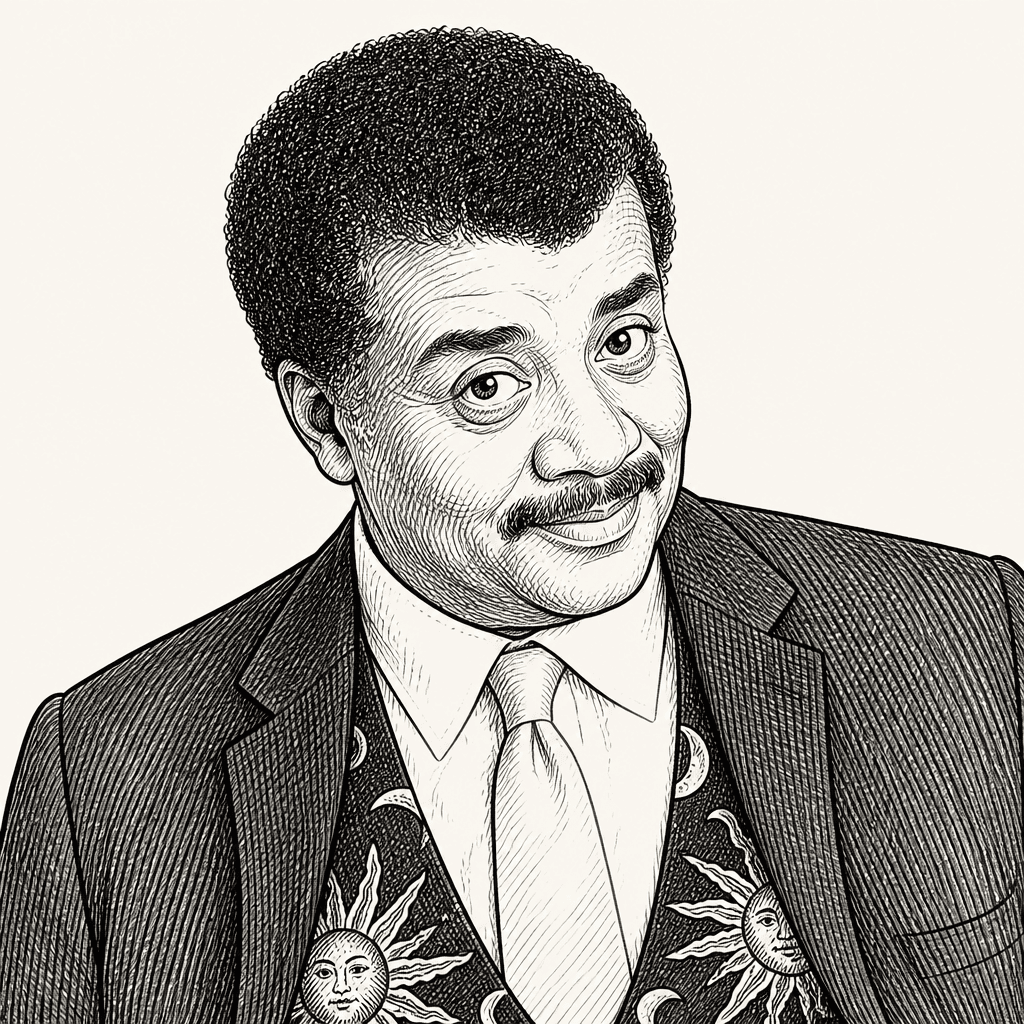 Neil Tyson
 Steven BartlettThe Diary of a CEOThursday, July 9, 202630 min read
Neil deGrasse Tyson, the astrophysicist and Hayden Planetarium director, argues that the scale and chemistry of the universe make alien life highly probable, but says claims of alien visitation still require physical evidence. In a Diary of a CEO interview built around his book Take Me To Your Leader, Tyson applies the same standard to UFO footage, whistleblower testimony, religion, psychedelics and simulation theories: uncertainty is not proof, and belief should not outrun what can be measured.
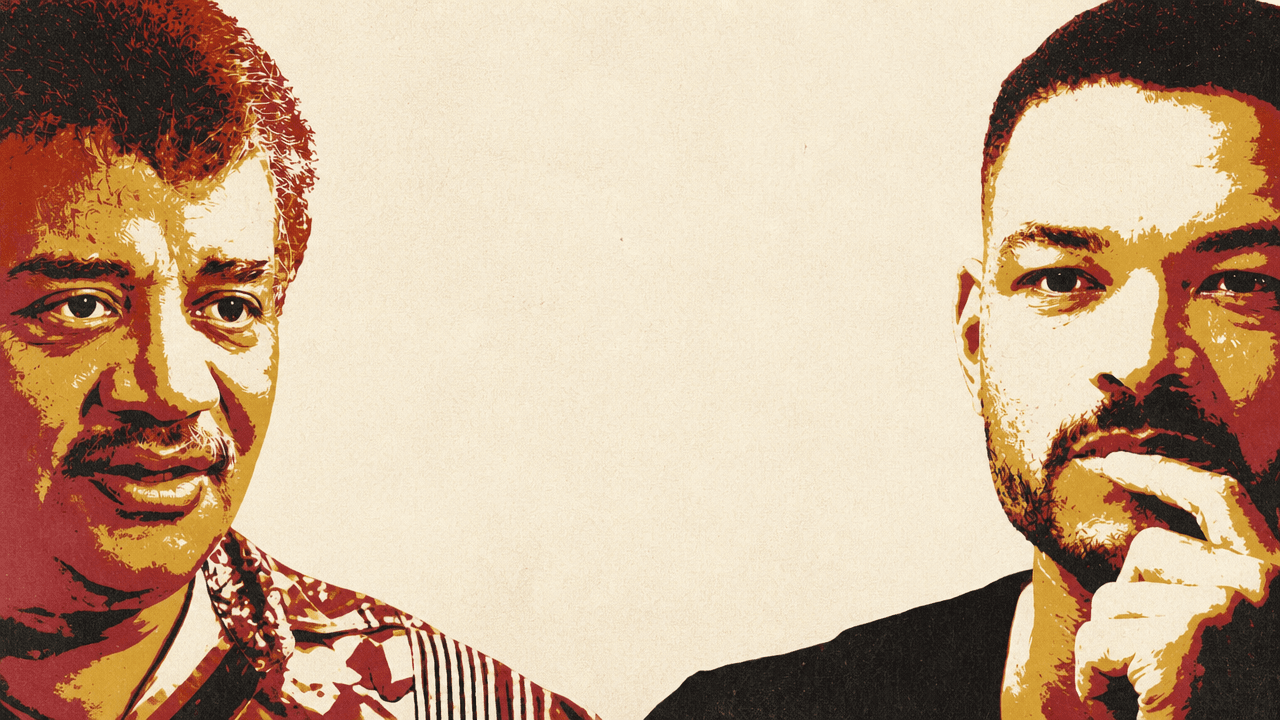
Alien life is probable; alien evidence still has to be brought into the room
Neil Tyson separates two questions that are often collapsed into one. The first is whether life, including intelligent life, is likely elsewhere in the universe. On that, he says he has “no reason to doubt it.” The second is whether any government, witness, image, or video has shown that alien beings or alien craft have already reached Earth. On that, his standard is blunt: “Bring out the alien.”
Tyson treats Barack Obama’s public remarks about aliens as scientifically ordinary, not as a coded disclosure. Obama’s line — “They’re real, but I haven’t seen them” — was, in Tyson’s view, exactly what a scientifically literate person would say: given the scale of the universe, aliens probably exist somewhere. Tyson says the public then converted that defensible general claim into a claim about “aliens in the basement of the White House” or somewhere in government custody. When Donald Trump later responded that Obama had released “classified information,” Tyson did not treat that as evidence; he simply moved back to the standard he applies to all such claims.




If you're saying you got an alien in the shed in the back 40, just bring it out. And the moment you do that, no one will ever have to ask again, do you believe in aliens?
The reason Tyson says he “put a foot into the ring” with the subject is not that the available footage persuaded him. It is that high-ranking whistleblowers — former intelligence officers and former military personnel — testified under oath in Congress. He says those claims cannot be dismissed in the same way as older anecdotal accounts from isolated witnesses who saw something but produced no evidence. Testimony from official government people, in his view, raises the seriousness of the question. It does not answer it.
The evidentiary gap matters because “UFO” still only means unidentified. Tyson says even the most committed UFO enthusiasts would agree that most sightings have natural explanations: cloud formations, lightning, twilight conditions, or some other phenomenon that was not recognized at the time. Some cases remain unexplained, and he has no problem with that. Scientists are attracted to things they do not understand. But a compelling unknown is not the same thing as a demonstrated alien.
He calls the famous “Tic Tac” case “fun” and “interesting” because he does not know what it is. The visuals shown were monochrome, low-resolution forward-looking infrared recordings, with flight data and target reticles around an oval object. Tyson notes that the case also comes with pilots’ astonished testimony. Still, what most interests him is not another ambiguous image. It is the stronger claim from whistleblowers that the government has “actual aliens,” crash parts, or reverse-engineered alien technology. If that is the claim, he says, the appropriate next step is not another debate about belief. It is physical presentation.
His probability argument for extraterrestrial life begins with Earth. Life, he says, got underway on this planet within roughly a hundred million years of when it could first have done so. That is a long time by human intuition, but small against Earth’s timeline. In his telling, Earth’s basic ingredients — which match the basic ingredients of the universe — moved from organic molecules to self-replicating life “almost as fast as it could possibly happen.” However hard that transition may be in the laboratory, Earth “didn’t seem to have a problem accomplishing it.”
The astronomical scale then compounds the argument. Tyson says current catalogues contain about 6,000 exoplanets — planets orbiting stars other than the Sun — and those are from a tiny searched region around our neighborhood. The first exoplanet was discovered in 1995, when Steven Bartlett was three years old; the catalogue has since risen into the thousands. If the local sample is representative, Tyson says, the galaxy contains millions, possibly billions, of planets. The Milky Way itself contains hundreds of billions of stars, and the observable universe contains at least hundreds of billions of galaxies. At one point Tyson reaches for the looser phrase “the trillion other galaxies”; elsewhere he gives the more careful formulation that the observable universe contains at least hundreds of billions.
That scale does not let him claim certainty. But it makes nonexistence unlikely in his view. Tyson says no one among those who has studied the problem has reason to doubt that life could arise frequently elsewhere in the Milky Way or beyond it.
But intelligence is not one thing. Tyson challenges the usual human-centered definition by pointing out that humans do not have the largest brains on Earth. In raw brain size, he says, whales, dolphins or porpoises, and elephants rank above humans. If aliens came to Earth and knew only that brains were important, humans might be fourth on their list of species to contact. Humans then try to rescue their status, Tyson argues, by using brain-to-body ratio. But even there, he says, humans are only at the top among mammals; mid-sized birds such as magpies and parrots have higher brain-to-body ratios.
The real operational question becomes narrower: not whether life is intelligent, but whether it has civilization, technology, and the ability to communicate across space or travel between stars. Whales may be intelligent, but they are not building telescopes. The Roman Empire may count as intelligent human civilization, but it did not understand electricity, computers, radio signals, artificial intelligence, or spaceships. If aliens had sent radio messages to Rome, Rome would not have sent radio back.
That distinction also weakens the assumption that intelligent aliens would already have visited Earth. The fastest spacecraft Tyson cites is New Horizons, sent to Pluto. If it had instead been pointed toward the nearest star system, Alpha Centauri, at those speeds, he says the journey would take about 50,000 years. An on-screen graphic gave a different comparison: four light years is roughly 23.5 trillion miles, and at a SpaceX Dragon speed of 17,500 miles per hour the journey would take about 167,000 years. The point in both cases is the same: interstellar distance is not merely large; it is prohibitive at current human speeds.
So Tyson’s position is a two-part discipline. The universe gives strong reason to expect life elsewhere. It does not make every unexplained object in a military video into an alien craft. The phrase that governs his view is not “believe” or “disbelieve.” It is evidence at the right level for the claim being made.
The universe makes humans less central, but not less connected
Steven Bartlett describes the effect of watching Cosmos as a feeling of insignificance. Seeing the Milky Way and the scale beyond Earth made him feel small and left a void he felt “called to fill” with meaning, purpose, gods, aliens, or some other framework. Tyson’s answer is not to deny the scale. It is to reject the emotional inference.


He begins by reframing size. Humans are small compared with the universe, but huge compared with atoms, molecules, and particles. If one thinks in powers of ten, there are scales above us and scales below us. A life form the size of a molecule, Tyson says, would feel small in a different way. Some have speculated about life at the scale of nucleons — particles in an atomic nucleus — though Tyson notes that life, as biologists currently define it, requires metabolism and other criteria that may be hard or impossible to satisfy at extremely small scales. Even viruses remain debated under some definitions of life.
The exercise is meant to unsettle human assumptions. It is tempting to imagine life forms simply scaled up or down from ourselves: a universe in a larger being’s gut, or life the size of a galaxy. Tyson warns that physics does not permit that kind of easy scaling. The laws of physics manifest differently on different scales. Insects cannot simply be made human-sized because their legs would break under their own weight. Heavy animals need thick legs. An ant can fall from a roof and keep walking; a human cannot. At small scales, surface tension dominates in ways humans barely notice.
His example comes from A Bug’s Life. A mosquito at an insect bar orders a Bloody Mary, and the bartender serves it not in a glass but as a blob of liquid sitting on the counter. Tyson says that is scientifically clever: below a certain size, surface tension is stronger than gravity, so the liquid beads rather than spreads. The scene works because the filmmakers understood that the world is not the same at every scale.
The same lesson applies to cosmic perspective. Bartlett felt small, Tyson says, because he entered with an ego “unjustifiably too large to begin with.” Tyson says he does not look up and feel small. Modern astrophysics tells him that the oxygen, carbon, nitrogen, and iron in the human body were forged in stars that exploded at the ends of their lives, enriching the galaxy and enabling later generations of stars, planets, and bodies. Early in the universe, those ingredients did not exist in the needed form; humans could not have existed as they are.
Not only are we alive in this universe, the universe is alive within us.
For Tyson, that is not merely poetic. It is an “astrophysical fact” that provides a pathway of relevance to the universe. Humans are also, in his phrasing, solar powered. The calories in a steak came from a cow; the cow ate plants; plants received sunlight. A domesticated cow, he says provocatively, is “a machine that we invented to turn grass into steak.” Since the caloric chain traces back to the Sun, human energy is traceable to a star.
That is where Tyson locates a near-spiritual feeling without converting it into theology. The universe is not just a vast external stage against which humans shrink. It is chemically continuous with the body. We are made from stellar debris and powered by stellar light. “Next time you go out and look up,” Tyson tells Bartlett, “I want you to feel large, not small.”
This same instinct informs Tyson’s account of why people are drawn to the sky in the first place. His speculation is biological and anthropological rather than purely cultural. Humans are unusually comfortable sleeping on their backs, vulnerable, with their bellies exposed. If ancient humans slept outdoors on their backs and woke at night, the first thing they saw was the sky: comets, meteors, the Moon, planets, stars. From night to night, the Moon changed shape and position; bright lights moved. Curiosity about the sky, he suggests, may be deeply rooted.
He does not think ancient people were necessarily “dreaming up aliens” in the modern sense. The older category was gods. Gods are often placed in the sky or in high places: heaven, clouds, Mount Olympus, light beams through clouds, divine figures floating or walking on water. Religious images and mythic beings often have qualities that could pass for alien. Medusa, with snakes for hair, is “as alien as anything you would ever conjure.” In that sense, Tyson groups aliens and gods as expressions of the same human capacity: imagining beings beyond ourselves.
Religion persists because it supplies significance; Tyson refuses the available labels
Neil Tyson says religion has value to people because it supplies significance, and that helps explain its persistence across cultures and through history. But his own relation to religion is shaped by a distinction between belief systems and testable claims.
By age eight, he says, what people told him about religion was not making sense. What he did not yet know was that belief systems “don’t have to make sense.” If they made complete sense, he says, they would simply be objectively true. A belief system is not the same thing as a scientific model. If some component of a belief lends itself to testing, science can test it; but if the test shows the belief to be false, believers generally do not stop believing, because the belief functions differently.
He says his early responses to religion were simple: religion over there, science over here. Later he concluded that religious people deserved a more informed and nuanced engagement, given religion’s force in culture, politics, economics, and history. He began reading religious tracts so that when people engaged him on belief, he could discuss what the beliefs claim about the objective universe and what they do for those who hold them.
He resists being labeled an atheist. The only “ist” he accepts is “scientist.” Titles, he says, are lazy because once someone applies one, they feel licensed not to think further about the person’s actual position. The word “atheist” also strikes him as unusual because it defines a person by what they are not. There is no common word for non-golfers. He sees danger in the “with us or against us” structure of such labels.
Tyson distinguishes himself from prominent atheist writers such as Richard Dawkins, whose title The God Delusion he calls “fighting words.” Those writers, in his description, reject God, reject religion’s influence on public life, and would prefer a world without it. Tyson says he is “not that guy” and has behavior that would be rejected by modern atheist thinkers. If forced into a label, agnostic is closer, but his emphasis remains scientific: what is consistent with observation and experiment?
That leads to the Big Bang. Tyson calls it “so thoroughly supported, as fantastical as it is.” Roughly 13.8 billion years ago, he says, everything we see and interact with began in an infinitesimal point — the birth of the space and time of our universe. The universe has been expanding ever since. It was not matter trying to occupy the same space as itself; energy can be compacted, measured by temperature. As the hot early universe expanded and cooled, energy made matter. Einstein’s equation, E = mc², made that relation between energy and mass legible.
What came before the Big Bang? Tyson’s answer is direct: “We have no idea.” There are suspicions. One possibility from later mathematics related to quantum physics and relativity is a multiverse: a medium “pumping out universes,” of which ours is one. But what caused the multiverse? Again, he says, we do not know.
For Tyson, not knowing is not a failure. It is the condition at the frontier. The scientific response to the unknown is not to fill it with an answer because one needs an answer; it is to write “the recipe for more data.” In cosmology, that means telescopes designed to understand dark energy and its manifestation over cosmic history.
Dark energy, as Tyson describes it, is something in the vacuum of space causing the universe’s expansion to accelerate. Given the matter and gravity in the universe, one would expect the expansion to slow, as an object tossed upward slows under Earth’s gravity. Instead, measurements found the opposite: acceleration. Tyson says that discovery “won a Nobel Prize” and, in his own phrasing, refers to a “1998 Nobel Prize.” He connects it to a term in Einstein’s equations that Einstein rejected because he thought there could not be “negative gravity.”
Dark matter is the name for sources of gravity whose cause is unknown. Dark energy and dark matter together, Tyson says, account for 95% of what is driving the universe. Everything familiar — biology, chemistry, physics, food, molecules, solids, liquids, gases — is 5%.
That number sharpens one of Tyson’s more skeptical scientific instincts. It is possible, he says, that humans may not be smart enough to figure out the entirety of the universe. Perhaps we figure out our little fraction and live “happily ever after” within it. But he does not use that limit to license speculation as knowledge. He gives the unknown names only reluctantly. “Dark energy” and “dark matter” are bad terms, he says, because they lead the witness. We do not know whether they are dark or energy or matter in any familiar sense. Better, he jokes, to call them Fred and Wilma.
Infinity and black holes mark the edge of useful intuition
Neil Tyson refuses to put a philosophical prerequisite on the universe. Asked whether the universe is infinite, he says it might be, and we do not know. The fact that infinity is difficult for the human brain does not mean the universe cannot be infinite. History, in his view, warns against imposing human preference on cosmic structure.
His example is Copernicus. Moving from an Earth-centered model to a Sun-centered model eliminated epicycles in principle, but Copernicus’s model did not initially match observations as well as the old epicycle system. The reason, Tyson says, was that Copernicus assumed perfect circular orbits. The assumption was philosophical and religious: God created the universe; God is perfect; the circle is the perfect shape; therefore heavenly bodies must move in circles. Later science corrected the assumption. The error was not asking a bold question; it was forcing the universe to obey a human idea of perfection.
Black holes provide the same lesson in a more extreme form. Tyson explains them from escape velocity. On Earth, an object thrown upward slows, stops, and falls because it remains captured by Earth’s gravity. Throw it faster and it rises higher. There is a speed at which it will never return: Earth’s escape velocity, which Tyson gives as seven miles per second. If an object’s gravity were stronger, escape velocity would rise. If it reached the speed of light, then light itself could not escape. If light cannot escape, the object is black. If nothing can escape, it is a hole.
A black hole does not reach out and suck in everything nearby by magic. If the Sun somehow became a black hole with the same mass, Tyson says, its gravity at Earth’s orbit would be the same as now. The danger is proximity. Tyson says there is some distance around a black hole — he thinks it is called the ergosphere — where stable orbits are no longer available and falling in becomes unavoidable. He does not present the terminology as the point. The functional boundary he emphasizes is the event horizon: the region from which the escape velocity is greater than the speed of light. Once inside, there is no path outward through the folded fabric of space-time.
Inside, the mathematics becomes stranger. Tyson says graduate textbooks on general relativity describe a new space-time opening up beyond the event horizon. As an observer falls in, time changes relative to the outside universe. Time for the falling observer ticks more slowly relative to the rest of the universe. Looking outward, the observer would see the future history of the universe unfold faster and faster.
Then the body fails. Gravity is slightly stronger at a standing person’s feet than at their head because the feet are closer to Earth’s center, but on Earth the difference is negligible. Near a black hole, that difference grows. These tidal forces stretch the body head-to-toe. At first, Tyson says, it might feel like a stretch. Then it becomes unrelenting. Eventually the body would snap, likely at the base of the spine, then each half would continue falling and splitting: one piece to two, four, eight, sixteen, and so on.
His own image is industrial rather than romantic. The falling body is not only stretched; it is forced into a narrower and narrower volume of space-time on the way to the singularity, “like toothpaste through a tube.”
What is at the center? General relativity says the singularity is infinitely dense and infinitely small. Tyson’s answer is that this is the limit of Einstein’s theory, not a settled physical picture. “How does that even happen?” he asks. “We don’t know.” Something may prevent it. The equations that give black holes also mark where current understanding breaks.
Space is already economically essential, physically crowded, and politically contested
The most immediate space problem Neil Tyson describes is not aliens but satellites. Low Earth orbit is becoming a working layer of the global economy, and that creates both value and risk.
When Bartlett raises satellite megaconstellations, Tyson says the question is not simply whether they are a problem, but for whom. For people who want high-speed internet in the middle of the ocean, the Arctic, the desert, or other remote places, satellite networks such as Starlink are a blessing. For astronomers observing the night sky, they are visual noise: streaks crossing images, contaminating data, and potentially interfering with asteroid tracking. If an object of interest is obscured or crossed by a satellite, the measurement may be compromised.
Tyson says this trend implies that the future of telescopes will increasingly be space-borne, or perhaps placed on the Moon. Humanity has already begun that transition with space telescopes, but the logic becomes stronger as orbit fills.
Bartlett cites roughly 5,000 objects launched into orbit in 2025 and says more were on track for 2026. Tyson responds that, by the mid-2026 recording, the number for that year was already high, and he says the last SpaceX figure he had seen was already above ten thousand satellites. Bartlett adds an estimate of 100,000 active satellites by 2040; Tyson says “probably more.” The satellite count matters not only because of hardware in orbit but because satellites enable entire economies. “There is no Uber without GPS,” Tyson says. The relevant value is not merely the satellites themselves but the economic systems they make possible: navigation, communications, commerce, reconnaissance, surveillance, and military security.
This is why Tyson sees the U.S. Space Force as a formalization of an existing reality. Under Trump’s first administration, the United States made Space Force official. Tyson notes that something like it already existed as Air Force Space Command; the change made the mission more explicit and pure.
The risk from crowding is not theoretical. Tyson explains Kessler syndrome as a cascading debris scenario described in 1978 by Kessler, whom he identifies as a physicist or mathematician. If one satellite is destroyed — by collision or by a missile — it may break into multiple pieces. Each fragment travels at orbital speeds, around 17,000 miles per hour, or about five miles per second. That is faster than a rifle bullet. Even a small piece, including a fleck of paint, can carry destructive energy when it strikes another satellite.
In Tyson’s description, if one destroyed satellite produces 10 fragments, and one of those fragments destroys another satellite, the cascade can go from 1 to 10 to 100 to 1,000 within only a few orbits. At sufficient density, he says, the cascade could take out all satellites. If low Earth orbit is sparse, debris may orbit harmlessly or fall to Earth. If enough satellites lie in the debris paths, destruction propagates. He does not think the threshold has yet been reached, but says it must remain “on our radar.” The film Gravity, he notes, portrays that scenario.
The governance situation is, in Tyson’s phrasing, a “wild west.” He frames the open questions practically: who owns the Moon, who owns a plot of land on Mars, and who owns minerals mined from an asteroid? His answer is not a legal survey. It is that “they’re trying to figure that out.” Bartlett suggests it becomes a matter of who gets there first. Tyson says yes — that is what he means by the wild west.
The Moon race, in Tyson’s view, is geopolitical before it is scientific or economic. The United States could have stayed on the Moon after 1972, or returned in 1980, 1990, 2000, or 2010, but did not. The renewed push came after China expressed interest in putting astronauts — taikonauts — on the Moon. Tyson says China “put a flame under our ass,” much as Sputnik did when the Soviet Union launched the first satellite and the United States created NASA within a year.
He rejects the idea that the Artemis program is primarily about science. Artemis, named for Apollo’s twin sister in Greek mythology, was born under Trump and continued under Biden. Tyson says Biden could have rejected it as a Trump initiative but did not, because NASA is “a geopolitically responsive organization.” His blunt formulation: “Don’t delude yourself into thinking we ever went to the moon for science. Then or now.”
That does not mean the Moon has no practical value. NASA has an area called in situ resource utilization, or ISRU, concerned with using resources found in place rather than carrying everything from Earth. Tyson says there may be water at the Moon’s South Pole. Lunar silicates might be used with 3D printers to make tools. Eventually, if bases, hotels, restaurants, and infrastructure develop, there may be an economy. Initially, he says, the driver is geopolitical.
Tourism is plausible in his imagination. The Moon is roughly a three-day trip at minimum energy, and Tyson says he would save multiple years of vacation money to go if the price came down. “Make the Moon our backyard,” he says. But even the Moon resists ordinary intuition. Without air, temperature is not the temperature of an atmosphere around you. Facing the Sun, one side of a body can burn while the other freezes. His joking solution: rotisseries, or very good insulation.
Aliens would likely be stranger than our stories make them
Neil Tyson expects that an actual alien would surprise humans most if it were humanoid. Most Hollywood aliens have a head, two eyes, a nose, a mouth, ears, arms, fingers, elbows, knees, and a body plan that can be performed by a human actor in a costume. Some are bald; some have pointy ears; some are reptilian or monstrous. But they remain variations on us.
That is biologically suspect in Tyson’s framing. Most life on Earth is not humanoid, despite sharing DNA and evolutionary history with humans. Oak trees, worms, lobsters, insects, microbes, and many other organisms are not human-shaped. If Earth, with shared ancestry, produces mostly non-humanoid life, Tyson sees no reason to expect alien life arising independently elsewhere to share the human body plan.
He also emphasizes that science-fiction creatures often do not match their implied capabilities. The Xenomorph, for example, is not building spaceships; if it comes to Earth, he says, it is because humans brought it. E.T., with fingers and a gentle demeanor, looks more like a creature that could build a spacecraft. Predator is a hunting figure, still humanoid. Teeth are scary, eyes are familiar, bodies are actor-shaped: much of the imagery reflects production needs and human fear, not biology.
Tyson’s taxonomy of reported alien archetypes includes Little Green Men, Grays, Arcturians, Lyrians, Sirians, Tall Whites, and Insectoids. Little Green Men dominated older mid-century imagery; even the word “men,” Tyson notes, implies humanoid form. Grays are more common today and are typically bald. Insectoids are revealing because many humans find insects ugly or repellent; an insect-like alien is immediately cast as unfriendly.
The deeper point of Tyson’s alien thinking is not a taxonomy of sightings. It is assumption reversal. His book, he says, has chapters called “Alien to Us” and “Alien to Them.” Humans should not assume that things obvious on Earth are obvious to visitors. If you befriended an alien and said you needed to “lay down horizontally and go semi-comatose for one third of Earth’s rotation,” the alien might have no category for sleep. If an alien has an appendage, do not grab it and shake it; you do not know what part of the alien it is. Even handshakes are not universal across Earth.
The “Alien to Them” thought experiment is sharper. Suppose aliens land in Los Angeles on the median of the 405 freeway. Tyson thinks they might conclude the dominant life form on Earth is the automobile. Cars move everywhere. Car haulers carry smaller cars, which might look like pregnancy. When cars are damaged, other cars arrive to take them away and repair them. At drive-through restaurants, humans remain inside the car while food is passed through a window and eaten inside. The “squishy things” inside, from the alien point of view, could look like the soft interior of the car life form.
The point is methodological. If humans cannot reliably interpret their own civilization from a deliberately alien vantage point, they should be cautious about projecting human categories onto extraterrestrial life. Tyson’s alien skepticism is not narrow disbelief; it is a demand that imagination become less anthropocentric.
Psychedelics may expose fragile perception, but Tyson trusts instruments over altered states
Bartlett presses Neil Tyson on DMT and the reports that people who take it often describe meeting alien-like entities. Tyson finds the commonality intriguing, but he rejects the immediate leap to a shared interdimensional experience. A simpler explanation, he says, is that DMT affects similar parts of similar human brains, generating similar experiences.
He also notes a cultural asymmetry: English-speaking cultures report far more alien sightings than other cultures. Either aliens prefer English-speaking countries, he says, or those cultures are more inclined or better equipped to report what they see. He favors the latter explanation.
Tyson has never taken psychedelics and is not especially curious. His reason is not moral panic but epistemology. “The human brain barely works as it is,” he says. Optical illusions show that simple drawings can confound perception: lines appear to bend, sizes look wrong, surfaces seem to move in or out of the page. If a scientist values objective reality, Tyson says, adding chemicals to an already fragile perceptual apparatus does not obviously bring one closer to reality.
Bartlett argues that if inhaling something can convert subjective experience into a different, vivid “4K” reality, then ordinary reality may be as fragile as an inhale. Tyson agrees that brain experience depends on electrochemical signals, and that disrupting them can produce dramatic shifts. But he resists the conclusion that reality itself is only chemicals in the brain. Philosophers may debate that; Tyson’s practical answer is measurement.
Science, in his account, separates objective reality from neurochemical subjectivity by using tools that extend beyond the five senses and produce repeatable results. Humans cannot see ultraviolet light, but a detector can register it. Humans cannot directly sense infrared, X-rays, gamma rays, magnetic anomalies, or electrical currents in the way instruments can measure them. Microscopes open the small; telescopes open the large. The Dead Sea was called dead because people could not see macroscopic fish there, but microscopes reveal salt-resistant microbes. Human reality missed them; instruments corrected it.
This is why Tyson says science has “dozens of senses.” Evolution gave humans the senses needed for survival, not complete access to reality. A bat, dog, or other species may inhabit a different perceptual world. But science, in Tyson’s view, changes the question. It is no longer simply one subjective reality versus another. It is whether measurements can be made, repeated, and agreed on by observers using tools.
He gives Einstein’s E = mc² as a case against collapsing physics into perception. The equation became foundational to nuclear physics and, through later developments, atomic weapons. Those weapons killed tens or hundreds of thousands of people in warfare. Tyson’s point is that the phenomenon was not imagination or a chemical illusion. It was real physics drawn from an objective reality established without drugs.
That does not mean DMT experiences are scientifically uninteresting. Tyson proposes an experiment: if people on DMT report insectoids or other entities, can one person obtain information from that psychedelic alien that matches information obtained independently by another person? That is how one would probe whether the shared experience corresponds to something beyond the brain. Without such testing, he says, declaring it real is the beginning of a new religion, not science.
If a drug brought him closer to objective reality, Tyson says, he would take it. But the route he trusts is not chemical alteration. It is better measurement.
Simulation arguments become less decisive when humans cannot yet simulate worlds
Neil Tyson says it is “way more likely” that humans are in a simulation than that they are chemical reactions in a giant petri dish. His objection to the petri-dish idea returns to scale: physics does not behave the same way at all sizes. A petri dish is an ideal scale for bacteria, not a larger container in which human-like chemistry can simply be scaled up and preserve the same environmental relations.
But he does not want to believe in simulation. “Nobody wants to be a simulation,” he says. His best argument for improving the odds that we are not simulated begins with the standard simulation chain: a universe develops powerful computers; it simulates a world; the simulated beings believe they have free will; they develop computers; they simulate another world; the chain continues. If one throws a dart at all possible worlds in that chain, it is more likely to hit one of the many manufactured worlds than the original.
Tyson’s counter is that only worlds with enough computing power to create other worlds can belong to the middle of the chain. Humans do not yet have the power to create an entire simulated universe populated by beings who believe they have free will. Therefore, he says, humans are not one of the middle worlds in a simulation sequence. We are either the first world, before the chain begins, or the last world in a chain that has not yet developed the power to simulate the next one.
That reduces the odds, in his simplified straight-line model, from “999 bajillion” simulated worlds against one base reality to something closer to one in two: original universe, or end-of-chain simulation. Tyson likes those odds.
Bartlett challenges the simplicity of the line. Perhaps the structure is a branching tree. Some simulated worlds create many descendants; some create none. Cousin simulations branch off. Some civilizations reach the power to simulate universes; others do not. Tyson accepts the possibility of branching but says the same logic applies: if a branch has already created further universes, humans cannot occupy that node because humans cannot yet do so. We must be at an edge — a terminal branch that has not yet developed simulation power — or the original.
The argument does not prove humans are not simulated. Tyson concedes that a more advanced civilization elsewhere in a vast universe could have got there first and created this world. He also agrees that it is arrogant to assume humans are the most technologically advanced civilization in the universe. But he resists Bartlett’s conclusion that this makes simulation overwhelmingly likely. The inability to create descendant universes matters because it determines where we could be in the family tree.
Bartlett then speculates that the multiverse itself might be the result of advanced civilizations creating new universes — perhaps each Big Bang is a technological event. Tyson says there is no reason to say it could not be that, and it would be “interesting” if civilizations could summon universes at will. But he does not step outside the uncertainty. The laws of physics measured on Earth appear to apply across the universe and across time. Perhaps those are simply the programmers’ rules, if there are programmers. Tyson says he has no way to step to the side of that argument.
He also raises an unresolved design question. If this is a simulation, did it begin at the Big Bang and proceed through single-celled life, multicellular organisms, intelligence, and technology? Or did intelligent beings appear fully formed with implanted memories? That is “very Matrix-y,” he says. Simulation talk can absorb almost any possibility, which makes it difficult to test.
Meaning is made, not found
When Bartlett asks for the point of life, Neil Tyson says the question will keep religion “in business for a long time.” For many people, the purpose of life is to serve God. Tyson finds that odd. If he created a universe, he says, he would not need people to praise him; he would create it and move on to the next universe. The idea of an all-powerful, all-knowing entity seeking submission and obedience is something he has never fully wrapped his head around.
His own answer is not that life has a preinstalled meaning waiting to be discovered. He says people often look for meaning as if it were “under a rock, behind a tree.” Instead, humans have the power to create meaning.
For Tyson, that creation has two core practices. First, he wants to learn something today that he did not know yesterday, and learn something tomorrow that he did not know today. That expands his awareness of objective reality and gives him more nuanced, informed perspectives. Knowledge can become wisdom and insight only if learning continues.
Second, he wants to do something each day that lessens the suffering of others. Bartlett asks why. Tyson answers that if he has the power to make the world better for his having lived in it, he values that. He values happiness and joy in being alive. Humor matters to him for the same reason: in his podcast, he says, science, pop culture, and humor are braided together because people return not only to learn but to reproduce the feeling of laughing and smiling while learning.
He is careful not to reduce helping others to self-satisfaction. If he helps someone across the street, he says, he does it so that the person makes it across the street, not so that he feels good about himself. Bartlett notes that it still makes him feel good. Tyson does not deny the feedback loop, but says the point is to spread goodness beyond oneself. Some things might make him feel good privately, but they do not spread the goodness.
His preferred model is passing favors forward. If he does someone a favor and they offer to repay it, he tells them not to. Repayment closes the loop. Instead, pass it forward, ideally to a stranger who will never remember your name. Then the favor travels through society, culture, and civilization as a tributary rather than returning to its origin and ending.
That ethic shapes his answer to the gravestone question. Tyson says he does not want statues, plaques, streets, or memorials. As an educator, he says, it is not about his life; it is about the lives he has touched. He does not need someone to look at a picture of him in a book. He wants them to open a book he wrote and learn from it.
The tombstone line he does want comes from Horace Mann, the early nineteenth-century American educator: “Be ashamed to die until you have won some victory for humanity.” Tyson says that is his goal as an educator: that humanity is better off for his having been in the world.
He connects that mission to curiosity and to a critique of schooling. Bartlett says Tyson’s net impact on him has been to expand curiosity and wonder. Tyson replies that this is exactly what most schools fail to do. Students count the minutes until class ends, the hours until the day ends, the days until Friday, the weeks until vacation, the years until graduation. Those sentiments mean learning has become a chore. He does not blame the students; he blames a system that does not teach curiosity.
School, in Tyson’s ideal, should be where curiosity is stoked and fulfilled. If it were, people would miss school. More importantly, leaving school would begin a life of continued learning rather than a release from learning. Bartlett distinguishes school from education, saying he hated school but not learning. Tyson accepts the distinction but says school has acquired a bad name because it so often fails its proper purpose.